A small playroom can run from a draped sheet over two chairs to an L-shaped sectional and ceiling-mounted sensory swing, and the deciding factor is what you are willing to give up: floor space, wall space, or a weekend.
A magnetic wall fits where an easel cannot, and a Roman shade stacked above the glass leaves more room than curtains that pool at the sides.
[link-whisper-related-posts]1. Toy Storage

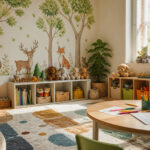
Vertical storage with pull-out wire baskets keeps toys sorted by type without eating floor space. We like mesh because you see what is inside before you pull it out, which cuts the "where is it" complaints.
Themed baskets, one per category, turn cleanup into matching instead of sorting. Lidded ones hide the chaos when guests come through.
Check your ceiling height before you buy tall; a low unit with a plant and a few books on top keeps the room from feeling boxed in.
2. Reading Nooks

A reading nook under the stairs turns dead space into the quiet corner every playroom needs. We have seen it work with a beanbag, a low shelf, and wall ledges at kid height so they can browse covers, not spines.
Wallpaper or a bright paint behind the nook sets it apart from the play zone without building a wall.
A fluffy rug works instead of a chair in tight spots; add a stuffed animal or two and they will actually stay put. The same setup shifts to homework later, so the space earns its keep for years.
3. Display Child Artwork

Framing what they already make costs less than buying art and does more for their confidence. We hang kids’ drawings on clip wire or in simple black frames, low enough that they can swap pieces themselves.
A string and clip system against a white wall, with a storage console below, keeps the gallery fresh without new holes. The frames do not need to match; mixed sizes look collected, not random.
One warning: if your child makes art daily, rotate monthly or the wall turns to wallpaper.
4. Use Colorful Decor

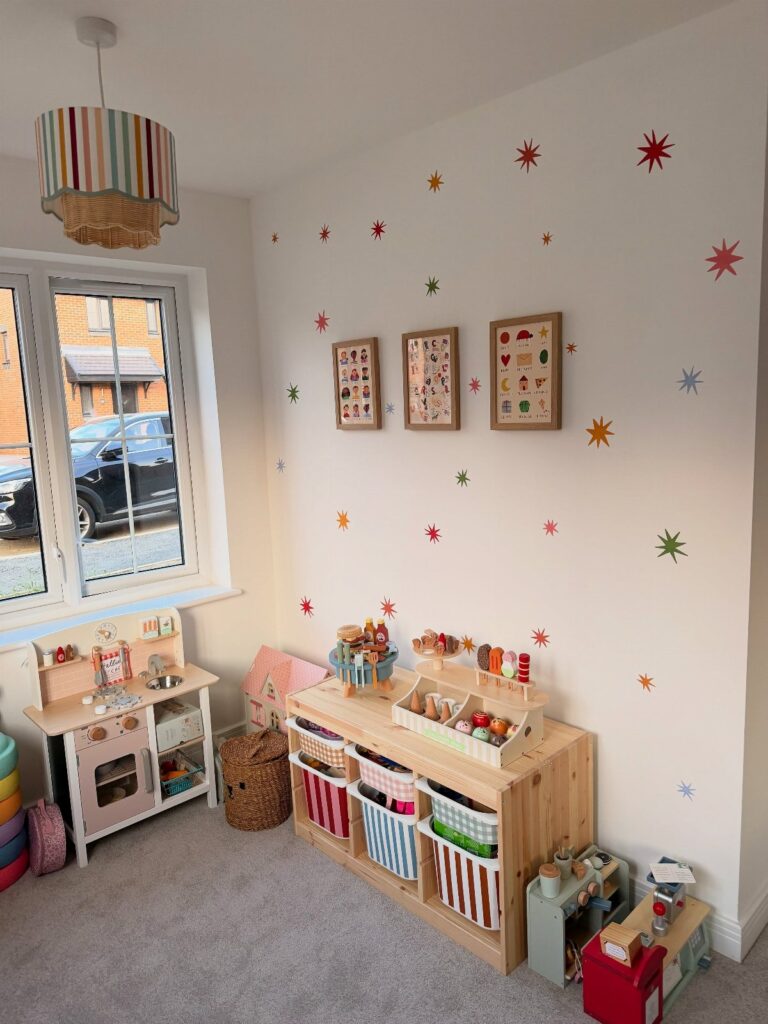
Color wakes up a small room faster than square footage ever could. Stack floating shelves in brights, add a woven basket with pattern, and frame pieces that pull from the same palette.
We started with a neutral base and added color through swaps: art prints, storage bins, a rug. Removable wallpaper or decals on one wall give you the accent without the commitment.
Pick a palette and repeat it, not match exactly. A handful of colors keeps it playful; more than that, and the eye has nowhere to rest.
5. Use Wall Murals
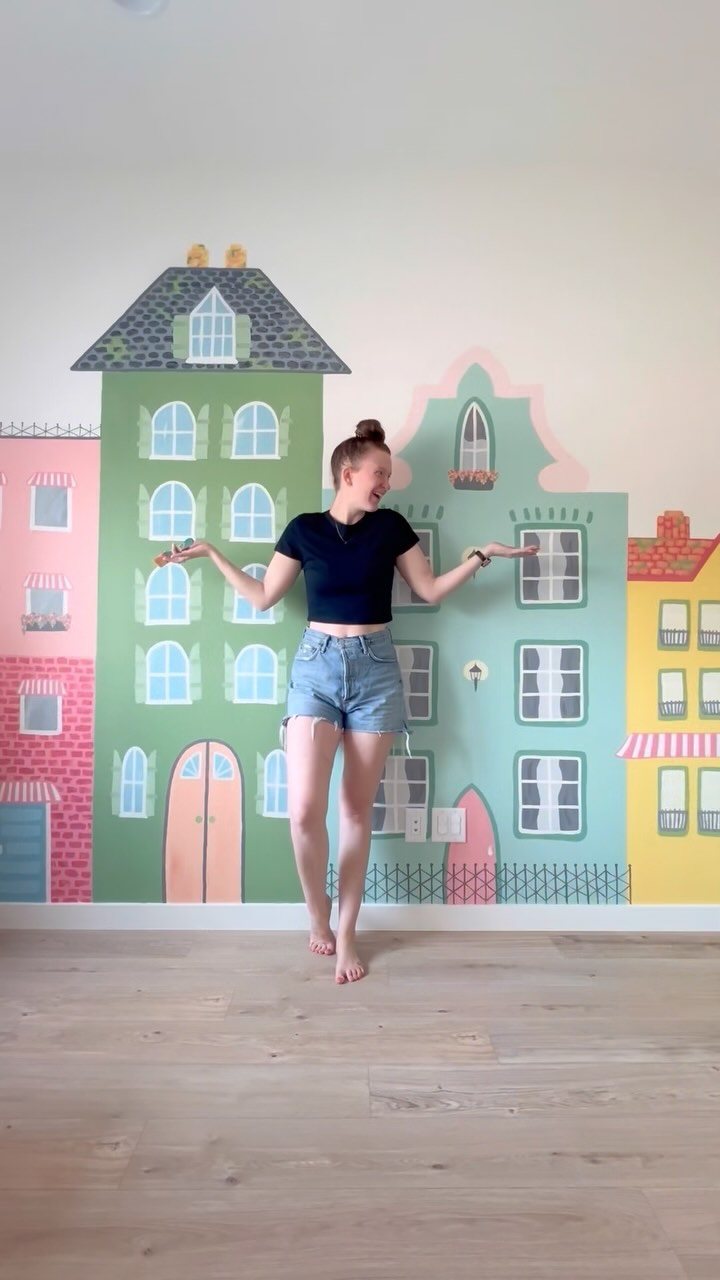
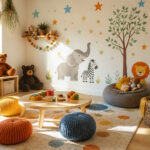
A wall mural turns one surface into the whole story, which matters when you do not have room for props and sets. Painted townhouses give kids a backdrop for pretend without a single piece of furniture moved.
You can hire it out or paint it yourself; either way, let them suggest a few images so they point and claim. Forest, animals, or a geometric pattern work if architecture is not their thing.
One mural wall is enough; two fights for attention and shrinks the room.
6. Add a Sizeable Sofa
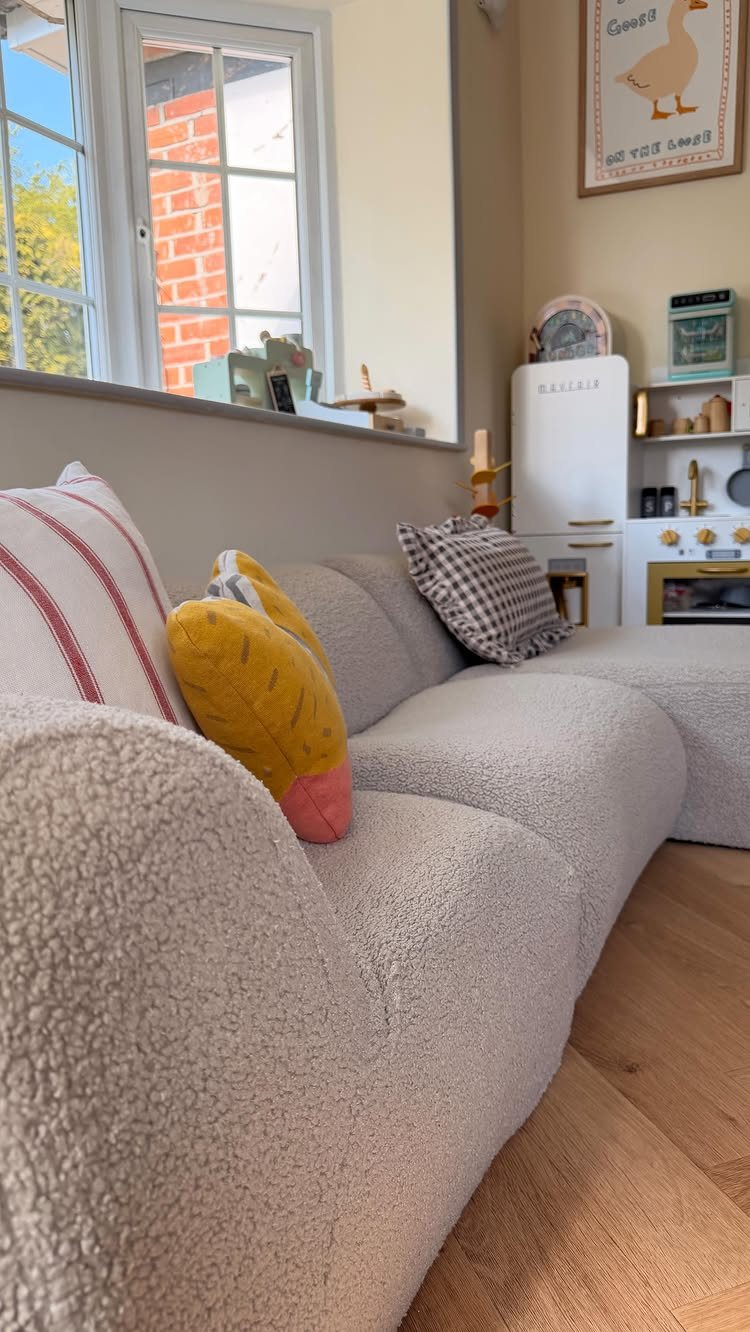
A big sofa in a small playroom sounds wrong until you try it. An L-shaped sectional anchors the space, defines the zone, and seats everyone for a board game or a movie without dragging chairs in.
Bouclé or another textured weave hides the wear better than flat weave, which matters with juice boxes in play.
Sit the sofa near a window for natural light and a toy kitchen for parallel play; parents can supervise from the cushion.
The tradeoff is floor space, so skip it if the room is under 120 square feet and you still need a train table.
7. Add a Swing

A sensory swing hung from a ceiling joist gives kids a place to burn energy and calm down in the same span of time.
Check your joist direction with a stud finder before you buy hardware, because a lag eye screwed into drywall alone will pull out by day three.
The climbing boards beside it are optional; the swing alone is enough for a child who needs motion to reset after school. Best for ages three to eight, and for parents who can tolerate a little thumping overhead.
8. Create a Magnetic Wall

A magnetic wall turns dead space into a surface kids actually use. You can buy a ready-made steel panel with a painted face or glue sheet metal to plywood and frame it yourself.
Either way, the wall behind it must take screws securely. We like these best in narrow spots where a desk or easel will not fit, because a child can stand right up against it.
Magnetic letters and their own drawings keep it busy without your input. Skip this if your kid is still mouthing small pieces; the magnets are a choke hazard until about age four.
9. Incorporate Natural Light

Light changes whether a small playroom feels cramped or just full. A Roman shade that stacks above the glass leaves wall space free, unlike a curtain that pools at the sides.
That matters in tight rooms where every inch counts. If your only window faces a neighbor, a translucent shade still washes the ceiling with reflected light without putting your child on display.
We would rather have one bright corner than two dim ones, so resist the urge to crowd both walls with tall shelves.
10. Create a Tent or Fort

A tent gives kids territory that is theirs alone, which matters when the playroom is also the guest room or the corner of the living room.
A store-bought cotton tent works, but a draped sheet over two chairs does the same job and stores flat.
The pom-pom trim and stuffed animals inside are the child’s job, not yours; your part is making sure the base sits on a rug so it does not slide on hardwood.
These last longest when they are not the only play option in the room. Rotate it out for a month and it feels new again when you bring it back.
Importance of Play
Independent play is not downtime; it is how children learn to think before they learn to read. Open-ended toys in one place give kids room to get bored and then figure their own way out of it.
Pediatricians have been pushing this for years, and we agree: the touching and manipulating comes first, the books later.
We like to see a playroom set up in zones rather than stations. Floor cushions and low shelves set a corner up for reading without anyone having to push it.
A magnetic board or chalkboard on the wall becomes a spot for them to puzzle things out standing up.
Morning baskets or a puzzle tray left out overnight give the next day a starting point, which cuts the "what do I do" opening act.
Rotate what is in the trays so the room does not go stale; the space stays the same, the possibilities shift.
Budget-Friendly Solutions
You probably own half of what a small playroom needs already. An old trunk works as surface and storage both.
A vintage rug you moved out of the living room grounds the space and hides marker stains better than anything new.
One designer we follow painted a wall deep turquoise and hung a large map; the room felt finished with almost no new furniture bought.
When you do buy, make each piece earn its place twice over. Foldable or nesting furniture stores flat against a wall and comes out for craft time.
A modular table shifts from art projects to snack time to puzzle work without a struggle. Keep the colors tight and coordinated so these pieces fade in, not shout; the toys will bring enough noise on their own.
Designing for Growth
We have learned to set up a playroom like a living room first, then let the toys move in. That means upholstery that holds up, solid wood tables, and lighting you can dim or brighten.
The bones stay adult; the contents change as the child does.
Plan now for what comes later. Run power and think about desk locations before you need them.
A spot that holds a toy kitchen at four should take a computer at twelve without rewiring. One designer we trust pre-plans seating arrangements for teen hangouts while the room still has a train table in it.
The TV, if you add one, needs parental controls a young kid cannot crack and gaming features a teenager will actually use.
Sony’s Bravia 5 handles both ends; we have seen it work in rooms that started with wooden blocks and ended with PlayStation 5s.
“Design your playroom like a living room first, then layer in play zones,” advises Christina Cruz of Christina Cruz Interiors, an AD PRO member in Austin, Texas.
Creating Cozy Spaces
A playroom that looks inviting gets used more. Thick, plush rugs soften the noise and the falls.
Layer fabrics and pillows so there is always a soft place to land. If a couch will not fit, bean bags or oversized floor pillows stacked in a corner do the same work for reading or drawing.
We add warmth through texture more than color. A bouclé or other nubby weave on seating hides the wear from daily use.
Multiple fabrics in the same tone keeps the room calm, not busy. In tight rooms, an oversized pillow against the wall with a clip light above it becomes a nook without building anything.
The child settles in, the chaos stays outside the perimeter, and you get a space that draws them in instead of corralling them.