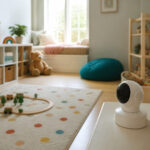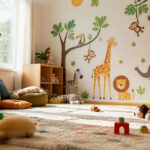
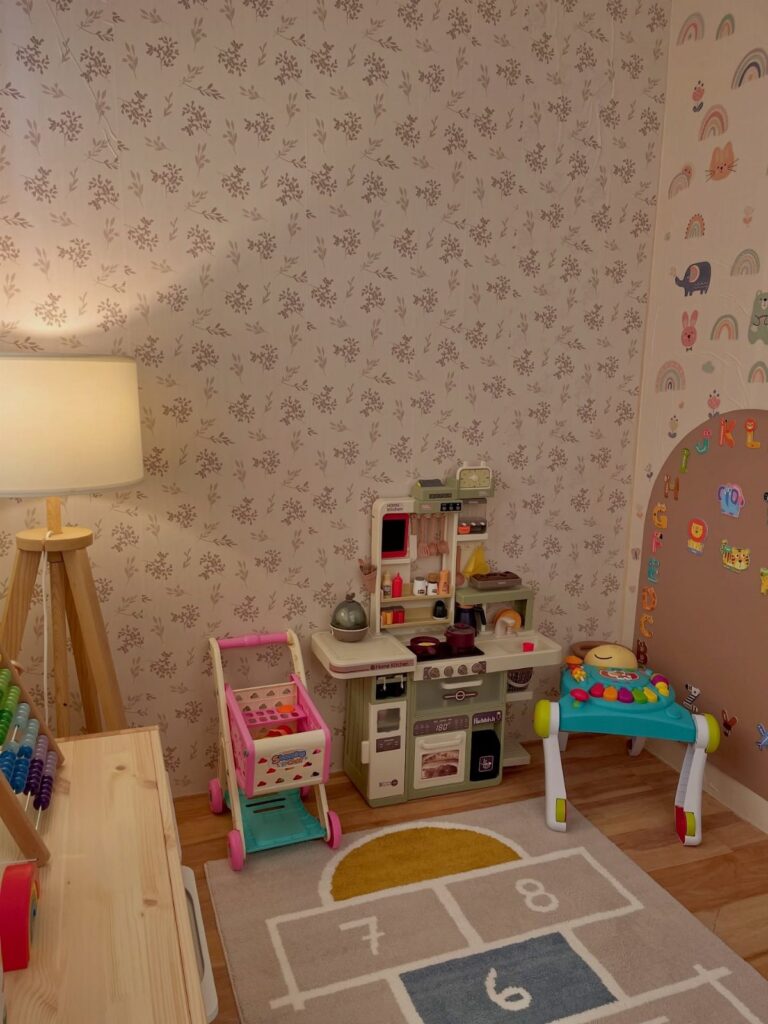
These small playroom design ideas range from a yard of fabric and an afternoon to a bolted climbing wall, so the deciding factor is how much of the room you can change and keep.
Renters will lean toward the draped-table playhouse or a tent that stores in a drawer; homeowners with studs to locate can bolt holds for a floor-to-ceiling climbing wall or hang a swing.
[link-whisper-related-posts]1. Utilize Vertical Storage
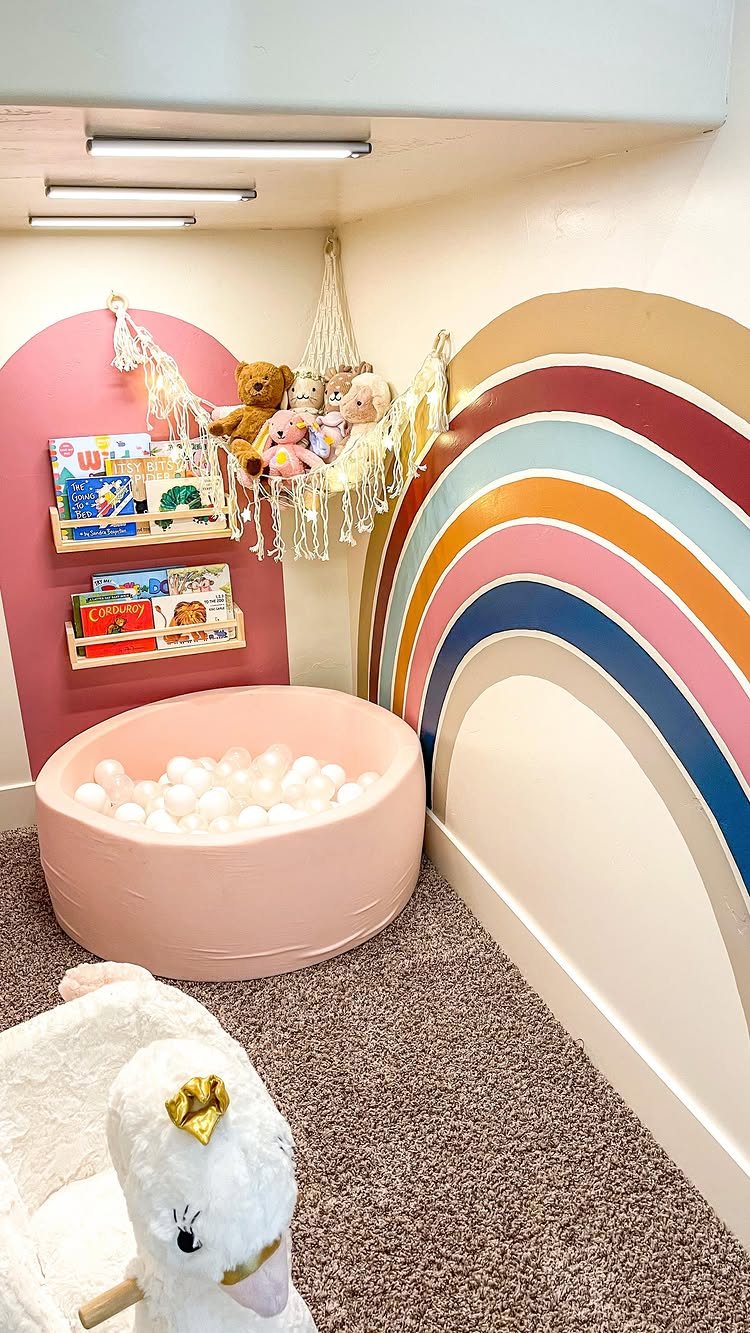
Wall space is free real estate in a small playroom. We mounted shallow shelves for books and added a macrame hammock for stuffed animals; the floor stayed clear for the ball pit.
Hooks at kid height keep dress-up capes and bags off chairs. Pegboards work too if you want tools or art supplies visible and reachable.
Check your wall type before you buy hardware. Drywall anchors handle most toy weights, but plaster or brick need different fasteners.
Renters should look for command-strip options rated for the load, and test them on a hidden spot first.
2. Reading Nook

A reading nook only needs a corner if you build up, not out. We tucked ours into a corner with a floor cushion and a wall shelf at eye level for a toddler.
The canopy overhead made it feel like a hideout, which got our kid to sit still longer than any chair ever did.
Bean bags work if you have floor space; a window seat with pillows saves it. Keep books face-out on the shelf, spines are invisible to pre-readers.
A basket on the floor catches the books they drag out themselves.
3. Toy Storage

Cube units with rope bins turned our green-walled playroom from chaos into something we could walk through. Each bin holds one category: cars, blocks, dress-up.
The kids know where things go, which means they actually put them away sometimes.
Baskets beat lids for kids under five; lids get lost and fingers get pinched. For puzzles, we started sliding pieces into gallon zip bags with the picture taped to the front.
It took an evening to sort what we had, but no more hunting for that last corner piece.
4. Cozy Seating Options

Floor cushions and a small tent turned an awkward corner under our angled ceiling into the spot where our kids actually calm down.
We layered a cheap rug over the wood floor for softness, then piled in pillows they already had.
A penguin stuffed animal became the unofficial guard. Small stools nearby let them set down snacks or a cup of water without leaving the nest.
This setup stayed cheap because we bought the tent frame and made the cover from drop cloths.
5. Create a Cozy Atmosphere

Warmth in a playroom comes from what you touch, not what you hang.
We kept the walls light but added wood slats behind the built-in sofa, which catches afternoon light and makes the room feel like a cabin instead of a classroom.
Floor cushions under the climbing wall give kids a soft landing and a place to flop.
Skip overhead fluorescents. A floor lamp with a warm bulb near the reading area makes the whole room feel smaller and safer in the good way.
Layer two rugs if your floor is cold; the slight height difference defines zones without walls.
6. Create a Play Zone
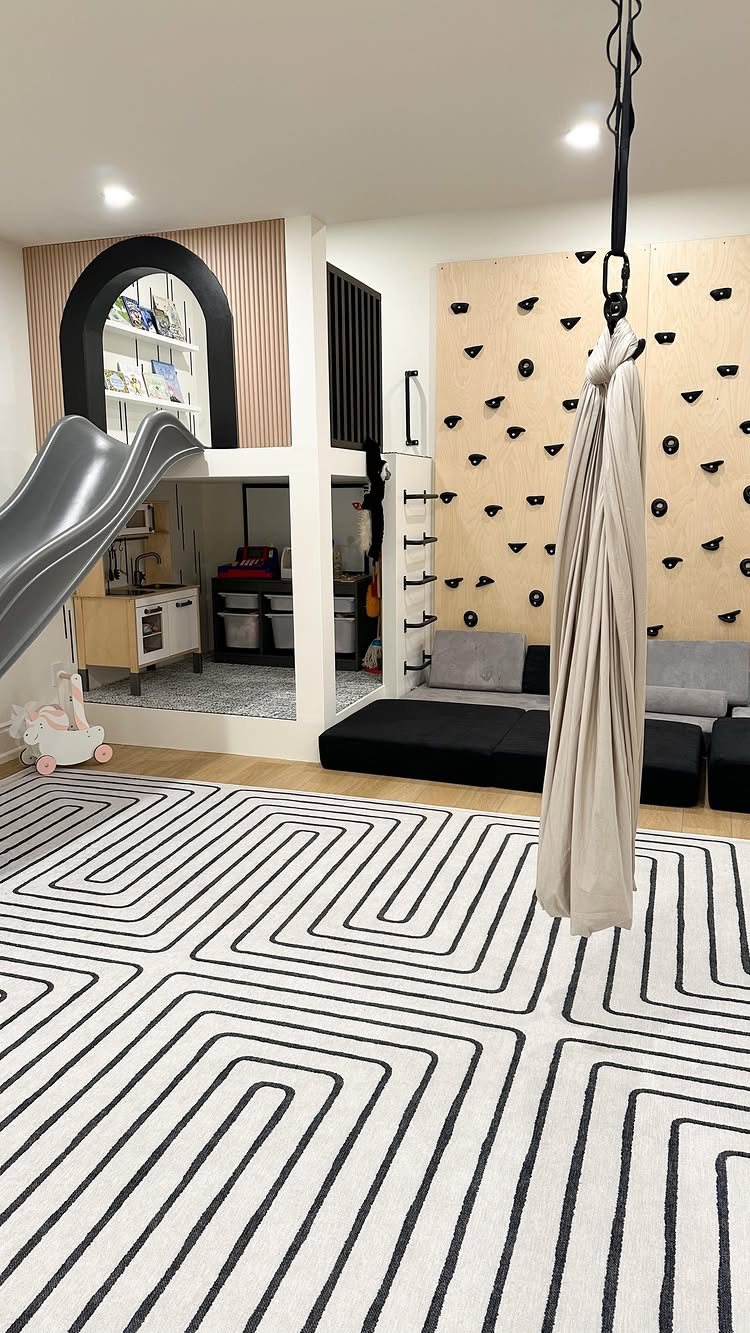
A geometric rug anchored one half of our room for active play; the other half stayed clear for the play kitchen under the loft.
The slide and climbing wall give the climbing kids their territory while the reading nook overhead stays separate.
Rugs work better than furniture for zoning in small rooms because you can roll them up when you need the whole floor. We used a black-and-white pattern that hides marker stains and shows toy cars to their best advantage.
A chalkboard or whiteboard on one wall marks the craft zone without taking floor space.
“Design your playroom like a living room first, then layer in play zones,” advises Christina Cruz of Christina Cruz Interiors, an AD PRO member in Austin, Texas.
7. Incorporate Sensory Elements

A sensory board taped to the wall at baby height turns a tight corner into something worth reaching for.
We like flip-top lids from reused food containers: foil, feathers, and a scrap of velvet behind each one give three textures to hunt through.
Tactile cushions on the floor and a soft rug underneath round out the zone without crowding it.
This works best for babies through early toddlers who still mouth things; keep pieces large enough not to choke on and check the tape weekly. Older kids need more action than a wall of textures gives them.
8. Create a Play Kitchen
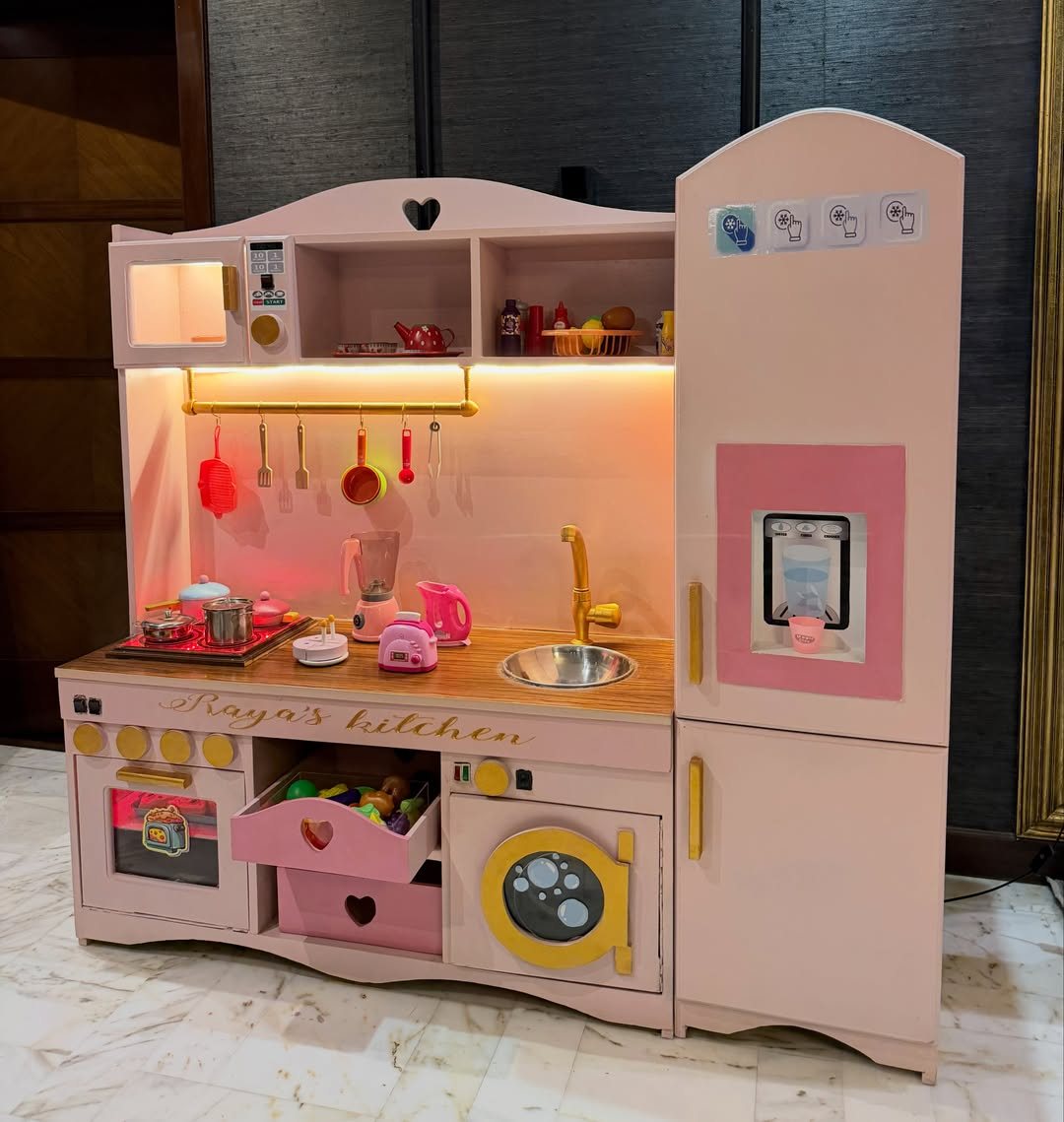
A toy kitchen squeezed against one wall keeps pretend cooking from taking over the whole room.
A play kitchen set with a sink, stove, oven, and fridge plus pots and utensils that store inside fits where a side table would go. Battery lights inside the oven and fridge make it feel real after dark.
We have seen these hold up for years if you bolt to the wall or leave them freestanding against it; tipping is the main risk once kids climb.
A magnetic strip above for hanging utensils, borrowed from the same idea used on tool boards, adds storage without extra floor space.
Skip the full set if your child is under two and still mostly stands at things; a single pot and a wooden spoon on a low shelf gets you there cheaper.
9. Incorporate a Playhouse

A dining table draped with a cloth house turns furniture you already own into a hideout.
A cream cover painted with a door and windows, fairy lights inside, and a basket of fruit on top to weight the cloth turns any small table into a playhouse.
That takes an afternoon and a yard or two of fabric if you sew, or a ready-made cover if you do not.
Battery lights inside mean no cord to trip on, and the whole thing lifts off when you need the table for dinner.
We like this for renters and anyone short on square footage; it stores in a drawer and leaves no mark. A cardboard box house is even cheaper and lasts a few months before the tape gives out.
10. Wall Murals
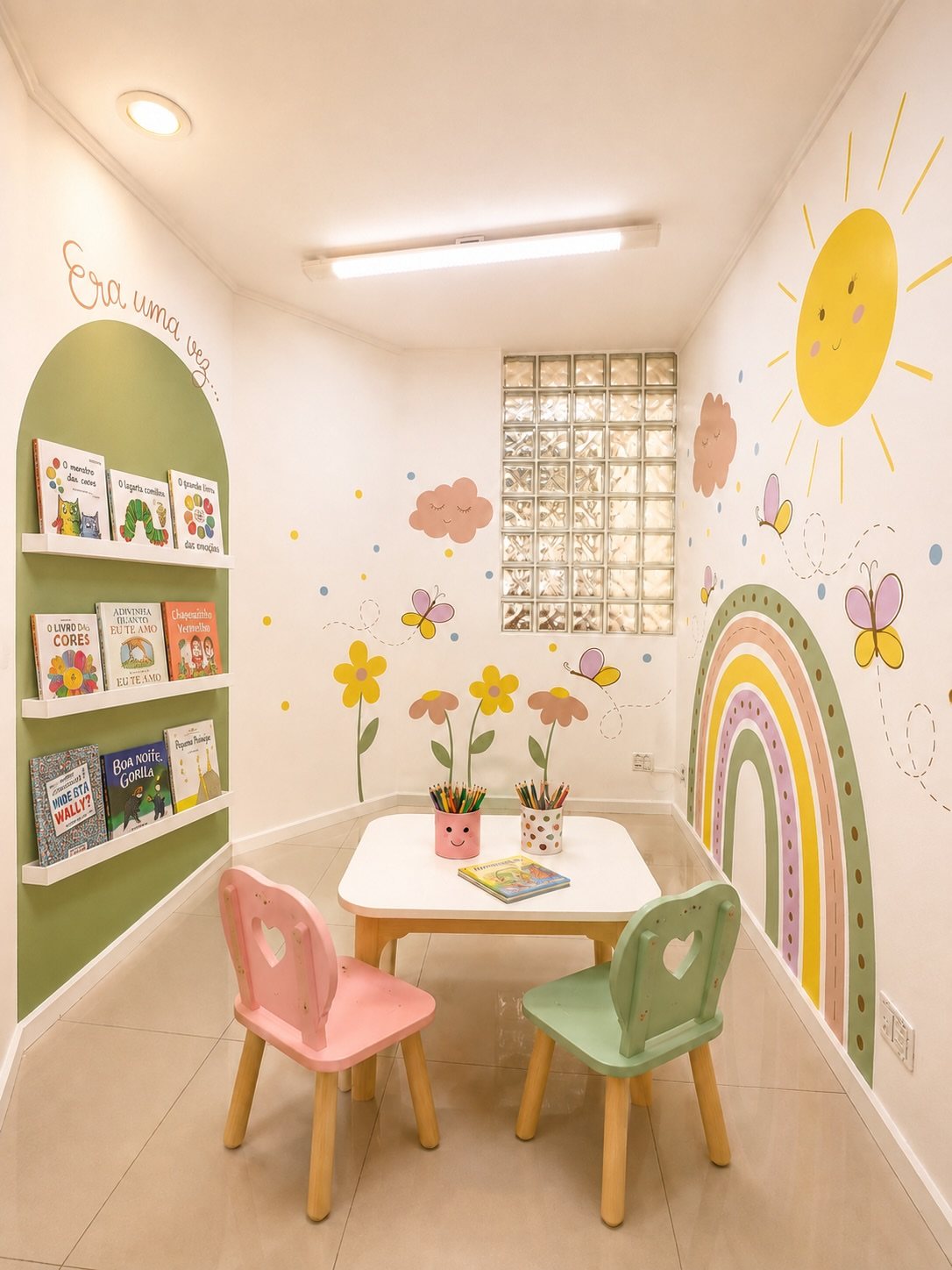
Paint samples let you cover a whole wall for the cost of a few half-pints from the hardware store.
We have learned to prime first even if the can says paint and primer in one; colors read truer and touch-ups hide better.
Let older kids draw a few elements themselves, then paint over their lines in the final colors; they spot their contribution every time.
Murals suit a room that stays a playroom for years. If the space might become an office or guest room, decals peel cleaner than paint.
11. Chalkboard Wall

Chalkboard paint on one wall gives kids a surface big enough to draw life-size figures, or to work through a bad day by scribbling it out.
The green shade in that attic room reads as color in daylight and function after school.
We paint the base coat, let it cure overnight, then rub chalk over the whole surface and wipe it; that seasons the wall so the first real drawing erases clean.
Real chalk beats dustless for saturation; dustless is easier on vacuum filters.
This trades away a wall you could have used for shelves or art. In a narrow room, the dark surface can feel heavy; try it inside a closet door instead, or on the short end of a rectangular room.
12. Use of Color

A playroom is the place to use the colors you vetoed for the living room.
Polka dots on the ceiling, primary red and blue on small furniture, and a patterned rug that would fight anywhere else can be cheerful without looking thrown together because the shapes repeat.
We start with one loud piece, usually the rug, and pull two or three colors from it for everything else. Paint samples in half-pint sizes let you test ceiling dots or chair legs before you commit.
The Benjamin Moore shade 401 Sour Apple reads too yellow on some walls; we skipped it after sampling, same as the parent who listed it barely used.
Bright color suits kids through early elementary; by third grade they start asking for walls that look more like the rest of the house. Plan to repaint or re-cover once the kids outgrow the colors.
13. Pegboard for Organization
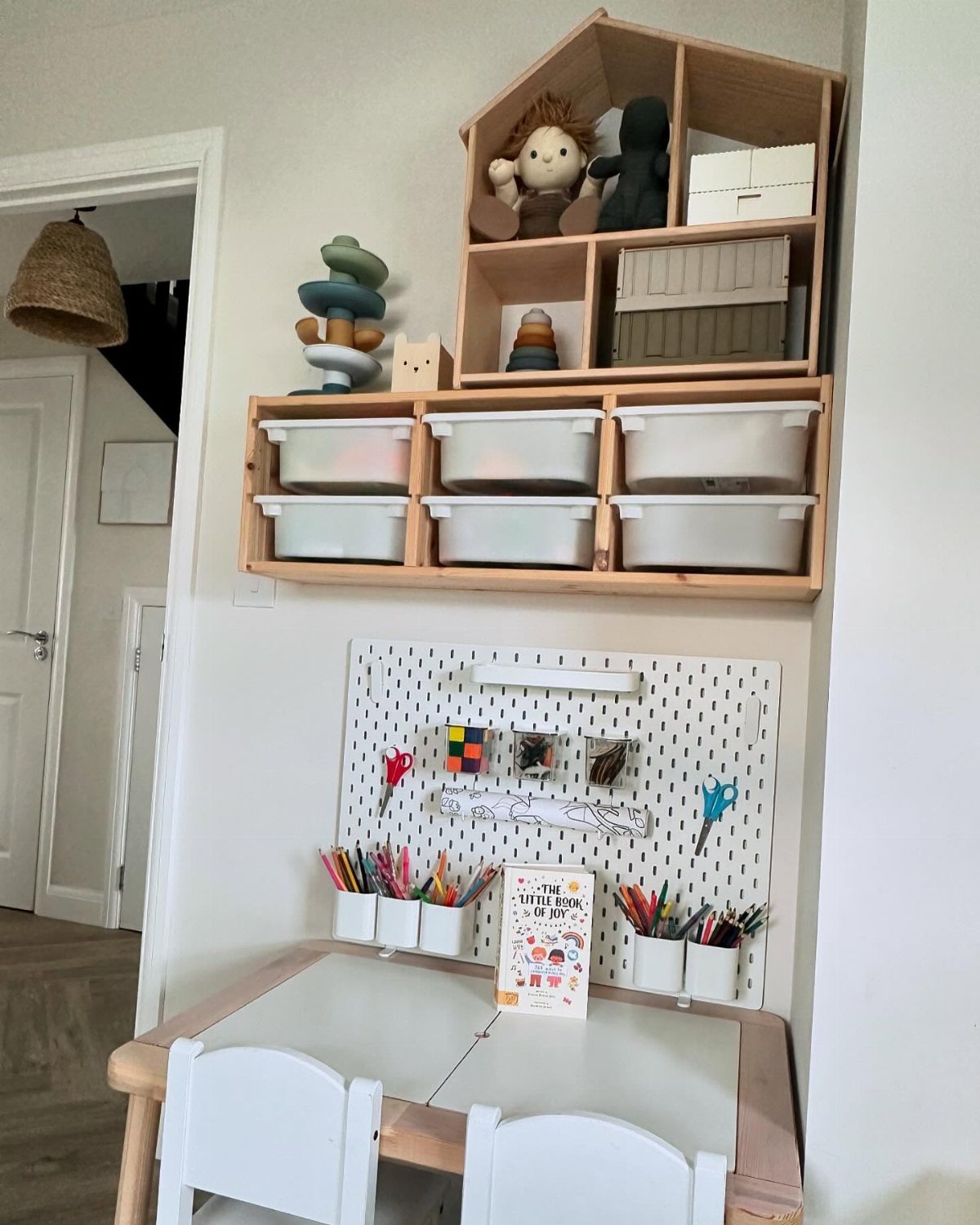
A pegboard turns dead wall space into reachable storage for markers, scissors, and small cups of supplies. We like the IKEA SKÅDIS system for this because the hooks and shelves swap out as your kid’s projects change.
Mount it above a small table or desk so everything sits at arm’s length while they work. The board keeps supplies visible, which means they actually get used instead of buried in a bin.
Best for kids old enough to handle hooks without pulling them down. For toddlers, stick with the lower rows and skip the small loose cups.
14. Use of Mirrors
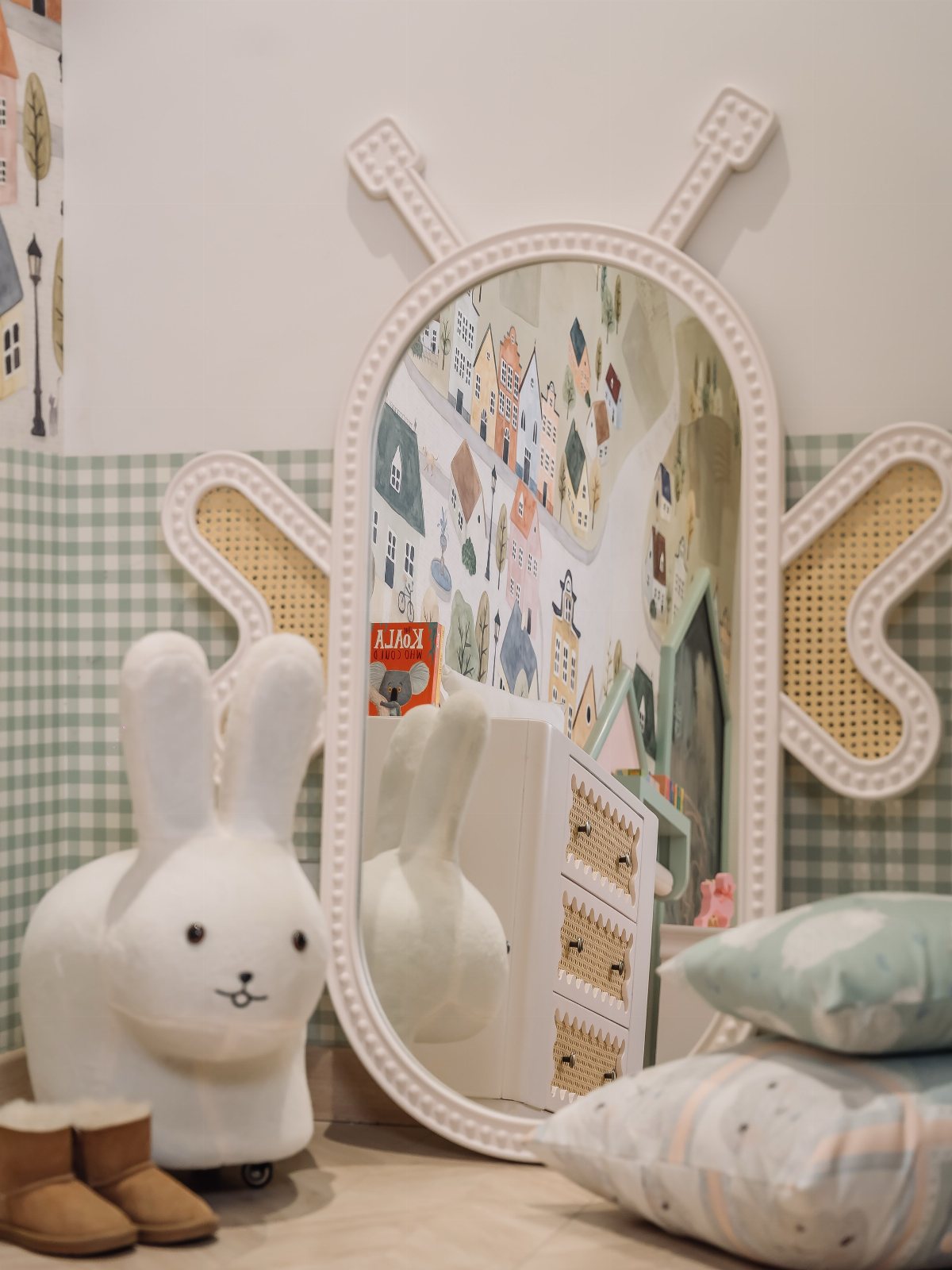
Mirrors bounce light around a cramped playroom and trick the eye into reading the space as bigger than it is.
A floor mirror set in a corner bounces back what light the room has and makes the space feel larger than it is.
Lean it rather than hanging it if your walls are plaster and you do not want to deal with anchors. The reflection also lets kids watch themselves act out stories, which turns out to be half the fun.
Skip this if your kids are still in the everything-is-a-toy-to-climb phase. A toppling mirror is not worth the extra square footage it buys you.
15. Use of Colorful Rugs

A bright rug does the job of marking where play happens without building a wall.
Pick one with a pattern your kid can read as a road, a river, or hopscotch squares and the rug becomes part of the game instead of just background.
We go for indoor-outdoor rugs in play spaces because they survive juice spills and marker accidents without turning into a stain diary.
Oversized flowers work, but a road map or numbered path rug does the same job of giving kids a place to move.
Some cheaper rugs skid on wood floors and need a separate pad to stay put.
16. Incorporate a Craft Table

A craft table gives kids a flat surface that is theirs, which means your dining table stops collecting dried glue and glitter.
A light wood table with a pegboard overhead keeps paper and supplies in the same zone, so cleanup means one trip.
If you do not have floor space for a full table, open up a closet and slide in a surface at kid height.
A bench or stool that lets their feet touch the floor helps them sit still longer while they work.
We learned to put the table near a window if you can. Natural light matters more than any lamp for telling colors apart.
17. Use of Play Mats
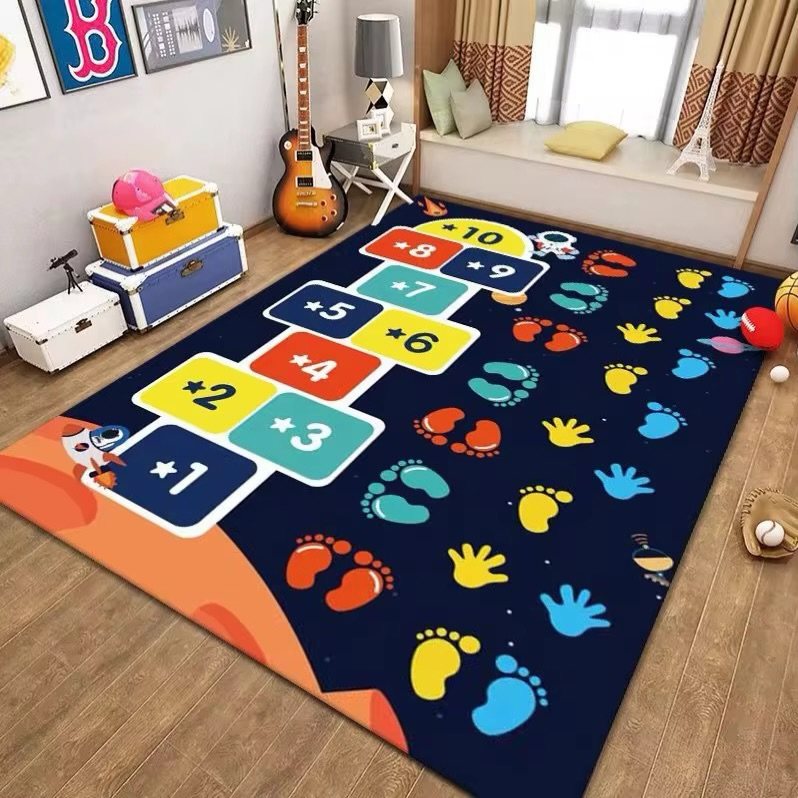
Soft mats buy you a clean place for babies to crawl and toddlers to tumble without worrying about what is on your floor. A numbered hopscotch mat works for older siblings too, so the same piece stretches across ages.
We like mats with printed paths or shapes because they give kids a starting point for made-up games.
If you are choosing between a thick foam mat and a thinner rug-style one, go thicker only for infants; preschoolers need the firmer surface for building block towers that do not wobble.
Indoor-outdoor rugs are the tougher choice for a mixed-age room. They hose off and dry fast.
18. Framed Child Art

Your refrigerator door only holds so many drawings before the tape gives up and the pile slides. Framing the good ones, or rotating a few in matching frames, turns that steady stream of art into actual wall color.
Lean a big frame on the floor for pieces that are too large to hang, or build a grid of smaller frames you can swap without tools.
A kid pointing at a collage that took a whole Saturday to make; giving it a frame says that time mattered.
Cheap poster frames from a craft store work fine. Custom framing is not required for a child’s watercolor phase.
19. Indoor Climbing Wall

A climbing wall turns one vertical surface into a gym for kids who need to burn energy before dinner. One wall, floor to ceiling, holds enough holds for a real workout.
Paint the wall first if you want it to read as decor, not equipment. A hand-painted pattern, stripes, or a solid color keeps it from looking like a garage afterthought.
The holds bolt through plywood backing, so locate studs or plan for a backing board screwed to the framing. A crash pad or folded mats below handle tumbles; a foam pit takes more square footage but absorbs bigger falls.
This one suits kids past the toddler stage who climb everything already, and parents who can tolerate the thump of feet on drywall.
If your lease forbids wall anchors, skip it; a doorway pull-up bar and hanging rings use no fasteners.
20. Art Corner

An art corner needs a work surface, paper in reach, and a way to put it all away fast. A low table or desk, a wall-mounted paper roll, and caddies for markers and crayons cover the basics.
The paper roll mounts at kid height so they tear off their own sheet; the caddies travel to the table and back to a shelf when the hour is up.
A rolling cart changes the game. Stock it with supplies, wheel it out for the afternoon, park it in a closet after.
The cart keeps the corner from colonizing the whole room, which matters when the playroom shares space with your living area.
This setup wins for kids who draw daily and parents who cannot stand dried paint on the dining table. If art happens once a month, skip the dedicated corner; a shoebox of supplies in the kitchen does the same job.
21. Use of Tents

A tent gives kids a room inside the room that adults do not enter.
Set it on a rug so the floor stays dry and the tent stays put; add a pillow and a small basket of books or a tea set and it becomes a destination.
In a shared space, pick a tent that folds flat or collapses fast. A play couch or low shelving behind it creates a soft boundary without a wall.
Sheer panels let you see in; solid canvas gives more hiding, which some kids need more than others.
This works best for children who play pretend for long stretches and for parents who can tolerate a fabric structure in the sightline.
If your kid loses interest fast, the tent becomes laundry storage; try a folding version you can test before committing floor space.
22. Incorporate a Swing

A swing hung from a ceiling joist adds motion to a room that toys alone cannot provide. The rhythmic back-and-forth helps some kids settle their bodies after school; others just want the lift and drop.
A single bolt through a joist beats a hook in drywall; if you hit a beam, use a lag screw and a locking carabiner so the swing removes fast when guests come.
A fabric-and-wood style sits close to the ground, which limits the fall and the arc.
Best for kids who seek movement and for basements or first floors where the ceiling can take the load. Upstairs bedrooms pass vibration through the frame; your downstairs neighbor may object.
A doorway bar with a hanging seat works where drilling is forbidden.
23. Incorporate a Loft Bed

A loft bed stacks sleep above and play below, which matters when the room is small enough that every square foot earns its keep.
The space underneath fits a desk, a reading cave, or open floor for building forts; built-in drawers or shelves along one side handle clothes and toys without extra furniture.
The rail needs to feel solid to you before a child sleeps up there. A forest mural or painted scene on the wall behind turns the lower nook into a defined world, not just a gap under a bed.
Slides down are optional; kids outgrow them fast, but the years they fit are loud and happy ones.
This suits children old enough to climb a ladder safely and rooms with ceiling height to spare; check that the child can sit up in bed without hitting the ceiling.
For a shared room, two lofts along one wall leave the center open, which is how some families handle sleepovers without a guest bed.
Importance of Open Space
Every piece of furniture you add takes away floor space they need to spread a train track, roll a ball, or spin until they fall over.
We leave at least a third of the floor clear in any layout we plan.
That sounds like a lot until you watch two kids build a blanket fort and realize they need the whole middle of the room to anchor it.
Storage climbs the walls, seating hugs corners, and the center stays open for whatever game happens today.
A clear floor also lets you reconfigure fast. Yesterday’s obstacle course becomes tomorrow’s dance floor without moving a sofa.
Resist the urge to fill every gap with a bin or a chair; the empty spots are where the play actually lives.
Flexible Design
A playroom that works at age three and again at twelve starts with pieces that outlast phases. Real-wood tables and tailored upholstery read as living-room furniture now and handle homework later.
Built-in desks or desk-ready corners wired for power save you from rewiring when school projects replace toy kitchens.
We plan for the switch before it happens. A wall that holds a play kitchen today needs a stud layout that works for a desk tomorrow.
Seating arranged in a loose U for group play stays useful for group study; just swap the small chairs for larger ones as legs grow.
Toys and books should exit naturally when interest fades, not because the shelving demands it. Layer play zones over a base that looks like the rest of your house, and the room shifts without a full teardown.
The color on the walls, the light fixtures, the rug: these stay. What sits on them changes.
Personalization
A playroom feels owned when a child spots their own hand in it.
Framed art they made, a wall with their own painted lines left in the final mural, a name on a bin or a crayon in a painted set: these details matter more than a bought theme.
We rotate the personal touches instead of piling them. One season it is a gallery wall of watercolors; next season, a mobile they helped string.
Removable decals let a ten-year-old’s soccer phase replace a toddler’s butterfly year without scraping paint.
Swapping pillows or hooks by season keeps the room fresh without buying new furniture. A room they recognize as theirs beats one that shows off what you picked for them.
Budget-Friendly Solutions
A small playroom does not need a big budget to work well. Blackboard paint on one wall, a corner cleared for a cushion and a few beloved toys, and you have a defined play zone without buying furniture.
We skip single-use pieces. Foam mats or indoor-outdoor rugs handle spills and tumbles for less than half the price of specialty play flooring.
Keep the palette consistent even when colors run bright. Repeating two or three tones from a single loud piece, usually the rug, makes the room feel planned instead of piled together.
The cheapest way to overcrowd a small space is to buy without that restraint.
Frequently Asked Questions
What are some ideas for a small playroom?
Wall shelves, hooks at kid height, and pegboards keep the floor open for active play.
A floor cushion and wall-mounted books in one corner, a rolling cart for crafts that tucks away when done, and a tent on a rug: three ways to use the same small space without building a wall.
Pick one loud piece like a patterned rug and pull your other colors from it so the room feels planned, not crowded.
What is the ideal size for a playroom?
There is no ideal size; even a corner can work if you limit what you ask it to do. When square footage is tight, one strong idea beats a crowd of them.
A single play feature, a corner for reading, or an open middle that becomes whatever the morning needs keeps the room from feeling packed.
A loft bed stacked over a desk or play kitchen buys you back floor space you did not think you had.