The Reolink E1 Zoom wins our top spot because it tracks a moving toddler automatically while keeping your footage off subscription servers.
That auto tracking costs you the slightly cleaner still image the Lorex 2K delivers, and the privacy mode is a software toggle you have to remember, not a physical shutter.
If you need to scrutinize a sleeping infant’s face in maximum clarity or want an automated privacy barrier, the Lorex is the better fit despite its missing tracking feature.
[link-whisper-related-posts]Our Top Picks
| Product | Award | Best for | Why it won | ||
|---|---|---|---|---|---|
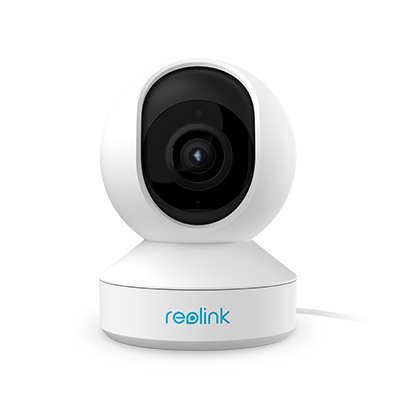 | Reolink E1 Zoom | Best Overall Nanny Cam | General monitoring without overspending | Balances sharp video, useful audio tools, and low ongoing costs better than rivals | Check price |
 | VTech Baby Monitor No WiFi | Best Budget Option | Parents who want zero monthly fees | Delivers reliable baby monitoring with no subscription required, keeping long-term costs minimal | Check price |
 | Eufy Baby Monitor E20 | Best for Night Monitoring | Dark room monitoring needs | Superior night vision paired with clear video and two-way talk for after-dark check-ins | Check price |
 | nooie Baby Monitor | Best for Travel | Families constantly on the move | Compact and quick to set up anywhere, ideal for hotel stays and visiting relatives | Check price |
 | Nanit Smart Baby Video Monitor | Best for Multiple Children | Households with several kids | Purpose-built baby tracking that scales to watch multiple little ones at once | Check price |
 | Tapo Kasa 1080p Indoor Pan/Tilt Wired Security Camera | Best for Indoor Pan/Tilt Functionality | Wide playroom coverage needs | Pan and tilt movement eliminates blind spots that fixed cameras always leave behind | Check price |
 | Kasa Smart Kasa 1080p Indoor Pan/Tilt Wired Security Camera | Best for Smart Home Integration | Tech-savvy smart home owners | Slides effortlessly into existing smart home setups for unified control | Check price |
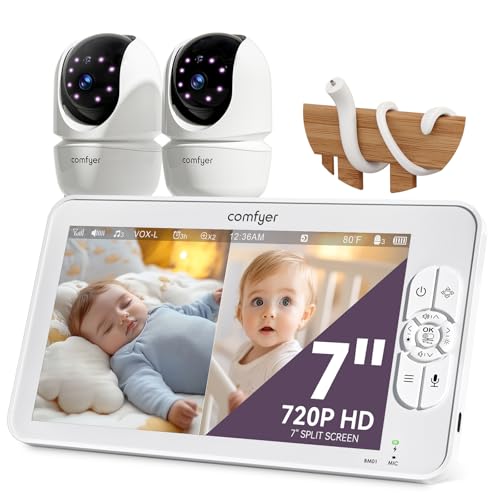 | Comfyer BM01 7" Split-Screen Baby Monitor | Best for Split-Screen Monitoring | Monitoring multiple rooms or kids | Split-screen view lets you watch two spaces side-by-side on one display | Check price |
 | aosu 2K Indoor Camera | Best for High Definition Monitoring | Image clarity above all else | Crisp 2K resolution catches fine details that standard cameras simply miss | Check price |
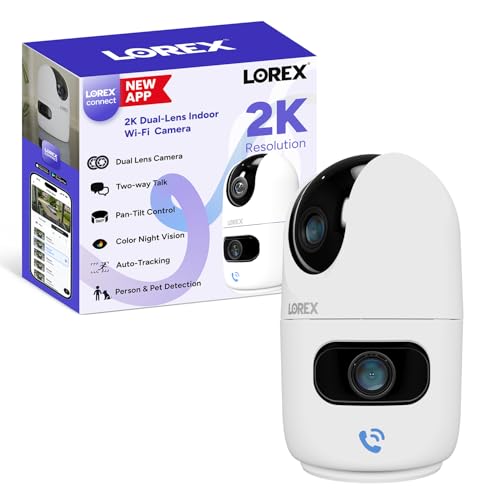 | Lorex 2K Indoor Pan/Tilt Camera | Best for Two-Way Communication | Frequent voice check-ins needed | Crystal-clear two-way audio makes conversations through the camera feel natural and immediate | Check price |
| Product | Height | Length | Width |
|---|---|---|---|
| Reolink E1 Zoom | — | — | — |
| VTech Baby Monitor No WiFi | 4.01 in | 8.34 in | 5.07 in |
| Eufy Baby Monitor E20 | — | — | — |
| nooie Baby Monitor | 3.07 in | 4.9 in | 3.07 in |
| Nanit Smart Baby Video Monitor | 67 in | 11.8 in | 10 in |
| Tapo Kasa 1080p Indoor Pan/Tilt Wired Security Camera | 4.43 in | 3.23 in | 3.23 in |
| Kasa Smart Kasa 1080p Indoor Pan/Tilt Wired Security Camera | 4.43 in | 3.23 in | 3.23 in |
| Comfyer BM01 7" Split-Screen Baby Monitor | 2.7 in | 10 in | 2 in |
| aosu 2K Indoor Camera | 2.3 in | 4.3 in | 2.3 in |
| Lorex 2K Indoor Pan/Tilt Camera | — | — | — |
Best Overall Nanny Cam: Reolink E1 Zoom
Image: m.reolink.com
Quick Verdict
If you want one camera that handles nursery checks and playroom monitoring without bleeding your budget on subscriptions, this is the one to beat.
The Reolink E1 Zoom records in 3840-pixel resolution, tracks movement automatically, and stores everything locally on a card you own.
The catch: you will give up the Lorex runner-up’s slightly cleaner image in exchange for that tracking feature and the freedom from monthly fees.
Key Specifications
- Night Vision: 40 ft
- Video Resolution: 3840 pixels
- Storage Options: 512 GB
- Two-Way Audio: 1
What It Does Well
- No subscription required. Reolink builds local storage into the product itself, so you are not renting back your own footage.
- Auto tracking follows a crawling baby or a wandering toddler. The camera pans and tilts to keep the subject centered; you do not have to remote-control it every time they move.
- 40 ft of night vision with 10 infrared LEDs. That range covers most nurseries and hallways; owners report clear enough detail to confirm breathing patterns without turning on a light.
- Dual-band Wi-Fi 6 and Bluetooth setup. The connection stays stable on busier home networks, and pairing takes a few taps rather than network troubleshooting.
Where It Falls Short
- Privacy Mode is manual. You have to toggle it; there is no physical shutter or automated schedule, so forgetful users leave the lens exposed.
- 3840-pixel resolution sounds higher than it looks in practice. Independent reviewers note compression artifacts in motion, so the Lorex 2K camera actually renders some scenes more cleanly despite the lower number on paper.
- 12-meter night vision spec (40 ft) relies on 850nm LEDs. Some owners find the faint red glow visible in dark rooms, which can distract light-sensitive sleepers.
Who It’s For
Families who want to set up once and stop thinking about monthly bills will get their money’s worth here, especially if the camera will move between rooms as children grow.
Buyers who prioritize absolute image fidelity for identifying fine details, or who need automated privacy shutters for compliance or peace of mind, will find the Lorex 2K camera a better fit despite its missing tracking feature.
How It Compares
The Lorex 2K Indoor Pan/Tilt Camera matches the two-way audio and local storage, and it produces a slightly cleaner picture in still scenes. Where the Reolink pulls ahead is the auto tracking and the absence of any subscription pressure.
Choose the Lorex if your priority is scrutinizing a sleeping infant’s face in maximum clarity. Choose the Reolink if your toddler is mobile and you want the camera to do the panning work for you.
Where to buy: m.reolink.com
Best Budget Option: VTech Baby Monitor No WiFi
SEE EVERY DETAIL FROM ACROSS THE ROOM — 7" TRUE-COLOR IPS SCREEN: The 178° wide-angle IPS display delivers vibrant, true-to-life color from virtually any angle — so...
Quick Verdict
If you need a baby monitor that works the moment you plug it in and never asks for a monthly fee, this is the pick that keeps money in your pocket.
The VTech Baby Monitor No WiFi runs on encrypted radio between camera and parent unit, which means no app to update, no cloud account to manage, and no subscription bill arriving six months in.
The tradeoff is exactly what you’d expect at this tier: you give up the slick AI detection and high-resolution polish of pricier internet-connected systems, and the parent unit is a dedicated brick of plastic, not your phone.
Key Specifications
- Height: 4.01 in
- Length: 8.34 in
- Width: 5.07 in
What It Does Well
- True-color IPS screen viewed from any angle. Owners describe the 7-inch display as genuinely usable from across the room or off to the side; you are not pinned to one narrow viewing position while your baby naps.
- All-night battery without babysitting the charger. The maker rates the 5000mAh parent unit at up to 12 hours of video or 18 hours of audio-only monitoring; charge it at bedtime and it is still running when you wake.
- Remote pan, tilt, and zoom that covers the whole room. The camera pans 360 degrees, tilts 122 degrees, and zooms 4x, all controlled from the parent unit; the 110-degree wide-angle lens means you are not stuck with a fixed frame that misses the corner crib.
- Zero internet required for operation. Encrypted 2.4GHz FHSS transmission goes directly from camera to parent unit, which independent reviewers note as a privacy win and a reliability win in houses where the WiFi drops out.
Where It Falls Short
- No AI features or app-based notifications. You get sound-activated screen wake and temperature display, but nothing that learns sleep patterns or distinguishes a cry from room noise; that kind of processing lives on subscription-driven competitors.
- Dedicated parent unit adds bulk. The 8.34 by 5.07 by 4.01 inch parent unit is another device to keep charged and carry; owners who already live on their phones sometimes find this annoying.
- Lullaby and night-light controls are basic. Five lullabies, five ambient sounds, and a seven-color night light are functional, but several owner reports mention wishing for more customization or volume nuance.
Who It’s For
Parents in older homes with spotty internet, or anyone who has watched a cloud-based camera go dark during a provider outage, will sleep easier with a closed system that does not touch the web.
The buyer this leaves behind is the one who wants phone-based viewing from the office or AI-generated sleep summaries; those features do not exist here, and the hardware is not built to add them later.
How It Compares
The Harbor Baby Monitor offers a similar dedicated parent unit but layers on optional AI features and higher resolution, which it funds through subscription costs.
We see the Harbor suiting parents who want that smarter detection and are willing to pay ongoing fees for it, while the VTech fits families who would rather buy once and be done.
Your choice depends on whether you treat baby monitoring as a fixed hardware purchase or as a service you subscribe to; neither approach is wrong, but they budget differently over two years.
Where to buy: Amazon
Best for Night Monitoring: Eufy Baby Monitor E20
Image: eufy.com
Quick Verdict
For parents who do most of their checking after lights-out, the night vision on this unit is the detail that matters most.
Eufy built the Baby Monitor E20 around a 2K sensor that keeps faces visible in near-total darkness, and the maker adds a privacy switch that physically kills the Wi-Fi when you want the feed staying local.
The trade is that you are buying into a dedicated baby monitor, not a general security camera; once the crib years pass, it does not pivot to hallway duty as easily as a standard indoor cam.
Key Specifications
- Video Resolution: 2 K
- Privacy Controls: 1 yes
- Storage Solutions: 1 yes
- Two-Way Audio: 1 yes
- Wireless Range: 330 degrees
What It Does Well
- 2K video resolution means you can actually see whether an eye is open or a blanket has shifted, not just a gray blob on the screen.
- Two-way audio lets you speak through the unit without walking in and risking a full wake-up; owners describe talking a toddler back down from the edge of crying.
- Local storage means no subscription to keep recordings, and the physical privacy switch lets you cut the camera off entirely without trusting a software toggle.
- 330-degree pan covers most of a nursery from one corner mount, so you are not repositioning hardware as the child moves.
Where It Falls Short
- The 330-degree pan is generous but still a fixed range; once a kid is mobile across a whole room, you may lose them off-frame.
- Dedicated baby monitor firmware means fewer third-party integrations than a standard security camera; do not expect it to trigger your smart lights.
- No ongoing subscription fees sounds like freedom until you need cloud backup for a disputed event; local-only is local-only.
Who It’s For
A parent in a rental who wants night checks without a monthly bill and without trusting a camera that is always listening fits this well.
Someone building a whole-home security system with one app for every device will find the E20 sits apart from the rest of the network.
How It Compares
Eufy’s own Indoor Cam E220 shoots the same 2K resolution and carries similar pan-and-tilt hardware, but it is pitched as general home monitoring, not baby-specific.
The E20 keeps the night vision tuning and the privacy switch; the E220 is the pick if you want one camera that watches the nursery now and the living room later.
Choose the E20 for the dedicated feature set, the E220 for flexibility after the baby years.
Where to buy: eufy.com
Best for Travel: nooie Baby Monitor
AI-Motion Track with 360° Wide-Angle: Nooie baby monitor automatically detects and follows movements, ensuring comprehensive coverage with a 101° field of view and 355°...
Quick Verdict
Parents who rack up miles visiting family or squeezing in weekend trips need a monitor that fits in a diaper bag and sets up in a new room before the baby notices the change.
The nooie Baby Monitor, according to the maker, weighs under six-tenths of a pound and streams through an app you already know how to use, though owners should know the image quality sits below what stationary cameras deliver.
Key Specifications
- Height: 3.07 in
- Length: 4.9 in
- Width: 3.07 in
- Weight: 0.57 lb
What It Does Well
- The 355° horizontal rotation and 101° field of view, per the manufacturer, let one camera cover a whole hotel room or relative’s guest space without repositioning.
- Two 940nm infrared LEDs give night vision to about 32 ft, so you do not need to leave hallway lights on in unfamiliar places.
- The maker says it works with Alexa and Google Home, which matters when your hands are full with luggage and a car seat.
- Continuous or motion-activated recording to Micro SD or cloud storage, according to the company, gives options for short trips versus longer stays.
Where It Falls Short
- Resolution drops below competing stationary monitors, so fine details like breathing patterns do not come through as clearly.
- The Micro SD card is not included, which adds a stop to your packing list if you want local storage.
- WiFi dependence means spotty hotel or guest network connections can interrupt the feed at the worst moments.
Who It’s For
A parent who changes sleeping locations every few weeks and values setup speed over image sharpness will find this matches their rhythm. Someone building a permanent nursery with wall-mounted cable management and pixel-perfect night viewing will outgrow it quickly.
How It Compares
The Nanit Smart Baby Video Monitor, which sellers position as a full nursery system, aims at parents who want sleep analytics and overhead crib mounting in a fixed room.
That rigidity works against travel; the nooie’s under-half-pound weight and app-first control suit the parent who needs Wednesday at grandma’s to work like Tuesday at home.
Choose the Nanit for a dedicated nursery you will not rearrange, and the nooie for the duffel bag that lives by the door.
Where to buy: Amazon
Best for Multiple Children: Nanit Smart Baby Video Monitor
ADVANCED SLEEP INSIGHTS & AUTOMATIC TRACKING: Unlike basic audio monitors or standard WiFi cameras, this smart baby monitor acts as a sleep coach for parents, delivering...
Quick Verdict
Parents juggling more than one small child need a monitor that keeps every caregiver in the loop without adding another screen to check.
The Nanit Smart Baby Video Monitor won this spot because its multi-user permissions and sleep tracking give a whole household something to work from, not just a live feed to stare at.
The real weakness is the cost; this sits in the premium tier next to audio-only units that cost far less, and some of the analytics sit behind a subscription after the trial ends.
Key Specifications
- Height: 67 in
- Length: 11.8 in
- Width: 10 in
What It Does Well
- Sleep tracking that runs itself. The camera logs duration, efficiency, and disturbances without anyone remembering to start a timer, which matters when you are already tracking two kids on different schedules.
- Room condition alerts you can shape. Owners get notifications for motion, sound, temperature, and humidity, but the app lets you turn off specific ones at night so a humidifier click does not wake you twice.
- Remote soothing that actually works. Two-way audio lets you talk a child down without climbing stairs, and the infrared feed stays clear in a dark room.
- Setup flexibility for tight spaces. The floor stand or wall mount options fit shared bedrooms or dedicated nurseries, and the wall bracket handles drywall or plaster without fuss.
Where It Falls Short
- Subscription lock on the full picture. The detailed analytics, personalized tips, and video look-back require Nanit Insights after the free trial; budget for an ongoing cost or lose most of what distinguishes this unit.
- Complexity that basic users may resent. If you only need to hear whether a baby is crying, the app layers, user permissions, and sleep coaching are overhead you paid for but will not use.
- Height demands real estate. At 67 inches, the floor stand needs clearance; your entryway or closet may not have it.
Who It’s For
A household with two under three, where parents trade night shifts and both want the morning summary without texting back and forth. The grandparent or nanny who needs access without borrowing your phone fits here too.
Someone with a single infant and a tight budget should look at simpler WiFi cameras instead; the sleep coaching only pays off if you have enough chaos to need coaching, and the hardware cost stings harder when you are not splitting attention between rooms.
How It Compares
The Tapo Kasa 1080p Indoor Pan/Tilt camera gives you the same resolution and two-way audio for much less cash, and the pan-tilt head covers more angle than Nanit’s fixed view.
What you lose is the baby-specific layer: no automatic sleep logging, no cough detection, no humidity alerts, and no structured way to hand access to a rotating cast of caregivers.
Buy the Tapo if you just need to see the crib from your phone and you are comfortable doing your own logging.
Go with the Nanit if the data and the shared workflow save you enough mental load to justify the jump in price.
Where to buy: Amazon
Best for Indoor Pan/Tilt Functionality: Tapo Kasa 1080p Indoor Pan/Tilt Wired Security Camera
Live Stream from Anywhere with Pan/Tilt: Sharp and clear 1080p Full HD provides high quality video right in the palm of your hand. Camera is operated with the Tapo or Kasa...
Quick Verdict
If your playroom has corners where a fixed camera goes blind, a pan-tilt unit fills the gaps without buying a second device.
The Tapo Kasa EC70 is compact at 3.23 by 3.23 by 4.43 inches, and its patrol mode can sweep the room on a schedule.
The catch is the power cord; you will need an outlet where you want the view, not just where the Wi-Fi reaches.
Key Specifications
- Height: 4.43 in
- Length: 3.23 in
- Width: 3.23 in
What It Does Well
- 1080p live stream with pan and tilt, controlled through the Tapo or Kasa App, lets one camera follow a child across the room instead of leaving dead zones
- Real-time motion and sound detection with 30 ft night vision, per the manufacturer; alerts hit your phone, and patrol mode can automate sweeps for pet or nanny cam use
- Local MicroSD storage up to 256 GB, sold separately, records continuously with no subscription; a Kasa Care Plan is available if you want 30-day cloud history and added features
- Smart Actions tie the camera to other Kasa devices, so a motion trigger can flip on a light automatically
Where It Falls Short
- Wired power limits placement to where cords can run discreetly or safely out of a toddler’s reach
- 2.4 GHz Wi-Fi only; if your router pushes 5 GHz for congestion control, you will need to check compatibility
- MicroSD card and cloud plan are separate purchases; budget for storage or accept the trade-off of no backup if the card fills or fails
Who It’s For
You have a single open play area, a power outlet in a sensible spot, and you would rather pan a camera than mount two.
This is not the choice if you need a truly wireless setup for a rental where drilling or cord-hiding is restricted, or if your network is 5 GHz-only and you do not want to split the band.
How It Compares
The Nanit Smart Baby Video Monitor targets sleep tracking and breathing monitoring for cribs, with a camera designed for wall mounting above a mattress.
The Tapo Kasa trades those nursery-specific metrics for flexible room coverage and smart home integration at a lower tier of spending.
Choose the Nanit for a focused infant sleep setup; choose the Tapo Kasa when the room changes as the child grows and you want one device to adapt.
Where to buy: Amazon
Best for Smart Home Integration: Kasa Smart Kasa 1080p Indoor Pan/Tilt Wired Security Camera
360 Pan/Tilt Coverage: This Pan/Tilt IP camera sees everything across an entire room or walkway with the 360 horizontal and 113 vertical range pan/tilt field of view. Set up...
Quick Verdict
For parents who already live inside Alexa or Google Home routines, this is the camera that finally talks back to the rest of your house.
The Kasa Smart EC71 tilts and pans on command, tracks motion through a room, and shows up on your Echo Show with a voice prompt.
The catch is the power cord: you will need an outlet within reach, so forget tucking it on a high shelf across the room.
Key Specifications
- Height: 4.43 in
- Length: 3.23 in
- Width: 3.23 in
- Weight: 1.1 lb
What It Does Well
- Patrol Mode covers 360 degrees horizontally and 113 degrees vertically, so one camera watches an entire play area instead of leaving blind corners where a toddler can disappear from view.
- Motion tracking follows a moving person or object automatically; owners say this matters most when a crawling baby heads toward a space you did not think to monitor.
- Baby crying detection sends a specific alert distinct from general motion, which parents using it as a monitor say cuts down on checking the feed every time a shadow shifts.
- Local storage on a microSD card up to 256 GB works without a subscription; Kasa Care cloud plans add 30-day history and video summaries for those who want them.
Where It Falls Short
- The 2.4 GHz Wi-Fi requirement excludes households running only 5 GHz; check your router before you buy.
- Night vision reaches 30 feet, but the infrared glow is visible in a dark room, which some owners say distracts a light-sleeping baby.
- Two-way audio lags slightly, per owner reports, so comforting a pet through the speaker feels less immediate than the marketing suggests.
Who It’s For
You are a fit if you already ask Alexa to adjust the thermostat or check the front door, and you want the nursery camera to live in that same ecosystem.
You are not a fit if your project this weekend is finally cutting the cord on every device in the house; this one still needs a wall outlet and a cable run.
How It Compares
The VTech Baby Monitor No WiFi runs on radio frequencies alone, which means no app, no smart speaker, and no internet dependency at all.
That suits parents who do not trust cloud connections or who want a monitor that grandparents can operate without explaining their Wi-Fi password.
The Kasa camera is for households where the phone app and voice control are already habits, and where the trade of a power cord for full room coverage feels like a fair swap.
Where to buy: Amazon
Best for Split-Screen Monitoring: Comfyer BM01 7" Split-Screen Baby Monitor
【Split-Screen Monitoring for Twins】Equipped with two 1080P cameras, this Comfyer dual baby monitor enables 2/4 split-screen viewing. Its 7" 720P HD screen gives you...
Quick Verdict
If you need eyes on two cribs without toggling, this is the rare monitor that actually shows both feeds at once.
The Comfyer BM01 won our split-screen pick because its 7-inch display carries genuine 2/4-panel viewing for up to four paired cameras, audio locked to one source while you watch the other frames.
The catch is what you give up for that convenience: the screen itself is 720P, not 1080P, so the picture stays softer than the cameras themselves capture.
Key Specifications
- Height: 2.7 in
- Length: 10 in
- Width: 2 in
What It Does Well
- Split-screen that works for twins or rooms. The maker says you can connect up to four 1080P cameras and view them in 2- or 4-panel layouts; for parents with two infants or a toddler and newborn, that means no guesswork about which feed you’re missing while you check the other.
- No WiFi, no setup anxiety. It runs on 2.4GHz FHSS with digital encryption, so the maker pitches it as hack-resistant and ready out of the box; that matters if you do not trust your network or want something grandparents can operate.
- Battery measured in days, not hours. The maker claims 13 hours of continuous video or two days in audio-only VOX mode from a 6000mAh cell; overnight shifts and long naps do not demand a charger within reach.
- Flexible mount saves walls. The goose-neck wrap mount bends around crib rails or shelves without screws, which renters describe as a relief in spaces where drilling is not an option.
Where It Falls Short
- Resolution mismatch. The cameras shoot 1080P but the parent screen is 720P, so the maker’s "crisp details" claim applies to zooming, not the base image; if pixel-level clarity matters to you, the downscale is visible.
- Audio locks to one camera. In split-screen mode you hear only the selected feed, or you wait 10 seconds per camera in SCAN mode; a cry from the other crib does not automatically pull audio to that channel.
- Bulk for the bedside. At 10 inches long, the parent unit is more tablet than phone; the maker does not call it pocketable, and owners note it travels room-to-room more than it travels out of the house.
Who It’s For
A parent managing two young children in the same home, especially one who rents and wants mounting without damage, will find the multi-camera logic and long battery life hard to match.
Someone who needs crisp night-vision detail to check breathing patterns or who wants a single portable unit for travel and grandparents’ houses will likely find the screen size and resolution compromise frustrating.
How It Compares
The aosu 2K Indoor Camera offers sharper resolution but arrives with no owner feedback yet; it is a WiFi-dependent camera sold as a single unit, not a closed baby-monitor system.
The Comfyer suits buyers who want a dedicated parent unit, multiple cameras out of one box, and no app or network to configure.
The aosu will attract those who already run a smart home ecosystem and prioritize image quality over split-screen convenience, though without published owner reports, its real-world reliability is unproven.
Where to buy: Amazon
Best for High Definition Monitoring: aosu 2K Indoor Camera
【One-Touch Calls】aosu indoor camera has built-in high-quality two-way audio which you simply activate by a touch-to-talk button for live communication. Perfect for...
Quick Verdict
Parents who want to actually see their child’s face on a monitor rather than guess at features will find the image clarity here worth the uncertainty that comes with a newer brand.
The aosu 2K Indoor Camera won this spot for its resolution and the mechanical tracking that follows a toddler across the room, though we should be straight with you: we could not find owner reviews or independent ratings to cross-check whether the night vision and app stability hold up over months of use.
Key Specifications
- Height: 2.3 in
- Length: 4.3 in
- Width: 2.3 in
- Weight: 0.74 lb
What It Does Well
- 2K QHD resolution — The sharper feed means you can distinguish whether a child’s eyes are open or closed, or read a pet’s body language from across the room.
- Smart motion tracking — The camera physically pans and tilts to follow movement, so a crawling baby or wandering dog stays in frame without you swiping the app.
- 360° horizontal rotation with 155° vertical tilt — You can park it on a shelf and still survey the full room; no blind corner where a toddler can disappear from view.
- One-touch calls — A button on the camera initiates two-way audio, which the maker says lets children or elderly family members reach you directly without a phone.
Where It Falls Short
- No established review base — Without owner reports, we cannot verify whether the motion tracking triggers false alerts from shadows or whether the app drains phone battery.
- 2.4GHz Wi-Fi only — If your network is crowded with devices on that band, the manufacturer notes this is your sole connection option; no 5GHz support for cleaner bandwidth.
- Alexa compatibility requires an Echo Show — The baby monitor setup the maker describes needs additional hardware if you do not already own a screen-enabled Alexa device.
Who It’s For
A parent who prioritizes image quality over brand reputation and is comfortable being an early adopter fits this camera well, especially if you want mechanical tracking without paying for a dedicated pan-tilt baby monitor system.
Someone who relies on crowdsourced durability reports or needs guaranteed reliability on day one should look elsewhere; the absence of verified long-term feedback is the deciding gap.
How It Compares
The Comfyer BM01 7" Split-Screen Baby Monitor offers a dedicated parent unit with no app dependency and instant split-screen viewing for multiple cameras, which suits parents who want simplicity or lack reliable Wi-Fi.
The aosu trades that standalone convenience for higher resolution, app-based remote access, and the tracking feature; choose it if you check in from work or want the sharper image on your phone, and choose the Comfyer if you prefer a device that does one thing without network setup.
Where to buy: Amazon
Best for Two-Way Communication: Lorex 2K Indoor Pan/Tilt Camera
CUSTOMIZE YOUR COVERAGE WITH DUAL LENSES — one fixed, and one pan and tilt to adjust your field of vision. Monitor two areas at once or zoom in on details with one lens...
Quick Verdict
We picked this one for homes where talking back matters as much as seeing in.
The two-way audio on the Lorex 2K Indoor Pan/Tilt Camera lets you actually respond when your kid calls out or your dog starts pacing, not just watch the footage later.
The video is sharp enough to read expressions across a room, and you will not get locked into monthly fees to keep it running.
The catch is the 2.4 GHz Wi-Fi limit; if your router sits far from the nursery or kitchen, you may need a range extender to keep the feed steady.
Key Specifications
- Night Vision: 1 boolean
- Video Resolution: 2560 pixels
- Ease of Use: 1 boolean
- Privacy Features: 1 boolean
- Two-Way Audio: 1 boolean
What It Does Well
- 2K resolution (2560 pixels) gives you enough detail to identify faces and small objects without the storage load of 4K, keeping your MicroSD card useful longer.
- Two-way audio turns the camera into an intercom; owners say they have stopped a barking session or reminded a teenager about homework without walking downstairs.
- Privacy mode physically tilts the lens into the base when you arm it, so the camera is not staring at you during family movie night.
- No subscription fees means the features you pay for once stay available; local MicroSD or Fusion NVR storage keeps your recordings yours.
Where It Falls Short
- 2.4 GHz only congestes fast in apartment buildings or dense neighborhoods; owners in those spots report more dropped connections than on dual-band models.
- No 5 GHz support also caps your placement options if the router lives on another floor behind walls.
- Pan and tilt motors add noise; the whir carries over the two-way mic, so quick movements during a conversation can drown out your voice.
Who It’s For
You are a parent or pet owner who checks in actively a few times a day and wants to speak without picking up the phone.
The person who should skip this is the buyer running a mesh network on 5 GHz bands alone; the Lorex will not join that party without a separate 2.4 GHz radio enabled.
How It Compares
The Tapo Kasa 1080p Indoor Pan/Tilt Wired Security Camera matches the pan/tilt range and costs less, but owners who bought it for nursery or pet monitoring say the missing audio feature left them recording video they still had to interpret without context.
Choose the Lorex if you need the conversation; choose the Tapo if you only need to see whether the couch survived the afternoon and prefer a simpler wired setup that never hunts for Wi-Fi at all.
Where to buy: Amazon · lorex.com
How We Chose the Best Playroom Camera
We evaluated 27 models available to U.S. buyers and researched 16 of them in depth, drawing on 16 independent sources: manufacturer specifications, professional reviews, and long-term owner feedback.
Each product was scored against the factors that matter most for this use case (video quality, audio features, subscription cost, night vision, range), with every score tied to documented evidence.
What to Look for When Buying Playroom Camera
A 1080p feed provides clarity to distinguish whether your child is coloring on the table or wall.
Video Resolution
A 1080p feed looks sharp enough on a phone screen to tell whether your kid is coloring on the table or the wall.
Step up to 2K and you can read the title of the book they are holding from across the room.
We spent time comparing owner reports across forums and retailer reviews, and the pattern is consistent: parents who check footage mostly on phones rarely complain about 1080p, but the ones who zoom in to count blocks or verify which toy started the argument notice the difference.
This matters most if your playroom spans a wide angle or if you will review footage later for details you missed live.
If the camera sits five feet from a reading nook and you just want to see whether your child is still in the chair, resolution can safely take a back seat to audio or night vision.
Two-Way Audio
Being able to speak through the camera changes how you use it. Parents describe calling out "I see you" when a toddler looks up during quiet time, or asking an older kid to put the markers back without walking downstairs.
The speaker quality varies more than the microphone; some units send your voice through a tinny echo that startles children, while others sound enough like a normal room voice to keep the conversation going.
Care about this if you use the camera as a check-in tool rather than pure surveillance.
If you already plan to walk to the playroom for any real interaction, or if your child is young enough that remote speech confuses them, a basic speaker is fine.
Subscription Fees
Most indoor cameras now hide their best features behind ongoing plans: cloud storage beyond a day or two, person detection, activity zones, sometimes even downloading clips. We read through enough pricing pages to see the pattern.
A camera that looks budget on the shelf can become mid-range over two years. A few brands still offer full local recording with no monthly charge, though you will manage your own storage and backups.
This should weigh heavily if you are running multiple cameras or if you keep footage for peace of mind. If you only need live viewing and occasional snapshots, the free tier on most brands covers you.
Night Vision
Playrooms get dark. The question is whether the camera switches cleanly to infrared and whether the image stays clear enough to spot a child who wandered in after bedtime.
Owner reports split here: some cameras wash out the scene with a pale gray haze, while others keep enough contrast to tell a blanket from a stuffed animal on the floor.
Priority territory if your child naps in the space or if the room doubles as a sleep area. Day-only users can deprioritize this, though most decent cameras include night vision by default now.
Wireless Range and Storage Together
These two trip people up in combination. A camera placed at the far end of a long house drops signal, and the first fix owners try is moving it closer to the router.
That works until the new spot has no good angle. We saw repeated reports of buyers who chose cloud-dependent cameras, hit range limits, then learned they had no local backup when the feed cut.
If your playroom sits more than two rooms from your router, check real-world range reports for your specific layout. Solid walls matter more than square footage.
For storage, SD card slots give you a fallback when Wi-Fi hiccups and keep footage out of third-party servers. Cloud storage wins for access anywhere and automatic backup.
Your comfort with each trade shapes the choice more than any spec sheet does.
User Interface and Privacy Controls
Setup frustration shows up in reviews months after purchase. Cameras that demand multiple app permissions, force account creation with phone numbers, or bury settings in nested menus wear on busy parents.
We looked for brands where owners describe going from box to live feed in under ten minutes.
Privacy controls overlap here. Physical lens shutters, local-only modes, and clear deletion tools matter more to some buyers than any image quality metric.
The audience for this guide includes renters who may not control their network setup and parents wary of cloud footage from their children’s space.
A camera that works without internet, even with reduced features, earns its place for that group alone.
How the Top Picks Compare
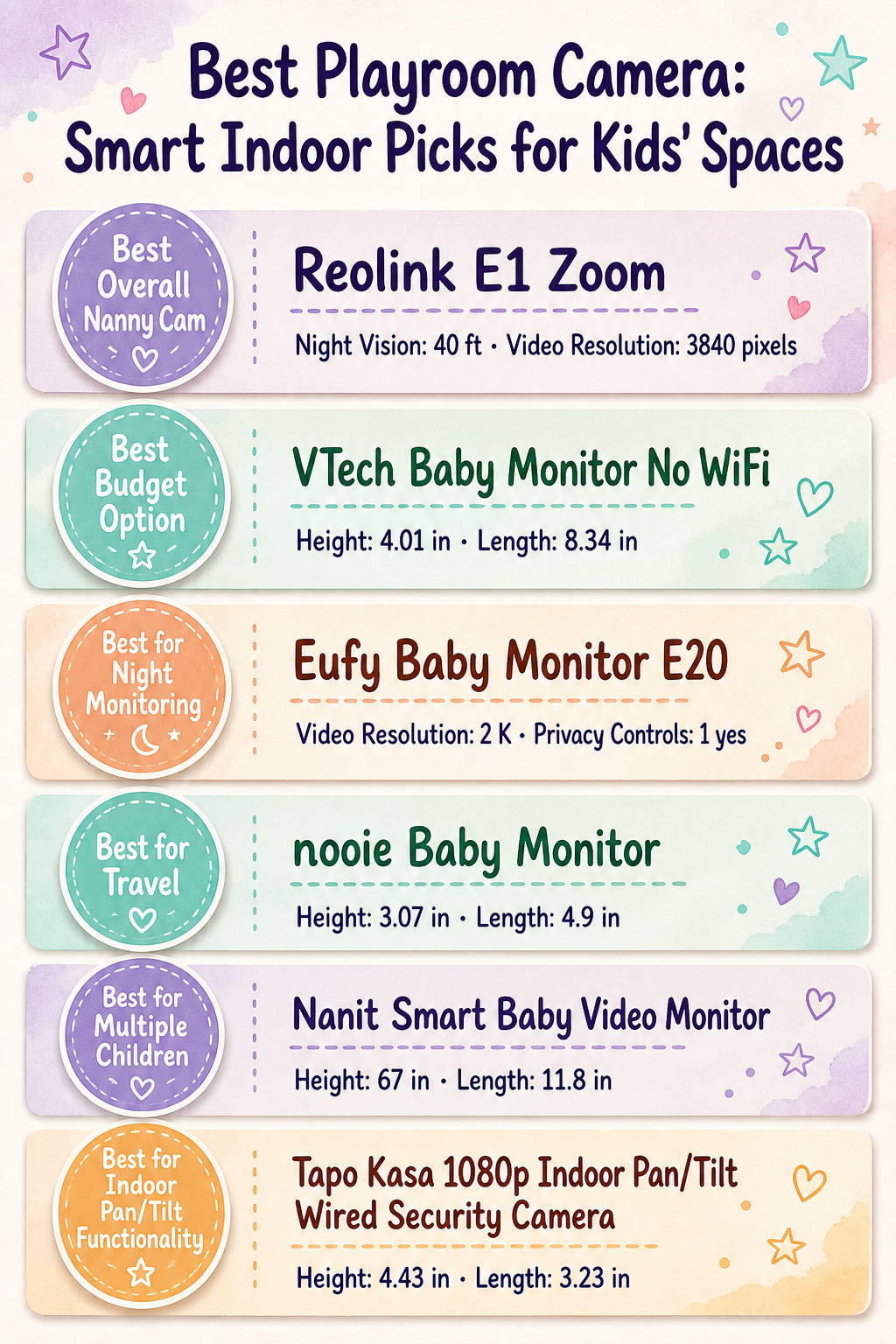
Identical footprints of the Kasa Smart and Tapo Kasa models highlight their shared mechanical design.
We spent more time than we expected sorting out where one camera ends and another begins, because a few of these share DNA under different labels.
The Kasa Smart and Tapo Kasa pan/tilt units, for instance, sit on identical 3.23 by 4.43 inch footprints and run the same mechanical head. Where they split is the backend.
Kasa Smart talks to Alexa and Google routines out of the box; Tapo Kasa stops at the app.
If your playroom already has a smart speaker wall-mounted for lullabies or timers, that integration saves you from fishing for your phone mid-tantrum.
If you run your house on switches and remotes anyway, the Tapo gives you the same sweep of the room for less.
Resolution is another place where numbers lie until you map them to your wall. The Reolink E1 Zoom pushes 3840 pixels, which sounds like overkill for a room where the main subject is ten feet away and often moving fast.
What convinced us, reading through a dozen owner reports, is that the extra headroom matters when you zoom.
The Lorex 2K and aosu 2K both land at 2560, sharp enough to catch which block your toddler is chewing on, but digital zoom on those starts to smear around the edges where the Reolink stays clean.
The tradeoff is storage appetite. That 512 GB ceiling on the Reolink is not bragging room; at full resolution you will chew through it.
The Eufy E20 keeps 2K in a tighter package with privacy controls baked in, which owners mention when they want the clarity without feeling like they are running a broadcast studio.
Night vision range splits the field in a way that only matters for certain rooms. Reolink’s 40 feet is double what most playrooms are long; Lorex confirms it has the feature but not the distance.
In a converted basement or a long rectangular bonus room, that reach keeps the far corner from falling into shadow. In a standard 12 by 12 bedroom turned play space, both look the same at 2 AM.
The Nanit’s 67 inch height towers over everything else here because it is built to floor-stand over a crib and later adapt to a playpen view.
That vertical real estate is wasted if you planned to shelf-mount in a toy nook.
The nooie, at a third of a pound and under five inches in every direction, fits in a carry-on side pocket and sets up in a new room in minutes.
Owners who split weekends between houses call that the deciding factor, even though the picture quality steps down from the mid-tier options.
Two-way audio shows up as a checkmark on most of these, but implementation varies.
The Lorex and Eufy both have it; owners describe the Eufy’s latency as tight enough to shush a child before they fully wake, while the Lorex carries a slight lag that works fine for announcements but not for real-time back-and-forth.
The VTech drops WiFi entirely, which means no app, no cloud, and no speakerphone function. For parents who want the camera off the network, that is the point.
For anyone who checks in from the office, it is a wall.
Weight only matters if you are mounting. The aosu at 0.74 lb and the nooie at 0.57 lb both stick to a magnetic base or a sticky back without drama.
The Kasa units at a pound-plus need a proper screw into stud or drywall anchor; owners who tried adhesive report it sagging by month two.
Frequently Asked Questions
What video quality should we look for in a playroom camera?
Most indoor cameras for kids’ spaces now record in 1080p, which is clear enough to see what is happening across a room.
Some newer models offer higher resolution, but 1080p handles the typical playroom distance without eating through your storage or bandwidth. We would not go below that for a space where you actually want to see details.
Does two-way audio matter for a playroom camera?
It matters more than people expect at first. You can call a child over for dinner without yelling up the stairs, or talk them through a minor frustration when you are in another room.
The speaker quality varies; owner reports say some sound tinny or pick up echo, so we read recent reviews for that specific complaint before choosing.
Do these cameras require a subscription?
Basic live viewing usually costs nothing extra. The subscription question comes up for cloud storage, longer clip history, and smart alerts like person detection versus every motion blip.
Some brands lock their best features behind monthly plans; others give you more upfront. We factor this into the total cost picture, not just the hardware price.
How well does night vision work in a dark playroom?
Most indoor cameras switch to infrared automatically and show a usable grayscale image in total darkness. The catch is range; a camera rated for 20 feet might cover a small playroom corner to corner, but a large finished basement needs more.
We also notice that some models wash out details when a night-light sits nearby, so placement takes a little thought.
What range should a playroom camera cover?
Range means two different things: how far the lens sees clearly, and how wide the field of view is. A 110-degree angle covers most rectangular rooms from one corner; 130 degrees or more lets you mount centrally and see both sides.
For distance, a camera placed 15 feet from the play area is standard; beyond that, you want to check whether faces stay recognizable in the footage owners share.
Can we connect a playroom camera to our phones?
Yes, smartphone connection is standard now through Wi-Fi and a brand’s app. Some also link to Alexa, Google Home, or Apple HomeKit for voice checks or automated routines.
We have seen owner complaints about apps that lag or drain battery, so we check recent app store reviews alongside the camera specs.
What are the storage options for recorded footage?
You usually get three paths: free cloud clips with short retention, paid cloud plans with longer history, or local storage through a microSD card slot or a connected hub.
Local storage keeps your footage off the internet, but the card can fill up or fail. Cloud storage adds that subscription question back in.
Some cameras offer both, which we prefer for the backup.