These thirteen ideas run from a toy basket you finish in an afternoon to an indoor climbing apparatus that needs lag bolts into studs and a call to your insurer.
What picks one over another is whether your space is rented or owned, since installing a climbing wall or hanging ceiling bars carries weight a 3M strip cannot take.
[link-whisper-related-posts]1. Utilize Vertical Storage
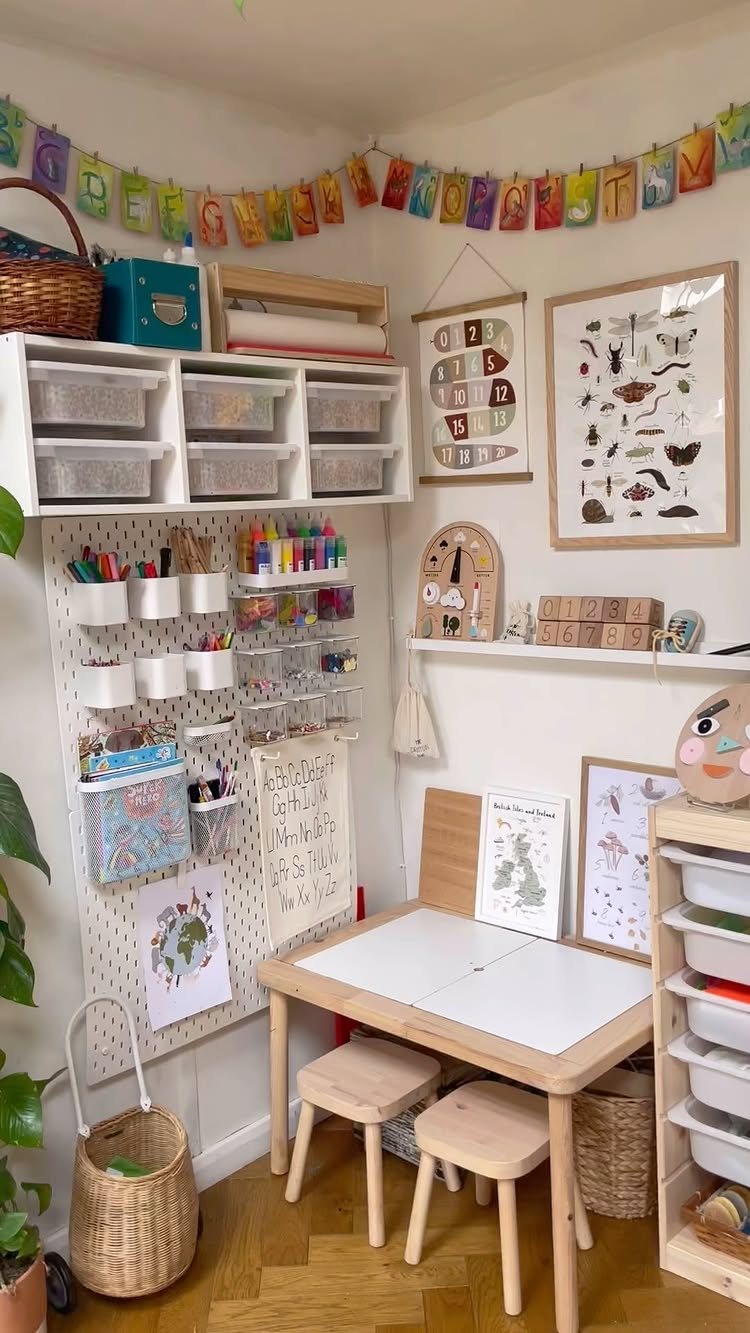
Walls do the heavy lifting when floor space is scarce. Floating shelves, pegboards, and wall-mounted bins keep toys off the ground and within reach for small hands.
A pegboard over a play table turns art supplies into a visible, grab-and-go system; hooks at kid height hang dress-up clothes or bags of blocks. We like this setup because cleanup means lifting, not spreading out.
Walls need anchors that hold real weight, especially in rental units with drywall rather than studs. Check your lease before drilling; 3M strips work for light bins but sag under books or wooden toys.
2. Reading Nooks
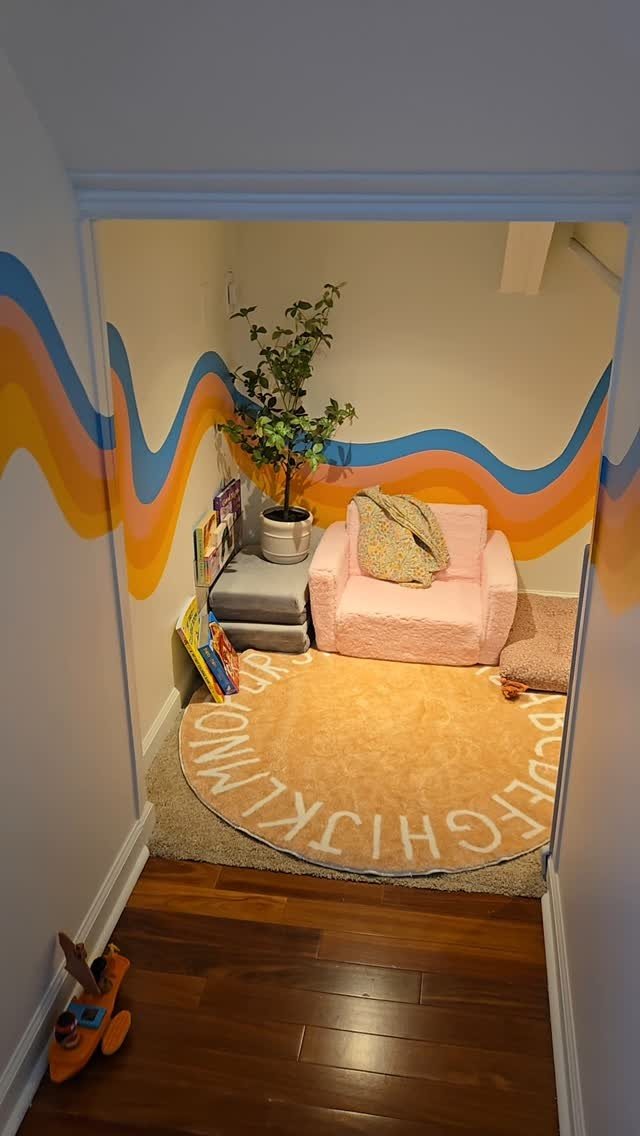
A reading nook needs only a corner and a low shelf to work. Bean bags or floor cushions make the spot inviting without demanding furniture that blocks walkways.
Wall-mounted shelves keep covers facing out, which draws younger kids in; baskets on the floor work better for toddlers who browse with their hands.
We set one up under a basement stairwell once, and the angled ceiling made it feel like a hideout rather than a storage afterthought. The cost stays low if you repurpose a closet or alcove you already have.
Skip the nook if your child tears books; board books survive baskets better than displayed spines.
3. Toy Baskets
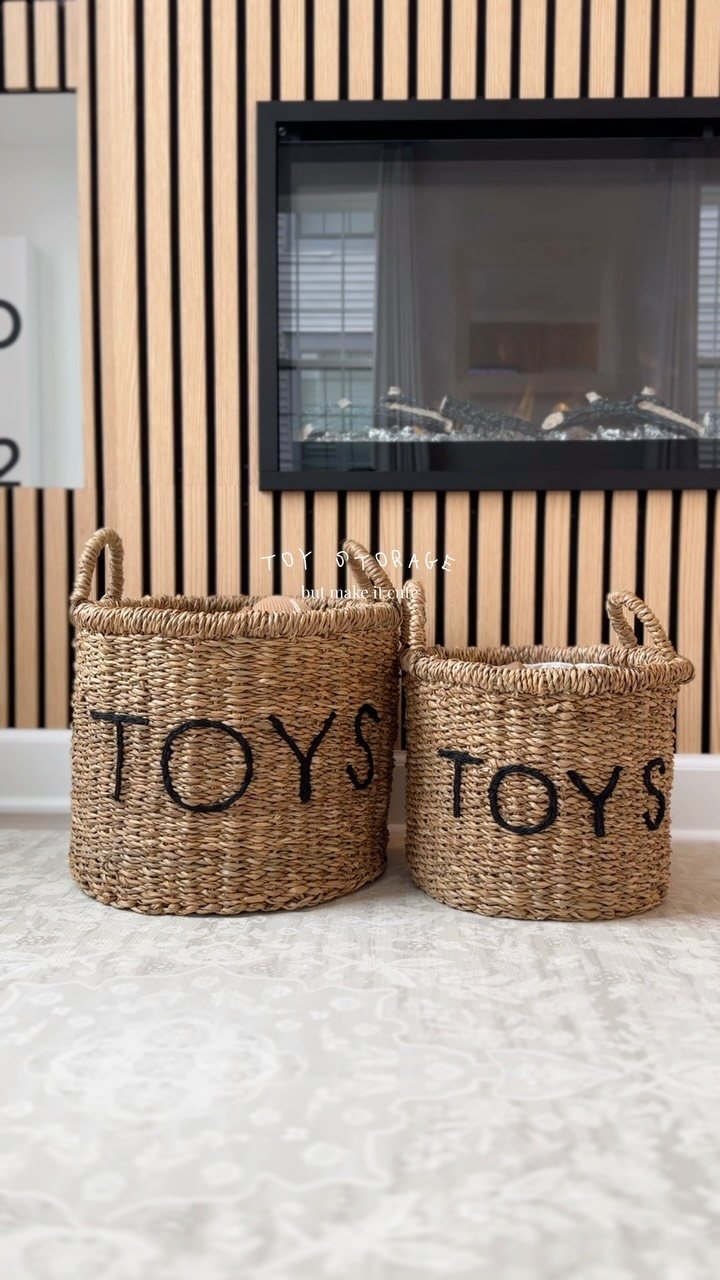
Seagrass or woven baskets turn toy piles into something you do not have to hide when guests come.
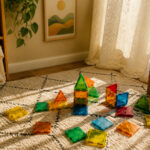
Labels help, but we have found that themed sorting matters more: one basket for puzzles with their pieces bagged inside, another for magnetic tiles, a third for soft toys.
Lidded baskets on a console table keep small-space living workable; open floor baskets invite kids to dump and dig. Baskets look tidy only while the lid fits.
Once a category outgrows its container, the system breaks down fast. Size up from what you think you need, or plan to rotate toys in and out of a closet.
4. Indoor Climbing Apparatus

A climbing wall or monkey bars in the basement or a spare room burn energy that would otherwise ricochet off furniture.
We have seen Pikler triangles work well for toddlers because they fold flat; mounted walls and ceiling bars need more commitment and ceiling height.
The hardware matters more than the holds: lag bolts into studs, not drywall anchors, and a crash pad or layered cushions below. This idea suits active kids in houses with unfinished lower levels.
Renters should skip the permanent install and look for foldable gyms instead. Check that your homeowner’s policy has no exclusions for indoor climbing equipment before you bolt anything.
From indoor climbing walls to craft stations and rainbow-themed rooms, the following playroom ideas will help you tap into your inner child while giving your own kids the ultimate fun space at home.
5. Dress-Up Nook

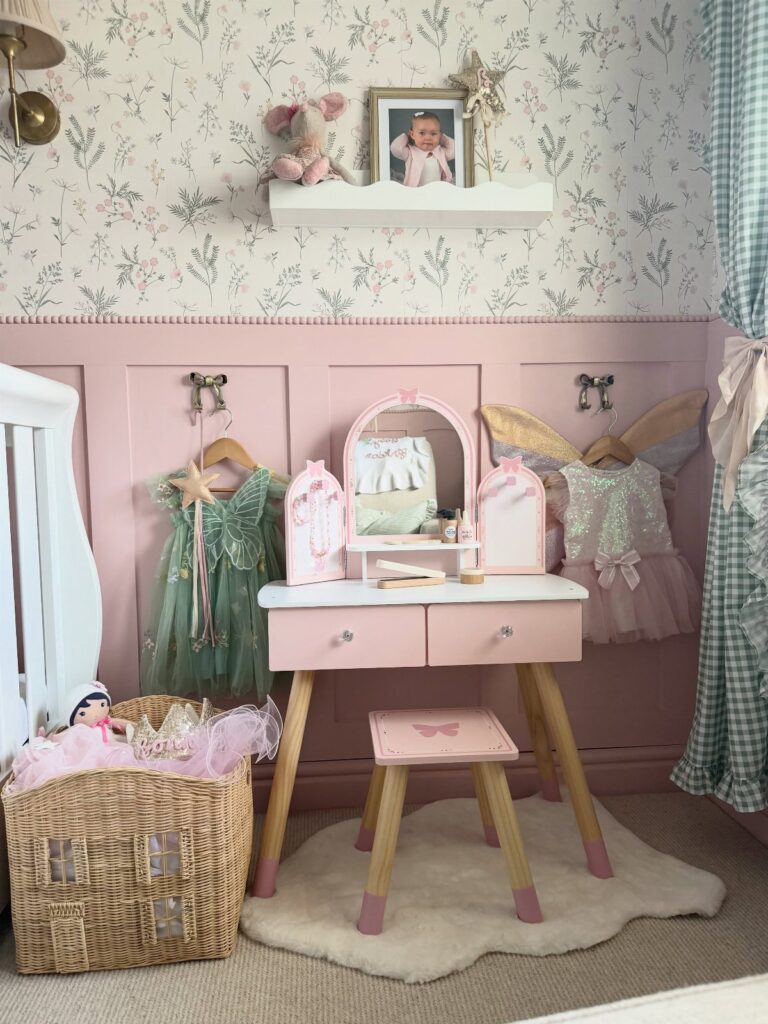
Costumes scattered across a bedroom floor kill the magic fast. A wall rack keeps capes and fairy dresses visible and off the ground; a single bin works for kids who would never hang anything back up.
We have seen vanity tables paired with racks turn a corner into a full dress-up station, but a closet rod at kid height does the same job with less footprint.
Store everything together: crowns, props, and shoes in one zone so play starts and ends in the same spot. This idea shines for ages three to six, when dress-up peaks.
Older kids tend to abandon it for screens unless you add a mirror and performance space.
6. Playroom Rugs and Play Mats

Floor covering in a playroom takes abuse that living room rugs never see. Indoor-outdoor rugs clean with a hose and survive marker, juice, and the occasional potty-training miss.
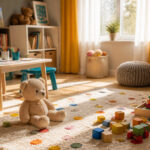
For babies on hardwood or tile, a wipe-clean play mat cushions falls and contains spit-up. We switched to a textured area rug once our youngest stopped mouthing everything; it warmed the room without looking like a daycare.
The shift happens once a kid stops mouthing everything on the floor, though that timeline varies. Patterned rugs hide stains better than solids, and low pile vacuums easier than shag.
Avoid anything with a rubber backing if you have radiant heat; it degrades and sticks.
7. Use of Color
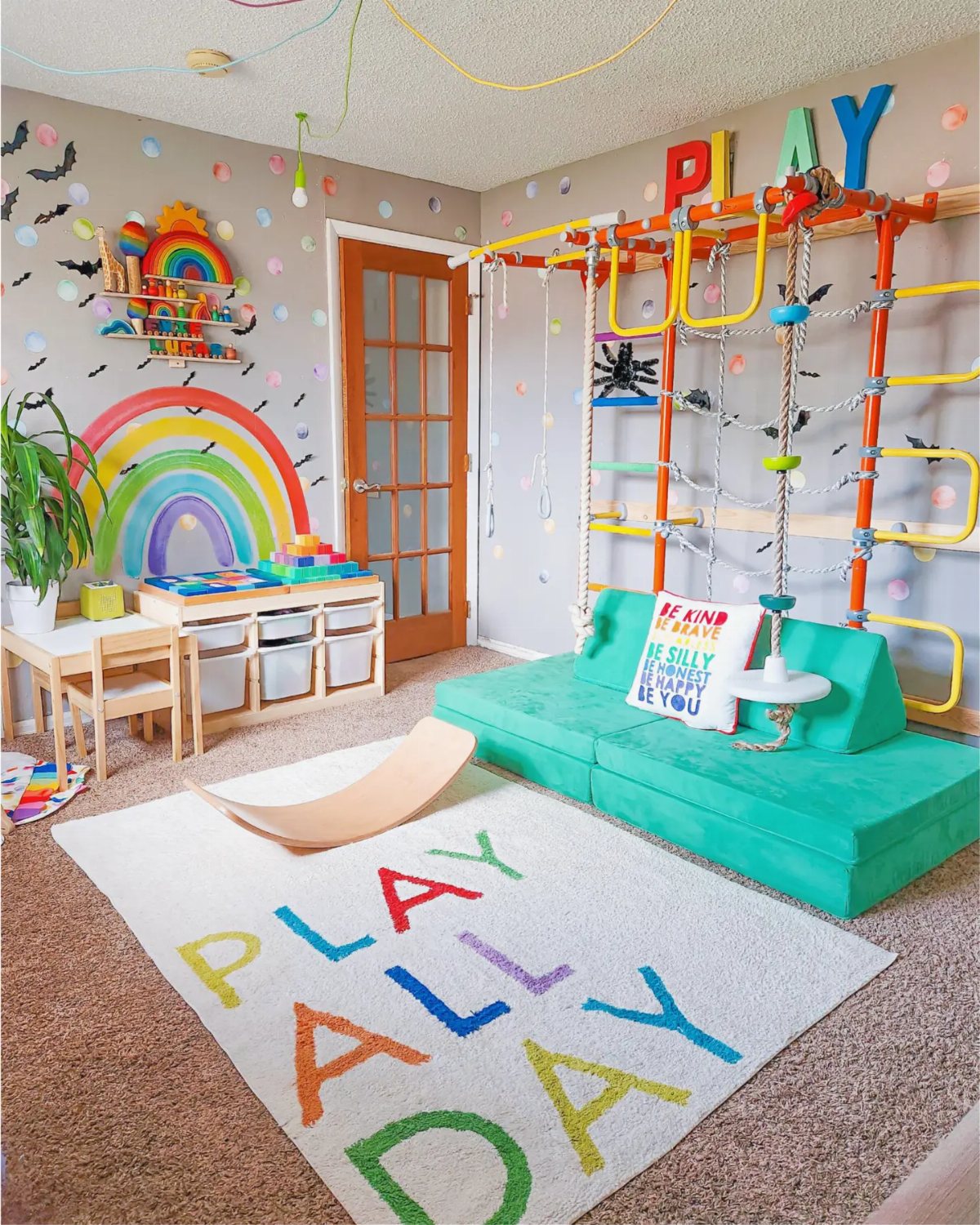
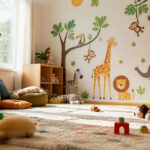
A painted rainbow across one wall turns even a cramped corner into a place kids want to be.
We like this because it needs no floor space at all; the color lives on the wall, not in toys you trip over.
Start with a mostly neutral room, white or soft gray, then add one big moment of color: a mural, a decal, or a single bright piece like that teal sofa.
The neutral base keeps the room from feeling like a circus when toys scatter everywhere.
This works best if your kid is the type who notices walls, not just floors. If they ignore everything above knee height, put the money into a rug instead.
8. DIY Magnetic Wall

A magnetic wall is a board that holds toys, not a toy that needs storage. Mount a steel sheet, paint it to match your wall, and kids stick shapes, letters, or their own art up with magnets.
Check that your paint is magnetic-receptive; standard latex won’t hold. We sized ours to fit between a door frame and a corner, dead space that does nothing else.
You put in the work once, then you do not pick up magnets for years. A child who still mouths small pieces needs larger magnetic blocks; wait on this if yours is under three.
9. Soft Modular Furniture

Foam blocks that stack into forts, sofas, or ramps keep a room from locking into one layout. One afternoon they are a tent, the next a landing pad off the climbing arch.
Corduroy covers read as furniture, not daycare; pick a tight palette, gray or tan, and the pile looks intentional even mid-build.
These pieces cost more than a single-purpose chair. Buy them if your kids are between two and six, the age when fort-building peaks.
After that, the same money goes further into a fixed desk and chair.
Creating a Cozy Atmosphere
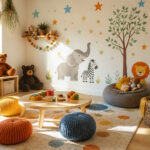
Soft textures do more than look nice; they change how long a child stays in a space. Boucle cushions or a plush ottoman give them somewhere to land that does not feel like the rest of the house.
We like low-profile speakers with a calm playlist running behind the play, not loud enough to compete with their noise, just enough to settle the room.
Gentle lighting matters in tight quarters. A lamp aimed at the ceiling bounces light down without the harshness of an overhead fixture.
Child-height mirrors let kids check their own costumes or faces without asking you.
Keep the color balanced, not busy. One soft wall behind active toys keeps the eye from tiring out.
If the room already has a bright rug or mural, let the textiles stay neutral so the space does not stack stimulation on top of stimulation.
Encouraging Independent Play
Kids stay at play longer when they can still see you. Set the play area within sight of where you already sit: the kitchen counter, the sofa, the desk in a corner.
They will wander over less often if the check-in is just a glance, not a trip down the hall.
Open-ended toys help, the kind that end differently each time. Blocks, dress-up, art supplies.
Same start, different finish. We have watched kids cycle through the same basket for an hour when the outcome is not fixed.
Build play into the day at the same time, same spot. After breakfast works for a lot of families.
The predictability trains them to start without a prompt.
Notice what they are doing, not just the result. A comment on the stack, the color choice, the tower that fell and rose again.
That attention is what keeps them going back.
Budget-Friendly Solutions
A play couch that flips into a fort or a climbing frame earns its square footage twice over.
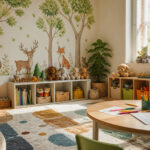
A low bookshelf works as a soft divider between the play zone and the living area; it holds toys on one side and faces upholstery on the other.
Mobile storage on casters rolls behind the sofa when guests come, then back out by morning. Baskets with handles move the same way.
Invest in pieces that work after the toy phase. A sturdy table at kid height becomes a homework desk later.
A bench with storage under the lid holds mittens and backpacks once the blocks are gone. We would rather spend once on a simple wood piece than twice replacing plastic that sags or cracks.
Safety Considerations
Every piece that stands on its own needs a wall strap or anchor, bookcases especially. A child climbing for a top-shelf toy can tip a unit faster than you would think.
Straps that screw to the back rail and then to a stud are the right call here; 3M strips do not hold.
Check corners on anything at kid height. A round edge on a coffee table or play table costs no extra and saves the urgent care visit.
Foam corners help on pieces you already own, though they peel and need replacing.
For climbing equipment, lag bolts into studs are the only hardware we trust. Drywall anchors pull out under body weight.
A crash pad below needs real thickness, not a folded blanket. Layer two crib mattresses or buy a gym-quality mat.
Radiant heat changes what works underfoot. Rubber-backed rugs degrade and stick to the floor over time.
Check your system before you lay anything down.
Frequently Asked Questions
What are some ideas for a small play area for kids in my home?
Baskets and a play mat are enough to start. A corner in the family room works fine if toys have a dedicated spot and a soft surface for young kids.
We like wall-mounted storage because it keeps the floor clear for actual play.
What should a playroom include?
Designated zones for different kinds of play, storage that fits the toy type, and a spot where an adult can sit. The one piece of furniture our kids actually fight over is a low table for drawing and building.
We keep art supplies at one end and puzzles at the other so cleanup has a clear path.