Totter + Tumble wins because the double-sided print flips when the nursery becomes a playroom, stretching one purchase across years.
Parents who need one fixed design or cannot wait ten days for swatches to arrive should buy a single-sided mat off the shelf instead; the waiting and the flip are the same feature.
[link-whisper-related-posts]1. Best for Growing Into
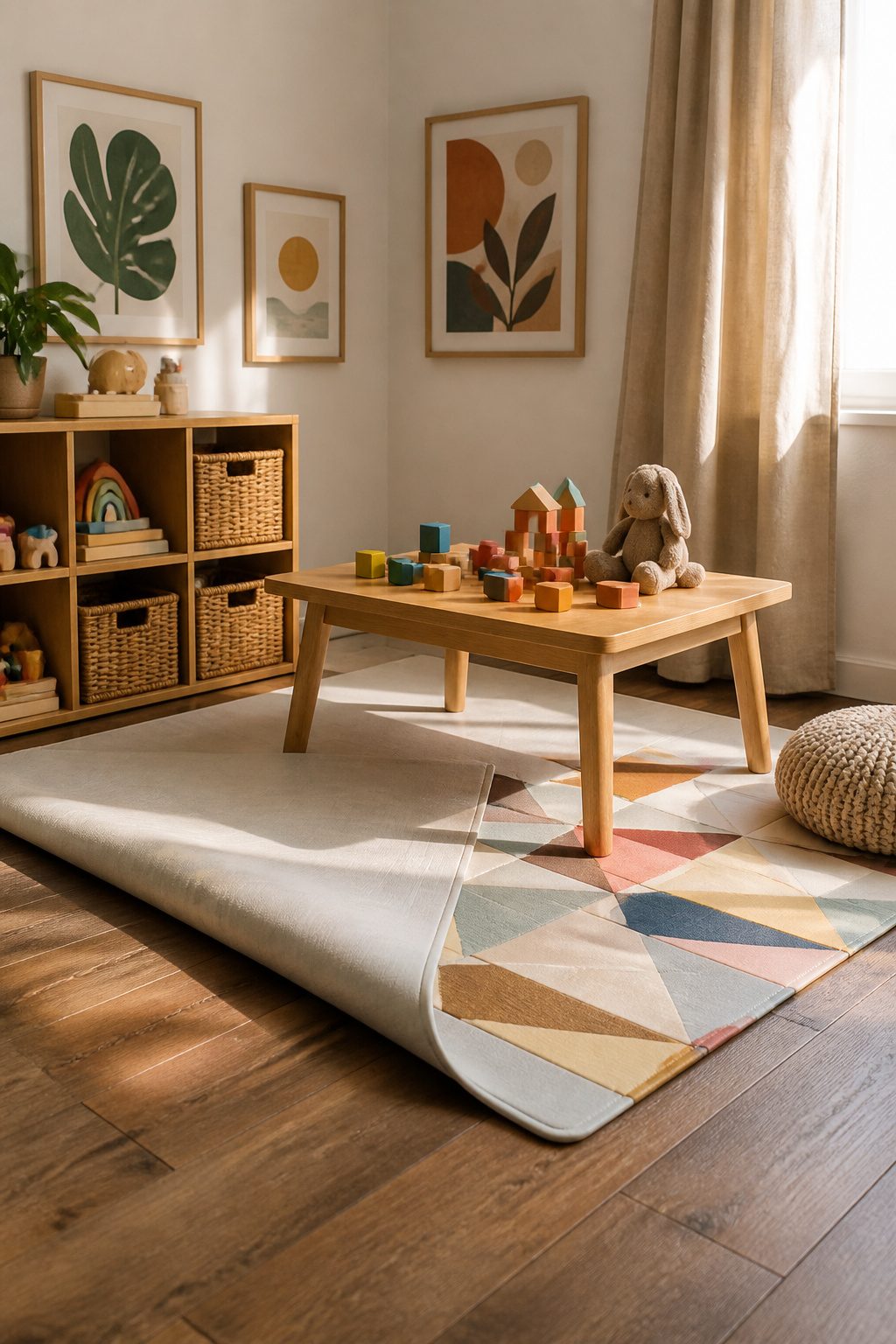
Totter + Tumble makes double-sided mats that flip between two prints, which is how we got years out of one purchase instead of replacing it when the nursery became a playroom.
They run the Atlas in two colors, the Brecon in six sizes, the Pimpernel Mineral Blue in five, and the Solstice in two sizes, so you can match a corner or cover most of a finished basement.
What sold us was the swatch service: you can order actual samples before committing, since the prints read differently in your light than they do on a screen.
Anyone who needs one fixed design or cannot wait on samples should skip this route and buy a single-sided mat off the shelf.
We waited about ten days for ours, laid them out in the actual room, and picked the side we wanted facing up first.

Support for 24 Square Feet: Set of 6 black foam exercise tiles, each measuring 24 by 24 inches, features interlocking edges and includes 12 end borders, offering durable support for 24 square feet in your home, gym, or daycare

SOFT & SAFE BABY PLAY MAT AREA – Give your little one a safe and comfortable space to explore with these colourful baby play mats for the floor. Made from soft XPE foam, this tile play mat helps reduce the impact of falls and tumbles, offering peace of mind during playtime.
2. Best for Looking Like Real Flooring
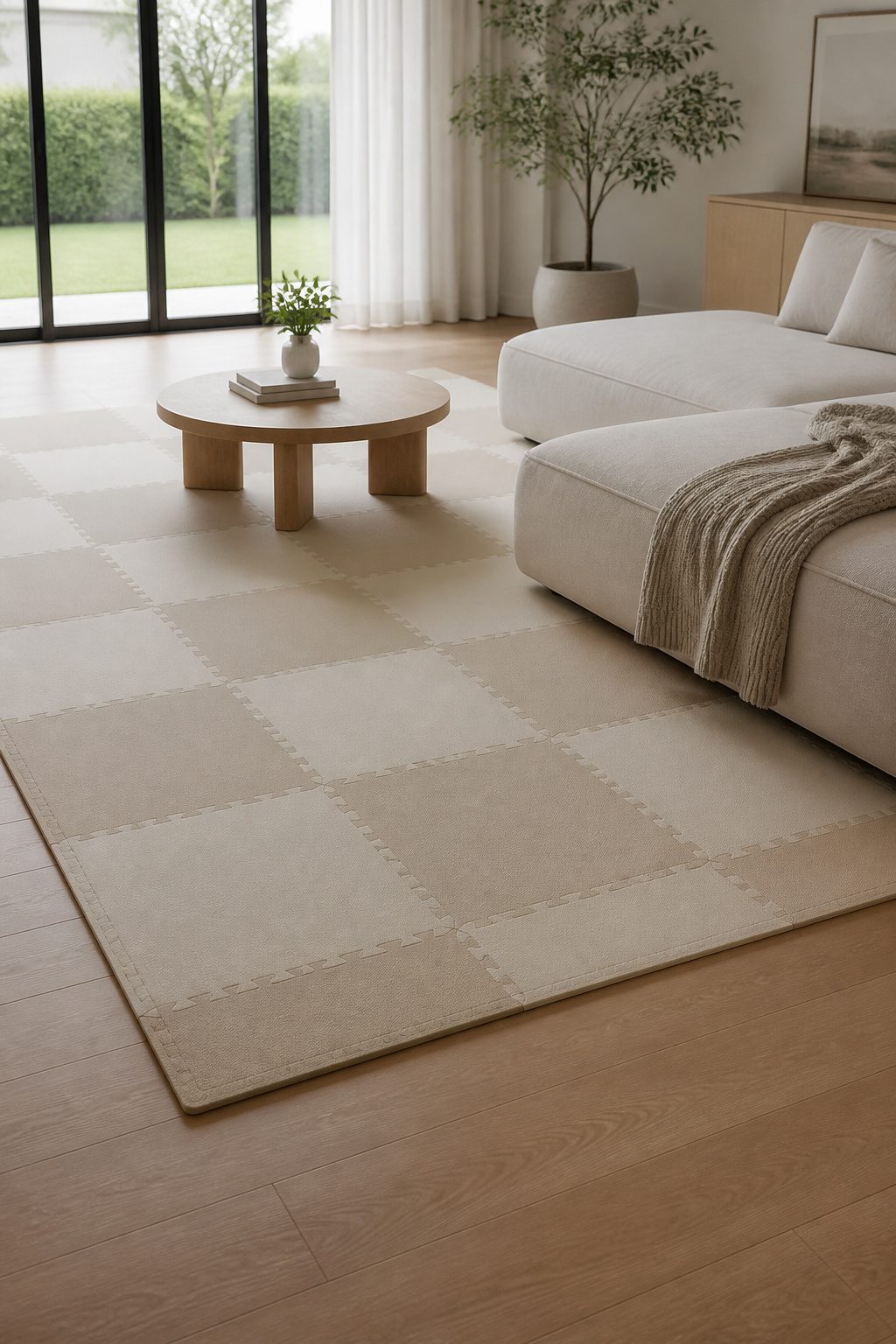
House of Noa’s Little Nomad line is built for parents who do not want their living room to read as a daycare.
The tiles lock together in a jigsaw pattern, but the patterns themselves, Emile and Aspen among them, are muted enough that the seams fade at a glance.
You buy the square footage you need, snapping together a 6-by-8 corner or a full 10-by-12 wall-to-wall run without ordering a custom cut.
The look works best in rectangular rooms where the edges land under baseboards or furniture.
In an L-shaped nook or a space with a bay window, the tile grid breaks rhythm and the eye catches every seam. For those layouts, a one-piece roll mat or a cut-to-fit rug wins.
The high-quality designs look like one piece when put together.
That single-piece illusion is what carries the mat past the baby stage.
At two or three years old, the child stops noticing the pattern entirely, but the parent still lives with it daily. A floor that looks intentional, not temporary, stays down longer without embarrassment.

12pcs Package Contains: 6 for each color, and 12 floor mats for two colors in total. If you need more quantities, please buy them superimposed.
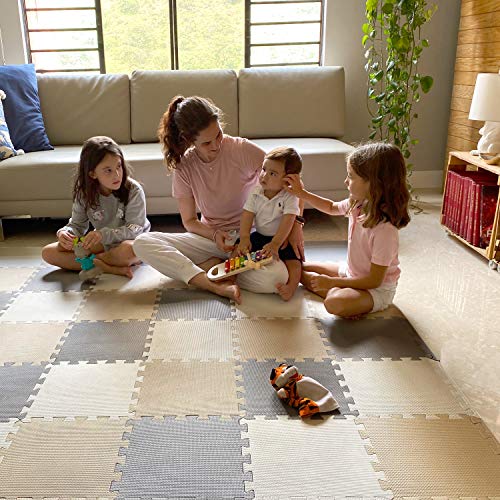
🤗 DESIGNED FOR BABIES & KIDS – SAFE PUZZLE PLAY MAT & CRAWLING FLOOR TILES: MioTetto baby play mat creates an ANTI-SLIP & COMFORTABLE, soft, non-toxic space for play, learning, and development. This Puzzle Mat is perfect as a Tummy Time Mat for crawling, and active play while protecting little ones from hard floors.

PROTECTIVE, PORTABLE FLOORING: Dense tiles provide cushioning for workout spaces; surface compression may occur with heavy equipment
3. Best for Moving Around
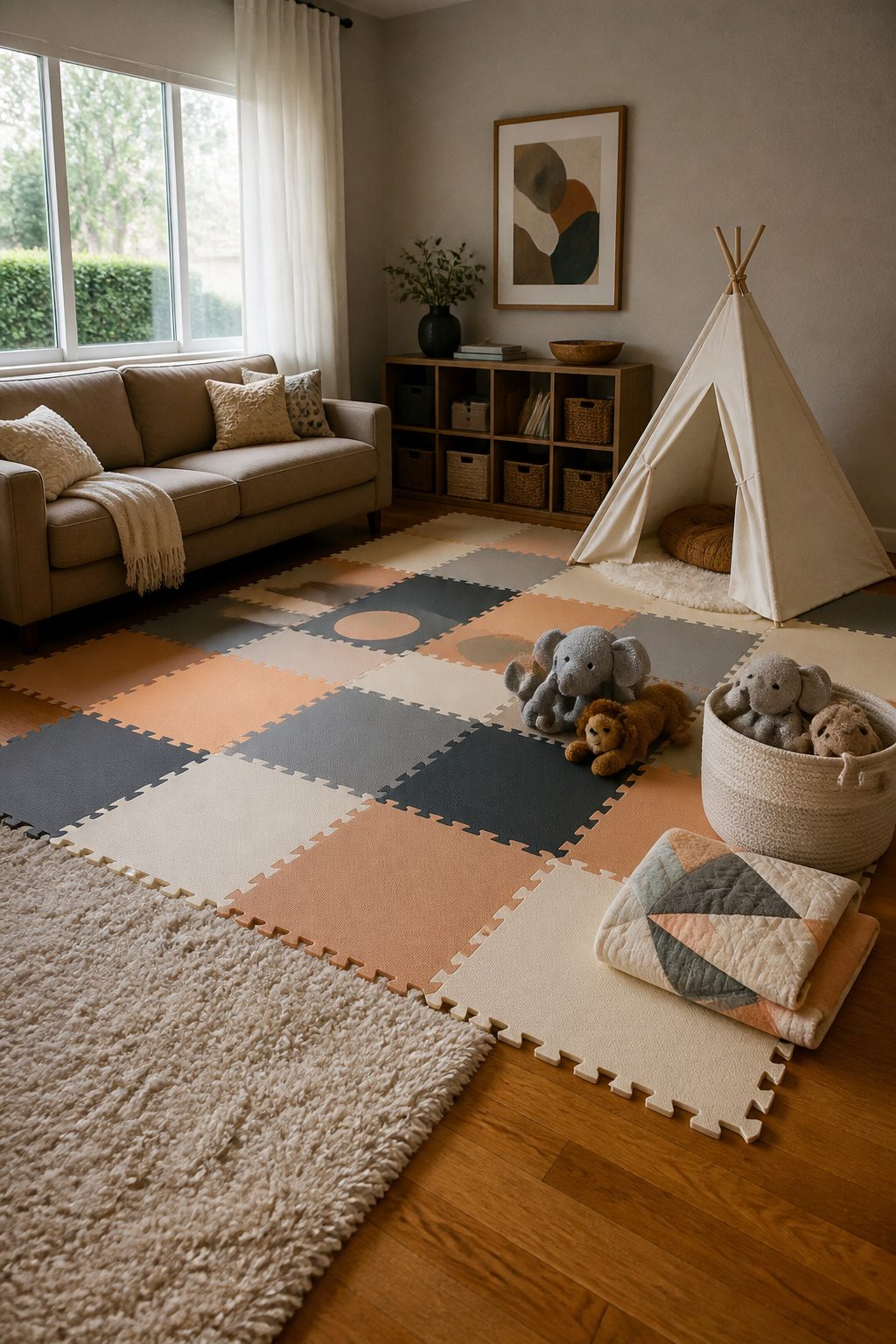
Toddlekind gives you two ways to set this up. Their foam mats come as jigsaw pieces you can pull apart and reconfigure, or as one reversible piece if you want a cleaner surface without the seams.
Four sizes run across both styles, so you are not forcing a 6-by-6 grid into a narrow corner or paying for more than a closet needs.
They also make a cotton travel mat that most roundups skip entirely. It folds down small enough to toss in the car for a weekend at the grandparents, which is the point where a lot of foam systems fail you.
The catch is built into the design.
Every one of these is meant to move, lift, or travel. If you are after one permanent surface that stays down for years and never gets packed up, this is the wrong line.
The jigsaw edges will eventually work loose under daily foot traffic, and the cotton mat is too thin to live on full-time.
We would skip Toddlekind for a finished basement play area and aim it instead at renters who know they are rearranging again in six months, or anyone who needs the same floor to work Tuesday in the living room and Saturday at the park.

Extra-Large 79"×118" Playpen Mat for Active Babies: Generously sized at 50"×74", this baby play mat provides ample space for toddlers, infants, and kids to crawl, play, and explore safely. Perfect for shared playdates or solo tummy time sessions.
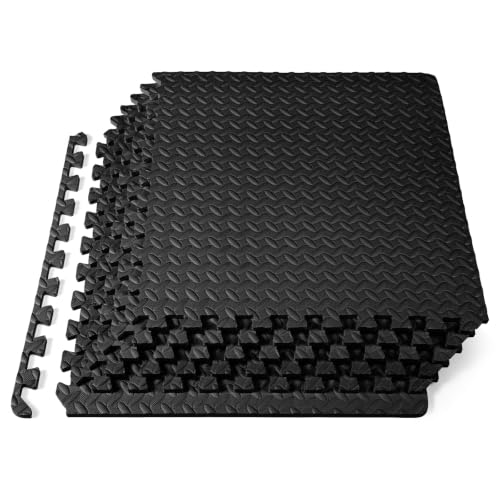
PROTECTIVE GYM FLOOR MAT: Durable, non-skid gym flooring for home gym that covers and protects your floor or carpet while creating a comfortable workout room or play mat

【1.3" Thick High-Density Elasti-Foam – 2X Softer Than Standard Mats】Designed for ultimate comfort, this playpen mat uses a 1.3-inch high-density elastic foam core that delivers 2X more cushioning than standard thin mats, providing plush, gentle support for tiny knees, elbows, and heads. It effectively protects infants and toddlers from hard floors during tummy time, playtime, and all active movement.
4. Best for Choosing Your Foam
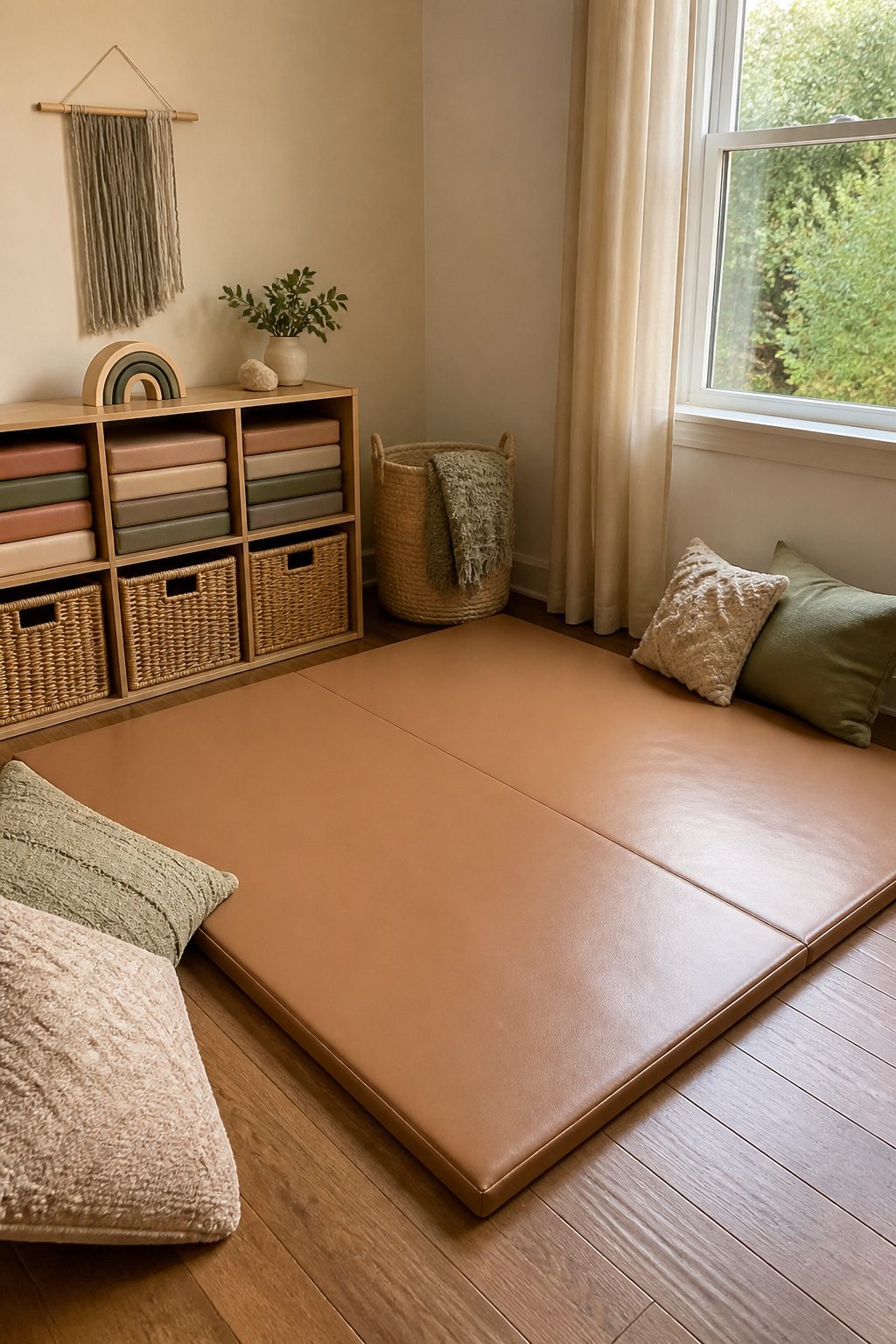
Toki Mats comes in standard or mega sizes, and that choice matters less than the one inside the cover. You pick between a classic foam insert and an organic one, and the gap in price is real.
We like the system because the cover and insert are separate: swap one out if it compresses, or if you decide the organic material was worth it after all.
The waterproof cover is sold extra, so budget for that if your kid is still in the spill-everything phase.
Skip this one if you already know you will not bother swapping inserts, or if the organic markup feels like a tax on parental guilt.
The mat works fine either way, but paying for options you ignore is how a playroom budget leaks.

💪 #𝟭 𝗣𝗥𝗢𝗧𝗘𝗖𝗧𝗜𝗩𝗘 𝗙𝗟𝗢𝗢𝗥 𝗠𝗔𝗧 𝗦𝗘𝗧 𝗪𝗜𝗧𝗛 𝟭𝟴 𝗣𝗨𝗭𝗭𝗟𝗘 𝗣𝗜𝗘𝗖𝗘𝗦 + EDGE PIECES FOR PERFECT FLOOR PROTECTION - protect your floor from scratches, knocks, dents, cold, noise, sweat and other fluids with probably the best and most secure protective floor mat available on the market. Completely BPA-free for your safety and well-being.

Complete Play Mat Set: Includes 36 foam puzzle floor tiles and border edges, covering up to 36 sq. ft. of soft, cushioned flooring that transforms any playroom, nursery, or exercise corner

High Density XPE Material: Our baby crawling play mat is made of BPA free XPE material. It is non-toxic and harmless, safe for baby crawling; and the material is soft and comfortable, which can protect the baby's delicate skin very well
What the Materials Actually Are
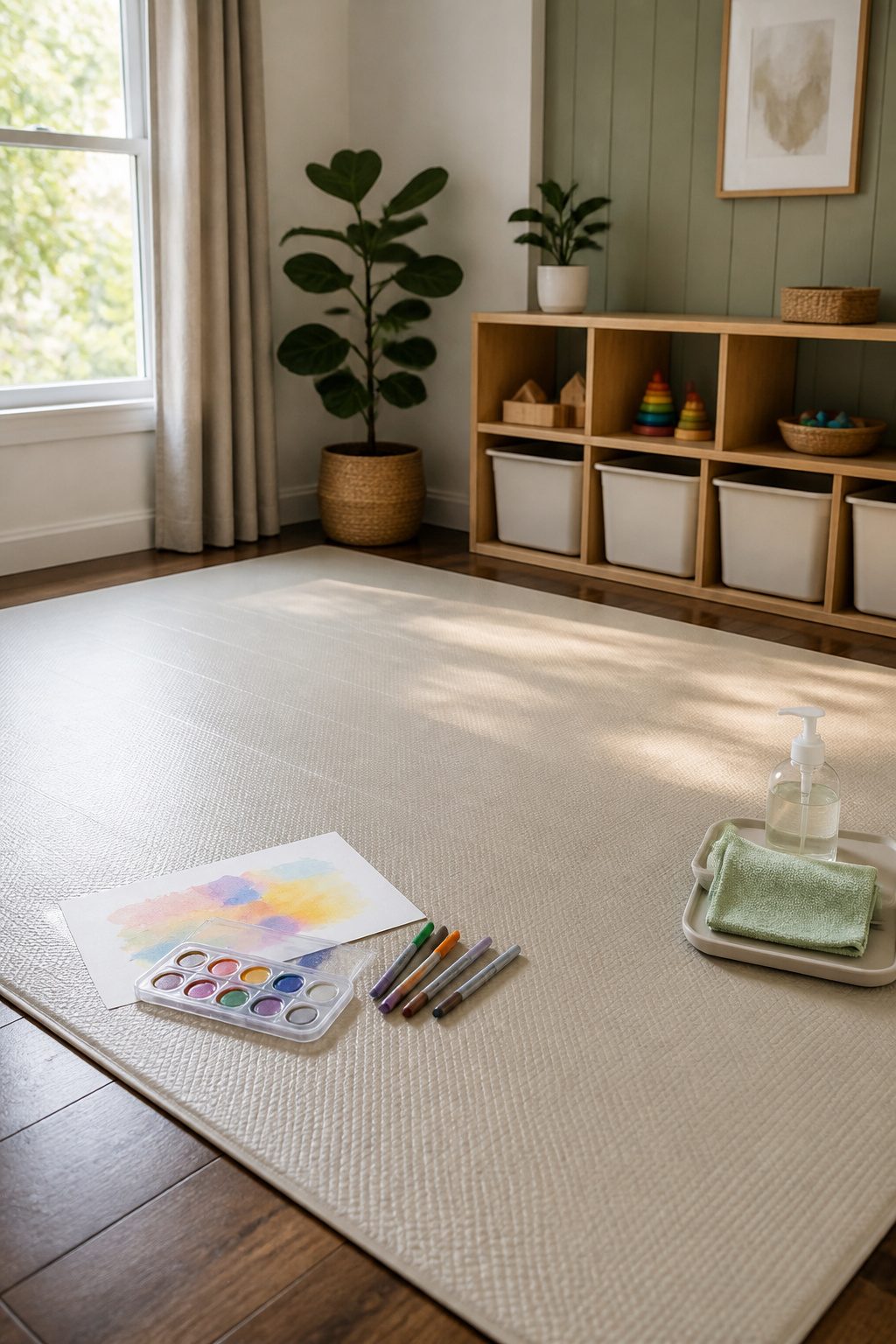
PVC memory foam sits at the center of most playroom mats we end up recommending, and for reasons that matter once you are past the baby-proofing phase.
The foam gives under a knee or a block tower, then springs back without the permanent dents you would expect from basic interlocking tiles.
What we look for is the non-toxic certification on the label, not the word "natural" in the marketing. Certifications mean the foam was tested for the phthalates and flame retardants that off-gas in a closed room.
Cleaning is where the material choice pays out.
A sealed PVC surface wipes down with a damp rag and mild soap; the foam underneath never soaks up juice or paint. We have seen mats that looked like fabric top layers, and they hold stains the way carpet does.
For a room that sees art projects and snack time past the toddler years, that wipeable skin matters more than the pattern printed on it.
Thickness is the tradeoff.
One inch of foam cushions a fall for a one-year-old. By age four, the same inch feels bouncy under a running kid but starts to shift under furniture legs.
We have found that denser foam, still in the PVC family, compresses less and lets you roll a storage bin across without catching a wheel.

Thicker, Softer, Safer - Baby's each phase is a new discovery and a shared joy. Our baby play mat for floor is 30% thicker than most other brands, made of premium padding foam and non-toxic fabric, it provides a softer, safer spot for babies learning to roll, crawl or walk. Each milestone is a cherished memory, enriching parenthood a blissful journey

1.3" Thicker Support: This baby play mat features a 1.3" thick high-density foam core which offers better impact absorption than many ordinary crawling mats. This creates a cushioning layer that is both soft and supportive. Whether your baby is rolling, crawling or taking their first wobbly steps, the playmat helps protect delicate knees and elbows from hard floors, making tummy time and active play safer and more comfortable.

✈️PERFECT SIZE FOR AIRPLANE TRAYS & TRAVEL - Measures 15x9 inches unfolded to fit standard airplane tray tables perfectly, then folds to ultra-compact 5x9 inches with snap-loop handle; lightweight design slips into diaper bags, backpacks, or carry-ons without adding bulk; ideal for flights, road trips, restaurants, waiting rooms, and anywhere you need instant quiet entertainment.
Sizing a Mat to Your Room
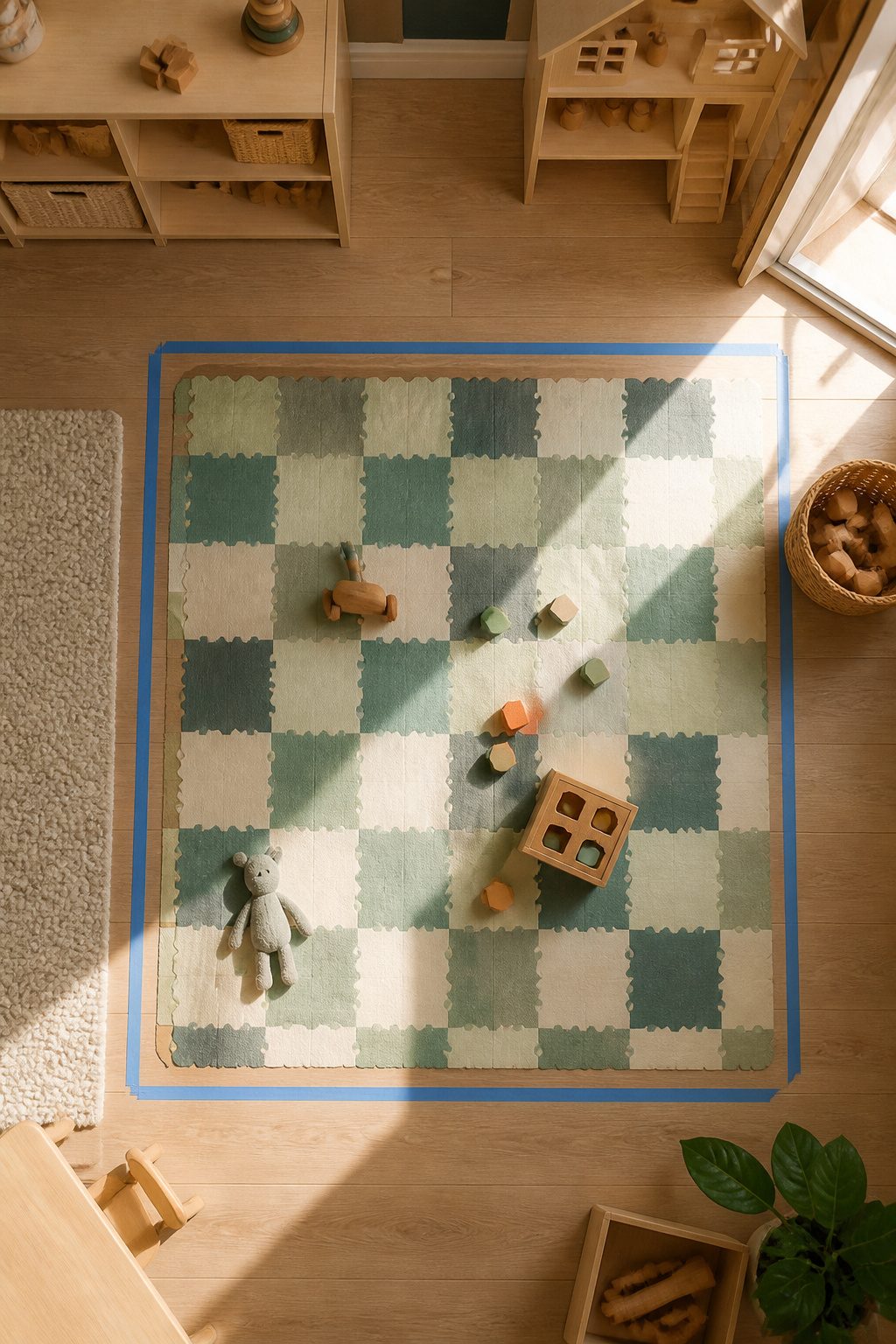
A mat that does not fit the room becomes a tripping hazard or a wasted corner. We start every playroom project with a tape measure and a roll of painter’s tape.
Lay out the footprint on the floor: rectangle, square, circle, or a long runner between two walls. Walk around it.
Open the door over it. That taped outline is your test before you spend anything.
Circular and runner mats exist for the spaces rectangles waste.
A circle seats two small kids at a center activity without crowding the walls. A runner protects a narrow galley between a couch and a bookshelf where a standard mat would overhang on both sides.
Brands build to different grids. Totter + Tumble offers the Brecon in six sizes and the Pimpernel Mineral Blue in five, so you can get close to your taped outline rather than cutting foam yourself.
The Solstice comes in only two sizes, which means you either plan the room around it or you look elsewhere.
No brand we found publishes exact fit formulas, and we would not trust one if they did: baseboards, heating vents, and door swings vary too much from house to house.
Tape the floor, pick the size that fills most of the usable space without blocking circulation, and accept a gap at the edges.

【SOFT TOUCH&THICK PLAYMAT】:Our nursery rug features high-quality, non-toxic 1.3-inch thick slow-rebound memory foam and is certified by OEKO-TEX fabric for added peace of mind. Made from non-shedding 100% coral velvet, it ensures a safe and worry-free play area for your little ones. The skin-friendly material provides a comfortable touch, while the non-slip design creates a secure space for play. This design also enhances longevity, maintains aesthetic appeal, and protects your floors, offering a comfortable stepping surface

ABOVE STANDARD SIZE – Covers a 6'x6' area when combining all 36 interlocking 12"x12" puzzle pieces

Complete Play Mat Set: Includes 36 foam puzzle floor tiles and border edges, covering up to 36 sq. ft. of soft, cushioned flooring that transforms any playroom, nursery, or exercise corner
When the Mat Outlasts the Playroom
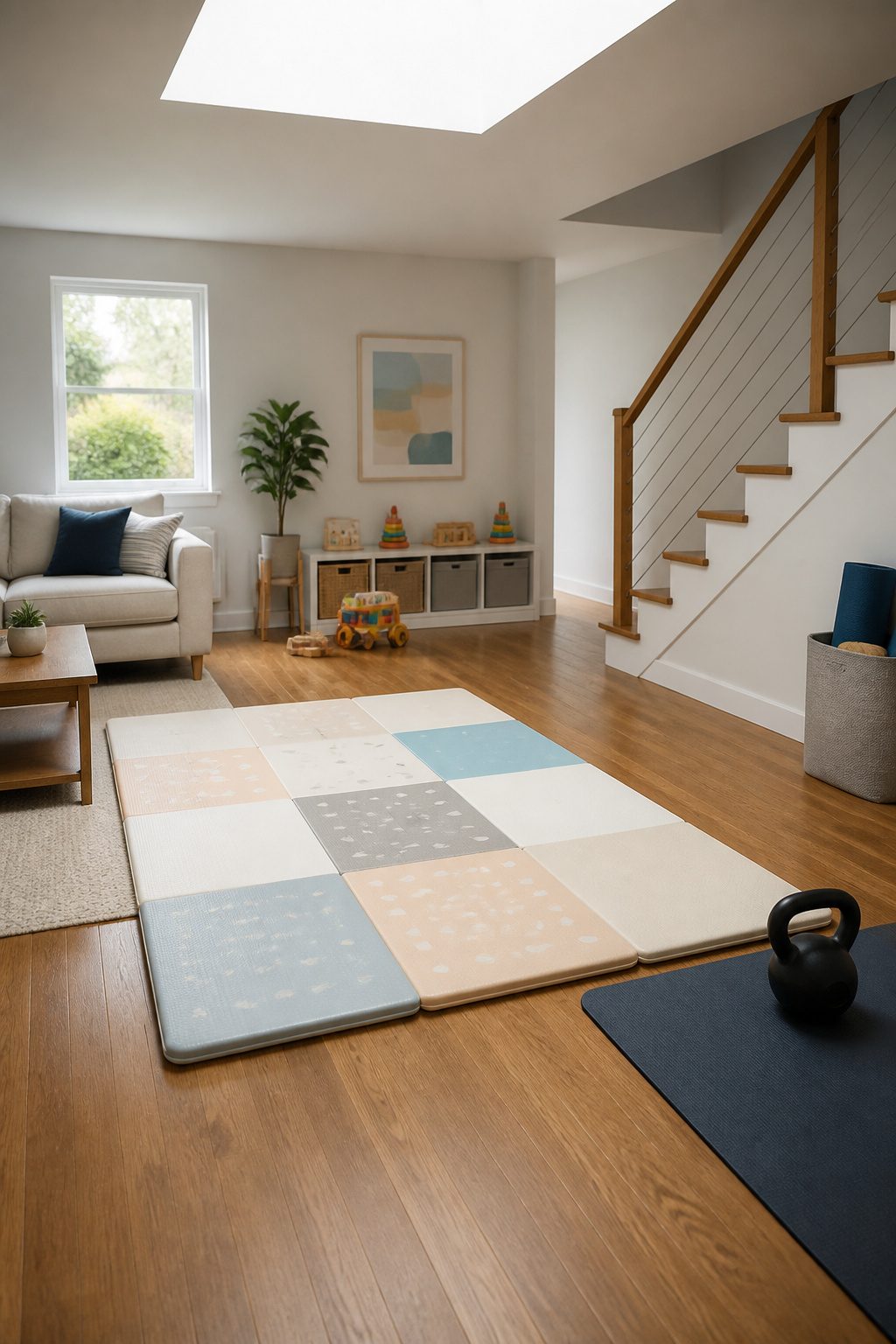
A mat that handles tummy time at four months and still earns its floor space at four years saves you from buying twice.
We have watched foam tiles go from infant support to fort foundations to yoga corners, and the ones that last share a single trait: density high enough that a crawling knee does not sink through, but low enough that a jumping kid gets some spring.
The same mat can anchor a play kitchen at two and a kettlebell at thirty-two if the surface wipes clean and the seams stay flat.
The catch is the buyer who needs only three months of cushioned flooring for a newborn.
For that window, a thin folding pad works fine and stores in a closet afterward. Spending more for a mat that outlives the phase only pays off if you have a plan for the second life.
We have kept ours in rotation because the interlocking edges let us shrink the footprint from a six-by-six play zone to a two-foot strip under a desk, then expand again when a niece visits.
If your future holds no workout space, no craft corner, no occasional guest sleeping on the floor, skip the investment and borrow a hand-me-down.
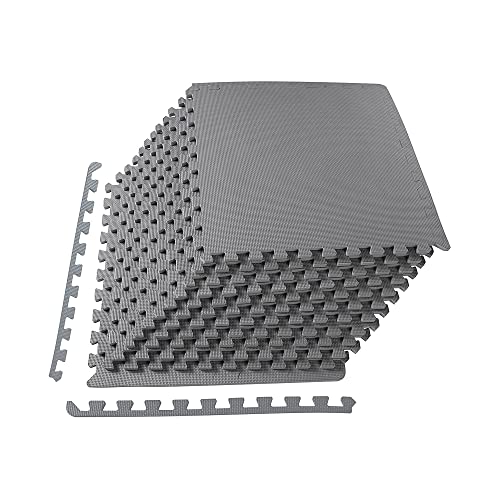
Quality foam: High-density EVA foam provides excellent support and cushion

12pcs Package Contains: 6 for each color, and 12 floor mats for two colors in total. If you need more quantities, please buy them superimposed.

DUAL-TEXTURE DESIGN: This mat features textured top surface and textured bottom layer; dual-texture EVA foam delivers balanced comfortable touch, suitable for barefoot or shoe use
Why Design Matters More Than It Should
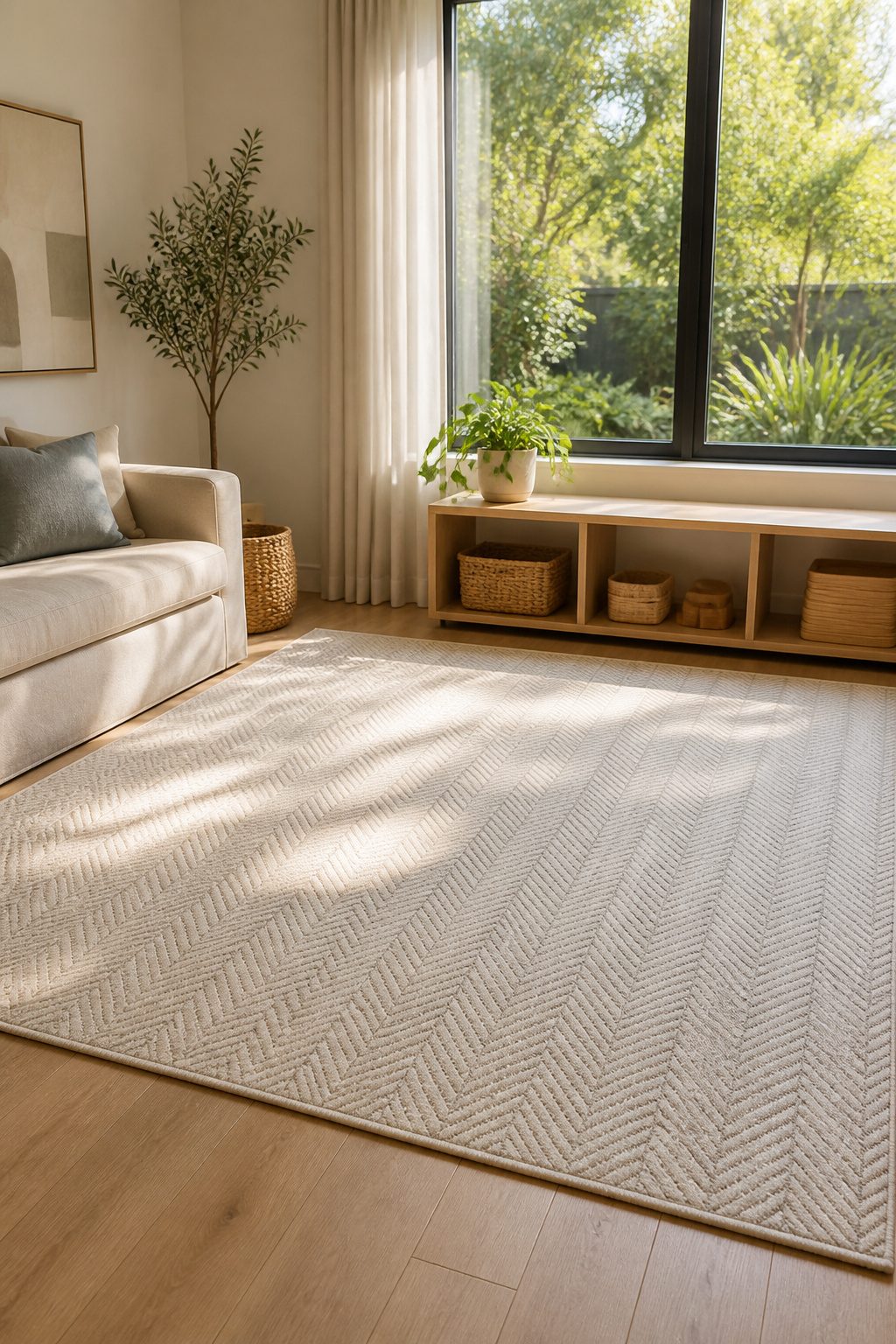
A few years ago we watched a playroom mat go from something you hid in a closet to something brands photographed in living rooms like area rugs.
The shift happened fast. Parents started asking why their entire downstairs had to look like a daycare, and manufacturers listened.
Now you can find mats in herringbone, muted terrazzo, and colors that read as "warm neutral" instead of "primary school."
We have mixed feelings about this. The mat that matches your sofa is usually $40–80 more than the one that doesn’t, and the markup is almost entirely for the surface pattern, not the foam underneath.
The real selling point is not that these mats look better. It is that they remove the friction of buying something you know you will resent.
We have talked to enough parents to know the decision often goes: "If I am spending this much and staring at it for three years, it should not make me wince."
That is a valid reason. It is just not the same reason as "better for the child."
Our take: pay for the blend-in look if the mat lives in a shared space you see daily.
If it is going in a dedicated playroom behind a door, buy the cheaper one and spend the difference on the next section’s flooring upgrade.
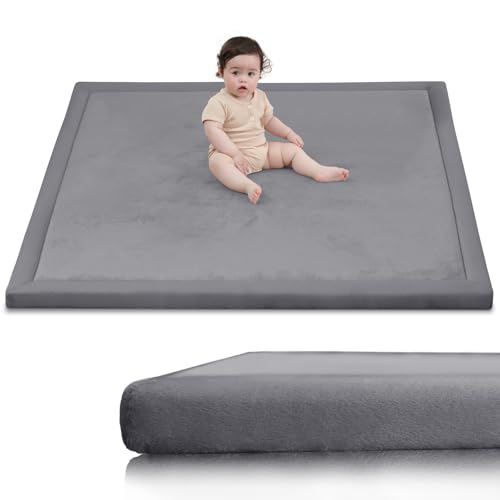
【Safe & Certified for Babies】Our baby play mat is designed with safety as the top priority. Certified by OEKO-TEX fabric standards and tested to meet CPSIA and ASTM requirements, this kids play mat is free from harmful substances. Parents can choose with confidence, knowing their little ones are playing on a non-toxic, ultra-soft crawling mat.

🐣SAFE & COMFY: Our baby play mat is made of 100% coral velvet material and filled with high-quality 3.5cm thick elastic foam,eco-friendly and durable, providing a safe and comfortable play area for your babies, without worrying about them hurting themselves on hard floors.The surface of this playmat is velvet cover, which is not only soft and comfortable to touch, but also has a good cushioning effect.

Frequently Asked Questions
What are the best play mats for babies and kids?
The best playroom mats that work past the baby stage include Totter + Tumble for double-sided designs you can flip as the room changes, House of Noa Little Nomad for looks that blend into adult spaces, Toddlekind for families who need to move or reconfigure, and Toki Mats for parents who want to choose their foam type and swap it later.
Each earns its floor space by solving a specific problem rather than just cushioning falls.
How do I choose the right play mat for my space?
Start by taping out the footprint on your actual floor with painter’s tape, then walk around it and open doors over it to test circulation before you buy.
Match the mat shape to your room: circles work for center activities, runners fit narrow gaps between furniture, and rectangles suit open areas.
Check available sizes against your taped outline, since brands build to different grids and no published formula accounts for your specific baseboards and vents.