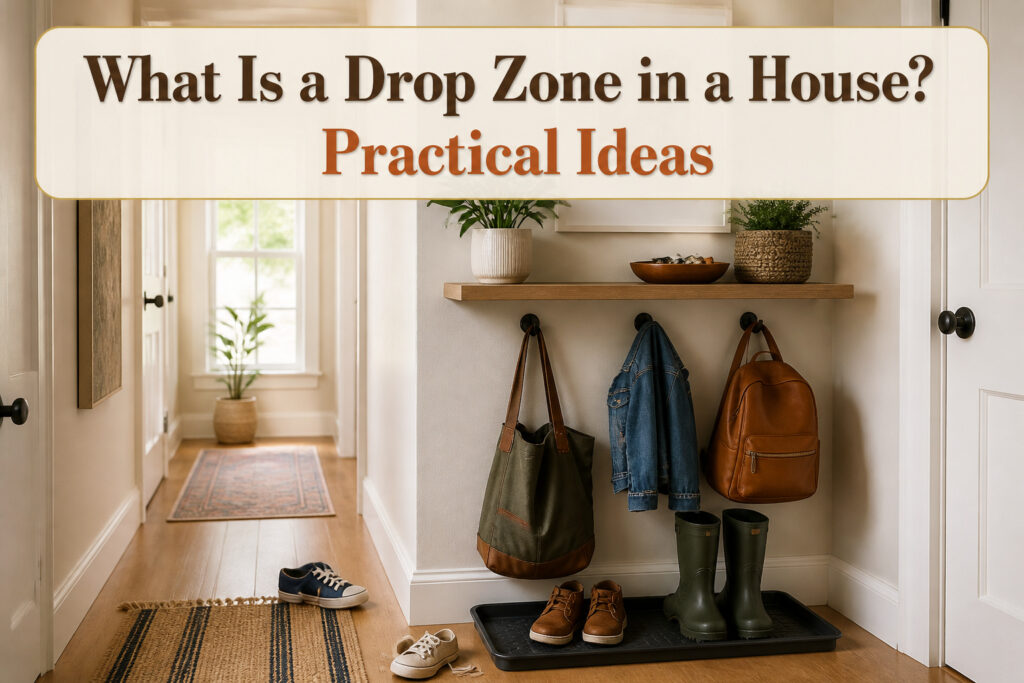
A drop zone in a house is a designated area near where you actually enter that catches keys, bags, shoes, and mail before they colonize every flat surface in your home.
The only catch is that it only works if you build it where your family walks, not where a floor plan says the entry should be.
We squeezed ours into a hallway just 34 inches wide, and a slim shelf, three hooks, and a boot tray stopped the morning chaos without blocking traffic.
[link-whisper-related-posts]1. What a Drop Zone Actually Is
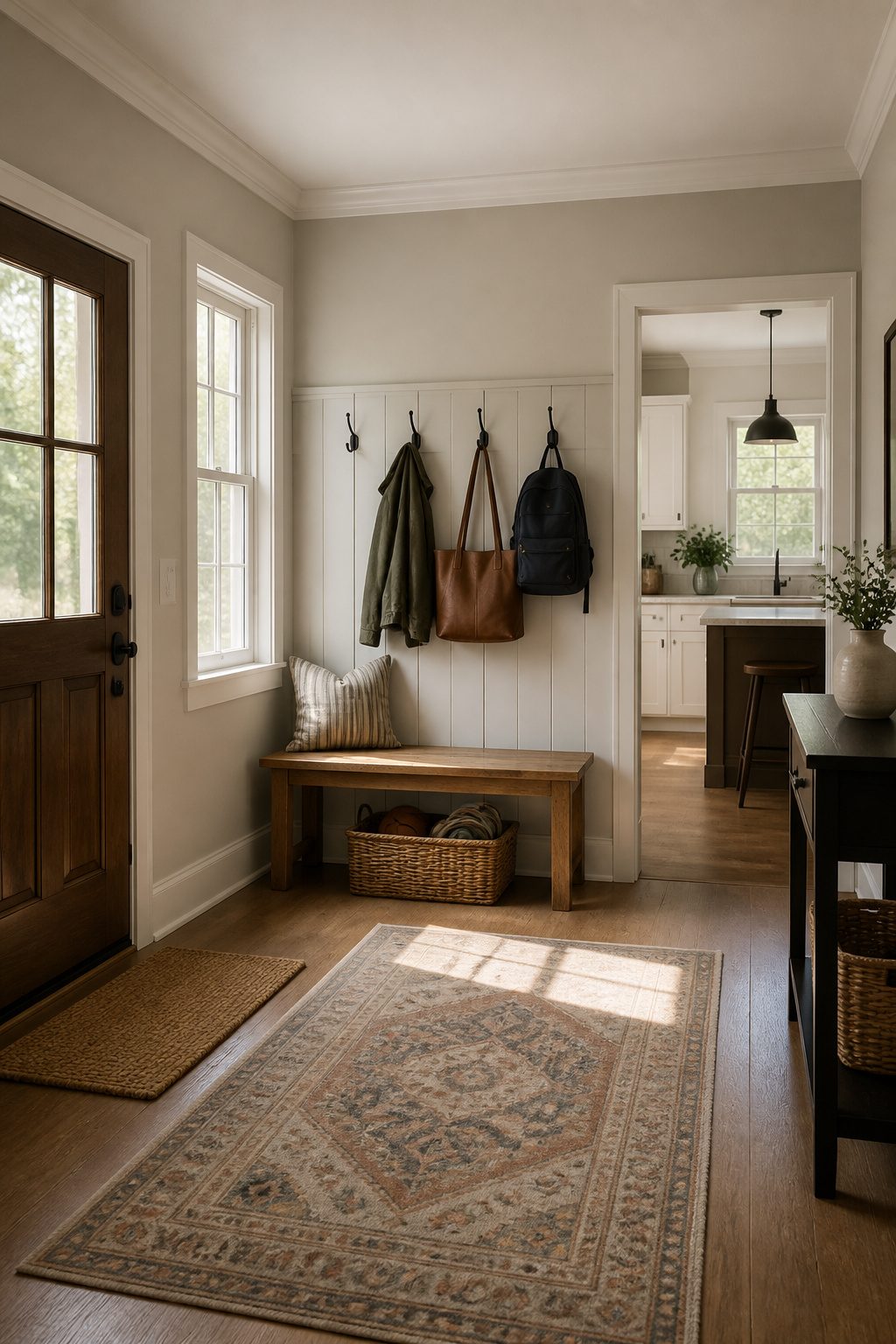
We realized our kitchen counter had become the default dump site for five people’s worth of stuff the morning we couldn’t find a single flat surface to set down a grocery bag.
That is the moment that defines a drop zone in a house: a designated area near an entrance where everyday items land so clutter does not spread room to room.
Every source we read opened with the same answer to the first question readers ask, and it matches what we lived.
Shoes, bags, keys, mail, sports gear, dog leashes, these are the items a drop zone catches before they colonize your floors and tables.
The location sits where your family actually enters, whether that is a mudroom, entryway, garage entrance, kitchen, or a small hallway.
A bench, a few hooks, and a basket sound simple because they are; the function is catching chaos, not displaying it.

Traditional style adds a stunning upgrade to any entryway, mudroom, laundry room or bath

【4-in-1 Multifunctional Design】This cute wooden coat rack wall mount can be installed in your bedroom, entrance, or bathroom Maximize Your Storage Space Combining a coat rack, key holder, mail organizer and display shelf, to store keys, umbrellas, school bags, hats, coats, etc and the top shelf can display photo frames, envelopes, plants, decorative letters, keys, etc while saving precious floor space.
2. Why You Actually Want One
We used to lose twelve minutes every morning hunting keys, bags, shoes, the dog leash.
The stuff had a way of radiating through the house: shoes migrated to the living room, jackets landed on kitchen chairs, keys vanished until we were already three minutes late.
A drop zone in a house stops that spread at the door. It is a designated spot near an entrance where everyday items land when you come home, so they are easier to find when you leave.
The payoff is not just tidier floors. 75% of people report that an organized home environment helps reduce stress, and for busy households managing work, school, and activities, that sense of control is hard to replace.
When 67% of people say a lack of storage options directly contributes to clutter, the fix is not more square footage; it is a functional space designed to catch the chaos before it spreads.
A well-designed drop zone is, in many ways, a stress-reduction tool.

Unbreakable Rubber Boot Tray Made from 100% natural rubber that outlasts plastic trays—no cracking when stepped on, no warping over time. Tough enough for heavy boots, gentle enough to protect any flooring.

[100% RECYCLABLE RUBBER]: This boot tray is made of recyclable rubber and has excellent abrasion resistance and durability, so there is no need to worry about the deformation during the using. Compared with other plastic shoe tray, our rubber shoe tray is more comfortable to use and more non-slip.

【SPACIOUS STORAGE】This shoe bench features 2 wide shelves that can hold at least 6 pairs of shoes, keeping your entryway organized. The top panel provides a convenient spot for bags or other essentials you need before heading out
3. Where It Goes
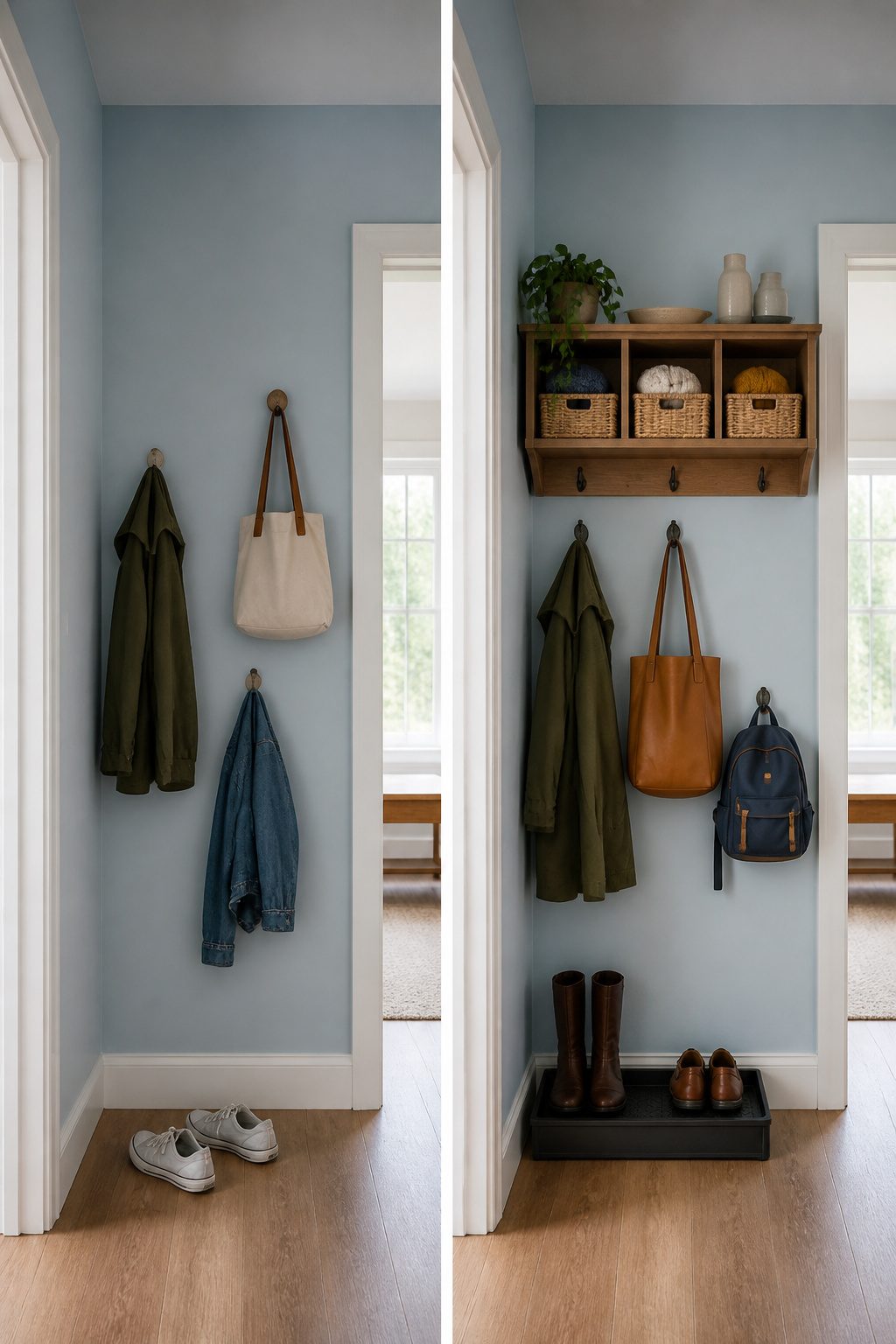
The spot your family actually walks through matters more than the spot that looks right on a floor plan. If everyone enters through the garage, a front-entry drop zone becomes a decoration nobody uses.
Entryways, mudrooms, garage entrances, and small hallways all work. The question is which door your shoes hit first.
Ours went into a hallway we assumed was too narrow: 34 inches wide, wall to wall. A slim shelf, three hooks, and a boot tray fit without blocking traffic.
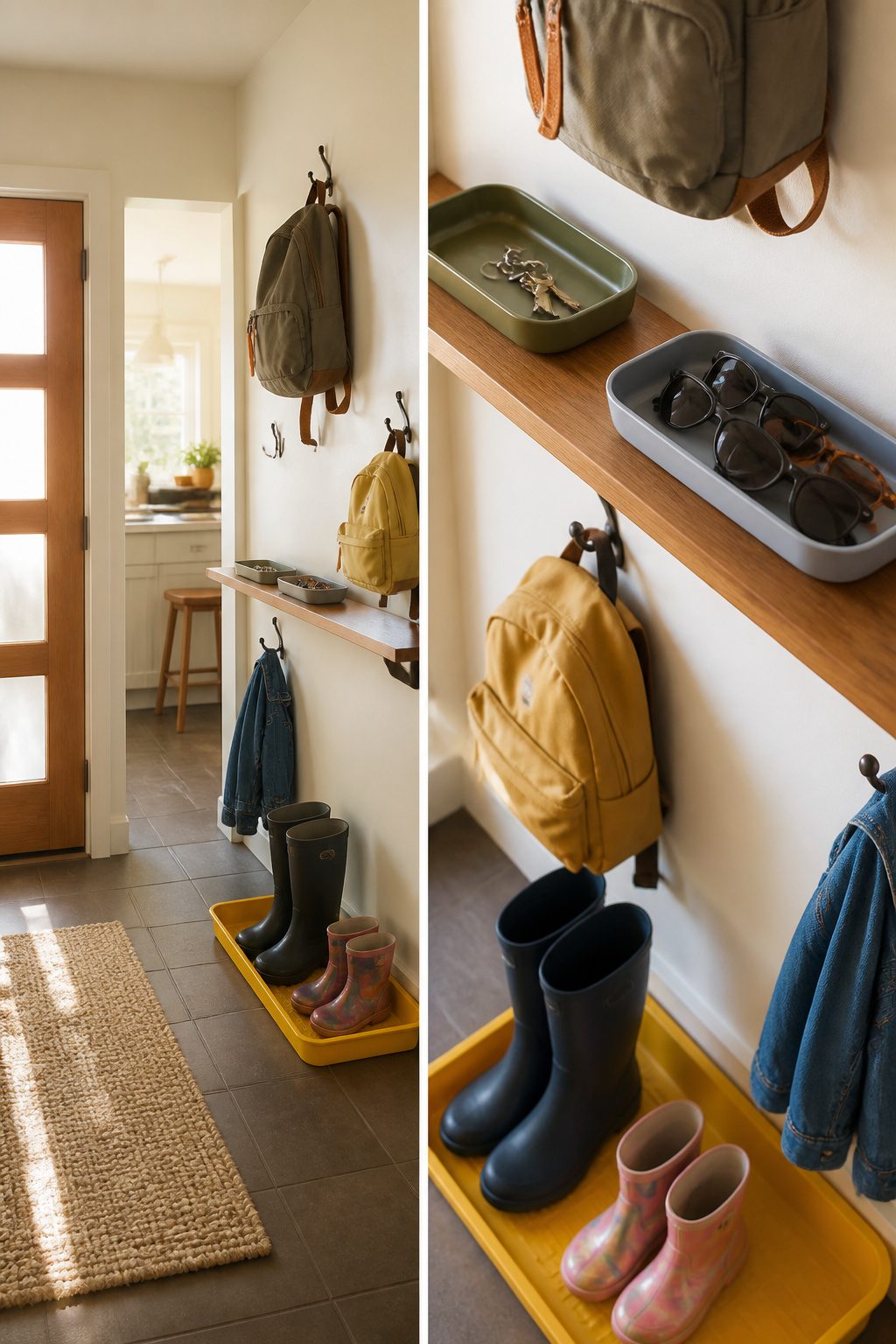
Vertical storage makes that possible. Hooks at two heights keep bags and coats off the floor; a shallow ledge for keys sits above eye level so the walking lane stays open.
Compact furniture helps in tight quarters. A bench with a lid stores gloves and hats and gives you a place to sit while lacing up.
We move the boot tray out in May when sandals replace boots, which buys back six inches of floor space for three months.
The system only works if it matches the season you are actually living in, not the one you planned for last fall.
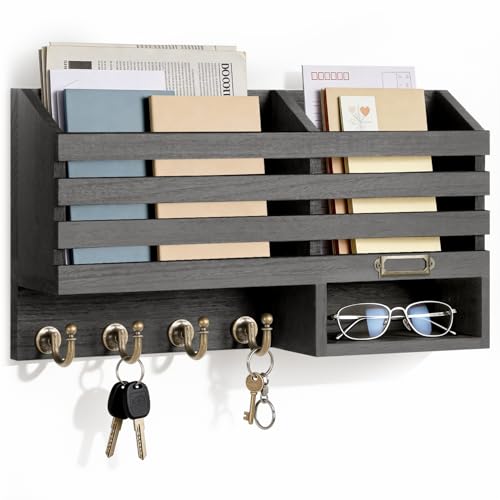
All At One Spot: This practical key holder for wall owns two large organizers for you to neatly store mails, letters, magazines and more. With an extra shelf for sunglasses or wallet and four vintage hooks for keys, masks and even dog leash, everything is ready for you to go out!

LIGHTWEIGHT AND STURDY CONSTRUCTION: Crafted from natural wood that has been dried to reduce weight and prevent falling when mounted, this handmade key organizer features sturdy and durable construction with coordinated appearance and beautiful shape, combining storage functionality with decorative appeal

Farmhouse style wooden tabletop mail organizer and key holder tray with shabby whitewashed finish and stylish cursive "MAIL" and "KEYS" labels
4. What Lives There
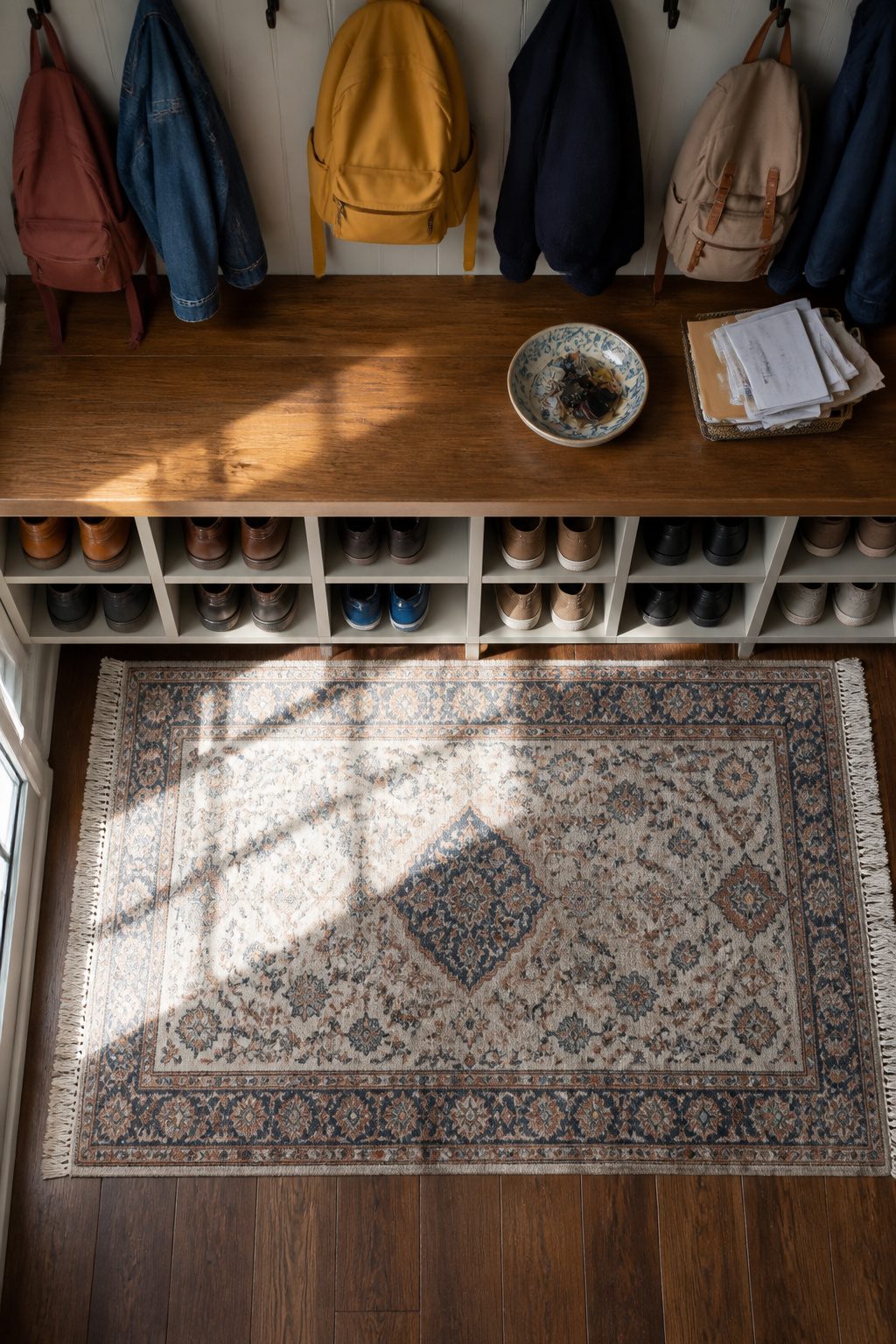
Keys, wallets, and sunglasses land first.
Then the backpacks, shoes, and coats that make it through the door in a heap. Mail stacks up until someone deals with it, and if there’s a dog in the family, leashes and walking supplies hang somewhere within arm’s reach.
The mistake we see is treating this like a storage closet. A drop zone works because it is narrow: only what moves daily, nothing that might move someday.
For families, the real test is personalization.
Our three kids each have a 12-inch hook labeled with their initials. The dog leash hangs on the fourth.
Lower hooks let younger children manage their own belongings, while higher ones handle adult coats and bags. Individual cubbies or lockers create ownership, which actually gets used.
A bowl or tray for keys and wallets, plus drawers for sunglasses and winter accessories, rounds out the essentials. The rest, seasonal gear and overflow, belongs behind closed doors or in another room entirely.

[Farmhouse Style] Enhance your entryway with this wonderful coat rack and shoe bench! It adds a touch of farmhouse charm into your home, suitable for entrance, hall, foyer, hallway, porch, ect.

Compatibility: Designed to securely hold most standard kick for scooters and push for scooters for and adults, keeping them upright and tips or falls in your garage or yard.
5. The Hooks, Trays, and Cubbies That Make It Work
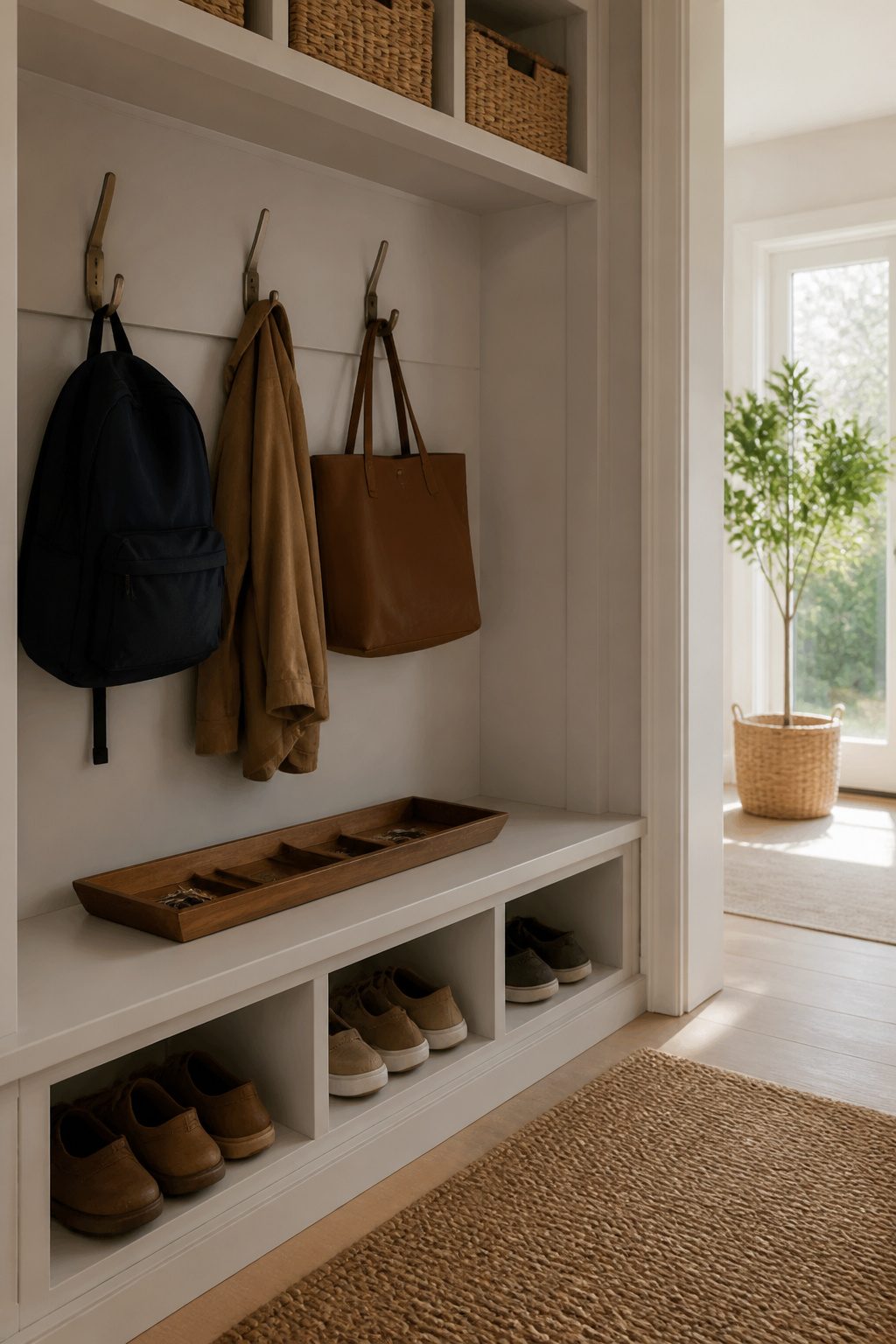
Every drop zone lives or dies on four pieces of hardware: hooks that catch bags and coats before they hit the floor, cubbies that swallow shoes, a tray that corrals keys, and a flat surface where mail can wait until someone deals with it.
We learned the hard way that cubbies need to be 13 inches deep; our first build stopped at 8 inches, and every pair of shoes stuck out like a hitchhiker’s thumb. We tore them out and started over.
Hooks should sit at 48 inches for adults and 36 inches for kids. That gap matters more than we expected.
Our youngest could actually hang up her own backpack once we lowered her hook, which meant one less pile on the floor to step over. Seating helps too, especially if anyone in the house wears boots that need wrestling.
"First, evaluate what typically gathers in the space… When you understand what items land here daily, you can create a system to make it more efficient."
What lands in your house is not what lands in mine, and the storage should show it.
A leash hook makes no sense for a cat household; a mail slot is wasted on someone who pays everything online. Build for the stuff that actually walks through your door, not the mudroom you saw on Pinterest.

Durable Steel Construction: This heavy-duty coat rack is made from premium steel and features a powder-coated white finish, offering a sleek, modern minimalist design that seamlessly blends with any entryway or living space.

Compact 3-in-1 Coat Rack with Lamp: Measuring 15.3"L × 11"W × 66.9"H (39 × 28 × 170 cm), this slim hall tree combines ambient lighting and vertical storage in one small footprint. Seven hooks are best suited for cropped jackets, cardigans, lightweight outerwear, scarves, handbags, and daily accessories rather than long coats or multiple heavy garments. One wooden shelf and one metal basket organize shoes, books, and small essentials. Please check the dimensions before ordering

STYLISH & ELEGANT: Crafted from high-quality white wood, our wall hooks with shelf blends modern design with functionality. It adds a touch of elegant charm to your decor while providing a convenient place to hang coats, hats, and more
6. How We Keep It From Becoming a Dump
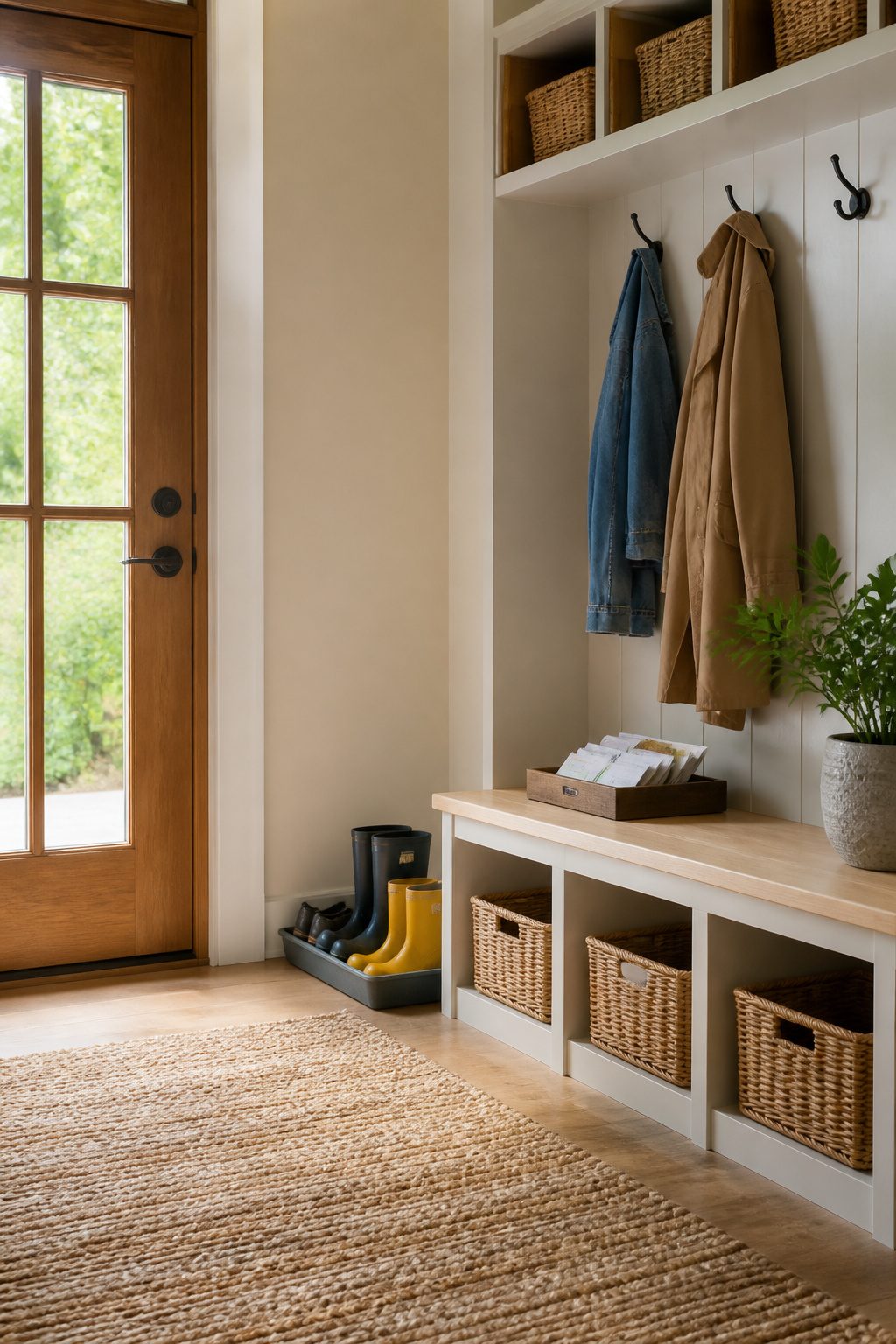
After three months our drop zone had become a graveyard for half-finished permission slips and a single roller skate.
The hooks held coats we had not worn since October, the mail tray hid a check we nearly forgot to deposit, and the shoe mat had turned into long-term storage for outgrown boots.
We had built the thing to solve clutter, not host it.
The reset that fixed it takes eight minutes on Sunday evening.
One of us sorts the mail tray, another walks coats and shoes back to bedroom closets or the donation bag, and whoever finds the permission slip finishes it then or throws it out.
Items that sit longer than a week do not belong in a drop zone.
Keys, wallets, and sunglasses go back to their dish; bags and lunch boxes return to their cubby or hook. If the weather turned two weeks ago, the gear from last season leaves now.
Professional organizers warn against overbuilding these spaces, and we learned why.
A bowl for keys, a tray for mail, a hook per person, and a spot for current shoes is enough. Anything more invites you to store instead of sort.

Display above, grab below. Each scalloped wall shelf with hooks pairs a 16.9-inch display ledge with three hooks, keeping keys, leashes, lanyards, headphones and light daily essentials visible and ready.

【Give Your Entrance A New Look!】KYIAANY launched a elegant and practical coat rack, from the appearance design and quality, it is a new upgrade.The garden fence design makes you feel like you are entering a beautiful garden when you open the door. Imagine that your coat and bag are gently hung on this elegant piano hook, just like playing a song of homecoming! Each hook can be flipped, and it is a note carefully carved by our craftsmen. Every time you touch it, it is a kind of enjoyment. The warm texture of black walnut color can enhance the overall texture and grade of the home. Whether it is modern, Mid-Century style, or vintage style, it can be perfectly integrated.

【16 Hooks for Family Essentials】 — Eight double hooks keep coats, backpacks, hats, scarves and keys organized in one convenient entryway station. Open hook placement makes daily grab-and-go easy
Drop Zone or Mudroom: The Difference
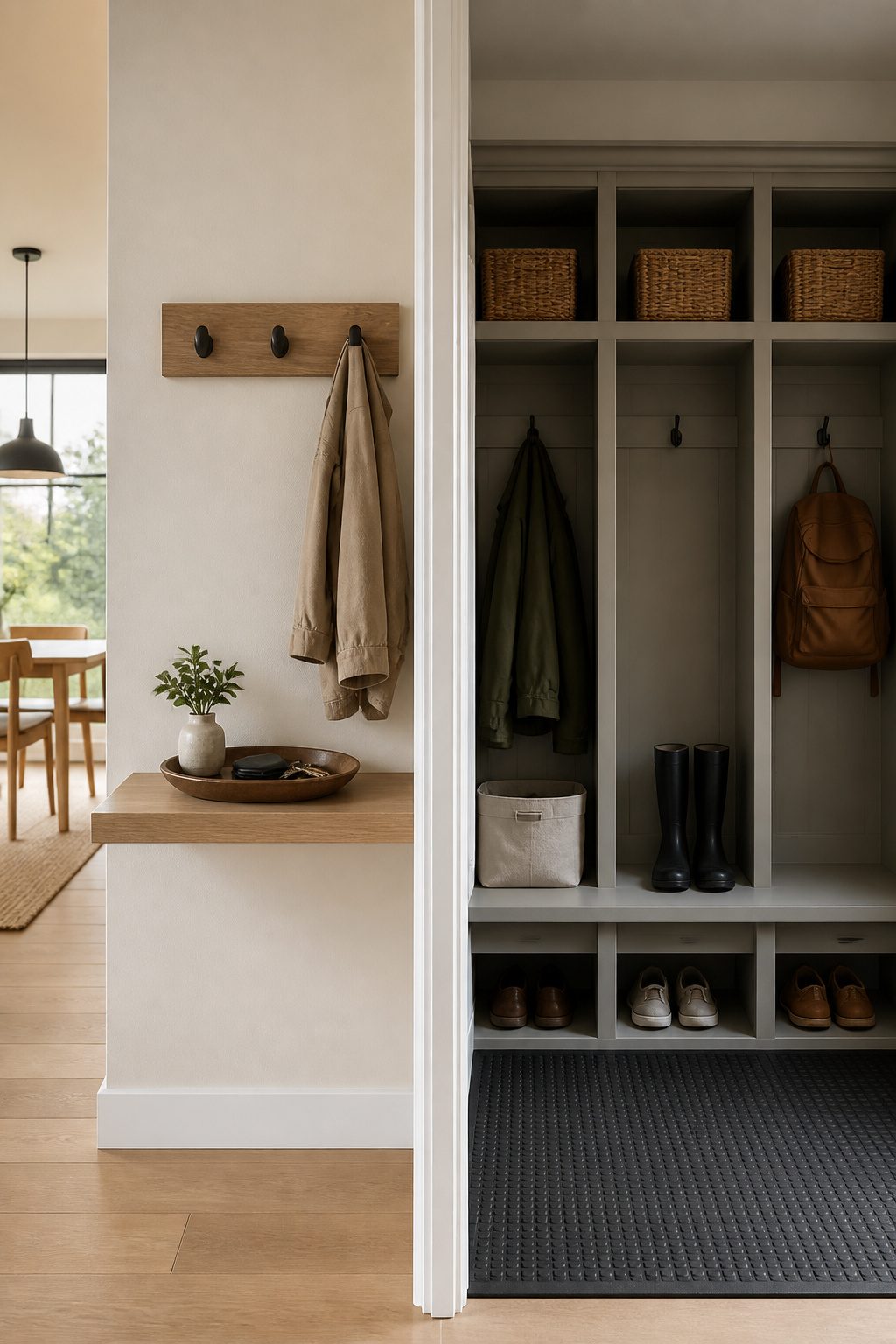
A drop zone in a house is more versatile than a mudroom, and the distinction matters when you are deciding what to build.
A mudroom is built for one job: stopping mud, snow, and wet gear at the door. It is where boots come off, coats get hung, and snow pants drop before anyone crosses into the living space.
That isolation is the whole point. A drop zone handles everything else you carry in and out: keys, mail, backpacks, lunch bags, leashes, the water bottle you meant to refill.
It can be a single hook by the door, a basket on a shelf, or a full wall of cubbies. The key is that it moves with your need, not with the architecture.
We have both at our place.
The mudroom catches the boots and snow pants from December through March. The drop zone lives closer to the kitchen and catches the daily clutter that used to die on the counter.
Two photos in one frame would show it clearly: one side the rubber mat and boot bench, the other the hook and small tray for keys and mail.
If you are renting or working with a tight footprint, start with the drop zone. It costs less, installs faster, and solves the problem you actually have every morning.
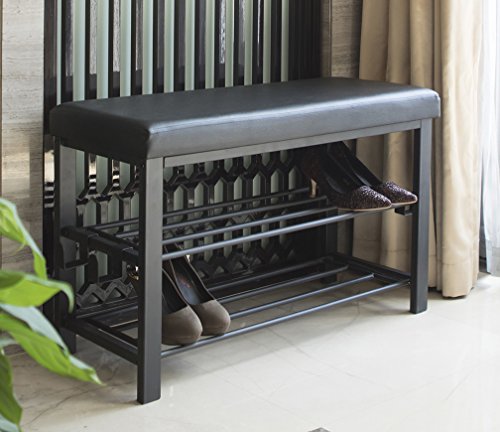
MULTI FUNCTIONAL & EASY TO INSTALL - Perfect height to sit on and change your shoes, put it at your entryway for shoes or your bed end for pillow and blanket. The 2 shelves are easy to access and will not occupy too much room.

[Cozy Comfort] Take off your shoes, and let the day's fatigue stop here on this bamboo shoe bench, inviting you to relax and unwind.

Space-Saving Shoe Organizer Bench: Our entryway shoe storage bench with a size of 32.3"L x 12.4"W x 18.3"H takes up very little space, but it can perfectly organize your messy corridor. The flip-open storage bench and adjustable shelf provide ample space for your shoes, hats, gloves, and other items
What We Got Wrong Building Ours
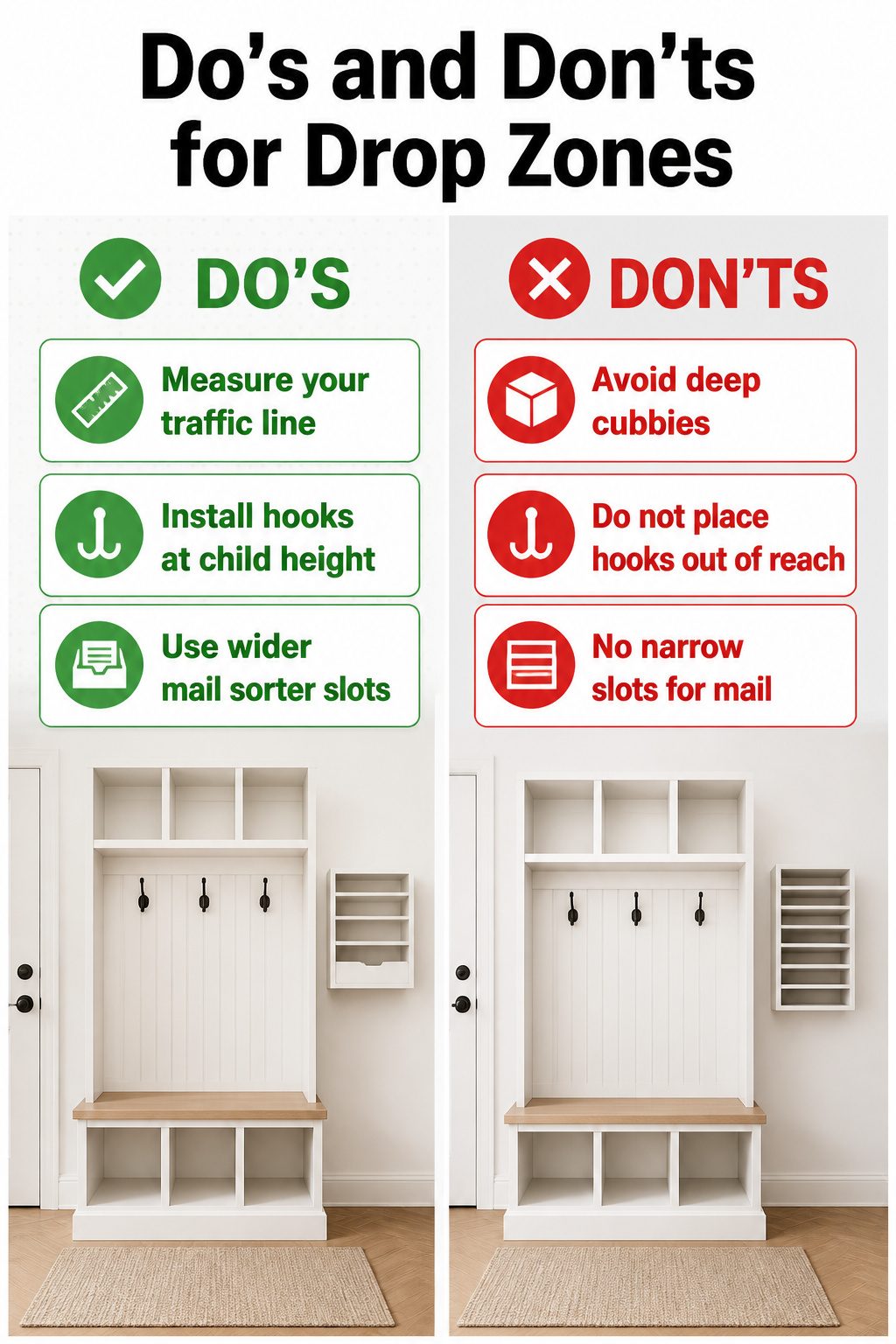
We bought cubbies that looked right on the shelf but stuck out too far into the hallway once mounted.
Three inches deeper than our old ones, and suddenly two people could not pass without turning sideways. Measure your traffic line, not just your wall space.
The hooks went in at a height that worked for adults.
Our then-five-year-old could reach them only by climbing the bench, so jackets piled on the seat instead. We moved them down later and patched the old holes.
A mail sorter with narrow slots looked organized until the holiday catalogs arrived and jammed halfway in.
We ended up pulling the whole unit out to free them. Wider slots or an open tray would have saved the trouble.
These three mistakes cost us an extra Saturday each to fix.
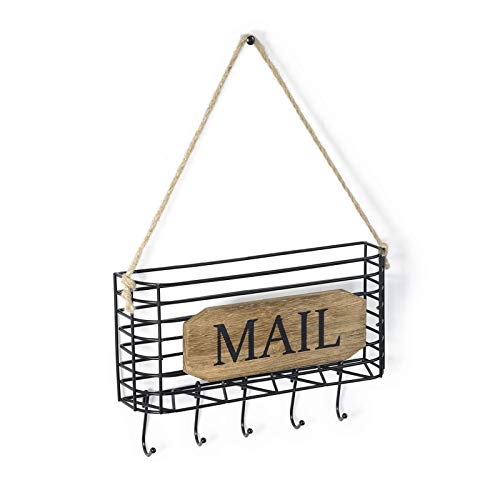
Rustic Yet Modern - Rustic solid wood combined with black iron wire, exquisite decor in the hallway, foyer, mudroom, or office.

Keep your space organized: This mail organizer is perfect for keeping your mails, files, newspapers, magazines, and keys well-organized. It's ideal for entryways, offices, and hallways, and helps reduce clutter.

Life Made Easier: The KISENG key organizer provides dedicated space for keys, mail, hats, glasses, and more, maximizing wall space. Keep everything neat and accessible, so you’ll never worry about losing your keys or other essentials again.
Seasonal Swap-Outs That Keep It Useful
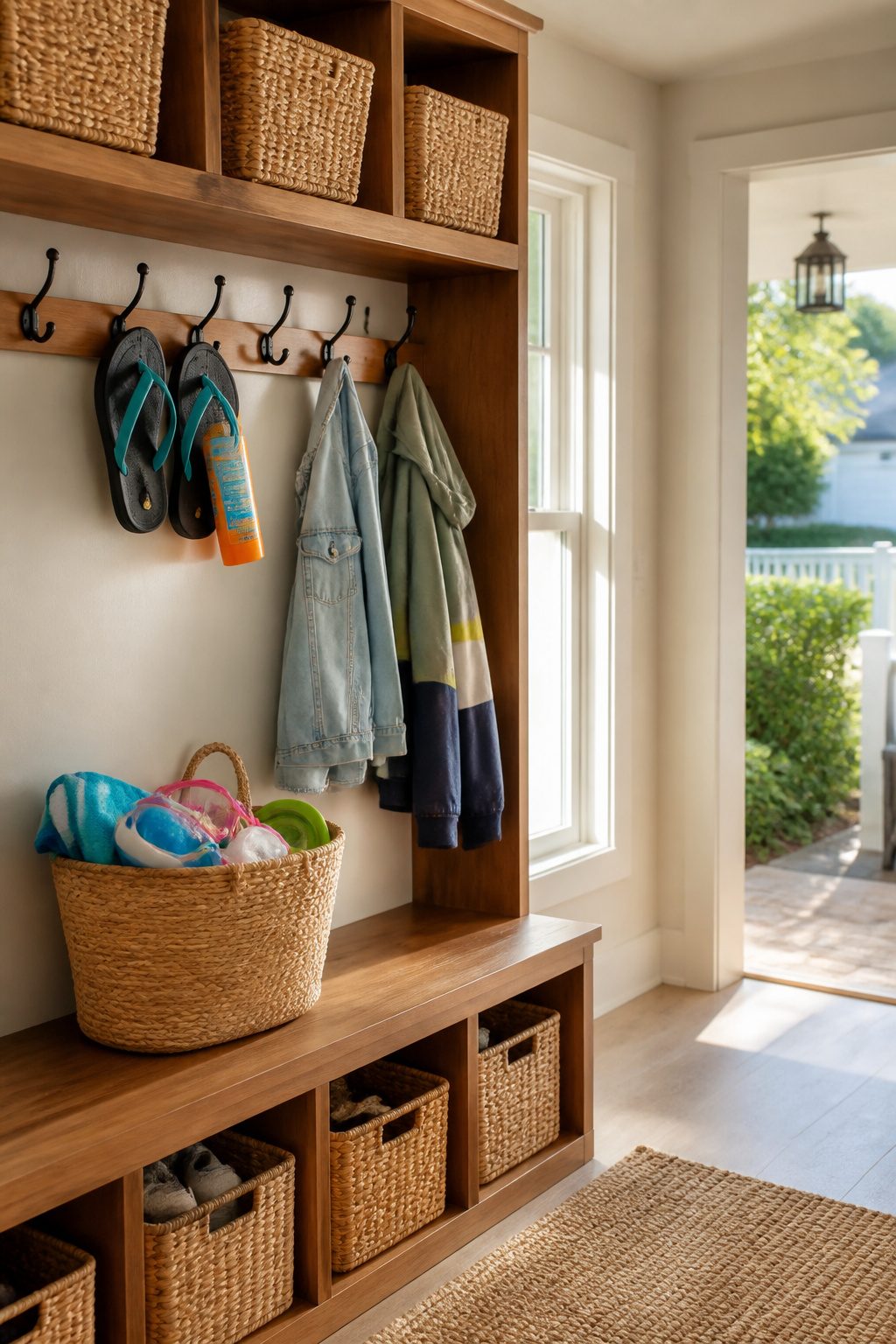
A drop zone only stays useful if its contents match what you are actually carrying through the door. We reset ours at the change of seasons, and that rhythm keeps it from becoming another cluttered surface.
In June, the winter gloves and hats move to a bin in the closet, and pool badges, sunscreen, and bug spray take their place on the hooks and in the tray.
By July the bug spray bottle is half-empty from real use, which tells us the system is working. November strips it back to essentials: keys, mail, one pair of shoes each, and the everyday bag.
The weekly tidy matters less than the seasonal swap, because a drop zone full of sunscreen in January is a drop zone nobody uses. We learned that the hard way after leaving a beach tote there through three snowstorms.
One Weekend, Under $150
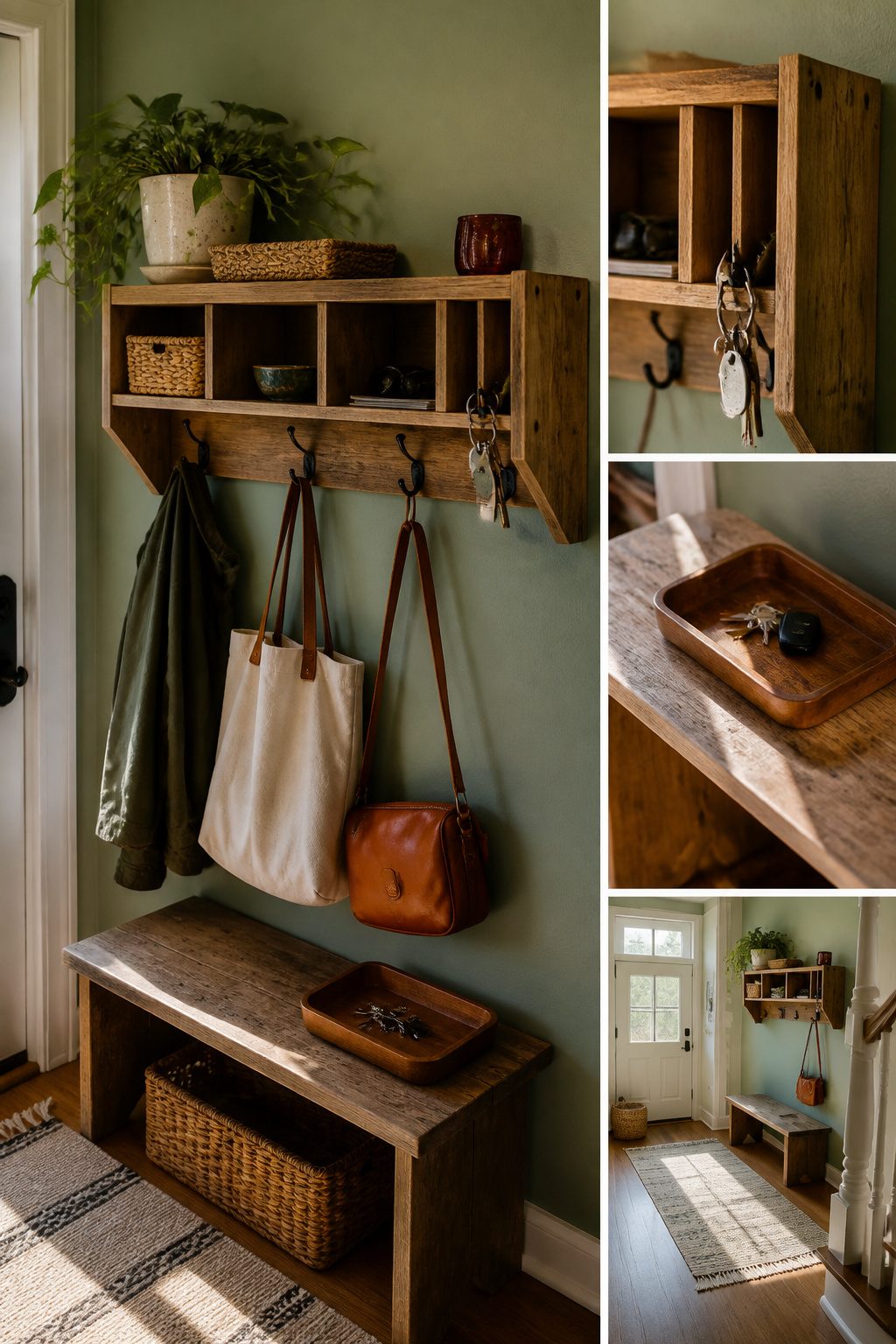
We spent a Saturday building ours for right around $150, but that number is ours, not a promise. What you actually spend depends on what you already own and what you refuse to live with.
A friend of ours spent $38. She screwed four hooks into a stud, laid a rubber shoe mat on the floor, and called it done.
It works because she owns two pairs of shoes and no dog. Another friend spent $400 on a bench with built-in cubbies and a cushion in a fabric she still talks about.
Both are drop zones. Both are honest prices for what those households needed.
We landed in the middle.
A half-sheet of plywood, two boards for the shelf, basic hooks, and the hardware to mount it. The plywood was the cheapest grade the yard carried; we painted it, so the grain did not matter.
If you have a saw and a drill already, you are already past the biggest line item. If you do not, borrow them or buy cheap ones, because this build does not justify a tool upgrade.
The place to save is the finish. Paint hides plywood.
Stain reveals it. That choice alone moved our final look by about $12 and two hours of sanding we skipped.

Ample Storage Space: The shoe storage cabinet measures 31.5" W x 78.74" H x 9.37" D. Its tall design offers 3 flip drawers for organized shoe storage, while the slim profile saves valuable floor space. Perfect for entryways, hallways, apartments, and other narrow areas.

【4-in-1 Storage】Keep your entryway neat and organized with this narrow shoe cabinet. Designed with two flip drawers, an open top display area, convenient side hooks, and a bottom storage area, it offers dedicated space for shoes, keys, bags, umbrellas, décor, slippers, and more. Whether placed in an entryway, hallway, foyer, or living room, this multifunctional shoe cabinet helps maximize storage while keeping everyday essentials within easy reach

SLIM FIT FOR TIGHT ENTRYWAYS – Only 9.45" deep, this narrow shoe cabinet adds hidden storage without crowding your walkway, making it ideal for entryways, hallways, foyers and apartments.
Frequently Asked Questions
What is a drop zone in a house?
A drop zone in a house is a designated area near an entrance where everyday items like keys, bags, shoes, and mail land when you come home, so clutter does not spread from room to room.
It sits where your family actually enters, whether that is a mudroom, entryway, garage entrance, kitchen, or a small hallway. The point is catching chaos, not displaying it.
How do you create a drop zone?
Start by identifying where stuff naturally lands in your home, then build only for the essentials your household carries daily.
A few hooks, a shallow tray for keys, and a place for current shoes are enough; anything more invites storage instead of sorting.
Keep the walking lane open, and if space is tight, use vertical storage rather than pieces that stick out into traffic.
What should be included in a drop zone?
Include only what moves daily: keys, wallets, and sunglasses in a bowl or tray; a hook per person for bags and coats; a spot for current shoes; and mail until someone deals with it.
A bench with a lid helps with seating and hidden storage. Seasonal gear and overflow belong behind closed doors or in another room, not here.
What is the difference between a drop zone and a mudroom?
A mudroom is built to stop mud, snow, and wet gear at the door, isolating mess before it enters living space.
A drop zone is more versatile: it catches keys, mail, backpacks, lunch bags, leashes, and the daily clutter that used to die on the counter.
A drop zone can be a single hook or a full wall, and it moves with your need rather than the architecture.