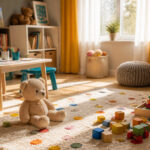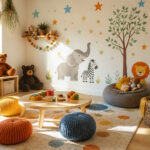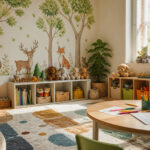
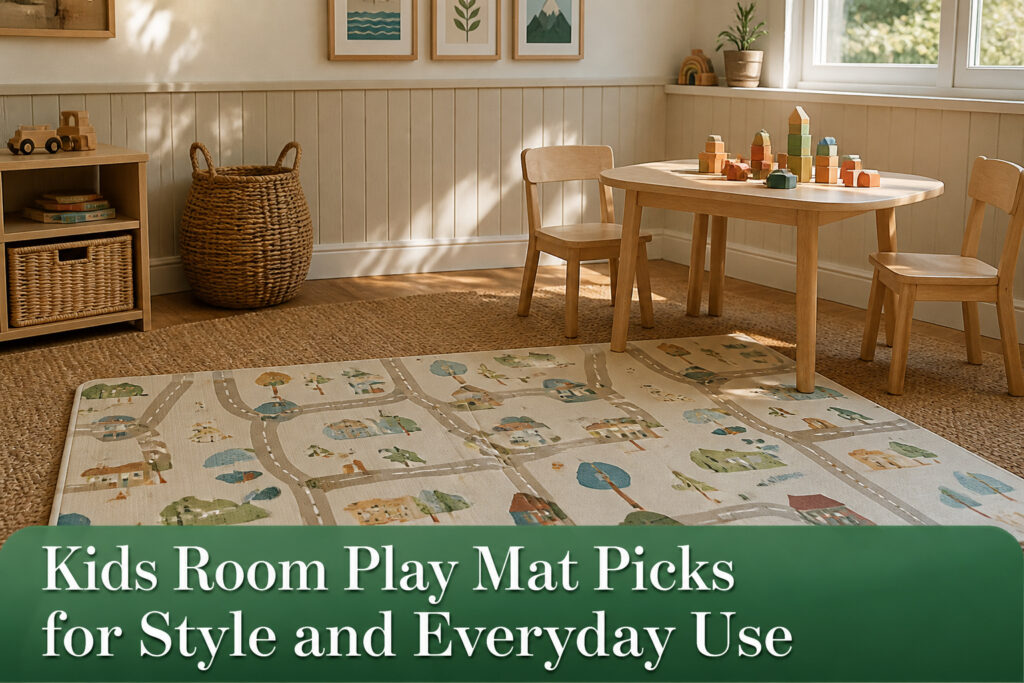
Totter + Tumble wins for families who need a sealed, wipeable surface that actually comes clean after juice spills and marker slips, with a reversible print that gives two room looks for under three digits.
Parents set on organic cotton or natural rubber should look at Toki Mats instead, where the organic certified foam costs more but removes the synthetic tradeoff entirely.
[link-whisper-related-posts]1. Totter + Tumble: Best for Double-Sided Durability

Totter + Tumble builds their mats from non-toxic PVC memory foam treated with an antibacterial finish, which means juice spills and marker slips sit on the surface instead of soaking in.
We have wiped enough play mats at closing time to know that "easy to clean" is not the same thing as "actually comes clean," and the sealed surface here passes that test.
The reversible print gives you two room looks without buying a second mat, and the sizes run wide enough to cover most of a standard kids room floor or tuck into a reading corner as needed.
The foam is synthetic through and through, so parents set on natural materials like organic cotton or rubber should look elsewhere.
For families who prioritize washability and a budget that stays under three digits, the tradeoff lands in the right place.
2. House of Noa: Best for Custom Room Fits

House of Noa builds its play mats as jigsaw pieces that lock together into whatever footprint your room needs.
The muted patterns read as one continuous surface once assembled, which matters when the kids’ zone opens into the living area and you do not want a circus floor in plain sight.
They also make tumbling mats in the same restrained palette, thick enough for toddler falls and foldable for closet storage when the weekend is over.
Skip these if you want a single solid sheet rather than interlocking tiles. The seam is subtle but it is there, and a few buyers never quite stop noticing it.
For renters fitting an awkward corner or a long narrow space, though, the custom shape usually wins out.
3. Toddlekind: Best for Growing Families

Toddlekind gives you two systems to work with, and the choice between them matters more than the color you pick.
Their foam mats come as interlocking jigsaw pieces or as one reversible piece, with four sizes and more than fifteen colors to sort through.
We like the reversible single piece for a defined corner or under a crib, because it lies flat without the seam lines that collect crushed cereal.
The jigsaw setup wins when the room shape is awkward or you know you will expand the zone later.
For families still hauling gear to grandma’s house, the portable cotton mat folds down small and handles the younger months well.
It is not padded enough for hard falls once a toddler is charging, so plan it as a travel layer, not the main surface at home.
Before you order, check your timeline. Parents who want one mat from baby through preschool without buying again should skip Toddlekind.
The cotton mat phases out too early, and adding foam pieces later means matching colors across batches that may not line up. If you are fine with a two-stage approach, the system works.
If you want to buy once, keep scrolling.
4. Toki Mats: Best for Organic Options

Toki Mats come in standard and mega sizes, both built as a single piece rather than interlocking tiles.
You pick between a classic foam insert or an organic certified option, and there is a waterproof cover add-on if you expect juice spills or diaper leaks.
The covers zip on and off, which matters more than we expected; our first mat without one needed spot cleaning twice a week.
The organic foam runs higher in price, and that certification is the whole reason to choose this brand over others.
If your budget is tight and you are not specifically shopping organic, you are paying for a label you may not value. We would skip Toki Mats in that case and put the difference toward a larger size elsewhere.
Five colors keep the look simple, not playful, so this reads more nursery than playroom for older kids.
5. Pehr Life Aquatic: Best for Nursery Aesthetic

Pehr’s Life Aquatic play mat sits at the nursery end of the kids room play mat spectrum, and we think it earns its spot there honestly.
The fabric surface and illustrated sea creatures give it the soft, styled look that photographs well against crib rails and woven storage bins, which matters if you are building the room around a Pinterest board you have been curating since month four.
The footprint is the only real downside. This mat is built for the infant-to-toddler window, not for the sprawled-out block castles that come later.
Parents who want one purchase to carry from tummy time through preschool should look at larger formats instead.
We have seen too many families try to make a nursery-sized mat work in a three-year-old’s play corner, and the edges curl, the pattern scales wrong, and the whole thing looks like a baby item that overstayed its welcome.
For the first eighteen months, though, the washable cotton cover and low profile make sense. It lies flat under a changing table, survives spit-up, and rolls up when relatives visit.
That is the use case to buy it for, and no further.
6. Lily & River: Best for Reversible Style

Lily & River mats come in reversible designs that let you flip the pattern when one side starts looking tired, which in a kids room play mat matters more than you’d think.
The foam is soft under bare knees but dense enough that a wooden block dropped from crib height won’t bottom out.
We like that the brand will mail swatches so you can test the color against your actual floor before committing, since the photos run warm and the real thing sometimes doesn’t.
The fabric face feels better than vinyl if your kid is the sort who face-plants during story time. That same surface is why we’d skip this one if you’re dealing with regular juice spills or a potty-training timeline.
Waterproofing wins over hand-feel for that phase, and no amount of pattern flipping fixes a mat that holds onto sour milk smell.
7. Skip Hop: Best for Activity Integration

Skip Hop covers the full span from newborn to crawling with play mats that hide activity gyms under reversible printed covers.
The designs lean toward modern neutrals and soft geometrics that read as rug rather than baby gear, which matters when the mat lives in a shared living area.
When the gym comes off, the padded base stays down as ordinary floor coverage for older babies.
The removable gyms arc over with dangling toys and tummy-time mirrors. Assembly is tool-free, and breakdown fits in a closet without fighting awkward frames.
We have seen parents keep the base in use past the gym stage, though the padding is thinner than dedicated crawler mats and the non-slip backing shows wear where a heavier toddler drags ride-on toys.
Parents of two-year-olds and up should look elsewhere. The activity integration that makes Skip Hop worth the price becomes dead weight once a child ignores hanging toys.
At that point you are paying for hardware you store and a base that does less than simpler mats at the same footprint.
If your kid is already walking steady and you just need soft floor for block towers and Duplos, skip this line and buy plain coverage.
8. Little Nomad: Best for Washable Full-Room Coverage

Little Nomad mats are sized to cover most of a room and stay there. We looked at this option for a nursery-to-toddler transition where the flooring was cold laminate and the budget did not stretch to wall-to-wall carpet.
The surface is washable in a standard machine, which matters more than we expected once finger paint and applesauce enter the picture.
The patterns lean toward muted geometrics and faux rugs that read as home decor rather than primary-colored gym equipment, so the room still functions for adults after bedtime.
These are not the mats you roll up for park trips or drag to grandma’s house. The weight and the full-room dimensions make them furniture, not gear.
If you need something that travels to playdates or survives the patio, this is the wrong category entirely.
For the renter or first-home owner setting up a dedicated kids room and wanting the floor to look intentional, Little Nomad fills a specific gap: soft enough for blocks and tumbling, presentable enough that you do not apologize when company walks through.
9. Gathre: Best for Indoor-Outdoor Flexibility

Gathre’s leather-like mats are thin, flat, and built to move. You can wipe them down after a snack, roll them up for the park, and lay them back down without creases.
These are not padded foam, so a baby taking a hard tumble on tile will feel the floor. If your main worry is cushioning for a new crawler on hardwood, you are better served elsewhere.
The surface repels juice and markers well enough that we have used ours under a high chair and later as a picnic base without switching gear. It stores in a closet loop or the trunk of a car without bulk.
For renters who want one mat that works inside and out, that flexibility is worth the trade. Parents who need shock absorption should skip this and look for thicker foam instead.
10. Boppy: Best for Newborn Interaction

The Boppy line centers on a soft, padded mat with a removable activity gym, built for the stage when a baby is still on their back and the ceiling is their whole world.
The arches hold dangling toys within reach of a newborn’s uncoordinated swipes, and the mat itself is light enough to move from nursery floor to living room without a second thought.
Parents whose babies are already sitting unassisted or crawling will want to skip this one; the small footprint and overhead gym become obstacles once floor space and freedom of movement matter more than batting practice.
We see these mats turn up secondhand in excellent condition, which tells you something about how brief the window is.
If your child is at that in-between stage, pushing up on hands and knees but not yet mobile, a larger flat mat without bars to roll into makes more sense for daily use.
Materials and What They Mean for Safety

Non-toxic PVC memory foam is the workhorse you’ll see most often in kids room play mat aisles.
It gives a cushioned surface that holds up to crawling knees and tumbling toddlers, and the good brands have moved away from the phthalates and heavy metals that made older PVC a concern.
Look for "non-toxic" or "phthalate-free" on the label, not just "safe for kids," which means nothing specific.
Cotton covers feel better under hands and won’t off-gas, but the padding underneath still matters. A cotton shell over conventional foam is still conventional foam against your baby’s face during tummy time.
Organic cotton with a natural latex or wool core costs more, but it removes the guesswork entirely if your toddler chews the edge, which they will.
Memory foam sounds plush, but it can be too soft for newborns. Babies sink in, which raises a suffocation risk that firm surfaces don’t.
We skip it for infants under six months and use it only in thicker, denser formulations for older toddlers who need joint cushioning for play.
Reading labels takes thirty seconds and saves returns. Flip the mat and check for CertiPUR-US, OEKO-TEX Standard 100, or Greenguard Gold.
Those third-party marks mean someone actually tested the foam or fabric, not just the manufacturer’s word. If the tag lists only "polyurethane foam" with no certification, assume it was made to the cheapest standard and keep shopping.
Size Options and How to Measure Your Space

Most play mats come in standard and mega sizes, with a few brands offering customizable dimensions if your room is an awkward rectangle or has a corner nook to work around.
We start every measurement at the wall where the crib or bed sits, not the center of the room, because that is where the mat actually lives day to day.
Leave about eighteen inches of walking space between the mat edge and any furniture with doors or drawers that need to swing open.
Interlocking tiles beat one solid piece when you need to cut around a radiator, a floor vent, or an angled wall, and they travel well if you rearrange often.
The downside is the seam line, which collects crumbs and requires you to lift and wipe underneath every few weeks.
One solid piece looks cleaner and vacuums faster, but you will need to roll or fold it to move it through doorways, and it rarely lays flat again immediately.
For a renter who might swap rooms as the family grows, tiles usually win. For a permanent nursery setup with one footprint, a single mat in standard or mega size is the less fussy choice.
Design That Survives Real Living Rooms

Muted patterns and reversible prints are what separate a mat you can live with from one you hide before guests arrive. We learned this the hard way when a primary-colored puzzle mat lived in our front room for six months.
Brands that offer swatch services let you test how a design reads against your actual couch and rug, not under showroom lights.
A reversible mat gives you two usable looks, which matters when the thing covers half your living room floor and never gets rolled up.
One side can read quieter, the other slightly bolder, and you flip it when the first starts looking tired or when you need the room to photograph differently for a listing or a pin.
The standard size fits in front of a couch without looking like temporary preschool equipment.
For the Pinterest side of this audience, the mat needs to read as intentional in a flat-lay or a corner shot, not as a compromise you settled for.
Circular and runner shapes work beyond the standard rectangle, which helps when you are trying to fill an odd space without broadcasting "baby lives here."
The foam construction still cushions a fall, but the visual cue is woven textile or muted block print, not primary colors and alphabet letters.
Cleaning Reality: What Wipes Down and What Goes in the Machine

Wipeable foam mats clean up in about thirty seconds with a damp cloth and mild soap, which is why we keep one in the corner where the juice boxes live.
Machine-washable cotton covers take longer to dry than you’d expect, sometimes a full day in humid weather, so plan for two covers if daily messes are your reality.
We learned that after a stomach bug weekend with only one cover in rotation.
PU leather surfaces resist marker and crayon better than woven fabrics, though permanent marker still wins that fight.
PU can crack after a couple years of folding and unfolding, especially if you store it against a radiator or in direct sun.
For busy parents, the real maintenance split is not material but construction. Mats with sealed edges and no fabric seams wipe clean all the way to the border.
Mats with stitched fabric bindings look softer in a nursery but trap crumbs and require actual laundering.
If your kid is still in the everything-goes-in-the-mouth phase, check whether the cover zips off or if the whole mat has to fit in your machine. Some full-room sizes won’t, and spot-cleaning becomes your life.
Frequently Asked Questions
What are the best play mats for babies?
The best play mats for babies combine safety, comfort, and a look you can live with in your main living space. Pehr’s Life Aquatic works well for the infant-to-toddler window with its soft fabric surface and washable cotton cover.
Skip Hop and Boppy both hide activity gyms under reversible printed covers for newborns who spend most of their time on their backs. For parents prioritizing organic materials, Toki Mats offers a certified organic foam option with zip-off waterproof covers.
How do I choose a play mat for my child?
Start with your child’s age and stage, then match materials, size, design, and cleaning method to that reality. Newborns need firm surfaces, not memory foam they can sink into.
Crawlers and toddlers need cushioning for falls and joints. Measure from the wall where the crib or bed sits, not the room center, and leave eighteen inches of walking space around furniture with swinging doors.
Pick wipeable sealed surfaces if juice spills are daily events; machine-washable covers if you want fabric under bare knees but can manage the drying time.
Are play mats easy to clean?
Wipeable foam mats clean in about thirty seconds with a damp cloth and mild soap.
Machine-washable cotton covers take longer to dry than expected, sometimes a full day in humid weather, so plan for two covers if daily messes are your reality.
Mats with sealed edges and no fabric seams wipe clean all the way to the border; stitched fabric bindings trap crumbs and require actual laundering.
PU leather surfaces resist marker and crayon but can crack after a couple years of folding and unfolding.
What are the best floor mats for a kid’s playroom?
Little Nomad covers most of a room and stays there, with a machine-washable surface and muted patterns that read as home decor rather than gym equipment.
House of Noa’s interlocking tiles lock into whatever footprint your room needs, with a continuous muted look that works when the kids’ zone opens into the living area.
Totter + Tumble offers double-sided durability with non-toxic PVC memory foam that actually comes clean, sized wide enough for most of a standard kids room floor. For growing families, Toddlekind’s jigsaw setup expands when you need more coverage later.
What age is appropriate for play mats?
Newborns from day one need a firm, safe surface for back time and interaction, which Boppy and Skip Hop activity mats provide.
Once a baby is sitting unassisted or crawling, the small footprint and overhead gyms become obstacles, and a larger flat mat without bars to roll into makes more sense.
Memory foam should be skipped for infants under six months due to suffocation risk; use it only in thicker, denser formulations for older toddlers who need joint cushioning.
Pehr’s Life Aquatic fits the infant-to-toddler window but phases out once sprawled-out block castles start; parents wanting one purchase from tummy time through preschool need larger formats instead.
What is the best playmat for children?
The best playmat depends on which stage of childhood you’re buying for. Totter + Tumble wins for double-sided durability and actual washability under three digits.
Toki Mats is the pick if organic certification matters enough to pay the premium. Lily & River offers reversible designs with swatch testing and a fabric face that feels better than vinyl, though it suffers with regular juice spills.
Gathre trades padding for indoor-outdoor flexibility that wipes clean and stores without bulk. For full-room coverage that looks intentional when company walks through, Little Nomad’s machine-washable, muted-geometric mats fill a specific gap between gear and furniture.