The ideas below run from $15 open bins to $60 wall-mounted racks, and the right pick depends on whether your kid builds in one dedicated space or drifts between the living room rug and a bedroom floor.
A drawstring bag with a play mat, at $50, cinches the whole collection into a cylinder when dinner is ready; drawer units on casters roll against the wall for families who build together in the same room every weekend.
[link-whisper-related-posts]1. Drawer Units

Stackable drawer units on casters let you sort bricks by color or size and roll the whole collection against a wall when playtime ends.
We like the Elfa-style carts with clear-front drawers: label each one with a vinyl cutout matching the brick color inside, and kids can spot what they need without dumping everything out.
An eight-drawer cart runs about $30, and the labels take hardly any time with a Silhouette or a steady hand and masking tape. This setup suits families who build together often and want cleanup to happen fast.
It does eat floor space; skip it if the room is already tight.
2. LEGO Storage Heads

LEGO minifigure heads in yellow, blue, or red work as lidded bins that announce exactly what lives inside. The large head holds a full Harry Potter Hogwarts set; the small one corrals Minecraft minifigures or vehicle parts.
At $15 and up, they cost more than plain plastic, but they keep themed builds from bleeding into each other and they look intentional on a shelf. We have seen families use one head per kid, or one per licensed theme.
Best for collections heavy on sets with distinct characters and storylines. If your child mixes everything into one big pile anyway, save the money for bricks.
3. Open Bins

Low open bins on a shelf or slid under the bed let toddlers dump and dig without asking for help.
A small dustpan or plastic scoop lives inside for cleanup, and the whole system trains kids to put bricks back where they found them.
4. Minifigure Display Case

A display case with a LEGO-stud inlay locks minifigures upright so a bumped shelf does not send a whole squad into the carpet.
The clear acrylic front turns a collection into wall art and stops the arms-and-legs scavenger hunts that waste half a building session.
Cases start around $45 and work best for figures that see daily play, not the ones buried in a bin for years. We would mount it at kid height and keep a small shelf below for active builds.
The limit is capacity: once it is full, you are back to hard choices about who stays and who gets stored.
5. Drawstring Bag

A drawstring bag with an attached play mat solves the problem of LEGO on the living room rug. Kids spread the mat, pour, build, then cinch the whole thing into a cylinder when the timer dings.
The Lay-n-Go version runs $50 and handles thousands of bricks; cheaper cotton sacks work if you add your own vinyl mat from a roll at the hardware store.
This is our pick for families who build in shared spaces and need to disappear the evidence before dinner.
It does nothing for organization, so pair it with a small labeled bin for current projects if your child builds sets from instructions.
On the one hand, Legos provide hours of instructional or open-ended play for kids. On the other, they wind up everywhere, feel impossible to contain and hurt like a mother when you unexpectedly step on one.
— Care.com
6. BYGGLEK LEGO Box

IKEA’s boxes with studs molded into the lid start at $15, so a finished spaceship or half-built dinosaur stays intact when the box slides under the bed.
The white finish blends with most room colors better than primary-blue bins, and the range of sizes lets you nest a small parts box inside a large project box.
We would use the shallow ones for minifigures and accessories, the deep ones for bulk brick. The lids are not airtight, so dust still settles; wipe them down monthly if your builder is allergic.
For families already making an IKEA run, tossing two or three into the cart is an easy win.
7. LEGO Rack System

LEGO’s own rack system mounts to the wall and gives you three shallow drawers plus a building plate on top. The drawers slide out to wherever your kid is working, and the plate stays put for half-built projects.
At $60 it costs more than a plastic bin, but the wood finish and stud detailing look intentional in a shared bedroom or play corner.
We like this for kids who build in short sessions and leave works-in-progress behind. Capacity is the catch: overflow still needs a bin somewhere.
If your collection is growing fast, pair this with under-bed drawers and use the rack for current favorites only.
8. LEGO Sorting by Color

Sorting by color stops the hunt for one red brick. Clear stackable drawers let your kid pull the whole color to the floor, build, and return it.
Labels help, though a preschooler may ignore them.
This system suits older kids building specific sets where color matters more than shape. Younger builders often grab by piece type, not color, so watch how your kid actually searches before you commit.
Start with a few colors and add drawers as the collection grows; buying the full rainbow upfront wastes money if half stay empty.
No sorting beats a clean floor at bedtime. If the system collapses after a week, dump everything back in one big bin and try again in a year.
9. LEGO Accessory Containers

Small parts vanish into the bottom of any big bin. Shallow compartment boxes from the craft-store bead aisle keep minifigure torsos, hairpieces, swords, and food tiles where small fingers can spot them.
One box for body parts sorted by color, another for themed extras: animals, flames, plants, whatever your kid collects.
Label each compartment with a cheap label maker or masking tape and marker. The boxes stack on a shelf or slide into a drawer, and the clear lids let your kid scan before opening.
This idea shines for accessory-heavy builders, Ninjago fans, anyone with a pile of identical-looking weapons. Pure brick builders can skip it.
Importance of Organization
Organized bricks let kids find that one red slope piece in under a minute instead of dumping a whole bin.
Color sorting or drawer systems also keep the floor clear enough to walk across, which matters when you are carrying laundry past a midnight build site.
We would not aim for perfect. A system your kid can maintain beats a beautiful setup that collapses the first time they play.
Sorting by color or size works if you rebuild it together every few weeks, not as a one-time marathon while the kids watch TV.
Involvement of Kids
Hand your kid the label maker. Let them pick whether the green drawer holds "plants and trees" or "everything green."
Ownership of the categories means ownership of the cleanup.
For younger builders, make sorting a game. Time them on how fast they can fill the "people parts" bin.
Older kids can handle the full breakdown: bricks, plates, tiles, specialty pieces. We would start with just two categories and add more only if they stick with it.
Praise the habit, not the result. A half-sorted pile put away willingly beats a perfectly filed collection you nagged over.
Display Options
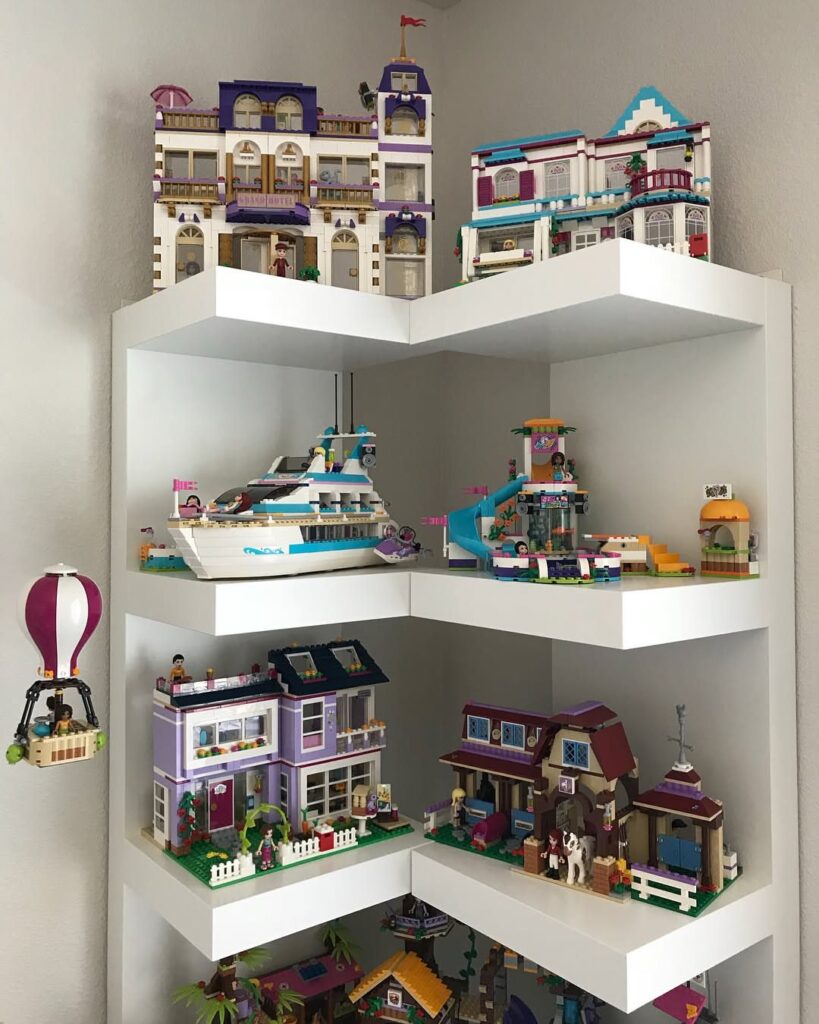
A finished build deserves better than the top of the dresser. Mount a floating shelf at kid height and rotate the display monthly; old builds slide into a flat storage box and new ones take the spotlight.
We would mount it near the building area so figures migrate back after play, not across the room where they will stay scattered.
An IKEA Lack table with peel-and-stick baseplates gives a permanent construction zone. Bricks stay off the carpet, and half-built projects survive until tomorrow.
The table and baseplates together cost less than most single LEGO sets and get more use than any of them.
DIY Storage Solutions
A shoe organizer over the back of the door gives you clear pockets for minifigures or instruction booklets. The pockets are shallow enough that nothing gets lost in the bottom.
Mason jars from the pantry sort by color on a windowsill; the glass lets light through and costs nothing extra.
We would add a strip of masking tape and a marker for labels, not fancy vinyl unless you already own the cutter.
For under-bed storage, screw four casters to a flat board and set a plain plastic bin on top. The bin slides out with one finger, no lifting.
Total cost stays low, and it holds more than the branded LEGO under-bed box at half the price.
Frequently Asked Questions
What are some creative LEGO storage ideas?
Open bins work well for toddlers who dump and dig, while stackable drawer units on casters let you sort by color or size and roll everything against a wall.
The right choice depends on how your kid actually plays: mixers need big bins, sorters need drawers.
What is the best way to store large amounts of LEGO?
Large under-bed drawers or bins keep bulk collections accessible without eating floor space. For collections that keep growing, pair a wall-mounted LEGO rack for current favorites with under-bed storage for overflow.
What are some good ideas for storage in a child’s bedroom?
A photo stuck to the front of each drawer beats written labels for kids who can’t read yet; they match the picture to the pile inside and know exactly where it goes back.
Mount a minifigure display case at kid height to turn collections into wall art and stop arms-and-legs scavenger hunts.