These ideas run from a quick bin swap to a weekend build with plywood and two-by-fours, and the right one depends on whether your space problem is floor, wall, or both.
A rolling cart stashes into a closet in seconds; a DIY Lego table stays put and eats that floor space for good. We like the rolling toy cart because it actually gets kids to use it.
[link-whisper-related-posts]1. Playroom Cabinets

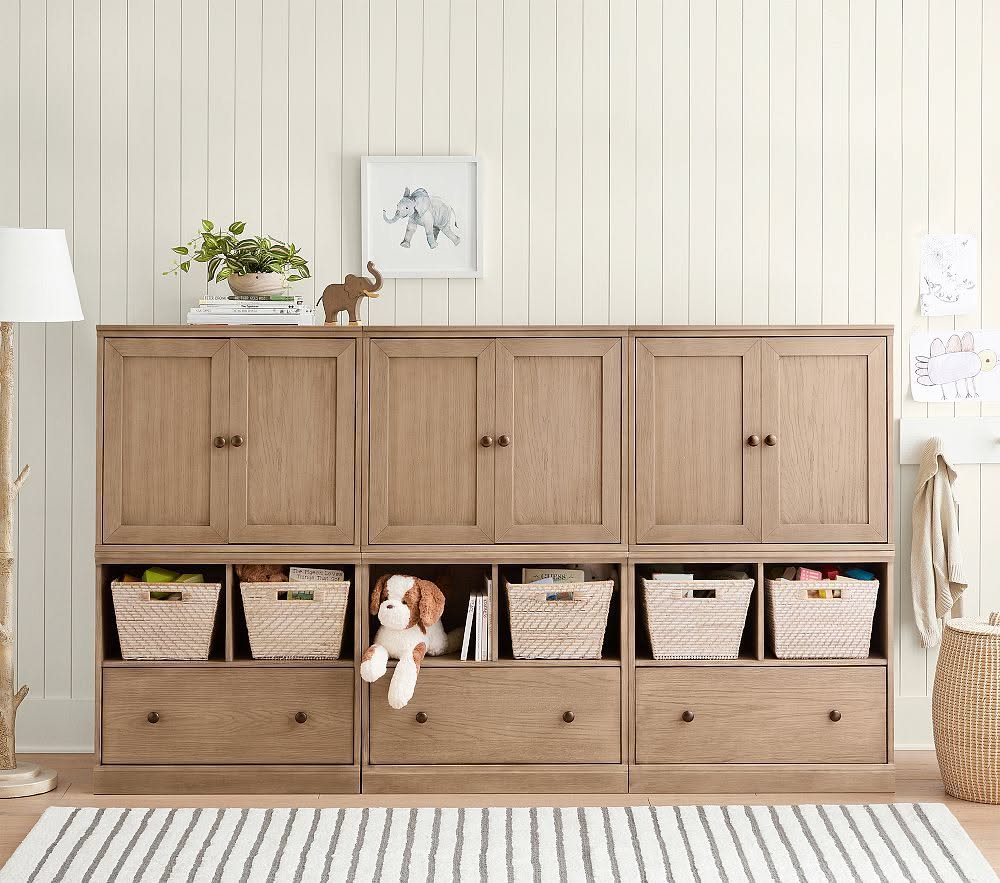
Low cabinets with drawers hide the visual noise that makes a playroom feel chaotic, but the toys stay within reach for kids who want to play and help clean up.
We like a unit with a bench ledge on top; it gives you a place to sit while the drawers below hold everything.
Inside, add baskets or bins to sort by category so nothing becomes a jumbled mess the moment one drawer opens.
2. Cube Storage Organizers
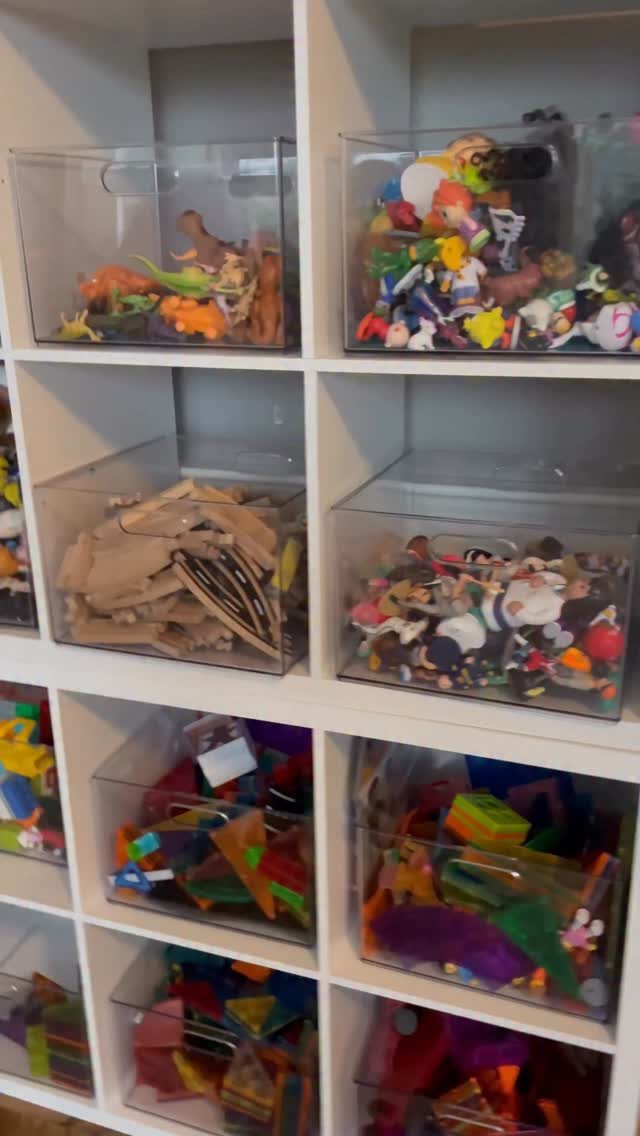
A cube organizer with fabric bins works well for families who need order fast and do not want to spend much.
Clear bins show exactly what is inside, which helps kids find what they want without emptying everything onto the floor. Sort by toy type: one cube for dinosaurs, one for wooden tracks, one for magnetic tiles.
Neutral bins keep the wall from shouting at you, though you can use what you have and upgrade later. We have used these in playrooms, bedrooms, and the corner of a living room that doubles as a homeschool space.
The whole thing sets up in under an hour.
3. Woven Toy Baskets
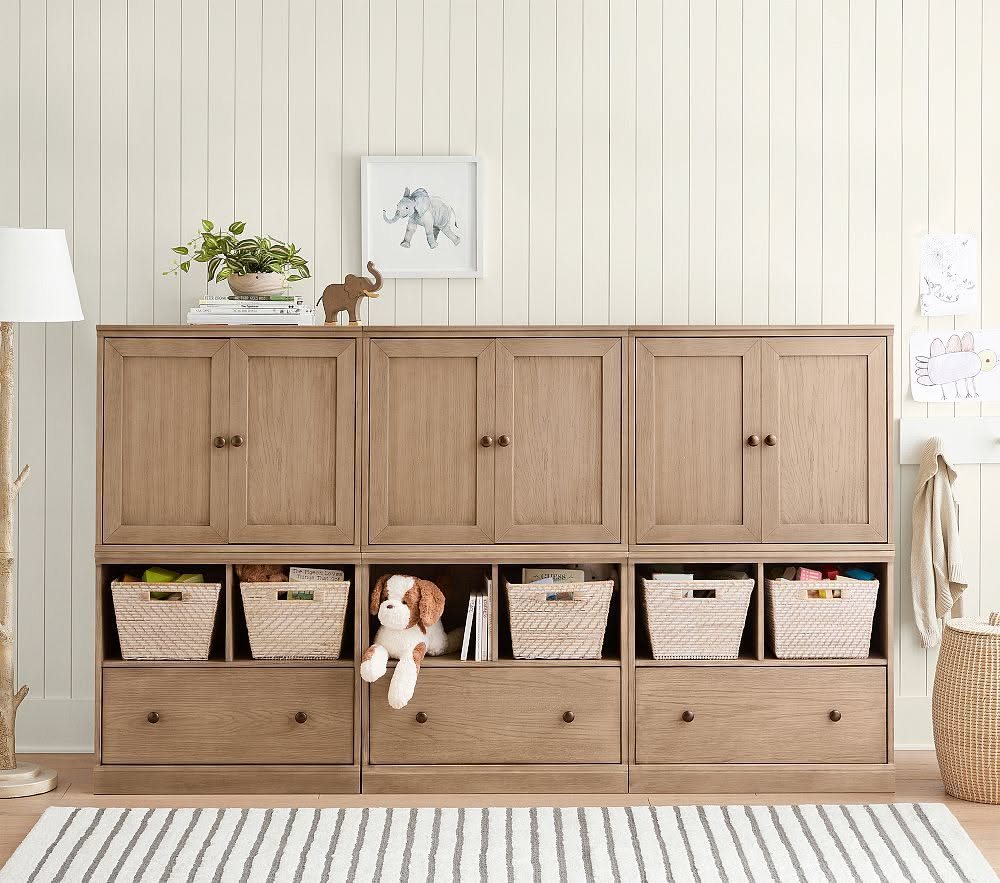
Woven baskets warm up a storage wall so it does not feel like a retail fixture in your living room.
Light-colored ones sit in open cubbies, ready for stuffed animals, books, or the random collection of small toys that migrate downstairs every morning.
Large baskets swallow stuffed animals whole; smaller ones by the couch catch what gets dragged in before dinner. Handles matter more than you think, because kids will carry them and you will too.
This is the choice when you want cleanup to go fast and the room to still look like adults live there. Open baskets do not hide clutter completely.
4. Rolling Toy Carts
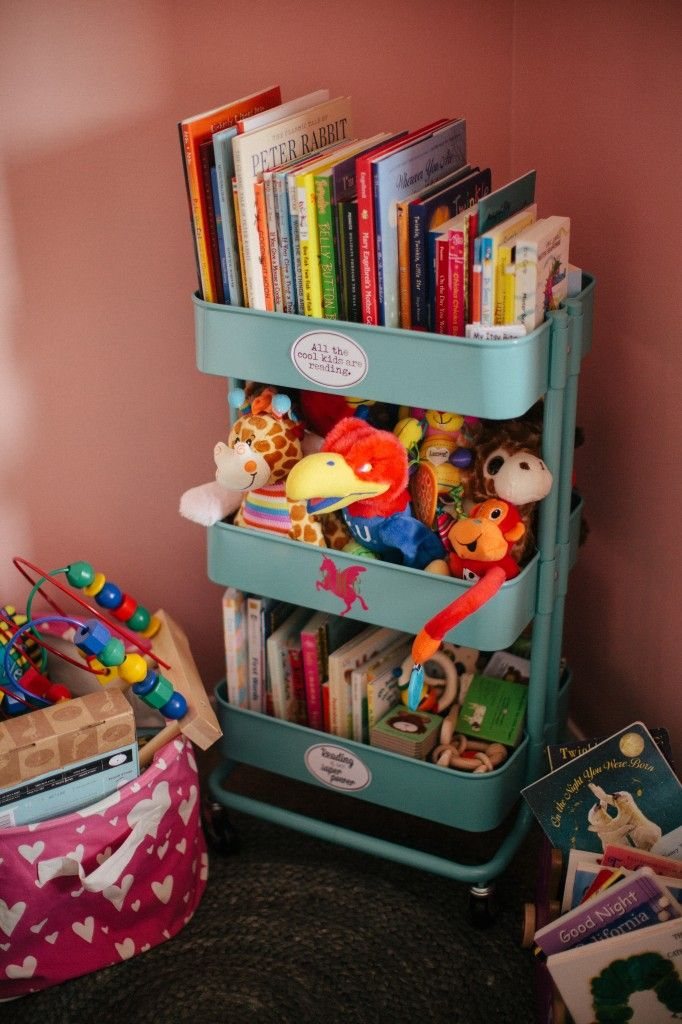
A rolling cart follows the mess instead of forcing you to carry toys back to one fixed spot.
A three-tier version holds books on top and stuffed animals below, with stickers that turn it into something a kid actually wants to use. We put daily favorites on the top shelf: crayons, small toys, whatever they reach for first.
The lower shelves take building sets or puzzles that come out less often. When playtime ends, roll the whole thing into a closet or corner.
It is metal, so it wipes clean, and the wheels mean you can move it outside in summer without making three trips.
5. Wall-Mounted Toy Storage
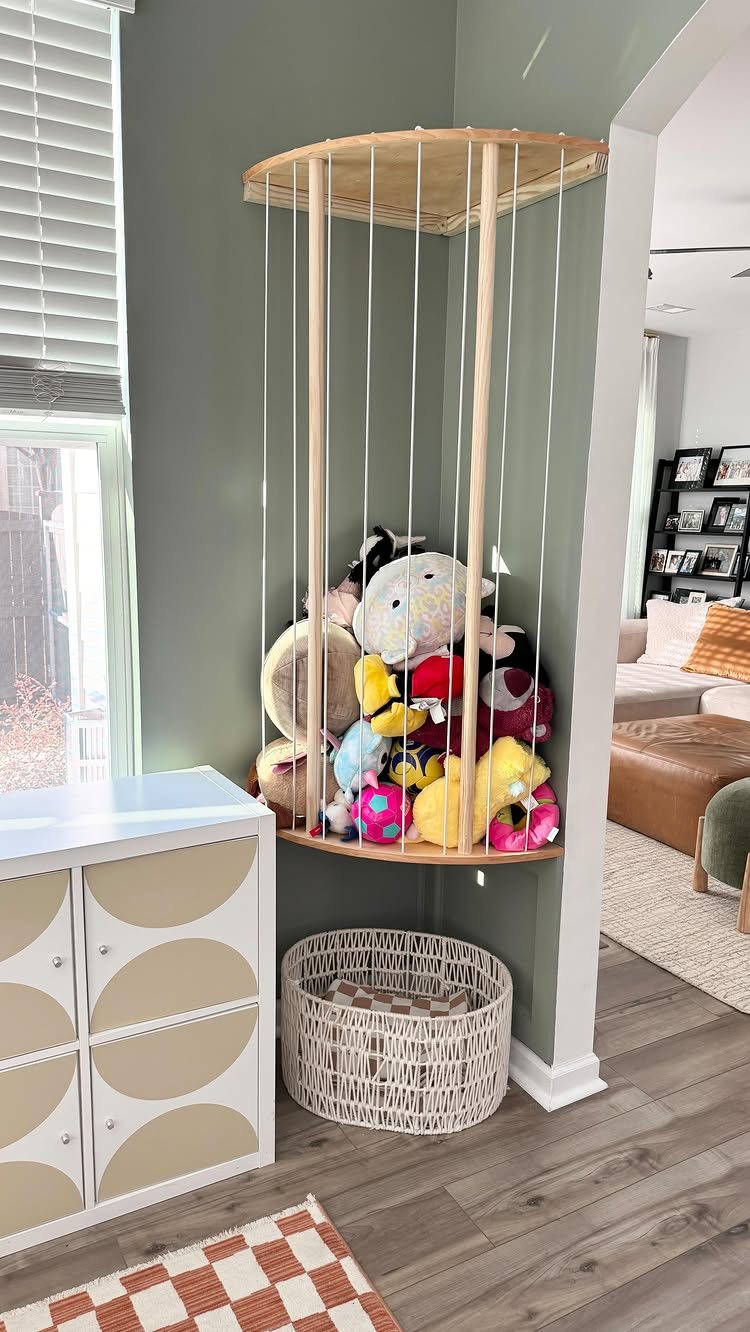
When floor space is gone, the walls are still there. A corner-mounted cage uses vertical rope or bungee cord to hold stuffed animals in a column of color, with a basket below for overflow.
You can also add wall-mounted baskets for smaller toys, or a pegboard for dress-up accessories and art supplies. Kids can reach what they need without climbing furniture, and you keep the center of the room open for actual play.
Installation takes an afternoon and basic tools. This suits small rooms best, or any space where adding another piece of furniture would mean giving up walking room.
6. Clear Storage Bins

Clear bins end the dump-and-search routine because kids can see the contents without pulling everything out. Labels speed cleanup even more, especially for pre-readers if you use pictures.
Stack them in a closet, slide them under a bed, or nest them inside a cube organizer. The cost runs low if you start with a few and add as you sort.
This is our pick for families drowning in small pieces: Lego, cars, figurines, anything that disappears into a solid bin and never comes out again.
7. DIY Lego Table
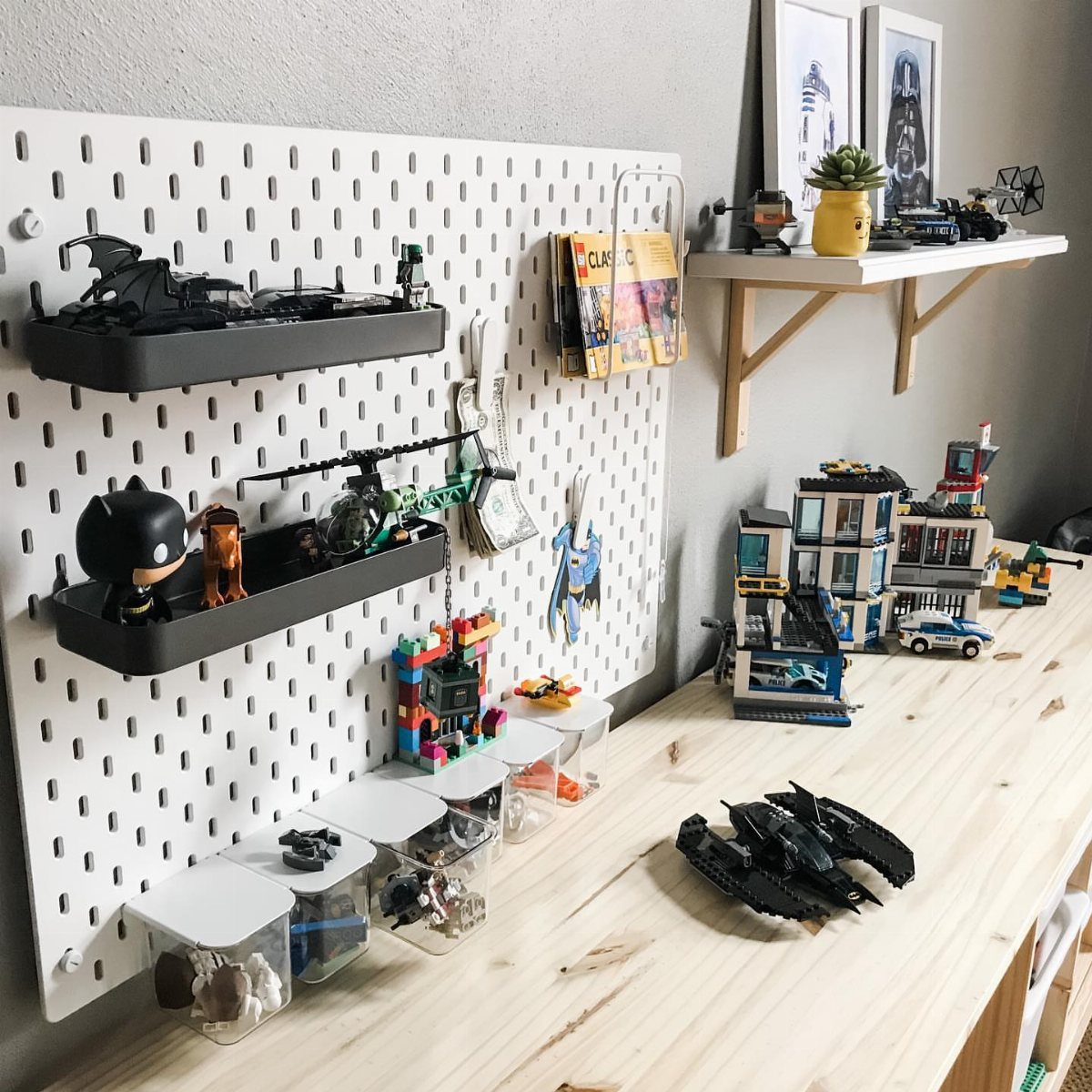
A dedicated Lego table gives bricks a home base so they stop migrating under the couch and into the vacuum.
You can convert any low table you already own, or build one from plywood and two-by-fours with a couple afternoons and some basic cuts.
Mount a pegboard behind the table to keep instructions, minifigures, and small bins within arm’s reach while kids build.
We like that setup because the board holds finished builds on black shelves, stores manuals in hanging pockets, and keeps small clear bins of sorted pieces at eye level. The table surface stays open for active building.
If you want a cleaner look, skip the pegboard and screw Lego baseplates directly to the tabletop instead. That keeps plates from sliding and gives kids a permanent foundation to build on.
This suits families whose kids build daily, not occasionally. It eats floor space permanently, so a rolling cart that stashes under a bed works better for intermittent builders.
Toy Rotation Benefits
Toy rotation works because kids engage more deeply when they are not overwhelmed by choice.
We leave a handful of toys the kids reach for most and move the rest into bins marked by what’s inside, stacked where they can’t see them.
Every few weeks we swap them, and toys that sat ignored suddenly get attention again. The room stays calmer without buying more storage, and kids learn to value what they have out.
Importance of Labeling
Labels turn cleanup into a task kids can finish without help. Picture labels work for pre-readers; words work for everyone else.
Our bins get named for what goes in them: the car box, the block box, the doll basket, the art drawer. Keep the text large and the placement obvious.
The setup takes time once, but after that toys go back to known homes instead of piling up for you to sort later.
Utilizing Vertical Space
A pegboard on the wall puts dress-up clothes, paint supplies, or play tools right at eye level where small hands can actually get to them.
Floating shelves hold the books they want at bedtime, the puzzle they’re working, or the two or three toys that cycle through every single day.
Aesthetic Storage Solutions
Storage does not have to look like it belongs in a machine shop. We like handles on anything kids carry, and materials that wipe clean after sticky fingers.
Frequently Asked Questions
What is the best way to organize a lot of toys?
Use a mix of labeled bins, vertical storage, and toy rotation. Wall-mounted options like pegboards or rope cages free up floor space when you are out of room.
What is the 20 toy rule for kids?
The 20 toy rule means keeping only twenty toys available at a time and boxing the rest away. It cuts clutter and helps kids focus on what they have instead of dumping everything to find one thing.
We find it works best paired with clear bins and a rotation schedule, so the stored toys feel new when they come back out.
How does the Montessori method organize toys?
Montessori-style organization keeps toys at child height in open, accessible containers so kids choose independently. Low cabinets, open baskets, and clear bins on reachable shelves fit this approach.
The method favors fewer toys out at once, sorted by category, with everything visible and within easy reach without climbing or asking for help.