Start this checklist by week 28, or you will be assembling a crib at 36 weeks while your partner times contractions.
Most parents burn through twelve diapers a day from day one, and running out at 10 p.m. is not a project you want.
Working through the list takes one evening to read, then a few paychecks to spread the cost across. The catch: the market is full of gear that gathers dust while the basics get underestimated.
[link-whisper-related-posts]Diapering

Newborns burn through 10 to 12 diapers per day, so the math gets real fast. We learned to keep two to three large boxes of newborn disposables on hand at all times, whether you go with cloth or disposable.
Running out at 10 p.m. is not a project you want.
- Diapers: Stock two to three large boxes of newborn disposables, or several dozen if you are using cloth. Either way, plan on 10 to 12 changes daily for the first weeks.
- Wipes: Grab two to three large boxes and make them unscented. Newborn skin reacts to fragrance more easily than you’d expect, and we saw the difference plain as day.
- Diaper cream: Keep two large tubes within arm’s reach of the changing station. We worked it into every change as a barrier, not just when rash showed up.
- Changing pads: One for home, one for the diaper bag. The portable one saves you during the outing that runs long.
- Diaper bag: Your mobile command center. We restocked it every Sunday so we were never counting wipes in a parking lot.
Clothing

Clothing is where most registries get bloated, and where we almost overbought ourselves. Onesies and sleepwear are the two pieces every source calls non-negotiable; everything else shifts with season and how often you run laundry.
- Onesies or bodysuits: 7 for a registry, 6–10 total. You’ll cycle through more than you expect, and they’re the gift everyone gives, so register for the middle of the range and let relatives fill the rest.
- Sleepers or footie pajamas: 4 for a registry, 6–10 if you’re buying yourself. Match this number to your onesie count so you can run one laundry load for both.
- Pants: 3–5 pairs on a registry. We skipped newborn pants entirely and went straight to 0–3 month; the waistbands swallowed our baby either way.
- Socks: 6–10 pairs. Same logic as onesies, and they disappear into the same void as adult socks.
- Hats: at least one seasonally right one, soft cap or brimmed depending on when your baby arrives. A winter knit cap bought for a July baby is likely to sit unused until it is outgrown, so match clothing to the season you are actually in.
- Mittens: one pair to start, mainly for scratching, not warmth.
Size split matters more than quantity. Register across newborn and 0–3 month, and buy a coming-home outfit in both newborn and preemie size.
Even a 7–8 lb baby can swim in a newborn onesie for the first two weeks.
Feeding

Feeding gear depends on how you plan to nurse, but some items belong on every baby needs list regardless.
- Insurance often covers a breast pump and replacement parts while you’re nursing. Call your provider before you buy; a hospital-grade electric pump can run hundreds out of pocket.
- Keep a couple bottles on hand even if you plan to breastfeed exclusively. If you pump, you’ll need them for expressed milk, and having a backup plan beats a midnight panic.
- Try a variety of bottles and nipples before you commit. Flow rate, shape, and material all matter, and babies are picky. What works for your friend’s newborn may not work for yours.
- 10–12 burp cloths is the number that gets you through a week without constant laundry. Bulk washcloths work too if you want to save a few dollars.
- Bibs catch what burp cloths miss. Five to ten keeps you from rinsing between every feeding.
We skipped the nursing pillow at first and regretted it within two days. The U-shaped support saves your shoulders more than you expect.
Sleep

A crib or bassinet is the centerpiece of newborn sleep, and the details matter more than the finish. We looked at what actually keeps a baby safe versus what just looks nice in a nursery photo.
- Crib slats must be no more than 2 3/8 inches apart. Anything wider and a baby’s head can slip through.
- The mattress has to be firm and fit tight to all four sides with no gaps. A soft or cushioned surface is not safe for sleep.
- Pick a crib, bassinet, portable crib, or play yard with the proper product label. That marking means it meets current AAP and CPSC standards.
- Skip the extras. No bumper pads, pillows, blankets, or toys in the sleep space. A bare crib reduces suffocation and SIDS risk.
- Get at least two fitted sheets so you are never stuck waiting on laundry.
- Add at least two swaddling blankets. We found two to be the practical minimum for rotation, though having a few more helps when blowouts happen at 2 a.m.
One thing we would not do: buy secondhand for anything with a safety standard attached. A hand-me-down dresser is fine.
A used crib might predate the rule you are counting on.
Bathing
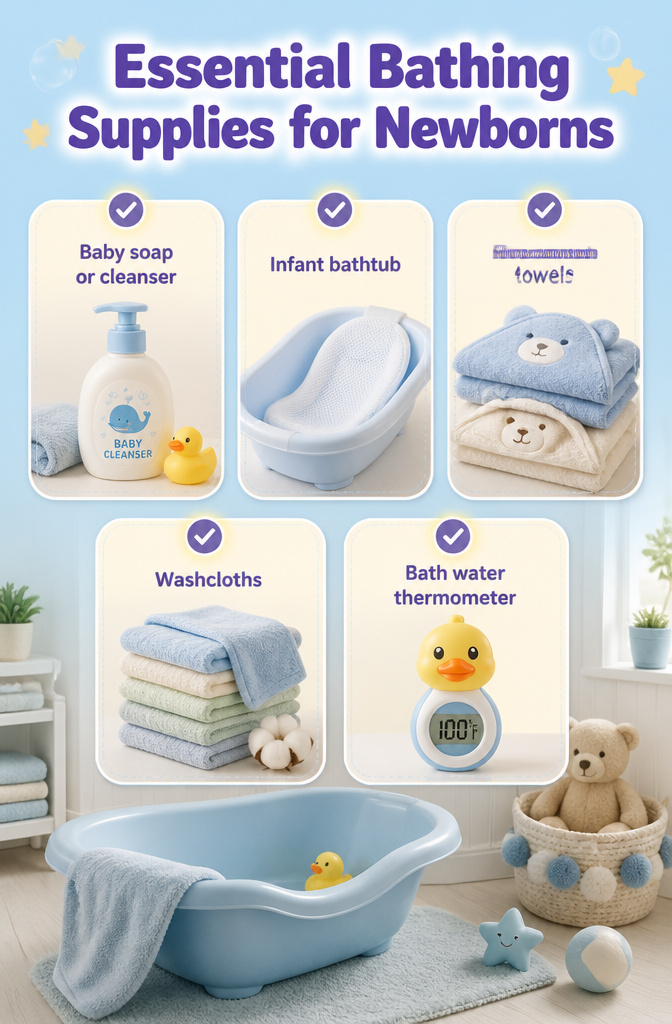
Newborns need two to three baths a week, and the math on laundry adds up fast. We keep six to eight washcloths and at least two hooded towels in rotation so you are not running the dryer every other day.
- Baby soap or cleanser: Pick something gentle and tear-free, formulated specifically for babies. Mild formulas matter here; their skin is sensitive and regular soap strips too much.
- Infant bathtub: A plastic tub with a newborn insert gets you through sponge baths until the umbilical cord stump falls off, then the transition to real baths. Skip the insert later and the same tub still works.
- Washcloths: Six to eight. Soft cotton, nothing fancy. You will use them for wiping from top to toe and you will go through them.
- Hooded towels: Two minimum, three if you want breathing room. The hood keeps heat from escaping out the top while you dry them off.
- Bath water thermometer: Water around 100°F, tested with a thermometer, not your wrist. Warm, not hot.
Health and Safety

Newborns do not give clear signals when something is wrong, so we keep a small kit ready and know how each tool works before the moment arrives.
- Rectal thermometer for the most accurate reading of a newborn’s temperature. Forehead thermometers are not reliable at this age; we skip them entirely.
- Nail clippers and a file, because baby nails grow sharp fast and scratch their own face before you notice. Trim after a bath when the nail is soft.
- First-aid kit stocked and stored where you can grab it one-handed. A solid kit includes a nasal aspirator, antiseptic wipes, round-tipped scissors, and bandages. We built ours from a checklist rather than buying pre-packed; either works if you verify the contents before you need them.
Getting Around
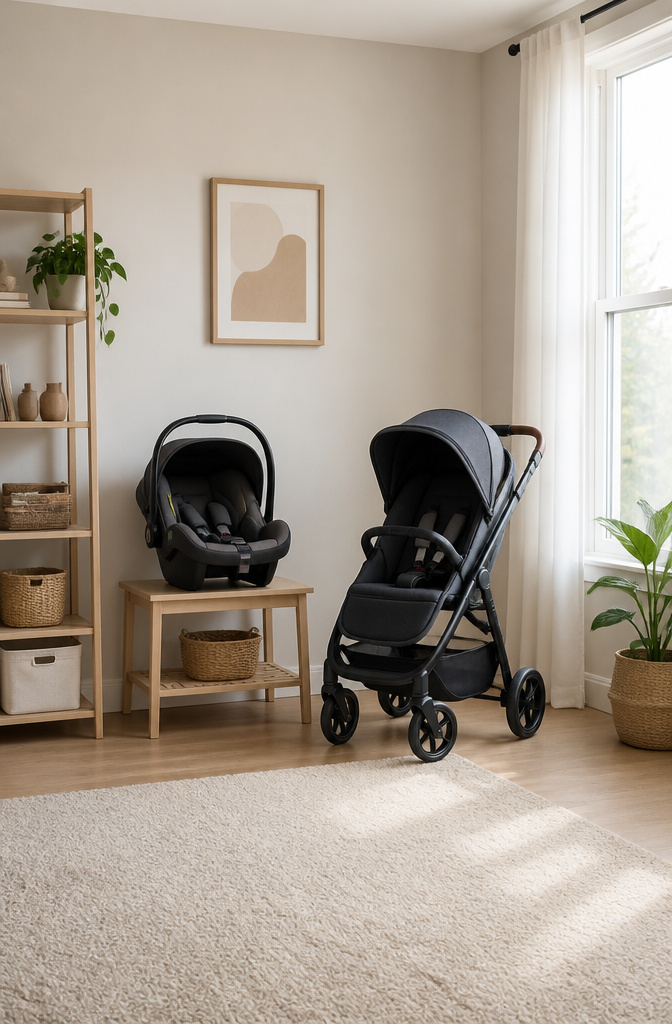
You cannot leave the hospital without a car seat that meets current safety standards, and you will use it daily from that first ride home.
We have watched new parents stall in the discharge hallway while staff double-check the install, so we suggest practicing with a doll or bag of flour before the due date.
- Choose a car seat that fits your car’s back seat width and your budget; convertibles last longer but infant carriers snap into strollers for errands.
- Match the stroller to your actual terrain, not your ideal one. Small wheels and smooth mall floors are one thing, cracked sidewalks and gravel paths are another.
- Test the fold one-handed in the store aisle. If it takes two hands and a foot, you will leave it in the trunk more often than you think.
- A stroller that accepts the car seat directly, no adapter hunt required, saves ten minutes per outing when the baby is already crying.
Soothing

Pacifiers belong in your bag as a calming tool, not a feeding substitute. We keep two to four on hand because they vanish exactly when you need one most.
- Buy 2–4 pacifiers. One in use, one in the diaper bag, and at least one spare for the gap under the car seat you will not find until the crying stops.
- Use them to settle the baby between feeds, not to replace a nursing session or bottle you already planned. The sucking reflex is strong in newborns, and a pacifier channels it without adding ounces they are not asking for.
- They get lost. Tuck a spare into every regular bag and the glove box. The backup you never bought is the one you will want at 2 a.m.
When to Start Buying
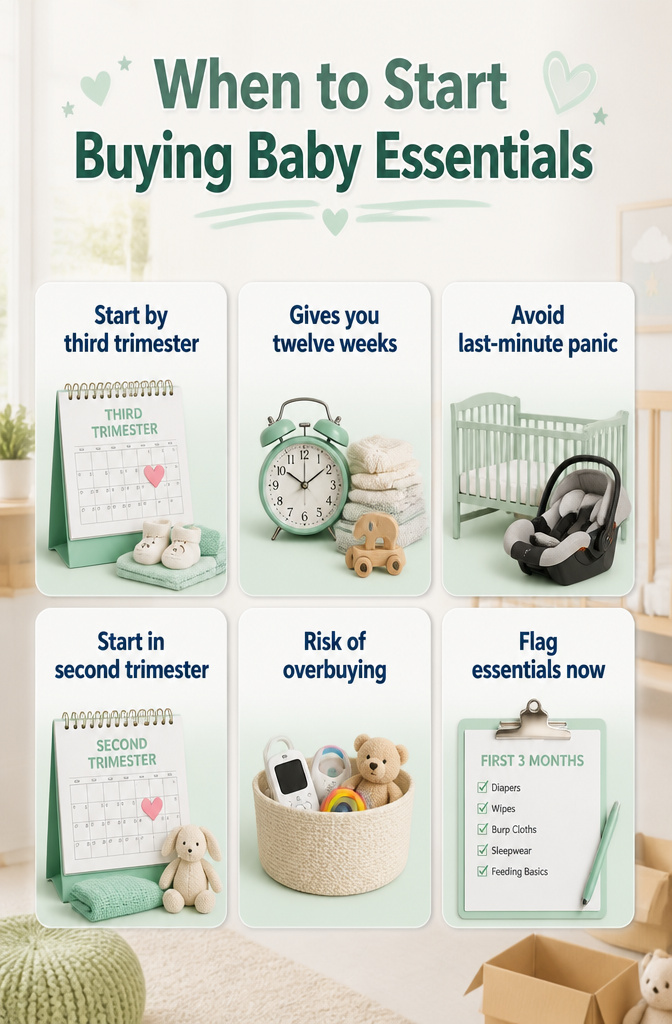
Most parents we talk to start their baby needs list right around the start of the third trimester.
That gives you roughly twelve weeks to research, compare, and spread purchases across a few paychecks instead of swallowing the whole cost at once.
We have seen the panic set in when someone waits until week thirty-six and realizes the crib still needs assembly and the car seat needs inspection.
Starting in the second trimester works too, especially if you want time to test-drive a stroller or sit in a glider before committing. The risk there is overbuying.
We have watched registries balloon with gadgets that gather dust while the basics, like enough burp cloths, get underestimated.
If you are mid-project on the nursery or the registry, start the list now and flag what you actually need for the first three months. Everything beyond that can wait.
The market will still be there after the baby arrives, and your hands will be full enough without managing returns on items you bought too early.
What to Skip

You can trim a baby needs list way down and still cover the basics. Secondhand clothing and toys work fine, and hand-me-downs save money on things a baby outgrows in months anyway.
We have seen parents get through the first year with little more than a crib, a stroller with car seat, a play mat, diapers, and a few outfits.
The line sits at safety gear. Cribs, car seats, and baby gates need to meet current standards, so skip the used ones unless you can verify the manufacture date and check for recalls yourself.
Older or damaged equipment may not perform the way you expect.
For everything else, a towel on the bed substitutes for a changing table, a shower in your arms replaces a baby tub, and a high chair that clips onto a real chair lasts years without the bulk.
Space and budget are limits, not excuses, if you buy only what you will use in the first few months.
Frequently Asked Questions
What are baby registry must-haves for a first-time parent?
A crib, car seat, stroller, diapers, wipes, diaper cream, breast pump, bottles, burp cloths, and a diaper bag cover the essentials. Focus on safety-rated sleep gear and feeding basics before adding extras like a changing table or monitor.
What items do you actually need for a baby?
For the first three months, you need a safe sleep space with a firm mattress, a car seat, diapers, wipes, a few outfits, feeding supplies, and a way to get around.
Safety gear such as cribs and car seats should be new and current-standard; nearly everything else can be secondhand or improvised.
What are the essential things I need for a newborn baby?
Newborns need 10–12 diapers daily, 6–10 onesies, 6–10 sleepers, 10–12 burp cloths, a rectal thermometer, nail clippers, infant-safe soap, and a car seat you can install correctly. Two fitted crib sheets and two swaddle blankets keep laundry from running your schedule.
How much clothing should I register for?
Register for 7 onesies or bodysuits, 4 sleepers or footie pajamas, and 3–5 pairs of pants. Fill gaps with hand-me-downs and gifts; split sizes across newborn and 0–3 month so your baby does not swim in everything from day one.
What diapering supplies do I need?
Two to three large boxes of newborn diapers, two to three large boxes of unscented wipes, two tubes of diaper cream, a changing pad at home plus one for the diaper bag, and the diaper bag itself.
Expect 10–12 changes daily at first.
What feeding supplies do I need?
A breast pump, a few bottles even if nursing, 10–12 burp cloths, 5–10 bibs, and a bottle brush for cleaning. Try multiple nipple shapes and flow rates before stocking up; babies reject bottles for reasons you cannot predict.
When should I start buying newborn essentials?
Most parents start around the beginning of the third trimester, which leaves about twelve weeks to research, compare, and spread costs across paychecks.
Starting in the second trimester works too if you want to test strollers or chairs in person, but guard against overbuying gadgets.