Plush storage can run from a stuffed animal hammock in the corner to vacuum seal bags under the bed, and the right pick depends on whether the toys still get dragged around daily or have shifted to "look but don’t touch."
A macramé hammock with three wooden rings keeps lightweight plush visible in a tight corner, while vacuum seal bags flatten seasonal collections to slide under the bed.
[link-whisper-related-posts]1. Stuffed Animal Hammock

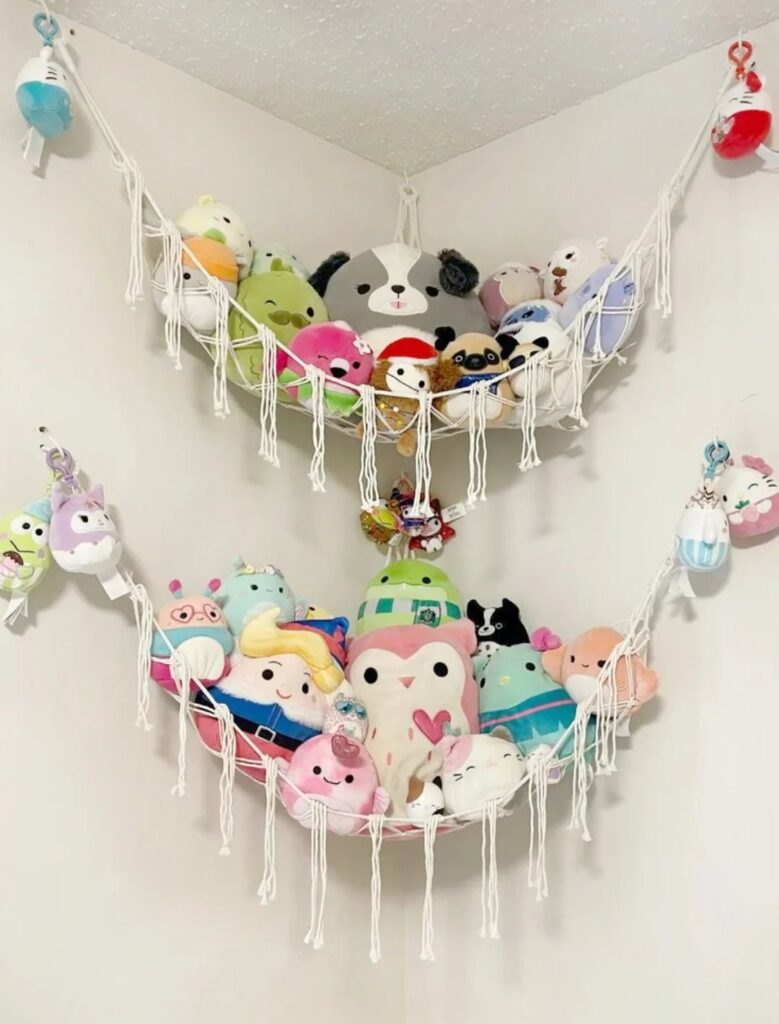
A macramé hammock turns an empty corner into usable storage. We like this for small bedrooms where floor space is tight and the bed already claims the center of the room.
The hooks that come with it are stainless steel, and three wooden rings stretch the netting so toys don’t all slide down into one pile. Lightweight plush work best here, anything heavier will sag and pull.
Hang it away from the bed if you are putting much weight above sleepers, though soft toys alone are a safer bet than hard plastic. This one adds a boho look that reads as decoration, not clutter.
Each custom hammock is made with natural cotton cord, supportive solid wood bars, and can hold six to 15 soft toys.
2. Stuffed Animal Zoo

Bungee cords stretched across a cube shelf turn ordinary storage into a zoo cage kids actually want to use.
The cords keep toys visible and grab-able without dumping them across the floor every time someone wants the one at the back.
You can build this with wood and cord from a hardware store, or buy a finished unit with child-safe bars already fitted. IKEA’s cube shelves are a common starting point because the dimensions are standard and the finish holds up.
Vertical or horizontal, it works in odd-shaped rooms where a toy box would stick out too far. Best for toddlers and early elementary kids who still want to see their whole collection at once.
3. Bean Bag Storage

An empty bean bag cover filled with plush toys becomes a seat kids will actually sit in. Zip it closed and the clutter disappears into something that looks like furniture.
This suits older children who have outgrown the toy zoo stage but still sleep with a few favorites; it also works in shared living spaces where a pink plastic bin would not pass.
Check that your cover’s zipper is sturdy, because a cheap one will split once the filling gets dense. The same bag can hold spare bedding later, so the purchase does not expire when the plush phase ends.
4. Over-the-Door Organizer

A wire rack over the door puts stuffed animals at kid height without taking wall or floor space. Individual baskets keep toys separated and visible, so nothing gets lost at the bottom of a deep bin.
We have seen parents color-code one basket per child, which cuts the arguing in shared rooms. This works best for smaller plush; a large teddy will overhang and snag every time the door moves.
Check your door clearance first, because the rack adds several inches and a tight hallway will mean constant bumping. Shoe organizers with fabric pockets are a softer alternative if the wire feels too utilitarian.
5. Vacuum Seal Bags

Vacuum seal bags compress plush toys to a fraction of their bulk for storage under beds or on closet shelves.
Compression flattens whatever goes in: a stuffed animal that starts fluffy comes out looking deflated, and the longer it stays sealed, the longer it takes to spring back. We would not use these for anything a child sleeps with nightly.
For seasonal rotation or sentimental pieces kept for years, the trade is worth it. Check whether your toys have stuffing that rebounds; polyester fiberfill bounces back better than older cotton batting.
Clear plastic lets you label without guessing which bag holds what.
6. Stuffed Animal Display Case

A rolling cylinder case with a clear wall protects display-worthy plush from dust while keeping them visible. The bear-shaped lid on this one adds a playful touch that signals "kids space" rather than collectible cabinet.
Wheels matter if the collection moves rooms or if cleaning day means rolling everything aside. Fairy lights inside are optional; they look nice in photos but add heat and a battery to maintain.
This solution suits the child who has outgrown daily rough play but still wants favorites on view, or the family preserving limited-edition pieces that will matter later. For active daily use, an open bin wins every time.
Cleaning Before Storage
Wash plush toys before they go into any closed storage. Check the care tag first: machine-washable ones go into a mesh bag on delicate cycle with mild detergent and cold water.
For hand-wash only, use cool water with a small amount of mild detergent in a sink or bowl, then rinse well. Either way, dry them completely.
Any trapped moisture will grow mold or mildew inside a bin or bag.
If a toy has taken a real beating, snip the short seam on the back, pull out the stuffing, and wash the shell separately. It dries faster and you can replace old stuffing with fresh.
Hang everything outside if weather allows.
Surface grime and food residue attract pests, so even toys that look clean get a pass with a damp cloth before they go away.
Maintaining Humidity Levels
Keep stored plush in a cool, dry spot with humidity between 45% and 55%. Basements and attics usually fail on one or both counts, so pick a closet inside the house instead.
If you are using sealed bins, toss in a silica gel packet or a small charcoal air purifier to pull residual moisture out of the air inside.
In humid climates, skip the hard plastic and go with breathable fabric containers; airflow keeps stuffing from flattening or taking on a musty smell.
The same moisture that grows mold weakens fabric over time, so this matters even for toys that will only sit for a season.
Rotating Toys
Pull stored plush out every few months for a quick check. A quick shake knocks dust loose and works the stuffing back into place so the toy keeps its shape.
A fabric steamer helps if anything has gone flat or stiff.
Set them in indirect sunlight for an hour or two, not direct sun that fades color. While they are out, run your fingers along seams for splits or weak spots.
A small tear caught early takes one quick stitch; leave it and the filling escapes, and the toy is done for.
This also keeps you from forgetting what you have stashed away. A child who has not seen a favorite in half a year will greet it like new, which stretches your existing collection without a trip to the store.
Frequently Asked Questions
What is the best way to store plush toys?
Use a mix of open and closed storage: keep daily favorites in something grab-and-go like a zoo cage or hammock, and tuck overflow or sentimental pieces into sealed bins or vacuum bags.
Open storage keeps toys in rotation and off the floor; closed storage protects the ones that sit unused for months. For long-term keeping, pick a clean, dry spot away from sunlight and damp basements.
What are some creative toy storage ideas?
Repurpose a bean bag cover so stuffed animals become the filling, turning clutter into furniture. Stretch bungee cords across an IKEA cube shelf to build a zoo cage where toys stay visible and reachable.
For a softer take on utilitarian wire, try a fabric shoe organizer over the door instead.
What age should kids stop having stuffed animals?
There is no set age; it depends on the child and their attachment. Some kids move on in early elementary, others keep favorites into their teens or beyond.
When a plush simply stops getting attention, that is the time to decide whether to donate, hand down, or store it. For pieces with sentimental or monetary value, long-term storage in a clean, dry bin keeps options open.
How do I keep pests out of my stuffed animal storage?
We keep our off-season plush in bins that seal tight, up on a closet shelf where the kitchen crumbs don’t reach. Avoid attics, garages, and damp basements where pests thrive.
Remove any lingering odors before you seal toys up; traces of food or sweat attract rodents and insects. Check stored toys periodically even in closed containers.
Should I wash stuffed animals before I store them?
If the tag says it can go through the wash, run it first. Clean toys according to their label and let them dry fully before sealing them up; trapped moisture causes mold, odor, and fabric damage.
Getting stains and smells out before storage also helps deter pests.