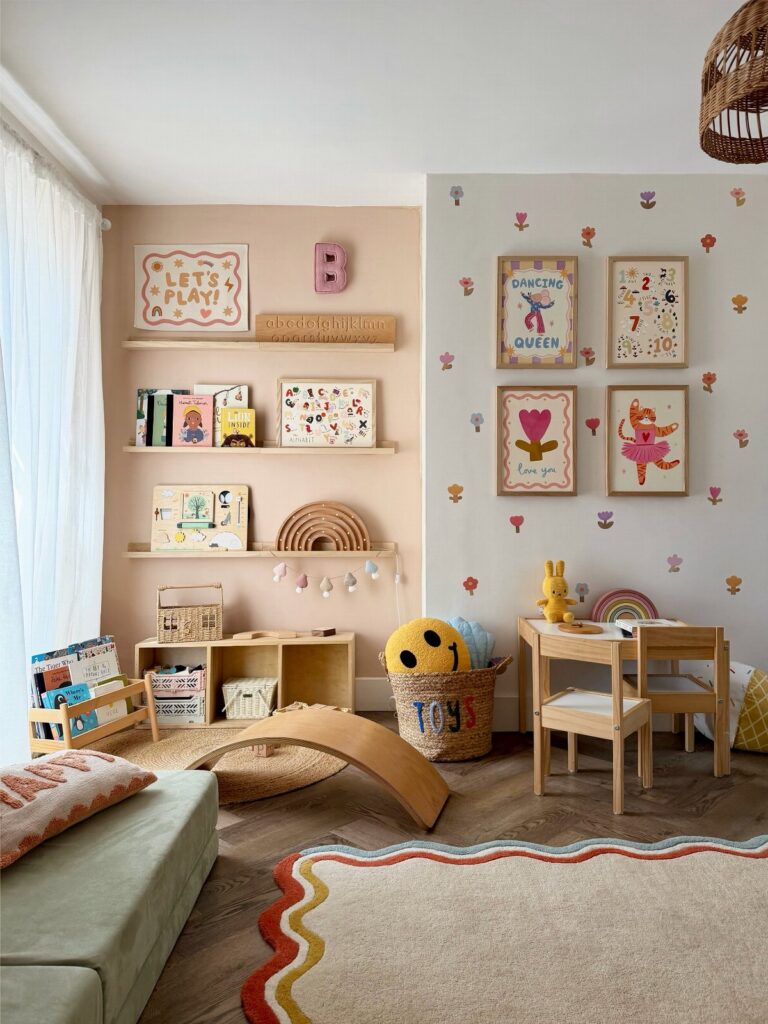
Playroom wall art can run from a single afternoon with a dollar-store budget to a weekend build with pine boards and a staple gun.
What decides which idea is yours is whether you want something that peels off when the kids outgrow it or something that stays for the long haul.
Walls in rented homes have to survive a child’s changing mind, which is why museum wax on frame corners and peel-and-stick decals that leave no residue both exist.
[link-whisper-related-posts]1. Gallery Wall of Masterpieces

A gallery wall turns the art your kid already makes into the main event.
We like painter’s tape and rosin paper for laying out the arrangement before you touch a nail; tape the paper to the wall, mark where hangers go, then transfer.
Matching frames keep the look clean when the art inside is chaotic, or mix sizes salon-style for more energy. Museum wax on the bottom corners stops frames from shifting, which matters more in a playroom than anywhere else.
String with clips lets you swap pieces without new holes; we rotate ours seasonally or whenever a masterpiece arrives home. Best for kids old enough to notice their work displayed, and for parents tired of refrigerator clutter.
2. Whimsical Wall Decals

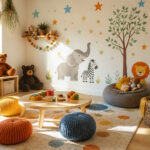
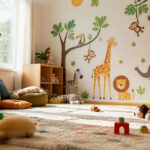
Removable decals buy you playfulness without commitment, which suits a room whose occupant will reject dinosaurs for space by next year.
Apply them to one wall or scatter them around corners and door frames; animals, story characters, or geometric patterns work the same way. Peel-and-stick goes up in minutes and leaves no residue when tastes change.
Stenciled paint is cheaper if you have a steady hand and a weekend. Murals run larger and more permanent; decals win for renters or the indecisive.
3. Interactive Chalkboard Walls

Chalkboard paint gives kids permission to draw on the wall, which is most of the appeal. Coat the whole wall or frame a section with painted trim for a finished edge; planets and labels turn this into stealth learning.
Dust-free chalk or liquid markers keep the mess tolerable. Pick a wall near a window so kids can see their own work, and expect to sweep the ledge sometimes.
We framed ours with white painted wood to keep it from reading as a black hole in a small room. Better for kids past the everything-in-mouth stage; younger ones need supervision with chalk fragments.
4. DIY Fabric Wall Art

Stretching fabric over wooden frames or embroidery hoops gets you color and pattern without paint or printing costs. Quilted mountains and hills add texture and hide uneven edges if your cutting is imperfect.
Lightweight cotton or canvas staples easily; thicker quilting cotton needs a heavier-duty stapler and possibly glue at the corners. We built ours from 1×2 pine and cheap muslin backing, then stretched the good fabric over the front.
One yard covers several small frames if you plan the cuts. Faster than sewing a whole quilt, and the shapes can follow whatever your kid is into that month.
5. Mood-Boosting Colour Block Paintings

Bold shapes and saturated colors carry a wall without characters or narrative, which means the art ages better than licensed prints.
Overlapping organic forms in bright colors against white brick are easy to mimic; acrylic on canvas gets you close, or paint directly on the wall if you own the place.
We like this behind a reading nook or low play table where the color frames the activity. Keep furniture neutral so the wall carries the room.
Sketch with chalk first, fill in with a wide brush, then touch edges with a small one. This is a single-afternoon project with cheap supplies and no drawing skill needed.
6. DIY Art Installations

Three-dimensional pieces built together beat anything bought, and the materials are usually on hand already. Small bright canvases topped with glitter-covered plastic animals are one way in; we have used paper flowers, yarn-wrapped letters, and fabric banners the same way.
Plastic figurines and craft glue from the dollar store keep this cheap. Let your kid pick the creatures and the paint colors, then assemble while the glue dries.
This is not fast: drying takes hours, glitter travels to the carpet, and the result is more charming than polished. Worth it for the collaboration, and for a child who sees their own choices on the wall.
7. Glow-in-the-Dark Wall Decals

A soft glow from the wall turns bedtime into something a child actually looks forward to.
Stars, planets, or a rainbow with clouds, like the one above the sofa, charge up during the day and shine for an hour or two after lights out.
The decals peel off clean when you move, so renters can use them without patching paint later.
Pick designs large enough to see from the bed but small enough that the glow stays gentle, not garish. We like constellations for kids who are learning them, and simple shapes for toddlers who just need a nightlight substitute.
A dim room all day means a dimmer glow at night, so plan for that. If your playroom has no window, skip this or add a small lamp nearby for an hour each evening.
8. DIY Growth Chart

A growth chart that moves with you beats doorframe pencil marks you leave behind for the next owner.
Interlocking wooden puzzle pieces with hot air balloons and stars work well; hang them so the one-foot mark sits a foot off the floor.
You could paint your own on a pine board, or buy vinyl decals and stick them to a painted plank.
Wood lasts longer and looks intentional; vinyl costs less and lets you change the theme when the room shifts from balloons to basketball.
Either way, write the dates next to the marks, not just the height, or you will forget whose growth spurt you are looking at later.
The real value is after they are grown. You will not keep the house forever, but you can keep this.
Safety Considerations for Decor
Hang anything above the reach of small hands, and keep it light. Canvas works; posters work better because they lie flat and cost little to replace if something happens.
Skip heavy frames where a child plays.
If you are renting, weight becomes even more important. Command strips and similar products hold a surprising amount when you let them set overnight, but check the rated limit and stay well under it.
For anything with depth, like a 3D installation, push it higher than you think; a toddler’s reach extends fast.
Choosing Colors for Playrooms
Red wakes a room up, but too much of it agitates. Use it as an accent, not a base.
Blue steadies attention; a blue wall or a few blue pieces near where a child reads or builds can calm without killing the energy.
Green ties to nature and balance, and kids in green spaces or green rooms show better concentration and less stress. Soft green walls with warm wood trim hold up over years without tiring kids out.
Bright colors and maximalist mixes are fair game in a playroom. The rules loosen here.
Throw out minimalism if you want; clashing shades are allowed. For gender-neutral rooms, skip the old pink-blue split and pick from yellows, greens, oranges, or a mixed bright palette that follows the kid’s own preference instead of a preset scheme.
Involving Children in Decor Choices
Ask a child old enough to answer what they want to see on their wall. Show them two or three real options, not an open question they cannot answer.
Let them pick the creatures for a 3D piece, the colors for a color block wall, or the theme for decals. The collaboration matters more than the result.
Maps, animals, alphabets, or planets give them something to look at and later to name.
A child who helped hang the piece or pressed the decal to the wall owns the room more than one who walked in after it was finished.
Maintaining a Tidy Playroom
Storage that a child can reach builds habit. Low open shelving, labeled baskets, and floating shelves at kid height let them put things back without help.
Pick units with soft curves or natural finishes that do not fight the wall art; bulky plastic bins in bright primary colors work against most decor.
Wall-mounted organizers and cubby holes double as display space for small pieces, which cuts clutter and adds interest at once.
Pegboards and baskets corral craft supplies, animal hooks catch costume pieces, and floating shelves with themed bookends lift books off the floor. Modular units with adjustable shelves shift as the toys shift, from blocks to books to craft supplies.
Frequently Asked Questions
What to put on the walls of a playroom?
Canvas wall art hung above sticky-hand height, posters that lie flat and replace cheaply, or a gallery wall of your kid’s own work with museum wax to keep frames from shifting.
The main thing is keeping it light and safe, since heavy framed pieces can fall and posters or clip systems survive both play and changing tastes.
What are some easy DIY wall art ideas?
Chalkboard paint on one wall or a framed section gives kids permission to draw where they usually cannot.
For three-dimensional pieces, glue plastic figurines or paper flowers onto small canvases; the materials usually come from the dollar store and the project is built together, not bought finished.