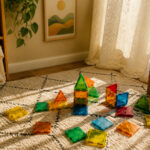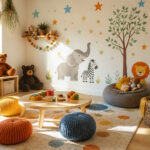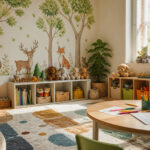
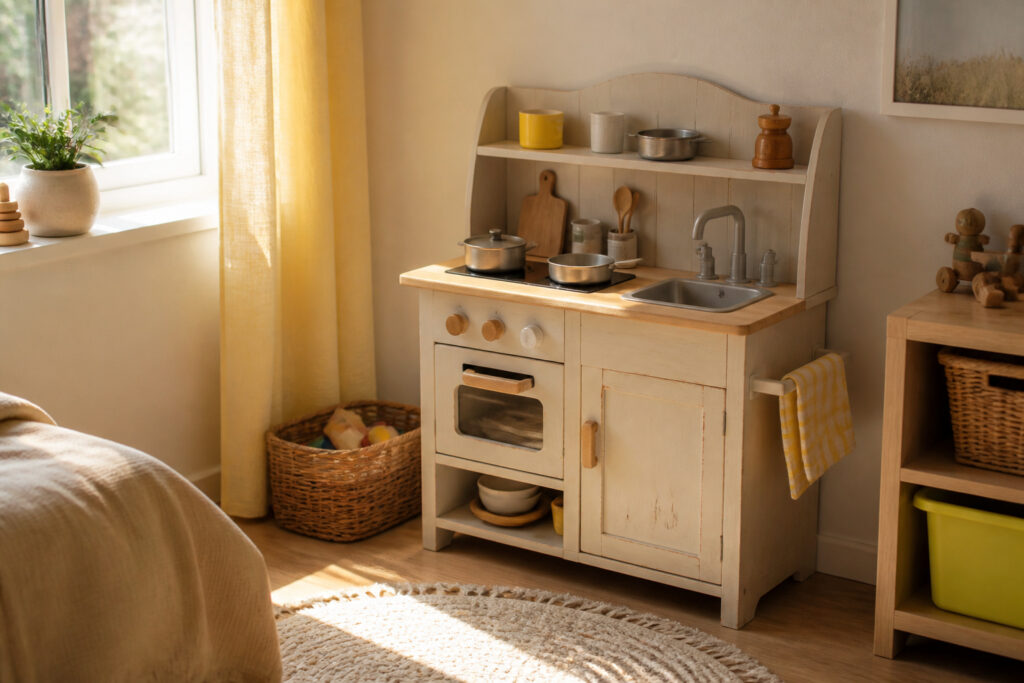
A kids room play kitchen is a scaled-down pretend cooking setup built for toddlers and young children, usually sized between two and four feet tall and priced anywhere from $52 to $799 depending on materials and features.
The same price can get you a bare open frame or a full set of appliances, so what you actually need depends on how your child already plays.
We have watched a three-year-old spend twenty minutes cooling invisible soup and lecturing a stuffed dog about table manners; the right kitchen is the one that sustains that kind of sustained, self-directed play for your kid’s age and your room’s layout.
[link-whisper-related-posts]Mini Wooden Play Kitchen

At $51.99, the Mini Wooden Play Kitchen sits at a price point where you start to wonder what exactly arrives in the box.
What you get is a basic frame, open on the sides and back, with enough surface for a sink cutout and a couple of knobs.
The wood is real, not the hollow blow-molded plastic you will find at this price elsewhere, but the finish is thin and the hardware is minimal.
The corners cut are the ones you would expect. There is no back panel, no side walls, and no oven door that actually opens.
Assembly is straightforward because there is not much to assemble, and the footprint is small enough to tuck beside a real cabinet or into a closet when company comes.
One reviewer noted it would be easy to add your own wood panels later if you want to close it in, which tells you how open the structure starts out.
For daily use, this is a weekend toy, not a daily workhorse. The wood will dent if a two-year-old climbs on it, and the sink basin, if it is plastic, will pop loose eventually.
But at this price, you are buying time to see whether your kid actually plays kitchen before you commit to the $200 sets. If they do, you will replace it in a year.
If they do not, you are out the cost of a nice dinner, not a car payment.
Classic Kitchen Set

At $60.99, the Classic Kitchen Set lands in the middle of what most families spend on a first play kitchen.
That extra twenty dollars over the mini option buys you a full-height back panel, a proper sink basin that holds water, and knobs that actually turn rather than just sit there for show.
The stove gets four burners instead of two, and the oven door opens on a hinge instead of pulling straight off in a toddler’s hands.
We see this tier work best for kids who have outgrown the floor-sitting stage but are not ready for a four-foot-tall setup that dominates the room.
The 36-inch counter height lines up with most two-year-olds’ chests, which means they stand at it naturally rather than hunch. The storage shelf underneath fits actual pots and pans, not just the four-inch toys that come in the box.
A smaller footprint is the main thing you give up. You need about three feet of wall space, and the particleboard frame will swell if someone actually dumps that sink water on it.
We would not put this in a carpeted bedroom without a mat underneath.
Toy Oven

A single toy oven lands in a different spot than a full kitchen set. At $69.90, it costs about half what most complete units run, and it asks for half the floor space too.
We have watched kids treat it two ways. Some loop it into existing play, sliding it beside a dollhouse or a block-built counter and calling it a day.
Others treat it as proof of concept, a test run that ends with requests for a sink, a fridge, the whole lineup.
The play scenarios it enables are narrower but often deeper. Baking cookies for stuffed animals, checking the timer, pulling out a tray of felt brownies, these repeat on loop because the oven is the whole show.
A full kitchen spreads the story across washing dishes and boiling pasta; the oven compresses it into one satisfying arc. For a two-year-old, that compression is usually enough.
By four, the missing pieces start to matter, and you will hear about them.
Whether it satisfies or leads to more depends on the kid and the room. A cramped corner where a full set would block the door, the oven wins.
A child who already plays kitchen at daycare and wants to replicate the whole routine at home, it will feel like a starter kit.
Our take: buy it as a standalone only if space or budget is the hard limit, or if you are testing whether kitchen play sticks before committing to the larger footprint.
Little Tikes First Prep Kitchen

Little Tikes has spent decades proving that thick plastic toys can survive being climbed on, dropped down stairs, and left in the rain.
The $99.99 First Prep Kitchen carries that same reputation: molded corners, no small doors to snap off, and a sink basin that actually holds water for a few minutes before it leaks through the drain hole.
You get a stovetop with clicking knobs, an oven with a see-through door, and a small prep shelf, all scaled for toddlers roughly two to four years old.
At this price, most shoppers end up comparing it to the IKEA Duktig.
The IKEA unit runs about the same money but comes unfinished, which means you are either sanding and painting it the same weekend you assemble it or living with raw wood that shows every juice stain.
The Little Tikes arrives in one color, no assembly of panels, and wipes clean with a rag.
If you need something that goes from box to play in twenty minutes and you do not want to own a set of Allen wrenches for a toddler toy, the plastic route wins.
If you want something that looks like furniture and you have an afternoon to paint, the IKEA route is the better bet.
IKEA Play Kitchen

The $99.99 IKEA DUKTIG is the kitchen every other one gets measured against, and that is mostly because of what you can do to it after you bring it home.
It arrives as plain birch plywood with a sink, a cooktop with knobs that click, and an oven with a see-through door.
The faucet and the phone handset that used to come along are gone now; you buy those separately, along with any pots, play food, or utensils.
The wood construction is real, not the hollow plastic that tips over when a toddler climbs. That matters if you plan to modify it.
We have seen the DUKTIG backed with wood panels to close the open sides, painted in matte black for a kitchen that looks grown-up, or fitted with a real brass faucet from the hardware store.
The hacks from Farah Pro, Almost Makes Perfect, and Brepurposed are the ones people reference most, and they work because the flat panels and simple joints take paint and hardware without fighting back.
You are not paying for a finished showpiece. You are paying for a solid frame that survives a weekend of sanding, drilling, or contact-paper application.
For renters or anyone who wants the kitchen to match the actual room instead of default red and white, that trade is usually worth the ninety-nine dollars.
Tiny Land Kitchen Set

At $119.99, the Tiny Land Kitchen Set sits just above the usual $99 cutoff where most budget play kitchens top out, and the difference shows up in your hands more than on the box.
The wood is thicker, the corners are actually sanded round instead of eased over with stain, and the hardware is metal where cheaper sets use plastic pegs that strip out after a few assemblies.
You will notice it most when a toddler hangs off the oven door; this one does not torque sideways.
The step up buys you a sink basin that lifts out for cleaning, a battery-free faucet with a real hand pump, and a back panel that is finished on both sides so the set looks decent from behind in an open room layout.
Those are not showroom details; they matter when you are wiping peanut butter out of the sink or the kitchen ends up facing the hallway because that is where the outlet is.
Whether the extra $20 is worth it depends on whether you are buying for a two-year-old who will outgrow it in eighteen months or a four-year-old who will cook imaginary meals until first grade.
For the longer timeline, the sturdier joints and removable parts pay back. For a short stint, the $99 tier gets you the same pretend play without the repair cycle.
White and Natural Kids Kitchen

The $129.99 White + Natural Kids Kitchen sits at a price point that asks a direct question: what does seventy dollars over the IKEA Duktig actually buy?
We have watched parents weigh this in the store, and the answer splits cleanly between the room it lives in and the play it gets.
The white finish with natural wood accents photographs better than it survives. The paint shows handprints by day three, and the wood veneer on the door fronts chips at the corners where toddlers pry them open.
That said, the modular two-piece layout adapts to corners better than the single-box IKEA build, which matters in a shared bedroom or a narrow nook between bed and wall.
The hardware tries harder. The ice dispenser turns with resistance that feels mechanical rather than decorative, and the sink basin is deep enough to hold actual water for a washing-up game.
Those details extend play sessions, though not proportionally to the price gap. A child who cooks with sound effects will not notice the difference; one who arranges tea parties by color palette will.
Our call: buy this if the kitchen lives in a common space where you see it daily, or if the modular fit solves a real layout problem.
For a closet-sized play corner or a first birthday where the box matters more than the contents, the lower-priced route leaves room in the budget for pots and felt food that get touched more than the frame.
Little Chef Modern Delight Kids Kitchen

At $239.99, the Little Chef Modern Delight Kids Kitchen sits at a price point that more than doubles what you will spend on entry-level plastic sets. We looked at what that extra money actually buys.
This is the most complete kitchen set we have found in the category. You get the oven, dishwasher, and sink piece plus a separate freezer and fridge combo, not just one unit with a pretend door.
The question is whether the completeness justifies the jump. For a toddler who mostly opens and closes doors, probably not.
For a four- or five-year-old running a full pretend restaurant, the separate pieces matter. They can stage a kitchen that looks like yours, with zones for washing, cooking, and cold storage.
That structure keeps play going longer before they hit the wall of "now what."
Who should consider this tier? You if you are buying once for two kids, or if the kitchen will live in a shared family space where you do not want primary colors shouting across the room.
The modern styling costs more, but it also means you are not hiding the thing in a closet when guests come over.
Milton and Goose Essential Kitchen

The Milton and Goose Essential Kitchen runs $799, which is roughly double what most families budget for a play kitchen. We looked hard at whether that gap closes over time.
The cabinet box is Baltic birch with North American maple face frames, hardware that turns and clicks like a real appliance, and a footprint solid enough that a climbing toddler will not tip it.
A senior kitchen and dining writer at New York Magazine’s The Strategist asked professional chefs and food people what they bought for their own kids; this was the brand that came up.
Heirloom quality, in daily use, means the doors stay aligned after two years of slamming, the finish does not flake where sticky hands grab, and the neutral colorways sit quietly in a living room instead of shouting across it.
One family reported their child started using it at age two and was still at it near age five.
Resale value matters here too: because the build holds up, secondhand prices stay closer to retail than plastic competitors that crack or fade.
Still, $799 is a lot for a toy that will be outgrown. We think the math works if you have multiple children, plan to resell, or simply want one piece that does not need replacing.
If your budget caps closer to $400, the value proposition thins out fast.
What Imaginative Play Actually Looks Like

Kids do not play kitchen the way the box suggests.
In our floor models, we have watched a three-year-old spend twenty solid minutes filling a plastic pot with invisible soup and telling it to cool down, then serve it to a stuffed dog with a lecture about table manners.
That is the work: not mimicking you, but rehearsing control over a world they can manage.
The role-playing shifts fast. One child plays chef, another plays customer, and within ten minutes they have invented a currency of colored pom-poms or switched to running a drive-through window.
The scenarios get elaborate around ages three to five, which is when sustained use peaks. A two-year-old will bang pots and pretend to eat; by four they are writing menus and refusing to serve the broccoli.
You see the social development in the arguments. Who holds the spatula, whether the pizza is "done," whose turn it is to wash the nonexistent dishes: these fights are practice.
The cognitive part shows up quieter, in the way they sort utensils by size or decide that the blue block is cheese because it is the right shape.
A play kitchen gives them objects with just enough realism to start from, and just enough blankness to fill in.
By six or seven, the kitchen itself usually becomes scenery. They might still use it as a prop in broader games, but the dedicated cooking play fades.
Plan for the window where it actually lives as a kitchen: roughly two to five years old, with the heaviest daily use right in the middle.
Wood Against Plastic

Wooden play kitchens like the Milton & Goose Luca run heavier and cost more upfront because the material itself costs more to source and finish.
The Luca is crafted from sustainable wood with non-toxic paints and stains, and that construction shows in the weight: once it is in place, it stays put. That stability matters if you have multiple children climbing on it at once.
The turnable knobs, moving faucet, and cabinet storage all sit in a frame that does not flex when kids lean.
Plastic kitchens trade that heft for something you can lift alone. A plastic set is easier to haul between rooms or slide into a closet when you need the floor back.
Cleaning is simpler too: a wet cloth on plastic does not raise the grain or leave water marks the way it can on finished wood.
The KidKraft 27-piece cookware set is built from sturdy, easy-to-clean plastic, and that same logic extends to plastic kitchen bodies.
Wood wins on longevity if the kitchen stays in one home. We have seen wooden sets survive three children and resale.
Plastic survives rough play, but the lighter joints and thinner walls fatigue faster under daily climbing. For a rental or a space you rearrange often, plastic’s portability pays back what it costs in shorter life.
For a permanent kids room play kitchen, the extra hundred dollars or so for wood buys you years.
Storage That Actually Works

Almost every kids room play kitchen we have unpacked comes with some kind of closed storage, and the promise is that this keeps the play area tidy. The reality depends on how much storage is actually in there.
Most units give you a small cabinet or two, maybe a drawer beneath the sink, and the open shelf above the stove where the pots end up living anyway.
Closed compartments hide clutter fast when you need the room presentable, but they fill up quicker than you expect.
The accessories that ship with the set, the plastic food bins and the extra utensils, often do not fit inside what is built in.
You end up with a clean front and a pile on the counter behind it, or you buy a separate bin and miss the whole idea.
We look for at least one compartment deep enough to swallow the whole accessory bundle in one sweep, because the cleanup only works if a five-year-old can shove everything in and shut the door.
Frequently Asked Questions
What are the best play kitchens for kids?
The best kids room play kitchen depends on your budget and how long you need it to last.
At $51.99, the Mini Wooden Play Kitchen works as a test run to see if your child actually plays kitchen before you spend more. The $99.99 IKEA DUKTIG is the standard most people measure against because it takes paint and modifications well.
For a permanent setup, the $799 Milton and Goose Essential Kitchen uses Baltic birch and maple that survives multiple children and resells at strong prices.
What features should I look for in a play kitchen?
Look for durability, storage that actually fits the accessories, and interactive parts that do something rather than just sit there.
Turnable knobs, a sink basin that holds water, and an oven door on a real hinge extend play more than decorative handles. Closed storage only helps if it is deep enough to swallow the whole accessory bundle in one sweep.
Wood holds up longer for a permanent kids room play kitchen; plastic wins if you need to move it between rooms often.
Are there any specific brands recommended by chefs or food professionals?
Milton and Goose is the brand that came up when a senior writer at New York Magazine’s The Strategist asked professional chefs and food people what they bought for their own kids.
The Essential Kitchen at $799 uses Baltic birch with North American maple face frames and hardware that turns and clicks like a real appliance.
That professional endorsement centers on build quality and neutral styling that sits quietly in a living room rather than shouting across it.