The baby accessories worth buying range from a $12 three-pack of bottles to a $400 Pack ‘n Play, and the deciding factor is how long each item actually stays in use.
A swaddle is essential until the baby rolls, then it becomes a hazard; a carrier bought once can last three years if the shoulder straps distribute weight instead of loading it all on your back.
The trap door on a Diaper Genie, not the pail itself, is what keeps the nursery from smelling at 3 a.m.
[link-whisper-related-posts]1. Baby Monitor

A baby monitor buys you the one thing new parents never have enough of: the ability to step into another room without wondering. The technology has moved well past crackly audio.
HD night vision and face-covering alerts are now the baseline worth paying for, because a blanket shifting over a sleeping baby at 2 a.m. is exactly the moment you need the device to speak up, not stay quiet.
Two models keep surfacing in our research for good reason.
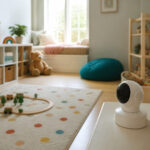
The Nanit Baby Monitor mounts overhead for a full crib view, saves sleep data you can actually use to spot patterns, and lets multiple phones connect so a traveling partner can check in.
The breathing wear add-on tracks movement without extra wearables. The Owlet Sock takes a different angle, wrapping around the foot to monitor heart rate and oxygen while the baby sleeps.
Both push alerts to your phone, both work over WiFi, and both replace the old ritual of hovering in the doorway with a flashlight.
Audio-only monitors still exist and cost less, which matters if your budget is tight or your apartment is small enough to hear a cry without help.
But for anyone in a two-story house or returning to work while a caregiver stays home, the extra data from a smart monitor stops being a luxury and starts being how you sleep through the night.
2. Sound Machine

A sound machine belongs on your registry because babies sleep lighter than adults, and the ordinary noise of a dishwasher, a door closing, or a truck outside is enough to pull them out of a nap.
True white noise, not music or nature tracks, masks those interruptions without adding something new for a young brain to process.
The Rohm Travel Sound Machine fits in a diaper bag, so you can carry that same buffer into a hotel room or a relative’s loud living room.
At home, we like the Hatch Baby Rest because it pairs the sound with a nightlight and lets you adjust both from your phone without opening the door. Two machines cover most families: one for the nursery, one that travels.
3. Swaddle Blankets

Swaddle blankets earn their place on the list because they solve two problems at once: the startle reflex that wakes a sleeping newborn, and tiny fingernails that scratch delicate skin.
The wrap mimics the close quarters of the womb, which is why babies settle faster inside one.
You have two practical routes here. Traditional cotton swaddle blankets work if you are comfortable folding and wrapping, and they are the budget pick.
Velcro or zip-up swaddles cost more but spare you the origami at 2 a.m. when the diaper change is already half the battle.
We keep both on hand: the cotton ones for daytime naps when we have patience, the zip-ups for nights.
The swaddle ends when rolling begins, usually between two and four months. That is the hard stop.
After that, switch to a sleep sack, which offers the same warmth without the risk of loose bedding. Many brands carry sleep sacks into toddler sizes, so you are not rebuilding your system from scratch.
4. Pack ‘n Play

A Pack ‘n Play earns its floor space by doing two jobs from day one. We see it used as a bedside bassinet for newborns, then as a travel crib once the baby outgrows the insert.
The models that include a bassinet and changing table run $50 to $400, and in a two-story house that range is worth every dollar for keeping one floor functional without running stairs every two hours.
The Guava Lotus packs into a backpack and carries onto flights, which is the route we would take if we had to pick just one.
For a unit that lives at home, look for a zip-down front, a washable mattress, and GREENGUARD Gold certification.
The bassinet insert is only useful for the first few months, so plan on the playard stage lasting the full two years and choose color and frame style you can live with in your living room.
5. Baby Carrier

A baby carrier earns its place when it keeps your hands free without wrecking your back, and the BabyBjörn Harmony is the one we keep reaching for.
One parent we followed used it from newborn through two years and counting, and the padded shoulder straps plus waistband actually distribute weight instead of loading it all on your shoulders.
The hip-seat design keeps the baby seated in a healthy position, and the mesh panel folds up for warmth or down for airflow, which matters more than you’d think when you’re walking through a parking lot in July.
Wraps and soft carriers work too, though the cheap one we tried early on had a flaw we didn’t anticipate: getting the baby out without waking her.
The Harmony’s side buttons release fast for that hands-in connection, and you can get a toddler onto your back solo, which is the difference between using it and leaving it in the car.
Gender-neutral styling helps; one partner in our research noted her husband actually grabbed it without prompting.
Three years of use is the practical lifespan here. Spend the money once, or buy twice.
6. Diapers and Wipes

Diapers and wipes are the one category where you will burn through stock faster than you expect, so plan for two sizes of diapers from day one.
Newborns outgrow the first size within weeks, sometimes days, and running out at 2 a.m. is a mistake you only make once. We keep a newborn pack and a size-one pack on the changing cart at all times.
For wipes, look for hypoallergenic, fragrance-free options if your baby has sensitive skin. Biodegradable wipes that decompose in about five weeks are widely available now, and they handle the same mess without the landfill guilt.
A wipe dispenser with a weighted plate solves the one-hand problem.
You are holding the baby down with the other hand, and a dispenser that lets you pull one wipe at a time without the whole pack following is worth the counter space.
Skip the warmers; they dry wipes out and add a step you will abandon by month two.
A three-tier rolling cart keeps diapers, wipes, and cream in one mobile station. We roll it between the nursery and living room depending on where the disaster strikes.
7. Pacifiers

Pacifiers land on every registry list for a reason, and we have watched enough parents lose a plain soother under the car seat to know why the attached plush kind wins.
A WubbaNub, the pacifier sewn to a small stuffed animal, is easier to spot in a diaper bag and harder to fling out of a stroller.
The animal gives a baby something to grip, and the weight keeps the pacifier from rolling away the instant it drops.
Sources describe households where children accumulate three or more, and the variety of animals means you can register for two in different styles so a backup is clean while the first is in the wash.
For parents who want a simpler option, the two-pack Mod Silicone Pacifiers from Dearest Grey are made from 100% silicone and carry CPSIA certification.
They are free of BPA, PVC, latex, and phthalate, and they are shaped with breastfeeding compatibility in mind. Either style works; the WubbaNub costs more but solves the hunting problem, while the bare silicone keeps things minimal and wash-and-go.
8. Bottles

Bottles land on every registry list for good reason: even parents who plan to breastfeed need a backup plan, and formula-fed babies live on them. We like the try-before-you-buy approach here, because babies are picky about what they’ll accept.
One of our team members watched her daughter refuse three brands before settling on a fourth, which is exactly why a sampler box of five popular bottles makes more sense than buying multiples of anything upfront.
If you do commit to a single brand, the anti-colic designs are where we would spend the money.
Dr. Brown’s bottles run around $12 for a three-pack and use internal venting to keep air out of the milk, which in our experience translates to less gas and fewer earaches down the line.
Six small parts per bottle to wash, every single time, adds up fast.
Avent bottles cut that difference with three nipple flow rates and a simpler air valve, and they pair directly with Avent breast pumps if you are pumping at all. Either way, buy only a few at first.
The bottles that work for your baby are the must-haves; the rest are just clutter in the cabinet.
9. Bibs

Bibs earn their spot in the drawer before you bring the baby home. We learned this after a single morning of outfit changes: milk drips down the chin, spit-up soaks the collar, and drool never really stops.
A bib catches what the burp cloth misses, and it stays in place while you shift the baby from shoulder to lap.
For the early months, soft organic sets handle the constant rotation. They lie flat under the chin, wash easily, and keep onesies presentable through three feeds in a row.
When solids start around four to six months, a silicone bucket bib changes the game.
The pocket at the bottom catches dropped food before it hits the lap or the floor, and you rinse it at the sink instead of running another load of laundry.
Two bib types cover the whole first year. Buy more of the soft ones than you think you need; they disappear into diaper bags, car seats, and the gap behind the changing table.
The silicone one lives in the kitchen, ready for oatmeal and avocado experiments.
10. Burp Cloths

You will fly through burp cloths faster than you expect, and the cheap ones fall apart after a dozen washes. We learned to look for soft organic cotton that holds up to daily spit-up and the laundry that follows.
A good burp cloth lives in the diaper bag, on the nursing pillow, and tucked behind every couch cushion, because feeding messes do not stay in the feeding chair.
Prints and colors help you grab the clean one fast in a 3 a.m. haze. Skip the thin flannel sets that feel generous in the package but shrink to napkin size.
Two dozen is not too many if you are bottle feeding or dealing with reflux; you will use them as impromptu bibs, changing pads, and shoulder blotters long after the newborn stage.
11. Play Mat

A play mat earns its floor space the day you bring the baby home. We looked at two directions: the puzzle-piece mats that look like area rugs, and the padded fabric mats built for sensory play.
House of Noa makes 12-piece sets that click together like foam tiles but read as living-room furniture. They are wipeable and non-toxic, which matters when you realize how much time a newborn spends face-down on the thing.
One parent we follow has used the same set from tummy time through toddler dancing, which tells you the cushion holds up.
OEKO-TEX certified mats from Moi Mili take the other route: double-sided fabric with a thick insulation lining, built for tummy time and sensory play. No puzzle edges, so it rolls or folds for storage.
The choice comes down to your floor plan. The puzzle mats stay put and blend in; the fabric mat travels better and stores smaller.
Both beat a blanket on hardwood.
12. High Chair

A high chair lands on most registries because it is the piece of furniture you will use every single day for two years, then store for the next child or sell.
We have watched parents buy the wrong one three times before they land on what works.
The seat that grows with the child wins. A high chair with a removable tray and adjustable footrest transitions from puree stage to toddler self-feeding without a second purchase.
We have seen families skip the infant insert and regret it; the baby slumps, the straps dig, and mealtime becomes a wrestling match. Spend the extra thirty dollars upfront.
The Lalo High Chair gets attention for clean lines that do not scream nursery in a small dining area. It breaks down to a play chair later, which matters in a rental where every square foot counts.
The cushion wipes clean and the legs are solid beech, not the hollow plastic that wobbles by month eight.
Skip the high chair with a dozen crevices in the seat. You will find dried sweet potato in them six months later.
Wipe-down surfaces with no seams beat "easy to wash" claims every time.
13. Portable Changing Pad

A portable changing pad earns its place in your bag by solving the one problem every outing eventually presents: a diaper change with no clean surface in sight.
The Natemia pad we keep in our stroller compartment weighs almost nothing and folds small enough to forget about until duty calls.
Toss it in the diaper bag, leave it in the car, or tuck it in the stroller; the compact build means you are never stuck choosing between a questionable public changing station and the back seat of your car.
We have learned that "lightweight and compact" in product copy usually means one or the other, not both, so finding a pad that actually delivers on both counts changed how often we left the house prepared.
For a weekend trip or a quick grocery run, it is the difference between packing the whole nursery and grabbing one ready bag.
14. Diaper Genie

The Diaper Genie handles the one job every new parent dreads: keeping used diapers from turning the nursery into a smell zone. We have used ours daily since our daughter was born, and the sealed system actually works.
You drop a diaper through the trap door, the mechanism twists it into an odor-blocking bag below, and you only deal with the full cartridge when it is time to empty it.
The trap door is the part that matters; a pail without that seal just sits there with the lid off, which defeats the purpose entirely.
The Platinum model is the one we ended up with after registering for it, and the difference from a standard trash can is immediate.
You can go several days without changing the bag, which matters at 3 a.m. when the last thing you want is a midnight trek to the outside bin.
One parent we heard from loved hers specifically for those smelly diapers, and we would agree. It is not a glamorous registry item, but it is one you will use multiple times a day for two years or more.
15. Baby Swing

A motorized swing with multiple motions, music, or nature sounds can calm a baby while you fold laundry or reheat your coffee. These things take up serious space.
A self-soothing lounger that responds to the baby’s own movement is lighter and easier to move room to room, but it does not do the work for you when the baby is fussy.
We would pick the motorized route for a first registry item and add a lounger later only if you travel often.
One thing we have learned from watching parents shop: the same baby can hate one swing and love another, and there is no predicting it.
If you buy used or accept a hand-me-down, test it early while you can still return or resell. Weight limits matter too.
A model that converts to a toddler chair stretches your use past the infant months, which is worth the slight extra cost at checkout.
16. Baby Bath Support

Newborn baths are where you realize you need more hands than you own. A baby bath support solves that without the bulk of a full tub.
We like the Angelcare Baby Bath Support for the early months: it cradles the baby in a reclined position so the head stays above water while both your hands stay free for washing.
One parent we follow used it until her daughter could sit up on her own, then switched to a seated bath seat.
If you want one item that lasts longer, a convertible baby tub is the other route.
The Euro Primo tub runs about $30 and flips from a reclined newborn position to a seated end for sitters, with ridges that support under the arms and between the legs. That means no second purchase at six months.
Either way, skip the kitchen-sink baths after the first week. The sink gets slippery, and the bend wrecks your back.
A dedicated support or tub keeps the baby stable and your posture intact.
17. Boppy Pillow

A Boppy Pillow earns its place on the list because it does more than prop up your arm during a 2 a.m. feeding.
It supports both you and the baby whether you are breastfeeding, bottle feeding, or switching between the two, and it takes strain off your shoulders and back in the process.
We have seen parents keep one upstairs and one downstairs just to avoid carrying it around the house, and that second purchase says something about how often it gets used.
Once feeding sessions wind down, it doubles as a lounger or a tummy time prop, so it does not sit in the closet after month three.
If you are building a registry, add this before you add the decorative items you will use twice.
18. Electric Nail Filer

Newborns come out with paper-thin nails that grow faster than you’d expect, and those tiny edges scratch their own faces before you notice.
We tried regular baby clippers once and nicked a fingertip; the pause before the cry lasted longer than the actual cut, but we still felt sick about it for days.
An electric nail filer runs on a small motor with cushioned grinding heads sized for infant nails.
You hold it like a thick marker, press the button, and let the soft pad round off the edge while they sleep or feed.
Most models run under $20, take a single AA battery, and include a slower speed setting that keeps the vibration from startling a drowsy baby.
The grinding heads wear smooth after a few months of weekly use, so factor in replacement cost or buy a kit with spares upfront. We keep ours in the same drawer as the thermometer; it gets used more often.
19. NoseFrida

The NoseFrida is one of those baby accessories must have items that earns its spot through sheer usefulness, not marketing noise.
It is a nasal aspirator that lets you clear a congested baby’s nose with suction you control, which matters because infants cannot blow their own noses and congestion ruins sleep for everyone.
We were skeptical about the mouth-end suction at first. It sounds unpleasant, but the filter blocks any passage of mucus or air back toward you, and the control you get beats any bulb syringe we tried.
You can feel the clog, ease up when the passage clears, and stop before you irritate the lining.
Clean the blue mouthpiece and the collection chamber with hot soapy water after each use, and replace the foam filter when it gets wet or dirty.
The unit is cheap enough that keeping a spare in the diaper bag does not strain a registry budget.
Skip the extra saline spray bottles unless your pediatrician suggests them; the NoseFrida works fine with plain saline drops from any pharmacy.
20. DockATot

A DockATot is a baby lounger that doubles as a portable sleep space for supervised naps, and it overlaps enough with standard loungers that we treat it as one entry.
The raised sides cradle a newborn and keep them from rolling, which matters during those first months when they have no control over their own weight.
We have seen parents use it on the couch, the floor, even the kitchen table during dinner prep, though the company is clear that it is not for overnight sleep or unsupervised time.
The price runs higher than basic foam loungers, and that is the real decision point. If you already own a pack ‘n play with a bassinet insert, the DockATot does not add much function for the cost.
But if you live in a small rental where every square foot counts, the smaller footprint and the ability to move it room to room wins out over dragging a full bassinet between spaces.
We would skip the deluxe covers and buy one spare in a dark color; spit-up shows up fast on the pastels.
Frequently Asked Questions
What are the must-have baby items for a registry?
A solid registry covers sleep, feeding, travel, and safety.
The items we keep coming back to are a baby monitor with HD night vision and face-covering alerts, a sound machine for masking household noise, swaddle blankets for the startle reflex, a Pack ‘n Play that works as both bedside bassinet and travel crib, a supportive baby carrier, bottles with anti-colic vents, a high chair that converts as the child grows, and a portable changing pad for outings.
Add burp cloths, bibs, a Diaper Genie, and a NoseFrida for congestion, and you have the core list that gets used daily.
How do I choose the right baby monitor?
Look for HD night vision and face-covering alerts as baseline features, because a blanket shifting over a sleeping baby at 2 a.m. is exactly when you need the device to speak up.
The Nanit Baby Monitor mounts overhead for a full crib view and saves sleep data you can use to spot patterns, while the Owlet Sock wraps around the foot to track heart rate and oxygen.
Both push alerts to your phone and work over WiFi.
Audio-only monitors still exist and cost less, which works for small apartments, but parents in two-story houses or those returning to work while a caregiver stays home benefit from the extra data of a smart monitor.
What feeding essentials do I need?
Bottles, bibs, and burp cloths form the core feeding setup.
For bottles, buy a sampler of five popular brands first because babies are picky; if you commit to one, Dr. Brown’s anti-colic design runs about $12 for a three-pack and uses internal venting to keep air out of the milk.
Bibs catch what burp cloths miss, so stock soft organic sets for early months and add one silicone bucket bib with a catch pocket when solids start around four to six months.
Burp cloths in soft organic cotton hold up to daily spit-up; two dozen is not too many if you are bottle feeding or dealing with reflux.
What sleep solutions should I consider for my baby?
A sound machine and swaddle blankets are the two items that changed how our babies slept.
True white noise, not music or nature tracks, masks household interruptions without adding something new for a young brain to process; the Hatch Baby Rest pairs sound with a phone-controlled nightlight, while the Rohm Travel Sound Machine fits in a diaper bag for trips.
Swaddle blankets solve the startle reflex and keep tiny fingernails from scratching; use traditional cotton if you like folding, or Velcro and zip-up versions for faster 2 a.m. changes.
Stop swaddling once the baby starts rolling, usually between two and four months, and switch to a sleep sack at that point.
What travel gear is necessary for outings with a baby?
A portable changing pad and a travel-ready sleep setup top the list.
The Natemia pad weighs almost nothing, folds small enough to forget about until you need it, and fits in a diaper bag, car, or stroller; it is the difference between packing the whole nursery and grabbing one ready bag.
For sleep away from home, the Guava Lotus Pack ‘n Play packs into a backpack and carries onto flights.
The pack ‘n play with a bassinet insert also works at home as a bedside sleeper for the first few months before converting to a travel crib, so you are not buying twice.
What are 10 main needed necessities for a baby?
These are the items parents reach for multiple times daily from the first week home through the first year.
What are some essential baby items to buy?
The essentials break into categories by use. For sleep: a sound machine and swaddle blankets, then sleep sacks after rolling starts.
For monitoring: a baby monitor with night vision and alerts. For carrying: a supportive carrier with padded straps and waistband.
For feeding: bottles, bibs, burp cloths, and a Boppy Pillow. For changing: a portable changing pad, Diaper Genie, and a rolling cart stocked with two diaper sizes.
For play and development: a play mat and baby swing. For health: an electric nail filer and NoseFrida for congestion.
For travel: a Pack ‘n Play that works as both bassinet and crib.