These playroom decor ideas run from a string of LED fairy lights to a full wall mural, and the one that fits you depends on whether you own the walls or answer to a landlord.
A command-stripped poster in a rental frame passes for art just as well as a wall decal, and the decals peel off when dinosaurs give way to rockets.
[link-whisper-related-posts]1. Mural or Wall Decals
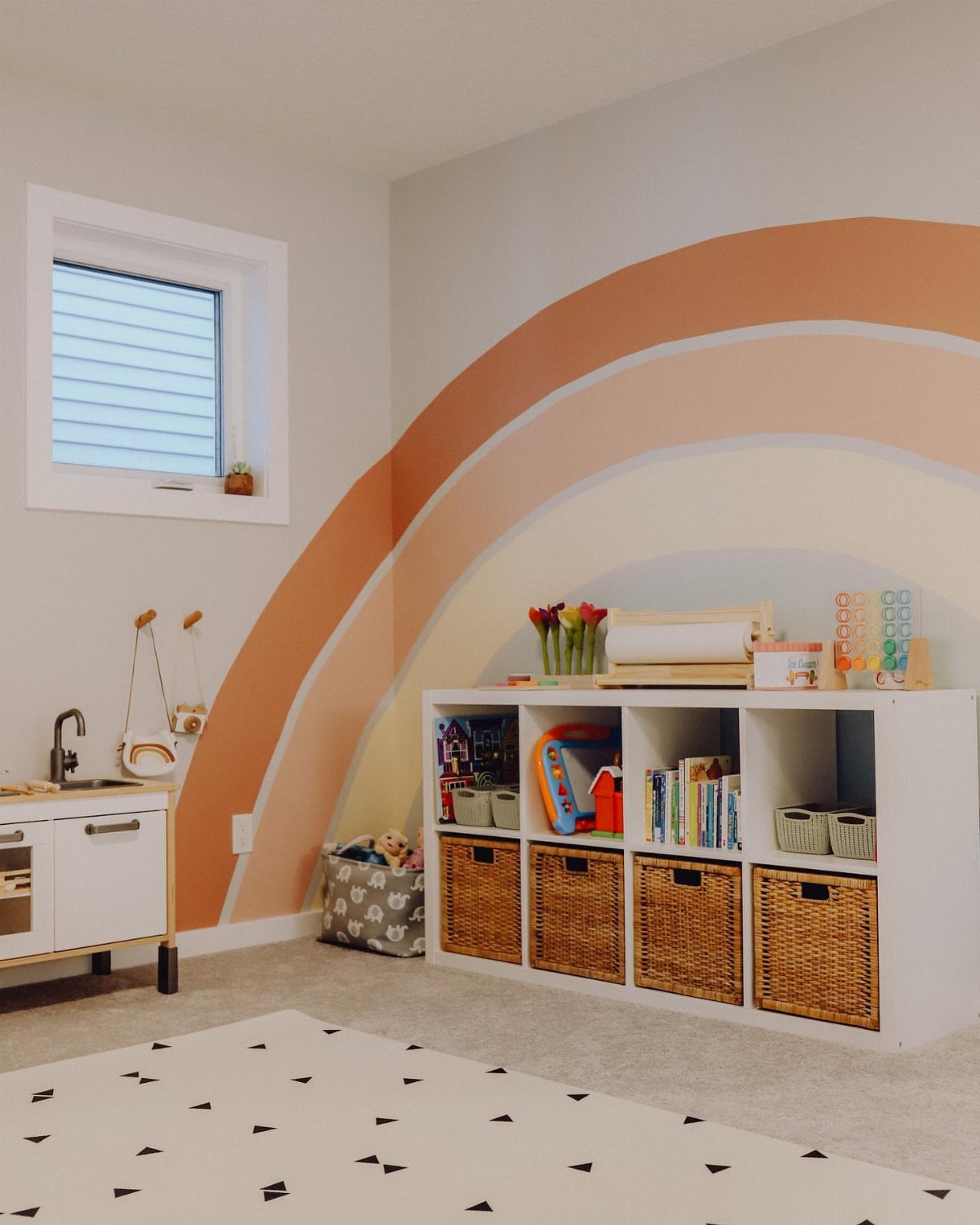
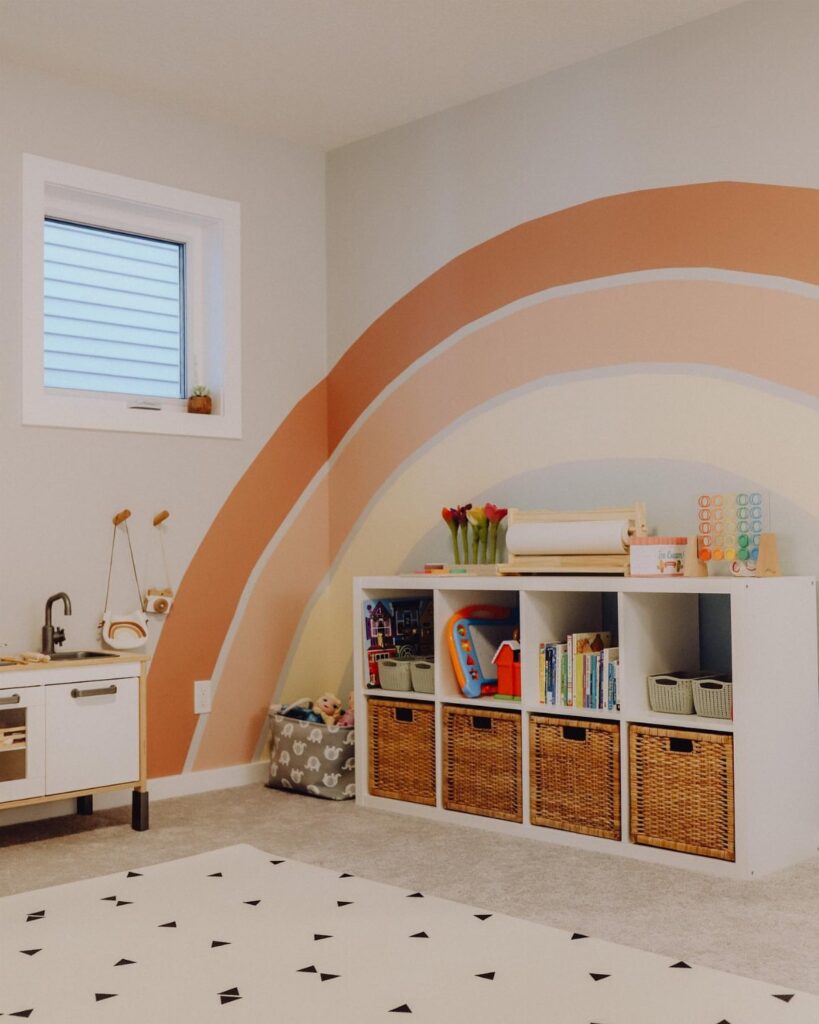
A painted rainbow turns a plain corner into something your kid actually wants to be in. We have watched a toddler abandon a toy bin to trace the arcs with her finger, completely absorbed.
Wall decals cost less and peel off when tastes change; paint lasts longer and takes abuse better. Match the scale to the wall: a small decal gets lost above a storage unit, and a floor-to-ceiling mural overwhelms a narrow space.
If your child fixates on one thing, dinosaurs or rockets or whatever, that image keeps working longer than generic clouds or stars.
Check whether the wall surface is smooth enough; decals bubble on textured paint. For a rental, command-strip a large framed poster instead and call it done.
2. Theme-based Decor
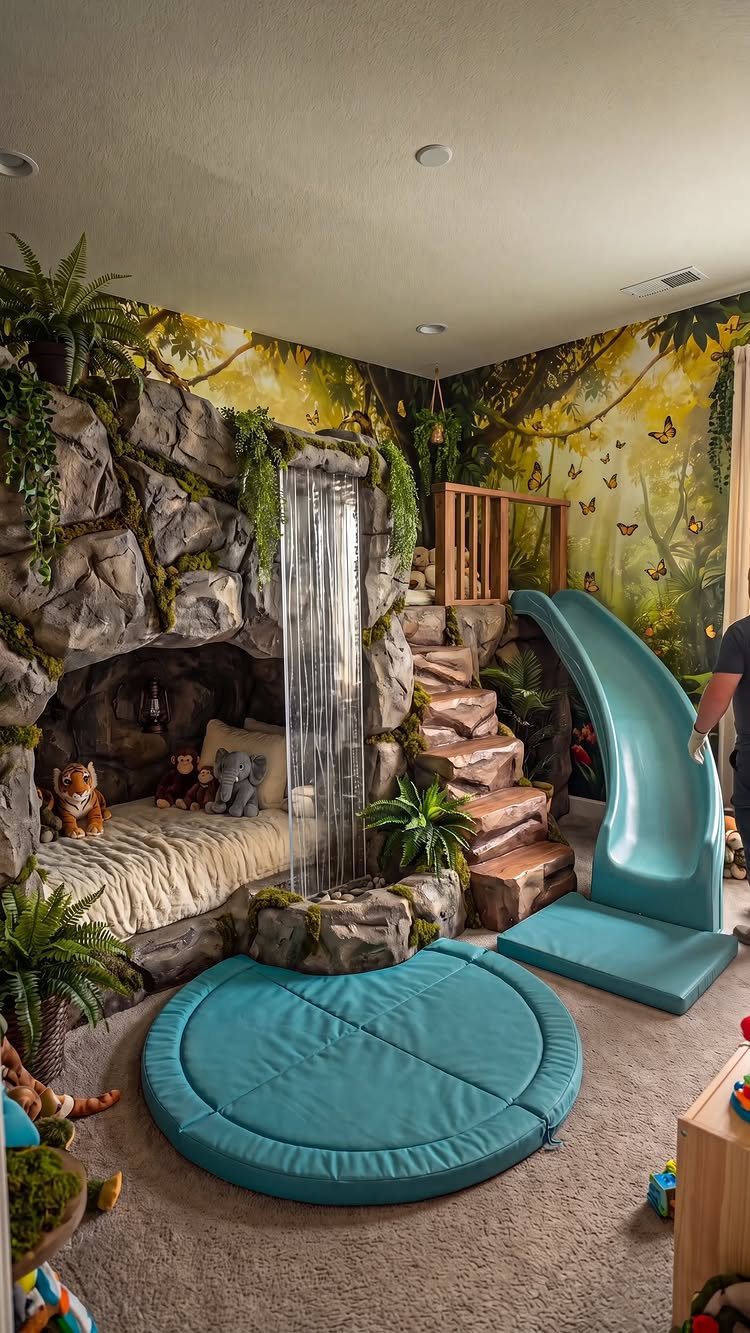
A jungle with a waterfall sounds expensive because it usually is. Custom carpentry and built-in plumbing looks great in a magazine spread, but most of us will not touch it.
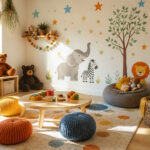
You get the same effect at a fraction by picking two or three repeating motifs and staying consistent. Animal prints on the rug, a leafy stencil above the bed, a woven basket that reads as safari gear.
The coherence matters more than the budget.
Space themes work well for tight rooms; stars and dark blues recede visually. Animal themes suit kids who collect figurines and already own half the props.
Avoid anything too age-specific unless you plan to repaint before long.
3. Sensory Play Area

Dim the lights and the same toys hold attention three times longer. A bubble tube or a simple string of LED fairy lights does the heavy lifting; the foam mats underneath keep it from feeling like a basement.
Sand and water tables need a floor you can mop. If that is not your setup, dry sensory bins with rice or beans catch spills in a shallow plastic tray.
We have seen a closet under the stairs become a sensory nook with a cheap light projector and a rug remnant.
This idea suits kids who spin, crash, or seek pressure. For a child who startles easily, skip the flashing lights and go with a weighted lap pad and a tent instead.
4. Storage Solutions
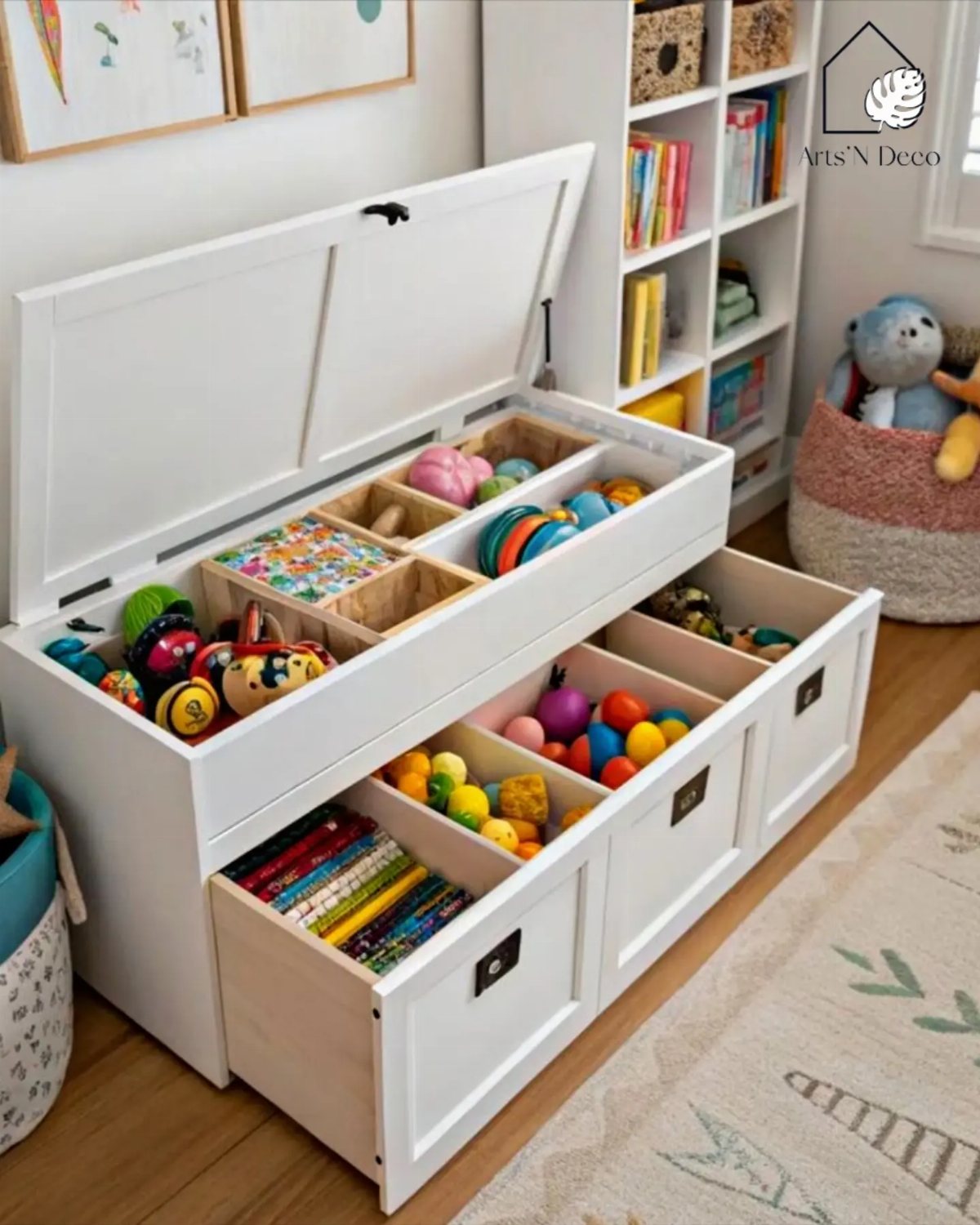
A bench that swallows toys beats a bench that just sits there. An open-top design lets you toss everything in fast; pull-out drawers below sort the stuff you actually need to find.
Baskets on shelves work for small spaces and smaller budgets. Label them with pictures, not words, until your kid reads.
Wall-mounted bins above a play table keep art supplies off the floor and within reach.
You will see everything, which means so will anyone who walks in. Closed storage looks calmer but out of sight means out of mind; open cubbies mean more picking up.
Match the system to your tolerance for daily mess, not your fantasy self.
5. Floor Rugs

An indoor-outdoor rug under a play kitchen takes juice spills and marker drops without becoming a stain diary. A geometric pattern hides the marks that do land.
Size it to the activity zone, not the room. A rug that floats in the middle defines nothing; one that extends past the play kitchen and block area actually keeps toys from migrating.
For crawlers, a padded play mat on top of the rug adds cushion without committing the whole floor to baby gear.
Avoid high pile; it traps Lego bricks and cracker crumbs equally well. Flatweave or low-loop polypropylene shakes out and hoses off.
6. Colorful Decor
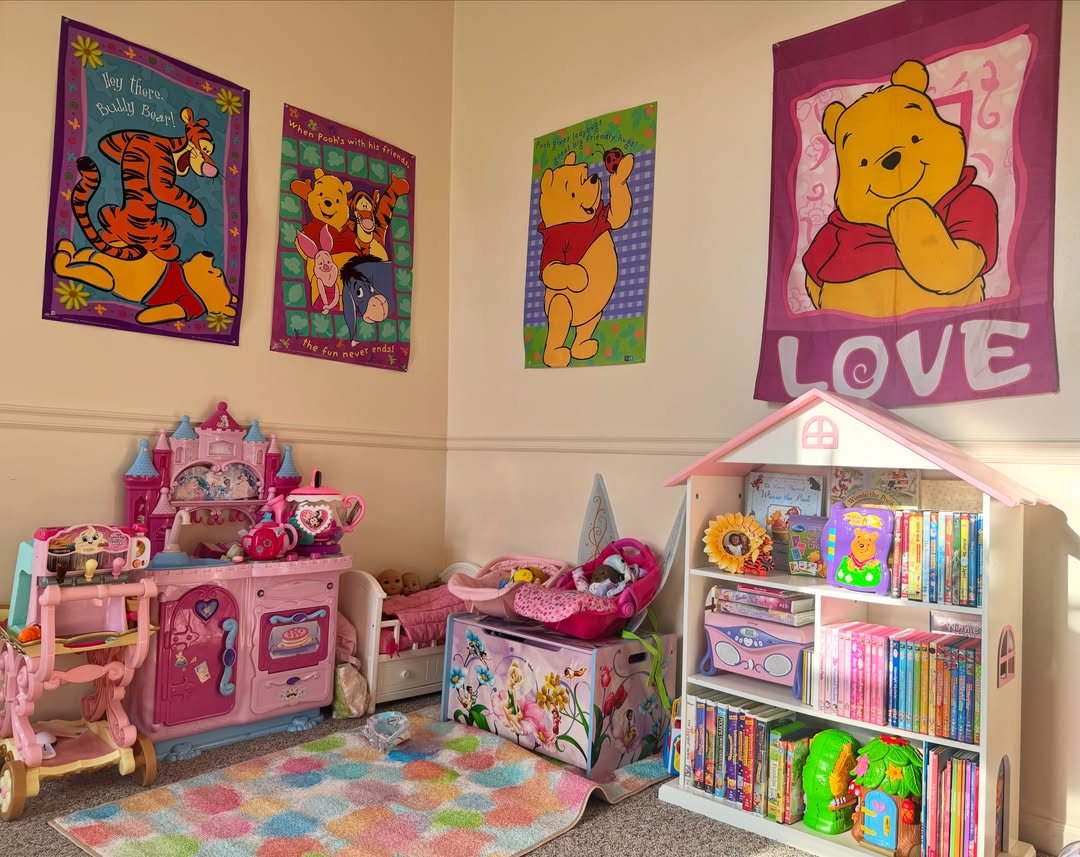
White walls are not boring; they are insurance. Touch-up paint matches when someone drags a chair through the finish, and you can swap the pink kitchen for a blue one without repainting the room.
Character banners do the color work: low cost, low commitment, easy to replace when your kid moves on to space or sports or whatever comes next.
Start with a neutral base in eggshell or satin, something you can wipe down, then add the energy through rugs, furniture, and removable art.
Too many bright pieces at once and the room vibrates; your eye needs somewhere to rest. Pick two or three main colors and let everything else play supporting role.
7. Designated Play Zones

Separate areas for art, reading, and active play keep toys from swallowing the whole room and help kids settle into one thing at a time.
We like using what you already have to draw the lines: a low shelf turned backward becomes a room divider, a rug in a bold pattern marks the building zone, a string of potted plants softens the edge without blocking sightlines.
Paint one wall in that zone a different color, but keep it in the same family as the next room so the house still feels connected.
Skip the climbing wall and pod swings unless you have tall ceilings and a stud finder; for most of us, a low table with paper rolls and a bin of cars on opposite sides does the same work.
“Playrooms need a giant dose of fun,” says interior designer Raili Clasen of Raili CA Design, based in Newport Beach, California.
8. Natural Light
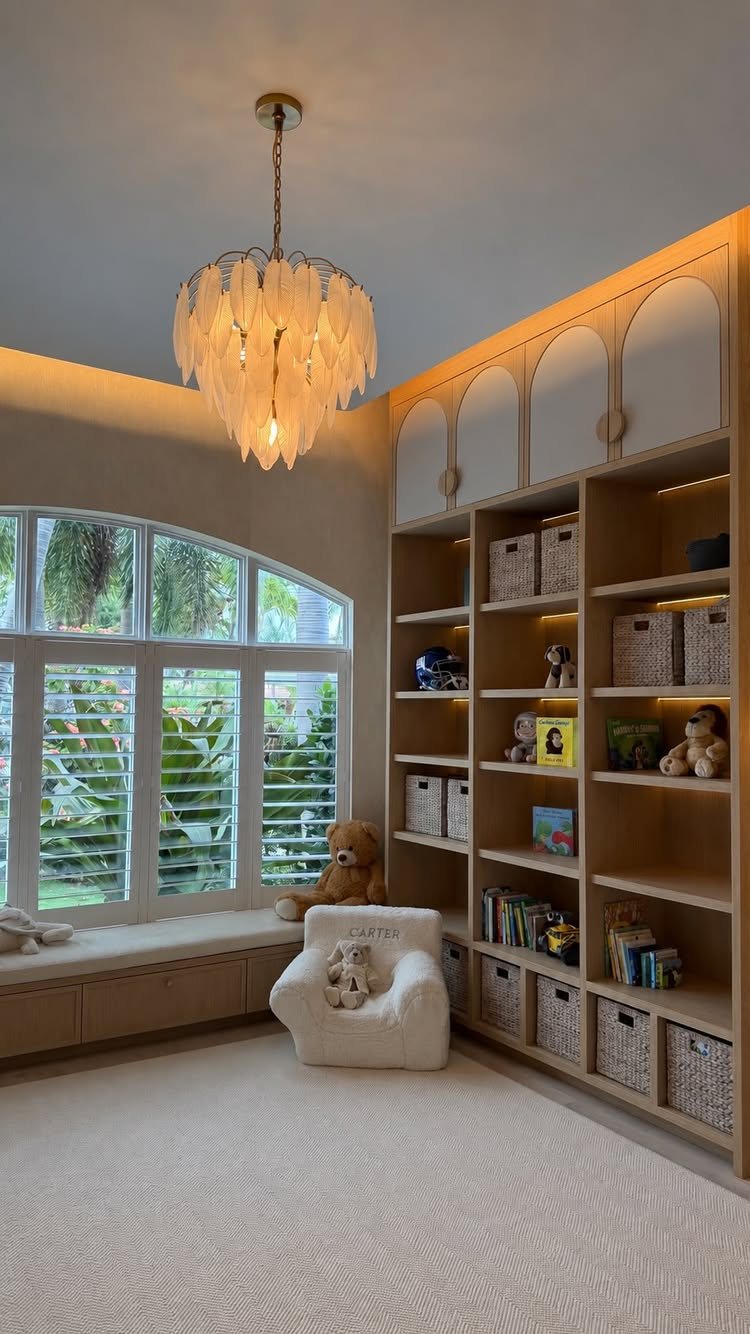
A basement playroom will sit empty if the light is wrong. We have seen it happen.
If you are choosing where to put the space, grab the room with the biggest windows you have, even if it means giving up the first-floor laundry.
Transom windows up high bounce light deep into a room and keep wall space free for storage. Paint the ceiling flat white, not cream; it matters more than the walls.
A shuttered arched window gives you control over glare during nap time without killing the brightness entirely. If the best window faces west, add a simple roller shade you can drop by mid-afternoon.
9. Floor Cushions

Floor cushions suit the playroom because they move where the action is and vanish into a closet when you need the floor back.
Sage green floor cushions large enough that two kids can lie flat without touching are the size to hunt for; anything smaller becomes a lap pillow. Look for covers that zip off for washing, since they will need it.
A crescent moon wall light and fabric canopy turn the corner into a reading nook without a single nail in a stud, so the whole setup can shift when the kids outgrow it.
Pair the cushions with a low table for puzzles, or skip the table and use them for fort-building instead.
Creating a Cozy Atmosphere
Soft rugs and comfortable seating matter as much for adults as for kids. A thick, plush rug softens the whole room and gives everyone a place to sit.
If a couch will not fit, bean bag chairs or oversized pillows piled in a corner work for reading or drawing.
Soft fabrics and pillows in different textures make the room somewhere kids actually want to settle in.
A pouf or ottoman at kid height makes the space feel welcoming to the smallest family members, not just the ones who can climb onto furniture.
Warm lighting finishes the job. A crescent moon wall light or a string of LED fairy lights keeps the room usable after dark without the harshness of an overhead fixture.
Designing for Growth
Start with furniture you’d use in any living room, then bring in the toys. Solid wood tables and upholstery that can take a beating hold up from toddler years straight through to high school.
Architectural lighting with dimming lets you shift the mood from building blocks to board games to whatever comes after.
Run outlets and cable paths now, before the walls are finished, so you are not drilling later when screens show up. A wall with cable access and a spot for a future desk saves you from rewiring later.
The same wall that holds a puppet theater now can take a monitor at twelve.
Keep toys and books loose enough that they rotate out when your kid moves on to something else. Built this way, the same four walls handle pretend play, then homework, then late-night hangouts with friends, no renovation required.
Maximizing Small Spaces
Run storage along one wall and leave the rest open. Floor-to-ceiling cabinets or school lockers the full length keep toys contained without breaking up the room.
Vertical storage keeps floor space clear. Cubby shelves with pull-out bins let kids sort their own stuff and still see what they have.
In a tight room, multifunctional pieces do double duty. A bench with pull-out drawers below seats a reader and swallows toys.
Encouraging Independent Play
A playroom that works lets a child choose what to do next without asking. Low furniture at kid height means they reach supplies themselves.
Open storage shows the options; closed cabinets hide the mess but also hide the invitation.
Keep the space contained so wandering is not required. A child inside knows where they are.
Leave materials out and ready. Paper rolls on a low table, blocks in an open bin, costumes on hooks: each one is a prompt.
The room does its job when a kid walks in and starts something without being told.