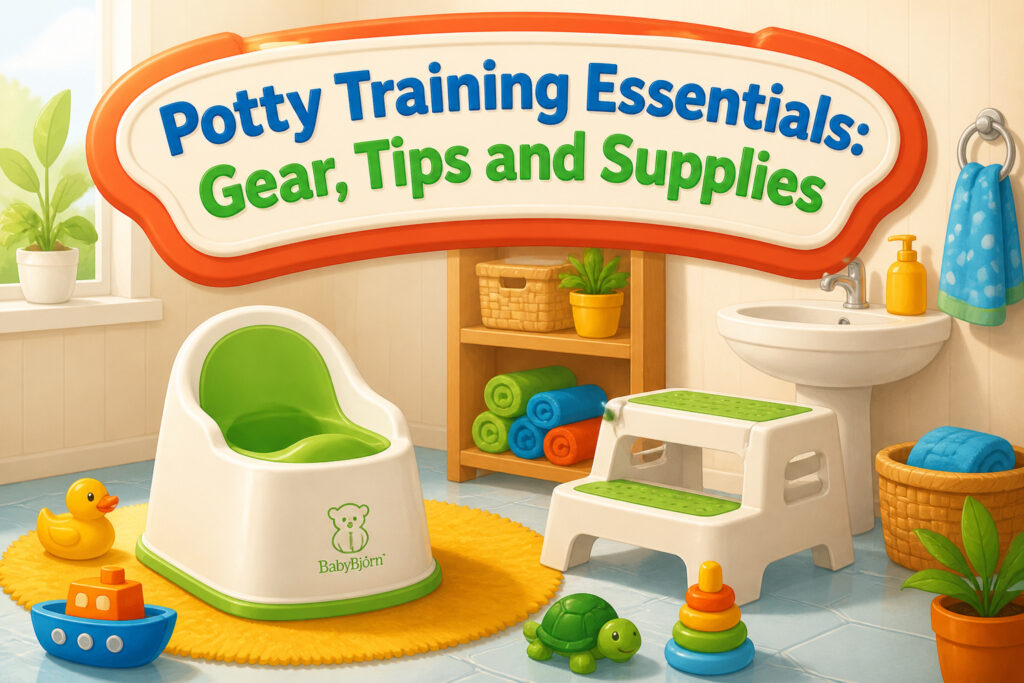
Potty training essentials are the stable, easy-to-clean tools that let a toddler reach the toilet and sink alone. The catch is that the wrong gear, like jeans with a button fly or a wobbly seat insert, can undo weeks of progress in a single afternoon. We kept the BabyBjorn potty chair on the floor for our early trainers because the rubber base never skidded on tile, and the handled inner bowl meant we rinsed without touching what was inside.
[link-whisper-related-posts]Potty Chair
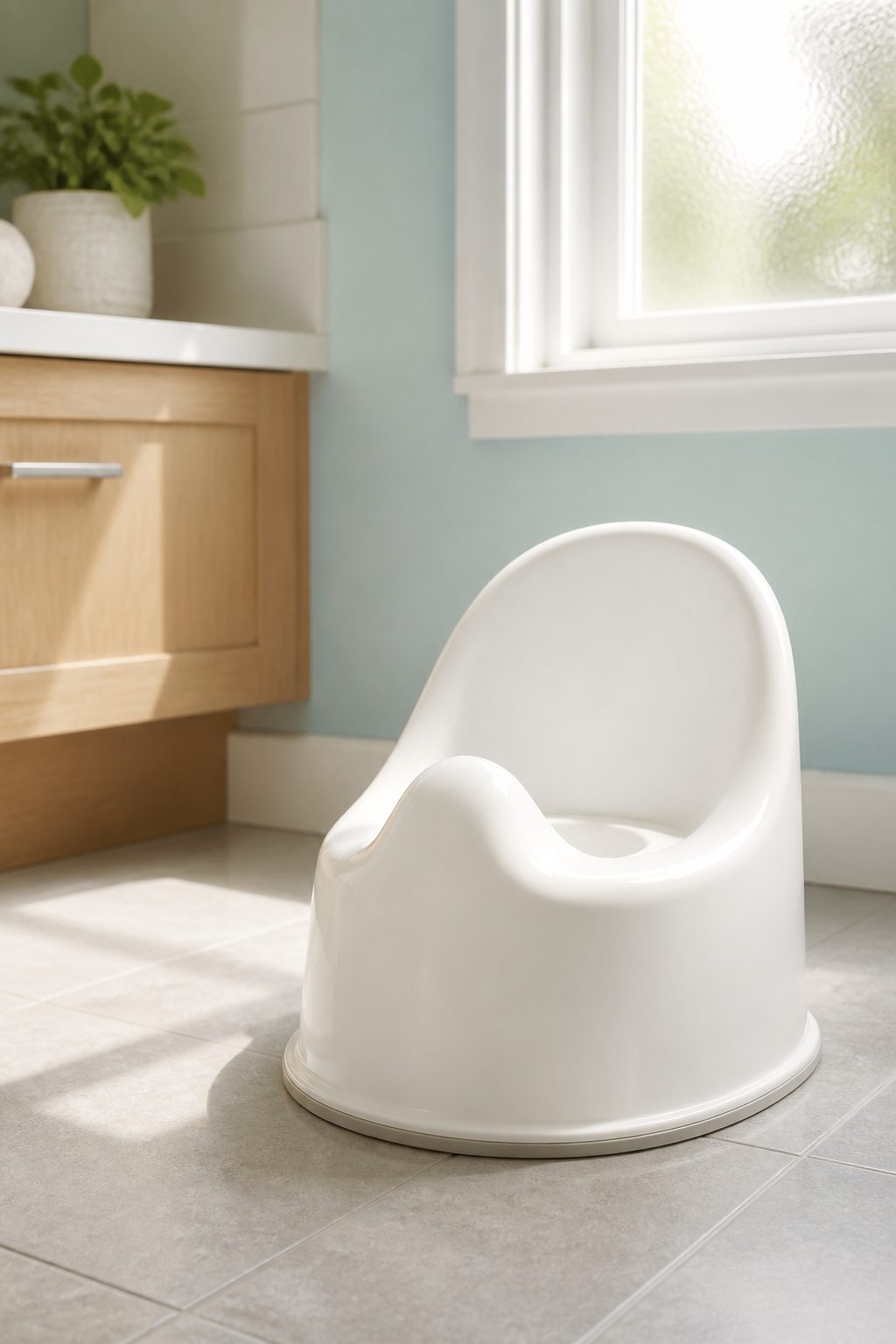
A potty chair is where most families start, and the reason is simple: it sits on the floor, so a toddler can get to it without your help. That independence matters more than any feature list.
We keep the BabyBjorn potty chair on the floor for the kids who train early. The inner bowl lifts out by a handle under the splash guard, so you carry it to the toilet, dump it, and rinse it in the sink without touching what is inside. The rubber base does not skid on tile, and the high back lets a younger child lean back without tipping. It is white plastic through and through, which means you see when it needs cleaning.
For families who want one purchase to last, the Go Time 3-in-1 Potty from Skip Hop converts. It starts as a standalone chair, then the seat pops onto a full toilet later, and the base flips over to become a step stool. That transition saves you from buying again when the child is ready to move up.
What makes either choice work is stability and ease of cleaning. A chair that rocks or has crevices you cannot reach will sit unused. Start with the floor chair if your child is small or nervous; skip straight to a seat reducer only if they are already steady climbing.

REALISTIC POTTY TRAINING TOILET: Gets kids excited about using the potty. The flusher plays "flushing" sounds & cheers, providing positive reinforcement. Easy to assemble; 2 AAA batteries included.
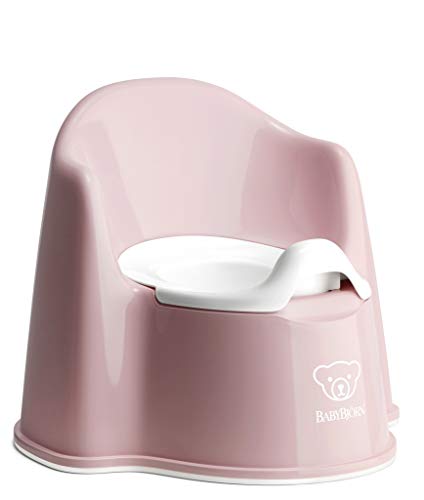
Comfortable potty chair with backrest and armrests

The sleek and simple design of this potty training toilet blends in perfectly with any bathroom décor
Potty Training Seat or Convertible Toilet Seat
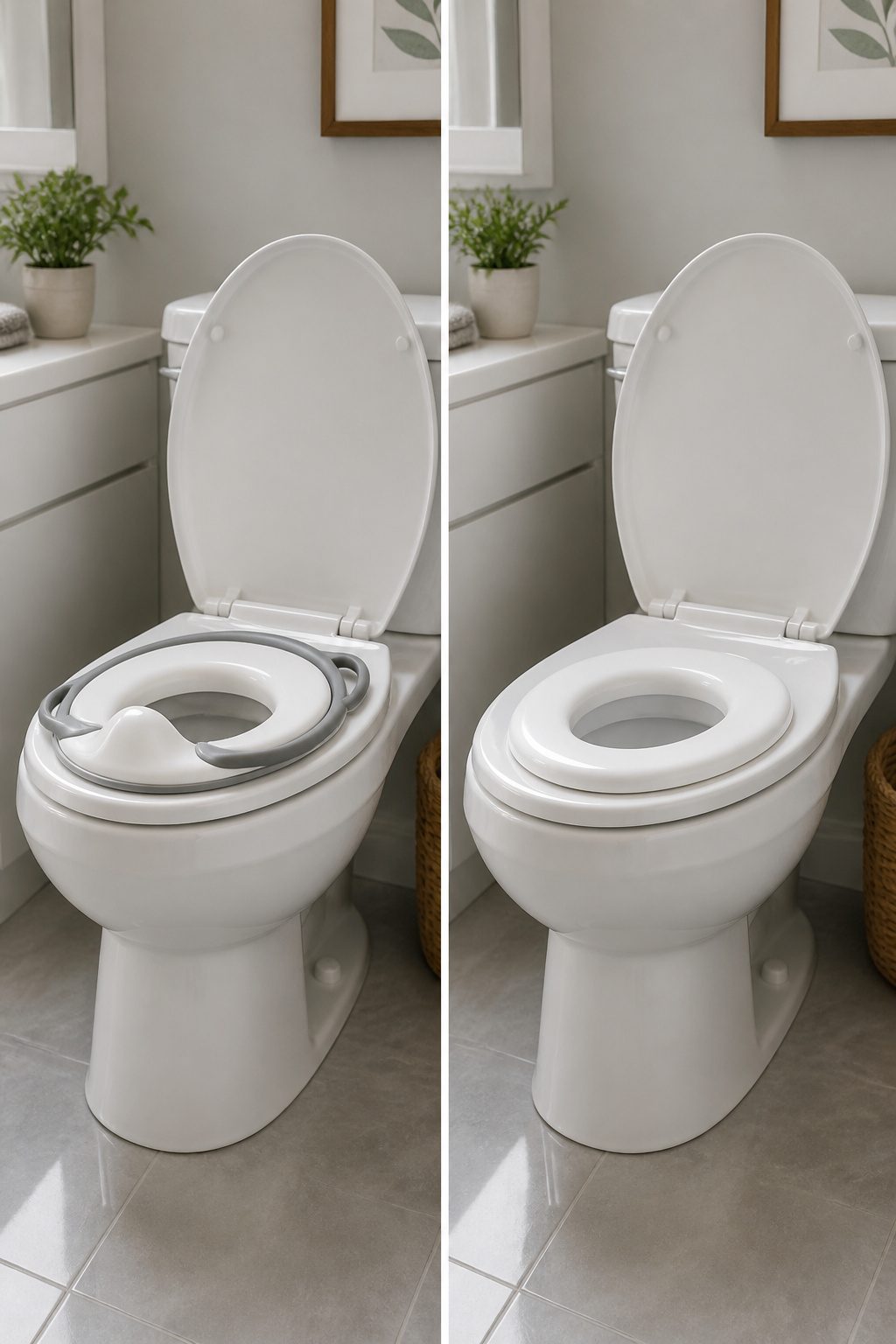
A toilet trainer that clips onto your adult seat skips the cleanup of a separate basin entirely. We like this path when bathroom space is tight or when you want to avoid the transition from potty chair to big toilet later. The BabyBjorn insert is the one we see mentioned most often for this job.
You have a second option: replace the whole seat with an all-in-one that flips between a child-sized ring and an adult one. It costs more upfront and takes a screwdriver to install, but there is nothing extra to store.
Either way, stability matters more than brand. A seat that shifts when a toddler sits down will kill their confidence fast. Check that the clips grip your toilet shape, and test it yourself before they do. If your child needs both hands free for balance, add side handles or a nearby wall they can reach.

Portable toddler potty seat perfect for potty training boys and girls

OUR POTTY SEAT WITH HANDLES helps your child transition to the big toilet easily. The built-in handles give kids something to grip onto for added confidence.

FLIPS DOWN, THEN UP: The Drop Down Potty Seat stays on the toilet and flips down when your toddler needs it, then flips up out of the way when an adult does. Nothing gets carried in and out of the bathroom.
Step Stool
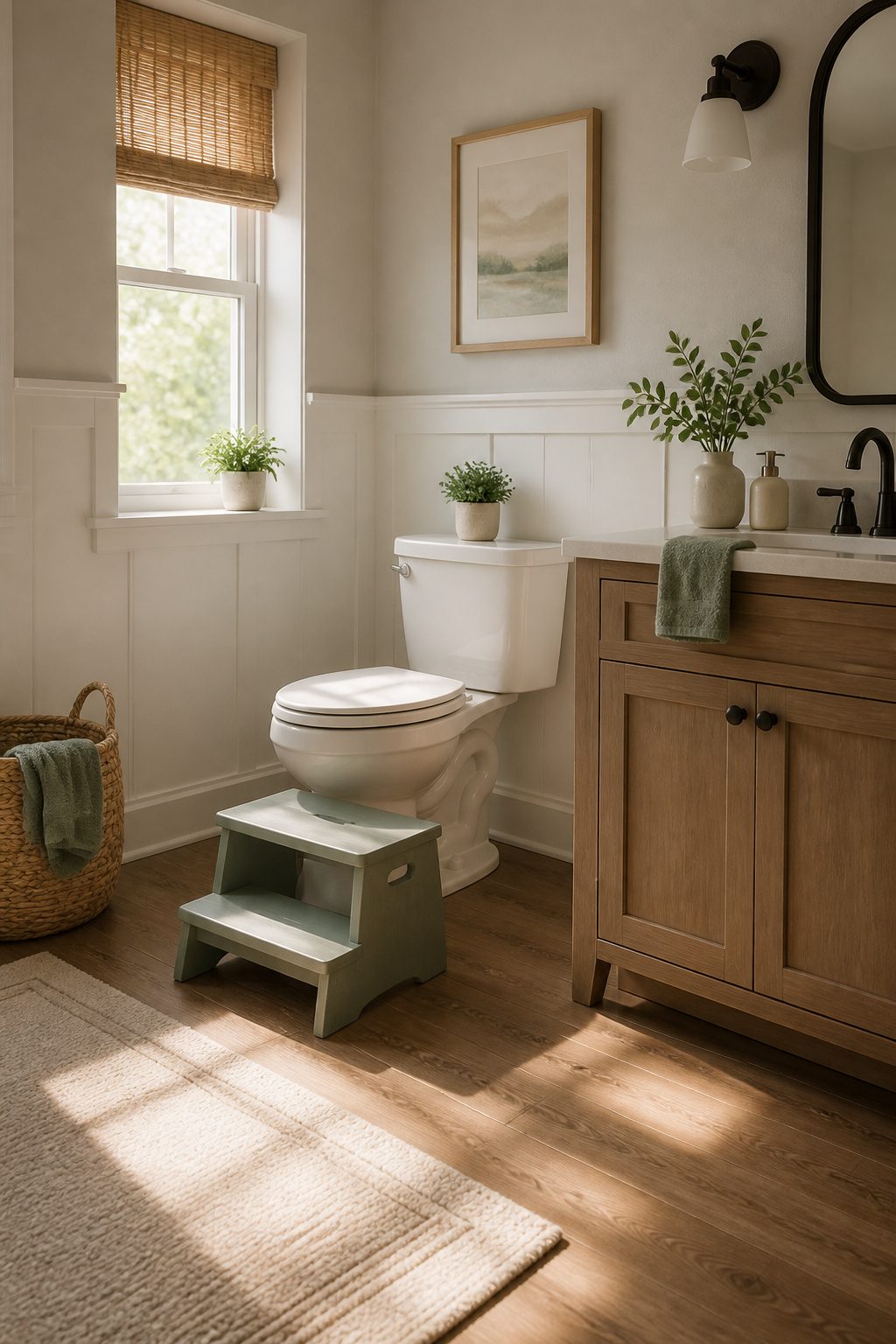
A child who cannot get onto the toilet alone will wait for you, and that waiting undoes the whole point of training. We learned that early. The right stool is the one they can move and use without calling for help.
For a standard toilet, a two-step stool lands their feet flat while they sit. That foot placement matters more than we expected: legs dangling leaves them straining against nothing, but both feet planted lets them brace into a squat, the position that makes bowel movements come easier. The top step should put their bottom at toilet height without a climb that scares a reluctant toddler.
Hand washing is the other half. Most bathroom sinks sit too high for a small plastic toddler stool. A two-step design gives the extra height they need to reach the faucet and actually use the soap.
We prefer rubber grips on the feet, not hard plastic, because bathroom floors get wet. A heavy wood stool feels sturdy but can skid; the non-slip base wins for safety. Some families need two: one at the toilet, one at the sink in a different room, so the routine stays the same wherever the child goes. Watch for side holes that let them carry it themselves. That independence is the goal, even if it means they occasionally carry it where you wish they would not.

【3-in-1 Convertible Potty Trainer: Grows with Your Toddler】This all-in-one toddler potty does it all: start as a standalone training potty for little ones, convert to a toddler toilet seat that fits standard family toilets, or transform into a handy step stool—perfect for every stage of potty training. Designed for kids 6 months to 6 years—no need to buy 3 tools. Saves space, saves money.
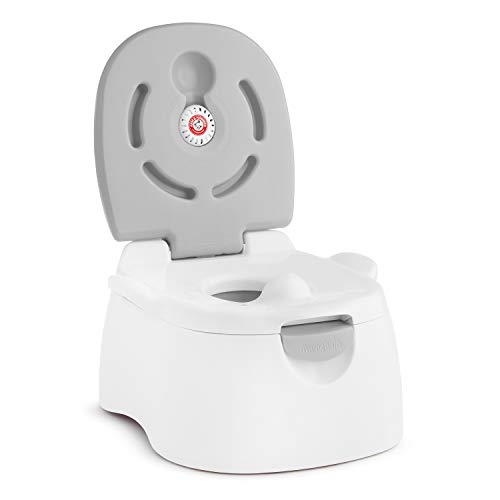
TODDLER POTTY CHAIR: Multi-Stage Design: Functions as a potty chair, removable trainer seat, and sturdy step stool all in one
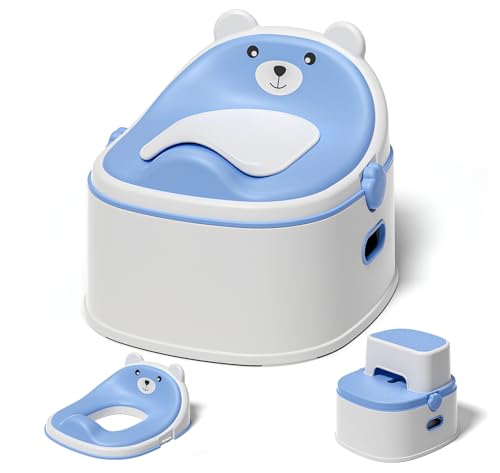
【3-in-1 Convertible Potty Trainer: Grows with Your Toddler】This all-in-one toddler potty does it all: start as a standalone training potty for little ones, convert to a toddler toilet seat that fits standard family toilets, or transform into a handy step stool—perfect for every stage of potty training. Designed for kids 6 months to 6 years—no need to buy 3 tools. Saves space, saves money.
Training Pants
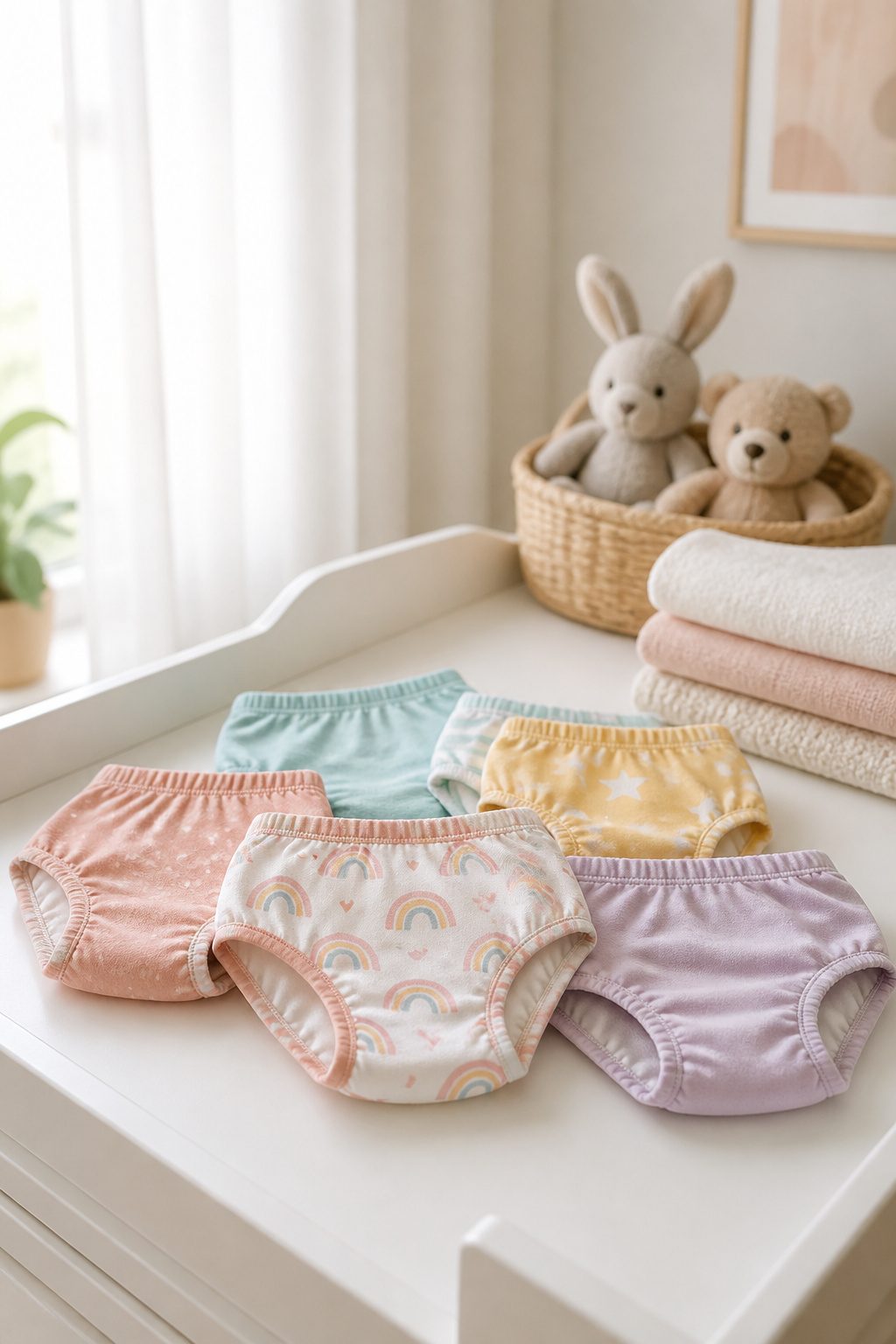
Training pants sit in a narrow window between diapers and real underwear. They catch enough of an accident to save your rug, but they let the child feel wet, which is the whole point. Diapers and pull-ups wick moisture away so fast a toddler barely notices; training pants do the opposite on purpose.
We see two ways to use them, and parents split hard on which works. One camp goes straight from diapers to cotton underwear, even if that means five outfits a day for a week. The other keeps training pants on hand for naps, car rides, or the first grocery trip after a dry streak. Do not let training pants become the default wardrobe for months. They are a backup for specific moments, not a lifestyle.
If your child was dry at naps for two weeks and suddenly wets the bed again, training pants beat going back to diapers. They keep the routine intact without the shame of a diaper. Nighttime is different; plenty of kids need real diapers or pull-ups for sleep long after daytime training sticks, and that is not a failure. The mistake we watched friends make was treating training pants like a halfway house the child could live in. They are a tool for a phase, not the phase itself.

This semi-permanent potty seat allows adults to still easily use the toilet during the potty training process; simply flip it up and out of the way as it blends in seamlessly with the toilet seat
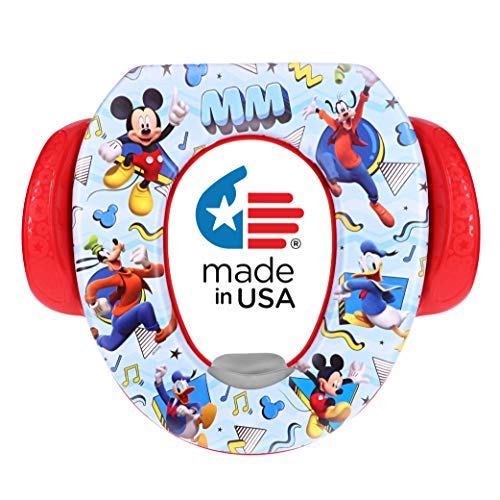
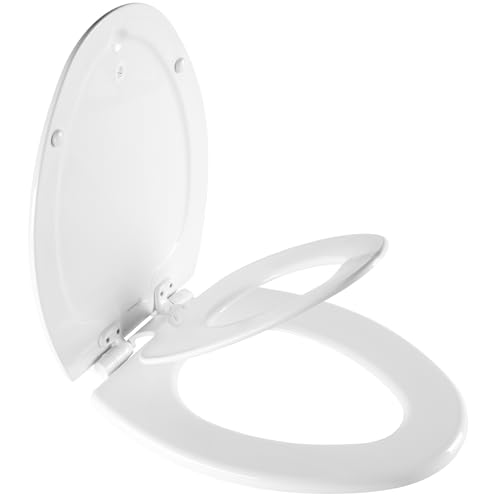
Transition from Adult to Child Use with Ease – Family-friendly toilet seat fits adults and children, potty seat stays magnetically secured and neatly tucked into the lid during adult use
Toddler-Sized Underwear
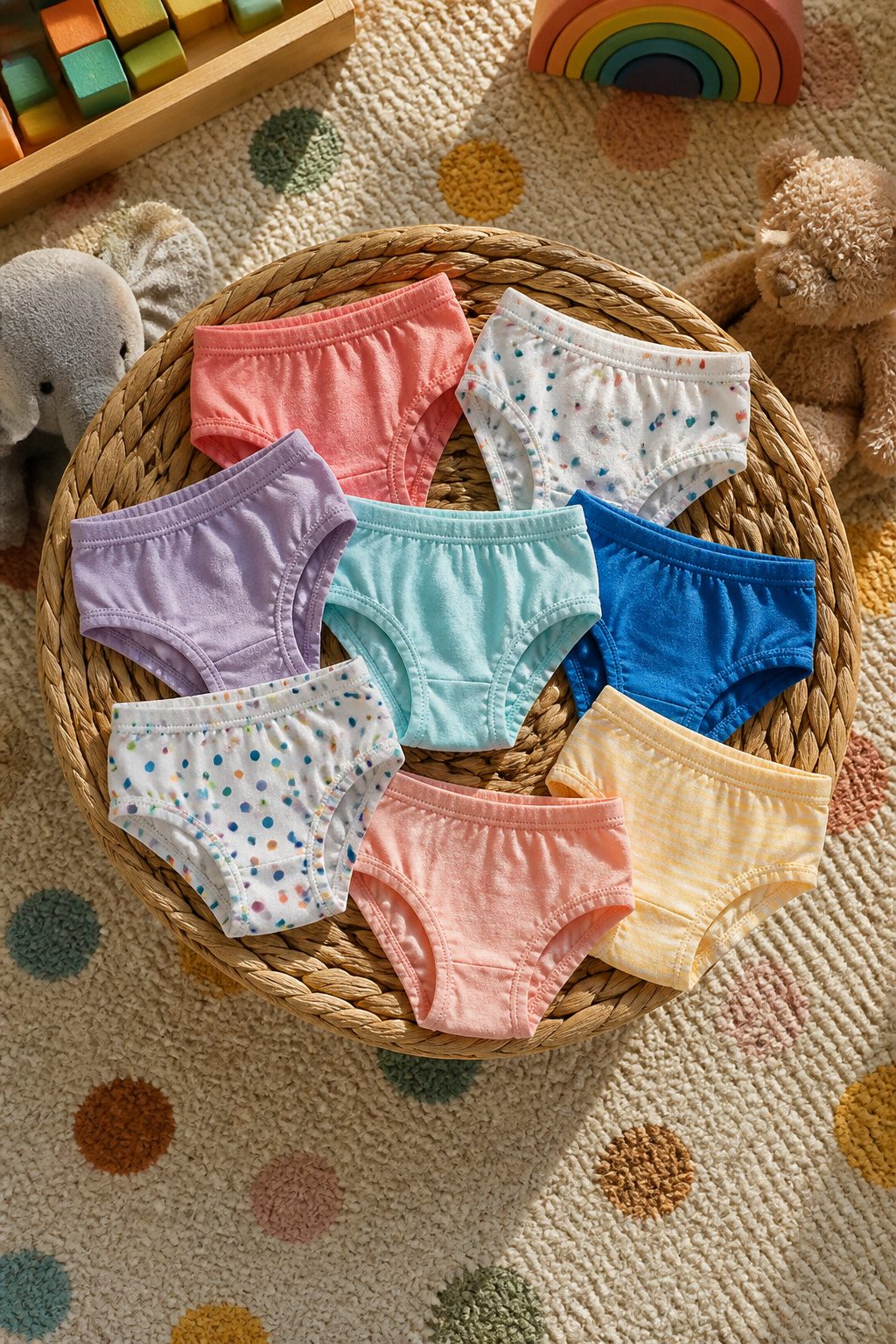
Real underwear teaches faster than any timer or sticker chart because the wet feeling is immediate and unmistakable. Pull-ups wick moisture away the same way diapers do, so the child never connects cause with effect. We switched straight to cotton toddler underwear once we committed, and the accidents dropped off faster than they had with the in-between stage.
Buy more pairs than you think you need. A dozen at minimum, because you will go through six in a day early on and you do not want laundry becoming the reason you reach for a pull-up. Cotton holds up through repeated hot washes; the cheap character-print pairs we tried shrank and faded fast, and the synthetic blends stayed damp against skin longer than plain cotton.
Character prints can backfire. When an accident happens in underwear covered in a favorite figure, the child often resists changing because they do not want to give up the image. Solid colors or simple patterns make the swap less of a negotiation. Let them pick the pack if that helps buy-in, but steer toward designs they will not treat as precious.

𝐀𝐧𝐭𝐢-𝐒𝐥𝐢𝐩 𝐃𝐞𝐬𝐢𝐠𝐧: This footstool was designed with growing toddlers in mind; Dreambaby Step Stool features 117 rubber dots for maximum traction and non-slip base to ensure the stool stays in place while in use. Perfect for tiny feet making big steps.

For Growing Kids: Step stools for kids is great for helping toddlers with toilet potty training, reaching the sink for washing hand and brushing their teeth, also reaching the kitchen, bathroom, bedroom, playroom, and living room. Step stool can increase their independence, confidence.

Adjustable Stability – Rabb 1st potty training seat designed with 6 adjustable height. Customize up to 3 inches for the perfect height, ensuring a secure, wobble-free experience that helps toddlers feel safe and confident.
Waterproof Mattress Cover
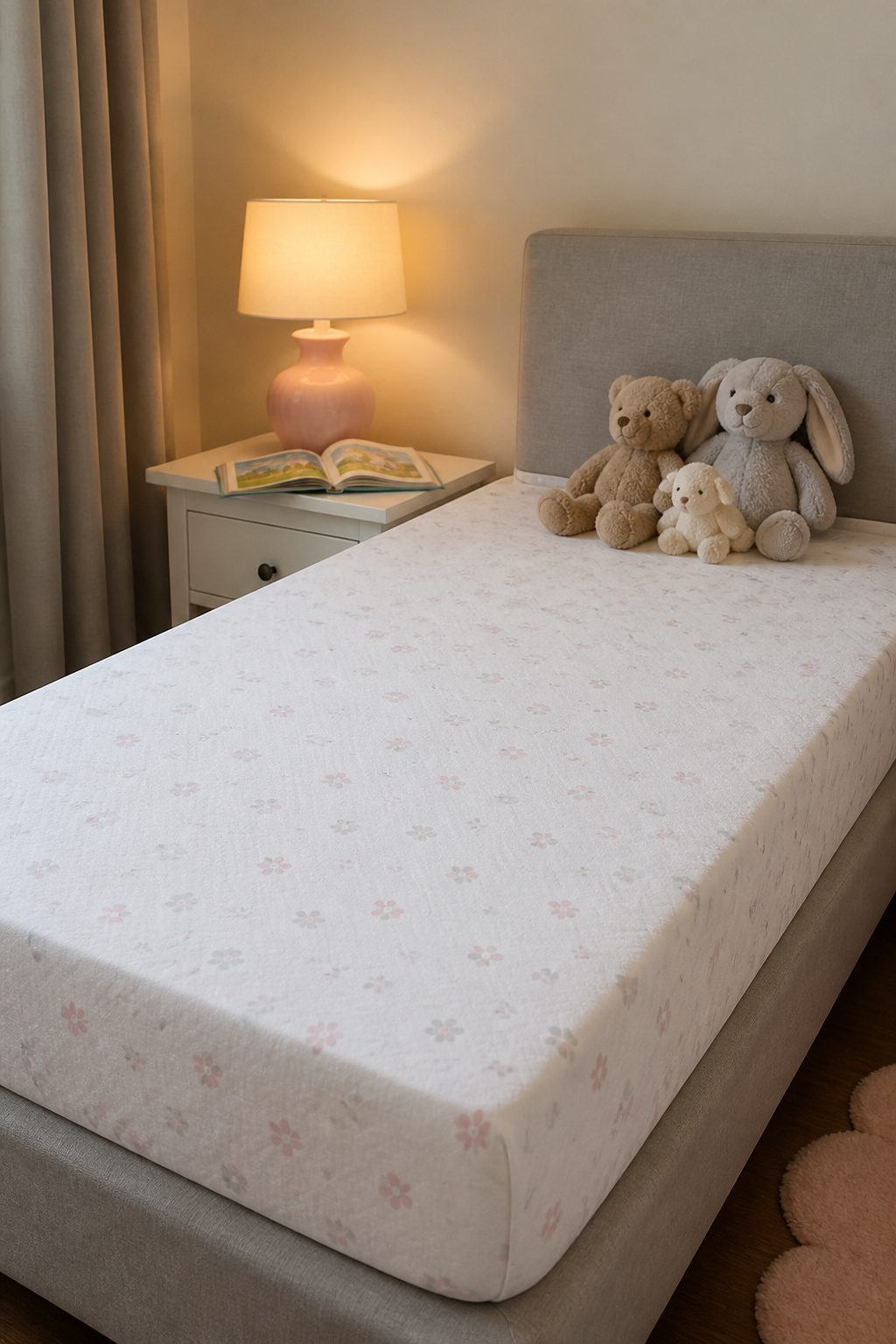
Nighttime accidents run on their own timeline, separate from whatever progress you see at the potty chair during the day. We keep two waterproof mattress covers in rotation: one on the bed, one in the wash. A fitted liner stays put better than a flat incontinence pad that shifts the moment your kid rolls over. We learned to check three things before buying. Noise matters, because crinkling plastic wakes a light sleeper every time they move. Fit should be snug like a regular sheet, not loose enough to bunch. Breathability is the tradeoff; a cover that seals out every drop can sleep hot, so we look for cotton tops with a waterproof membrane underneath rather than full vinyl. The cover saves the mattress, but it also saves you from stripping the whole bed at 2 a.m. when you would rather swap the sheet and go back to sleep.
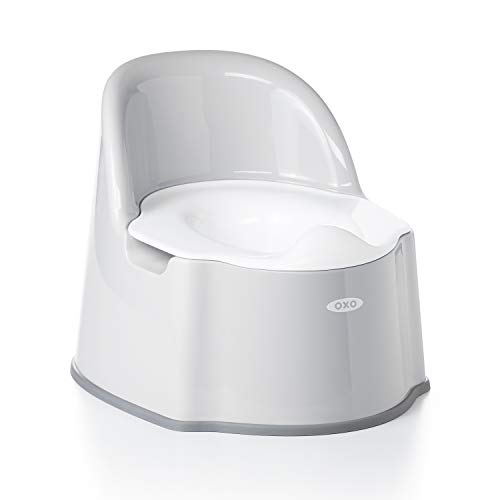
Seamless seat design is comfortable and won't leave marks on tiny tushies
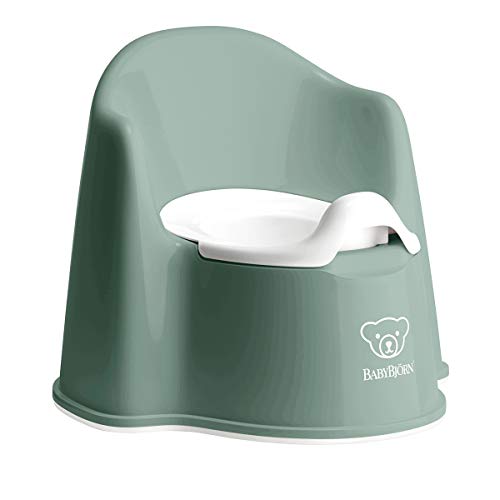
Comfortable potty chair with backrest and armrests

POTTY & TRAINER SEAT: The potty training system includes a training potty which features Nickelodeon characters and a trainer seat with splash guard for a smooth transition to the family toilet
Easy-On Clothing
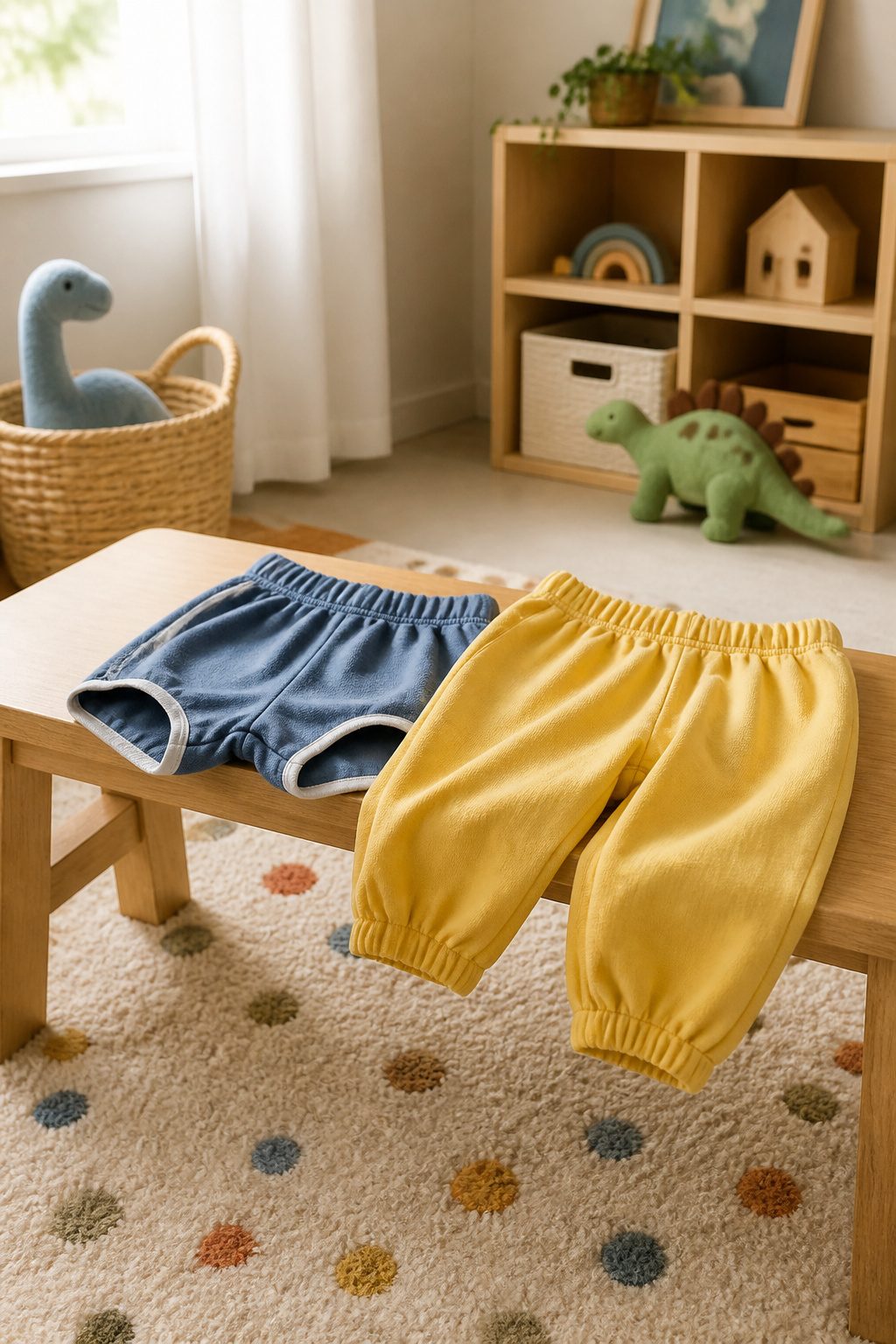
Elastic waistbands matter more than we expected when we started potty training. Our first weekend, we dressed our toddler in jeans with a button and zipper because they were what we had on hand. By the third accident, we realized the problem was not the timing or the chair; it was the thirty seconds of fumbling while the urge turned into a puddle on the bathroom floor. We switched to pull-on shorts and soft pants with covered elastic at the waist, and the difference was immediate. The same goes for anything with snaps, overalls, or tight leggings. If a child cannot push the clothing down in one motion, the clothing is working against the process. We also learned to skip the cute lace-trim underwear at first. The elastic edges on some styles can snap against skin, and a toddler who is already uncomfortable will not sit still for that. Pull-on pants with a soft, covered waistband let the child focus on the actual task instead of fighting their clothes to get there.
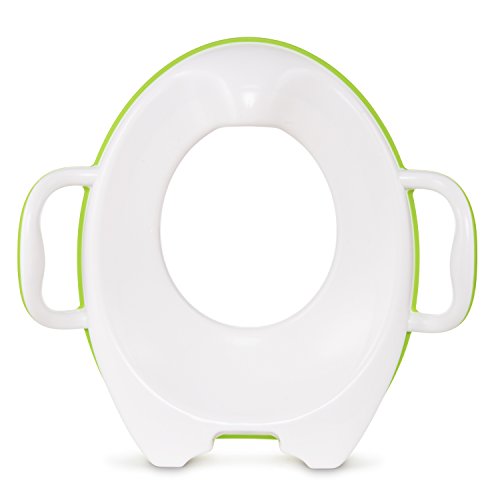
Portable Toddler Potty Seat: Perfect for potty training boys and girls.

【Let Kids Feel Comfortable and Secure during Process】When kids is sitting on the seat, The toilet seat insert is comfortable padded and their hands can hold the handles on side at the same time their feet can relax on the second step. Those features will let your kids feel calm and secure throughout potty training process.
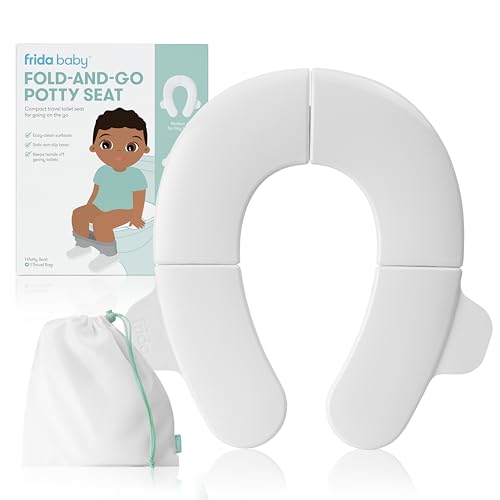
FITS ADULT TOILETS: The Fold-and-Go Potty Seat creates a smaller, solid sitting surface over an adult toilet, helping toddlers sit comfortably without bracing against a rim that feels too wide.
Flushable Wipes
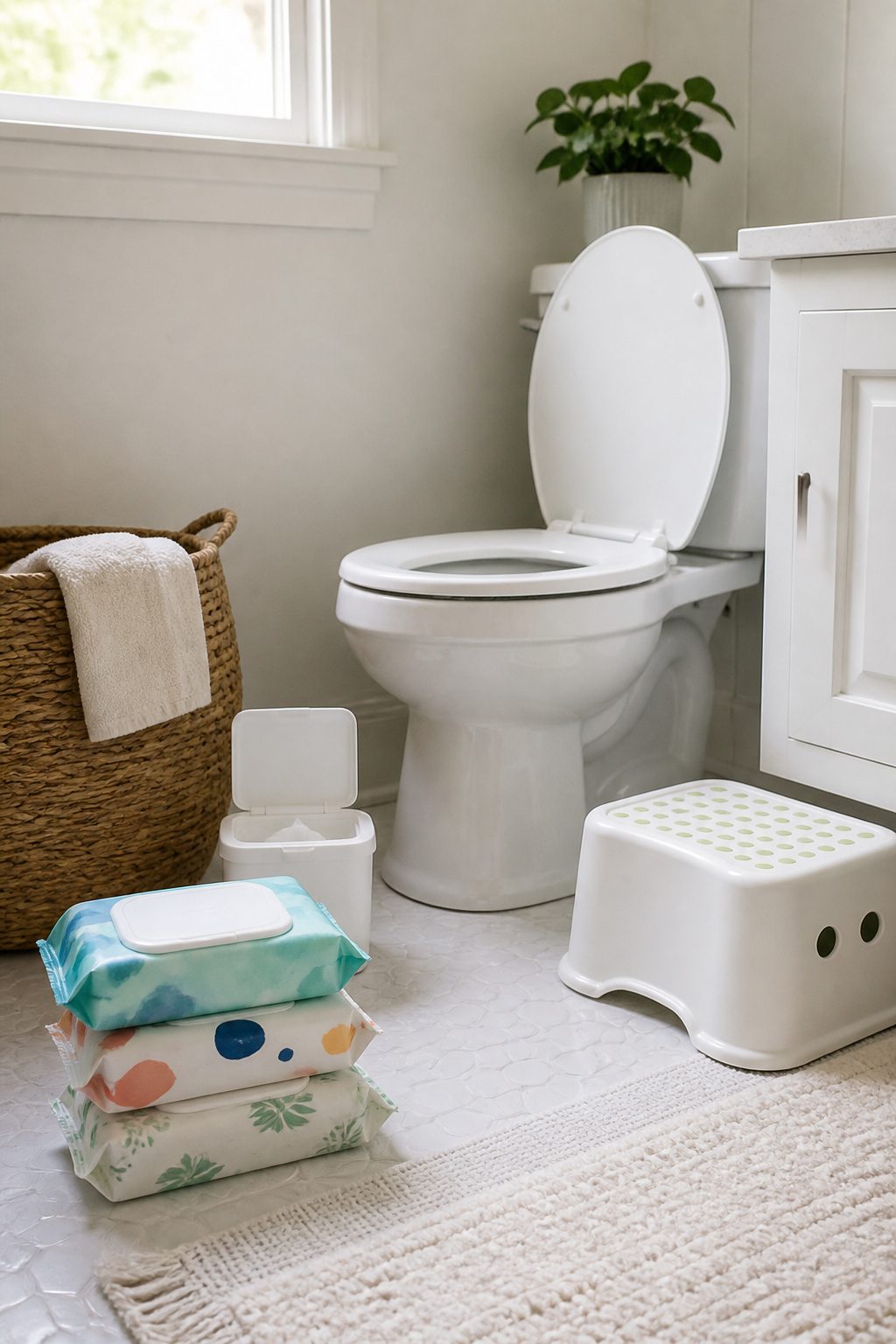
"Flushable" on a wipe package does not mean your plumbing agrees. We have cleared enough clogs at our own bathroom to treat that word as a warning label, not a promise. The wipes break down slower than toilet paper, and in older Salt Lake City pipes that can mean a bill you did not budget for.
For a child learning to wipe, though, a wipe glides where paper drags. A three-year-old pressing too hard with dry paper tends to smear and panic; a damp wipe forgives clumsy hands and folds easier than a wad of tissue. We keep a bin beside the toilet for the used ones and treat them like diapers, not debris. The extra step is worth it for the weeks when your child is still figuring out pressure and angle.
Toilet paper wins again once the motion is automatic, maybe around kindergarten. Until then, the wipe is a training tool, not a plumbing solution.

Height Adjustable - 4 adjustable positions, and we've included detachable screws so you can easily raise or lower the children's toilet ladder by up to 3 inches, ensuring a perfect fit on any surface.

Watch your child make their way through every phase of potty training with this 3-in-1 potty seat that transitions from a standalone potty to an adult toilet topper to a step stool.

【2-in-1 Toddler Potty Training Toilet Seat】Designed for growing toddlers age 1–3, this multi-functional potty training toilet seat easily converts into a potty chair, training potty, or a toilet step stool ladder, supporting your child's full toilet training journey. A smart solution that replaces multiple baby toilet products with one.
Disinfectant
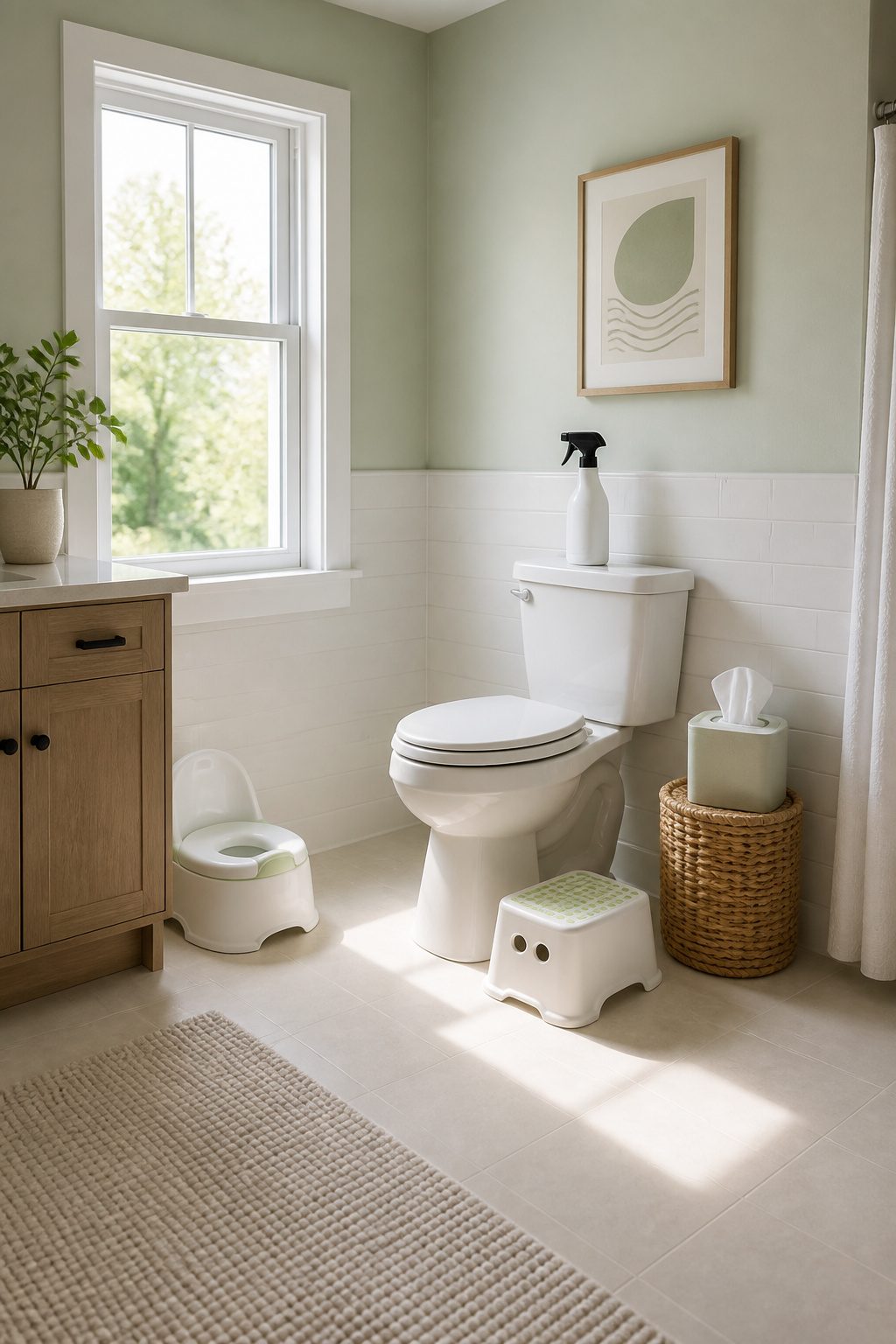
You will want a disinfectant spray ready in the bathroom from day one, not stored under the kitchen sink where you have to hunt for it while a puddle spreads. We kept ours on the back of the toilet for three months straight, and we reached for it more often than we expected in the first two weeks. The spray we used was marketed for pet messes, but it handled human urine stains just as well. We also kept a pack of disinfecting wipes in each bathroom for quick wipe-downs of the toilet seat, floor, and baseboards. After the first month, the accidents tapered off and the spray moved to a cabinet, but leaving it out until then saved us from hunting during the moments we least wanted to.

Install the Disney Junior Minnie Mouse Flip & Sit Potty Seat in seconds with no tools required; comes with two adhesive strips to attach to the adult toilet lid; four extra strips included

BUILT-IN POTTY TRAINING SEAT: Makes going to the potty easy & efficient for everyone. Magnetic feature keeps potty seat up & out of the way of adults, & is easy for kids to flip down when they need it. Compatible with most toilets; easy 5–10-minute installation.
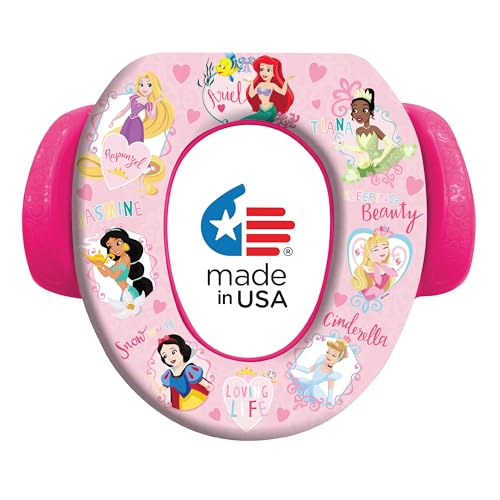
MADE IN THE USA: Durably constructed potty seat is made in the USA and built to last.
Rewards System
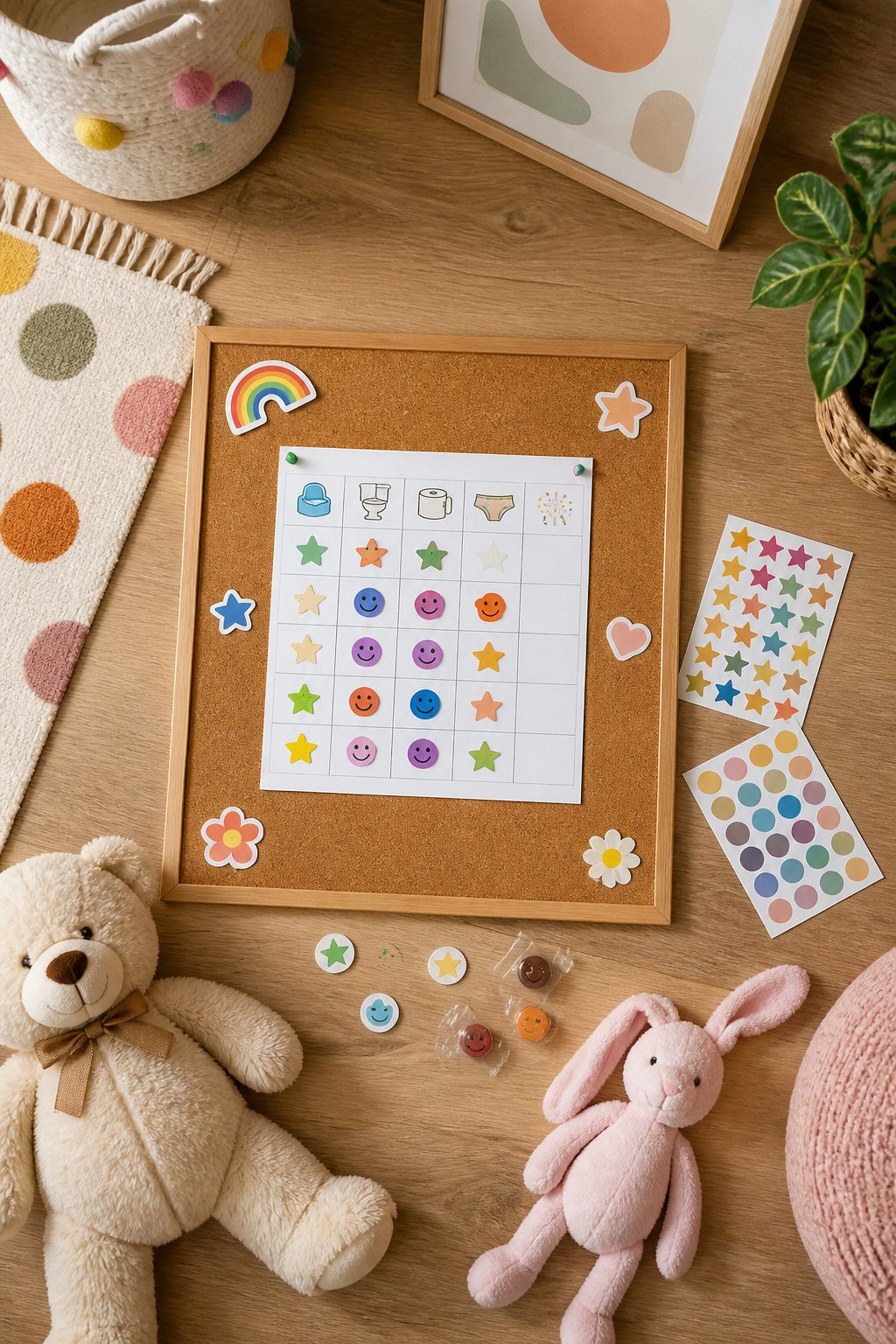
Stickers and small treats can get a toddler interested in sitting on the potty in the first place, but the novelty wears off faster than you expect. We have seen the sticker chart fill up for three days, then the kid stops asking for it and the chart hangs there half-empty. That does not mean the system failed; it means it did exactly what it was meant to do, which is build a positive association early while the habit forms. If your child still needs a nudge after the stickers lose their shine, a larger reward tied to a real milestone, like the first successful day or the first time they use the toilet for a bowel movement, can carry more weight than a daily prize. The real work after that is praise and consistency, not supplies. Buy the basics first, add a reward system only if you hit a wall, and do not let the shopping list become the reason you have not started yet.

2-IN-1 STEP STOOL + POTTY SEAT – GROWS WITH YOUR CHILD No need to buy a separate step stool. This foldable potty seat converts into a sturdy step stool for reaching the sink, washing hands, or brushing teeth. Lightweight, compact – stores anywhere. Skip the separate training potty – kids love using the “big toilet” just like mom and dad, and you'll love never cleaning out a mini potty again. (This is what millions of parents rave about: No more dumping and scrubbing a tiny plastic potty. Your child feels like a big kid. You get your bathroom back. Win-win)
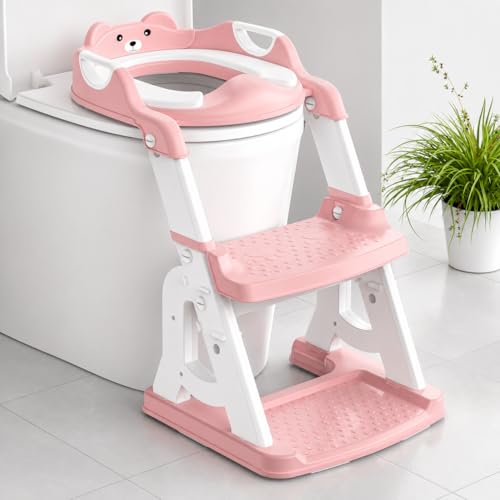
【Dual Safety Structure】The MeuLife potty training seat features a unique integrated triangular support design reinforced with a horizontal support bar. This dual-structure system ensures even weight distribution, making the seat sturdier and wobble-free while effectively eliminating the common issue of instability. Paired with a widened pedal measuring 15.7 × 7.1 inches, it helps relieve children’s fear of falling or climbing during potty training.

NO-TOOLS SETUP IN SECONDS –Open the box for the training seat , unfold, and place on the toilet—no drills, no screws, no loose parts. Perfect for busy parents and first-time set up
Potty Training Books
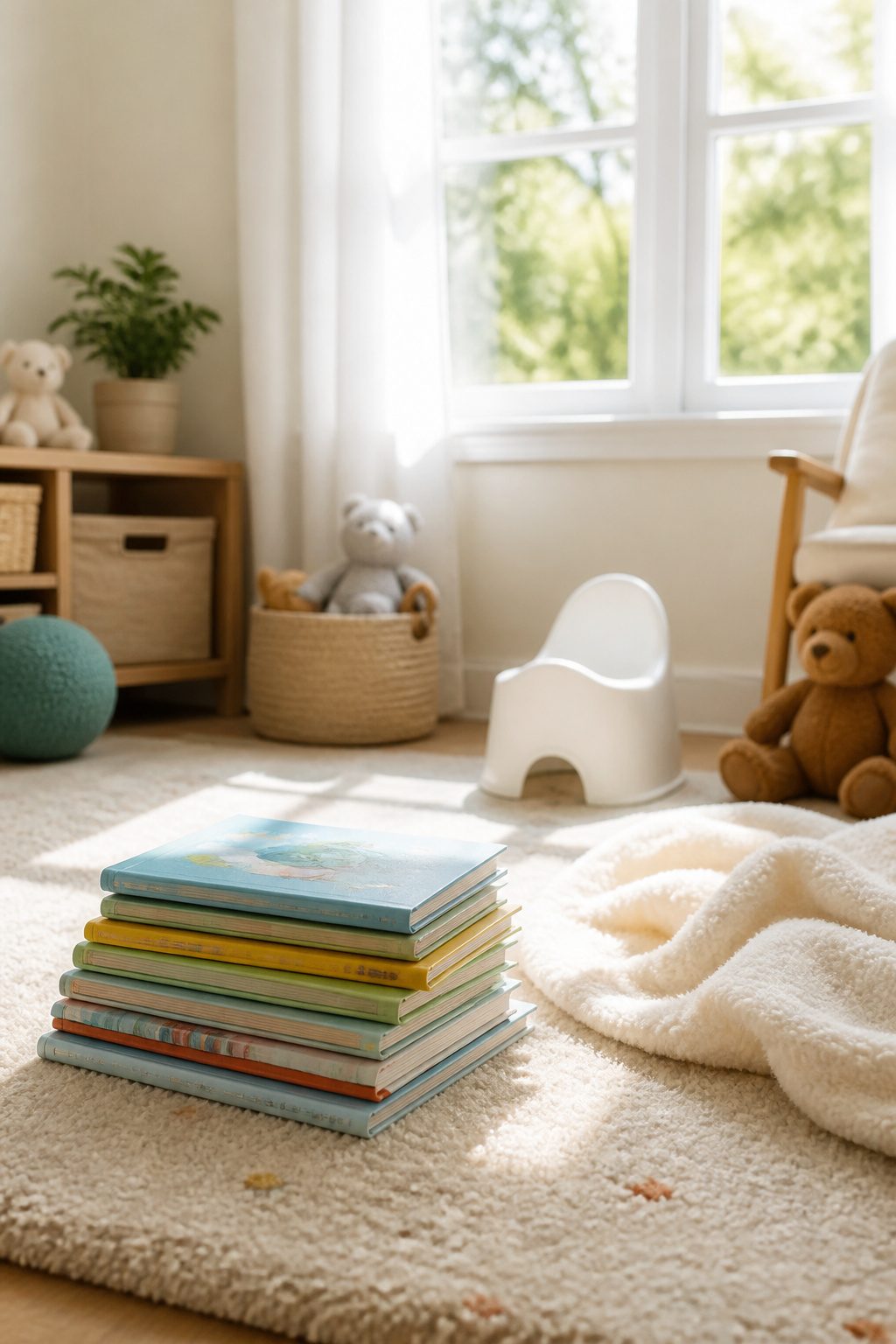
Books about using the potty gave our toddler words for what was happening in her body, which cut down on the frustration faster than any sticker chart managed. What Is Poop held her attention through multiple reads, mostly because it treated the subject as ordinary rather than gross-out funny. A few others we borrowed gathered dust on the shelf, usually the ones that leaned too hard on cheering or characters she did not recognize. We found the most useful titles were the plain, body-focused ones she could flip through while actually sitting on the toilet, not the storybooks that required us to read start to finish. If a book keeps her on the seat long enough for the muscles to relax, it earns its spot in the stack; if she hands it back after one page, it does not get a second trip upstairs.
Travel Potty
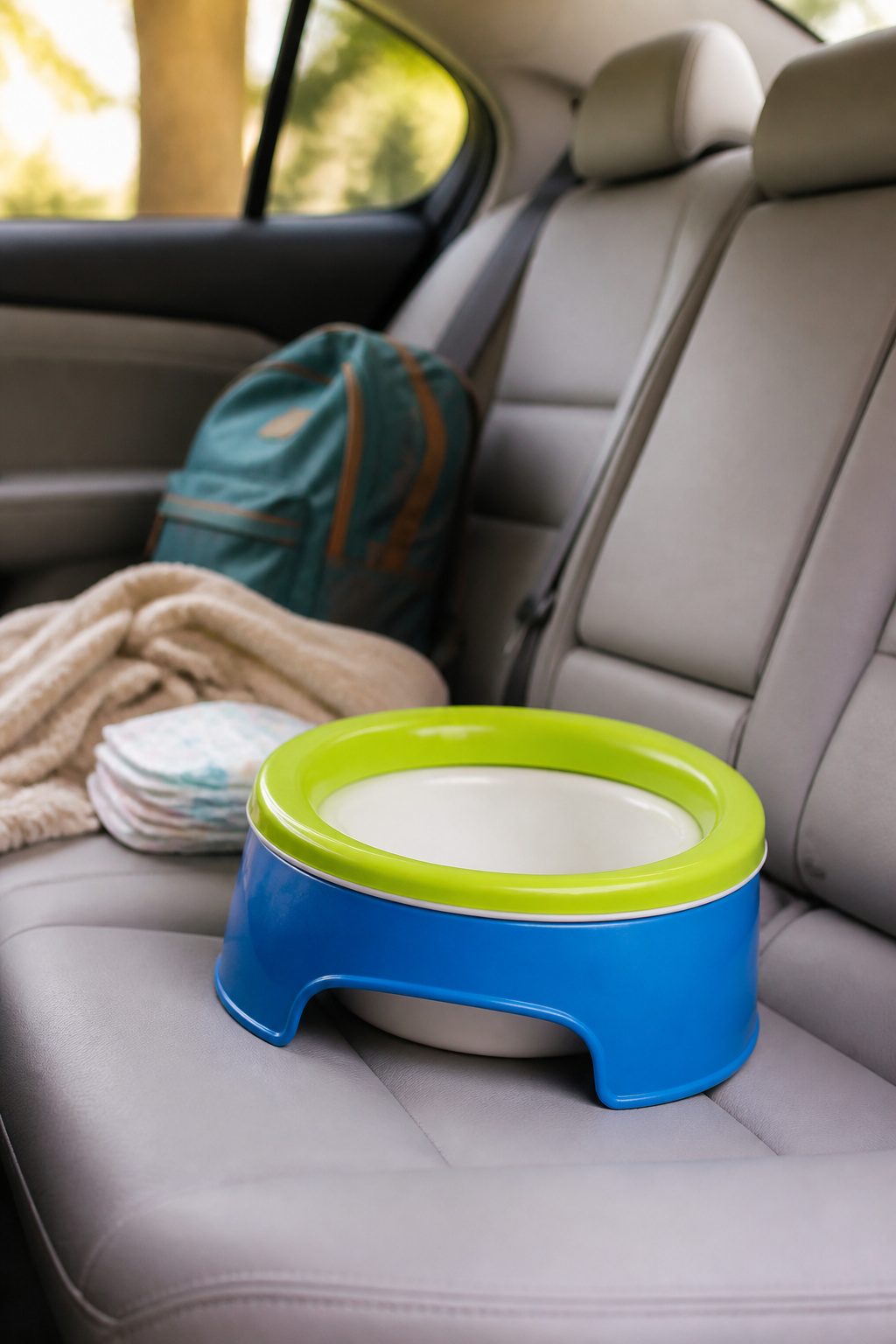
A Potette travel potty belongs in the back seat from the first day of training, not after the first accident. We kept ours in a large wet/dry bag alongside disposable liners, sanitizing wipes, and a change of clothes, and that bag lived in the car for six months. The silicone liner is worth the extra purchase if your child will ask for a potty by color; it also removes the grocery-bag crinkle that makes the whole setup feel temporary and shaky to a toddler who needs confidence.
Public restrooms can undo a week of progress in one visit. Automatic flushers roar before a child is off the seat, and standard seats leave them dangling or braced in a squat that reads as emergency, not routine. A travel potty that converts to a seat on a full-sized toilet covers both scenarios, or you can set it up as a standalone potty in a stall corner with a disposable liner and toss it after. We never regretted the bag space it took.
Extra Bed Sheets
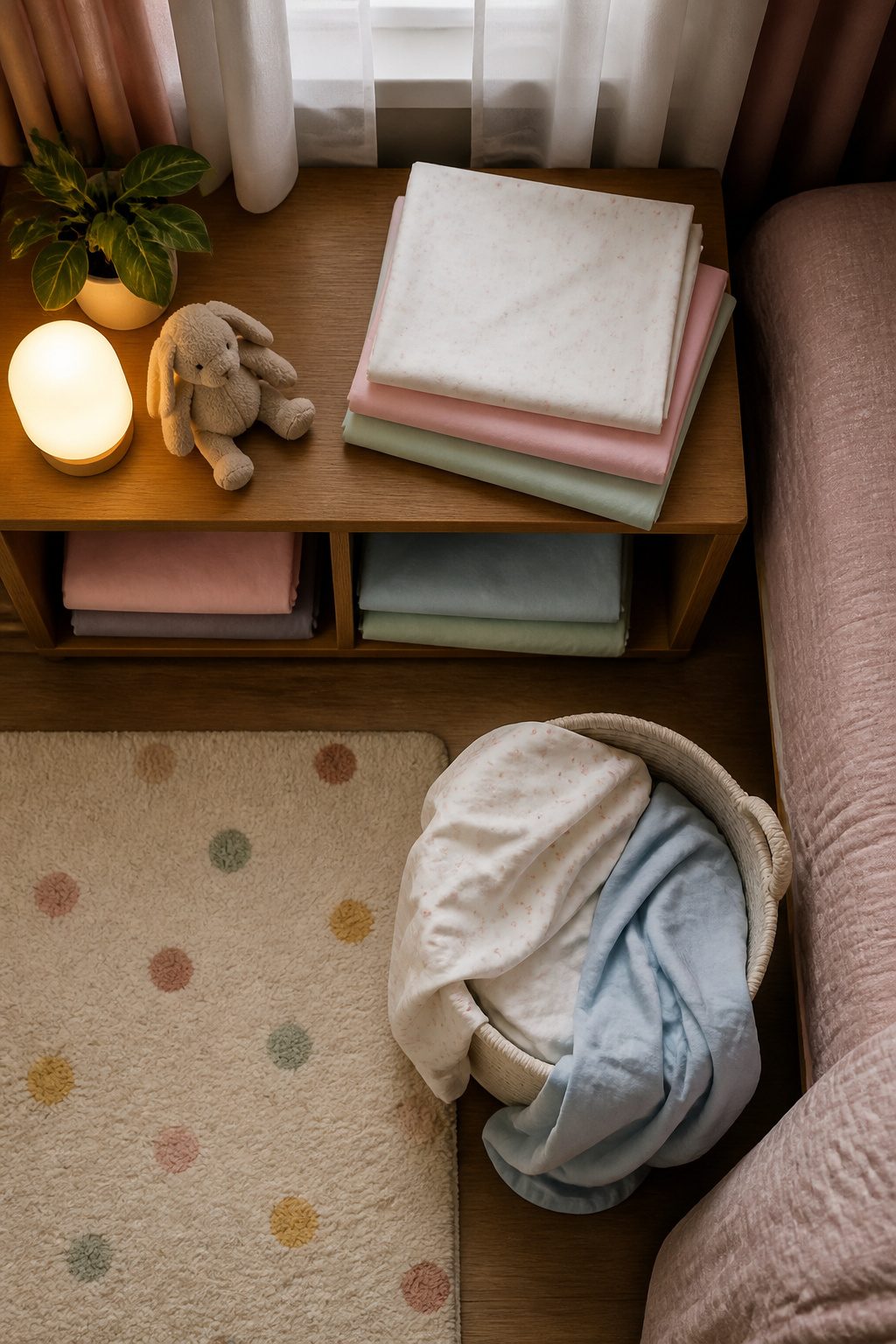
Nighttime accidents keep happening long after daytime trips to the potty are sorted. We learned to keep two spare sheet sets in the bedroom itself, not down the hall in the linen closet where you are fumbling at 2 a.m. with a crying toddler and half your brain still asleep. The closer set gets swapped on fast, the wet set goes straight to the washer, and the third set waits clean in the closet as backup. Cotton-polyester blends dried fastest in our dryer at midnight, about twenty minutes less than all-cotton, which meant we were back in bed sooner and the mattress stayed protected underneath.
Toilet Targets
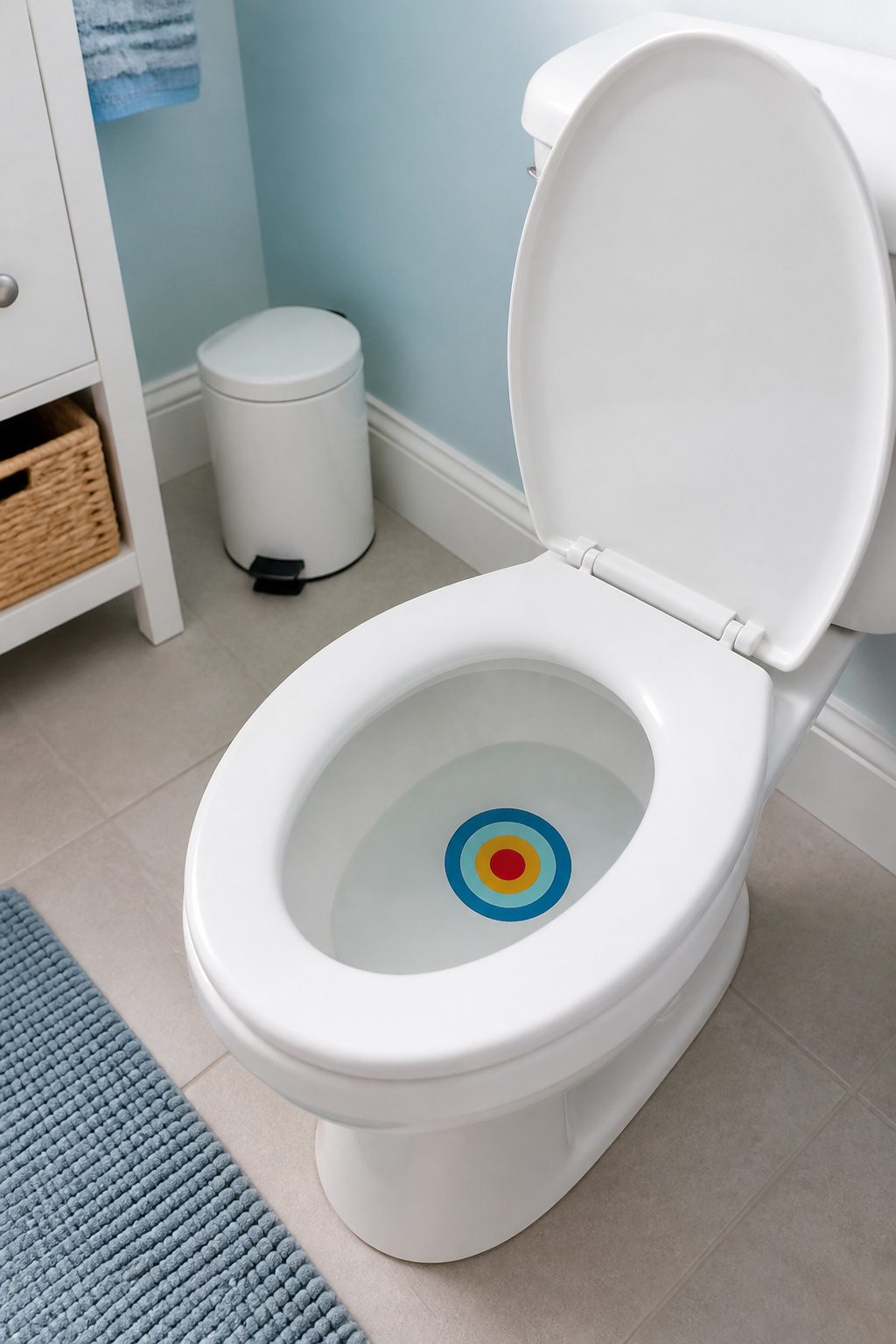
Toilet targets are optional, but we have seen them cut cleanup time when a boy is learning to stand. The idea is simple: put something in the bowl he can actually aim at, and the stream goes where you want it instead of where you do not.
You have two main paths. One is a floating item, something buoyant that sits on the water surface. The other is a semi-permanent sticker fixed to the bottom of the bowl. Both give a clear focal point. Cereal works too, though it breaks apart fast and you are flushing food, which feels wasteful after the third bowl.
In our reading, the stickers hold up better than floating targets, which tend to spin or sink once they get waterlogged. A sticker that dissolves too fast is just extra paper to fish out, so check that the adhesive is meant for porcelain and water exposure. The floating kind is easier to swap, but that also means buying refills.
Some parents skip standing practice entirely and teach sitting first. That is a valid choice, and it removes the aim problem completely. If you do go for standing, a target is a cheap experiment. Buy a small pack before you commit to a subscription-style refill kit. If your son ignores it, you are out a few dollars, not a drawer full of unused supplies.
Timer or Potty Training Watch
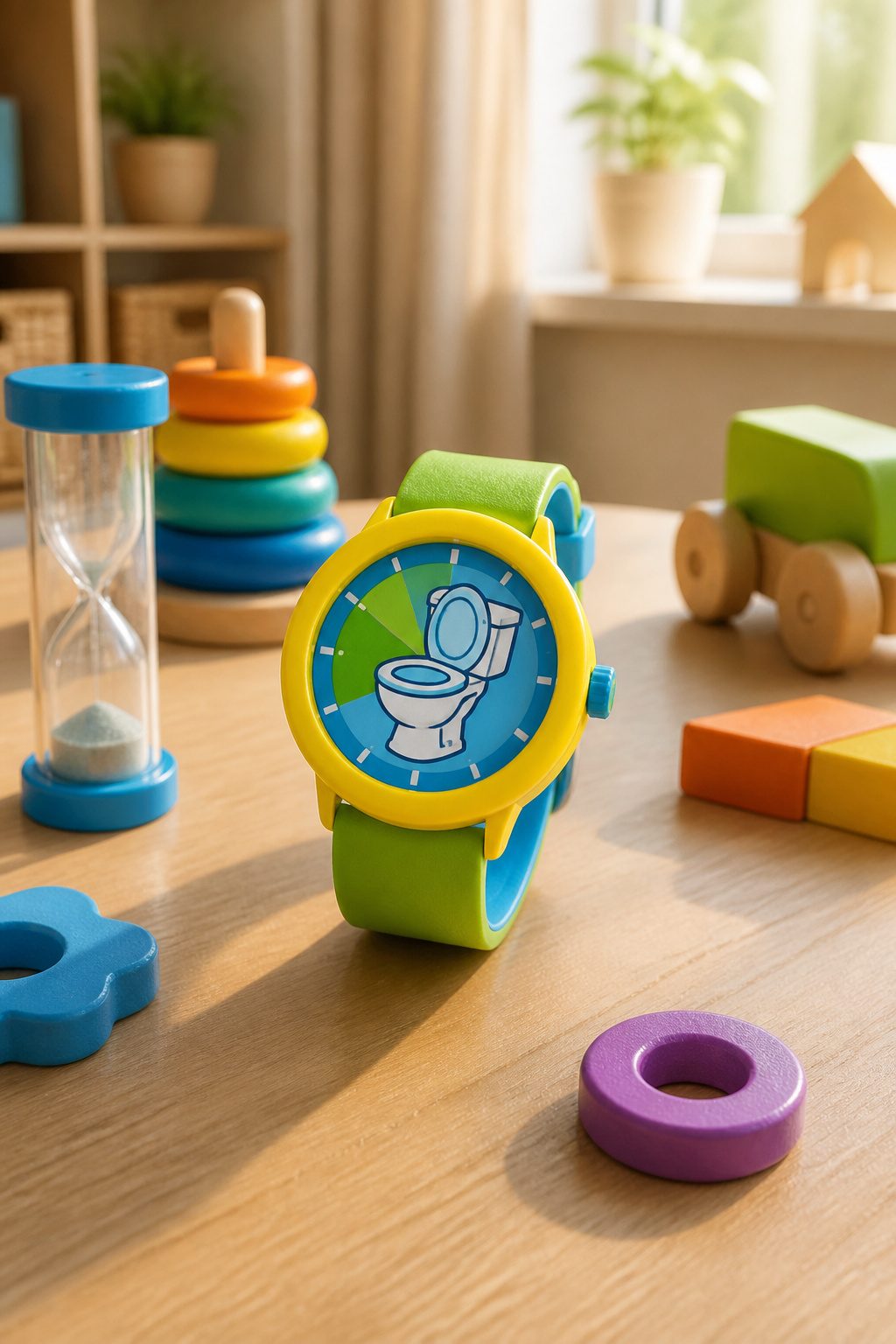
A timer is the simplest way to keep potty training from turning into a staring contest between you and your toddler. We started with a basic kitchen timer set for every 20 to 30 minutes, and that rhythm did the heavy lifting for the first few days. The alarm became the cue, not us, which cut down on the power struggle.
A potty training watch works the same way but travels with the child. The alarm sounds on their wrist, so the reminder reaches them even when they are deep in a block tower in another room. That matters if your house has more than one level or if you are trying to keep the process consistent between caregivers.
We tried both approaches with different kids. The fixed 30-minute schedule got results faster for the child who needed structure, but it also meant stopping play mid-stride, which led to some resistance. Letting the child lead, with us watching for signals instead of the clock, took longer but produced fewer battles. Neither way is wrong. The timer wins if you need to build the habit from zero; child-led timing wins if your kid already notices when they are wet and you have the patience for a slower arc.
Potty Training Methods
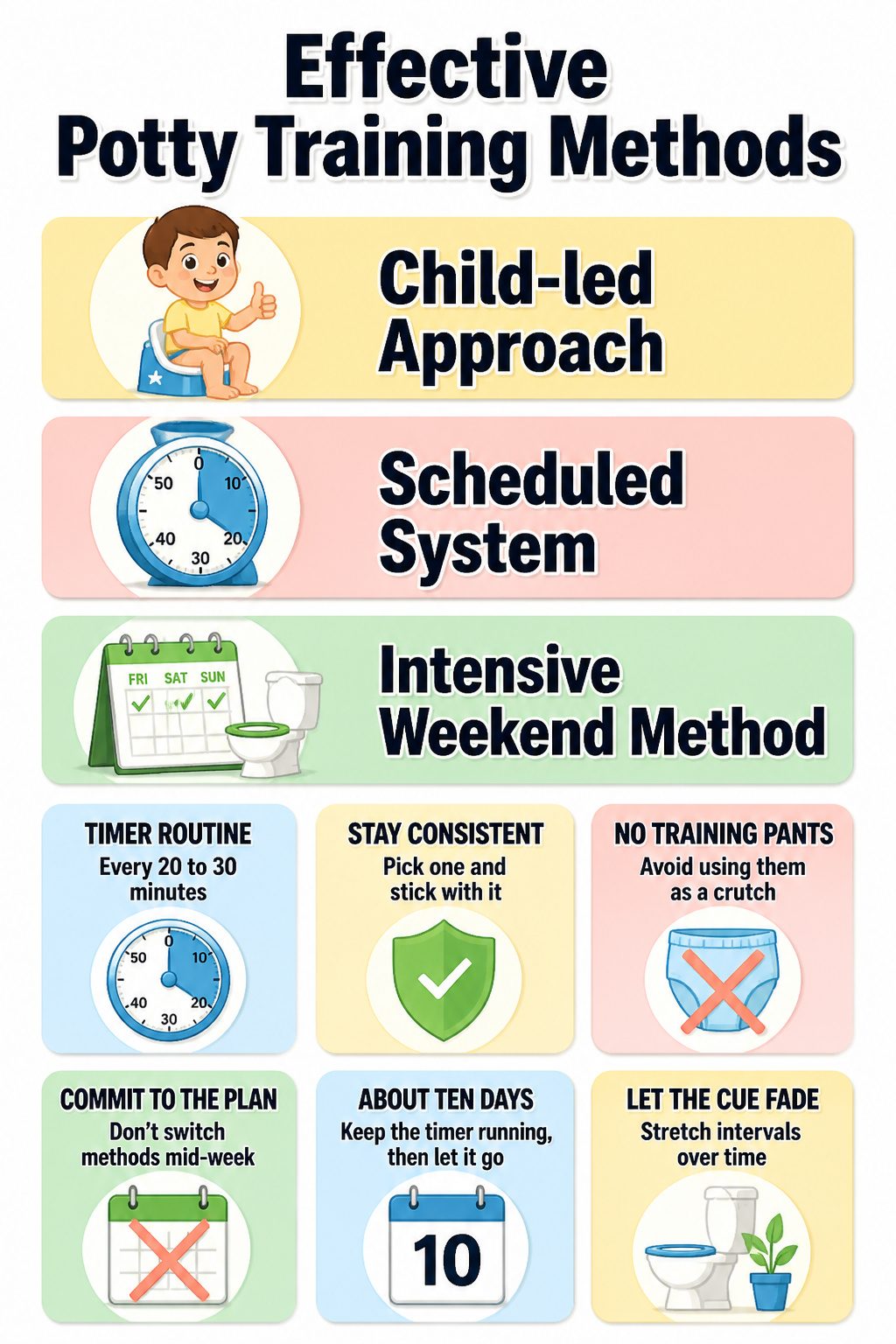
The three approaches you will see are child-led, scheduled, and intensive weekend methods. We tried a loose child-led start first, thinking fewer battles meant less stress, but our kid treated the potty like a suggestion box. We switched to a timer system, setting it for every 20 to 30 minutes, and that rhythm finally stuck. The timer built the habit; later we stretched the intervals until the cue faded.
What convinced us, reading through how these methods actually play out, is that picking one and staying with it matters more than which one you pick. Training pants used as a crutch, or switching methods mid-week because a post looked inspiring, just resets the learning. The families who finish in a reasonable window commit to a single lane, whether that lane is the child’s pace, the clock, or a concentrated block. We kept the timer running for about ten days, then let it go once our kid started heading to the bathroom unprompted.
Positive Reinforcement
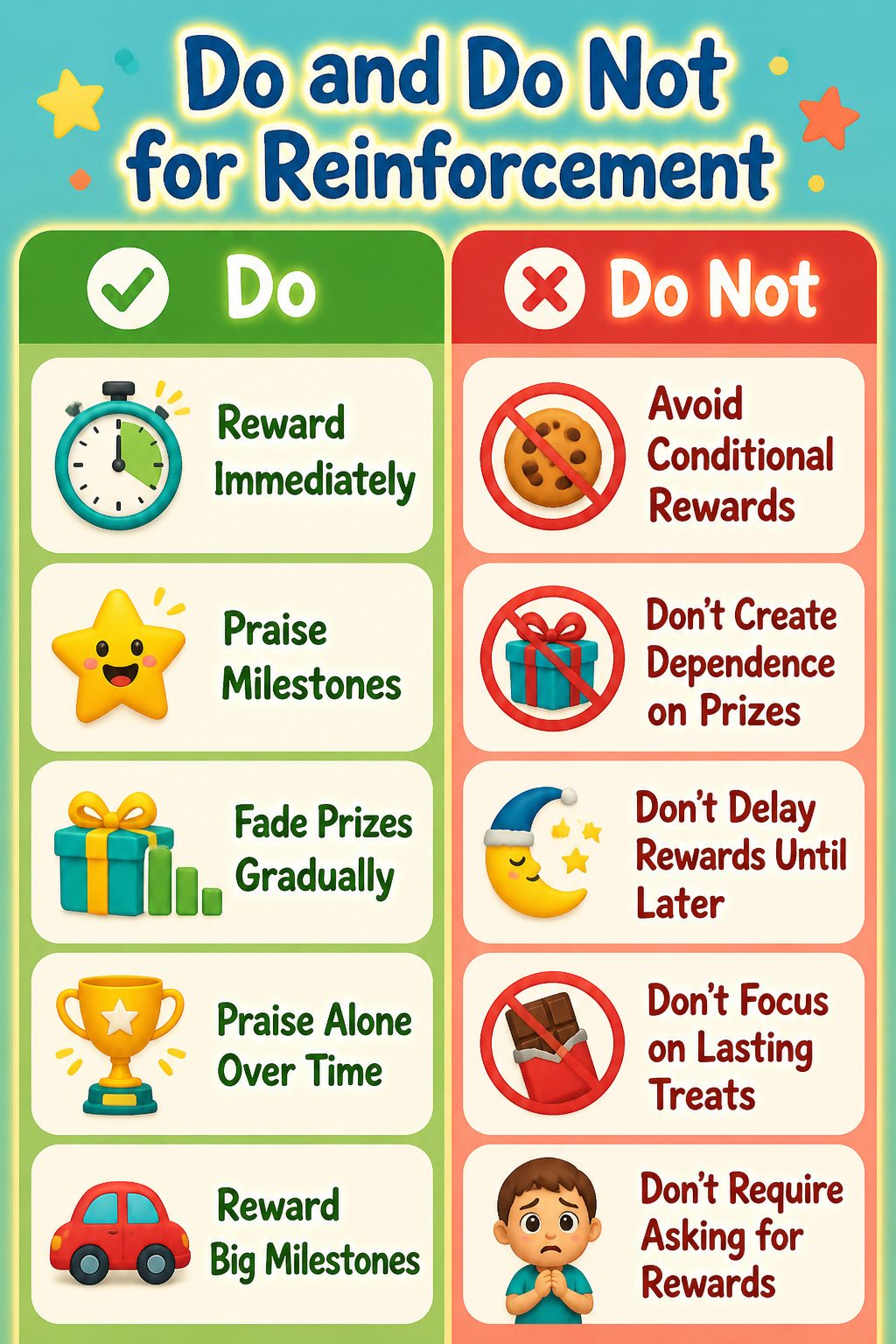
A sticker dropped in the exact second the splash hits works better than one handed out at bedtime. We learned that timing the reward to the action, not the aftermath, is what builds the association. Early on, a small treat or a chart square for every success is fine, but start fading the prizes by the second week. If the child is still asking for a cookie before they will sit on the potty by week three, the reward has become the reason instead of the habit.
Praise alone should carry more weight as the days pass. We shifted to bigger milestones only: the first full dry day, the first independent trip to the bathroom. A small toy for those moments still marks the achievement without keeping the child on a perpetual payment plan.
Accidents and Cleanup
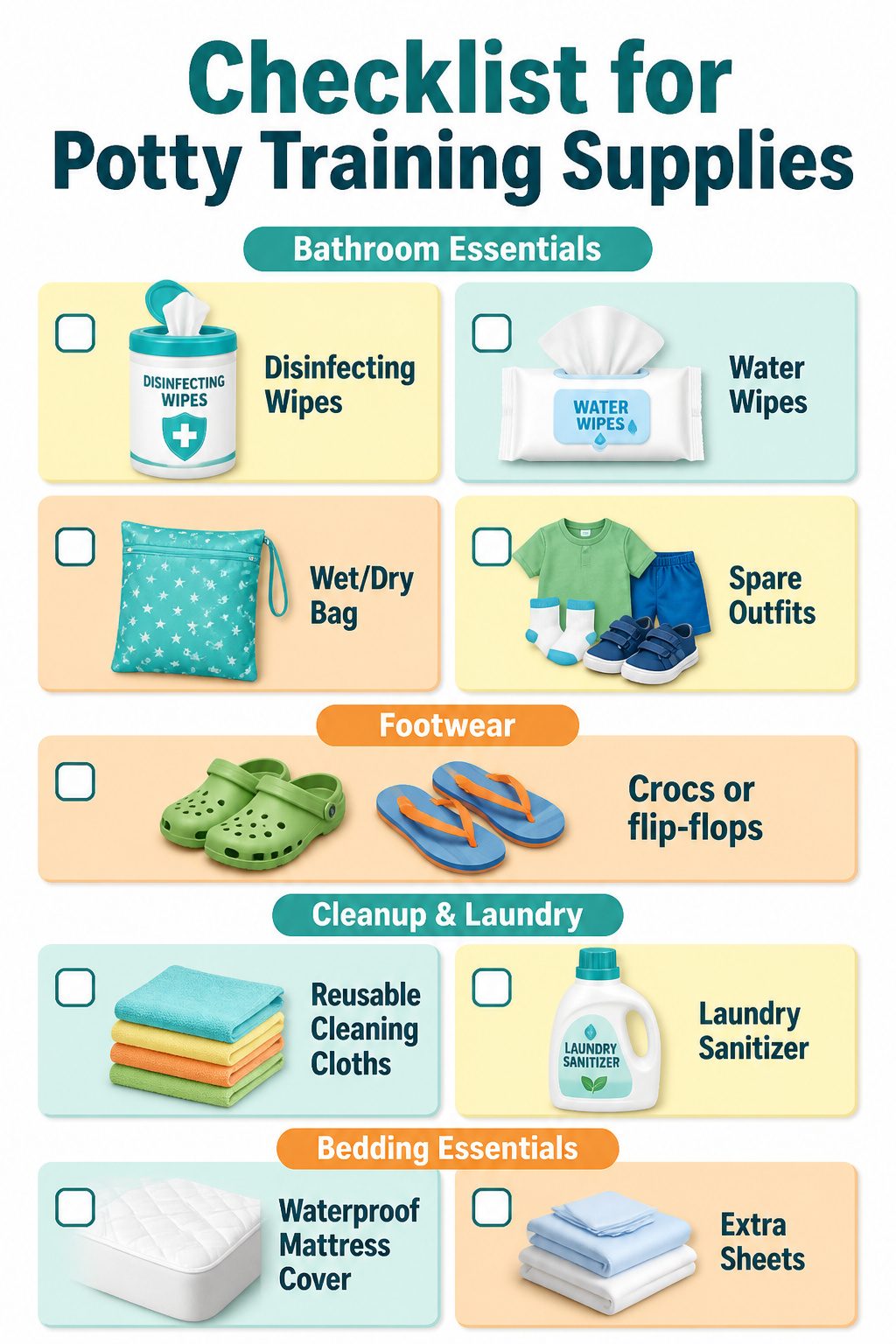
Accidents will happen, and the difference between a rough morning and a manageable one is whether you already have supplies within arm’s reach. We learned to keep a basket in every bathroom with disinfecting wipes, water wipes, a wet/dry bag for soiled clothes, and at least two complete spare outfits including socks and shoes. Crocs or flip-flops earn their spot here: they rinse clean in seconds when sneakers do not.
For cleanup itself, hardwood and tile forgive you. A quick wipe with disinfectant and the incident is over. Carpet is where we lost time. What worked was keeping old burp cloths in that same basket; they are more absorbent than paper towels for blotting, and tossing them straight into a diaper disposal bag kept the smell contained until laundry day. We also kept a spare shirt in there for ourselves after one memorable incident on the living room rug.
On laundry, a capful of laundry sanitizer in the wash made the difference between clothes that smelled clean and clothes that did not. Nighttime accidents meant we needed that backup system ready: waterproof mattress cover on the bed, another in the wash, and extra sheets folded nearby so we could swap everything at 2 a.m. without turning on every light in the house.
Travel Considerations
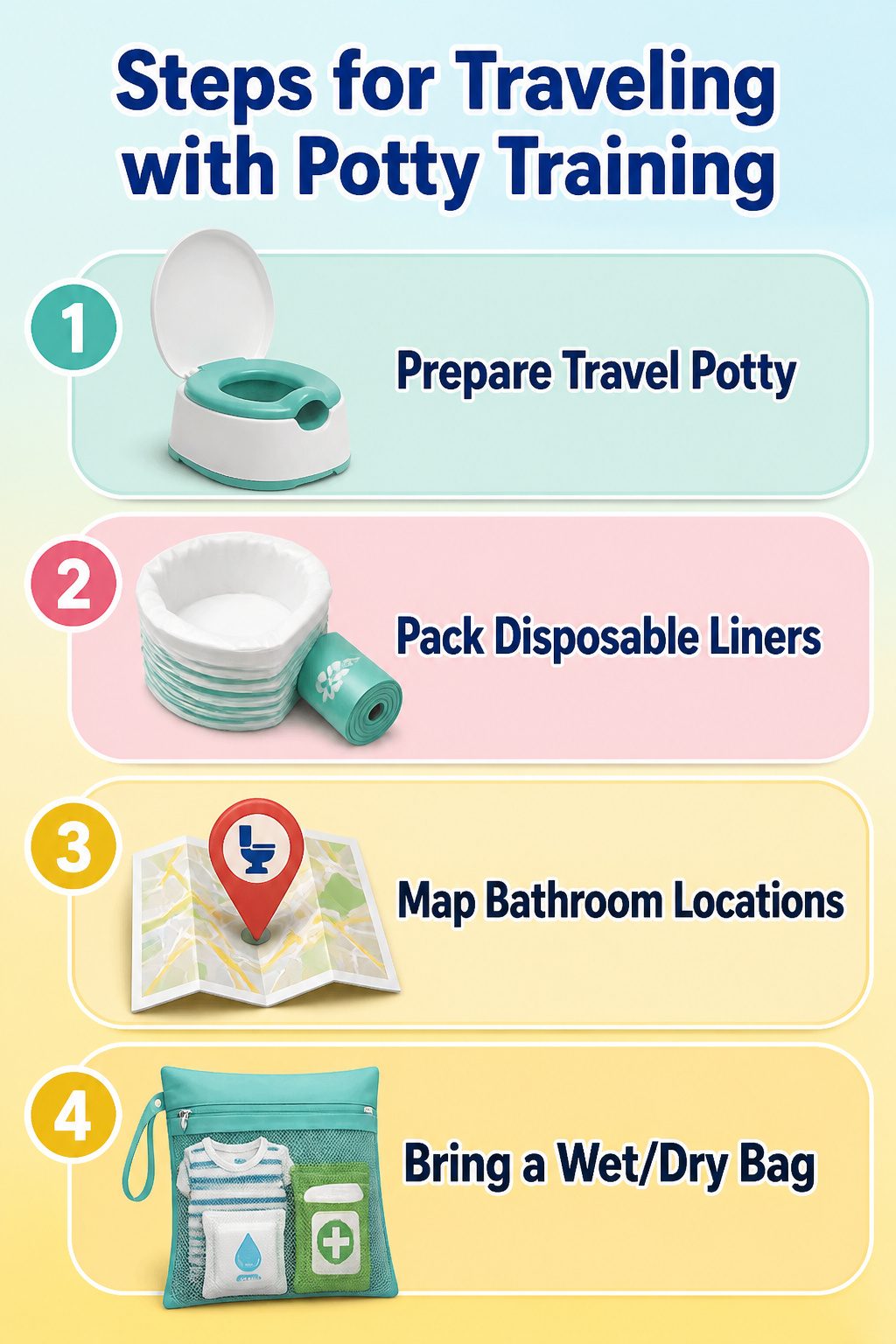
We learned quickly that a travel potty alone does not save an outing. The disposable liner bags are what let you toss and go when no sink is nearby, and we kept individually wrapped toilet seat covers stashed in the glove box, the diaper bag, and the beach tote. The covers go between the public seat and any portable seat you bring, which matters more than we expected once you are wiping down a foldable seat with antibacterial wipes in a parking lot.
For the first two weeks, we planned every trip within a ten-minute radius of home. That distance felt safe because we could get back before the "I need to go" became an accident, and we still mapped bathrooms at every stop: the library, the grocery store, even the hardware store. We never left without a wet/dry bag holding a spare outfit, water wipes, and sanitizing wipes that doubled for restaurant tables.
Frequently Asked Questions
What potty training supplies do I actually need?
The basics are a potty chair or seat reducer, a step stool, and real underwear. A floor-level potty chair works best for small or nervous toddlers, while a seat reducer on the full toilet skips a later transition. Everything beyond that is optional and depends on your child and your routine.
When should I buy potty training supplies?
Before you start, not the morning of day one. Having the potty seat already in the bathroom for a week before you begin helps normalize it for your child and removes one variable from an already stressful process.
Do potty training rewards actually work?
For some children, yes, particularly in the early stages when you are building a positive association with the potty. Small, immediate rewards like a sticker or stamp work better than delayed ones, and most children do not need them indefinitely. Start fading prizes by the second week so the habit, not the payment plan, carries the behavior.