A boys’ playroom can be a pine kitchen you build over a weekend or a foam couch set that costs as much as adult furniture and needs a hand carrying the box inside.
The ideas below cover both ends: Ball Pit; Play Kitchen; Play Tent; Foam Play Couch; Rug; Rocking Horse; Table and Chairs; Dollhouse; Educational Wall Decor; Bookshelves with Baskets; Book Ledges; Safety Considerations; Organizing Toys; Creating a Fun Environment; Age-appropriate Toys.
Age shapes what works: under four, a ball pit or rocking horse matches where they are; past that, the same square footage goes to a table for projects or ledges where they can grab their own books.
The ideas below cover both ends: Ball Pit; Play Kitchen; Play Tent; Foam Play Couch; Rug; Rocking Horse; Table and Chairs; Dollhouse; Educational Wall Decor; Bookshelves with Baskets; Book Ledges; Safety Considerations; Organizing Toys; Creating a Fun Environment; Age-appropriate Toys.
The alphabet strip you hang belongs at seated-kid height, not up near the ceiling where it turns into wallpaper they ignore.
[link-whisper-related-posts]1. Ball Pit

A ball pit corners off a space where toddlers burn energy without leaving the room.
We like a foam-sided pit with a fabric floor; the walls give when a child leans, and the whole thing folds flat when you need the floor back.
Pick a diameter that leaves walking room around it.
The balls come in sets of a few hundred, which sounds like plenty until you see the depth; buy more than you think, since the count printed on the box is usually the piece count, not the fill.
Check that your vacuum hose fits through the mesh top for cleanup.
Best for kids under four who still mouth toys. After that, the novelty fades fast.
2. Play Kitchen

A play kitchen keeps a toddler occupied longer than almost anything else we have set up.
You can buy flat-pack versions, or build from pine 1x3s and paint if you want it to match your trim. One maker we saw spent about $20 on lumber and stain, plus a weekend of cutting and assembly.
Either way, add a small shelf or ledge nearby for play food and pans; the play collapses if the accessories wander out of reach.
Leave room behind it for the child to stand and reach everything. A play kitchen pushed flat to the wall is a storage cabinet, not a toy.
3. Play Tent

A play tent gives a child a room inside the room, which matters more than we expected.
You can buy a pop-up tent, or stretch a sheet over a PVC frame for less. The floor mat matters as much as the tent; cold wood or tile kills the cozy feel.
Add a pillow and a small basket of stuffed animals, and the space becomes a reading nook when it is not a fort.
Check the height if you want to crawl inside during story time. Many tents are sized for kids, not adults, so check the height before you buy.
4. Foam Play Couch

A foam play couch is furniture that becomes a obstacle course, then folds back into a couch.
The modules unzip for washing, which you will need; juice finds every seam. We have seen these used as forts, ramps, and guest beds for sleepovers.
The investment runs higher than a standard kids’ couch, but it replaces several pieces if you count the climbing structure and the spare bedding.
Measure your doorway before ordering; the box is large and the pieces do not compress. Best for kids aged two to eight, after which the sit-height feels low.
5. Rug

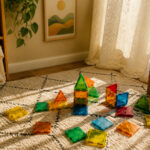
A rug defines the play area and cushions the falls that come with it.
We look for low-pile or flat-weave for toy cars and building blocks; shag traps the small pieces. A rug pad underneath keeps it from sliding on hard floors and adds another quarter inch of padding.
The size should extend past the activity zone on each side, or the edge becomes a tripping hazard during running games.
Washable is worth the upcharge. Machine-washable rugs now come in sizes large enough for most playrooms.
6. Rocking Horse

A rocking horse is the rare classic toy that still holds attention after the batteries die. A triple-seat version turns solo play into a shared activity.
Single-seat versions cost less for finished wood; triple-seat runs higher and needs more floor space. Check the rail length against your room; the arc is longer than it looks in photos.
A carpeted floor softens the landing if a child rocks too far.
Weight limits vary, and toddlers outgrow them fast. We see these used most in the toddler years, when the motion is exciting but the child is still low to the ground.
7. Table and Chairs

A small table with chairs turns a corner of the playroom into a place for Play-Doh, snack time, or stuffed-animal tea parties.
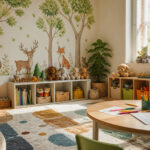
We like a set that sits low enough for feet to touch the floor, with a surface you can wipe down after marker experiments go wrong. The speckled finish on this one hides the scratches that will come.
Chairs should slide under or stack so the floor stays clear for wrestling matches later. If you only have space for one piece, make it the table; kids will sit on the floor and treat it as a workstation anyway.
8. Dollhouse

A dollhouse does not stay a dollhouse long in a boy’s room. Ours became a fire station, a dinosaur refuge, and a spaceship control deck within the first week.
The house shape matters less than the open access: rooms you can reach into from the front, not just peer through windows.
We learned to skip the delicate furniture sets and let them raid the block bin for custom pieces that collapse satisfyingly during Godzilla attacks.
A white or neutral finish lets the contents steal the show, and it ages better than primary colors once the kids hit grade school.
9. Educational Wall Decor

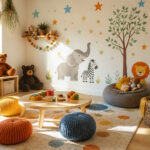
Wall banners and prints turn empty vertical space into something the kids actually stare at.
We hung an alphabet strip where our youngest could see it from the foam chair, not crammed up near the ceiling where it reads as decoration.
Height matters: keep it low enough for a seated child to point at, which means below adult eye level.
Posters need frames or a laminate surface if they are going to survive being pointed at with sticky fingers.
Rotate them every few months; the ABCs become wallpaper faster than you would expect, and a fresh set costs less than a new toy.
10. Bookshelves with Baskets

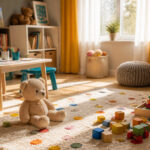
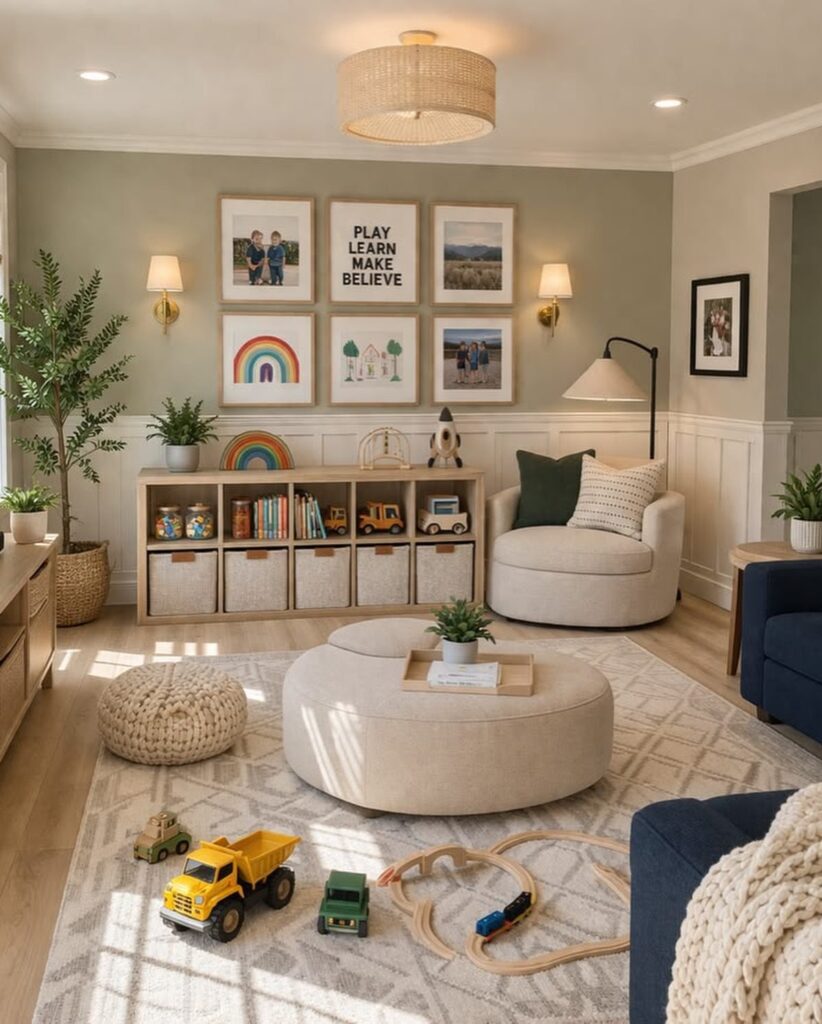
Built-in cubbies with woven baskets look calm even when every basket is technically overflowing.
We sized ours to fit the bins first, then worried about what went inside; a basket that slides out becomes a portable dump truck or a laundry helper, which means it earns its keep twice.
The white finish here reflects light into corners that can turn gloomy with toys piled high.
Leave at least one shelf open for books they are currently obsessed with; baskets hide the rotation, but the open shelf shows them what to reach for next.
11. Book Ledges

Front-facing ledges let a young child judge a book by its cover, which is exactly how that age group chooses.
We mounted ours at the height where our kids could grab without climbing, which meant accepting that the bottom row would be empty some days because everything migrated to the floor.
Stuffed animals colonize the gaps between books within a week; we stopped fighting it and now leave space for a bear or two to guard the stack.
Safety Considerations
Keep anything smaller than a golf ball on a shelf the toddler cannot reach, even if it belongs to the older child. We draw the line at marbles, LEGO minifigures, and coin-cell batteries left where a crawler explores.
Supervision matters most during the first month a new setup goes in.
Kids test boundaries when the room is still novel, and that is when someone tries to stand on the ball-pit rim or rock the horse near the tent pole.
Organizing Toys
Bins beat deep drawers because a child can see the bottom. We use clear plastic for blocks and woven baskets for stuffed animals; the contents read at a glance, and the baskets soften the visual noise.
Shelves need a front lip or a low rail. A single row of books stays put; stacked games slide off the first time someone bumps the unit reaching for a truck.
Label with pictures, not words, until around first grade. A photo of a car on the bin handles cleanup without reading.
Creating a Fun Environment
Rotate the heavy pieces seasonally rather than crowding them all in at once. The play kitchen moves to the basement for summer; the tent comes down when the foam couch is in fort mode.
The room gains square footage without construction.
Wall color matters more than theme. We have seen navy and sage outlast dinosaur murals by years, because the child grows into them instead of out of them.
Leave the center of the room empty when you can. That floor space is where the real play happens once the novelty of each toy fades.
Age-appropriate Toys
A second-grader builds LEGO sets with pieces that could choke a newborn. We keep those builds on a high shelf the older child reaches by stool, then put the stool away.
The preschooler in the middle is the bridge. He wants what his sister has and still mouths what his brother drops.
Give him his own bin of larger blocks in the shared zone; it heads off the grab reflex.
For the newborn, hang a high-contrast card where he lies on a blanket. He is not playing yet, but he watches the room, and that counts as engagement until he can reach for objects himself.
Frequently Asked Questions
What are some small playroom ideas for boys?
Even a corner works if you pick gear that collapses: ball pits with pop-up sides, fabric tents with flexible poles, and plastic kitchens that lift away in one piece.
Pick pieces that do more than one job, like a foam play couch that becomes a fort or guest bed. Wall-mounted book ledges and low-hanging educational banners use vertical space without eating floor area.
What should every playroom have?
A rug that defines the space and cushions falls, plus storage that looks calm even when full. We like cubbies with baskets that slide out for portable play, plus at least one open shelf for current favorites.
Low-mounted wall decor at child height beats decoration hung near the ceiling.