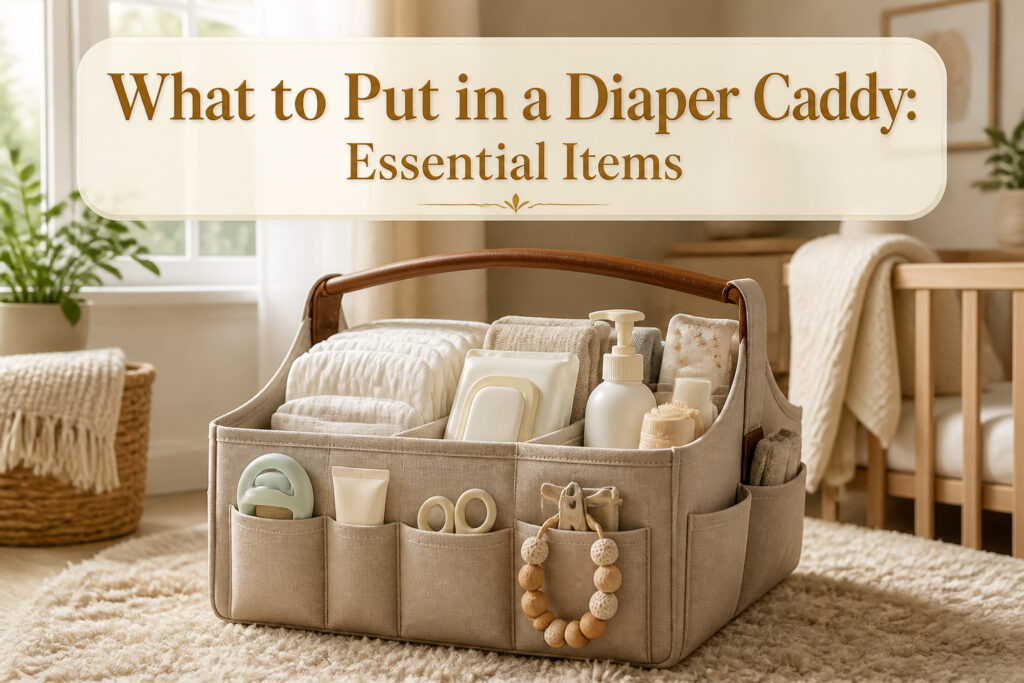
A diaper caddy needs 15 items to be truly ready, but only if you treat it as a portable station you carry room to room rather than a nursery decoration. The difference shows up at 2 a.m. when you realize the wipes are still in the kitchen from the last change. We learned that after too many mid-change scrambles with a screaming newborn, and now we keep six to eight diapers in the main compartment at all times.
[link-whisper-related-posts]1. Diapers
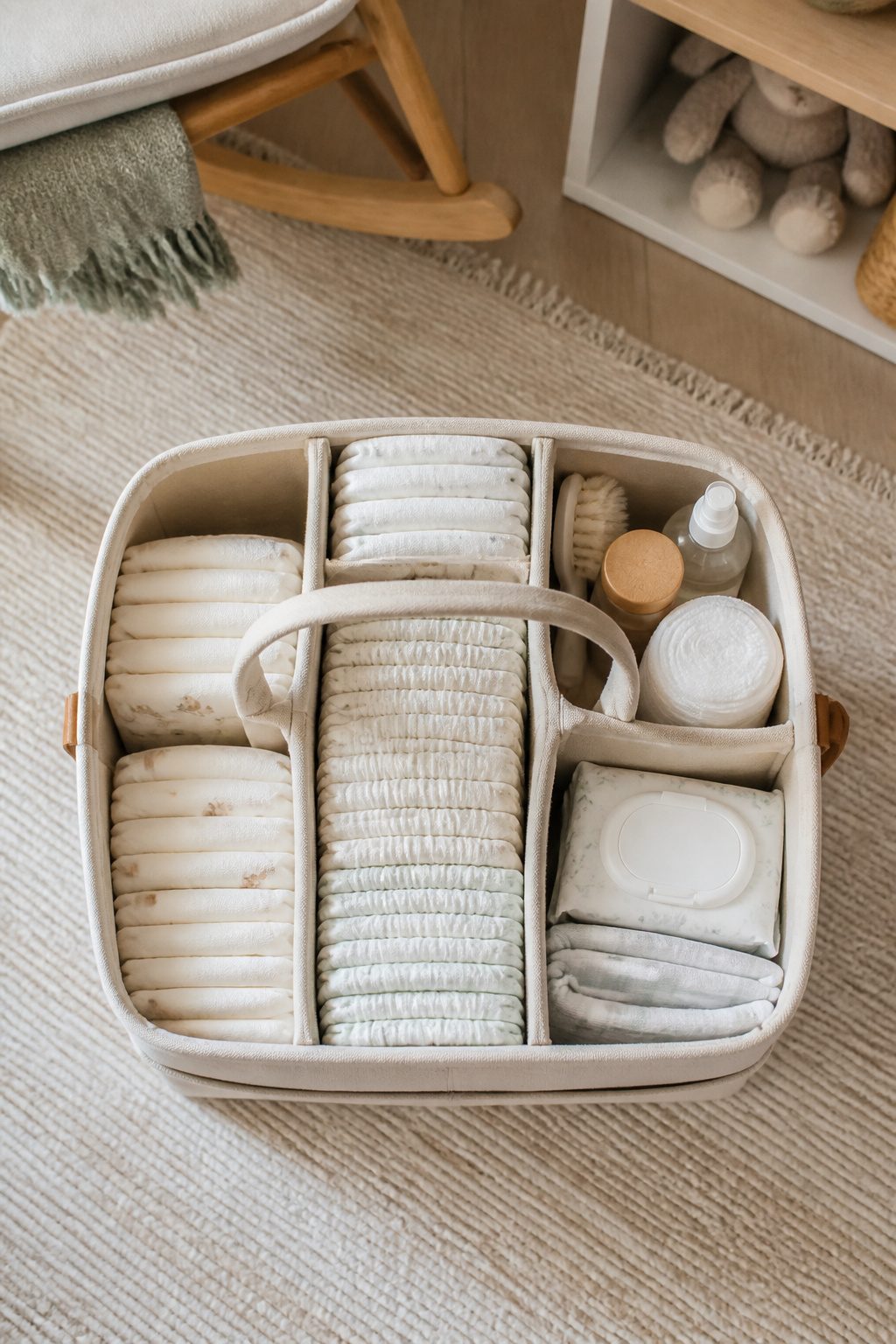
Newborns burn through 10 to 12 diapers a day, so running out mid-change is not the kind of surprise you want. We keep 6 to 8 in the caddy at a time, which is enough to get through a good stretch of the day without the thing turning into a brick.
Here is the gap nobody fills: they all say "stock diapers," but none of them tell you which size. From what we have seen, most parents keep the current size plus one size up. Babies do not send a memo before a growth spurt hits, and finding out at 2 a.m. that every diaper in the house is suddenly too small is a special kind of frustration. Check the stash every few days if your baby is between sizes or just looking a little longer in the onesie.

Far from Dirty Wipe: The wipes easily get dirty by dust and other spoils after unboxing, Seposeve wipe case can effectively help you to avoid such problem. Effectively keeps the wipe clean, away from dust and stains.

3-in-1 DIAPER BAG ESSENTIALS: Meet the Keepigo Diaper Bag Wipe Dispenser, the ultimate baby travel essential. This compact, toddler break-proof diaper caddy organizer combines a baby wipe holder, diaper dispenser, and disposable diaper bag dispenser. Perfect for newborns and toddlers, it's ideal for toddler travel essentials or a baby changing station at home.

Keeps Wipes Fresh and Ready: The silicone seal locks in moisture to ensure your baby wipes stay fresh every time. No more worrying about dried-out wipes during diaper changes or clean-up moments
2. Baby Wipes
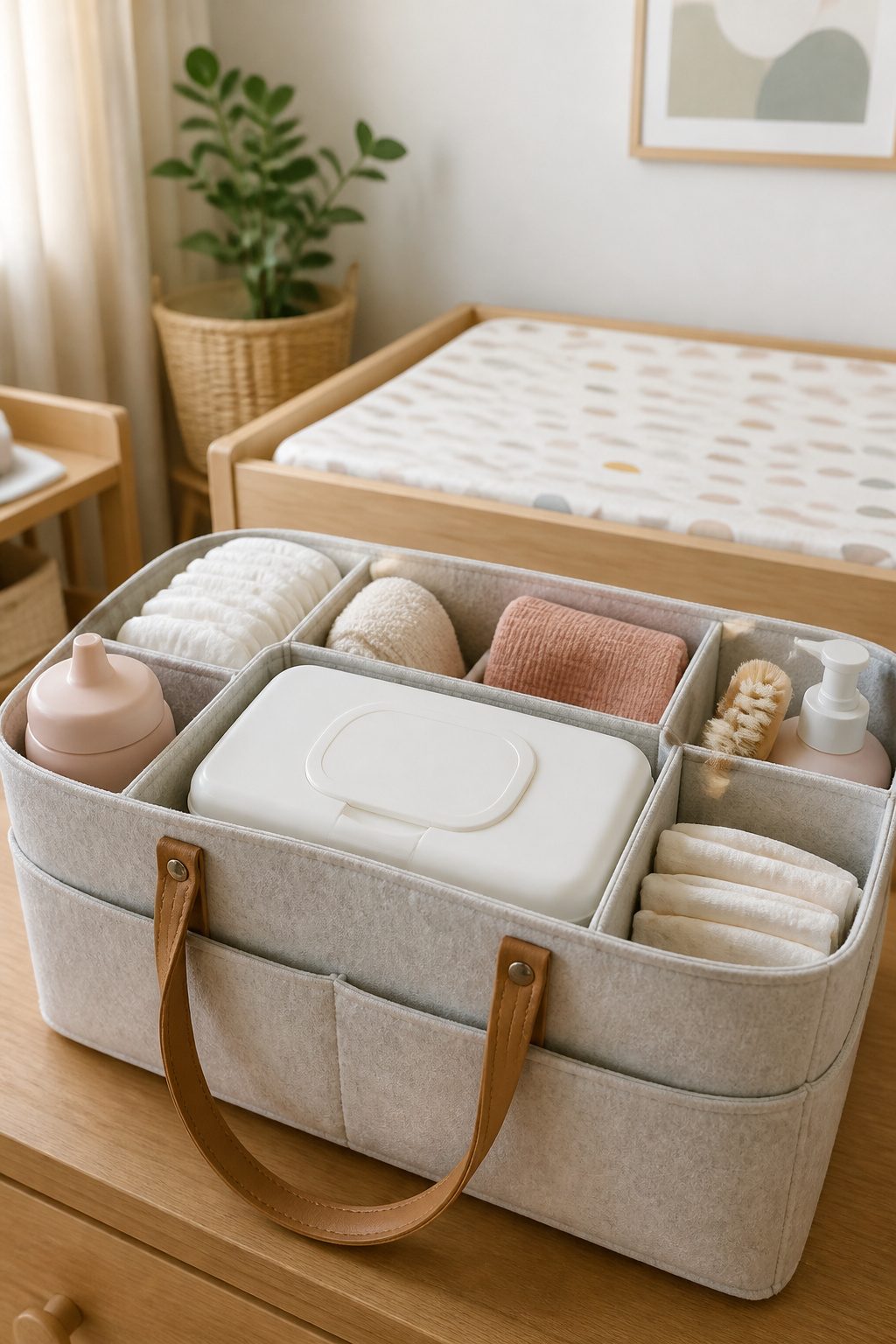
One full pack of wipes is what we keep as the standard load for a diaper caddy. Keep the pack sealed between changes, because a dried-out wipe is useless and you will not notice until you are mid-change with a mess on your hands.
We have tried the washcloth route and abandoned it. A washcloth needs to be wet, wrung out, and then dealt with afterward, which adds two minutes to a change that needs to take thirty seconds. Wipes pull out one-handed, clean the mess, and go straight into the trash or a disposable bag. That speed matters at 3 a.m. when the baby is screaming and you are running on two hours of sleep.
If your wipe pack does not have a built-in plastic lid, a refillable wipe case is worth the small cost. The snap-shut ones trap moisture better than the sticker tabs that lose their grip after a week of opening and closing. We learned that after a pack went half-dry sitting in a nursery basket for five days.

Tender Gentle's Zinc Oxide Ointment helps protect and aid the skin.

MAXIMUM ZINC OXIDE FORMULA: Formulated with maximum strength 40% Zinc Oxide (skin protectant) and enriched with Shea Butter, this zinc diaper rash treatment protects your baby's skin all night long
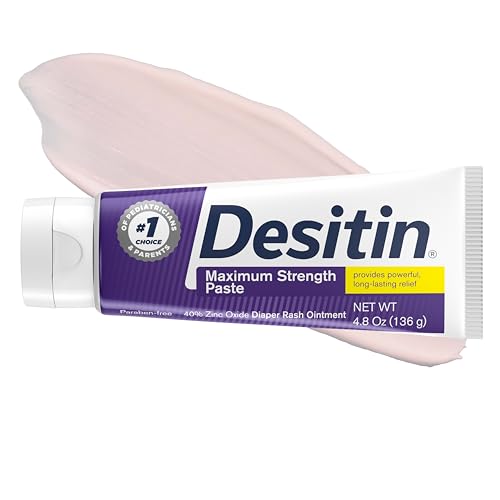
5-in-1 Baby Paste: Helps treat, heal, protect, soothe and help prevent diaper rash; Desitin Zinc Oxide paste seals out wetness and soothes chafed skin for noticeable relief on contact
3. Diaper Cream or Ointment
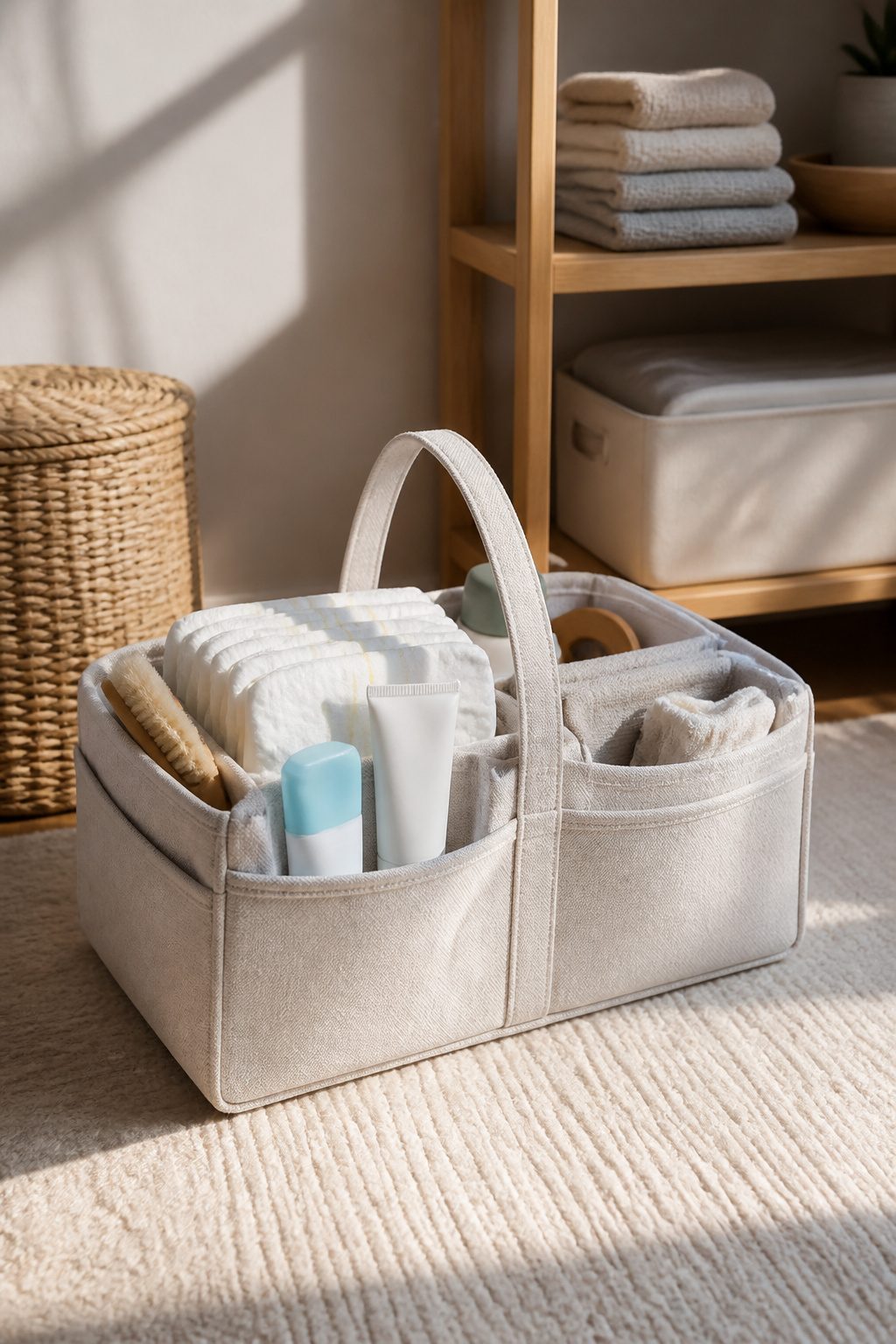
Diaper cream belongs in the caddy because it both prevents and soothes diaper rash. We keep zinc oxide for prevention and a petroleum-based cream for healing existing irritation, since they do different jobs. A tube wins over a jar every time; you can open it, squeeze, and cap it with one hand while the other stays on the baby. We learned that after too many near-drops with a round container on a changing table at 2 a.m. If the rash is already raw, layer the petroleum cream thick and skip the wipe-down at the next change unless there’s stool involved. Let the barrier sit.


MAXIMUM STRENGTH PROTECTION: 40% zinc oxide skin protectant helps treat and prevent diaper rash while sealing out wetness.

PEDIATRICIAN RECOMMENDED DIAPER RASH OINTMENT: A+D Ointment is pediatrician-recommended and contains Vitamin A and Vitamin D to soothe, moisturize & protect the skin. Free of parabens, dyes, and phthalates.
4. Burp Cloths
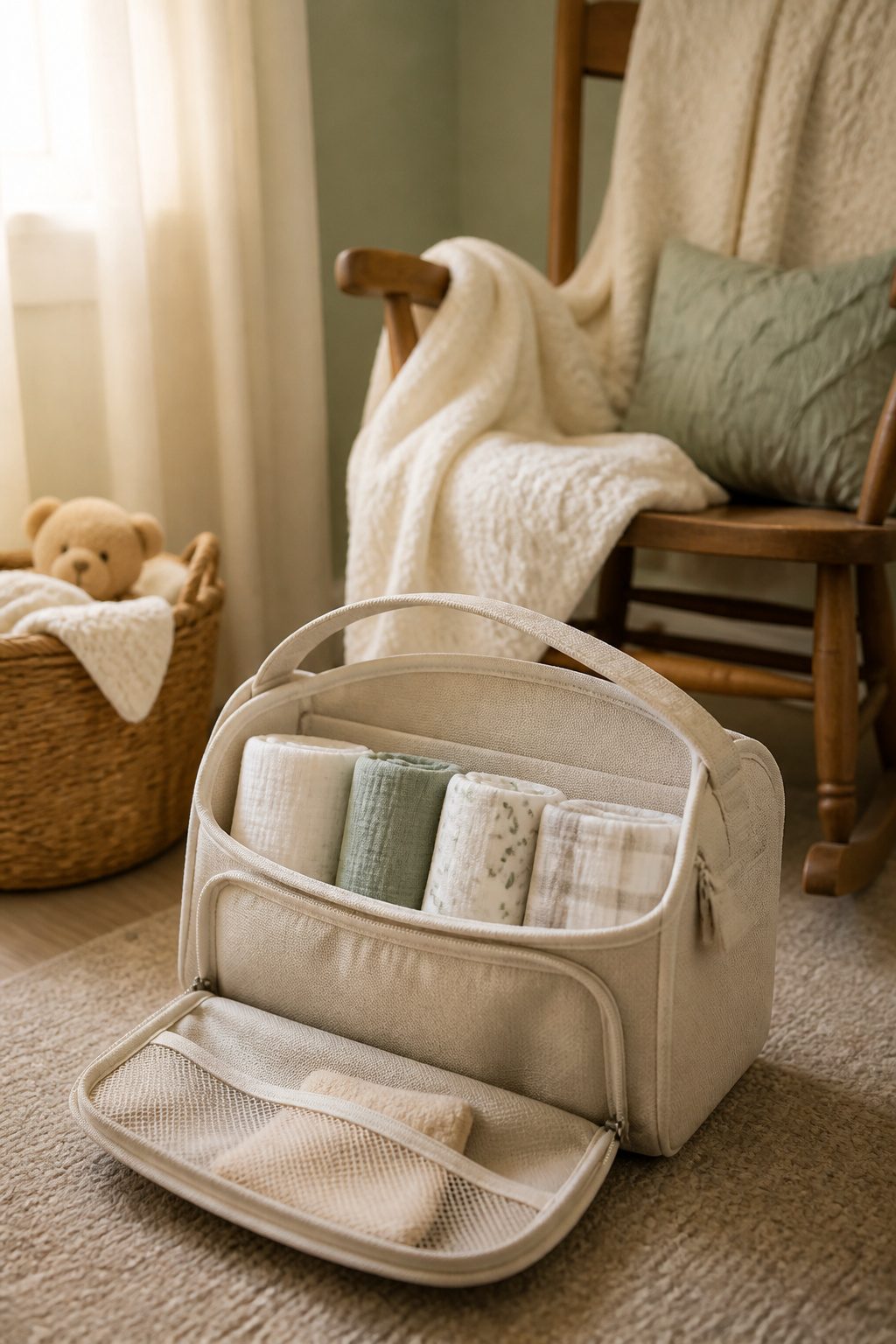
We keep four or five burp cloths in the caddy at all times. They start on your shoulder during feeding, catch the spit-up or milk dribbles, then stay in your hand for whatever comes next: drool, a wipe-down, or the moment a diaper change overflows and you need to act fast before it hits the couch. One cloth can go through three jobs in ten minutes, so having a few clean ones ready matters more than having one perfect one.
The soft ones work best for this double duty. A rougher cloth protects your shirt fine, but when you need to wipe a chin or blot a mess off fabric, you will reach for the soft one every time. We learned to group them in the third section of the caddy, away from the creams, so you are not pawing past ointments to find a dry cloth with one hand while holding the baby with the other.
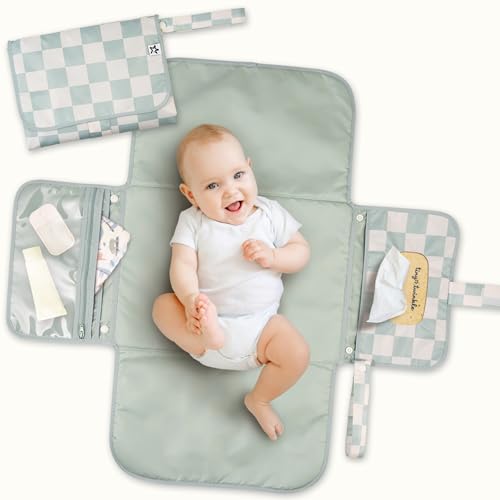
EASY TO CARRY: Our Changing Pad wipes clean and folds flat to 7x10 inches for easy storage, and clips to strollers or diaper bags with a secure snap-loop handle—lightweight and ready wherever you go.

Soft & Comfortable Changing Surface: The Ubbi On-The-Go Diaper Changing Baby Mat provides a soft, cushioned surface for your baby during diaper changes, ensuring comfort and support wherever you go.

EASY TO CARRY: Our Changing Pad wipes clean and folds flat to 7x10 inches for easy storage, and clips to strollers or diaper bags with a secure snap-loop handle—lightweight and ready wherever you go.
5. Change of Clothes
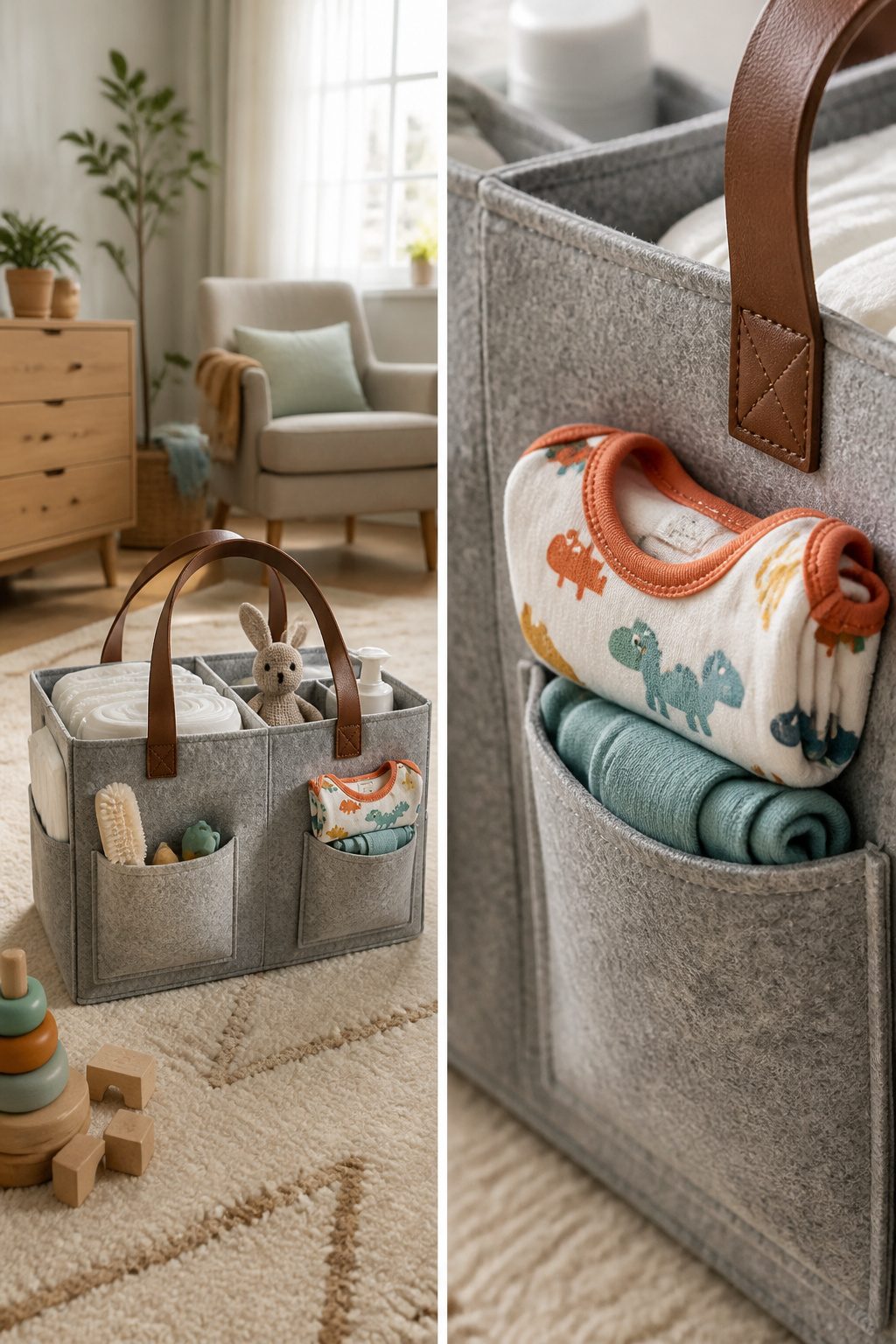
Blowouts rarely stay where you put them. We learned that after the first time we thought a diaper had done its job, only to find the mess had traveled up the back and down both legs. Keep one complete outfit in the caddy, not just a spare onesie, because a half-measure leaves you halfway dressed and still scrambling.
A sleeper works best, or a onesie paired with pants, rolled tight so it fits in a side pocket without swallowing the space. Size it current or slightly large; a baby in a too-small backup is a second problem you do not need at 2 a.m. We skip the socks and hats unless you have the room, but the full coverage from neck to toe is non-negotiable. Replace it the moment you use it, or the caddy becomes a collection of almost-theres that fails you exactly when you need it.

20" by 12" Perfectly Sized Burp Cloths – Enjoy a calming burping experience with the KeaBabies Shea Baby Burp Cloths Baby Boy, Girl. Made longer and larger, with double-layered ultra-soft organic cotton to help keep you mess-free.

Ultra Soft & Safe for Baby Skin: Made from 100% natural muslin cotton and certified to meet CPSC safety standards, our muslin burp cloths are ultra-soft, breathable, and perfect for newborns’ sensitive skin. The pre-washed fabric reduces shrinkage and gets softer with every wash.

20" by 12" Perfectly Sized Burp Cloths – Enjoy a calming burping experience with the KeaBabies Shea Baby Burp Cloths Baby Boy, Girl. Made longer and larger, with double-layered ultra-soft organic cotton to help keep you mess-free.
6. Hand Sanitizer
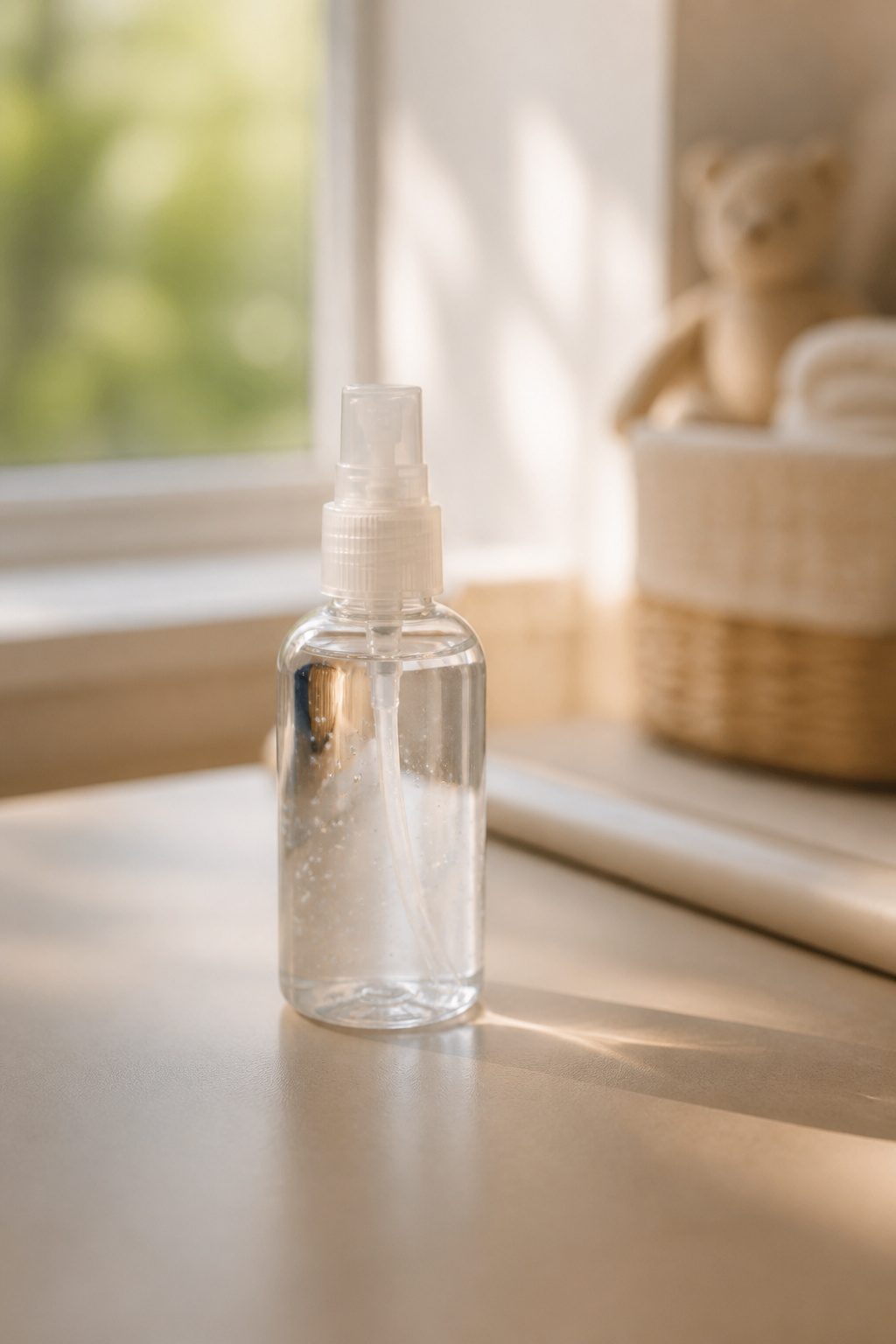
A diaper change on a public changing table leaves your hands in territory you do not want to carry into the rest of your day. We keep a small bottle of alcohol-based hand sanitizer gel in our caddy for exactly those moments when a sink is half a parking lot away. The bottle should read at least 60% alcohol on the label; anything weaker is not doing the work you think it is.
Use it on your own hands, not the baby’s skin. We have seen a parent reach for the bottle and rub it on a newborn’s fingers as if it were lotion. It is not. Baby wipes handle the child; sanitizer handles you. The alcohol that kills germs on adult skin will dry and irritate an infant’s, and it offers no benefit the wipes have not already given. Keep the two jobs separate and you will not make the mistake twice.

Portable & Convenient Design: This refillable baby wipes holder is compact and lightweight, making it perfect for outdoor adventures, travel, hiking, and daily use. Keep your wipes accessible and organized wherever you go.
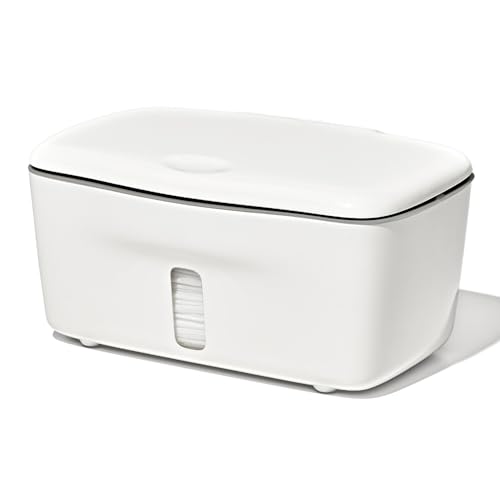
Essential Baby Wipes Dispenser: The Perfect Pull wipes dispenser is designed so you can easily grab one wipe at a time while you've got one hand on baby

Keeps Wipes Fresh & Moist: The Ubbi On-The-Go Baby Wipes Dispenser keeps wipes fresh, moist, and ready for use, ensuring they're always perfect for quick clean-ups.
7. Pacifiers or Comfort Items
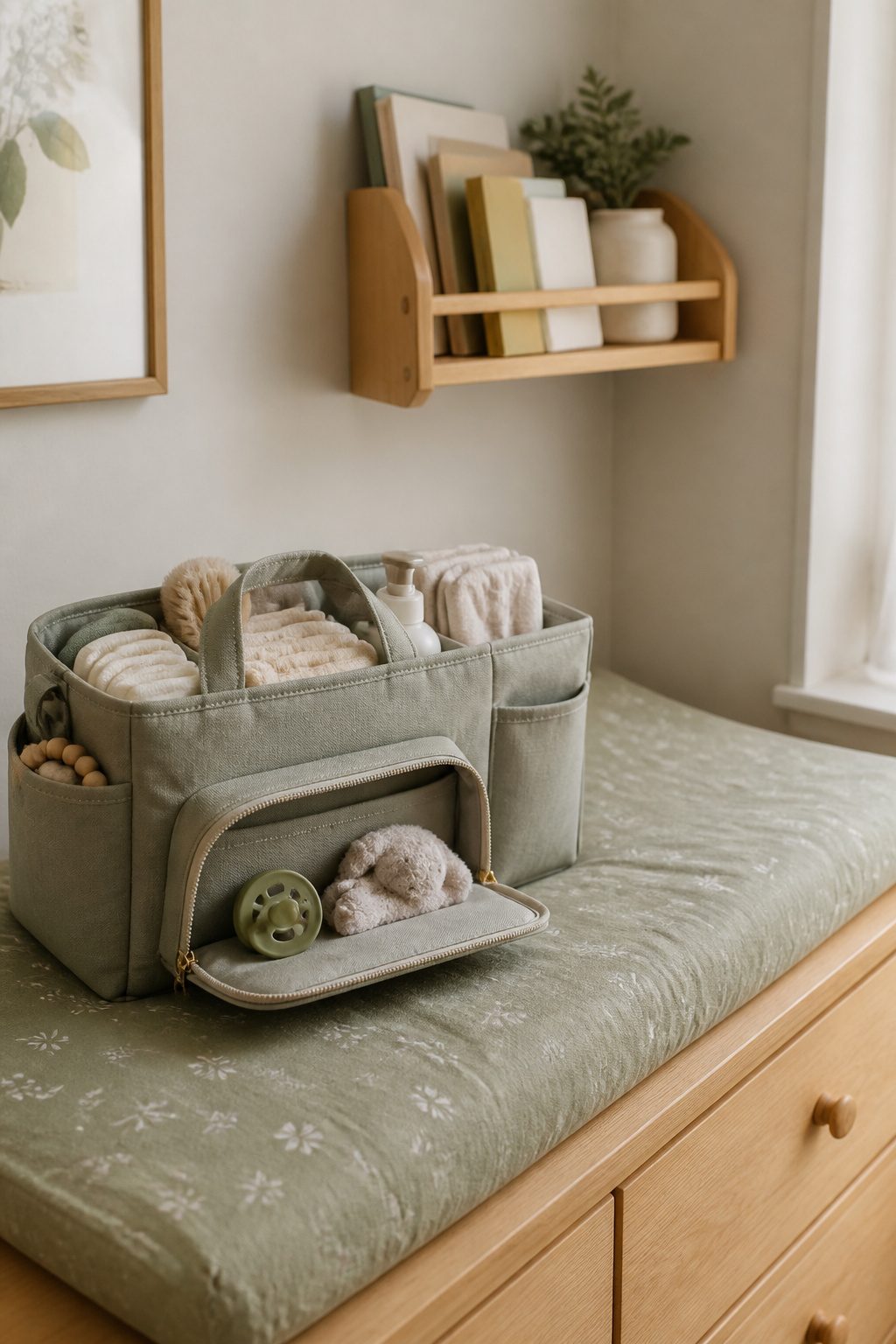
A spare pacifier or small comfort item in the caddy saves the moment when a fresh diaper does not instantly fix the mood. We keep ours in a clean side pocket, zipped if the caddy has it, because a loose pacifier at the bottom collects lint, picks up cream residue, and ends up needing another wash just when you need it clean. A pocket or small pouch keeps it ready to go straight to baby’s mouth. The same rule holds for a favorite teether or soft toy you reach for mid-change: separate storage, not shared space with ointment tubes or wipe packs. If you use more than one soothing item, keep the daily favorite toward the front and rotate backups farther back so nothing sits forgotten past its useful life.

16-ounce jar of Desitin Maximum Strength Diaper Rash Paste with 40% zinc oxide works on contact to treat and help prevent baby diaper rash discomfort

Relieves discomfort fast: This Maximum Strength Boudreaux's Butt Paste diaper cream helps treat and prevent diaper rash, providing fast relief and instantly protecting irritated skin with first use; this product is FSA & HSA eligible in the USA

ZINC OXIDE FORMULA: Formulated with 15% Zinc Oxide (skin protectant) and Panthenol, this zinc diaper rash treatment creates an effective barrier and protects your baby's skin all night long
8. Thermometer
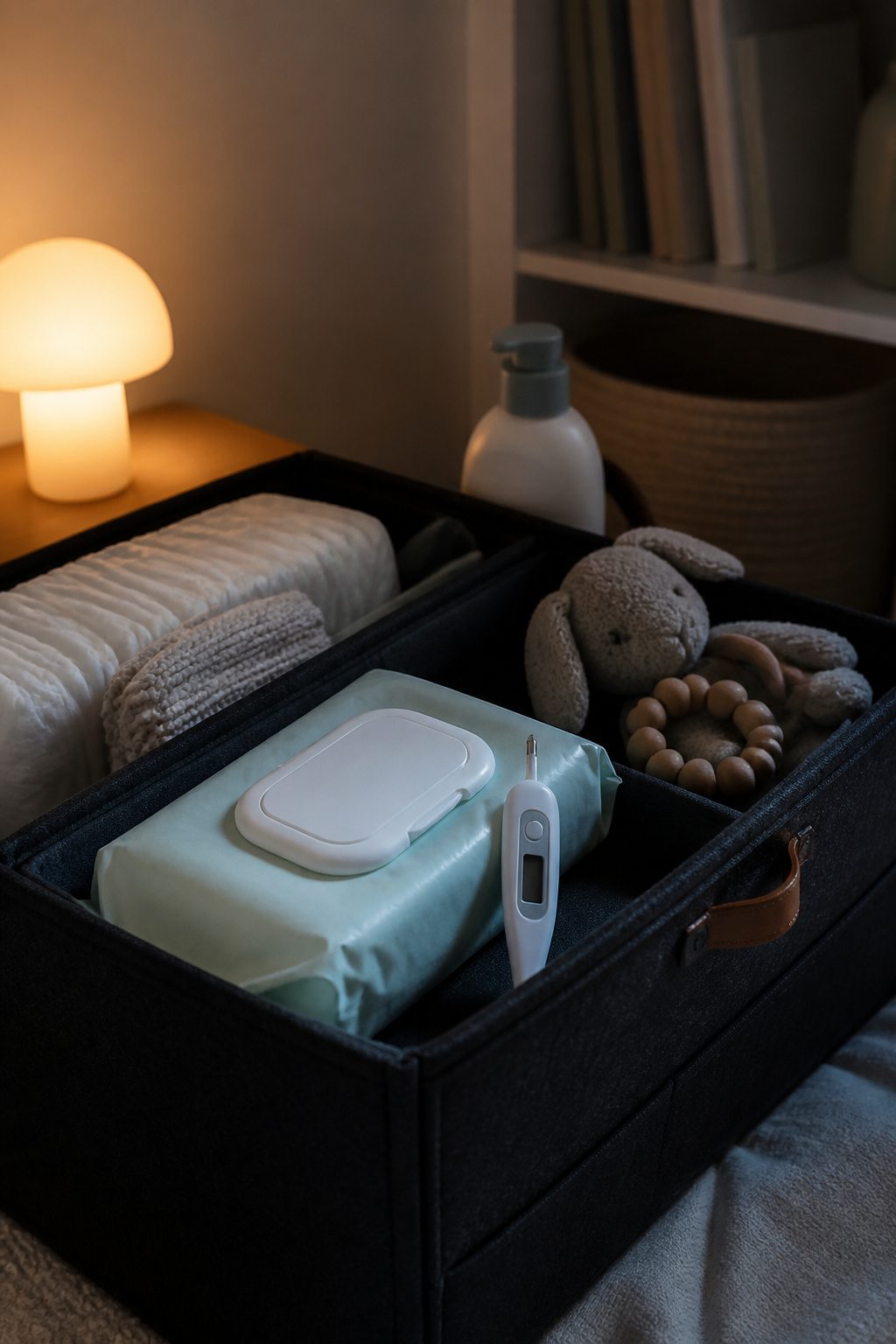
A digital thermometer belongs in the diaper caddy because the moment you need it is rarely the moment you planned. We keep ours right next to the wipes, and the reason is simple: fever checks happen at 2 a.m. when the baby feels warm against your wrist during a change, not during business hours when the medicine cabinet feels convenient. The caddy is already in your hand. The thermometer that lives in the bathroom drawer might as well be in another zip code for how useful it is then. We learned this after a few nights of fumbling through cabinets while holding a fussy baby, and now it stays where the work actually happens. A rectal thermometer is the common choice for accuracy with infants, though your provider will guide the method. The point is proximity, not perfection in the device itself.

PEDIATRICIAN RECOMMENDED DIAPER RASH OINTMENT: A+D Ointment is pediatrician-recommended and contains Vitamin A and Vitamin D to soothe, moisturize & protect the skin. Free of parabens, dyes, and phthalates

SOOTHES, PROTECTS, & RELIEVES: Unlike other lotions and creams, A+D Overnight Healing Rash Ointment contains Vitamin A & Vitamin D to help heal and moisturize skin and repair and rejuvenate aggravated skin to help your baby wake up with happier skin

HELPS TREAT & PREVENT DIAPER RASH: Helps seal out wetness from your baby’s delicate skin and helps treat and prevent diaper rash. This soothing, hypoallergenic formula also protects chafed skin due to diaper rash
9. Nail Clippers or File
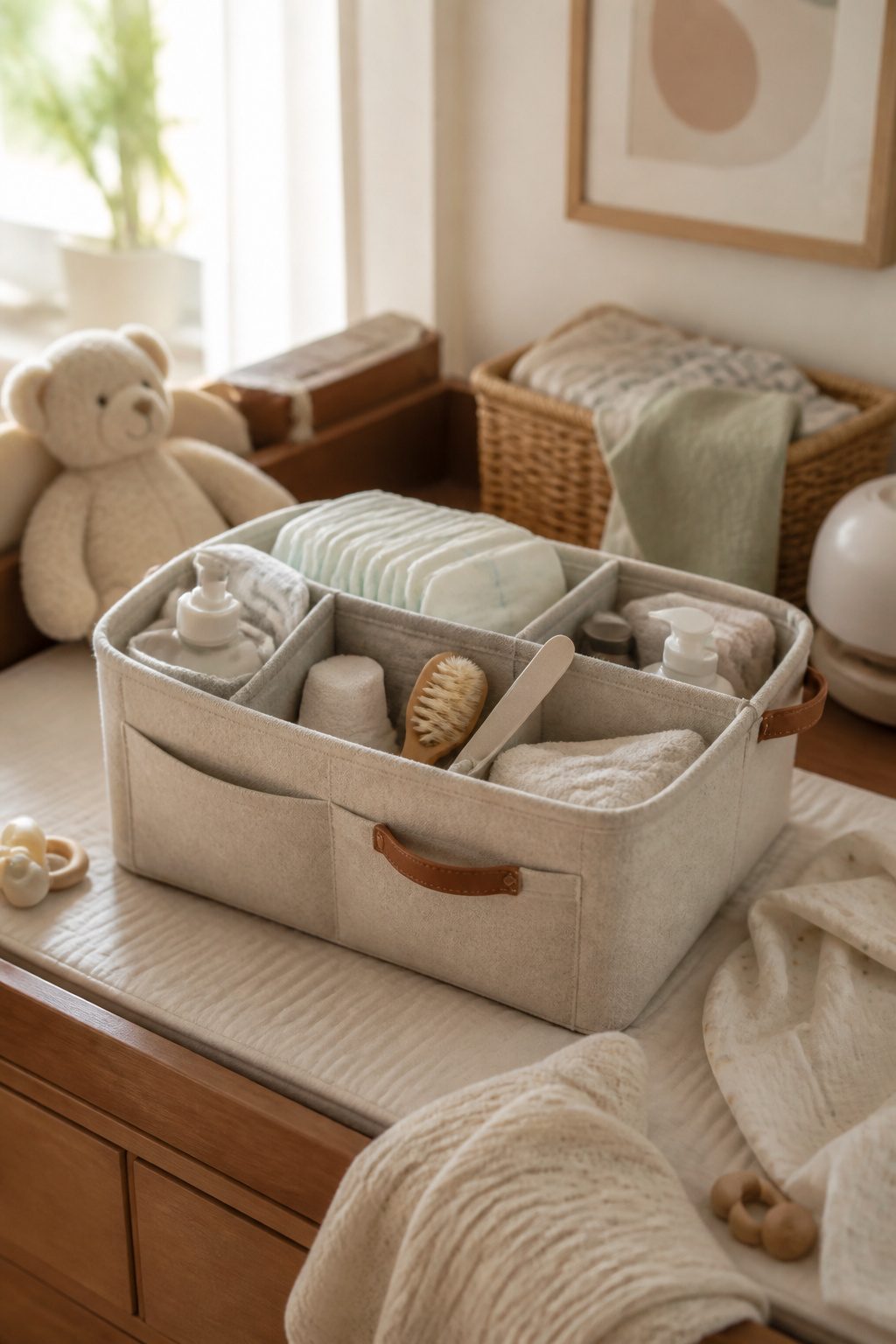
Babies scratch themselves most often during diaper changes, when the swaddle is off and their arms are free to flail. We keep a nail file in the caddy, not clippers, at least for the first few weeks. Newborn nails are tissue-thin and cling close to the fingertip, so a clipper bites skin more often than nail. A soft emery board lets you wear the edge down in short strokes while they wiggle. Once the nail plate thickens and the fingertip fills out, around the one-month mark, you can switch to clippers. We still carry both now, but the file gets the real work.
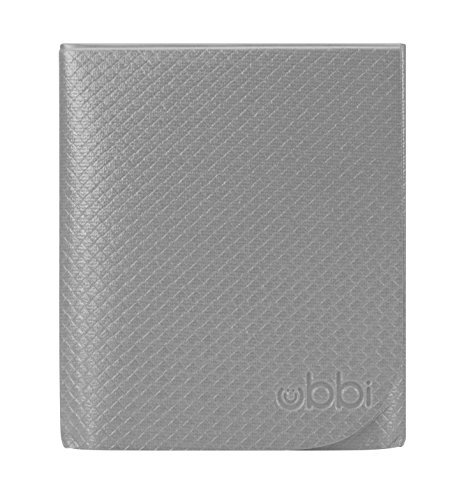
Soft & Comfortable Changing Surface: The Ubbi On-The-Go Diaper Changing Baby Mat provides a soft, cushioned surface for your baby during diaper changes, ensuring comfort and support wherever you go.
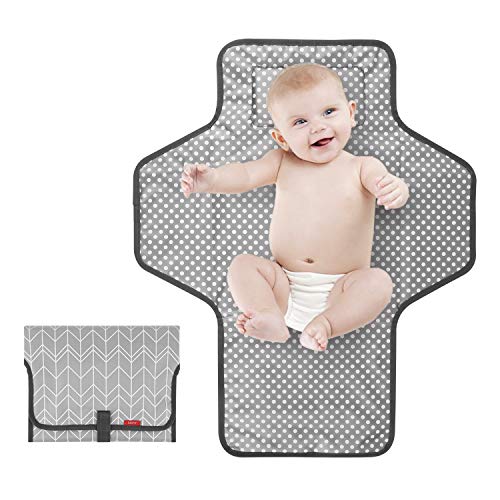
MORE LONGER & WIDER ACTIVE SPACE FOR YOUR BABY: Our portable changing pad is large enough for all babies(Extand Size App 27x22 In), built-in a soft cushioned pillow for great comfort and convenience. The portable baby changing station is very lightweight and compact when folded so you can change your baby’s diaper anywhere

Travel-Ready – Our soft padded Swift Portable Diaper Changing Pad keeps your baby comfy during diaper changes anywhere, adding a clean, cushioned layer over public changing surfaces without any fuss.
10. Nasal Aspirator
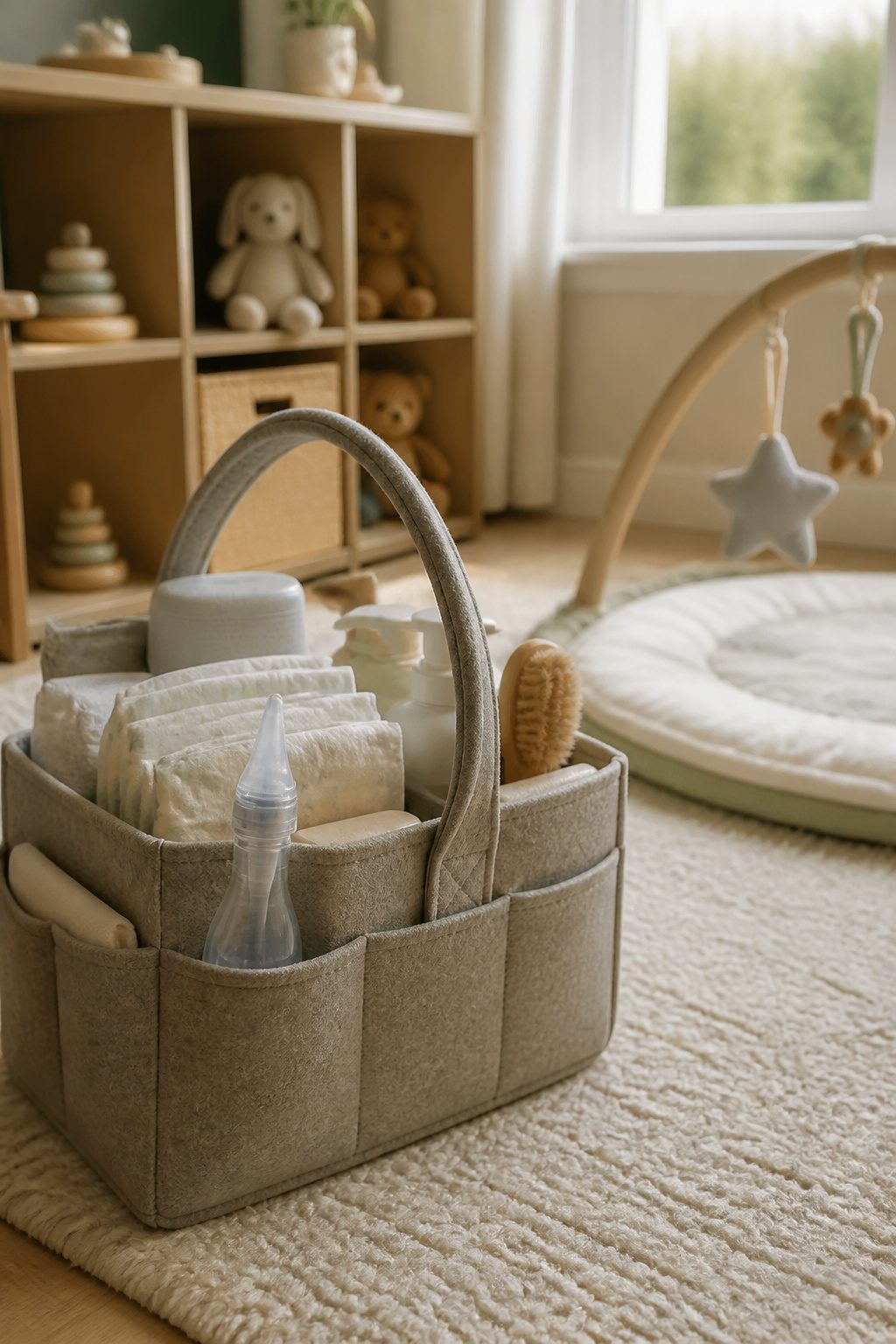
Congestion hits when you least expect it: the baby is lying flat on the changing pad, you’re leaning in close, and suddenly you hear that stuffed-up breathing. The change table is where you notice it first because that’s one of the few times you’re face to face and the baby is horizontal, which makes a clogged nose sound worse than it is.
We keep a nasal aspirator in the caddy, not a bulb syringe. Bulb syringes work in a pinch, but you can’t see inside them and they never dry out fully between uses. The aspirator with the little tube and mouthpiece (yes, you suction through your own mouth) lets you control the pressure and you can tell exactly what you cleared. It comes apart for washing, which matters more than we thought it would.
The real win is having it right there when you notice the problem. The baby is already upset, you’re already in position, and digging through a bathroom drawer with one hand while holding a wiggly newborn with the other is not a maneuver worth repeating. In the caddy it lives next to the diapers, so the whole routine stays in one spot.

👶 Gentle on Baby's Skin: Crafted from 100% premium cotton, our burp cloths provide a soft, breathable comfort for your little one. The natural muslin material is perfect for all skin types, including sensitive and delicate skin, making it ideal for use on the face, hands, and body.

20" by 12" Perfectly Sized Burp Cloths – Enjoy a calming burping experience with the KeaBabies Shea Baby Burp Cloths Baby Boy, Girl. Made longer and larger, with double-layered ultra-soft organic cotton to help keep you mess-free.

Soft and Gentle Baby Burp Cloths: Made from 100% breathable muslin cotton, these burping cloths are lightweight, gentle, and ideal for your baby’s sensitive skin.
11. Small Trash Bags or Disposable Bags
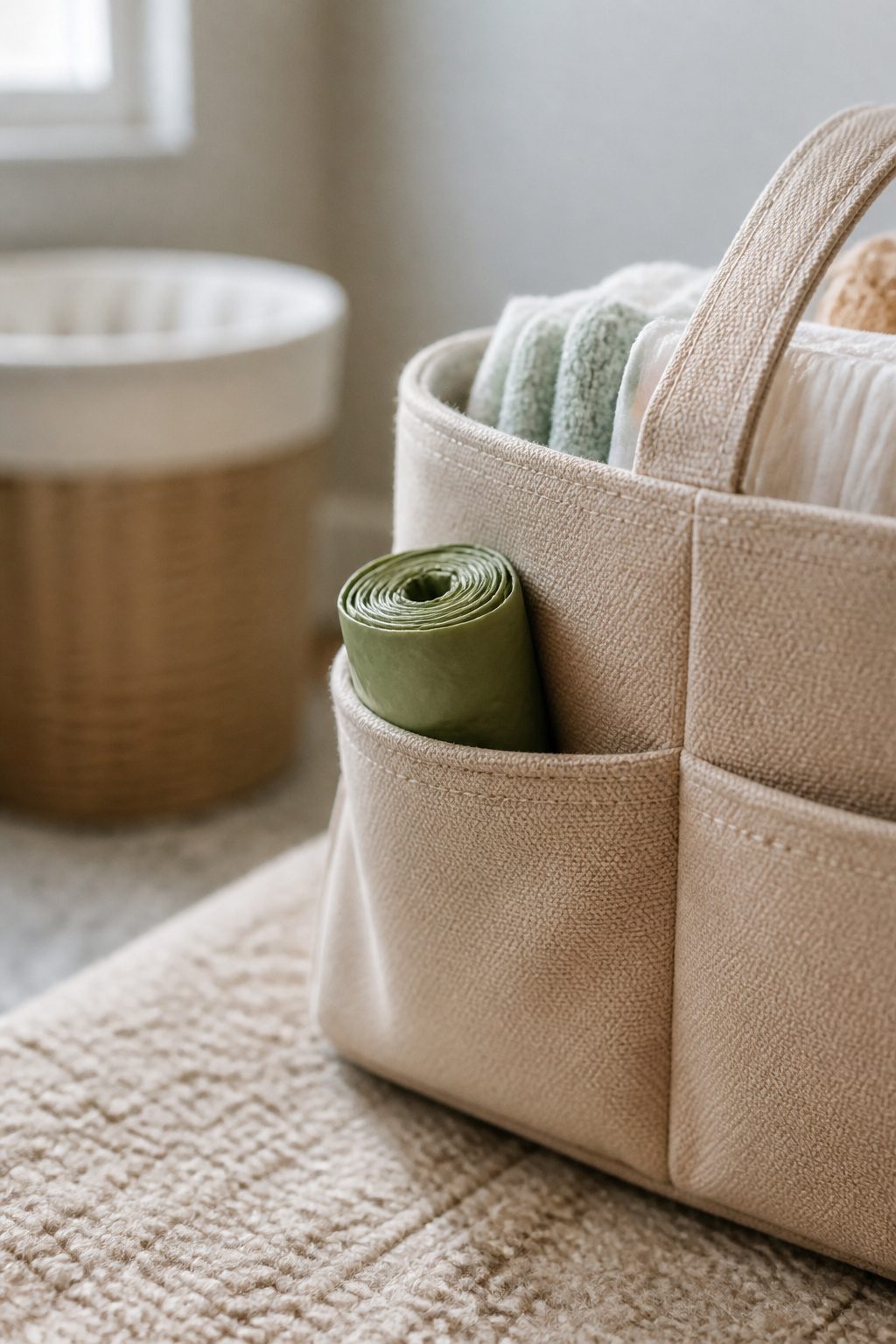
A roll of dog-waste bags lives in our caddy, and they handle the same jobs as the scented diaper sacks at the pharmacy for a fraction of the cost. Same thin plastic, same tie-off, no difference we have found in three years of use.
You will reach for them most often when the nearest trash can is two rooms away and you are holding a soiled diaper you do not want to set down anywhere in between. They also save the outfit after a blowout: seal the clothes inside, contain the mess and the smell, and deal with laundry when you are back at the changing table instead of racing to the hamper with both hands full. A few bags stuffed in the side pocket turn a portable caddy into something you can actually use away from home without praying for a garbage can to appear.
12. Changing Pad or Liners
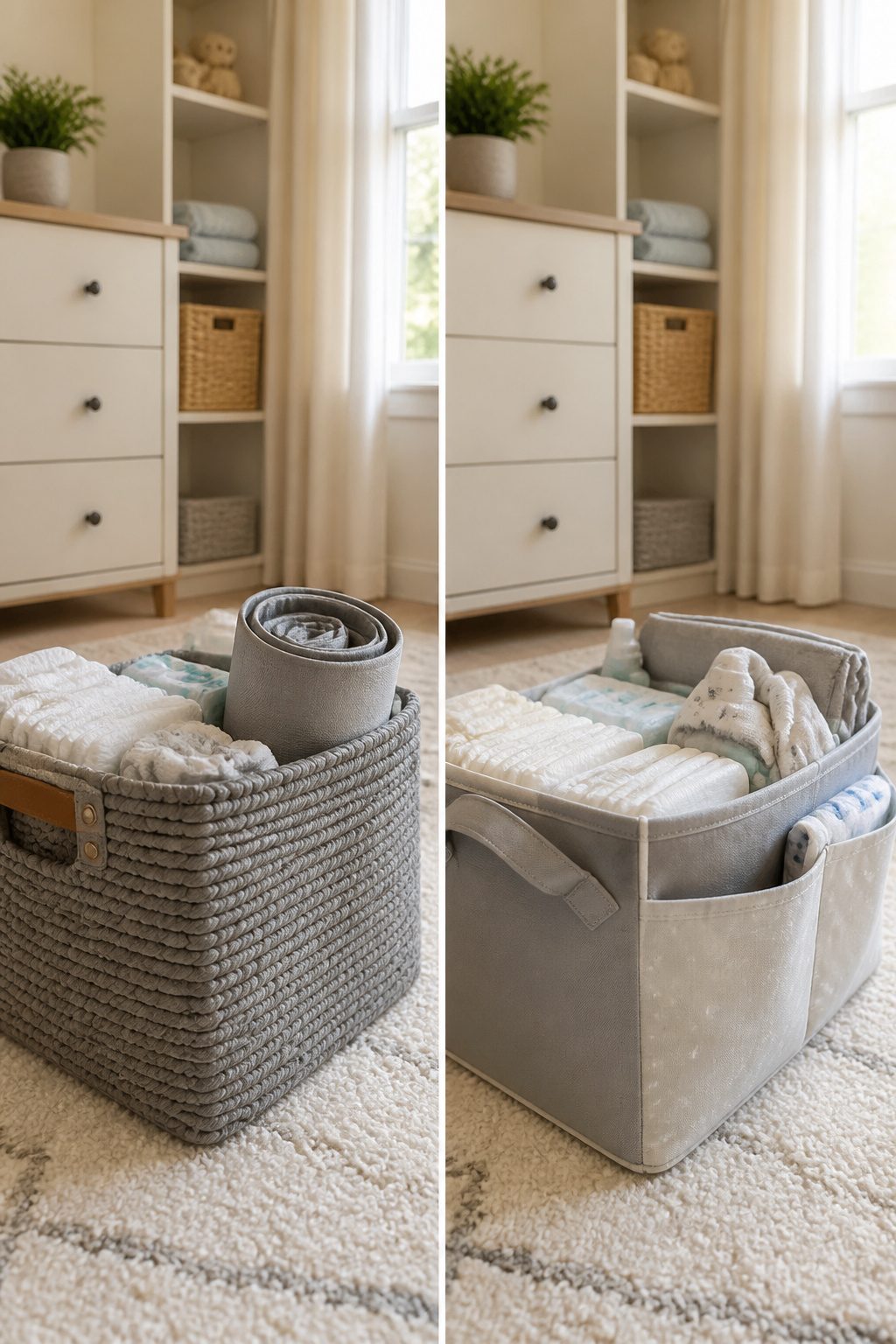
A thin foldable changing pad or liner takes up less space than a full changing station and moves with you from room to room. We keep one rolled in our caddy because most changes happen on the floor, the couch, or the back seat, not at a dedicated table. A swaddle blanket works in a pinch, but a pad with a wipeable surface saves your upholstery and your sanity when a diaper fails mid-change. Disposable liners are another option if you want to toss the mess instead of washing it. Either way, the point is having something clean to lay the baby on wherever you land, without hauling furniture behind you.
13. Baby Lotion or Moisturizer
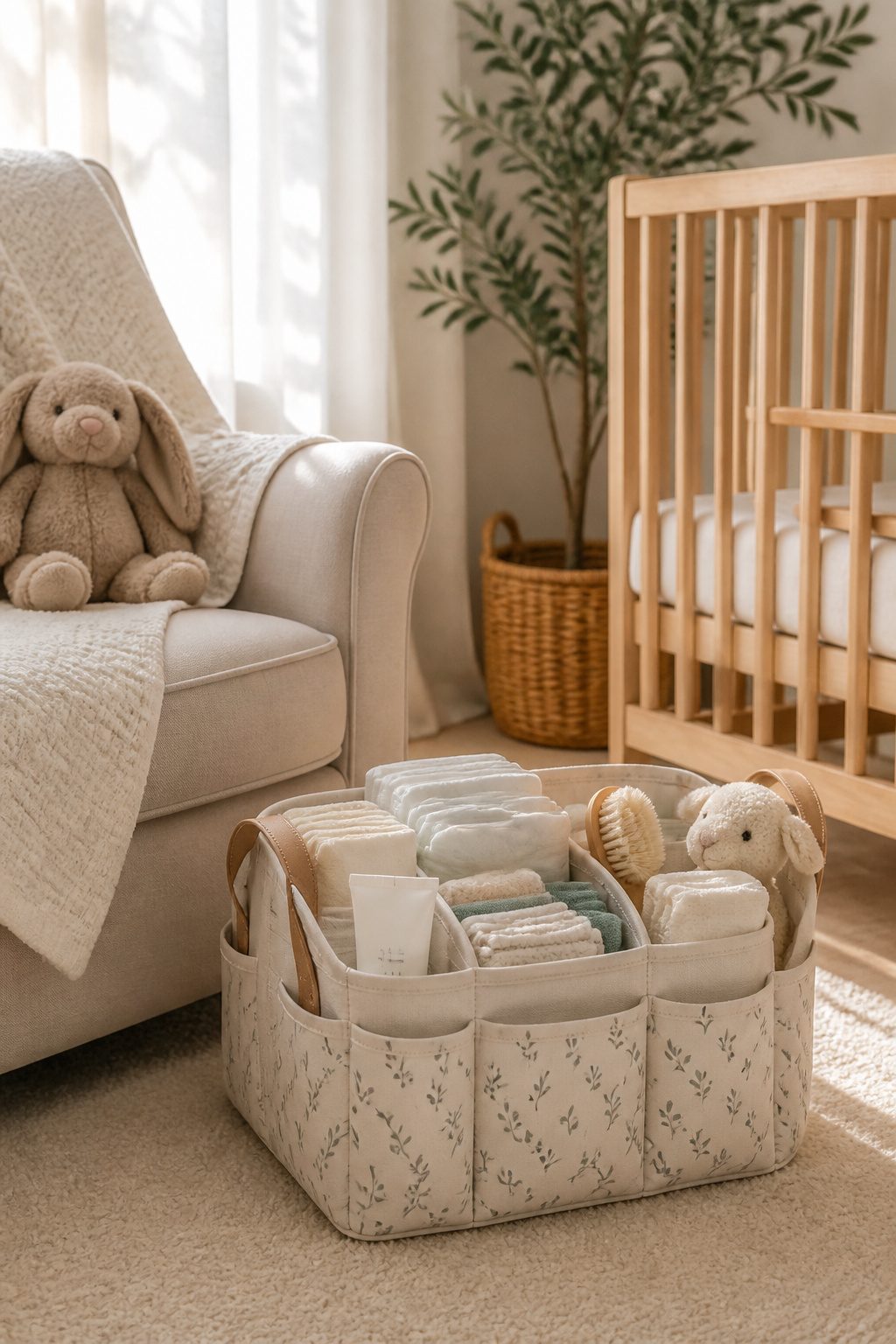
Dry patches show up on a baby’s knees, cheeks, or behind the ears right when you have them undressed for a change. That is the moment you want a small tube of lotion within arm’s reach, not back in the nursery cabinet. We keep a travel-sized bottle in our caddy for exactly that reason: spot treatment, not a full spa routine.
Fragrance-free formulas are the safer call for newborns and sensitive skin. Scented products smell nice in the store, but they are a common trigger for rashes or reactions you will not have time to troubleshoot at 2 a.m.
Lotion is optional for most babies. Plenty of infants do fine with nothing beyond the occasional diaper cream, and over-moisturizing can actually mask skin problems you should notice. We include it because we reached for it often enough with our own, but if your baby’s skin stays soft without it, leave the space for something you will actually use.
14. Teething Toys
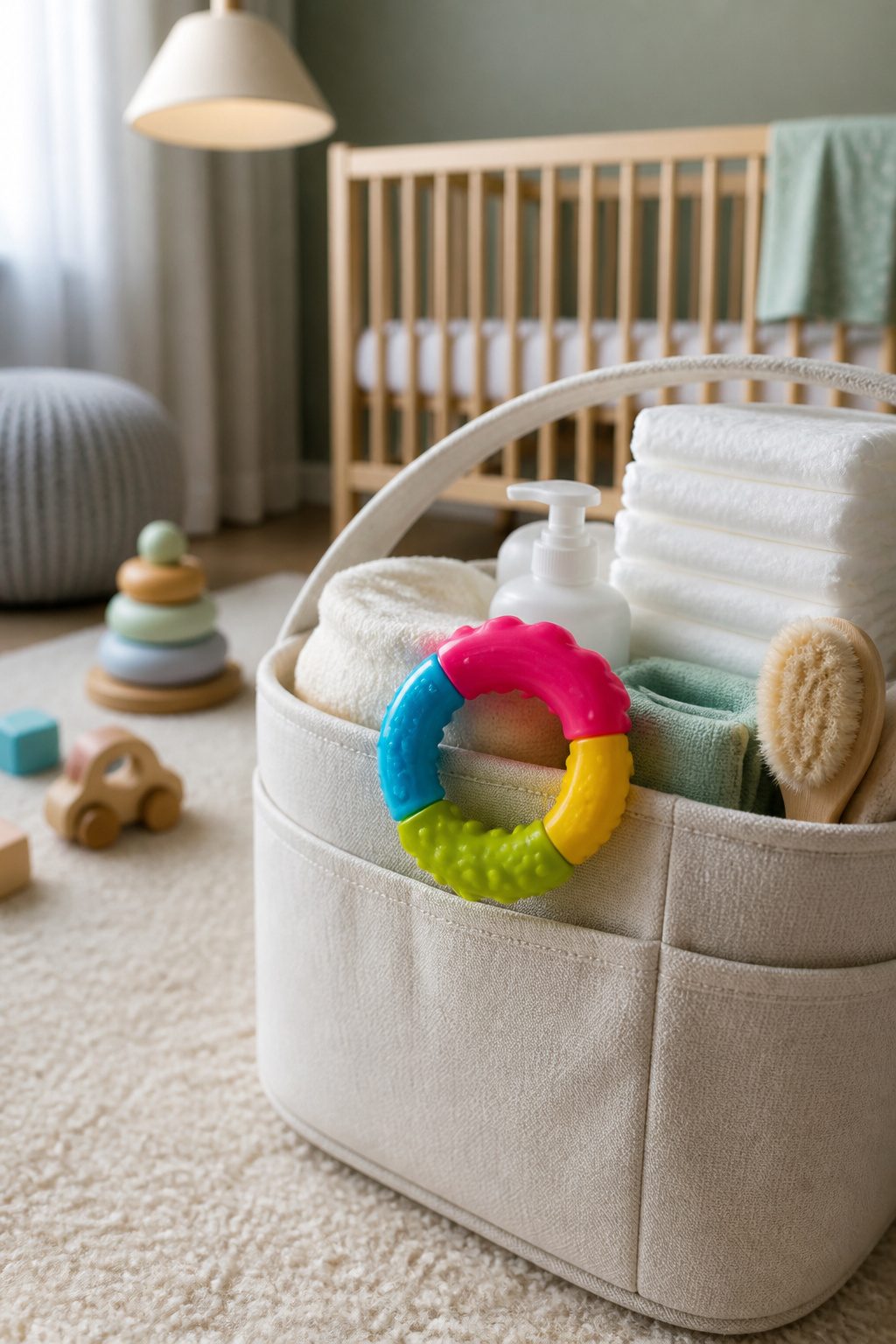
Once a baby hits six months or so, diaper changes turn into wrestling matches. We keep a teething ring in the caddy, not on the floor, for exactly that reason. A toy pulled from a carpet or car seat is carrying whatever the dog tracked in; the one in your caddy stays clean enough to go straight into a mouth.
Linking rings or silicone rings work best because an angry baby can actually grip them. Smooth round toys roll out of reach and add to the chaos. The rings hook over a wrist or hang off the caddy edge, so they do not disappear mid-change.
We learned this after watching a plastic rattle slide under the dresser for the tenth time. The teething ring bought us the thirty seconds we needed, and it stayed out of the dust bunnies while we were not looking.
15. Extra Pacifier or Teething Ring
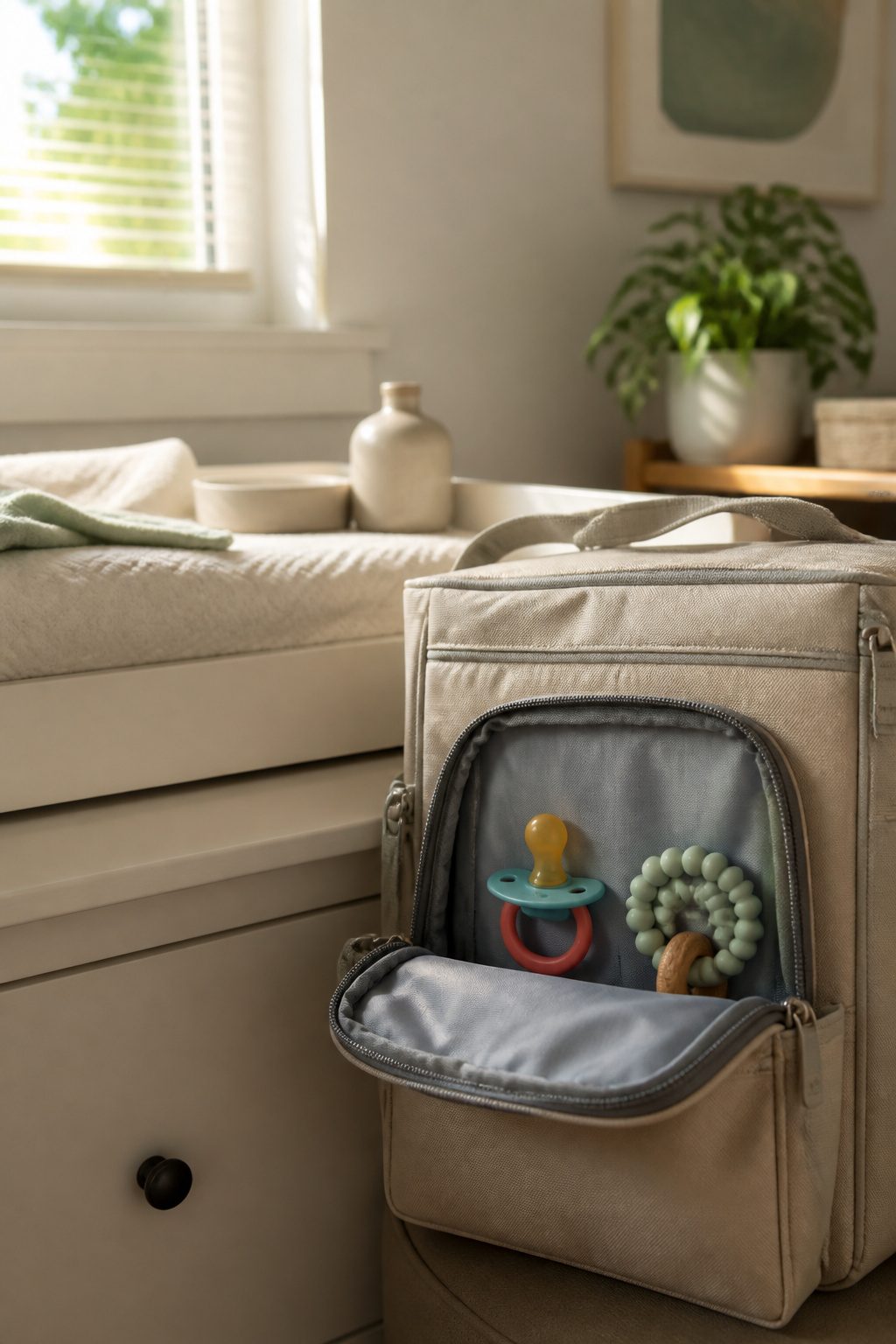
We learned the hard way that one pacifier is never enough. The one in use gets dropped, rolled under the dresser, or left in the car seat at the worst moment. The backup stays sealed in a clean pocket of the caddy, untouched until the primary is lost or dirty enough that you do not want to put it back in the baby’s mouth.
A spare teething ring works the same way. We keep a silicone one that can be wiped down fast, not the plush kind that needs a washing machine once it hits the floor. At 3 a.m., you are not hunting for where it fell. You are reaching for the clean one that was there all along.
Redundancy sounds like over-preparing until you are standing in a dark room with a crying baby and no comfort item within arm’s reach. That is the moment you decide the extra ounce of space in the caddy was worth it.
Why a Diaper Caddy Matters
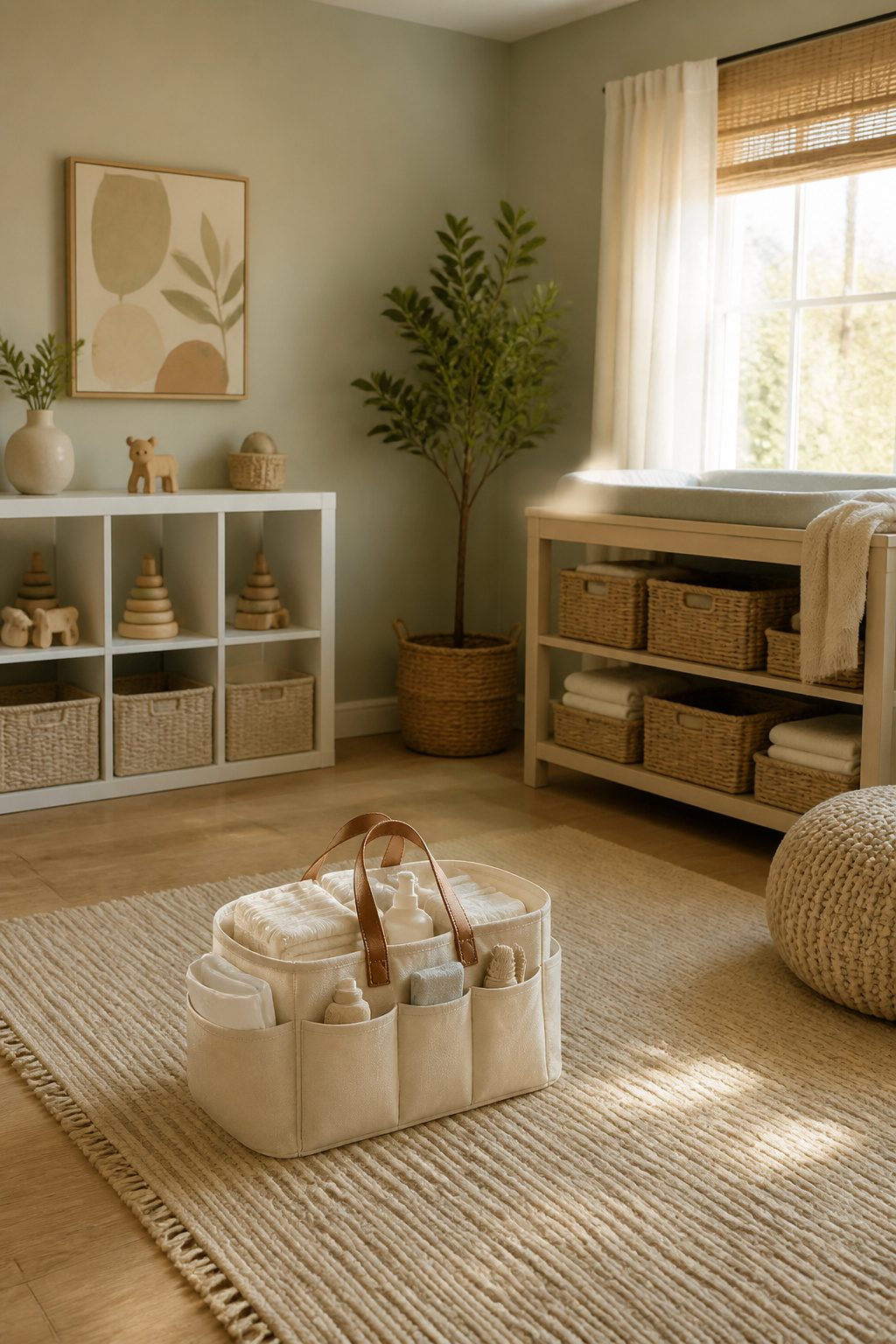
A diaper change at 2 a.m. with a screaming newborn is not the moment to discover you are out of wipes or to hunt for the diaper cream. We have been there, and the caddy exists so you never have to be there again. It keeps diapers, wipes, and the small tools you reach for every time in one portable place, within arm’s reach whether you are in the nursery, the living room, or your own bedroom.
Before we used a proper caddy, we kept supplies in a regular bin. More than once we started a change only to realize the wipes were still in the kitchen from the last round. That mid-change scramble is the stress a caddy removes. When everything has a designated spot, you can scan it in seconds and know what is missing before the diaper comes off. It also smooths handoffs between parents: whoever is on duty sees the same setup and does not have to guess where you hide the spare pacifier.
The caddy is not a nursery decoration or a luxury registry item. For a few hundred dollars in total baby gear, it is the small system that makes the daily routine faster and calmer.
How to Organize a Diaper Caddy
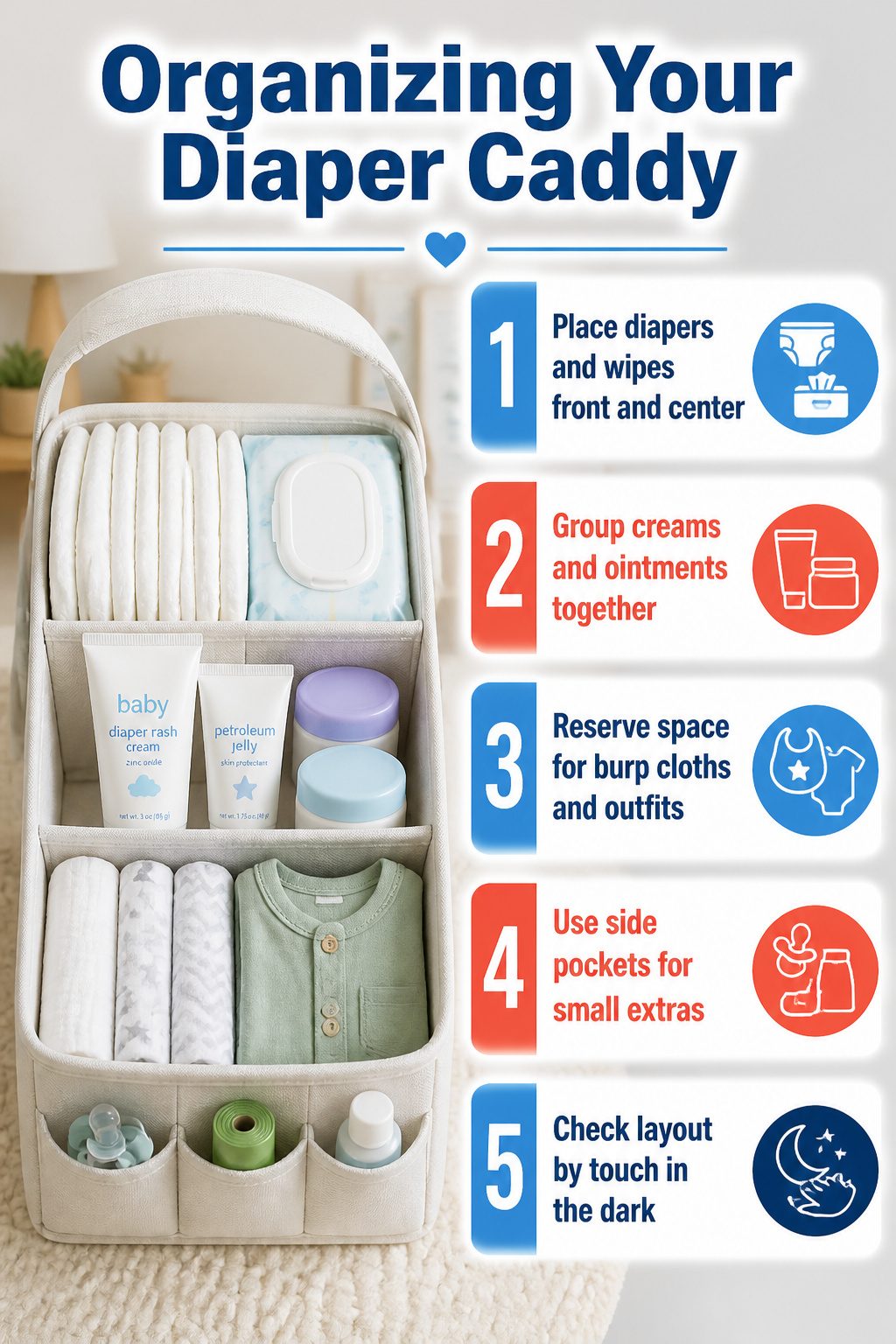
- Put diapers and wipes in the main section, front and center. These are the two things you reach for every single change, so they should sit where your hand lands first.
- Group creams and ointments together in a second section. If you use more than one product, keep the daily-use tube toward the front and stash backups behind it.
- Reserve a third section for burp cloths and a backup outfit. You will not need them on every change, but you will need them fast when spit-up or a blowout hits.
- Use side pockets for pacifiers, disposable bags, and the small extras that otherwise sink to the bottom. Compartments keep them from becoming the junk drawer of the caddy.
- We once loaded wipes at the bottom of a deep caddy. Three midnight changes later, we reorganized. Now we check the layout by touch with the lights off: if you cannot find it one-handed in the dark, it is in the wrong spot.
Types of Diaper Caddies
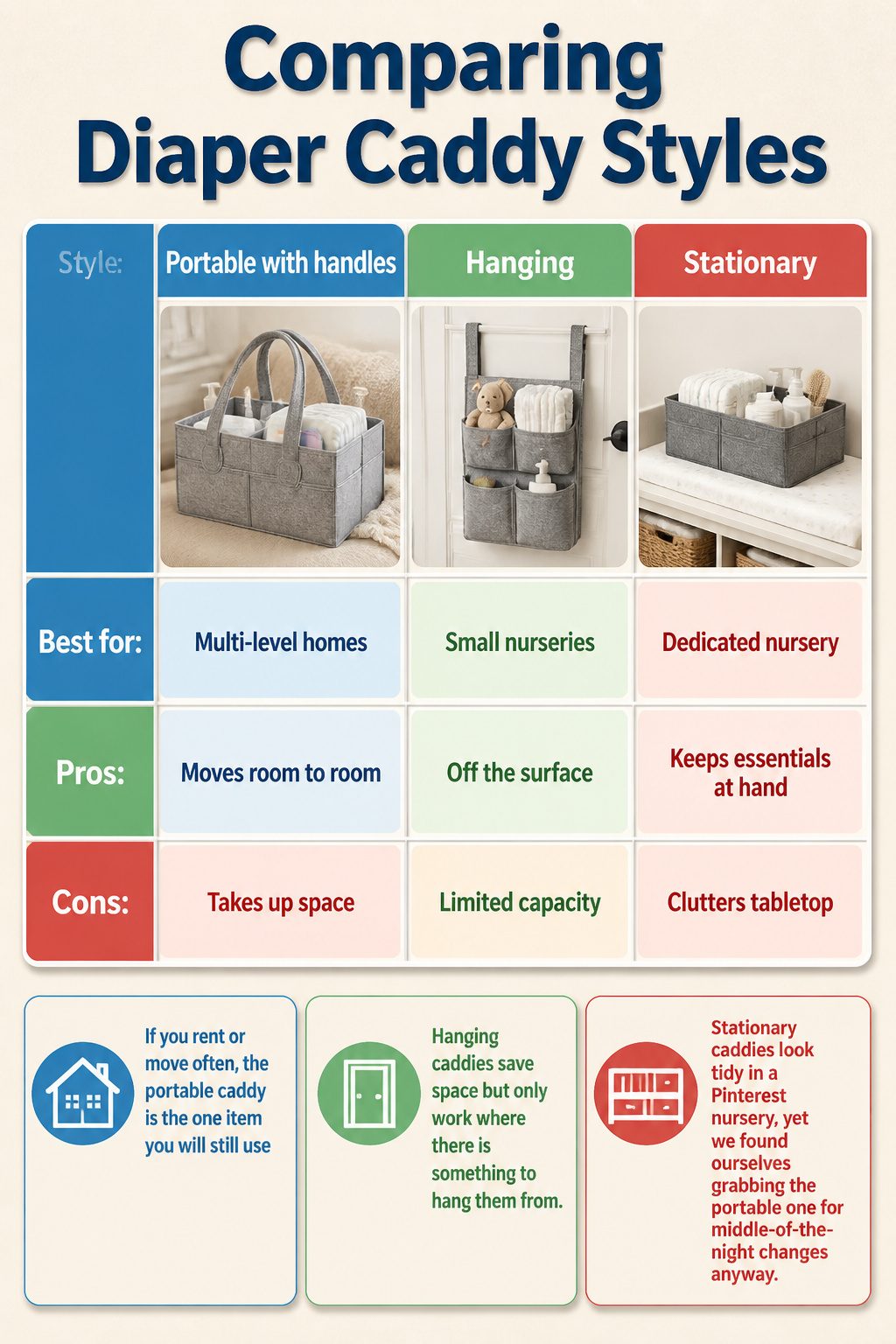
We have tried all three styles of diaper caddy across different setups, and the right choice depends more on your floor plan than on looks. Portable caddies with handles work best when the nursery and the living room are on different levels; you carry the whole station with you instead of relocating the baby. Hanging caddies clip to the side of a changing table or the back of a door, which keeps the surface clear and hides the storage from sight. Stationary caddies sit on top of the changing table itself and hold just a few diapers, wipes, and creams, with the bulk stored below.
| Style | Best for | Pros | Cons |
|---|---|---|---|
| Portable with handles | Multi-level homes, car trips | Moves room to room; compartments keep items sorted | Takes up floor or couch space wherever you set it down |
| Hanging (door or changing table) | Small nurseries, tight spaces | Off the surface and out of sight; easy to reach | Limited capacity; needs a rail or hook to attach to |
| Stationary on changing table | Dedicated nursery with storage below | Keeps essentials at hand; pairs with drawer stock | Useless anywhere else; clutters the tabletop |
If you rent or move often, the portable caddy is the one item you will still use after the changing table is gone. Hanging caddies save space but only work where there is something to hang them from. Stationary caddies look tidy in a Pinterest nursery, yet we found ourselves grabbing the portable one for middle-of-the-night changes anyway.
DIY Diaper Caddy Ideas
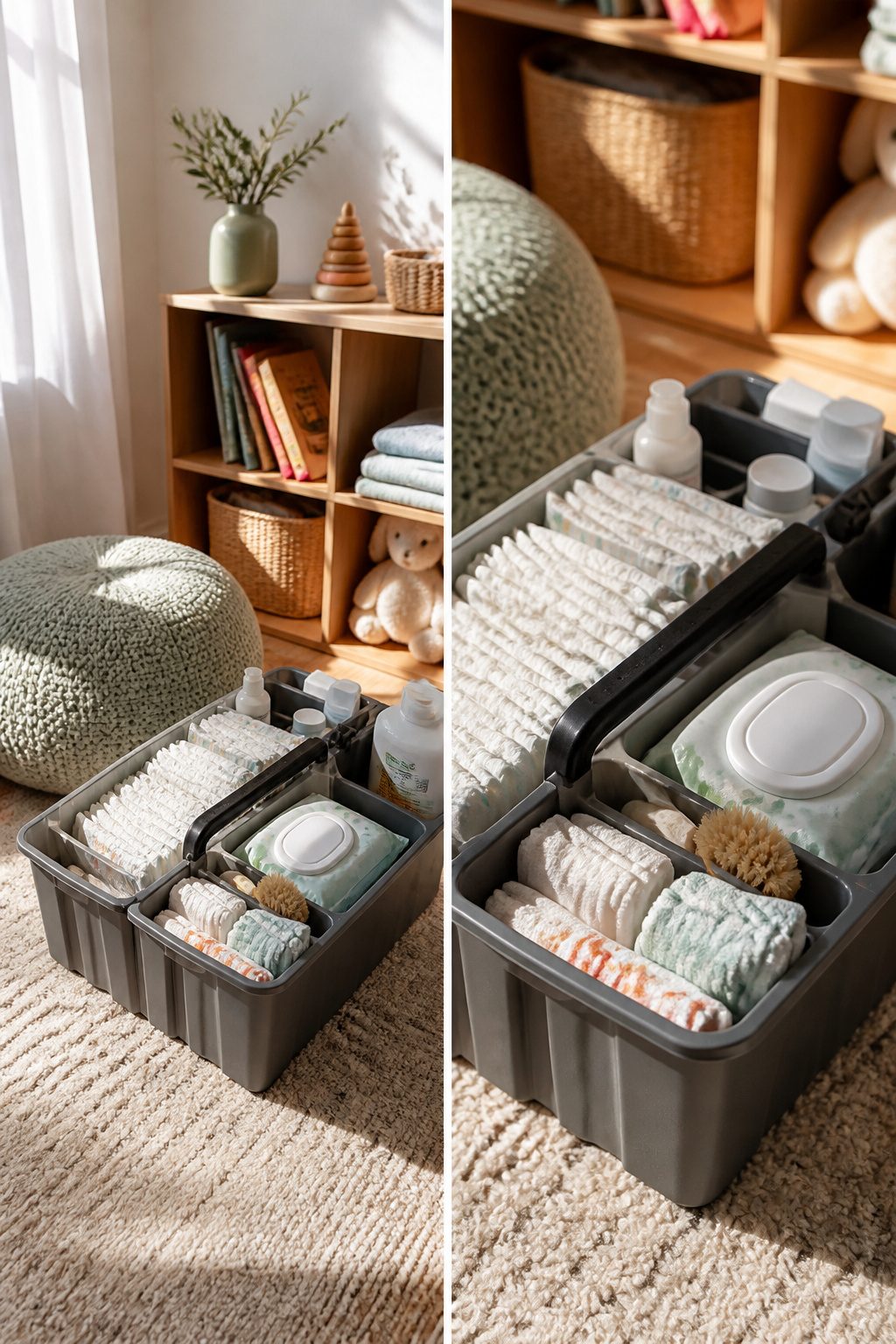
A plastic bin from the closet works fine if you add a few small baskets inside to keep diapers, wipes, and creams from sliding into one pile. We have also used a fabric tote with cardboard dividers cut to size, which lasted longer than we expected for something that cost nothing beyond a glue stick. The shower caddy route is popular: the built-in compartments already match how you actually reach for things, though the wire ones let small bottles tip through the gaps unless you line the bottom.
Our own experiment was a $4 thrift-store tool caddy with a folding metal handle. It carried everything we needed for about six months, which was long enough to prove the shape worked, and then the handle snapped at the rivet one morning on the way down the stairs. That failure taught us more than the success did. For a homemade caddy, test the handle loaded before you trust it, and keep the heaviest items, the creams and spare clothes, in the base rather than the top pockets where they strain the seams.
Frequently Asked Questions
What should go in a diaper caddy?
The essentials are diapers, wipes, diaper cream, burp cloths, and a complete change of clothes. Most parents also add hand sanitizer, a spare pacifier, a thermometer, nail care tools, a nasal aspirator, disposable bags, a foldable changing pad, and a teething ring once the baby is older. The article covers 15 items total, but you can adjust based on your space and your baby’s age.
How many diapers should I keep in a diaper caddy?
Keep 6 to 8 diapers in the caddy at once. That is enough to get through a solid stretch of the day without weighing the caddy down. Check your stash every few days if your baby is between sizes or looks ready to size up, since growth spurts tend to hit without warning.
Do I really need a diaper caddy for my baby?
You do not strictly need one, but it removes the mid-change scramble. Before we used a caddy, we started changes only to realize the wipes were still in the kitchen from the last round. A caddy keeps everything in one portable place so you can scan it in seconds and know what is missing before the diaper comes off.
How do I organize a diaper caddy?
Put diapers and wipes in the main section, front and center. Group creams and ointments together in a second section. Reserve a third section for burp cloths and a backup outfit. Use side pockets for pacifiers, disposable bags, and small extras that otherwise sink to the bottom. Test the layout by touch with the lights off: if you cannot find it one-handed in the dark, it is in the wrong spot.