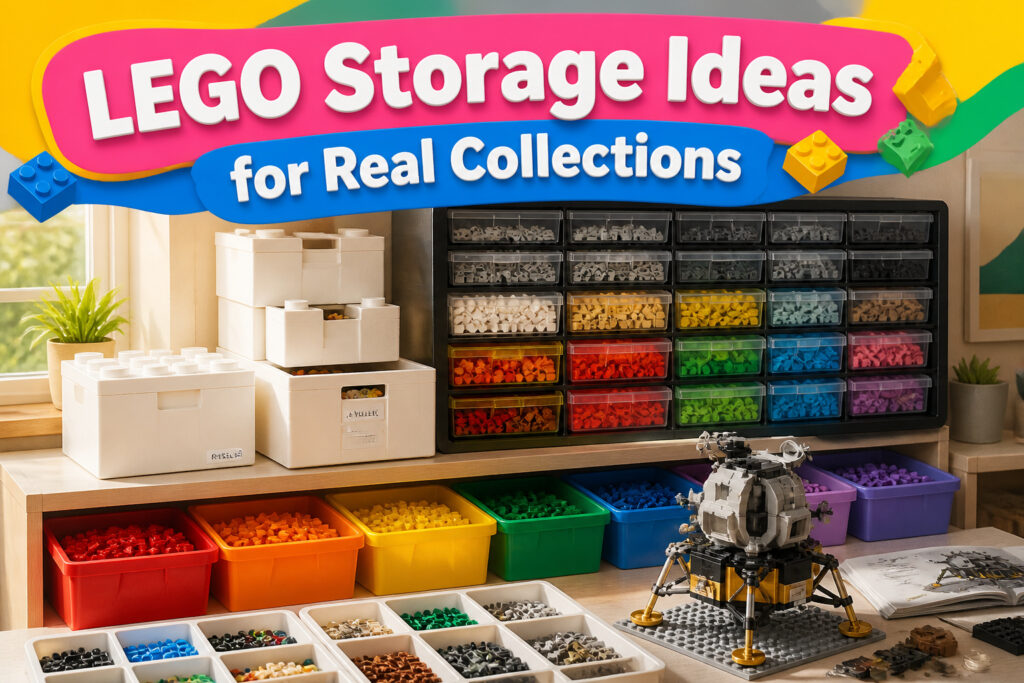
The right LEGO storage idea depends on whether you are protecting a half-built lunar lander or sorting ten thousand loose bricks by part type.
A $35 Akro-Mils cabinet with 5.0 × 13.3 × 3.7 cm drawers handles the latter; a stud-lidded BYGGLEK box handles the former. Most builders start with color-coded bins and eventually shift to sorting by shape once the rainbow stops being helpful.
[link-whisper-related-posts]1. Plastic Drawer Cabinets
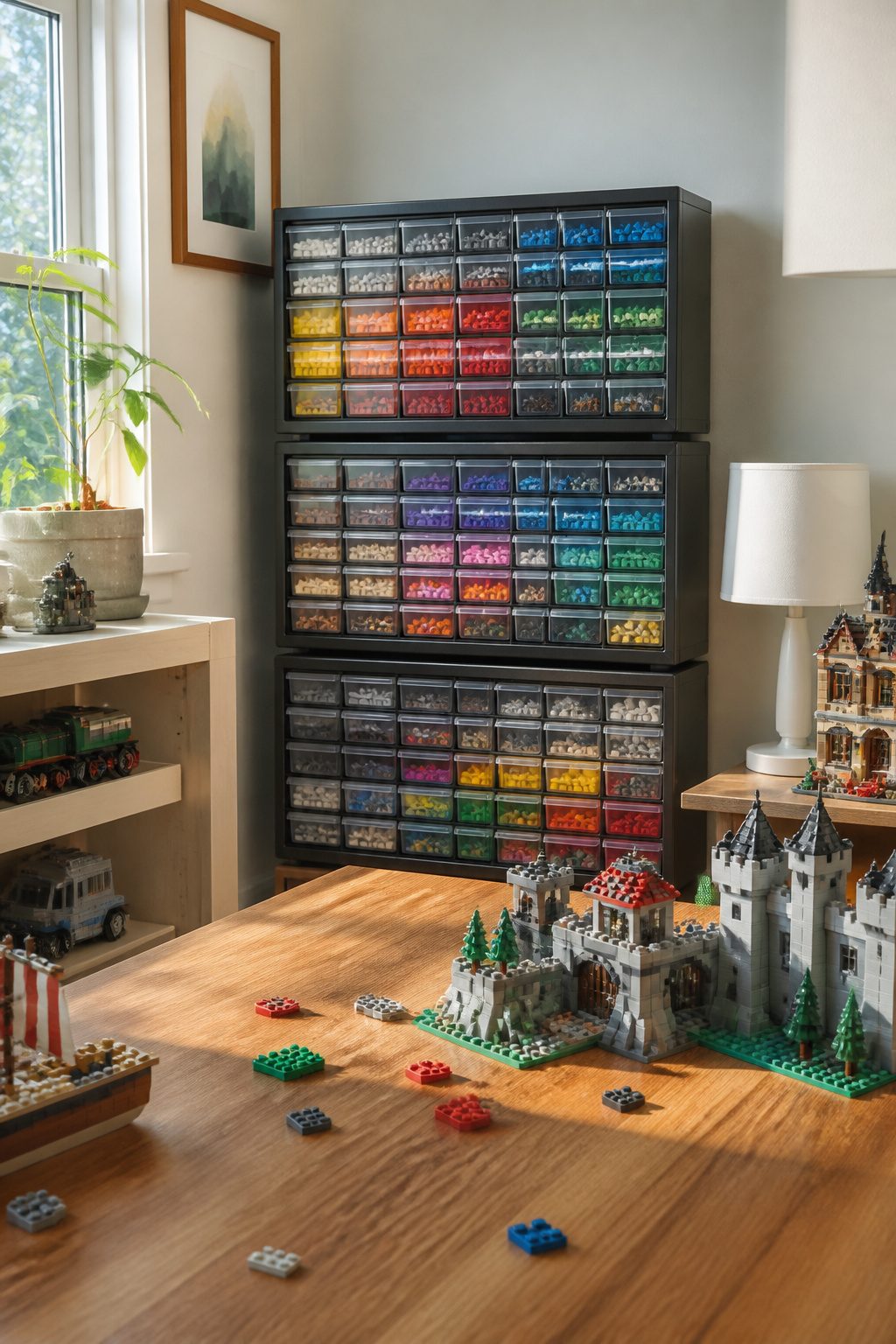
Plastic drawer cabinets are the most-backed solution across every collection size we looked at, and the Akro-Mils 64-drawer unit is the one that comes up first for good reason.
Each small drawer measures 5.0 × 13.3 × 3.7 cm inside, which is deep enough to hold a 16-stud brick standing up and shallow enough that you are not digging through layers of mixed parts.
At about $35, the price has stayed competitive enough that people with medium to large collections tend to buy several and stack them.
We sort ours by part type, not color, though the drawer count makes either system workable.
The 64-drawer cabinet is all small drawers; if you need larger bins for plates or tires, the 44-drawer mixes sizes and the 24-drawer goes all large at 10.8 × 13.3 × 5.3 cm each.
The drawers pull out fully and stack when removed, which matters more than we expected during active builds when you want four part types on the table and the rest put away.
What to watch out for: the frame flexes more than it looks like it should, and cheaper knockoffs crack at the drawer stops.
Akro-Mils drawers bend instead of breaking if you force them, which in a house with kids is not a small thing. Wall-mounting hardware is not always included, so check the listing if you are short on desk space.
IRIS makes a sturdier frame at a similar price, though the drawer sizes run the same; if you find them in stock, they are worth comparing side by side.

𝐓𝐰𝐨 𝐝𝐫𝐚𝐰𝐞𝐫 𝐬𝐢𝐳𝐞𝐬 – 𝐨𝐧𝐞 𝐩𝐞𝐫𝐟𝐞𝐜𝐭 𝐟𝐢𝐭.Most drawer organizer units force you into one size. Not this drawer storage cabinet. We give you BOTH large and small drawers in the same tool organizer. Small compartments for screws, beads, and electronics. It's the ideal garage storage solution for mixed items. It’s perfect for hardware sorting, craft supplies, or classroom art materials.
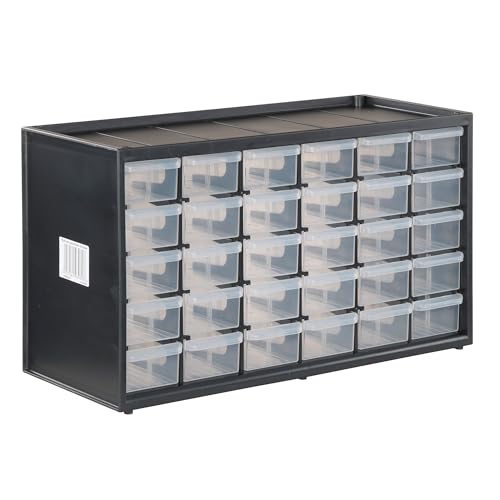
30 small transparent drawers for high visibility of content

Clear Plastic: You will receive 2 pack 8-grids small Jewelry plastic organizer containers and 2 sheets of stickers. These organizer boxes are made from PP and the clear box is easy to see at a glance, so you can easily and quickly find what you want in the box.
2. Tackle Boxes
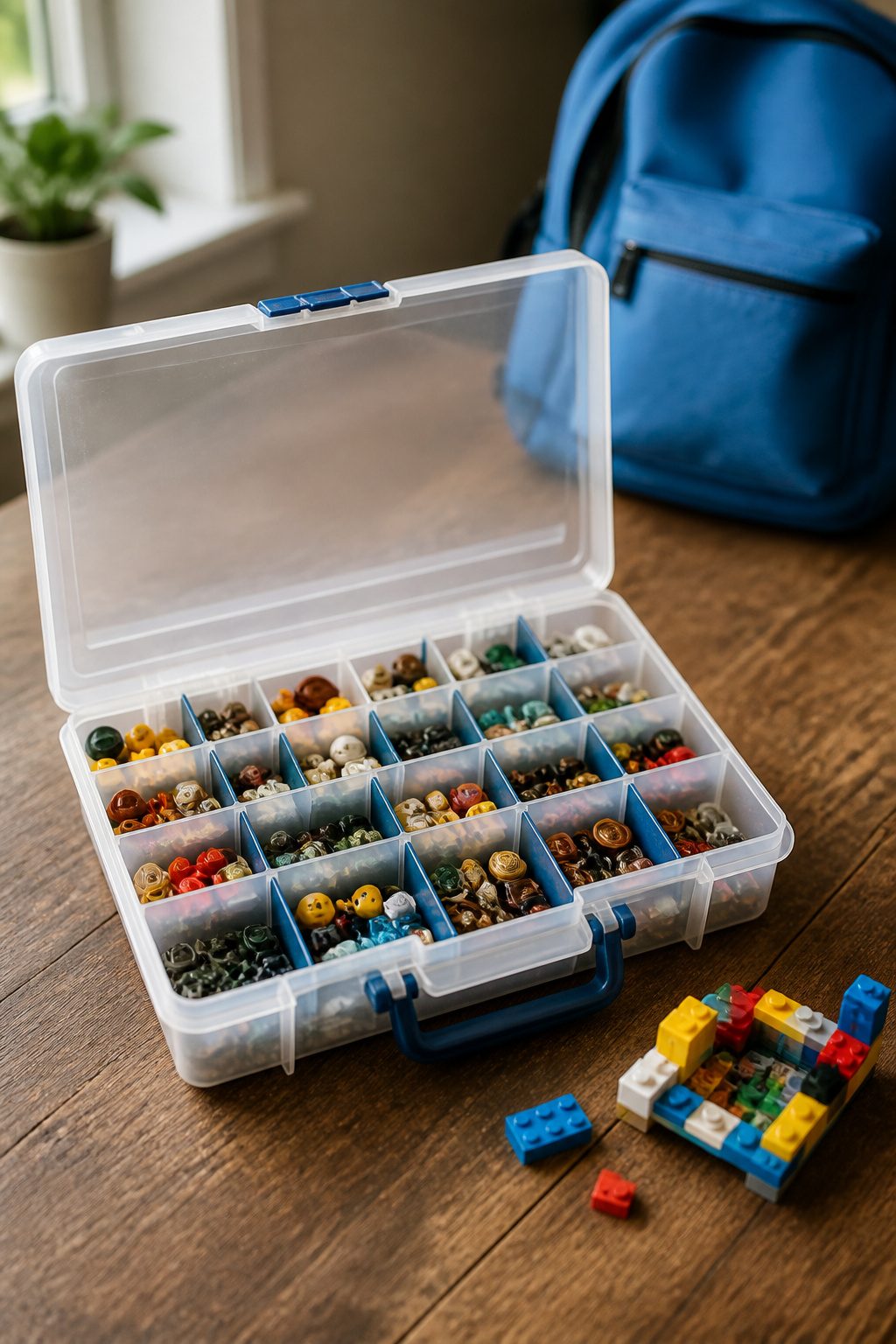
Tackle boxes with adjustable plastic dividers are the cheapest portable system we have found that still keeps small parts sorted.
The Plano 3700 Series runs 14 × 9¼ × 2 inches with up to 24 compartments, and its smaller sibling, the 3600 Series, measures 11 × 7¼ × 1¾ inches with up to 21. Anything below that size is too cramped for LEGO bricks to be workable.
These make sense in three situations: travel, smaller collections, or overflow storage for specialty pieces.
The tight-fitting lid and hinged design mean you can throw one in a car for a build session at a friend’s table or a convention without everything mixing into a single pile.
For younger builders who need to carry their own parts, the handle and latches beat a loose bin.
The tradeoff is speed. You fold open the lid, then work carefully removing parts so the remaining pieces do not shift into the wrong compartment, what builders call the "earthquake" problem.
If you sort by both part and color and need deep storage for basic bricks, the shallow trays fight you; the compartments are not deep enough for bulk.
Removable compartment organizers solve this somewhat, letting you carry just one bin to your build area, but they add cost and complexity.
One frustration we keep hearing: flat tiles and plates wedge into the thin crevices between dividers and are miserable to pry out.
For that geometry, a mid-size drawer wins. Tackle boxes earn their keep with minifigure accessories, animals, and other odd-shaped pieces that do not compact together and are not needed every five minutes.

HEAVY DUTY CABINET WITH 44 DRAWERS: The small storage cabinet is made in the U.S.A. from rugged, high-impact plastic and measures 20" W x 6" D x 16" H; Organizer drawer external dimensions - 6" x 4-9/16" x 2-3/16" (large); 6" x 2-7/32" x 1-9/16" (small)

HEAVY DUTY CABINET WITH 24 DRAWERS: The 24-drawer small storage cabinet is made in the U.S.A. from rugged, high-impact plastic and measures 20" W x 6" D x 16" H; Organizer drawer external dimensions - 6" x 4-1/2" x 2-3/16"

DIMENSIONS: Overall cabinet measures 7" L x 19.5" W x 15.5" H. Drawer sizes include large drawers (6.87" L x 4.31" W x 2.12" H) and small drawers (6" L x 2.12" W x 1..62" H) for organizing items of different sizes.
3. IKEA TROFAST System
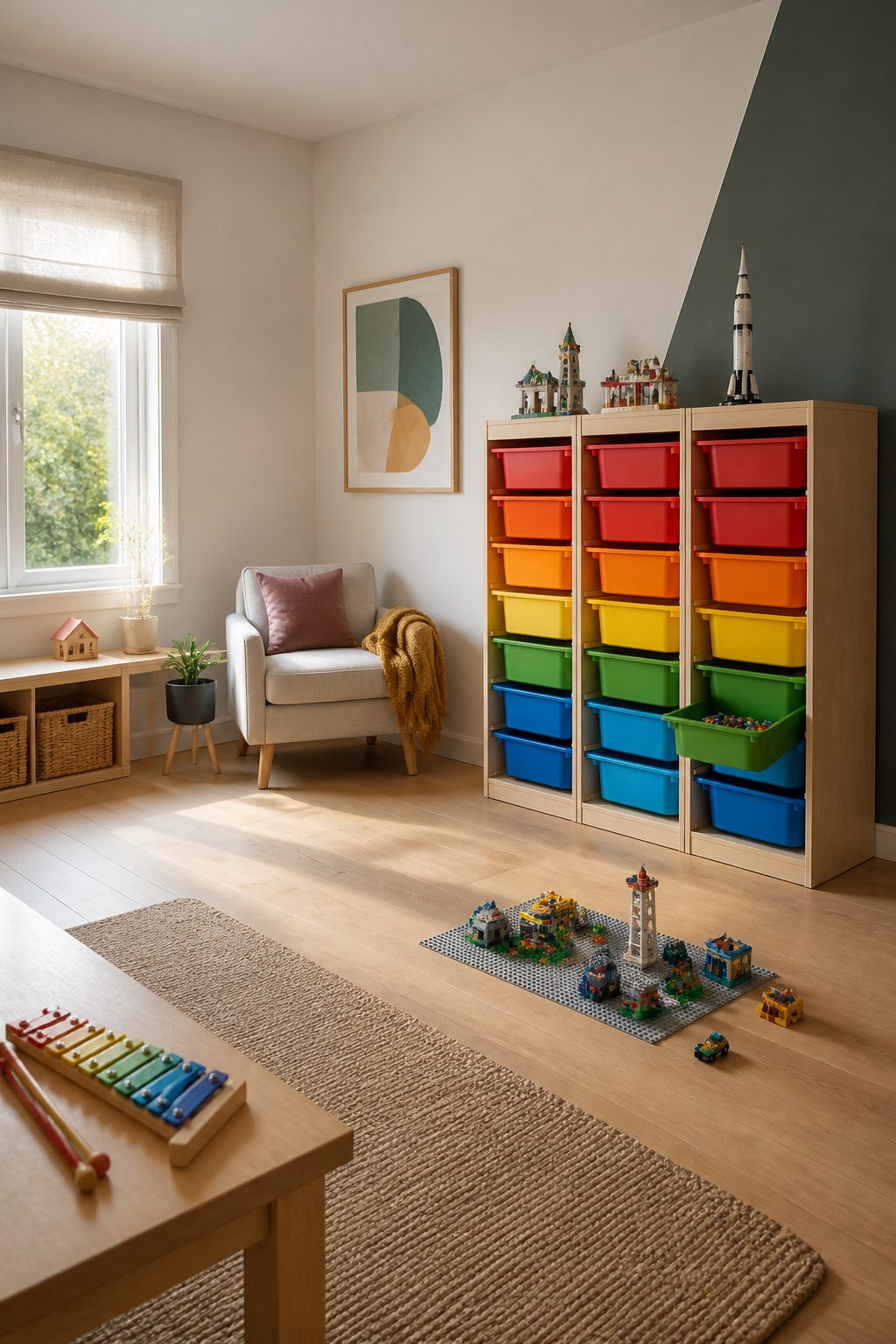
The TROFAST system is where most of us started when a shoebox stopped cutting it. IKEA sells these as stackable frames with pull-out bins in multiple colors, and that color range matters more than it sounds.
You can sort by color, by shape, by theme, or dedicate one bin per kit and still know what lives where from across the room.
The frames are particleboard, the bins are plastic, and the whole thing is built to stack or sit side by side.
That modularity is what lets it adapt to real room layouts: a narrow vertical tower against a wall, a low horizontal run under a window, or the drop-in table setup some builders use for a combined build-and-store station.
The bins come out, so you carry just what you need to the coffee table and snap it back when done.
A nine-bin combination runs about $74, and a six-bin version exists if you are working with less wall space or a tighter budget. Lids and add-on frames are available if the collection keeps growing, which it tends to.
This is the system we point people toward when they have moved past the single-bucket phase but are not ready to commit a whole wall to storage.

SMART DIVIDER SYSTEM: This tackle storage box offers customization options with 12 adjustable dividers that can create up to 24 different compartments. This ensures quick compartmentalization of your storage space.

Versatile Applications: As a bead organizer or tackle box organizer, this multi functional plastic box meets various storage needs. Ideal for beads, jewelry parts, fishing supplies, craft materials, and small accessories

What You Get: Large 15 grid box (10.8*6.3*2.2inch) with environmental-friendly tough plastic construction, be your lure box, jewelry organizer, craft storage and bead organizer.
4. Open Bins
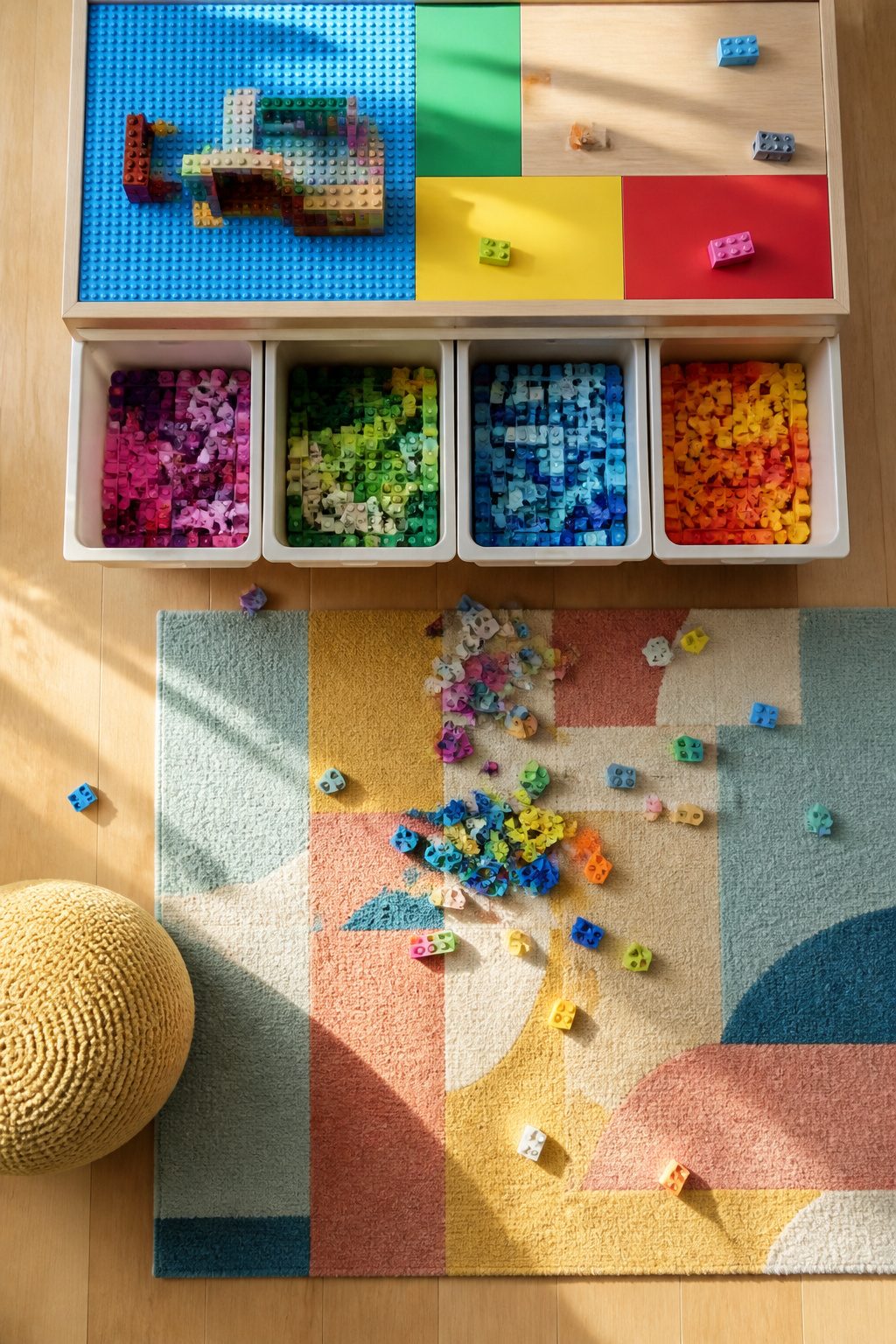
Open bins keep cleanup honest. When a bin is shallow enough that a child can reach the bottom without standing on tiptoe, bricks go back in.
When it is too deep, pieces settle into a layer the kid cannot touch, and the floor becomes the new sorting surface.
We have watched this happen with Trofast-style setups: the medium-depth trays work, the deep ones become black holes where colors mix into an archaeological dig.
The unsorted bin is the real secret. One catch-all container, emptied back into sorted storage once a month or less, keeps the system from choking on perfection.
Every family we have seen try lid-only systems ends up with bricks on the floor because unstacking and unlidding for two stray pieces is not a task a child completes.
The bin has to let you toss pieces in on your way past, or it will not happen.
Dust is the tradeoff.
Open bins behind a cabinet door solve it; so do small bin-in-drawer cabinets. But open-front bins in a small room waste space storing air, the reach-in gap that sits empty so your hand can move.
Large room, fine. Tight corner, that gap costs you.

Premium materials: The compartmentalized storage box is crafted from eco-friendly PP material, featuring a durable, odorless, and non-toxic design. Its spacious capacity and lightweight construction make it easy to carry and store in a backpack.

DURABLE DESIGN: Crafted from robust plastic, this organizer box with dividers offers space for storing small parts and accessories

CLASSIC LEGO DESIGN: Modeled after the original LEGO bricks, these are the perfect addition to any master builder’s household
5. Swoop Bags
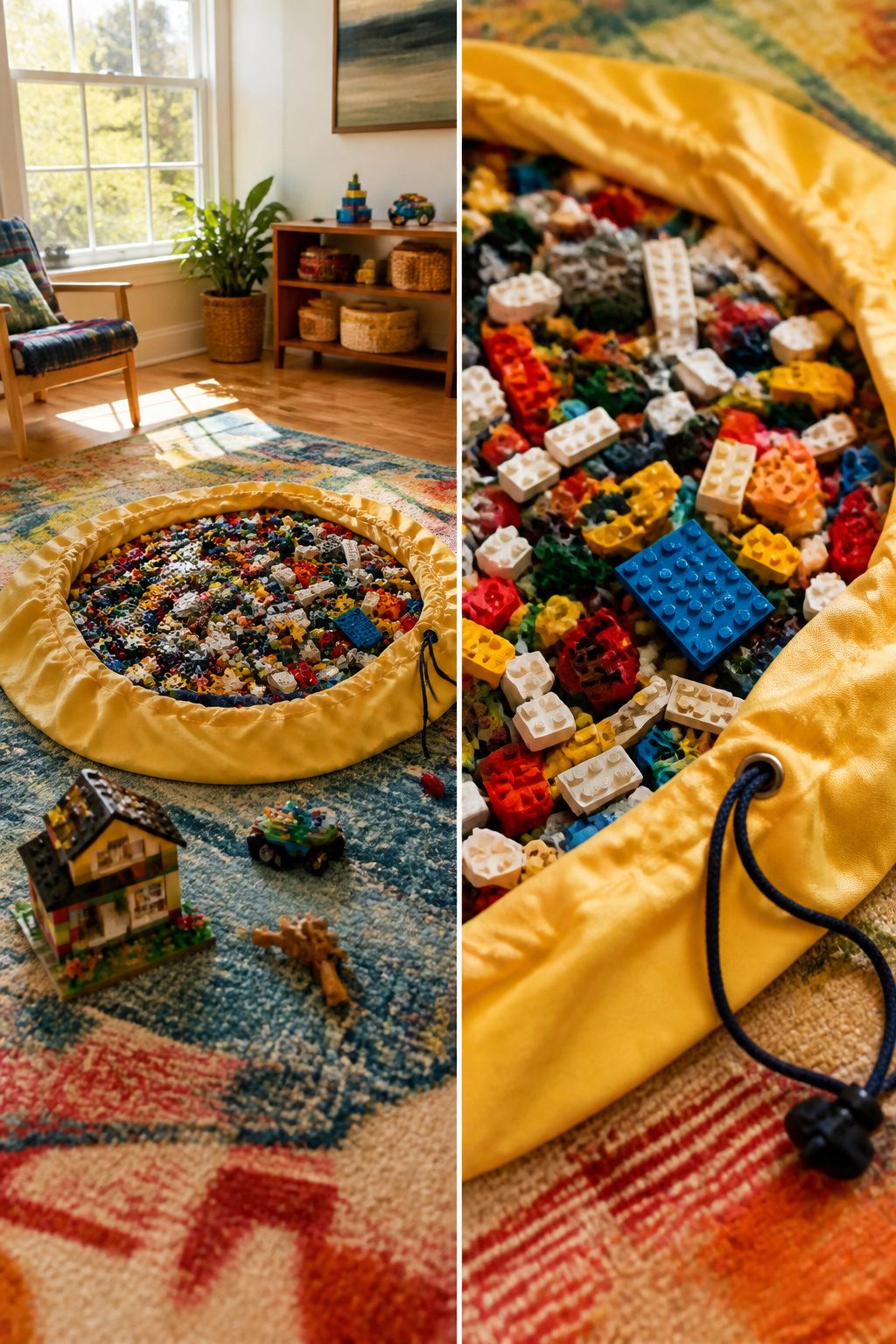
A Swoop Bag is a soft cloth circle, 3 feet wide in the large size, that lies flat as a play mat and cinches closed into a sack.
Spread it, build on it, pull the drawstrings, and the floor is clean in under a second. The muted fabric also softens the grating sound of bricks sifting together, something plastic bins only amplify.
"A single Swoop Bag can store thousands of bricks… minimizes the number of Lego being stepped on."
That speed matters most when toddlers roam, but the real question is what happens after the swoop. Everything lands in one mixed pile.
For younger kids still building rainbow towers, that is fine. Once they move to specific structures and want bricks by color or size, the bag becomes a first step, not a finished system.
We have seen families pair it with a sorting session on weekends, or treat the swoop as daily triage while drawers handle the real organization.
The bag wins on speed and floor space; it does not replace sorting, it postpones it.

【Multifunctional Cube Storage Bin】This durable clear plastic organizer can cleanly store all the small bits and pieces of building blocks, beads, dolls, toy matchbox cars, and miscellaneous in a more organized fashion.

OFFICIALLY LICENSED LEGO STORAGE ORGANIZER 3-PIECE SET: A fun and convenient set of storage bins for storing and organizing Legos. It can be used to hold brick sets, action figures, small cars and other toys and accessories. Recommended for ages 3+.

Compact Dimensions: This blocks storage organizer measures 14.2"L x 9.5"W x 3.9"H, offering ample storage capacity while maintaining a compact footprint that fits easily on shelves, countertops, or inside drawers.
6. BYGGLEK Boxes
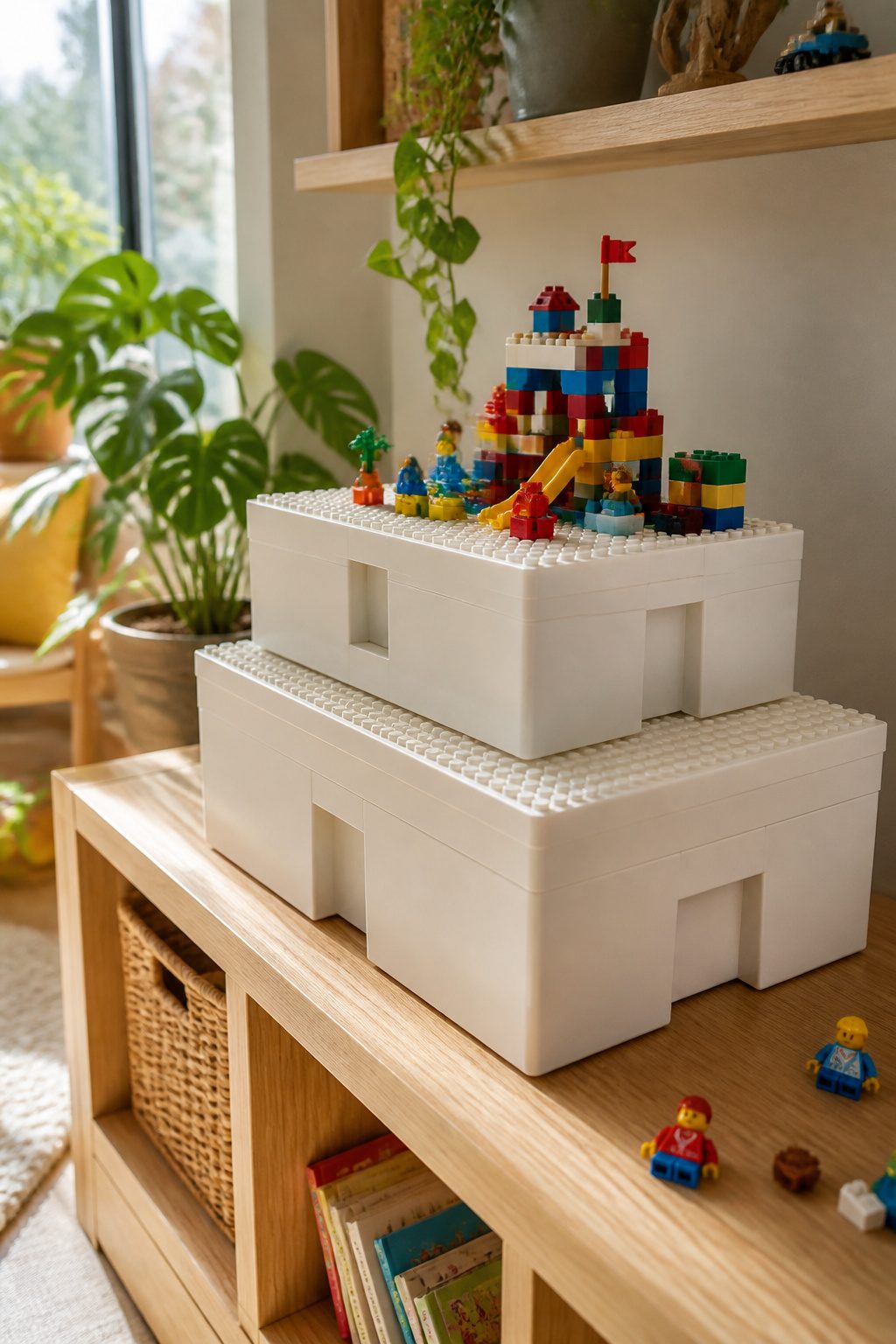
The stud-covered lid on the BYGGLEK box doubles as a building baseplate, which changes how you think about storing an unfinished build.
IKEA developed these in partnership with Lego, and the line runs from a medium box down to a compact three-pack of small containers.
The stud pattern wraps the exterior too, so you can build on the sides and even around the box, not just on top.
We see these as a narrow tool in a larger system. The interior holds bricks like any box, but the real point is keeping a work-in-progress intact without claiming table space forever.
A half-built lunar lander stays assembled, lid becomes landing pad, and the whole thing slides onto a shelf until Saturday. The small sizes suit minifigures and specialty pieces best; the medium box handles a modest in-progress model.
For most collections, BYGGLEK will not replace your primary bins. It costs more per liter than plain storage, and the fixed stud spacing limits what you can park on that lid.
Where it earns its spot is the builder who starts three things at once and hates teardown, or the parent who wants a kid’s latest creation visible without it colonizing the dinner table.
One box for the current obsession, another for the minifigure squad, and your main sorting system stays untouched behind them.

HEAVY DUTY CABINET WITH 16 DRAWERS: The 16-drawer small storage cabinet is made in the U.S.A. from rugged, high-impact plastic and measures 10-1/2" W x 6-1/2" D x 8-1/2" H; Organizer drawer external dimensions - 6" x 2-7/32" x 1-9/16"
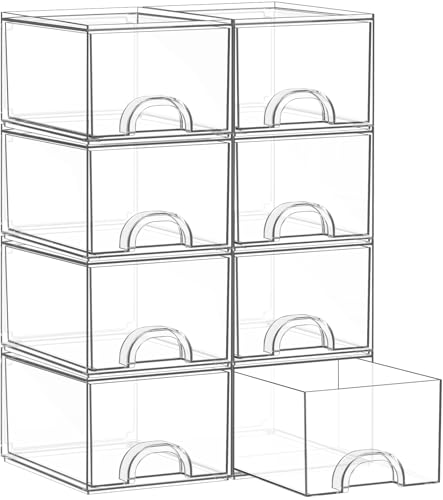
【Space Saver】: Zeawec clear stackable storage drawers for art tool & sketch help maximize your storage space and keep your home, office, or vanity area clean and tidy.

OFFICIALLY LICENSED LEGO STORAGE 4-PIECE TOTE AND PLAY MAT: Mat Roomy LEGO haul tote carries three color-coded zip-top containers, then unzips flat to create a mat when it’s time to play.
7. Akro-Mils Mini Drawers
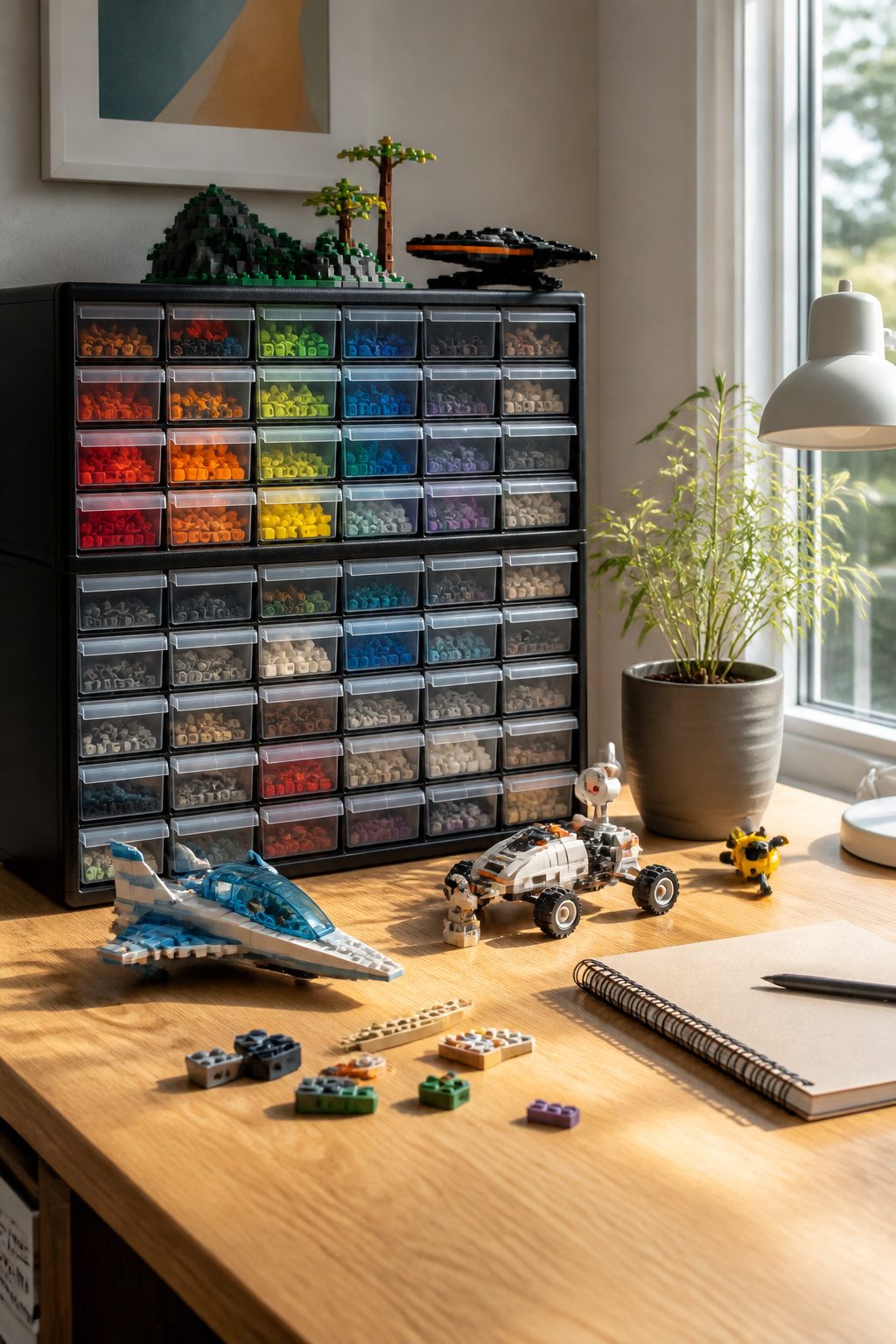
Akro-Mils mini drawers are the first thing most builders picture when they think small-parts storage, and we get why.
Each small drawer measures 5.0 × 13.3 × 3.7 cm inside, which is plenty for Technic pins, minifigure accessories, and printed tiles, but not for anything wider than a 2×4 brick standing on end.
The drawers pull out fully, stack if you want, and come with plastic dividers to split a drawer into quarters.
The catch is volume. One of these 64-drawer units costs about $35, and you can fit everything inside it into a single large IRIS drawer that takes up the same vertical space as four of the big ones.
That makes Akro-Mils a poor primary storage choice for anyone with more than a starter collection.
We keep three units on the build desk anyway. For the pieces you reach for every session, the ones that disappear into a bin of mixed parts, having them at arm’s length beats walking across the room.
The 44-drawer hybrid, half small and half large, is the compromise we’d buy first if we were starting over.

DIMENSIONS: Overall cabinet measures 19.5" L x 7" W x 15.5" H. Drawer sizes include large drawers (6.87" L x 4.31" W x 2.12" H) and small drawers (6.87" L x 2.12" W x 1.62" H) for organizing a wide range of small items
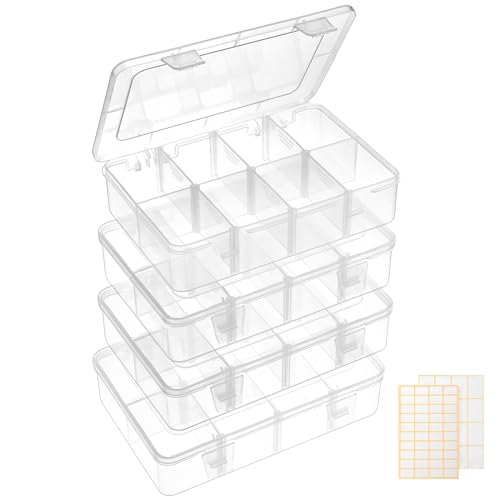
Premium Quality Clear Plastic: You will receive 4 pack 8-grids small Jewelry plastic organizer containers and 2 sheets of stickers. These organizer boxes are made from PP and the clear box is easy to see at a glance, so you can easily and quickly find what you want in the box.

HEAVY DUTY CABINET WITH 26 DRAWERS: The small storage cabinet is made in the U.S.A. from rugged, high-impact plastic and measures 20" W x 6" D x 10" H; Organizer drawer external dimensions - 6" x 4-9/16" x 2-3/16" (large); 6" x 2-7/32" x 1-9/16" (small)
8. Sterilite Drawers
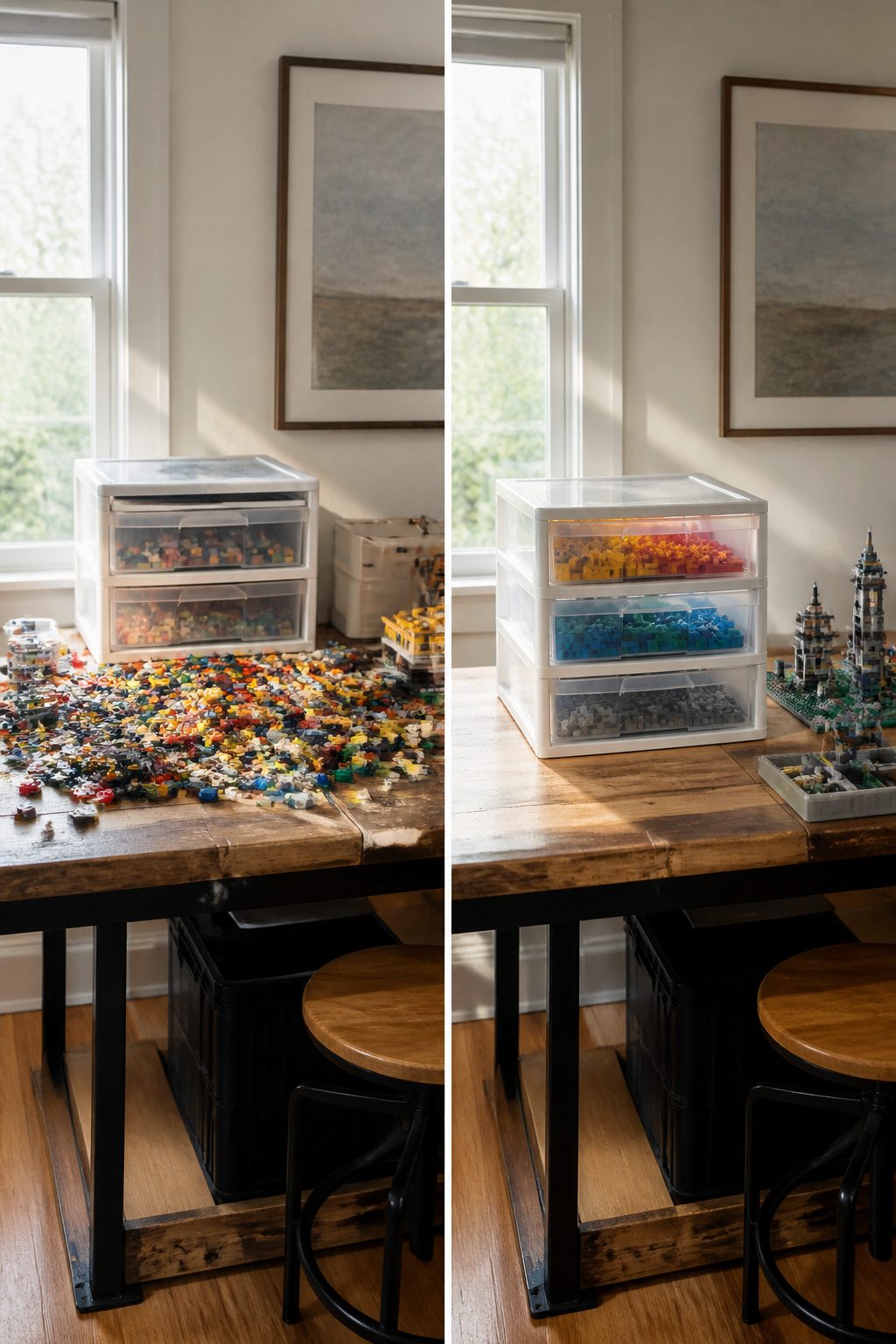
Sterilite 3 Drawer Organizers run less than $10 per unit when you buy multiples online with free shipping, which puts them squarely in the entry-level tier of LEGO storage. We see these as the step up from shoeboxes, not the final destination.
The three-drawer format fits mid-sized categories exactly: one drawer for metallics and transparent pieces you want to protect from scratching, another for specialty tiles and hinges that vanish in larger bins, a third for round pieces sorted by scale so you can browse 2×2, 3×3, and 4×4 options while you build.
They stack, though we would not load heavy collections more than three or four high without watching for bowing. The drawer slides are functional, not premium; you will feel the difference if you have handled Akro-Mils cabinets.
The real limitation is weight tolerance and the physical slide quality under daily use. One practical note: the contents of a large Pick-a-Brick cup fill a single drawer precisely, which makes restocking day faster than you expect.
Color options run toward light plastic, and black is scarce if you are trying to match darker systems already in the room.
Shop the range, because this is the price band where aesthetics compete with utility and the right shade may sway the choice.

SUBASTANCE and COLOR - Made of good quality PP hard plastic; Clear.

Ample Storage for Small Items: This 15-compartment organizer box offers sufficient space for all your small supplies, making it easy to organize by size, color, or project; the compact design is portable, fitting seamlessly into your workspace or travel bag. Box dimensions: 10.9''L x 6.4''W x 2.1''H; grid size: 2.2''L x 2.''W x 2.2''H

Plano Tackle Storage | Protecting your passion since 1952
9. DIY Solutions
Mason jars sit on a shelf in our back room, each one holding a single color of bricks. We started with one jar of red, then added blue, then yellow, and now we have twelve of them lined up.
The glass lets you see what is inside without opening the lid, and the wide mouth means a hand fits through easily.
A case of twelve runs about what you would spend on one plastic drawer unit, and if you already can jars in the fall, you have the empties sitting around.
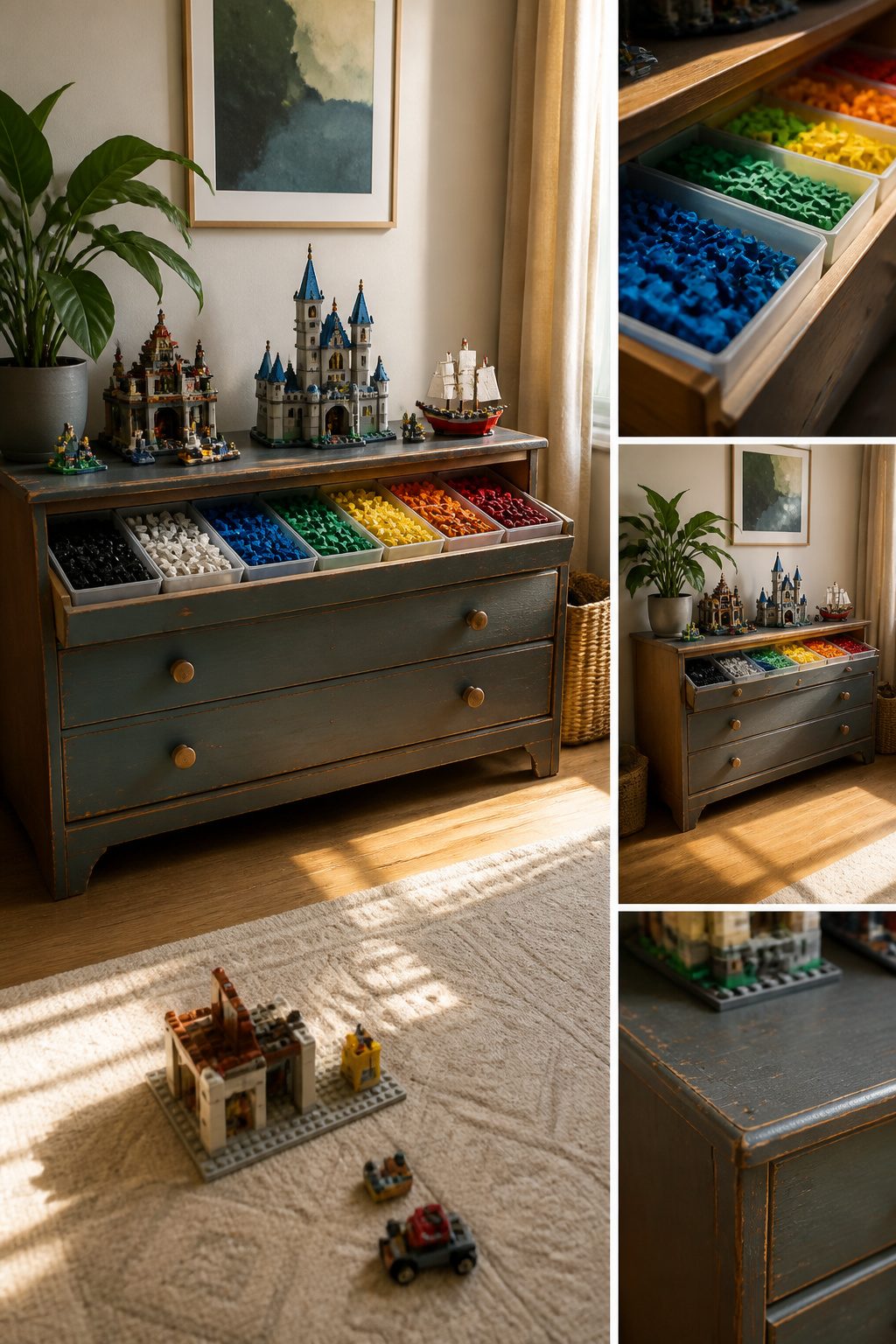
Repurposed furniture works when the piece is the right depth. We turned a short dresser into a build station by pulling out the top drawers and fitting shallow bins in their place.
The original drawer fronts became a drop-down work surface. It took a Saturday and some plywood, but the height was already right for a kid standing at it.
The mistake to avoid is building around a piece before you check that the drawers run smooth empty; a warped rail will fight you every time.
Built-in shelving only makes sense if you own the wall. We have seen renters do it anyway, then patch and paint when the lease ends, and that math rarely works.
For a first home you plan to stay in, a simple ledge system screwed to studs, with bins that slide out like drawers, uses space that would otherwise go to baseboards and dust.
The time investment is a full weekend, plus paint drying. DIY wins when you have more time than money and the dimensions of your space do not match anything sold in stores.

★PRODUCT INCLUDES - 2 pack 36 compartment clear plastic storage boxes and 72 pcs small sticker labels. They are packaged in a secure box for safe delivery. The products are made of sturdy food-grade plastic and will not break easily.

【Sturdy and Durable】- Made of transparent and environmentally friendly pp plastic, solid, not easily deformed. Sturdy plastic case with snap-shut lips can close tightly to protect your items from falling out.

10. Display Shelves
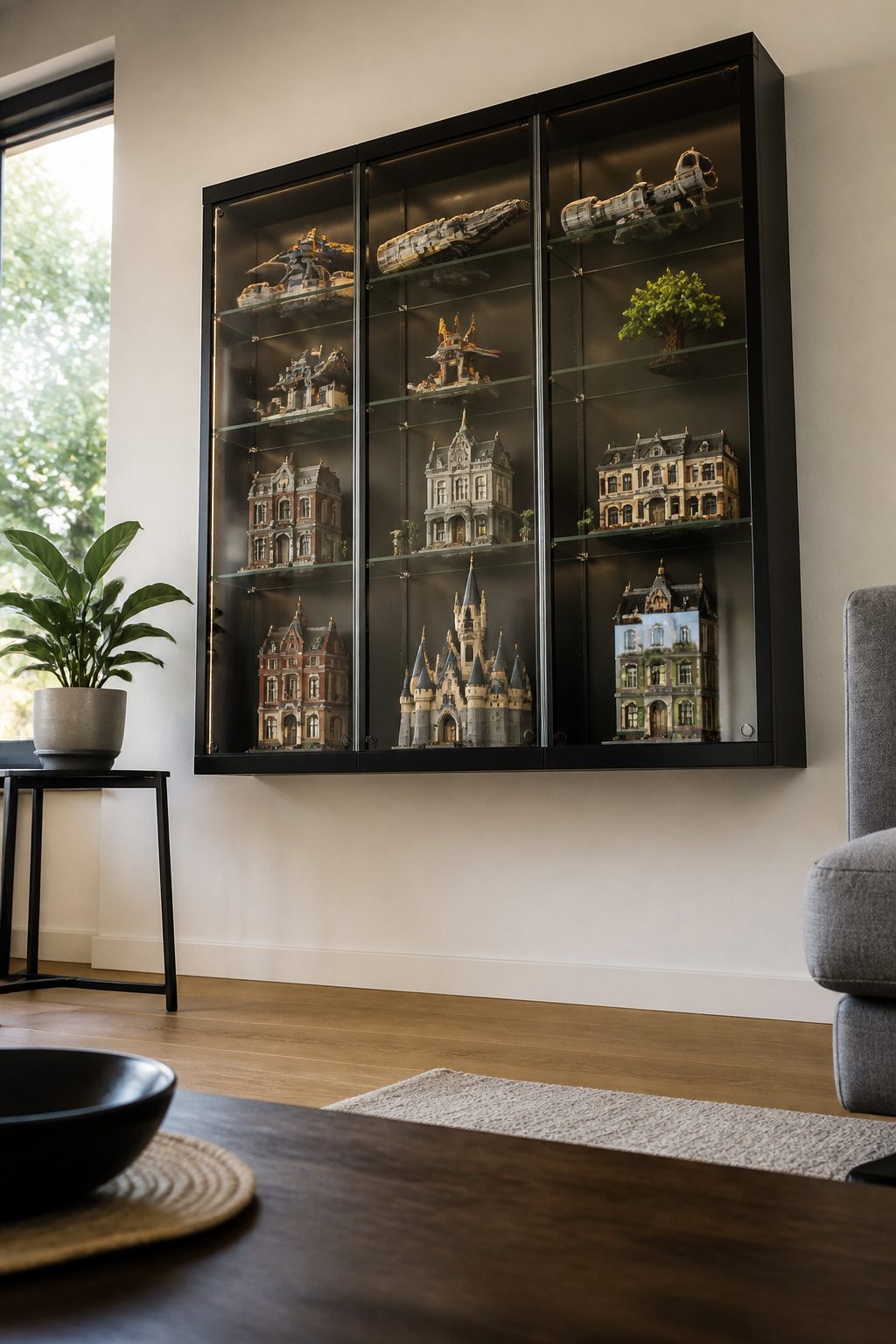
Completed builds left in bins tend to break apart and get forgotten.
Wall-mounted or freestanding shelving turns a collection into room decor, which changes how you treat it. You actually dust the Falcon instead of digging for a missing wing piece.
IKEA’s Billy system with glass doors runs about $199 and solves the dust problem outright; the glass also keeps pets and younger siblings out.
The Kallax line, around $45, works for mixed use: compartments fit bins for loose bricks on the lower cubes while the upper ones hold display builds.
If you are renting and cannot anchor to studs, floating LACK shelves or EKET wall-mounted cubes keep floor space open and leave no footprint to patch later.
EKET cubes especially read like oversized bricks themselves, so the display nods at what is inside.
The real shift happens once a build sits at eye level under light you already own.
It stops being stored and starts being seen. That visibility is what keeps adults building; out of sight really does become out of mind.

HELPS YOUR CHILD BUILD BETTER HABITS: Teach kids to put toys away without nagging! This fun toy storage organizer encourages responsibility and keeps your playroom clutter-free—making daily routines easier for busy parents.

【STORAGE BIN SIZE】:The size of the storage basket is 15L"x10"W x 9"H inches.Perfect for all kinds of rooms, Such as: closet, Bathroom, Bedroom, Toy room, nursery, cloakroom, Balcony, Pet room, Anywhere you need it.

OFFICIALLY LICENSED LEGO BIG TOY BUCKET: This large toy bucket helps you effortlessly clean up and store your kids’ collection of Legos, building bricks, and other toys in seconds.
Sorting Methods That Actually Stick
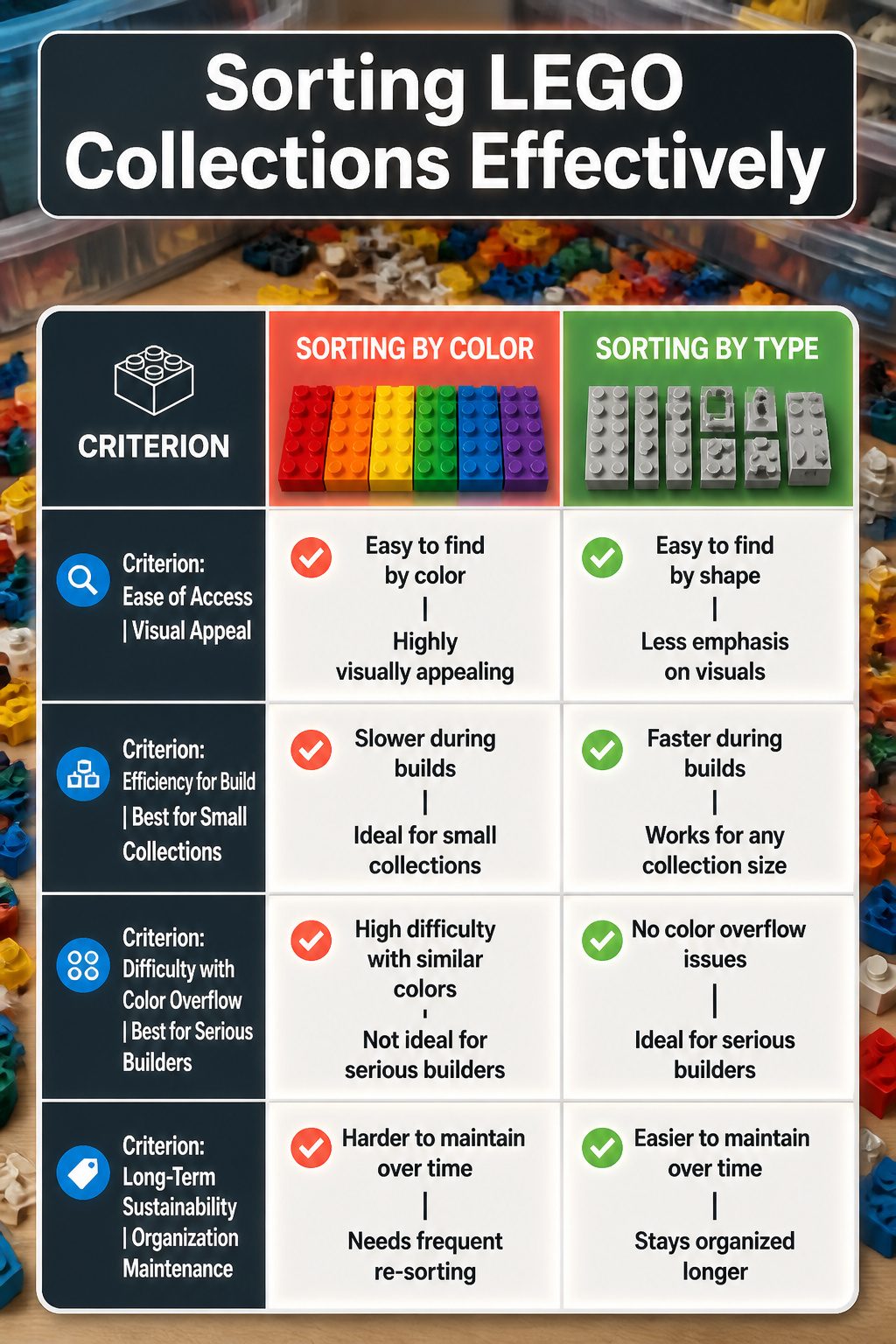
Sorting by color feels right when you open your first big set and see a rainbow of bricks spread across the table. It photographs well, and for small collections it works fine: you reach for red, you find red.
The trouble starts around the third or fourth set, when you own forty-seven shades of red and the piece you need is buried under slopes that happen to match the same brick.
At that point most of us shift to sorting by type, separating plates from tiles from bricks with clips, because the shape of a piece matters more than its color when you are mid-build and hunting for a 1-by-2 jumper plate.
Sorting by size has its own following, especially for builders who work in volume and need to grab a stack of standard bricks fast.
The tradeoff is that a 2-by-4 brick and a 2-by-4 plate share a footprint but behave nothing alike in a build.
We have watched collections evolve through all three methods, and the pattern is consistent: color is the gateway, type is the destination, and the builders who stick with color usually have the smallest collections or the most patience for digging.
Your brain matters here.
If you visualize builds by shape, sort by type. If you see a finished model in colors first, color may carry you further than the experts suggest.
The real win is picking one system and labeling it clearly, because a bin labeled vaguely is a bin that becomes unsorted in a month.
Storage for Minifigures
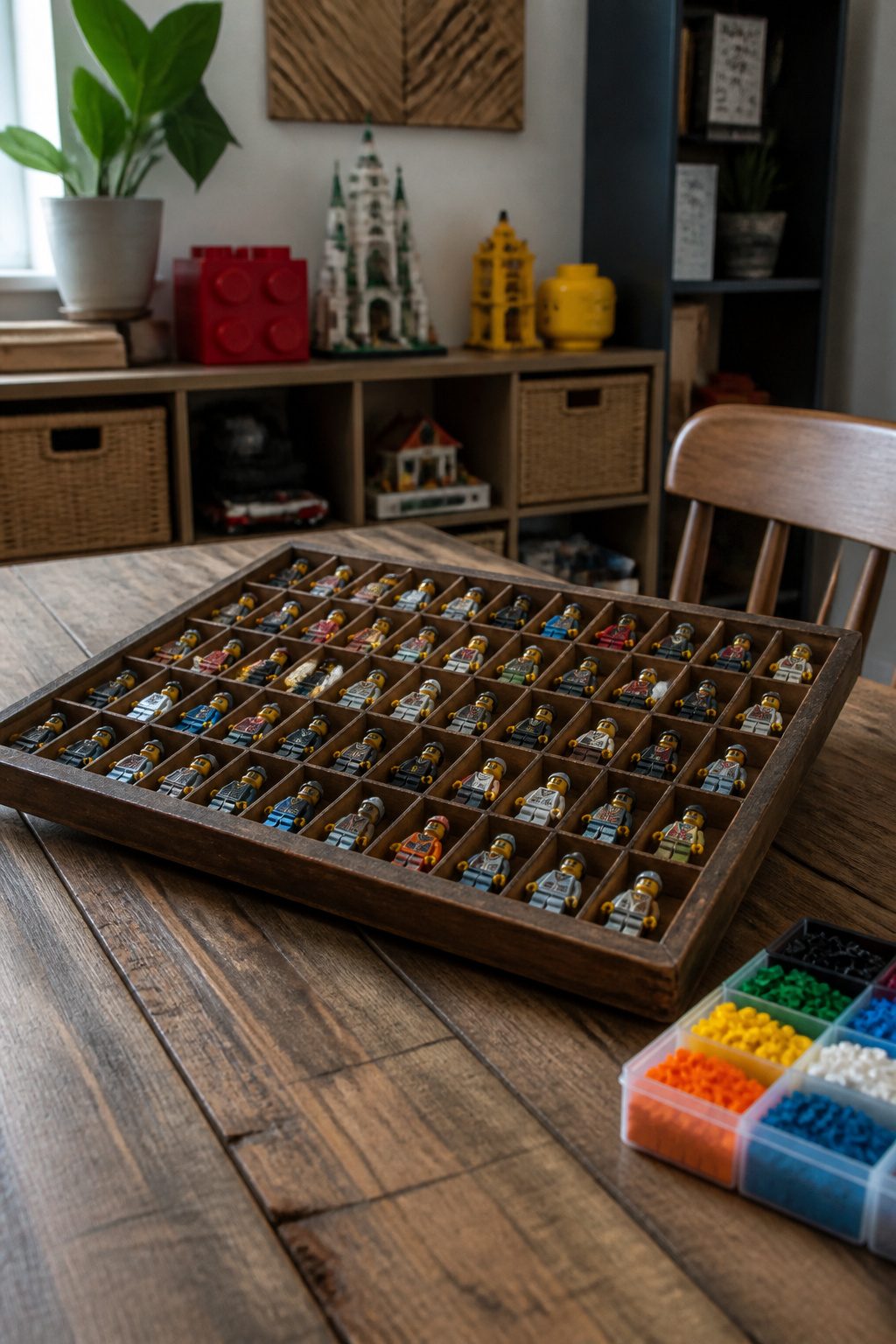
Minifigures present a storage problem that brick bins do not solve. They are top-heavy, the small connection points between torso and legs stress easily, and the printed faces and torsos scuff if they rattle against hard sides.
Most of us have one of a given character, not twenty, so losing one to a jumble box matters more than losing a red 2×4.
A printer’s tray, the kind once used for metal type, gives each figure its own shallow cell.
The compartments are small enough that figures stand upright without tipping, and the wood edges are softer than plastic if something shifts. We have seen these hung on walls or laid flat in drawers.
If wall space is tight, a divided organizer box, the sort sold for beads or embroidery floss, works in a drawer. The clear lids let you scan the collection without opening every compartment.
Lego does make branded cases shaped for figures, and the IKEA Bygglek small boxes, sold in a set of three with studded lids, fit a modest collection of favorites.
The studded lid is technically a building base, though in practice most people use that size for display rather than construction. For anyone keeping figures in active rotation, the bead-box route costs less and the compartments are already sized right.
Portable Options for Builders on the Move
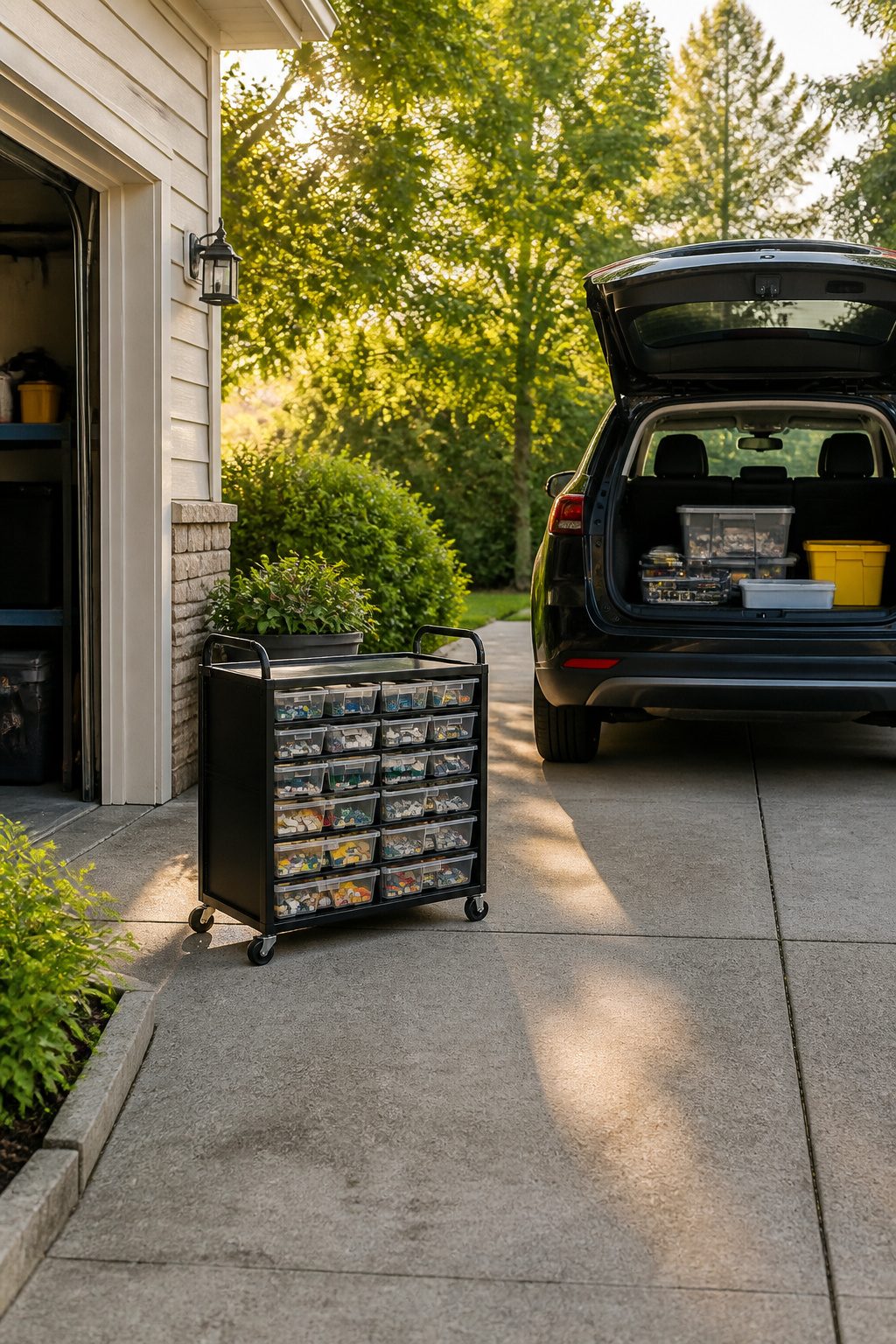
Most LEGO storage stays in one room, but collections have a way of needing to travel.
We keep a rolling cart upright under six drawers tall so it fits through a car door without tilting or spilling sorted parts into the seams.
That height keeps each unit modular; stack them at home, separate them for the road. For group builds or moving between households, a cart with casters beats carrying bins that slide open mid-step.
The same logic applies to drawer towers in a hatchback: keep each section six drawers or fewer and you can stand them upright in the cargo area, no straps or blanket barricades needed.
If your build travels to LEGO user group meetings, test the fit in your vehicle before the night of; a tower that clears the trunk lip still might not clear the hinge.
What $50, $150, and $500 Buy
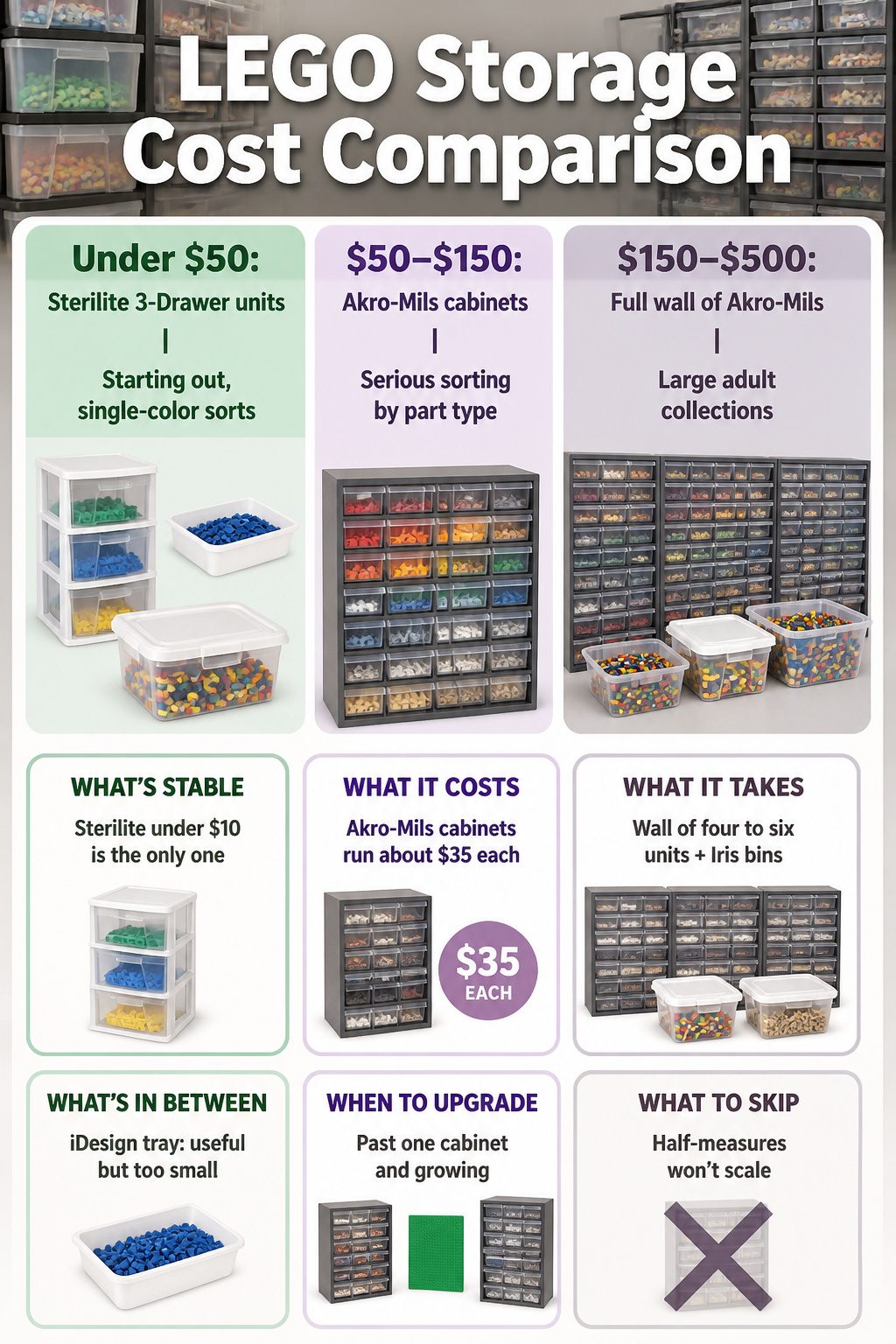
The gap between "cheap" and "investment" storage is wider than most roundups admit. We sorted the options into tiers using the one hard figure we have and the relative positioning the sources give everything else.
| Tier | What lands here | Approximate spend | Best for |
|---|---|---|---|
| Under $50 | Sterilite 3-Drawer units (under $10 each), iDesign Linus tray ($18–$24), Iris 17-Quart bins ($8 single, ~$27 four-pack) | $10–$50 | Starting out, single-color sorts, kids’ overflow |
| $50–$150 | Akro-Mils 24-, 44-, or 64-drawer cabinets (~$35 each), multiple Sterilite stacks | $50–$140 | Serious sorting by part type, growing collections |
| $150–$500 | Full wall of Akro-Mils cabinets, mixed drawer sizes, plus bins for bulk bricks | $150–$400+ | Large adult collections, dedicated build rooms |
The Sterilite under $10 is the only price you can count on staying stable.
Everything else shifts with retailer and shipping. Akro-Mils cabinets run about $35 each, so a wall of four to six units plus a few Iris bins for unsorted bulk quickly pushes you past $150.
The iDesign tray sits in an awkward middle: useful for active builds, but too small to anchor a whole system. If your collection is past one cabinet and growing, skip the half-measures and budget for the third tier.
Frequently Asked Questions
What are the best storage solutions for LEGO?
Plastic drawer cabinets, tackle boxes, and the IKEA TROFAST system are the most popular choices. The Akro-Mils 64-drawer cabinet runs about $35 and sorts parts by type or color with pull-out drawers that stack.
Tackle boxes like the Plano 3700 Series work best for travel and specialty pieces. TROFAST combines stackable frames with colored pull-out bins for about $74, making it the usual step up from a single bucket.
How do I organize LEGO bricks?
Sort by part type once your collection grows past a few sets, because shape matters more than color when you are mid-build. Color sorting looks neat but buries the piece you need under matching shades.
Size sorting helps for bulk brick stacking but mixes plates and bricks that behave differently. Label every bin clearly; vague labels turn sorted storage into a junk drawer within a month.
How can I display my LEGO creations?
Wall-mounted or freestanding shelving turns stored builds into room decor you actually maintain. IKEA’s Billy system with glass doors runs about $199 and blocks dust and pets.
The Kallax line at $45 mixes display cubes above with storage bins below. For renters, floating LACK shelves or EKET wall-mounted cubes need no studs and leave no patchwork later.
What is the best way to store LEGO minifigures?
A printer’s tray gives each figure its own shallow cell so they stand upright without tipping, and wood edges scuff less than plastic.
A divided organizer box for beads or embroidery floss works in drawers with a clear lid for scanning. IKEA BYGGLEK small boxes fit modest collections, though most people use them for display rather than building.
What are some DIY LEGO storage ideas?
Mason jars cost about the same as one plastic drawer unit for a case of twelve and let you see colors through the glass. Repurposed furniture works if you check drawer rails first; a warped rail fights you forever.
Built-in shelving only pays off if you own the wall; renters usually lose on patch and paint time. A simple ledge system with slide-out bins uses baseboard space but eats a full weekend.