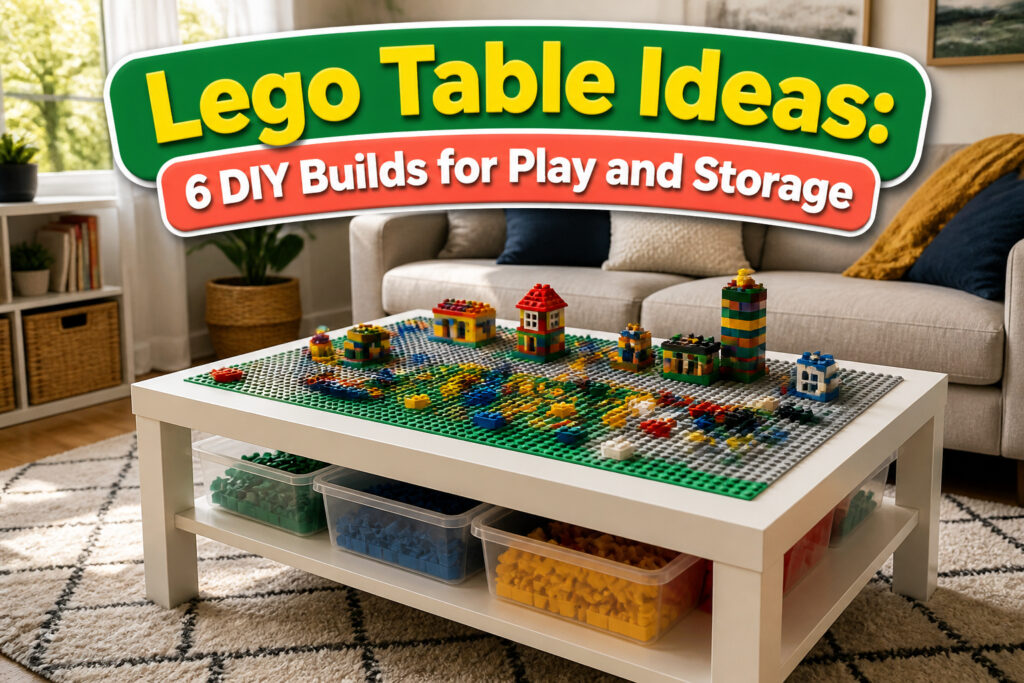
A LEGO table is a dedicated build surface with storage underneath, and the one you build depends on whether you need it to convert back to adult furniture someday.
Gluing baseplates to a $30 IKEA Lack coffee table takes an afternoon and peels off later with Velcro; the TROFAST build runs closer to $260 but swallows entire brick collections in sliding bins.
We learned to check plate thickness before ordering, after our first 5-by-5-inch plates sat higher than the 15-by-15s and killed any build that crossed the seam.
[link-whisper-related-posts]IKEA TROFAST Lego Table
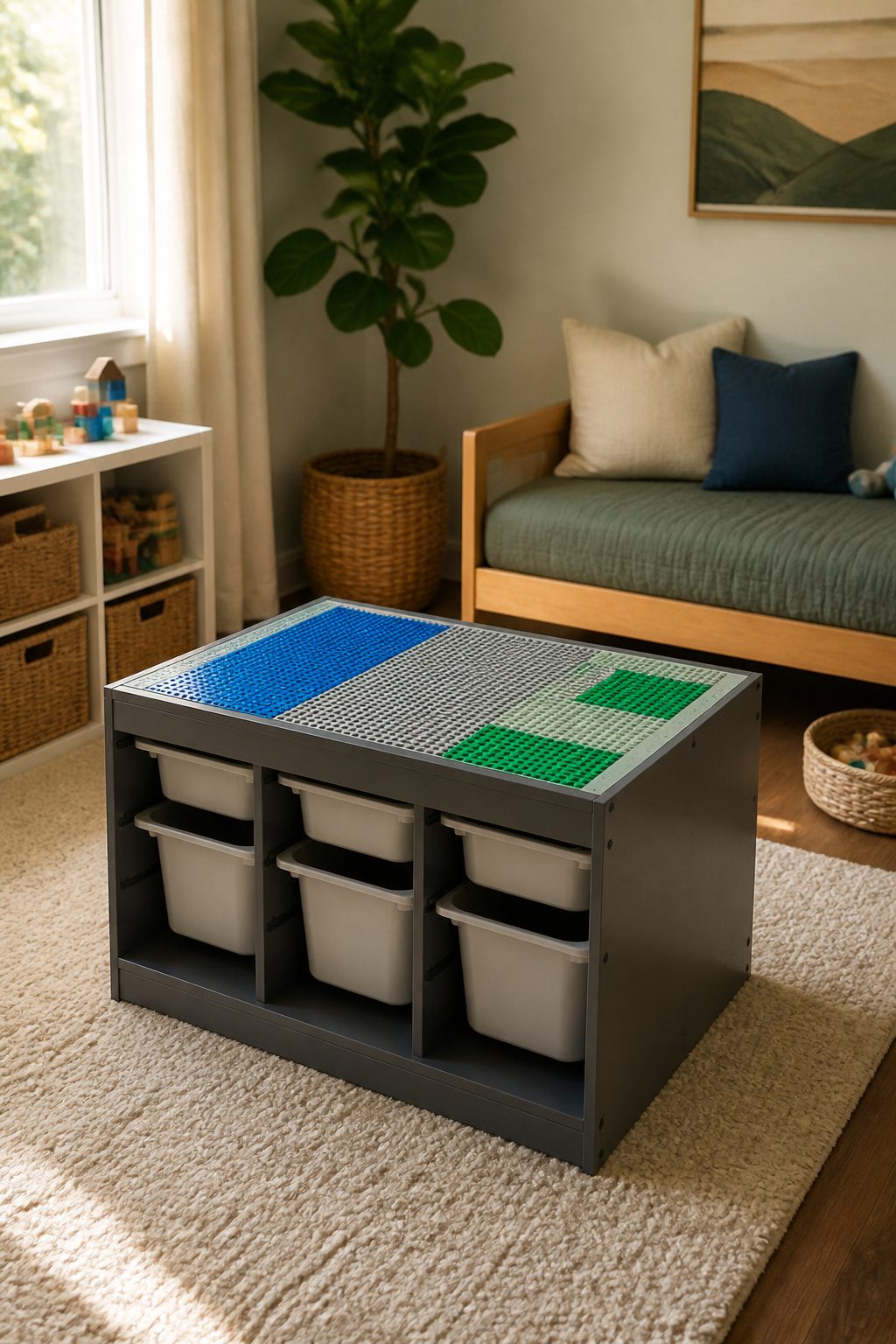
The TROFAST unit measures 37 1/2 inches wide by 17 inches deep, and we laid each top with two 15-by-15-inch baseplates plus three 5-by-5-inch plates, leaving about an inch of clearance at the edges.
We learned the hard way to check plate thickness before ordering; our first 5-by-5s sat higher than the 15-by-15s, which would have killed any build that crossed the seam.
The replacement set included blue and green extras, so the kids ended up with water and grass patches built right in.
Color match is not perfect between the gray plates, though the difference is slight enough that you will wonder if it is just the light.
This table offers the option for deeper storage than our other choices, and as your kid grows or if their interests change, you can store anything in these bins.
That adaptability matters when you are already spending around $260 for the unit, baseplates, and glue. The deep bins slide under the build surface and swallow loose bricks whole, which beats stepping on them at 6 a.m.
Four kids can kneel around the 15-inch legs comfortably; swap in the 24-inch Grow-With-You legs later and the same table works for adult builders.

WOODEN BRICK PLAY TABLE: The Play N Store Building Bricks Play Table features over 3 sq ft. of brick plate space, 2 plastic storage bins, 75 play bricks, 1 brick separator tool | Table is the perfect space for imaginative play

OFFICIALLY LICENSED LEGO STORAGE 4-PIECE TOTE AND PLAY MAT: Mat Roomy LEGO haul tote carries three color-coded zip-top containers, then unzips flat to create a mat when it’s time to play.

【2-IN-1 PLAY TABLE】Two functions for the price of one—a total lifesaver! The dual-sided lid fits Classic Lego on one side and Duplo on the other—perfect for siblings to unleash creativity. This storage box serves as spacious storage and a sturdy building table. The thick pine lid won’t bend under heavy builds, keeping their dream worlds safe and beautifully on display in your living room.
IKEA Lack Table Hack
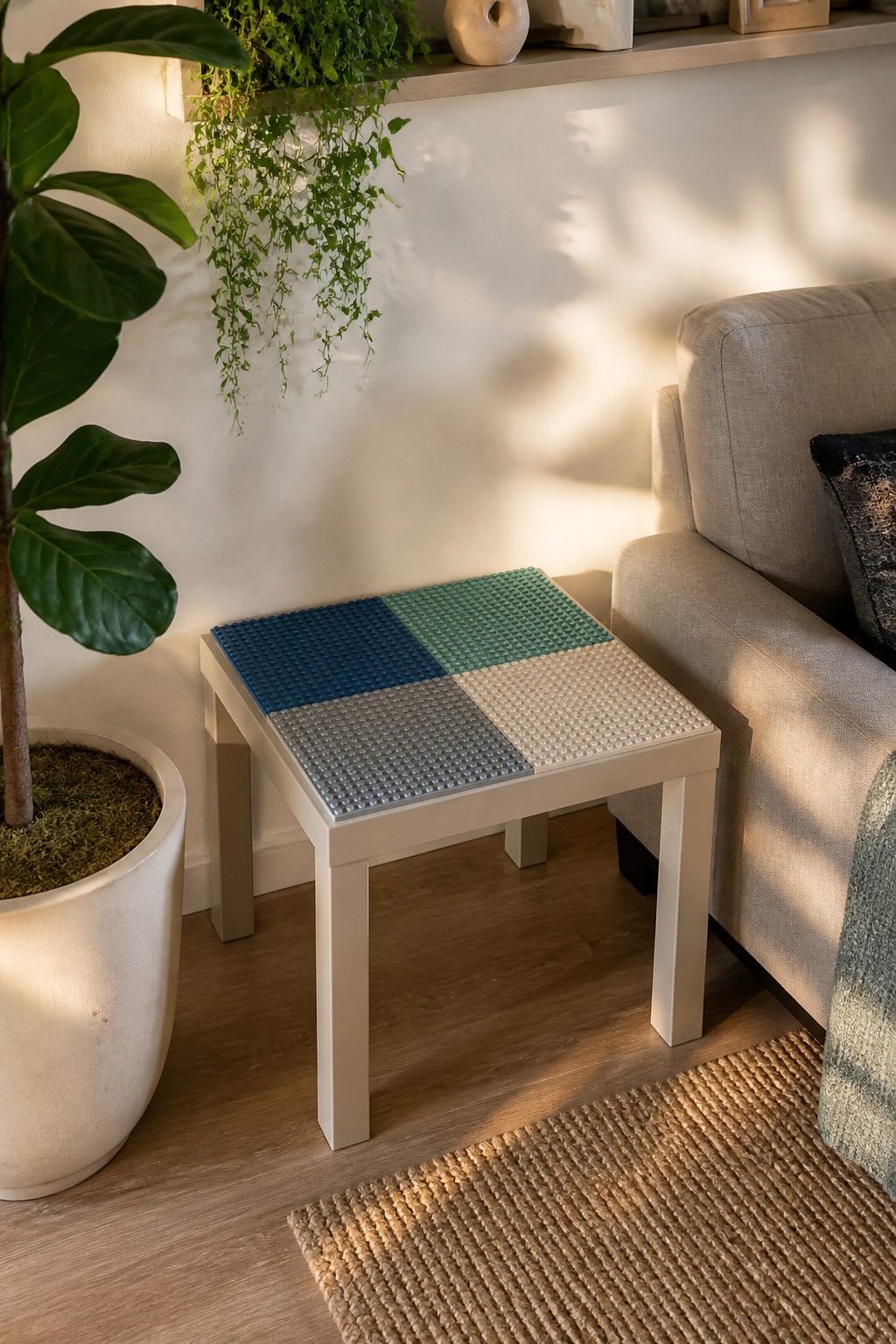
The IKEA Lack side table is the build we point people toward when they want something done this afternoon for under fifty dollars.
The top is 22-by-22 inches, which sounds small until you watch a five-year-old actually work at it; they do not build sprawling cities, they build scenes, and that footprint is enough.
At roughly 20 inches tall, it sits where a younger kid already is, no climbing, no chair to drag around.
Four 15-inch LEGO baseplates cover the surface with a little overhang on each side, which we trim with a utility knife or just leave; the lip keeps plates from sliding.
We attach them with Velcro sticky backs, not glue, because someday this table goes back to being a side table or gets handed down clean.
The whole thing fits a corner of the living room without announcing itself as furniture for children. That matters in a rental where the living room is also the playroom and you want your Saturday back.

FOLDS FLAT FOR EASY STORAGE: Unique folding legs allow the entire table to collapse in seconds. Slide it under a bed, lean it in a closet, or take it on the go. Perfect for apartments, playrooms, and dormers!

Brick Sorting Design: This building tray features 8 spacious, separate compartments for easily organizing building blocks of various sizes. It keeps pieces neatly organized and within easy reach, reducing clutter during the building process.

OFFICIALLY LICENSED LEGO STORAGE ORGANIZER 3-PIECE SET: A fun and convenient set of storage bins for storing and organizing Legos. It can be used to hold brick sets, action figures, small cars and other toys and accessories. Recommended for ages 3+.
Coffee Table Conversion
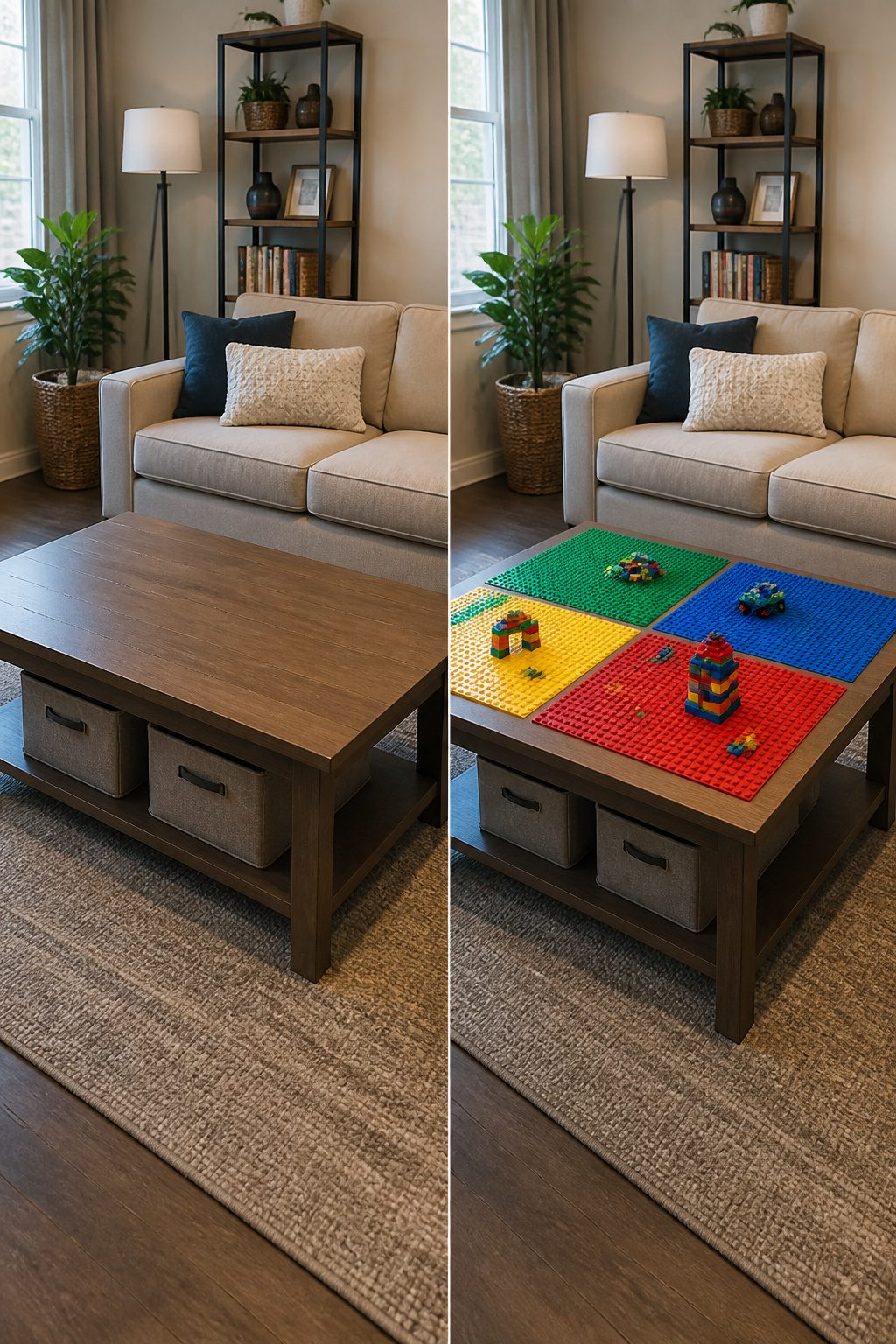
The coffee table you already own is the starting point we like best, because a renter can take it back to normal when the lease ends or the phase passes.
Look for a piece with a lower shelf or enough clearance underneath to slide bins. The IKEA Lack runs about $30 and sits low to the ground, which puts the build surface at toddler height without any leg work.
We attached four 15-inch square baseplates to the top with Velcro sticky backs, so the whole play area lifts off later without damage.
A shelf underneath beats drawers for rental life, since plastic bins you supply yourself move with you and adapt to whatever the next apartment offers.
If your table has no lower tier, under-bed storage boxes on casters slide straight beneath most standard frames and roll out when it is time to clean up.
The real advantage is the flip side. Keep the original tabletop finish intact, or cover it with a reversible panel, and the piece still works for Super Bowl snacks or craft night once the bricks go back in their bins.
One afternoon, a few dollars in adhesive strips, and you have a dedicated build zone that does not read as kids’ furniture to the landlord or your guests.

BASEPLATES: Each Baseplate Measures 10" x 10" (32x32 studs). Available in 6, 8, or 12 Packs with 6 Vibrant Colors (Green, Blue, Grey, Sand, White, Black). Fully Compatible with All Major Building Brick Brands, ensuring a Perfect Fit For Your Existing Sets.

VERSATILE DESIGN: This multifunctional lego table provides an ideal surface for builders of all ages. Crafted from premium wood, it accommodates multiple lego trays for building simultaneously to keep your projects neatly organized.
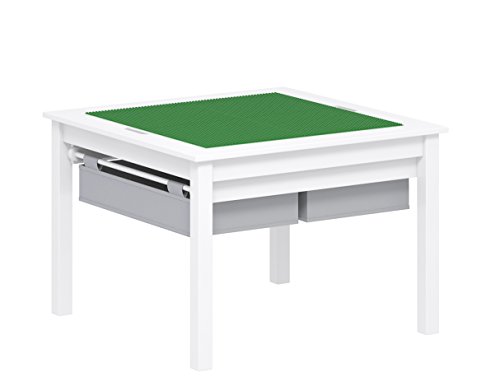
ASSEMBLED DIMENSION: 25.6 "W X 25.6"L X 21"H, This Kids Play Table is sized right for toddlers and kids aged 3+. The height is conveniently sized for young children, making it easy for them to access the table while either kneeling or sitting on the floor.
Multi-Purpose Activity Table
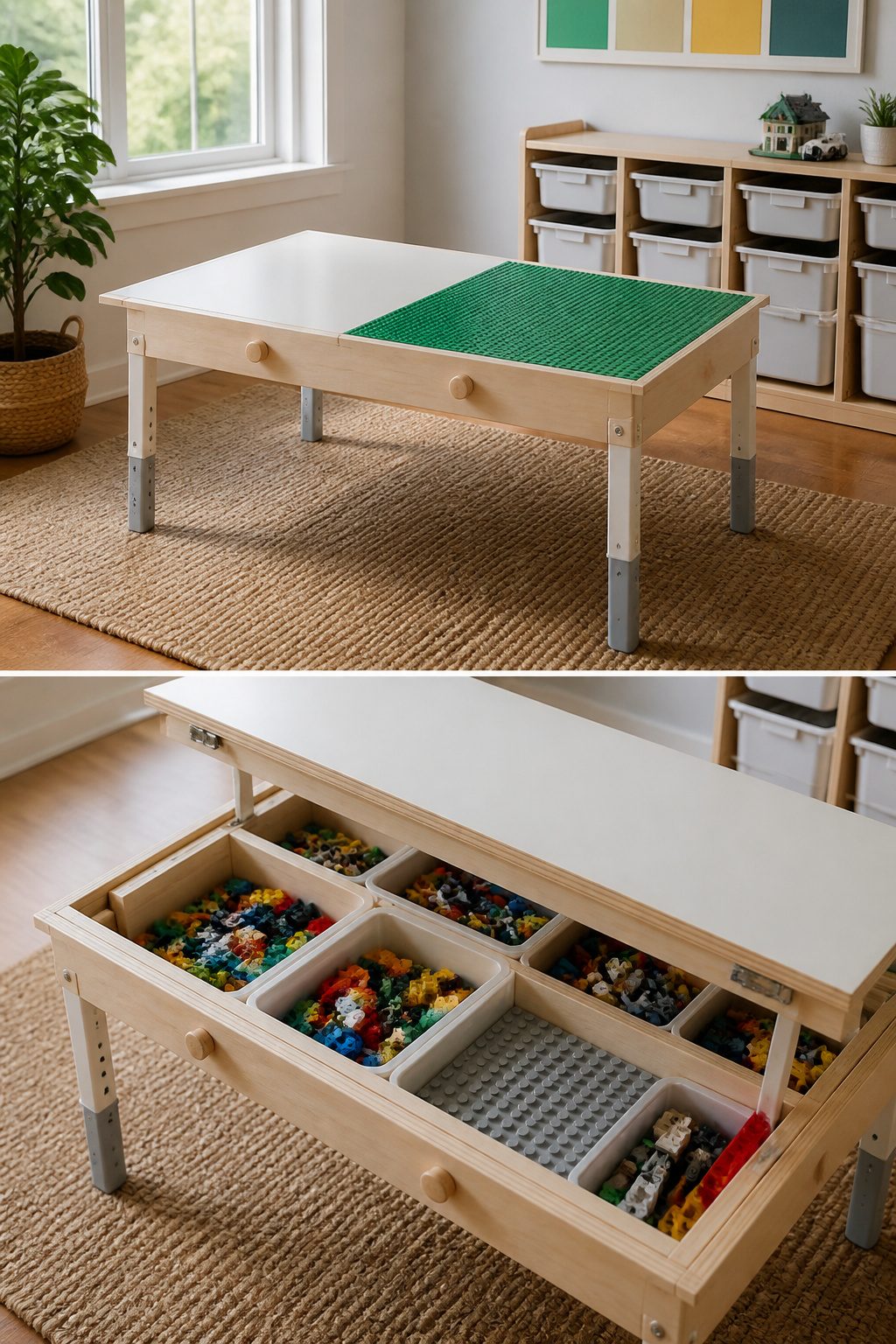
A table that flips from LEGO baseplates to a smooth face buys you years of use.
We looked hard for builds with a real height-adjustment mechanism and came up short; most "adjustable" tables online are fixed-height builds with adjustable chairs, or the builder skips the hardware entirely.
If you want legs that grow with a kid, you will likely need to improvise.
One route we have seen work: start with an IKEA TROFAST frame at toddler height, then swap in longer legs or stack the unit on a low platform later. The TROFAST bins stay useful either way.
The flip-top itself is the easier win. Baseplates on one side, sealed plywood on the other, and a few hinges let you hide a half-built city under the lid when dinner guests arrive.
That same lid, flipped upside down, becomes extra building space. Sources describe tables pressed into service for Super Bowl snacks, craft projects, and overflow seating; the LEGO setup does not have to own the room full-time.
For renters, this is the table type that justifies the floor space. One footprint, multiple uses, and no permanent install.
The catch is that you build the flexibility in at the start, hinges and all, because retrofitting a flip mechanism onto a finished box is fussy work you will not want to repeat.


【Building Baseplate & City Road Map & Chess 3-in-1 Versatile】Our kids activity table features a reversible tri-functional top, switching seamlessly. It keeps play diverse in the playroom, living room,or bedroom—perfect for lego building, vehicle adventures,or strategic chess—lego table growing with their interests.(please check the size chart to confirm the height suits your needs before ordering)
Portable Lego Tray Table
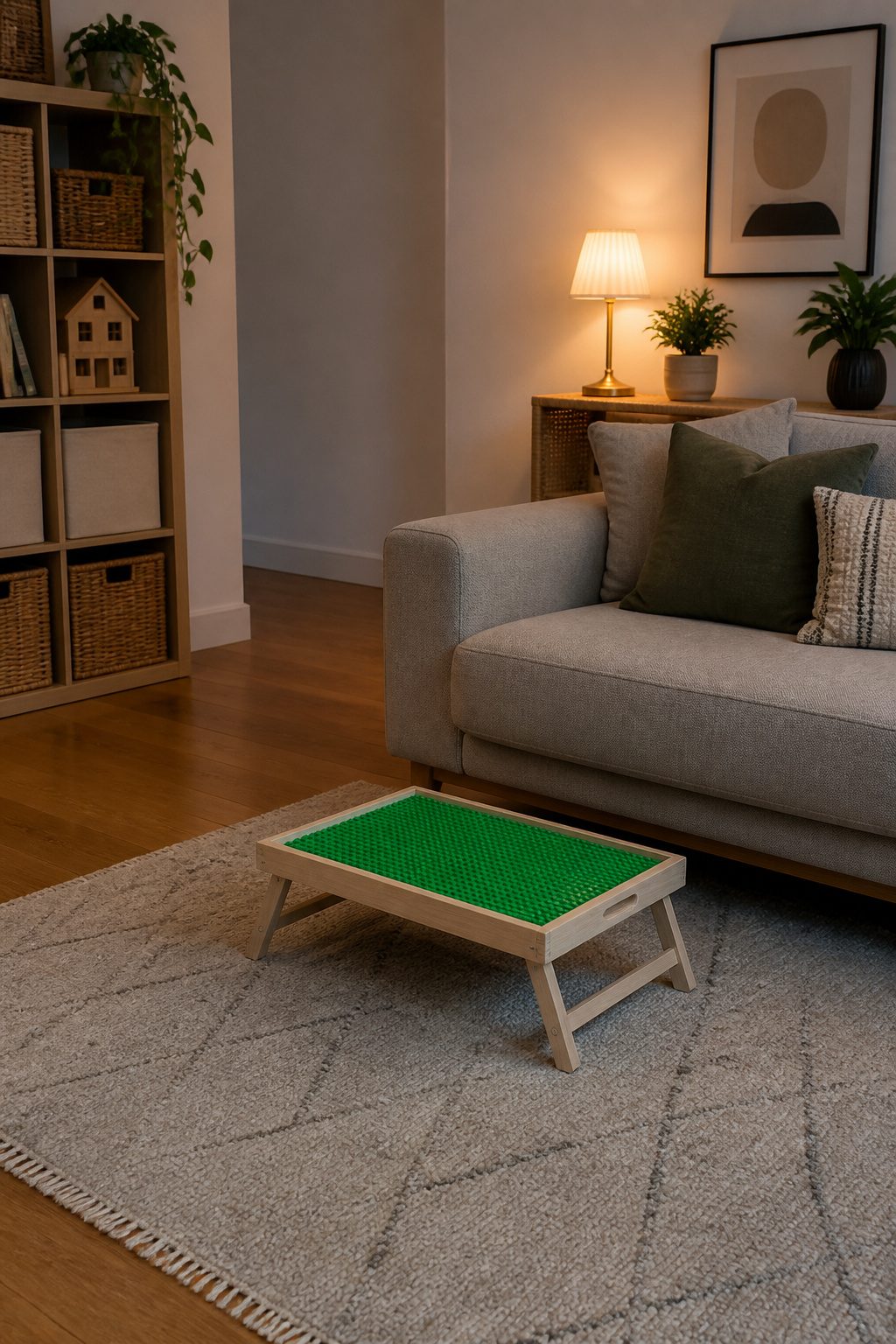
A wooden breakfast tray with fold-flat legs gives you a Lego surface that travels room to room and tucks under a sofa when the build is done.
We like this for families who rent or simply do not want another piece of furniture claiming floor space permanently.
The tray keeps bricks contained with raised edges, and one baseplate glued to the surface turns it into a ready play zone in under an hour.
Weight stays low because the tray itself is thin pine or similar softwood, not the MDF bulk of a fixed table.
You can add a second baseplate to the underside for storage if you want a lid effect, though one plate is enough for most kids to work with.
Fold the legs and slide it into a closet when company comes, or let each child keep their own tray so nobody negotiates over color sorting.
Personalizing with a painted name or sticker border takes almost no time and helps at grandma’s house when three cousins bring identical trays.
The tradeoff is size: you get a single builder’s space, not a spread for group projects. For apartments where the dining table is already doing triple duty, that limitation is the point.

Size and Application: Our base plate kit measures 10'' x 15"/25.5x38CM, classic standard size, compatible with all major building block brands that accept standard building blocks for small particles.

A place for creative play – This 48x48-stud baseplate provides an open landscape for all kinds of LEGO creations

A foundation for creative play – This 32x32-stud baseplate provides an open landscape for all kinds of LEGO creations
Custom DIY Tables
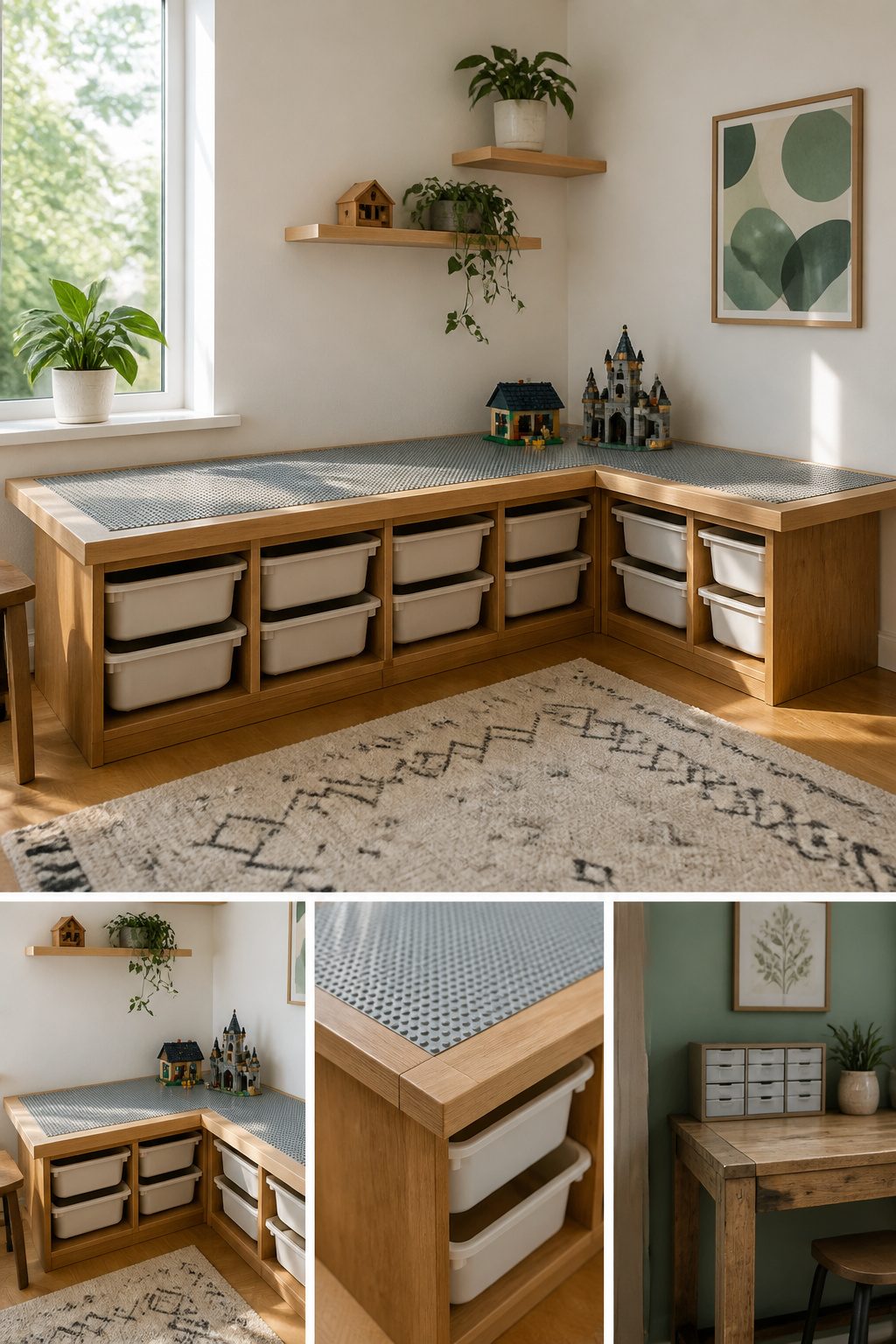
A custom build lets you size the table to the exact wall or corner it needs to live in, and you get to decide how much storage is enough.
We have seen builds that pair TROFAST units with a top surface for about $260 in materials, with roughly $170 of that going to the storage bins alone.
That six-hour timeline is real; the joinery is not difficult, but fitting the bins flush and squaring the frame takes patience.
The place where custom work usually stumbles is the finish. Paint reads as "playroom" the moment it goes on too bright, and stain can look muddy against carpet.
We have had better luck matching the table to existing furniture by taking a drawer front or shelf to the paint counter and working from that chip, not from the wall.
A sample board tested in the actual room light beats every online swatch.
If six hours and $260 feel like too much, a simpler frame on locking casters, sized to slide under a bed or against a sofa back, runs closer to two hours.
The tradeoff is storage; you are building for the bricks that are out right now, not the collection. That is often enough for a weekend build, and it keeps the living room from becoming a permanent showroom.

【MAXIMIZED SORTING: 16 ZONES】Stop hunting for missing bricks! Upgraded building tray for lego with 4 extra sorting trays plus 12 built-in curved compartments to keep thousands of bricks organized and visible. The smooth, curved edges make it effortless to slide out tiny parts for a faster, frustration-free building experience.

PERFECT SIZE: Brick building is often a group activity, so our product is thoughtfully designed with a large 22" x 41" surface — spacious enough for multiple people to build together and enjoy the fun of teamwork.

A blank canvas for creative expression – This 32x32-stud baseplate provides an open landscape for all kinds of LEGO creations
Baseplate Layout and Attachment
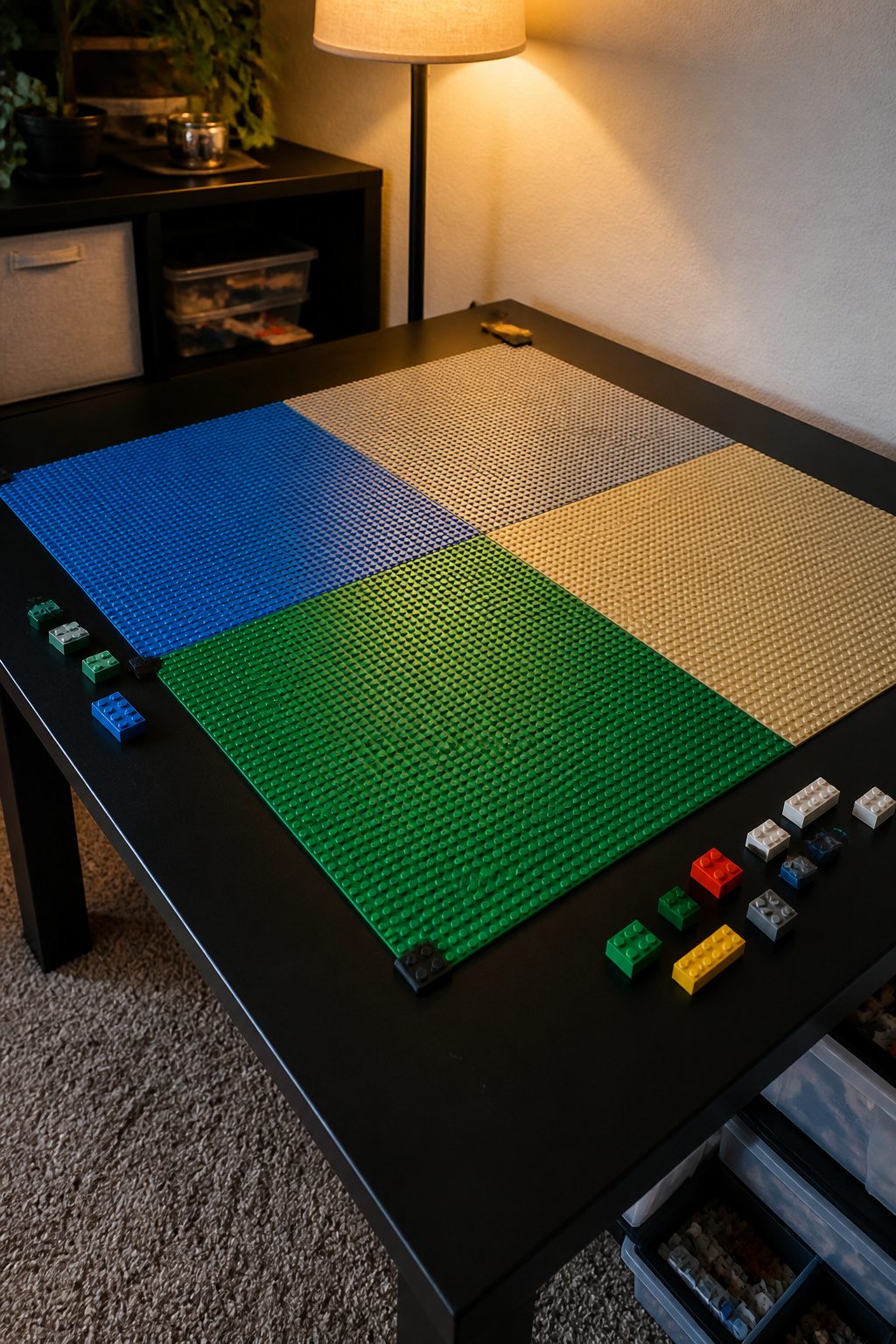
LEGO baseplates come in three sizes: 15" x 15", 10" x 10", and 5" x 5". Four of the large plates cover an IKEA Lack coffee table top with barely any waste, while nine of the 10" size would fill the same space.
We have used both layouts and the 15" plates win on cost and fewer seams for a toddler’s big builds, though the 10" grid gives you more color mixing without cutting.
For attachment, we have tested glue against Velcro and the difference is reversibility.
Gorilla Glue bonds the 15" plates to a TROFAST unit permanently; you weight the corners overnight and hope your layout was right, because peeling a glued plate tears the plastic.
Velcro sticky-backs on each corner of a Lack table let you lift the whole surface off for cleaning or relocation.
The catch is that a determined four-year-old can shift a Velcro plate sideways during a vigorous build. We would glue for a dedicated station and Velcro for anything that might become a coffee table again someday.


COMPATIBLE WITH STANDARD BRICKS & DUPLO-SIZE BLOCKS – GROWING WITH YOUR CHILD: The sturdy baseplate works with both classic building bricks and jumbo DUPLO blocks, letting kids build directly using their own collection. One table supports years of creative play from toddler to elementary school.
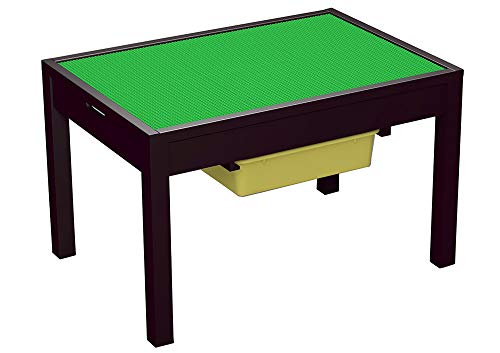
ASSEMBLED DIMENSION: 32.2 "W * 22.2"L * 20"H . This Table with storage is sized right for toddlers,kids,older kids aged 3+.
Storage That Actually Fits Bricks
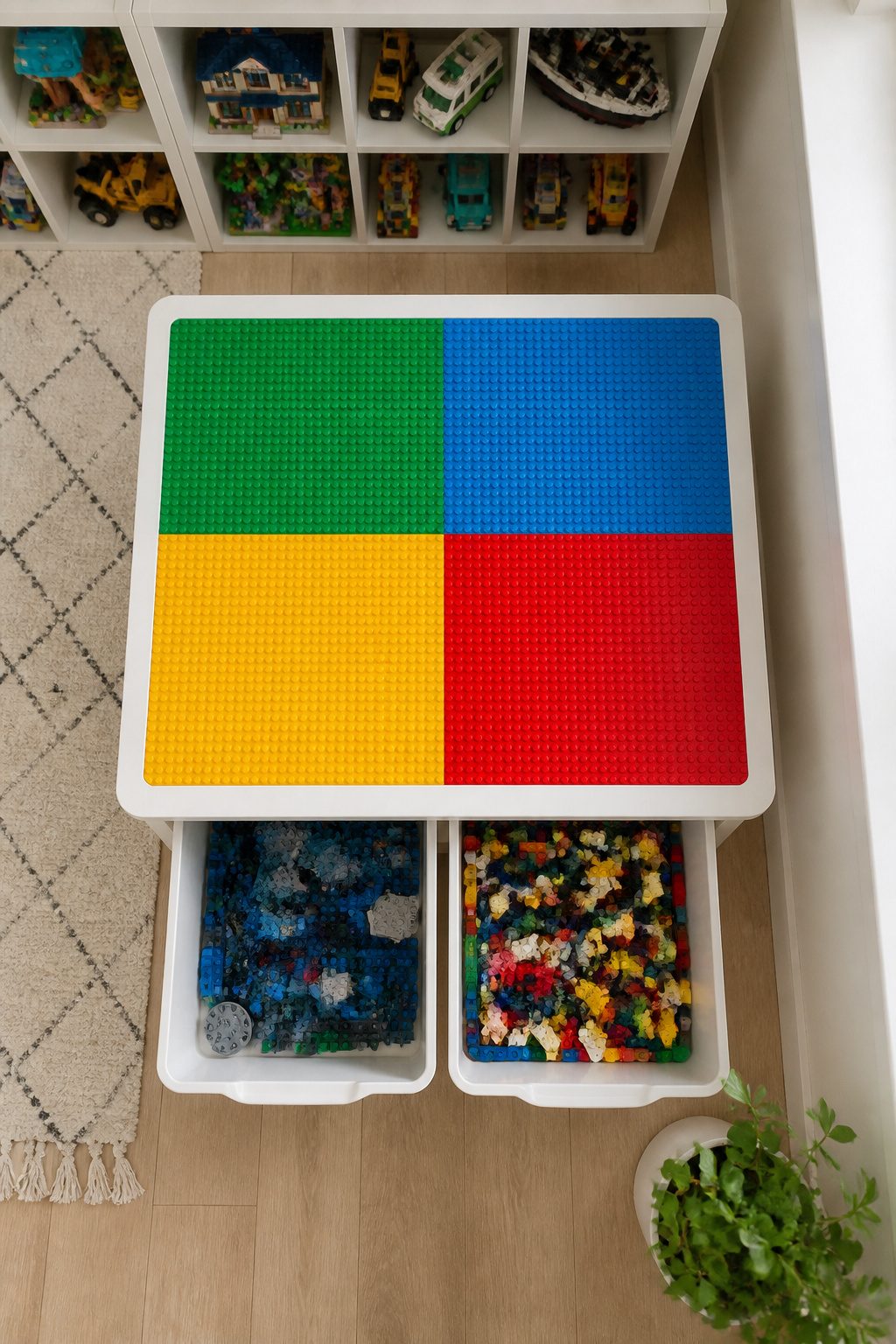
The storage you build into a Lego table will either save your sanity or waste your Saturday morning every time a minifigure goes missing.
We learned this after watching a friend’s custom table with shallow drawers: bricks stacked two deep, everything jammed, kids giving up and dumping the whole drawer on the floor.
Drawers need to be deep enough that a 7-year-old can drop a handful in without stacking, or they stop using them.
Bins beat drawers for active builders. A clear bin on a shelf lets a kid scan contents in two seconds; a drawer hides everything and turns into a junk drawer by week three.
The deep rolling bins that work best run about 18 by 25 inches on top, 10 inches deep, with a second tier at 25 by 10 for plates and manuals.
That footprint slides under most tables we have built, and the casters matter more than the lid.
A bin that rolls out with one foot while someone’s holding a half-built Millennium Falcon is worth more than a prettier box that sits still.
Shelves above the table fail unless you place the front edge within arm’s reach of a seated kid.
We mounted ours too high once; the bottom shelf held completed sets that never got played with because getting them down required standing up and asking for help.
Two years later we moved that same shelf down 8 inches and usage tripled.

LEGO Building Block Assistant: This wooden lego building table is your exclusive helper for building. It features a partitioned storage design with 7 dedicated compartments to categorize LEGO pieces of different shapes and colors.

BASEPLATES: Each Baseplate Measures 10" x 10" (32x32 studs). Available in 6, 8, or 12 Packs with 6 Vibrant Colors (Green, Blue, Grey, Sand, White, Black). Fully Compatible with All Major Building Brick Brands, ensuring a Perfect Fit For Your Existing Sets.

Efficient Brick Sorting: This building tray features 7 spacious, separate compartments to easily sort small, medium, and large building block pieces. Keep all your bricks organized and within arm’s reach during building, eliminating messy workspaces and reducing the chance of lost pieces—making your building process smoother and more enjoyable.
Materials, Tools, and Budget
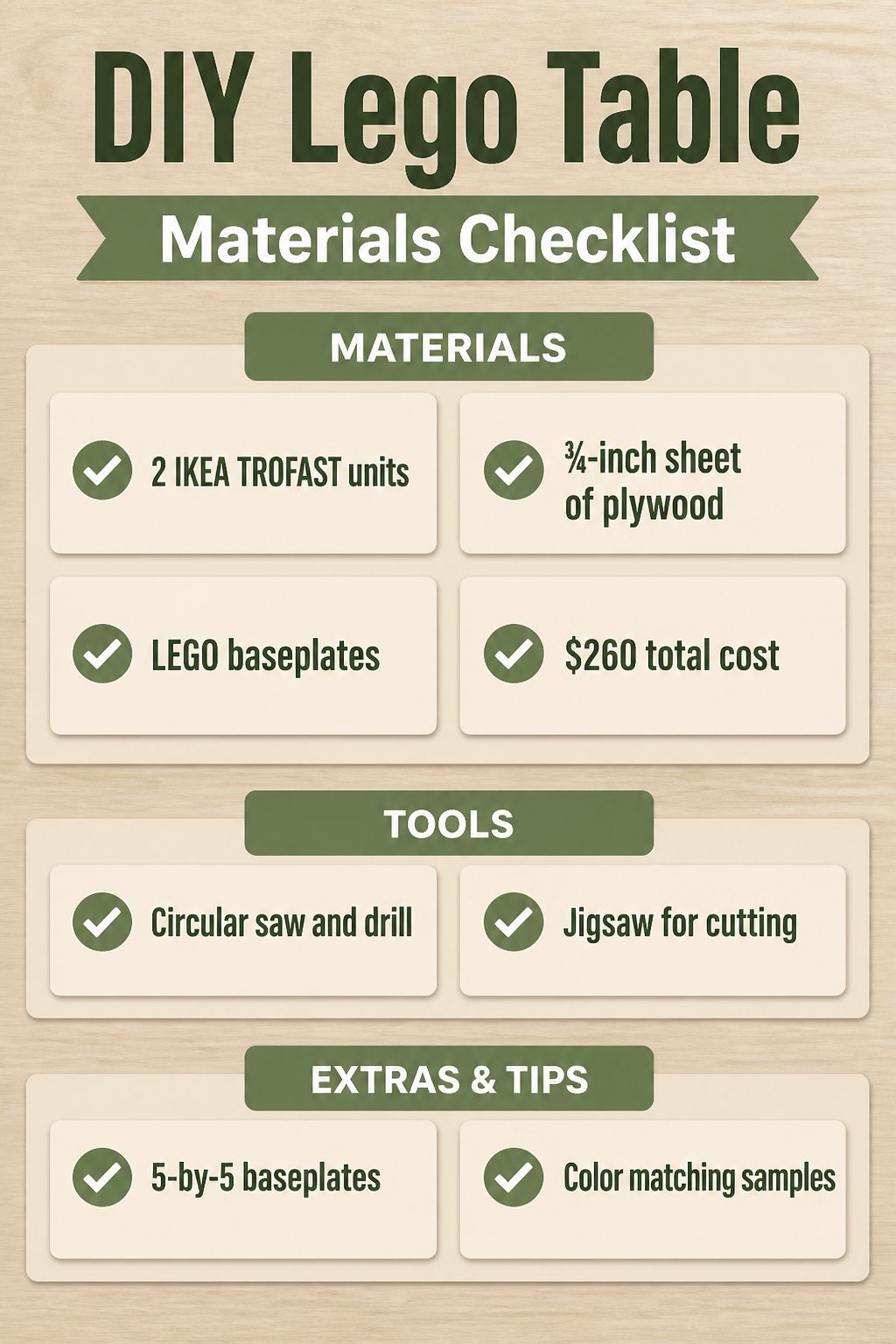
Most builds we looked at start with two IKEA TROFAST storage units, a ¾-inch sheet of plywood, and LEGO baseplates.
The TROFAST units run about $170 for the pair, and the rest of the lumber and hardware pushes the total to roughly $260 if you build the full version with shelves and trim.
One simpler version skips the extra plywood and pine strips and lands closer to $100 and two hours. That is the choice you are really making: storage depth versus speed.
For tools, a circular saw and drill handle almost everything.
A jigsaw helps if you are cutting baseplates to fit, which you probably will. The TROFAST top measures a little over 37 inches wide and 17 inches deep, so standard 15-by-15 baseplates do not cover it cleanly.
We saw builders mix in 5-by-5 plates to fill the gap, but watch the thickness. One set of 5-by-5 plates sat higher than the 15-by-15s and would have left a ridge where a build spans both.
The ones that finally worked came in a mixed set with blue and green plates, which the kids used for grass and water.
The gray shades also differ slightly between plate sizes. It is minor, but if color matching matters to you, order a sample first.

【REVERSIBLE TABLETOP】One side green base plate compatible with Lego bricks, flip to town map for toy cars & pretend play (toy cars NOT included). Dual-surface 2-in-1 design satisfies all play demands. Includes 4 anti-slip pads to stop panel from sliding

2-in-1 Flip-Open Design – Closed position creates a smooth wooden desk for writing, drawing, reading, and mealtime. Flip both lids open to reveal a sunken Lego-compatible building board, instantly turning the table into a dedicated play zone for blocks and creative construction.
![Wood Designs Time-2-Play Kids Birch Plywood Rectangular Lego Compatible Play Table, 30.75"x 15.5" with 18”-29” Adjustable Legs, Montessori Building Blocks Desk with Trough [Blue and Green]](https://m.media-amazon.com/images/I/31gdiLf5Y0L._SL500_.jpg)
Home and daycare kids activity play table is compatible with Lego(R) brand blocks. Birch plywood tabletop, constructed in U.S.A., adjustable metal legs with gliders, and reinforced apron for strength across years of children's use.
Size and Height for the Long Haul
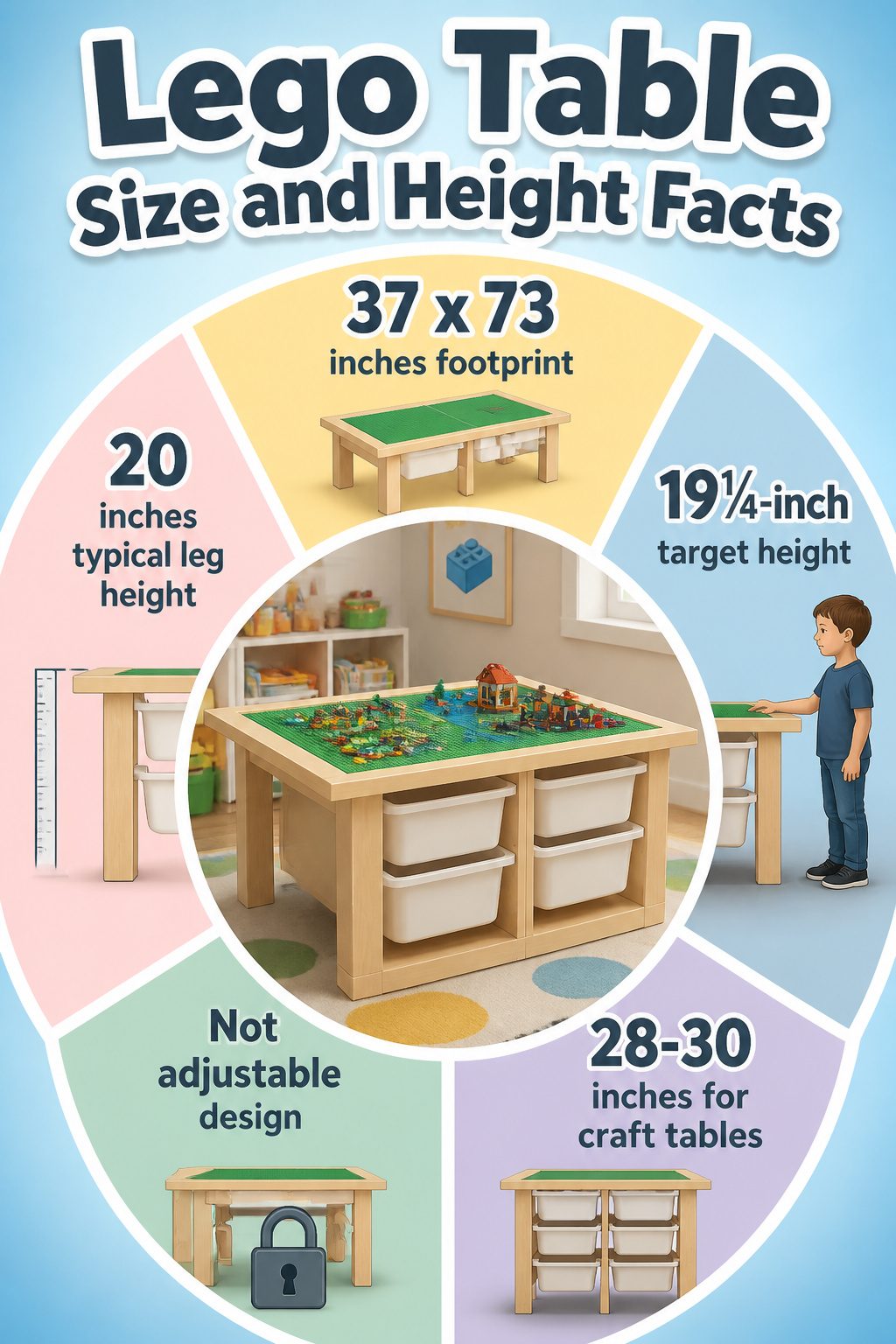
Most TROFAST builds end up at 37 inches by 73 inches, the footprint of two units side by side.
That is a lot of building space, but the real question is whether your kid can reach the middle without climbing onto the table itself.
We have seen parents cut the top down to a single unit after watching their five-year-old lean halfway across and knock the whole border loose.
The usual leg height lands around 20 inches, which puts the surface just above toddler knee level and below where an eight-year-old starts hunching.
One builder we followed aimed for 19¼-inch legs plus ¾-inch plywood to hit exactly that mark, measuring against their train table and play kitchen until it felt right.
The number matters less than the reach test: have your kid stand flat-footed and see where their wrist falls.
What almost no one builds in is adjustability. A table that works at age four is low for age nine, and by twelve it is a floor seat.
The TROFAST frame does not move, so your choices are replace the legs later or plan for a second life as storage under a taller desk.
One commenter suggested stacking two units to hit craft-table height at 28 to 30 inches, which trades play access for a surface adults can actually sit at. We would not start there unless you are building for mixed use from day one.

FANTASTIC BUNDLE - Seize our 4-pack of 5" x 10" or 16 x 32 block base plates; an excellent proposition to design your tabletop or build a play wall.

10-Pack 5"x5" Green Baseplates - Set includes ten 5"x5" building plates designed for a tight fit with all major brick brands. Ideal for expanding creative play setups at home, in classrooms, or in craft stations.

Size and Application: you will get 4 pcs base plates with 4 colors: green, blue, red and yellow. Our base plate kit measures 10'' x 15", the little cylinder is fine to 0.19"(0.5 cm), classic standard size, compatible with all major brands of building bricks.
Frequently Asked Questions
What materials do I need to build a LEGO table?
Most builds use two IKEA TROFAST storage units, a 3/4-inch sheet of plywood, LEGO baseplates, and screws or glue. You will also want a measuring tape, painter’s tape, a wet rag, and weights to hold plates down while adhesive sets.
A circular saw and drill handle the cutting and assembly; a jigsaw helps if you need to trim baseplates to fit.
How much does it cost to make a LEGO table?
A full build with two TROFAST units, plywood, and trim runs about $260, with roughly $170 of that going to the storage bins alone.
A simpler version that skips extra shelving and uses one unit lands closer to $100 and takes about two hours. Your choice is really between storage depth and speed.
What size should a LEGO table be?
Two TROFAST units side by side give you a 37-inch by 73-inch surface, which fits four kids comfortably but may be too wide for a single child to reach the middle.
A single TROFAST unit at 37 1/2 inches wide by 17 inches deep works better for younger builders.
The usual leg height is around 20 inches, putting the surface just above toddler knee level; test by having your kid stand flat-footed and checking where their wrist falls.
How do I attach LEGO baseplates to the table?
Gorilla Glue bonds plates permanently for a dedicated station; weight the corners overnight and accept that peeling them off will tear the plastic.
Velcro sticky-backs on each corner let you lift the whole surface off later for cleaning or to return a coffee table to normal use, though a determined four-year-old can shift plates sideways during vigorous building.
Glue for permanence, Velcro for anything that might change back someday.