
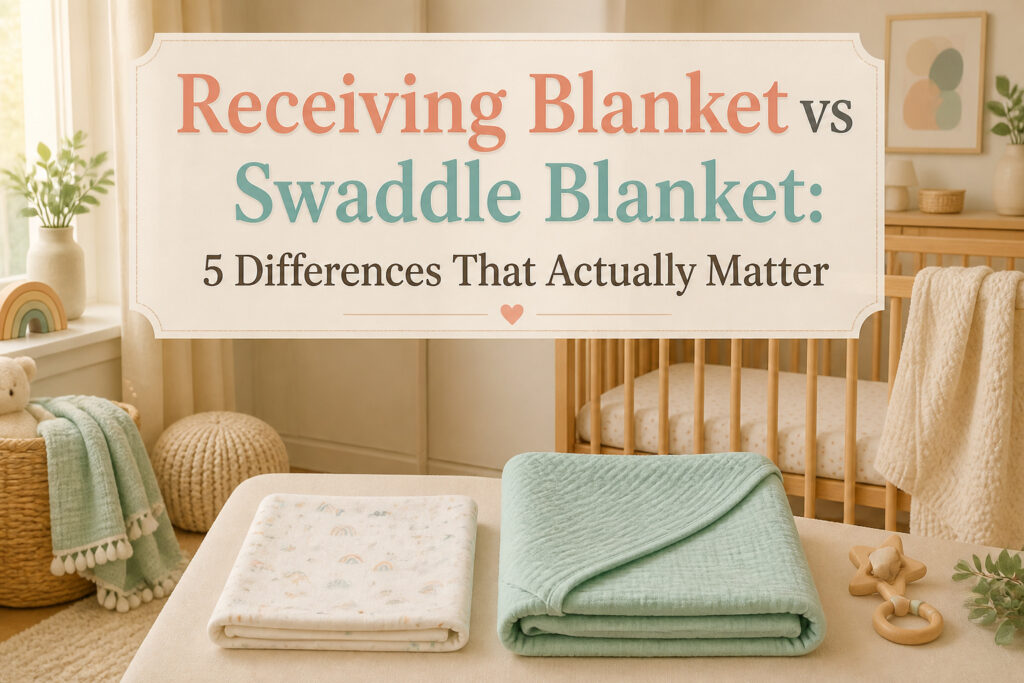
Receiving blankets win for most parents because they keep working long after the swaddle stage, but a newborn who startles awake every twenty minutes needs a true swaddle blanket instead.
The catch is the size difference: a standard receiving blanket measures 30 by 30 inches, while a swaddle runs 47 by 47, and that extra 17 inches is what makes a tucked wrap tight enough to trigger the calming response.
Our second baby outgrew receiving blankets for swaddling by six weeks; the corners barely reached.
[link-whisper-related-posts]What These Blankets Actually Do
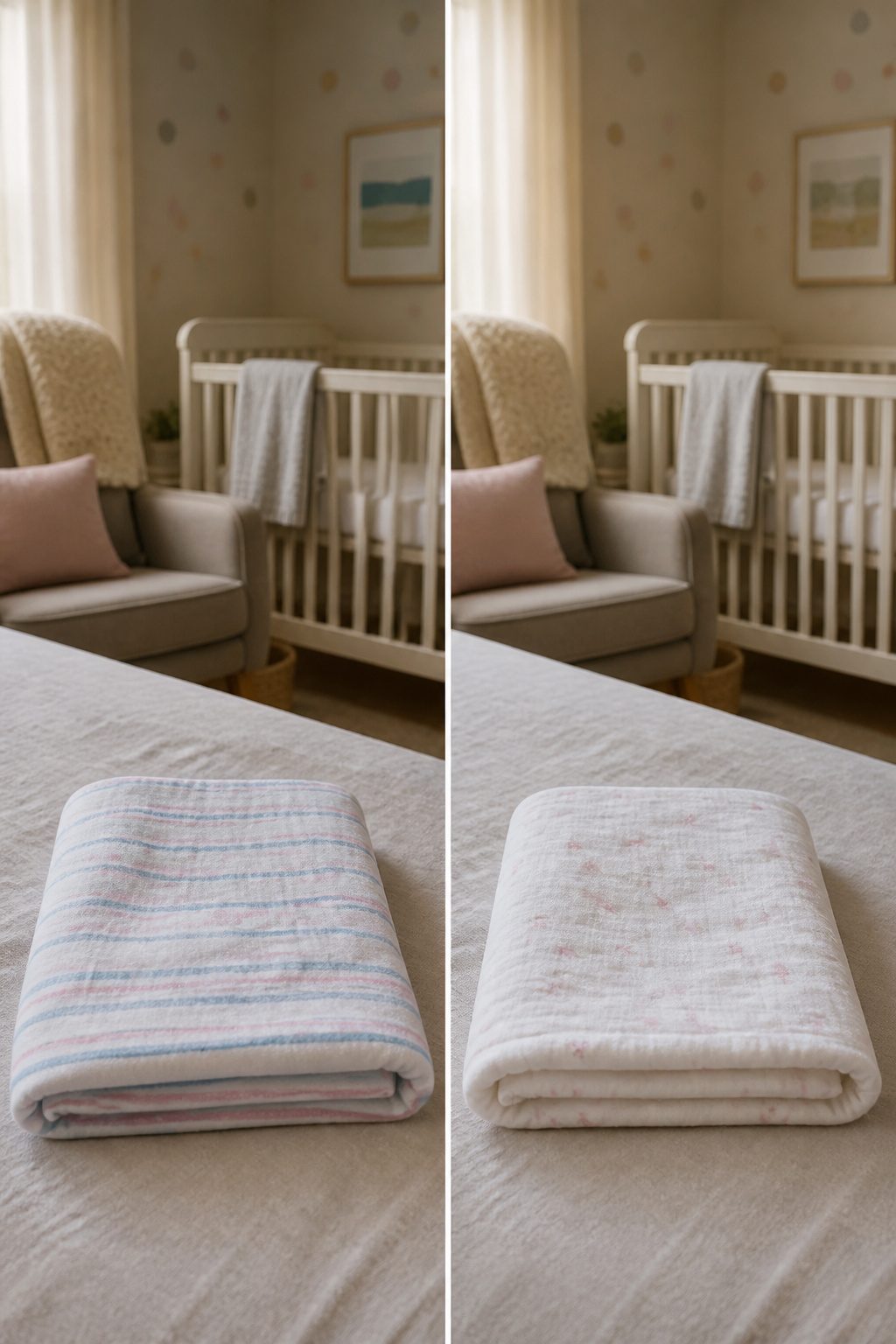
We see it almost every Saturday morning: a couple standing in our baby section with a receiving blanket in one hand and a swaddle in the other, turning them over like they’re the same thing in different packaging. They’re not.
A receiving blanket is hospital equipment first, baby gear second. The name comes from what nurses actually do with it, wrap the baby right after delivery, which is why you’ll spot those thin pink-and-blue stripes in every birth announcement photo.
It’s a 30-by-30 or 36-by-36 inch square of cotton or flannel, no fasteners, no stretch, meant to warm and cover and wipe and prop and do whatever else the moment demands.
A swaddle blanket is built for one job only: to hold a newborn’s arms tight against their body so the startle reflex doesn’t snap them awake every twenty minutes.
The fabric is lighter, often stretchier, and the sizing runs larger so you can get the snug wrap that actually triggers that calming response.
One is a workhorse you will use for burping, stroller shade, and emergency diaper changes. The other is specialized gear for safe sleep, and it cannot do the other blanket’s jobs.
You can swaddle with a receiving blanket if the baby is small enough and you know the fold, but a swaddle blanket will never double as your nursing cover or your car-seat sunshield.

Soft and Lightweight: Muslin swaddle blankets are made from breathable cotton muslin fabric, so gentle and soft on baby's delicate skin. These baby blanket provide a cozy and comforting environment for newborns, promoting better sleep and relaxation

Cozy Fabric: Our muslin swaddle blankets are made of 100% cotton (Muslin) for maximum breathable with skin-friendly soft touch and retain its color after washed for several times. Keep your baby super comfortable and soft with this swaddle blanket

Soft & Breathable:Made of 70% rayon from bamboo and 30% organic cotton, Yoofoss muslin swaddle blankets are breathable and skin-friendly. The softness of swaddle blanket is three times than regular cotton. Baby swaddle blankets are certified to meet Consumer Product Safety Commission (CPSC), ensuring meticulous quality and the highest standards of safety for baby.
Size and Shape
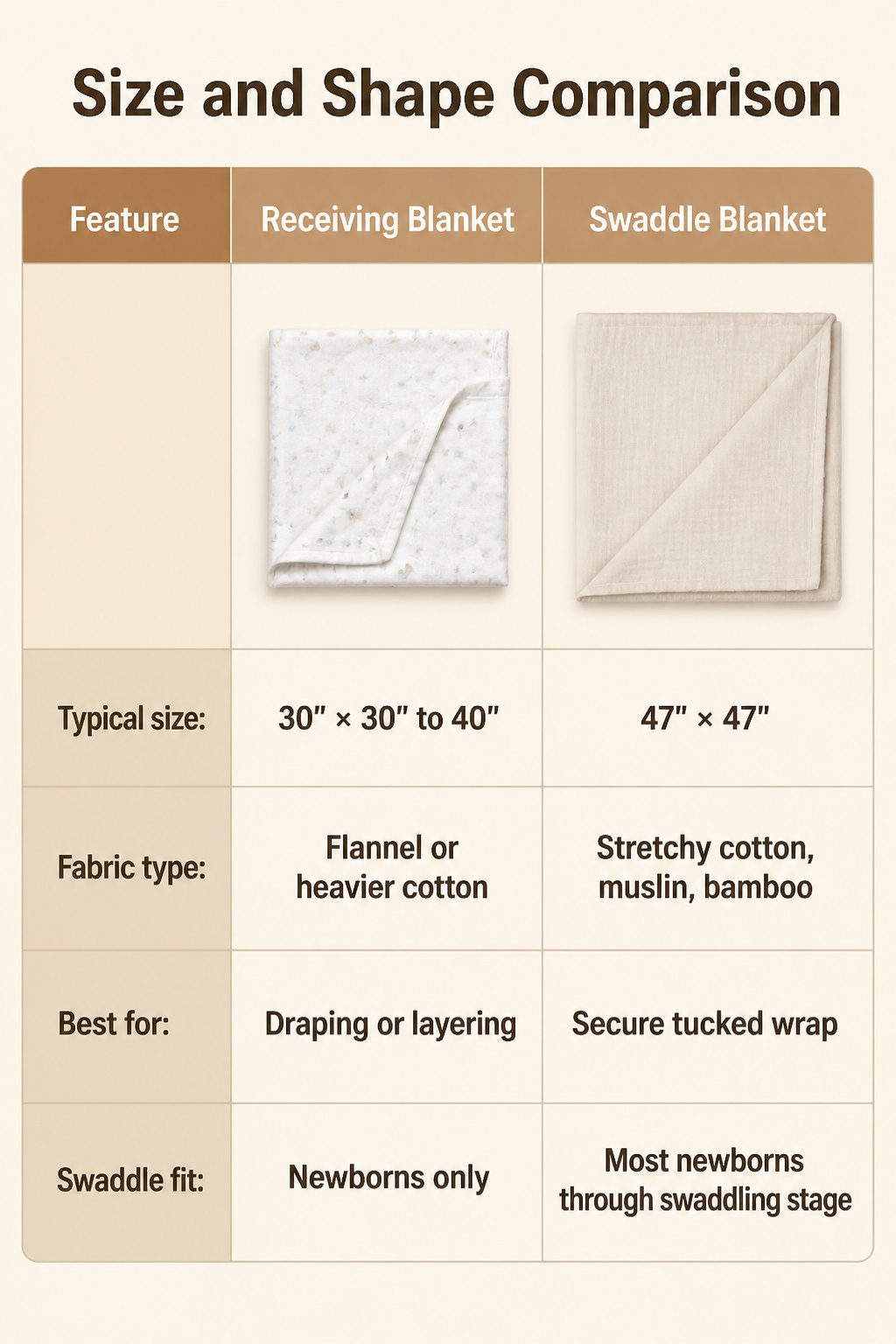
A receiving blanket is usually 30 by 30 inches to 30 by 40 inches, while a swaddle blanket runs 47 by 47 inches.
That extra 17 inches of fabric on each side is what makes the tucked wrap possible, the kind that keeps a newborn’s arms snug against their body and stops the startle reflex from waking them.
We tried swaddling our second baby in a receiving blanket at about six weeks old and the corners barely reached.
A 30-inch square leaves you fighting for enough material to tuck under, and once a baby hits the two-month mark most have outgrown receiving blankets for swaddling entirely.
The smaller size suits draping over a shoulder, light covering in the stroller, or that first hospital photo, but it does not give you the secure wrap a true swaddle blanket provides.
| Feature | Receiving Blanket | Swaddle Blanket |
|---|---|---|
| Typical size | 30" × 30" to 30" × 40" | 47" × 47" |
| Fabric type | Flannel, fleece, or heavier cotton | Stretchy cotton, muslin, or bamboo |
| Best for | Draping, layering, burping | Secure tucked wrap |
| Swaddle fit | Newborns only, first few weeks | Most newborns through swaddling stage |


Premium 100% Cotton Material: This blanket is meticulously crafted from pure cotton, ensuring a soft, breathable, and gentle touch for your baby's delicate skin, promoting a cozy and comforting experience.

100% cotton receiving blankets for newborns, woven for lasting softness that holds up wash after wash and gentle on delicate baby skin.
Fabric and Breathability
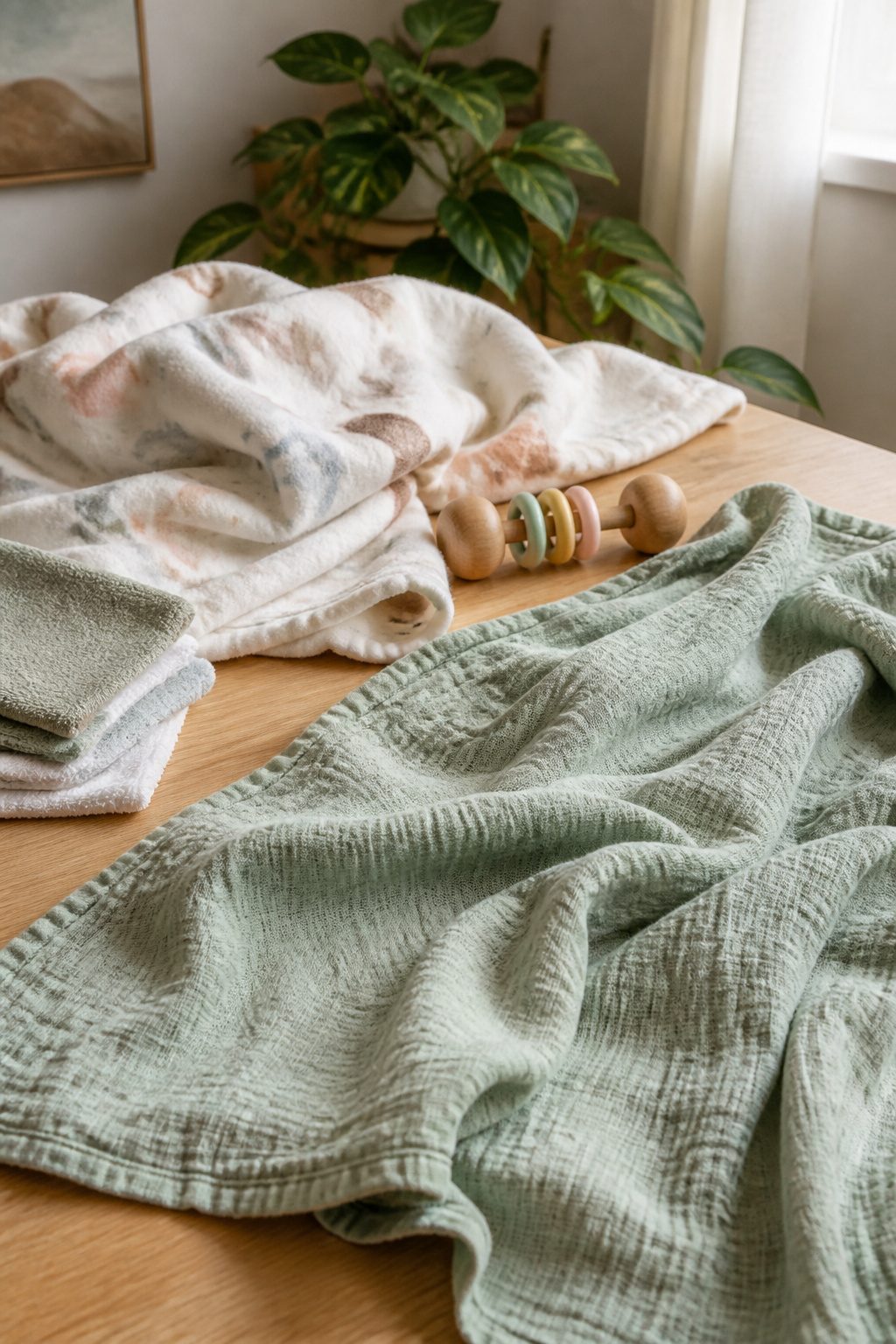
Receiving blankets and swaddle blankets pull from some of the same material families, but they choose them for different jobs. Cotton, flannel, and muslin dominate receiving blankets.
Flannel in particular shows up in maternity wards because it gets softer with each wash and handles spit-up and dribble without fuss. The priority is absorbency and a gentle surface against newborn skin, not structure.
Swaddle blankets lean into muslin, bamboo, and stretchy jersey blends, usually around 47 by 47 inches. The stretch matters because a wrapped baby cannot kick off layers, so the fabric itself has to give just enough to stay snug without binding.
Breathability becomes a safety factor here in a way it is not for a receiving blanket draped over a shoulder.
A swaddled baby with fabric pressed near the face needs open weave or lightweight knit that still moves air; a receiving blanket used for cleanup or a quick drape does not face that same risk.
We keep flannel receiving blankets in the drawer for messes and grab the bamboo-muslin swaddles for sleep. The distinction is not about which fabric is nicer; it is about which failure mode you are designing against.

COTTON INTERLOCK KNIT: Crafted from lightweight, ultra-soft 100% cotton, this double-knit fabric offers natural stretch and breathability, ensuring year-round comfort

COTTON INTERLOCK KNIT: Crafted from lightweight, ultra-soft 100% cotton, this double-knit fabric offers natural stretch and breathability, ensuring year-round comfort

Ultra Soft Fabric: Our baby receiving blanket is composed of stretchy, ultra soft, lightweight jersey fabric, and made of high quality viscose fibers. It's perfect to wrap your child in softness, warmth, and a feeling of security. Baby and toddler will love the blankets, as they are safe, comfortable and super soft on their skins.
Design Features
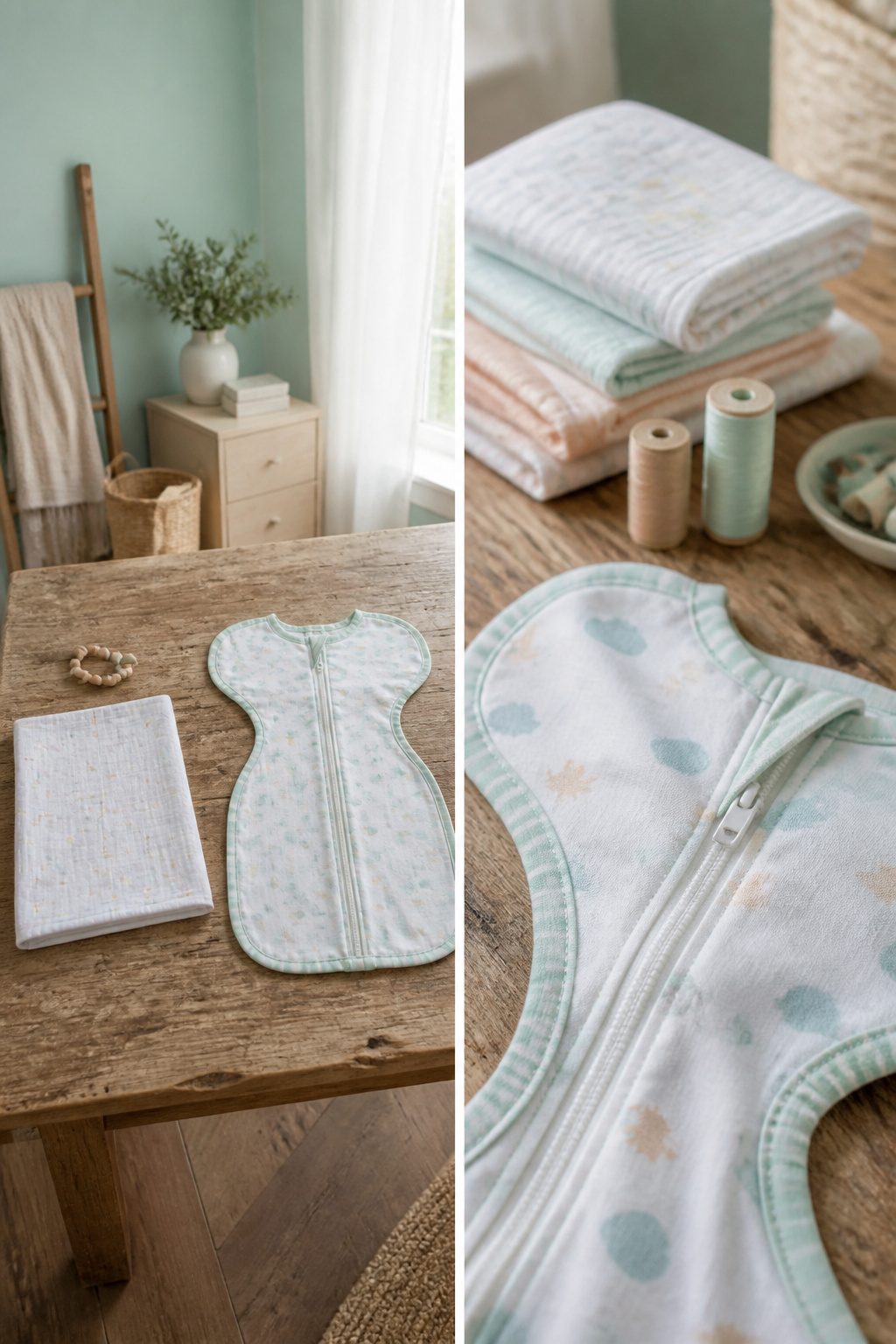
A receiving blanket is a simple square, sometimes with a finished edge and nothing else.
No wings, no fasteners, no engineered structure. We have watched parents at 2 a.m. try to fold a square receiving blanket into a secure swaddle while a newborn squirms, and the wrap loosens before they set the baby down.
A zippered swaddle takes about ten seconds. The difference is not minor when you are running on three hours of sleep.
Swaddle blankets are built as engineered products with consistent tension: Velcro panels, zippered pouches, snap closures, or shaped wings that remove the guesswork.
The tension stays where you set it, which matters because a loose swaddle is not a safe swaddle. Receiving blankets rely entirely on your folding skill and the friction of the fabric, and both fade as the baby moves.
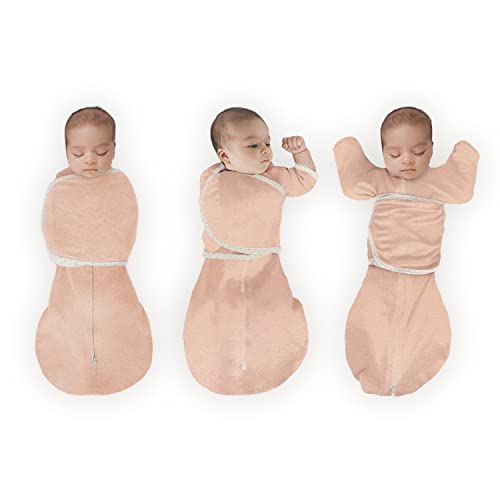
The OMNI SWADDLE SACK offers parents MORE OPTIONS to adjust how they swaddle as baby grows. A GREAT CHOICE for snug swaddling a newborn, for a baby who likes to suck on hands, for a baby starting to roll over, and every stage during baby’s first 3 months

𝐏𝐞𝐫𝐟𝐞𝐜𝐭 𝐒𝐥𝐞𝐞𝐩 𝐒𝐨𝐥𝐮𝐭𝐢𝐨𝐧 𝐟𝐨𝐫 𝐘𝐨𝐮𝐫 𝐁𝐚𝐛𝐲: Newborn Velcro Swaddles Little Goose Swaddles Bands, Made with ultra-soft, skin-friendly material, this swaddle wrap is designed to gently hug your baby, reducing the startle reflex and helping them sleep soundly through the night. Ideal for newborns and infants, it promotes deep, peaceful sleep.

Keep your baby calm and comforted with the SwaddleMe by Ingenuity Original Swaddle in small/medium. This swaddle fits babies ages 0-3 months, 7-14 pounds, and up to 26 inches long
Versatility After the Newborn Phase

We tracked our receiving blankets for a full year after our youngest outgrew them. They kept working.
- Burp cloth draped over a shoulder, no fancy shape needed
- Nursing cover in a booth at the diner we still hit on Saturdays
- Car seat shade clipped with a clothespin against afternoon sun
- Changing pad liner for the plastic mat in the trunk
- Lovey our toddler still sleeps with, edges frayed soft
- Rag for juice spills on the laminate
Swaddle blankets do one job and do it well, but the Velcro, zippers, and tapered cut that make them secure for sleep also make them awkward anywhere else. Once your baby starts rolling, they retire.
We have seen parents cut the fabric into stroller liners, but the fasteners snag and the shape never lays flat. A receiving blanket folds square and stays useful.

Set includes seven flannel blankets. Measures 30x30 inches.

HOSPITAL-GRADE COTTON FLANNEL – 100% cotton, the same classic stripe pattern used in hospital delivery rooms and pediatric centers across the country. Pre-washed for immediate softness right out of the package.

Set includes four flannel blankets. Measures 28x28 inches.
Swaddling Safely
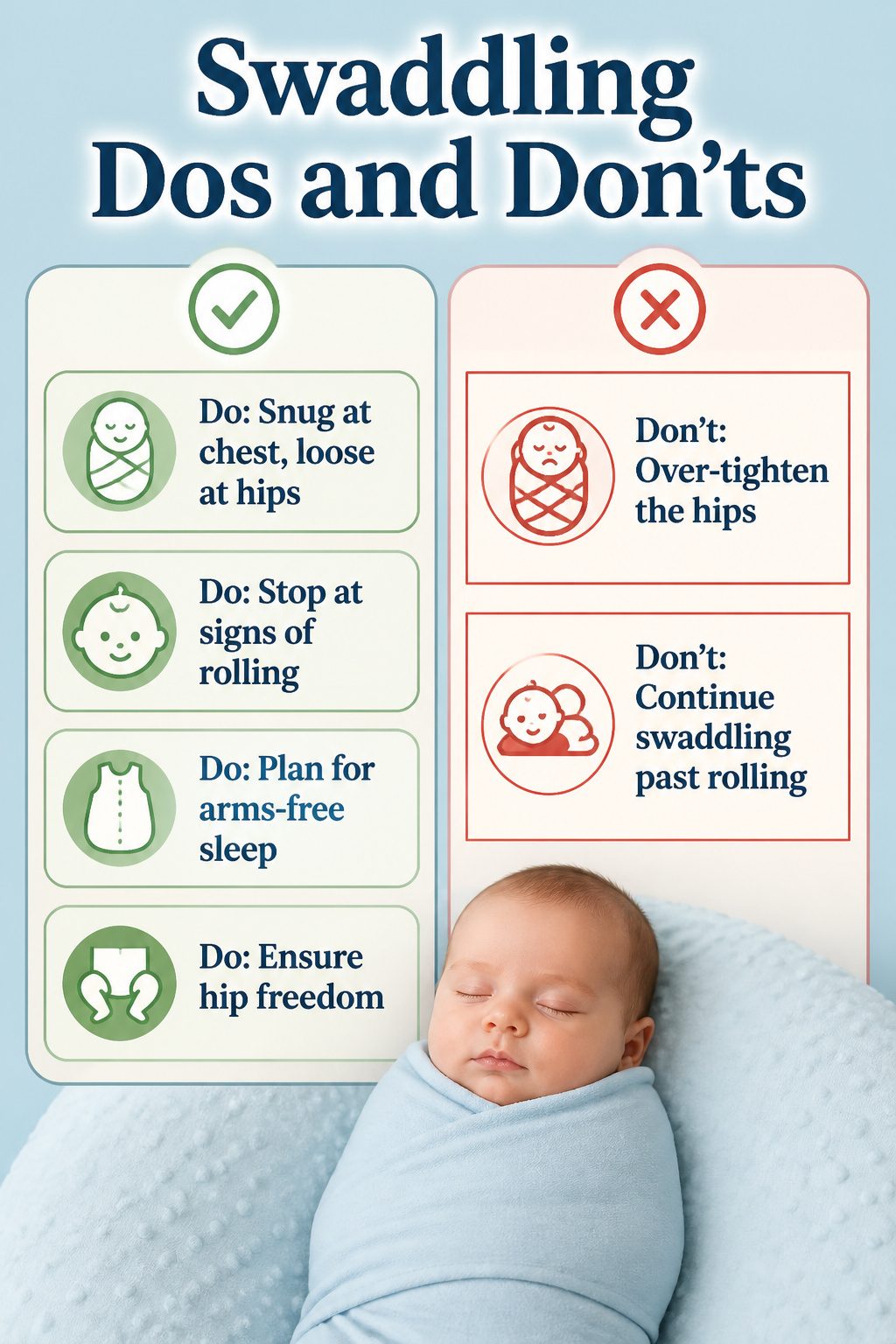
A proper swaddle wraps snug at the chest but loose at the hips, leaving room for your baby to bend and move their legs.
That hip freedom matters more than most new parents realize at first; tight wrapping across the hips can interfere with healthy development.
Most pediatricians say to stop swaddling once your baby shows signs of rolling over, typically at 2–4 months. We have had customers come back looking for sleep sacks right at that four-month mark, surprised at how fast the transition arrives.
Continue swaddling past rolling and you risk suffocation; a baby who rolls onto their stomach while wrapped cannot push themselves back up or turn their head freely.
The move to arms-free sleep comes sooner than you expect, so plan for it when you are still picking out your first blankets.

【OEKO-TEX Certified: Soft & Breathable Swaddle Blanket】Momcozy muslin swaddle blankets are made with 70% viscose derived from bamboo fiber and 30% cotton, an OEKO-TEX certified lightweight and breathable fabric that feels soft and gentle on delicate newborn skin. The airy muslin fabric helps keep babies comfortable during sleep, cuddling, and everyday use.


Generous 47x47 Size for Flexible Use: Each blanket measures a full 47 x 47 inches—noticeably larger than standard 40-inch swaddles. This added space makes wrapping your newborn easier and more secure, while the extra length extends usability as your little one grows. Use it as a cotton receiving blanket, stroller cover, or tummy time mat.
How Many to Buy
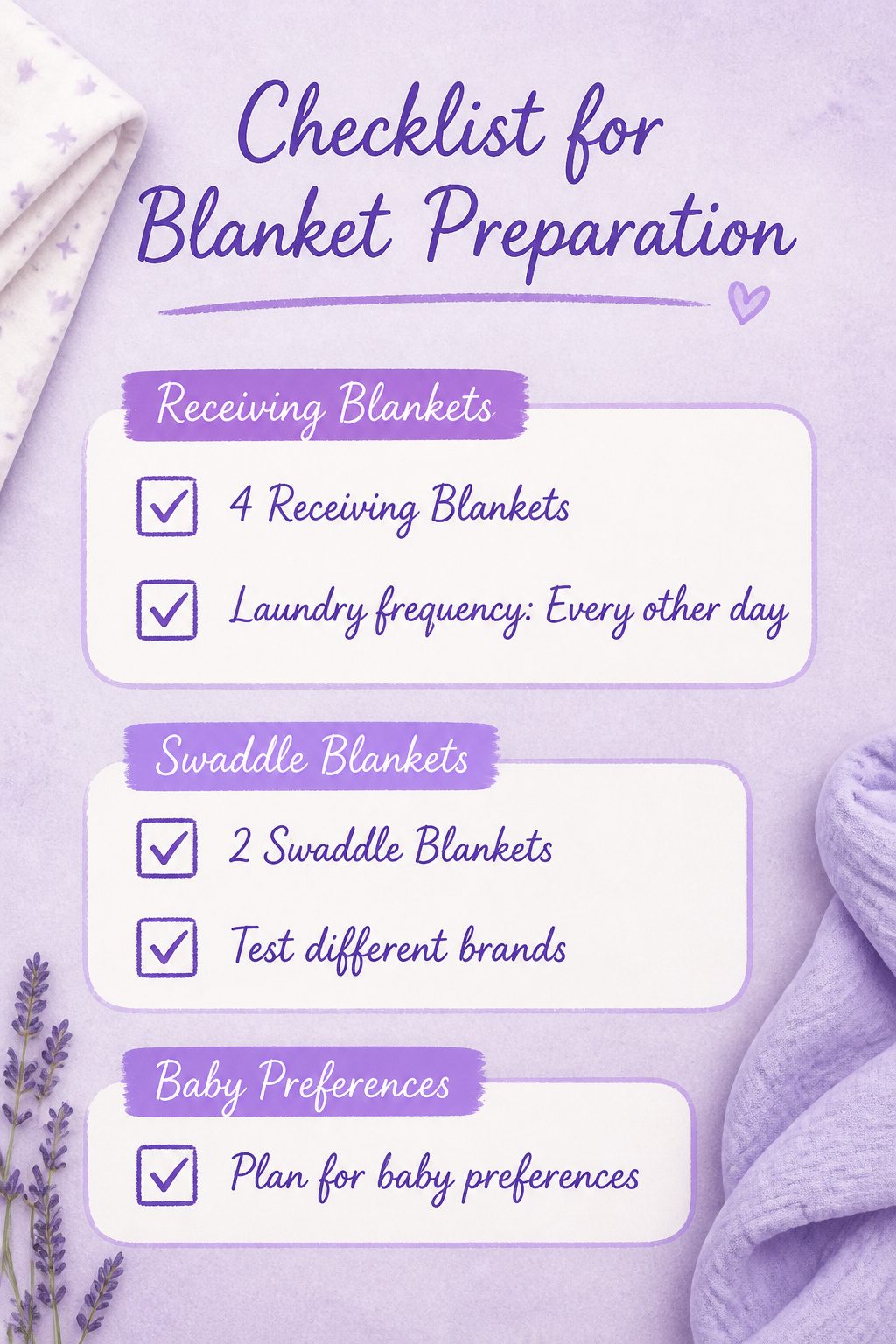
We started with four receiving blankets and two swaddle blankets, then adjusted once we saw how the days actually went.
The receiving blankets went through two or three uses per day, easy. One for the morning spit-up, one draped over the changing pad, one kicked to the floor by noon.
That put us at a load of laundry every other day just to keep up, so we bumped to six and found our rhythm.
The swaddle blankets were different.
They only came out for sleep, and not every baby takes to every brand. We had two to start, both the same make, and when our first wouldn’t settle in either we were glad we hadn’t stocked up.
Two or three total is enough to test what your baby tolerates and still have a clean one while the other sits in the wash.


EVERYDAY ESSENTIALS: Includes five 30" x 30" cotton flannel receiving blankets for an easy-to-reach supply throughout the day

Newborn Receiving Blankets Set: there are 8 pieces of white cotton baby blankets in the package, which measure 30 x 40 inches/ 76.5 x 102 cm; The nursing blanket has sufficient quantities and a large size, which can bring warmth to your newborn
Moving Out of the Swaddle
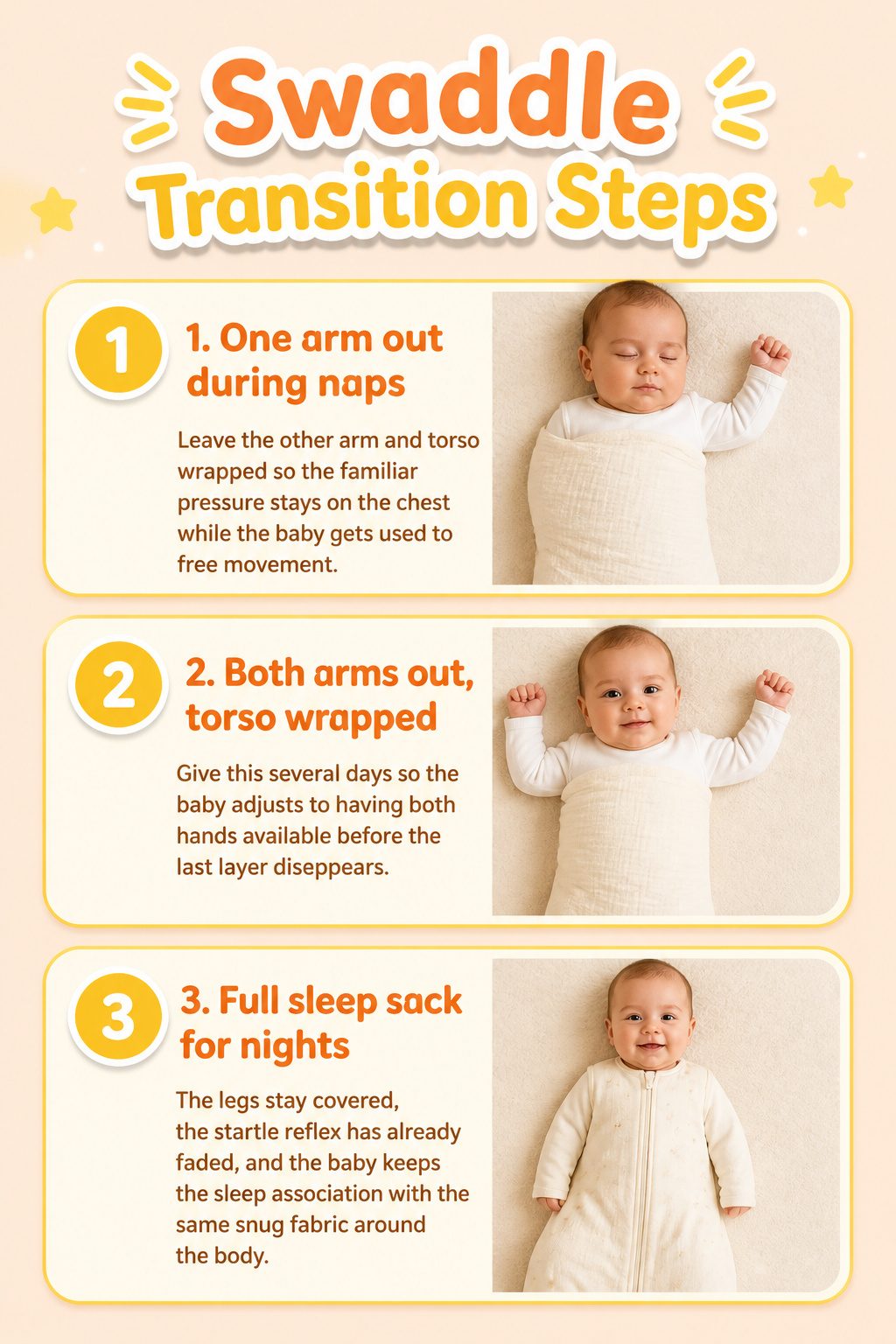
Most parents hit the swaddle wall around two to four months, when rolling starts and the pediatrician’s warning becomes real.
The blanket comparison articles rarely walk you through what happens next, but this transition is what determines whether you wasted money on swaddles you can’t finish using.
We phased it this way:
- One arm out during naps. Leave the other arm and torso wrapped so the familiar pressure stays on the chest while the baby gets used to free movement.
- Both arms out, torso still wrapped. Give this several days so the baby adjusts to having both hands available before the last layer disappears.
- Full sleep sack. The legs stay covered, the startle reflex has already faded, and the baby keeps the sleep association with the same snug fabric around the body.
Sleep sacks bridge the gap. You need one to two of them for the post-swaddle months, and they are the reason we tell parents not to over-invest in swaddles that lock both arms down with no escape hatch.
A muslin swaddle with a loose wrap or Velcro transition panel gets you farther than a rigid design that ends up in the drawer the day rolling starts.

COTTON INTERLOCK KNIT: Crafted from lightweight, ultra-soft 100% cotton, this double-knit fabric offers natural stretch and breathability, ensuring year-round comfort

Cozy Knit Fabric: Keep your little one cozy with our plush Konssy knit baby blanket. Made from ultra-soft polyester, it offers warmth and comfort in a thick, luxurious design. Perfect for snuggling your bundle of joy and makes a thoughtful gift for any new parent

COTTON INTERLOCK KNIT: Crafted from lightweight, ultra-soft 100% cotton, this double-knit fabric offers natural stretch and breathability, ensuring year-round comfort
The Mix That Worked for Us
Parents need both, but not in equal measure. Receiving blankets are the workhorse; swaddle blankets are the specialist tool.
We packed six flannel receiving blankets for our own, which lines up with the six to eight most households keep on hand for spit-up, diaper leaks, and the general mess a newborn generates.
For swaddling specifically, we added two muslin swaddles with Velcro. The Velcro matters more than the fabric, especially at 2 a.m. when the wrap keeps slipping.
We also threw in one zippered model after watching grandparents struggle with any wrapping technique at all. The hospital sends you home with some receiving blankets, so resist buying a dozen upfront.
Four to six clean ones on hand is the starting point most parents settle into, and you can adjust once your own laundry rhythm and mess level become clear.

【Right Size → Cozy ZZZ】Please refer to the size chart image and use baby's weight to select sizes. Size Size S – Ideal for babies weighing 10-18 lbs, aged 0-6 months, and baby's height 23-27 in. Size M – Ideal for babies weighing 18-24 lbs, aged 6-12 months, and baby's height 27-31 in.The right size will ensure comfortable snug, proper neckline and good hip movement.

The 6-way Omni Swaddle Sack with Adjustable Wrap and Arms Up Sleeves with Mitten Cuffs is the IDEAL SWADDLE; The patented design supports more sleep positions for baby's hands and arms providing more options for BETTER SLEEP and SAFER SLEEP.

【Two-Step Easy Swaddle for New Parents】Comfortably place your baby on the unfolded swaddles, fasten the whisper-quiet hook-and-loop, and zip up the bottom to achieve a snug, womb-like fit in seconds. This baby swaddle sack makes diaper change effortless for new parents.
Frequently Asked Questions
What is the difference between receiving blankets and swaddling blankets?
Receiving blankets are smaller, multipurpose squares of cotton or flannel meant for warming, covering, and cleanup, while swaddle blankets are larger stretchy wraps built specifically to hold a newborn’s arms tight against their body for sleep.
A receiving blanket can double as a burp cloth, nursing cover, or stroller shade; a swaddle blanket cannot.
You can swaddle with a receiving blanket only while the baby is very small, but a true swaddle gives the secure wrap that stops the startle reflex.
How many receiving blankets do I need?
Start with four to six receiving blankets. Most parents find they cycle through two or three per day between spit-up, diaper changes, and general mess, which puts you at laundry every other day unless you keep more on hand.
The hospital sends some home with you, so resist buying a dozen upfront until your own routine becomes clear.
Are swaddle blankets good for babies?
Yes, when used safely and only before rolling begins. Swaddle blankets help newborns sleep by mimicking womb pressure and damping the startle reflex that snaps them awake.
The wrap must be snug at the chest but loose at the hips, and you should stop as soon as your baby shows signs of rolling, typically at two to four months, to avoid suffocation risk.