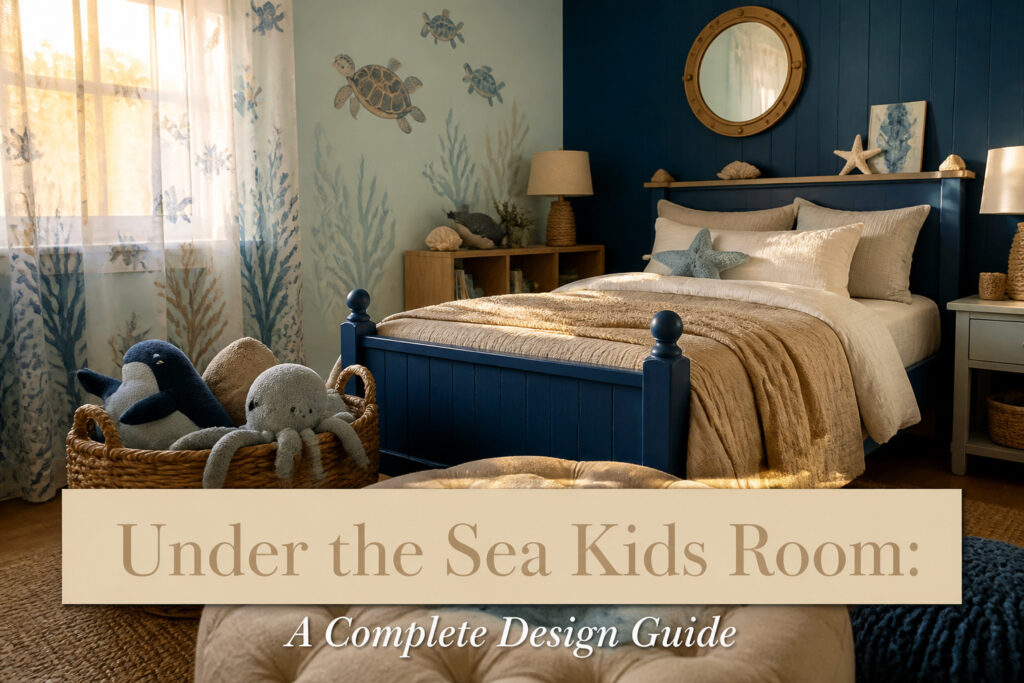
A kids room under the sea works best when blue takes up no more than sixty percent of what you see at eye level, with pale sand and warm white doing the rest.
The mistake most parents make is stopping at the blue and ending up with a carnival instead of an ocean.
We learned this after painting one accent wall "deep ocean" and watching it swallow an eight-by-ten room whole by four in the afternoon.
[link-whisper-related-posts]Color Palette

The best base for a kids room under the sea runs from deep navy through mid blue to light turquoise, and the mistake we see most often is stopping at the blue.
A wall painted strong cyan can feel like a carnival instead of the ocean if you do not ground it.
We have watched rooms work when the blue is no more than sixty percent of what you see at eye level, with the rest going to pale sand tones on carpet or flooring and warm white on ceiling and trim.
North and Nook’s lighter palette of pale blue, warm white, and sandy beige proves the point: natural wood and woven texture against those cooler blues keeps a small room from feeling like an aquarium.
If you want another layer, muted seafoam or sage in pillows or a blanket adds depth without fighting the main tone.
Deep blues do cocoon well for sleep, but only when you have the square footage to absorb them; in the eight-by-ten rooms we see most often, a mid blue with warm neutral companions wins out.
Wall Décor

A mural gives a kids room under the sea its immediate identity, but the accent-wall approach keeps the project reversible if you rent or if the theme shifts in a few years.
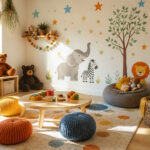
We have watched renters paint one wall in navy or marine blue, then layer decals of whales, dolphins, or octopuses over the solid color. The surrounding walls stay light, so the room never feels like an aquarium tank.
Wallpaper across a single wall works the same way. Rolling waves in a blue that matches your paint, or a smaller repeat pattern like anchors, gives you the theme without sealing every surface.
Decals cost less and peel off when the phase passes; we have learned they also lift at the edges faster in bathrooms or near windows with condensation, so keep them to dry bedroom walls.
For art you can move, a small group of coordinated prints beats covering every wall. Think sailing scenes, starfish, or single large pieces like a whale silhouette.
One mirror shaped like a porthole does more than a dozen scattered fish. We have seen scalloped edging or a shell-shaped headboard behind the bed work well for younger kids, though the novelty fades faster after age seven or eight.
Furniture Choices

Natural wood or neutral white furniture keeps an under-the-sea wall from turning the room into an aquarium exhibit. We have watched a bright blue wall fight a cherry-finish bed frame, and nobody wins that battle.
A natural wood bed frame paired with muted blue walls gives the ocean theme a place to land. IKEA makes a simple pine frame that takes a beating and does not compete with the paint.
For dressers, a warm wood finish holds crayon marks and water rings better than painted surfaces, which chip at the corners where kids climb. We learned that after repainting a white dresser twice in one year.
Shelving is where most rooms go wrong.
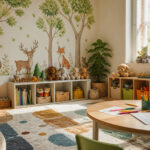
A long low bookcase in natural wood, like the Crate & Kids piece we have used in tighter spaces, keeps books and shell collections at kid height without adding another color to fight the walls.
If the room is small, nesting stools that tuck under a matching play table save floor space and keep the wood tone consistent across the room.
White furniture works too, but only if it is a clean neutral white, not a warm cream that turns muddy against blue.
Pick one wood tone or one white and repeat it: bed, dresser, shelves, all speaking the same quiet language so the fish and the waves on the wall get the attention.
Textiles

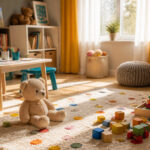
Bedding in a kids room under the sea theme runs toward pale blue and sandy beige rather than dark navy, which keeps the space lighter and easier to live with.
We have learned that soft cotton holds up better than anything with a heavy printed surface; the graphics crack and fade while the fabric underneath still looks tired.
A textured rug in a warm weave does more for the coastal feeling than another graphic of a whale, and it hides the sand and crumbs that actually come home from the playground.
Curtains should be simple cotton or linen in cream or warm white. They soften the cooler blues without adding another pattern to compete.
Woven baskets for toy storage and a chunky blanket folded at the foot of the bed add the driftwood-and-sand texture that makes the room feel like a real space instead of a catalog page.
The wash cycle is where we have taken our hits. Chunky knits and loose weaves snag in the machine; we now wash them inside a mesh bag on gentle and lay them flat.
Tight-weave cotton bedding can take warm water and regular detergent without the color shifting, which matters when you are washing sheets twice a week some seasons.
Accessories

Plush sea creatures look great on a shelf until you realize they collect dust faster than anything else in the room.
We stopped buying the ones with long fabric tentacles or fuzzy "coral" textures; the short-pile stuffed fish and smooth-rayed stingrays wipe clean with a damp cloth and still look new after a year.
Ocean-themed cushions fall apart at the zipper. We have opened three that split within two months of normal use, all from the same big-box pattern where the whale or turtle is printed across a seam.
Solid-colored cushions with a single embroidered detail hold up better, and you can swap them to a reading nook later without them screaming "nursery."
Starfish-look string lights are the one decorative item we would buy again, but only the battery-powered strands with a timer function.
Plug-in versions tangle in ways that waste your Saturday, and the timer saves you from climbing behind furniture every night.
The plastic starfish shapes themselves are hollow, so they do not heat up; the painted resin ones we tried did, and we returned them.
Skip the "floating" jellyfish lamps that hang from the ceiling. They look magical in product photos and spin in circles from any vent draft until your kid is seasick watching them.
Wall-mounted sconces shaped like portholes cost more but stay where you put them.
Functional Storage

A repurposed steamer trunk works wonderfully as a toy box or cabinet for bulky items like bedding and blankets, and we have learned the hard way that capacity means nothing if a four-year-old cannot lift the lid.
One trunk we tried sat empty for months because the hardware was too stiff for small hands.
We swapped the hasp for a simple rope handle threaded through the front hasp mount, and suddenly it became the go-to spot for dress-up clothes.
For open shelving, driftwood-style boards keep the ocean look without requiring actual beach salvage. We space ours 14 inches apart vertically, which fits picture books upright and plush toys stacked two deep.
The mistake we made on the first install was mounting too high; anything above 36 inches from the floor became dead storage that the kids ignored entirely.
A hammock hung above a bed or in a corner corrals stuffed animals while leaving the bed clear for sleep.
We use it for the overflow, not the daily favorites, because fishing a specific plush out of a hammock at bedtime is a frustration nobody needs.
Paint ties existing pieces in fast. A bedside cabinet in deep turquoise reads as ocean without the fish motif, and it migrates to a different room later without screaming nursery.
Reading Nook

A reading nook works in very little square footage. We have seen a 3 x 3 foot corner hold a floor cushion, a low cube shelf, and a clip-on reading light without crowding the rest of the room.
Keep the furniture low so sight lines stay open across the space; a tall bookcase in that same spot would chop the room into pieces and fight against sleep and play zones that need to flow together.
Place the cushion with its back to the wall, the shelf within arm’s reach to the left or right, and the light coming from behind the shoulder so the page stays bright without glare in the child’s eyes.
If the room is also where toys live and where a guest bed folds out, keep the nook on the calm side of the room, away from the door and the toy traffic path.
That separation lets the corner read as a retreat rather than spillover space, which is what makes an under-the-sea theme feel intentional rather than scattered.
A soft blanket in a wave pattern and one shell-shaped pillow do the work of a dozen themed items; the rest of the budget stays in function.
Zoning the Room

Children need to know where one activity ends and another begins, and in a kids room under the sea that has to do triple duty, color blocking is the clearest signal you can give them without building actual walls.
We have laid out enough small rooms to learn that a bed pushed against deep blues and neutrals reads as a cave for sleeping, while the same bed against bright orange or yellow suddenly feels like a launch pad.
The shift does not have to be dramatic. A single painted band at chair-rail height, or a rug that stops exactly where the play space starts, trains the eye faster than any verbal reminder you will repeat at nine PM.
Furniture arrangement can finish the job where paint cannot. Open shelving works as a fake wall that still lets light through, and it earns its footprint by holding books, bins, or the shell collection that fits the theme.
We once tried a solid bookcase for this and the room shrank by half in feeling; the open back was the difference between defined and cramped.
Nesting stools that tuck under a small table keep the study zone compact enough that it does not bleed into sleep space, and a daybed against the long wall can anchor the room so the rest of the floor plan stays flexible.
The mistake we keep seeing, and have made ourselves, is treating every wall as available real estate.
Leave one wall almost empty and the room breathes, even when the octopus beanbag and the kaleidoscope and the mermaid atlas all have to fit somewhere.
Growing With the Theme

The biggest mistake we made in our first themed room was painting a full-wall mural of cartoon fish.
Painted murals look great for about eighteen months, then many kids decide fish are ‘for babies’ and parents spend a weekend priming over it.
Now we start with a neutral base on the big pieces and keep the theme in what you can swap in a Saturday afternoon.
Keep the walls a solid blue or turquoise, the kind of color that works with surf posters or ocean photography later just as easily as with whale decals now. The same goes for furniture.
A simple white or natural-wood bed frame, dresser, and nightstand stay put for years. We have learned to buy quality here, because moving a mattress is easier than replacing a broken particleboard frame.
Where to stay cheap: bedding, curtains, wall decals, and the small stuff. Under-the-sea bedding sets run $30–$60 and last until the next growth spurt anyway.
Wall decals peel off clean if you warm them with a hair dryer first. A magnetic wood frame for a poster costs a fraction of framed art and lets you swap the print in thirty seconds.
For storage, a quick coat of paint on an existing bedside cabinet ties it to the theme without commitment. A repurposed steamer trunk works as a toy box now and a blanket chest later.
Skip the built-in anything themed; you will regret it when the mermaid phase ends.
What We Would Do Differently

We once painted an accent wall in what the sample card called "deep ocean" and watched it swallow the room whole.
The color looked coastal in the store lighting, but under a north-facing window it turned almost black by four in the afternoon.
Paint the wall you are testing and live with it for two full days before you buy the rest of the gallon.
We learned that after covering the whole thing again with a lighter teal that actually let the white trim breathe.
The coral-shaped hooks looked right on the packaging, but three of them broke in the first month because they were hollow resin with a thin metal post.
We replaced them with plain wooden pegs painted orange, and those have held wet towels and backpacks for two years without a crack.
Our biggest storage mistake was a woven rope basket that matched the theme perfectly and held almost nothing. The sides sloped too steep, so a stuffed shark took up the whole footprint.
We swapped it for a flat-sided canvas bin in solid navy, which slides under the bed and actually fits the dress-up bin and two puzzle boxes.
Budget and Timeline

We have done three under-the-sea rooms in the last four years, and the wall treatment is where the budget lives or dies. The first room we painted freehand waves with leftover house paint and a $12 foam roller.
It took one Saturday, looked soft and handmade, and still gets compliments. The second room we tried peel-and-stick wallpaper with fish scales.
The paper alone ran near $200 for one accent wall, and lining up the pattern ate both weekends plus a Friday evening.
It looked sharp, but we tell people to skip it unless they are staying in the house long enough to justify the hours.
Furniture paint is another place to save. A secondhand dresser with new ocean-blue paint and rope pulls costs about $40 total and reads as themed.
Hardware-store rope and homemade pulls work as well as nautical ones bought online, where the markup is silly. Bedding is harder to fake.
The cheap polyester sets with cartoon whales pill inside a month. We have learned to buy solid navy or teal cotton and add one printed throw pillow.
It costs nearly the same, holds up through washing, and the room still reads as under the sea.
Most of these rooms finish in two weekends if you paint. Add a third if you are building anything from wood.
Our biggest regret was trying to save time with all-in-one wall decals. They peeled by year two, and we ended up painting over the residue anyway.
Frequently Asked Questions
What colors are best for an under the sea kids’ room?
Keep blue to no more than sixty percent of what you see at eye level, with pale sand tones on flooring and warm white on ceiling and trim.
Deep navy works best in larger rooms; mid blue paired with warm neutrals wins in the eight-by-ten spaces most families have. A muted seafoam or sage in pillows or a blanket adds depth without fighting the main tone.
How can I decorate an under the sea themed room?
Paint one accent wall in navy or marine blue and layer decals of whales, dolphins, or octopuses over it, keeping surrounding walls light so the room never feels like an aquarium tank.
For art you can move, a small group of coordinated prints beats covering every wall, and one mirror shaped like a porthole does more than a dozen scattered fish.
Starfish-look string lights with a battery-powered timer create underwater mood without the hassle of plug-in versions.
What are some functional storage ideas for a kids’ room?
A repurposed steamer trunk works as a toy box if you swap stiff hardware for a rope handle small hands can manage.
Driftwood-style open shelving spaced fourteen inches apart vertically fits picture books upright and plush toys stacked two deep; mount nothing above thirty-six inches from the floor or kids will ignore it.
A hammock hung in a corner corrals stuffed animal overflow while leaving the bed clear for sleep.