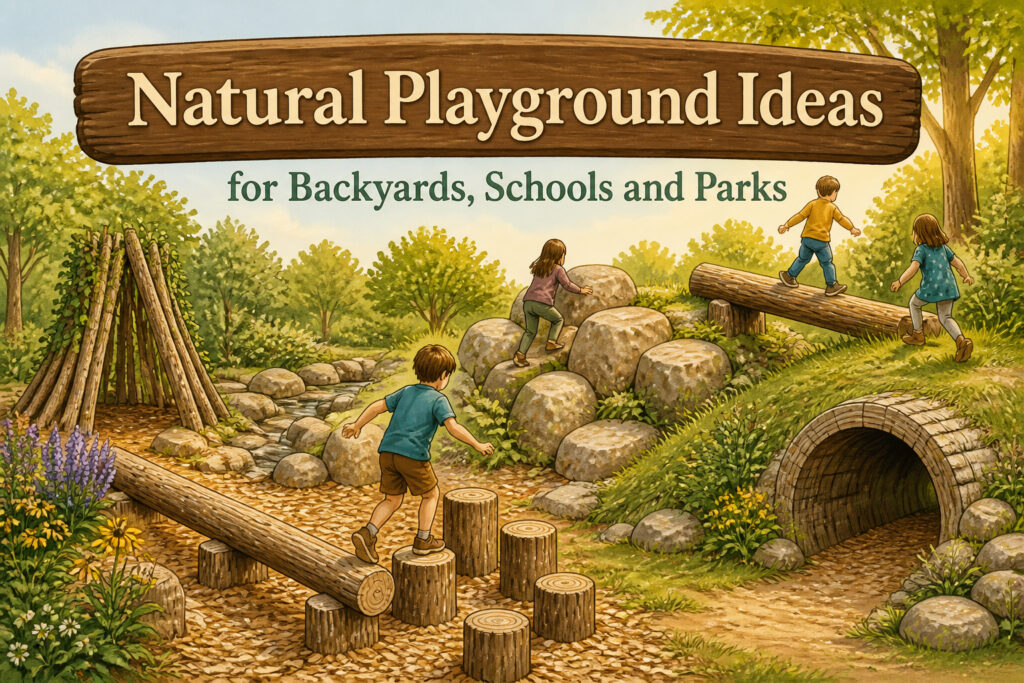
A natural playground builds play spaces from logs, boulders, sand, and living plants rather than manufactured equipment. The catch is that raw materials shift, rot, and splinter, so every element needs inspection and a planned fall surface; wood chips under a stump matter as much as the stump itself. We set our climbing boulders by burying one-third of their height in packed gravel, no concrete, and check them each spring after the ground thaws.
[link-whisper-related-posts]Rocks and Boulders
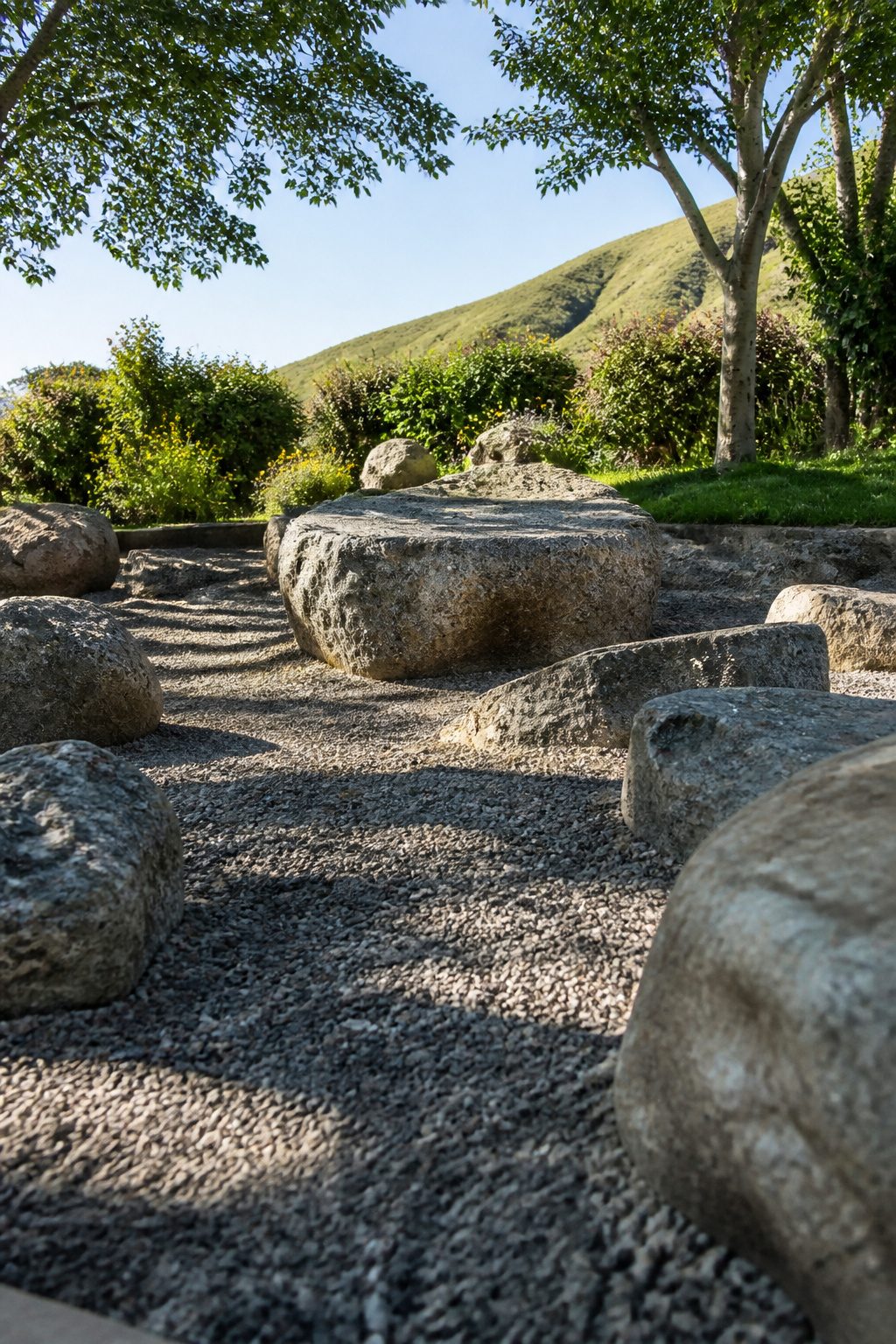
Rocks and boulders do three jobs in a natural playground without costing much. Children climb them, sit on them, and turn them into whatever their game needs that day. A boulder becomes a mountain, a boat, a shop counter. The same rock handles physical play and imaginative play, which is why we keep coming back to them.
For home use, keep climbing boulders under 30 inches high for preschoolers and under 48 inches for older children. Anything taller belongs on a slope where a fall rolls rather than drops, or it needs a soft landing zone worked into the budget. Width matters more than height for stability; a rock that wobbles when a grown-up steps on it is a rock that will tip when three kids scramble up together.
We set ours by digging a base one-third as deep as the boulder is tall, then packing the gap with compacted gravel. A 24-inch rock wants 8 inches buried. No mortar, no concrete; the weight and the packed base do the holding. Check it each spring after the ground thaws and shifts. The rock that sat solid in October may need re-packing by April.

【16 Route Challenges Included】 Follow the double-sided route sheet and explore 16 different challenges. Rearrange the holds, change the setup, and keep every play session fresh.

【Portable finger strength trainer】This climbing training ball is crafted using industrial-grade 3D printing technology. The unique micro-texture on each grip mimics the tactile feedback of real rock surfaces, enhancing finger engagement and strength building. Note: Slight layer lines are a natural result of high-strength printing, ensuring durability and a functional grip feel.

Product Include: kits includes 25 packs of multi-colored rock climbing holds, a 8.5ft long climbing rope, mounting hardware -54 bolts(1.9"), 54 weld nuts, 108 washers, and 1 installation instruction. Comes in 5 bright colors including red, orange, yellow, green, and blue and feature multi shapes, this rock climbing set provides children with enjoyable climbing experience.
Logs and Tree Stumps
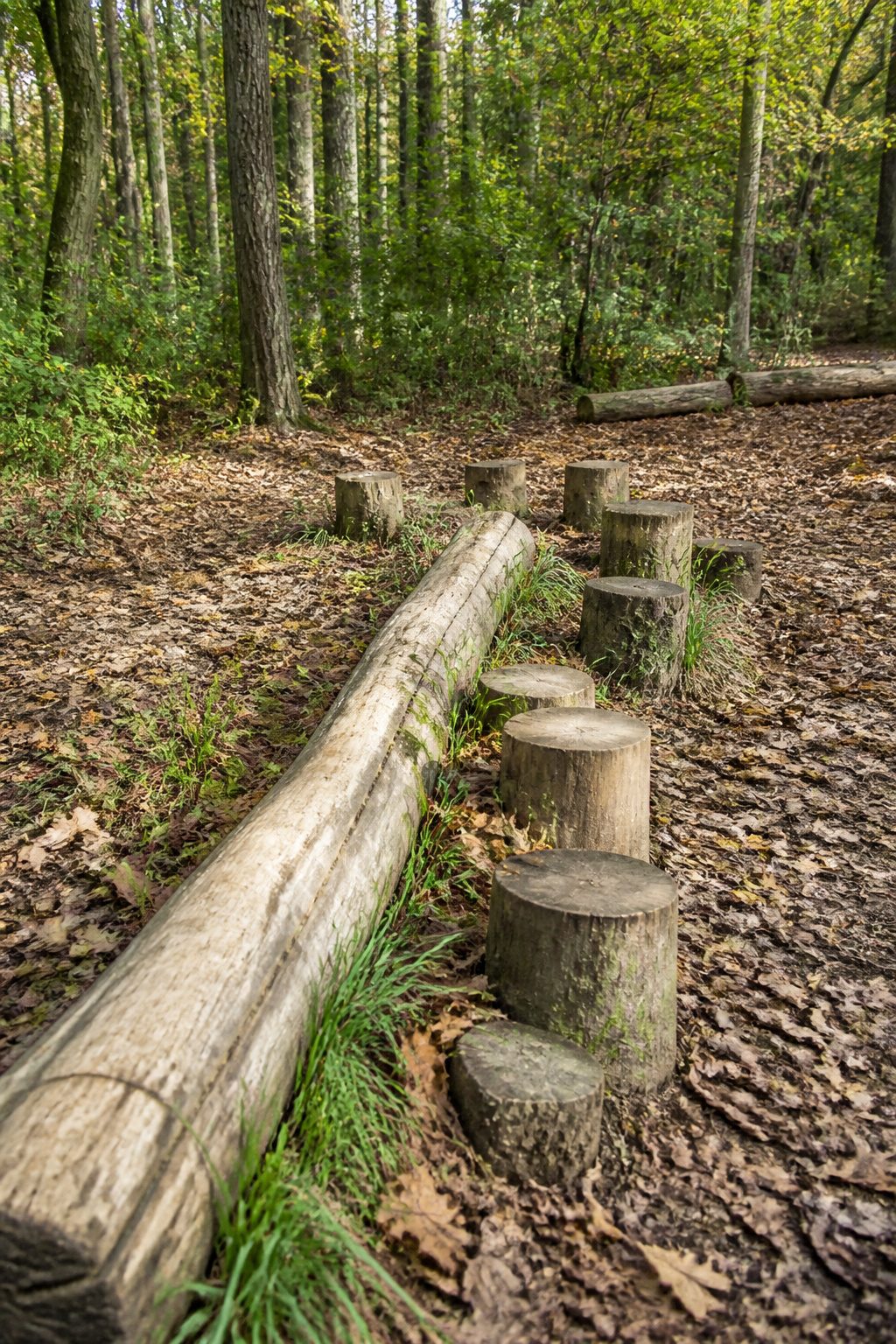
Logs and tree stumps are the backbone of most natural playgrounds we have helped plan, and they earn their place by doing several jobs at once. A fallen log laid flat becomes a balance beam; set on end at staggered heights, stumps turn into stepping stones or a staircase up a small slope. We have seen kids use the same pieces as seating around a mud kitchen, then flip them into boats or bridges an hour later. The lighter the piece, the more likely children are to rearrange it themselves, which is where the real play starts.
Sourcing is usually the easy part. Local tree services often have fresh-cut hardwood they need to unload, and many will drop logs for free or the cost of fuel if you are willing to take them wet and unseasoned. Treat anything you bring in for outdoor durability, or you will be replacing soft, punky wood in two seasons. That means stripping bark, which holds moisture and insects, and raising the pieces off bare ground so air can circulate underneath. We prefer keeping the wood raw rather than sealing it; a rough, weathered surface gives better grip for small feet than a glossy coat ever will.

Shredded rubber mulch looks like real wood mulch Rubberific Shredded rubber mulch requires no maintenance. It will not fade, rot, compress, or lose its original beauty, even...
Loose Parts
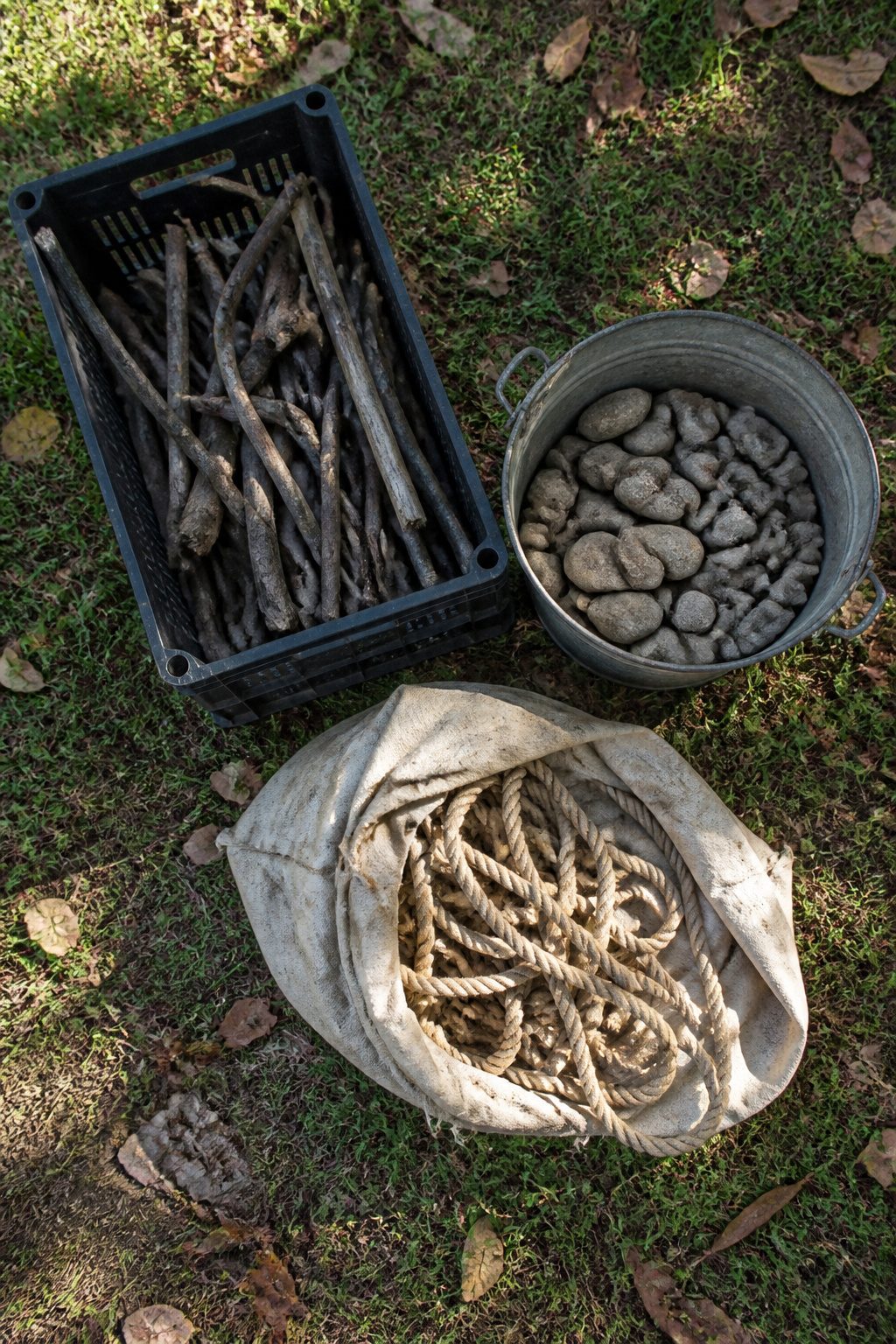
Kids will ignore a bin of pinecones by week three if it sits in the same spot. We learned that rotation matters more than quantity. A milk crate of sticks, a galvanized bucket of stones, and a fabric sack of rope sections stored under a covered porch or in a shed keeps the materials dry and lets you swap one collection in and another out every two weeks. The novelty resets without you buying anything.
Open-ended materials work because they carry no instructions. A stick becomes a digging tool, a tent pole, or a balance wand depending on what the kid needs that afternoon. Same for stones, which shift from currency in a game to weights for a dam to borders for a fairy house. The play lasts longer when the material does not dictate the game.
We keep a rough rule: if a found object fits in a closed fist and has no sharp edges, it goes in the rotation. Larger branches stay in a separate pile for building, and we replace them as they split or rot. No finish, no treatment, just dry storage so they do not mold. The whole system costs the price of the containers, and the time is an hour every other weekend to gather fresh material from the yard or a nearby park and swap the bins.

Balance Beams: Get creative and active with a modular set of balancing beams that connect any which way!

Enhance balance and coordination skills for all ages with this 40 inch round beech wood balance beam.

4-in-1 Design: This 4-in-1 outdoor play toys balance beam combines a balance beam, flag game, obstacle jumps, and ring toss. It works as a balance beam for kids 3+ , enhancing sensory integration, motor skills, coordination, and logical thinking.
Water Features
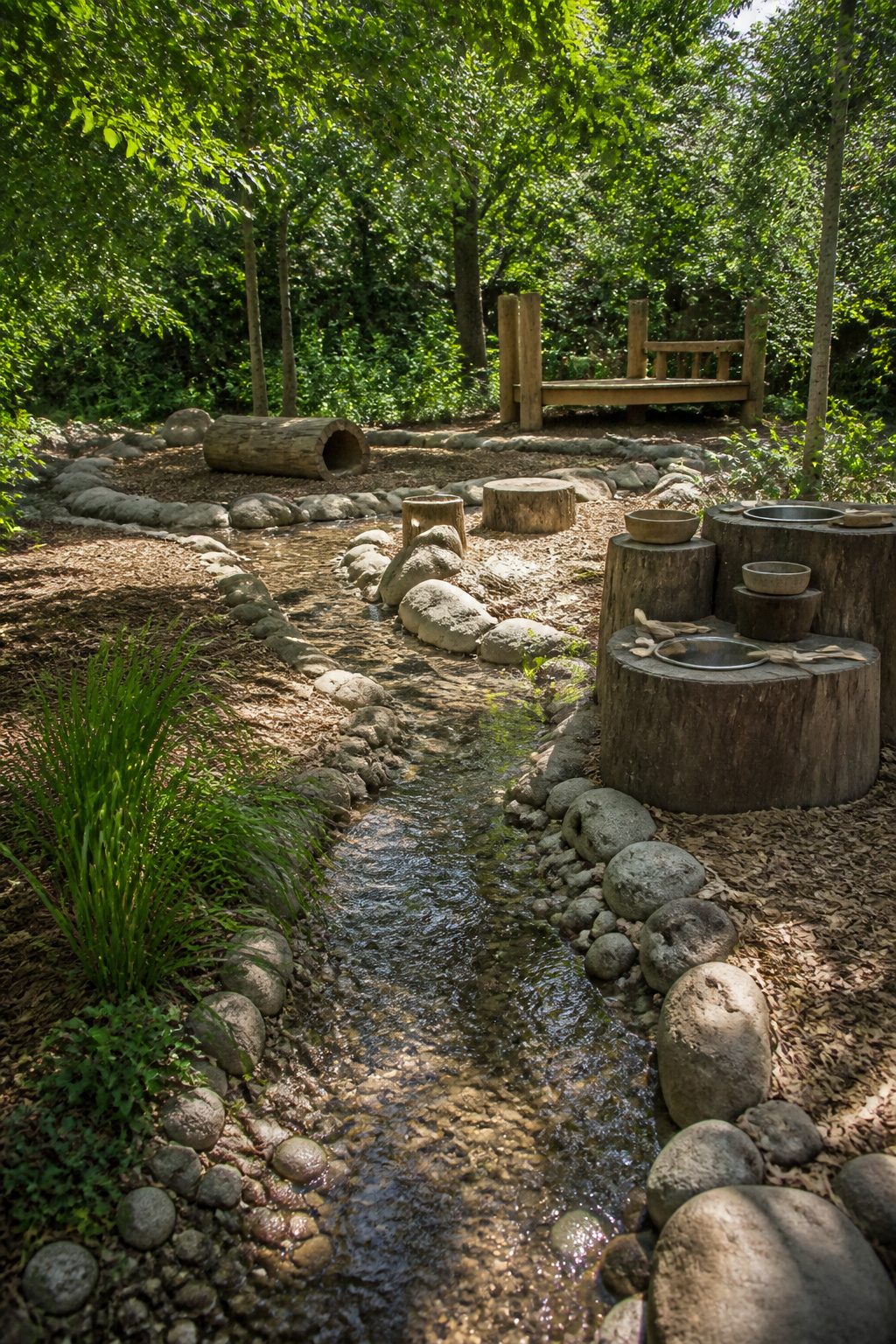
Water play in a natural playground does not need pumps or concrete basins. A shallow stream cut into a slope, even one that runs only when you fill it from a hose, gives kids the chance to race sticks, build dams, and watch sediment settle. We have seen a backyard river system built from a single board, some soil, and a bucket of water; the erosion and gravity experiments happen on their own. For smaller spaces, a trough system or a simple waterfall that spills into a bed of rocks serves the same purpose, and if you route the overflow toward a garden bed, the plants get watered while the kids play.
Mud kitchens and birdbaths are lower-commitment entry points. A mud kitchen is just a sturdy table or stump near a spigot, with a few bowls and a patch of dirt that is allowed to get wet. A birdbath at ground level, refilled daily, becomes a place for splashing and for watching birds. Drainage is the detail that determines whether any of this survives the first season. A stream or trough needs a low point where water can escape toward a drainable area; standing water breeds mosquitoes and, in cold climates, splits whatever it freezes inside. If you are in a zone with hard winters, design the water feature to drain completely or plan to dismantle and store the removable parts before the first freeze. Wood that stays wet will rot even if it is sealed, and spar urethane coatings on any wooden elements need reapplication every couple of years if the feature runs all summer. Letting the surrounding area grow a little wild, rather than manicuring it, actually reduces the labor: the plants absorb runoff, hide the mud, and make the whole thing look intentional instead of neglected.

Ideal Diameter Size: each wooden stump stepping stone has a perfect diameter of approximately 7.87 inches (20 cm), allowing it to stand out beautifully without overwhelming your space; Its size makes it perfect for flexible placement in various settings, ideal for enhancing your whimsical garden decor

[Premium Material ]: Molded from expanded polypropylene (EPP). Ordinary foam cracks and crumbles under pressure, but EPP absorbs the force of impact — standing up to everyday jumping, dropping and roughhousing. These toddler stepping stones support up to 330 lb (about 150 kg), so parents can step on with confidence too. Built for both kids and adults, they add active fun to indoor play, outdoor play zones or backyard adventures(Slip hazard on smooth surfaces — use on a rug or carpet)

SmartYeen stepping stones super value pack,include 8-pack high quality balance stones in bright colors,designed for kids coordination play.
Sand and Gravel Areas
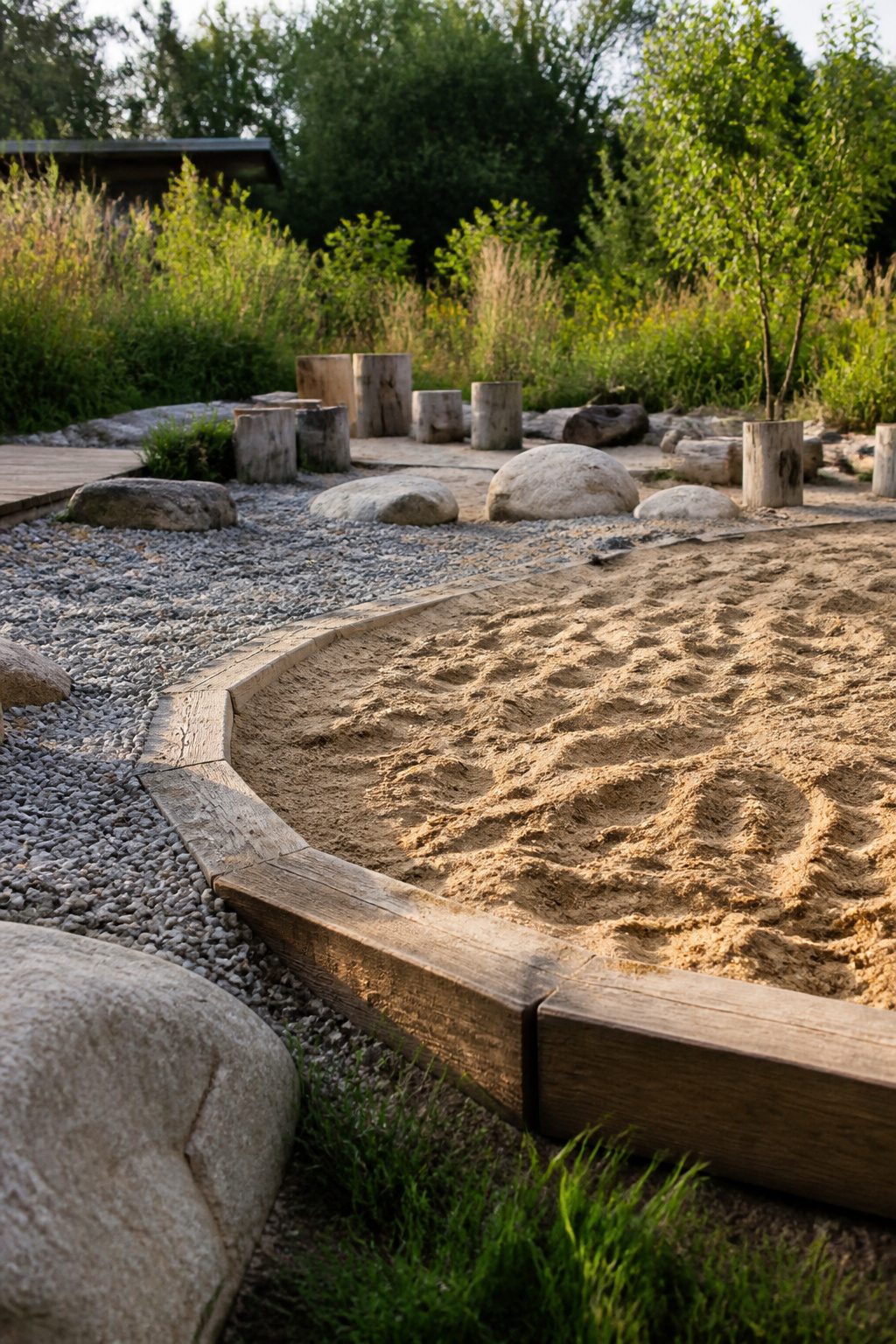
Sand and gravel areas anchor a natural playground because they give kids something to manipulate, not just climb on. Digging, pouring, and sifting are the activities that hold a three-year-old’s attention for half an hour, and they cost far less than any manufactured structure.
For a sand pit, 12 inches of depth is enough for real digging without the hazard of a child tunneling in too deep. Gravel beds work at 6 to 8 inches; go deeper and you are just hauling stone you will never see again. Both need containment. We have seen yards where the sand migrates across the lawn one rainstorm at a time, and the fix is simple edging: landscape timber, concrete curb, or even a ring of buried boulders set half in the ground. The edge should sit 2 inches above grade to catch the material, not so high that it trips a running kid.
Drainage is the part people skip and regret. A sand pit with no outlet becomes a pond after every hard rain. Dig your base with a slight slope to one corner, lay in 4 inches of crushed stone, then set perforated drain pipe before you add the sand. Gravel beds drain on their own if the subsoil is not clay, but if it is, that same pipe-and-stone base saves you from a swamp.
The sensory value is why we keep coming back to these materials. Sand is cool and smooth; gravel rattles and shifts under weight. Kids notice the difference, and they use the two materials differently, sand for building, gravel for pouring and sorting. That unstructured, open-ended play is what natural playground designers are after when they list loose materials as a core element.

Product material:Heavy-duty structural steel, strong and durable, green powder coating, can effectively prevent corrosion and rust.

MID-WEIGHT POLAR FLEECE: Delivers just-right warmth without bulk, allowing kids to move freely. Durable, stain-resistant, and machine washable, it’s a parent-friendly choice built to last

Indoor & Outdoor Play Equipment: From the positive reports we're not sure who loves this sandbox digger more, kids or grownups; the unique fold-up design has easy-grip handles, smooth pivoting controls, and a full-sized seat for loads of imaginative play - both indoors (with wooden blocks, crumpled paper) and outdoors (with snow, dirt, sand, wood chips), so your little one can enjoy realistic construction fun in any season
Climbing Structures
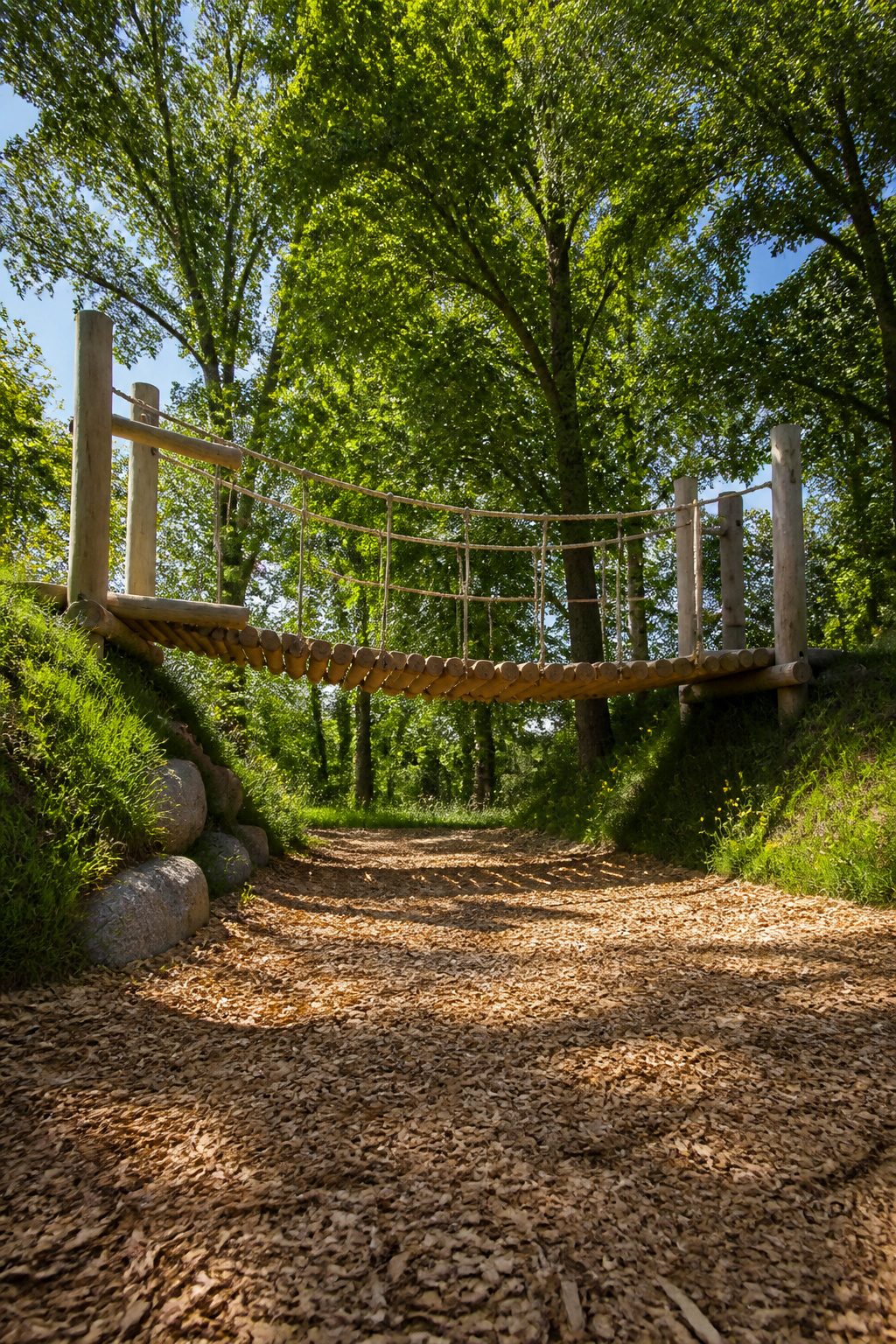
Treehouses, rope courses, and net climbing elements are where a natural playground earns its keep, but they are also where we have seen the most mistakes in our own planning. Keep unsupervised climbing under six feet; anything taller needs adult eyes on it or a locked gate until someone is watching. The passages note that wooden structures can break or splinter, so we anchor every post with concrete footings below frost line and use through-bolts, not screws, at stress joints. Rope courses need tensioners you can check by hand; nylon stretches, and a slack bridge is a trip, not a challenge. For netting, we run manila or hemp over polypropylene every time. It costs more and rots faster, but it grips small hands in a way slick synthetic never will. Moss underneath helps, though we would not rely on it alone; a six-inch wood-chip fall zone is the backup we actually trust. If you are building for a school or park, liability is real and natural materials lack the built-in safety features of commercial equipment. We would still build this way, but we would document every anchoring decision and check tension monthly, not seasonally.

Climb anywhere, no wall required — Experience the thrill of bouldering and climbing from the comfort of your home, office, or on the go. Compact, lightweight, and ready to use straight out of the box without any additional equipment needed.

12PCS Climbing Holds: Come in 6 Macaroon colors and feature 3 different shapes for building a unique rock wall for kids, which can easily attracting children’s to play with

Rock climber clothes men and gifts for mountain climbers. This rock climbing gifts for women is a mountain climbing clothing. This is a bouldering design for boulder
Sensory Gardens
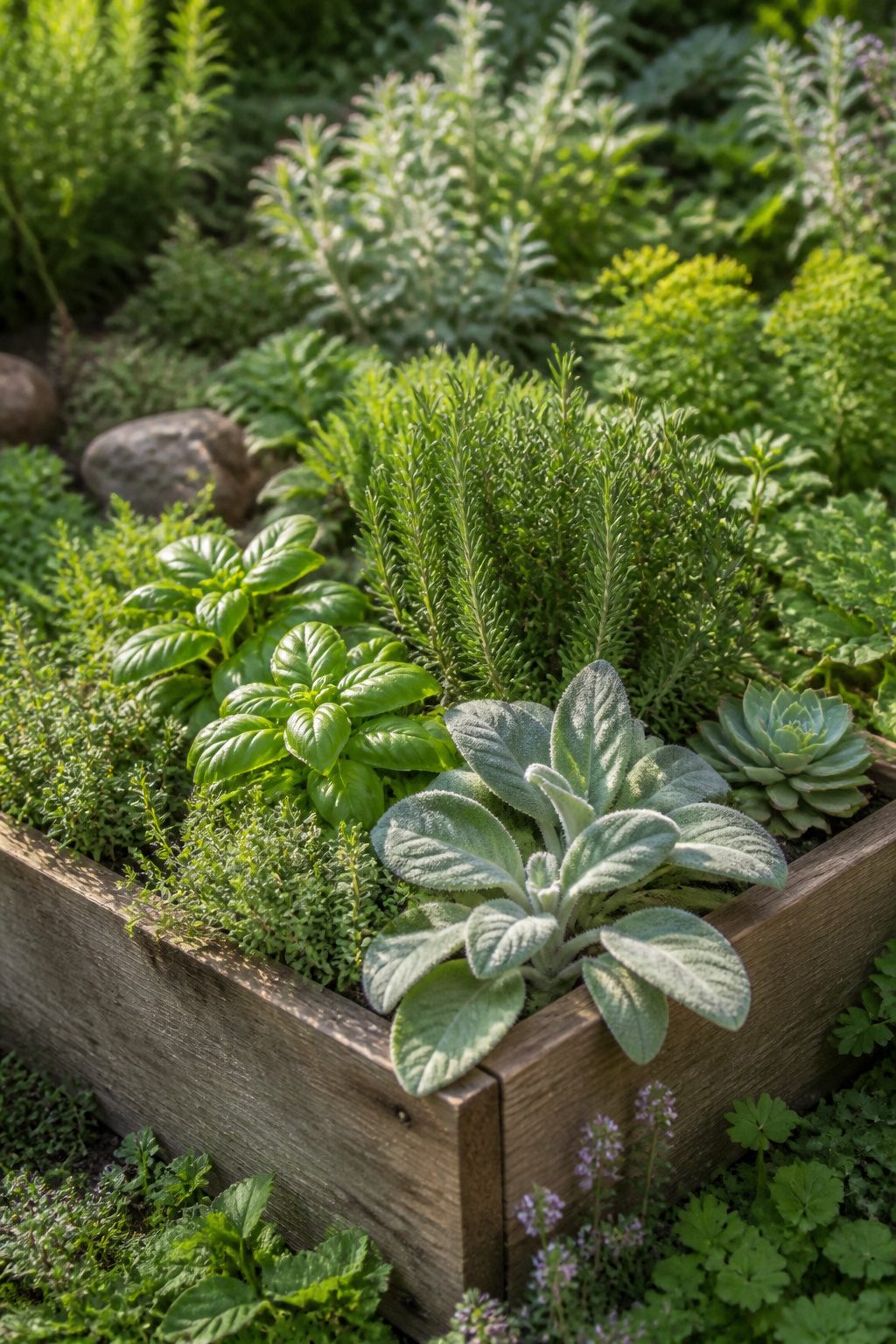
A sensory garden in a natural playground does not need to be large to work. We have seen a single planter box filled with herbs and succulents keep a group of preschoolers busy for an hour, and we have watched a root-view playhouse turn into the most fought-over corner of a yard. The point is to give children something they can touch, smell, and watch change, not to build a show garden.
For touch, we reach for plants with obvious texture contrasts: fuzzy lamb’s ear, bumpy succulents, smooth snapdragon stems. For smell, herbs are the reliable choice. Mint, basil, and rosemary release scent when a child brushes past or crushes a leaf, which is exactly the interaction you want. For visual interest, we mix leaf shapes and heights rather than chasing bloom color, since flowers are brief and leaves last the season.
Every plant in a children’s space must be safe if eaten, which rules out a surprising number of common garden choices. We stick to culinary herbs, edible flowers like nasturtiums, and succulents known to be non-toxic. Seasonal interest matters more here than in an adult garden because children notice when something changes. We plant spring bulbs for early color, summer herbs for scent, and seed heads that rattle in fall.
Low maintenance is not laziness; it is survival. A weekend builder who plants something that needs daily watering has built a chore, not a playground. We choose drought-tolerant herbs and self-seeding annuals, and we mulch enough to cut weeding to twice a season. A planter that a child can water with a small can is enough structure; the plant does the rest of the work.
Shelters
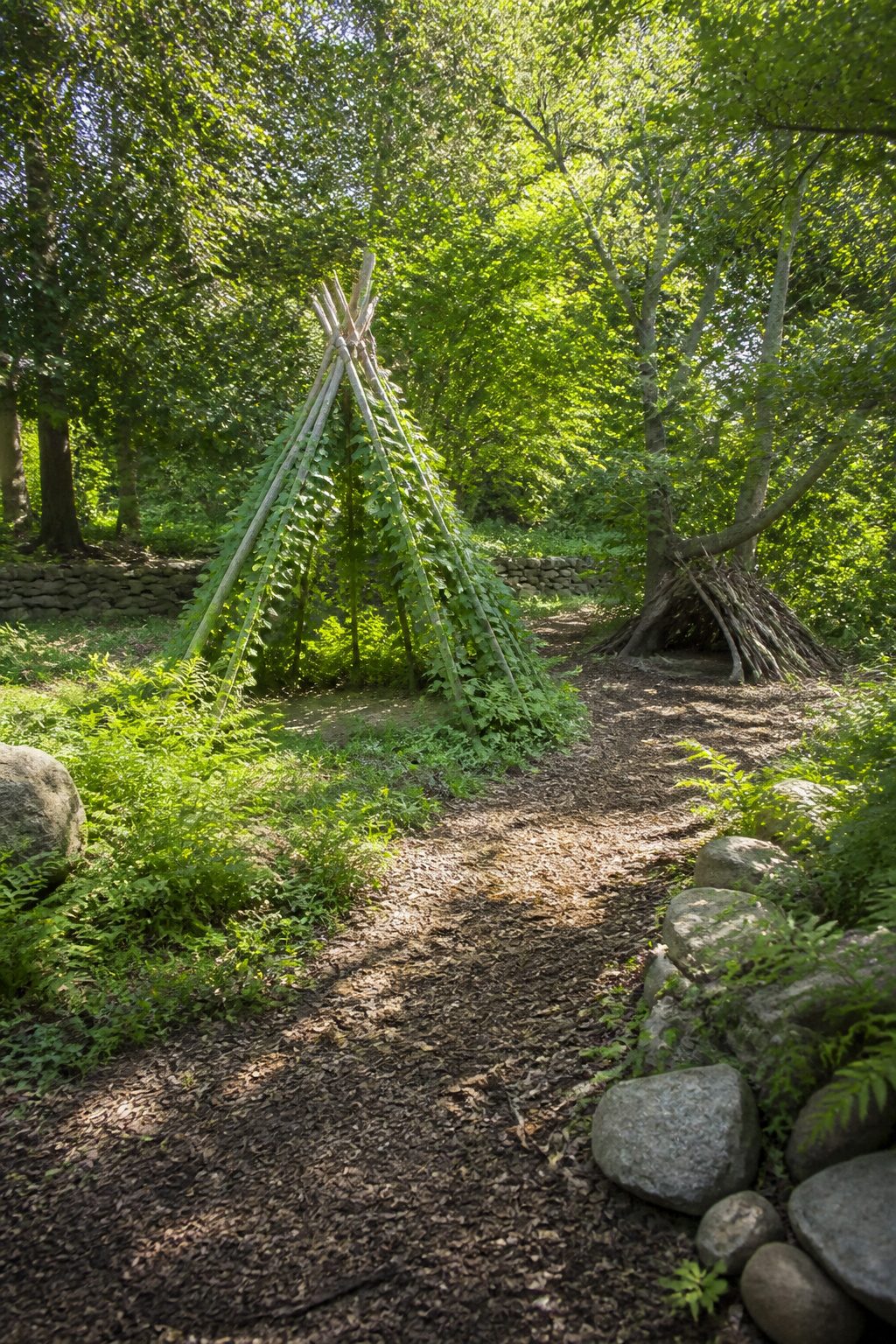
A bean teepee gives children a living shelter they can help build in an afternoon. Run six to eight poles into the ground in a circle, lean them together at the top, and lash with twine; plant climbing beans or morning glories at the base, and by midsummer the walls close in. For something faster, a branch den needs nothing but fallen sticks leaned against a low tree branch or a simple A-frame you build together. We like these because the construction is the play; kids decide the door height, the window gap, whether the roof needs more cover.
If you want a structure that stands through rain and snow, a small cedar playhouse is the year-round shelter that extends the season without complex joinery. Salvage shops and garage sales often yield scrap lumber, old windows, or hardware that fits a naturalized plan at little or no cost. A three-foot by four-foot footprint is enough for two children and a stack of books, and keeping the roof pitched so water runs off matters more than perfect corners. We have seen these outlast metal swing sets because the materials let you replace a rotted board instead of scrapping the whole frame.

12PCS DURABLE BALANCE BEAMS & STEPPING STONES - Includes 4piece tactile stepping stones and 8pcs balance beams equipments,perfect for kids 3-5 and maxload up to 180 lbs, This balancing beam set allow kids to walk,stand,jump or climb on these balance stones,encourage kids to try different games, obstacle courses and configurations.

【Sensory Stepping Stones for Kids】 Includes 8 balance beams, 5 textured stepping stones, 30 action cards, a game spinner and a handy storage bag. This balancing stones set allow kids to walk, stand, jump or climb on these balance stones. Encourage kids to try different games, obstacle courses and configurations. Kids stepping stones suitable for various scenarios including family yards, parks and playground.
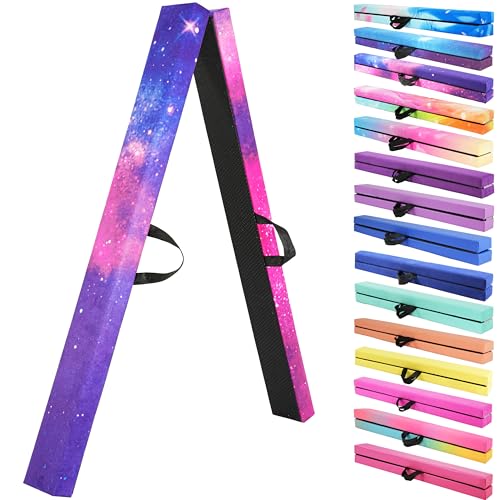
[EXTRA FIRM WOODEN STRUCTURE]: This 8FT folding balance beam is constructed with a 50% wood core structure and 50% High density EVA foam, ensuring durable quality and supporting all basic gymnastics exercises. the beam can support a weight capacity of up to 250 LBS. Beam also has a durable faux suede cover, providing excellent stability for long-term training.
Balance Beams
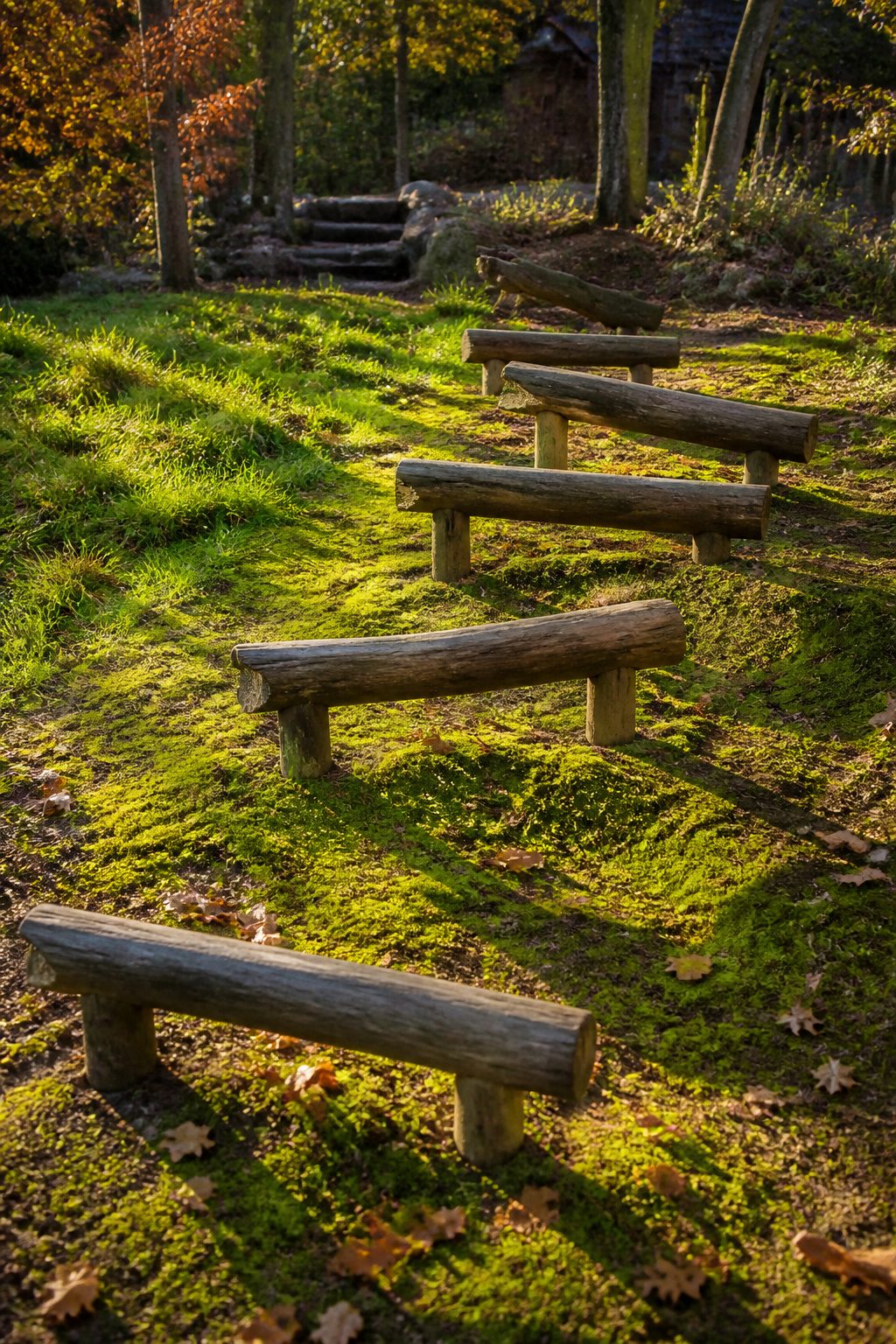
A row of logs set into the ground at staggered heights gives kids a straight line to walk, not a pile to climb. We keep the tallest end under twelve inches for preschoolers and let the grade school set handle stumps closer to knee height. Space them two feet apart at first, then tighten the gap once a child can clear the first course without wobbling. The same logs work here as in a scramble pile, but laid end to end they train a different skill: controlling momentum along a narrow path instead of deciding which surface to attack next.
Lighter pieces let you rebuild the line every season. A child who helped set the spacing will test their own limits more carefully than on fixed equipment, and rearranging the course turns into its own game. Moss or wood chips underneath handle the tumbles; no surface is soft enough to skip the height check. We have seen a toddler freeze on a six-inch beam and a third-grader sprint a jagged line twice that, so the challenge is in the spacing and the wobble, not the elevation alone.

Set of 2 Pre-Aged Stepping Stones: Includes two durable concrete stepping stones, ideal for creating charming walkways or accents in your garden or yard.

READY-TO-PAINT 7x7 GARDEN STONE: No plaster, no messy molding! Hop right into a world of creative fun as you paint a mosaic sun garden stone to life!

Designed for Safety: Each balance stones features an anti-slip ring on the bottom and textured surface for added stability during play. With a 220 lb weight capacity, these stones are built for both kids and adults, making them perfect for indoor or outdoor fun
Musical Elements
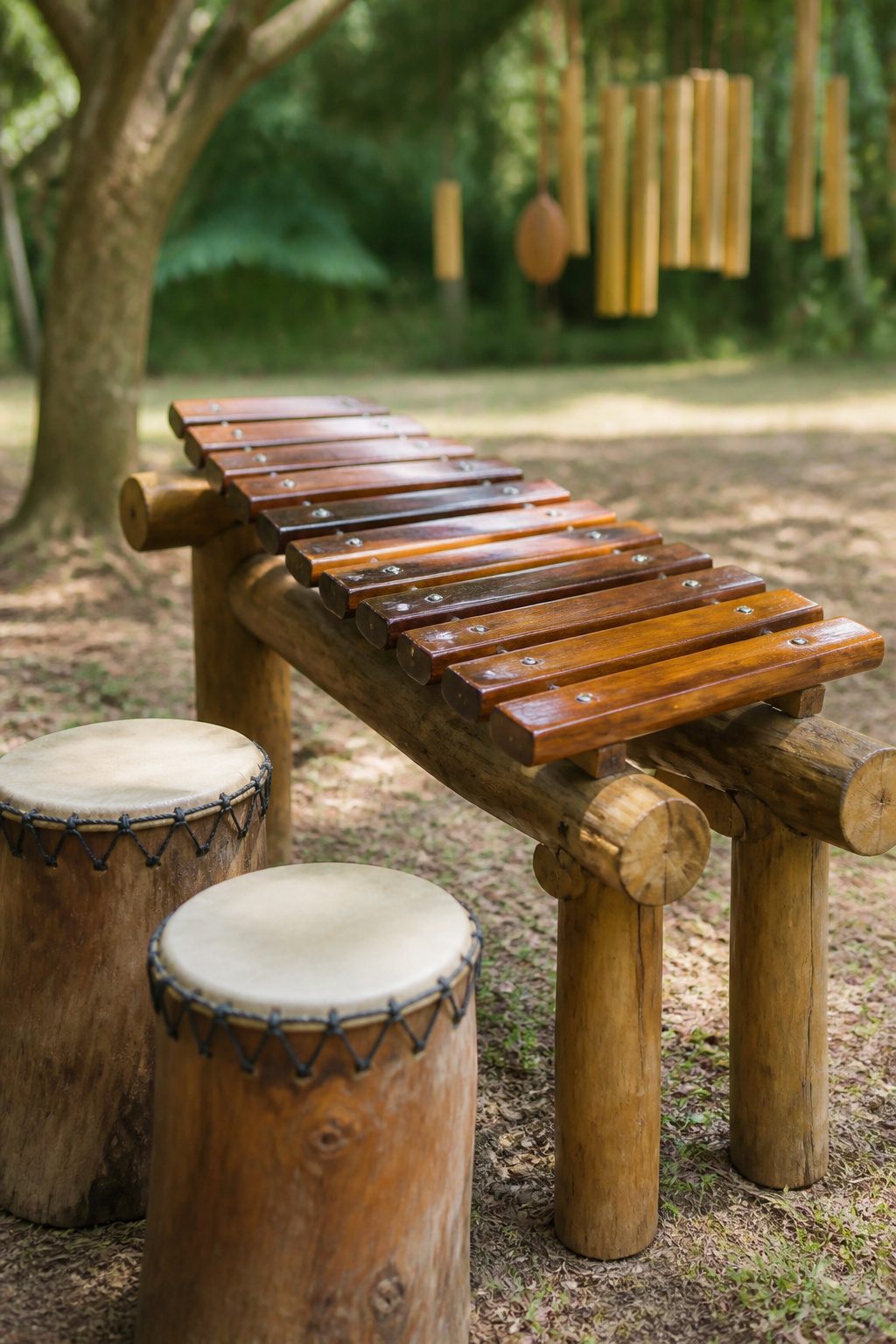
Sound turns a corner of the yard into something children return to without prompting. We started with a wooden xylophone built from hardwood slats and a log frame, tuned by ear with a mallet and a bit of patience. The slats need to be dense enough to hold pitch through humidity swings; soft pine goes flat and dull after one wet week.
Drum stumps are simpler. Hollow out a standing trunk section, stretch a goatskin or a heavy synthetic head across the opening, and lash it with paracord. The body already has a natural resonance. Leave the bark on if you want the rough tone, strip it for something cleaner.
Bamboo chimes are the forgiving project. Cut tubes to graduated lengths, drill near the node, and string them so the striker hits below the hole. The trick is the striker weight: too light and you get tinkling, too heavy and the tubes crack over time. We seal the cut ends with exterior oil, not varnish, so the bamboo can still breathe and dry out.
Weatherproofing these instruments means accepting they will shift. Wood moves, skin stretches, bamboo checks. Plan for retuning once a season, and build the joints with screws rather than glue so you can swap a split slat in twenty minutes.
Why Natural Playgrounds Work
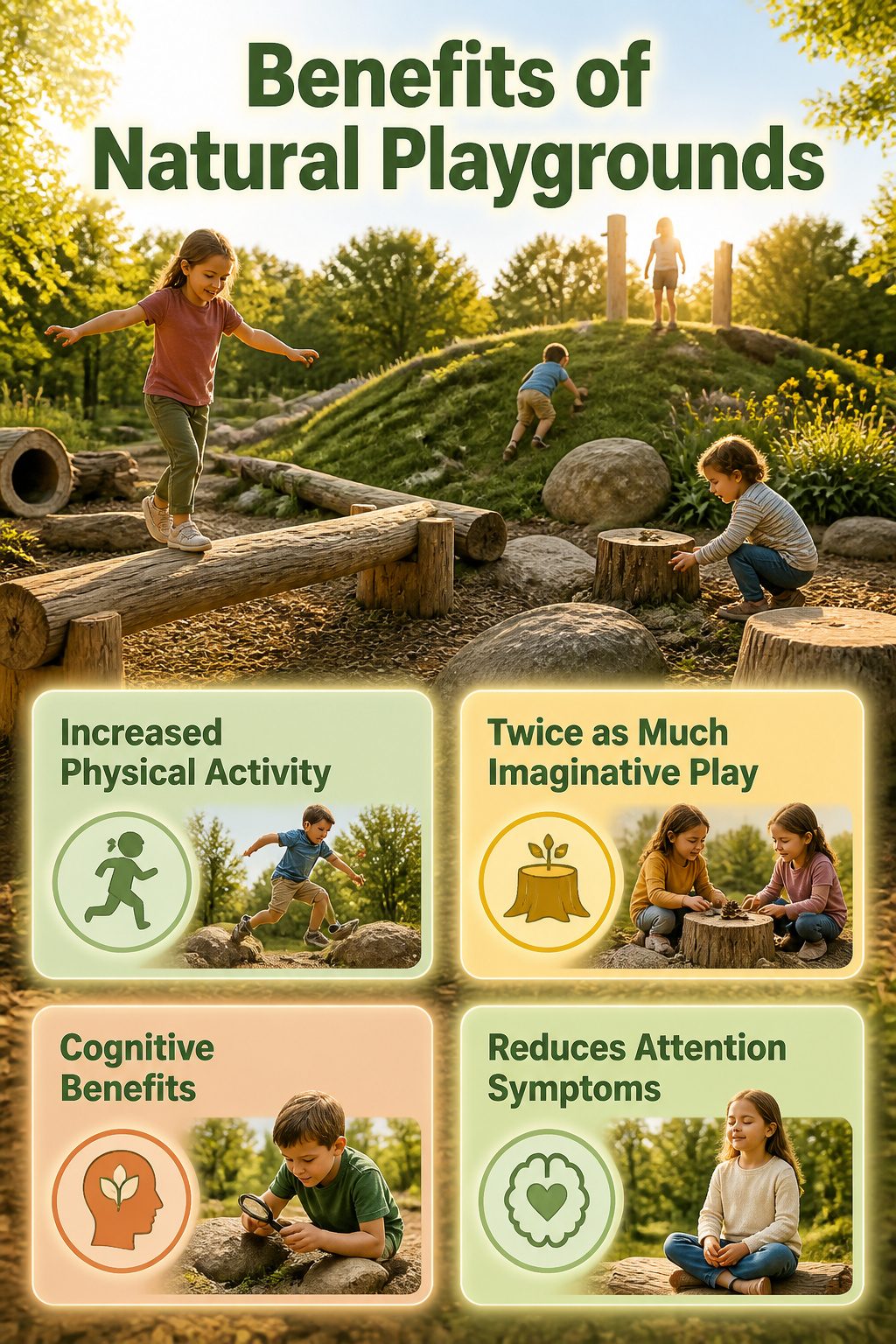
Kids stay moving longer on a natural playground than on the usual plastic-and-metal setup, and not because someone is yelling at them to run. A log rail demands balance, a grassy hill invites climbing, and the work of it feels like play rather than exercise. That difference matters: children engage in physical activity with more vigor in these spaces, and the multisensory effort tires them out in the way an afternoon of real play should.
The imaginative play lasts about twice as long as it does on traditional equipment. Without a slide telling them which way is down, kids invent the game themselves. Unstructured play lets them touch bark, shift rocks, and test what a stump will hold. They learn their own limits and their own solutions.
For children dealing with attention deficit or depression symptoms, time in these spaces reduces what weighs on them. The National Wildlife Federation puts it plainly:
When children play and learn in nature, they do so with more vigor, engagement, imagination, and cooperation than in wholly artificial environments, and that symptoms of attention deficit and depression are reduced.
That last part is what stopped us cold when we first read it. Nature is not an extra; it belongs in the same conversation as sleep and nutrition. A backyard boulder or a schoolyard hill is not decoration. It is part of what children need to function.
Keeping It Safe
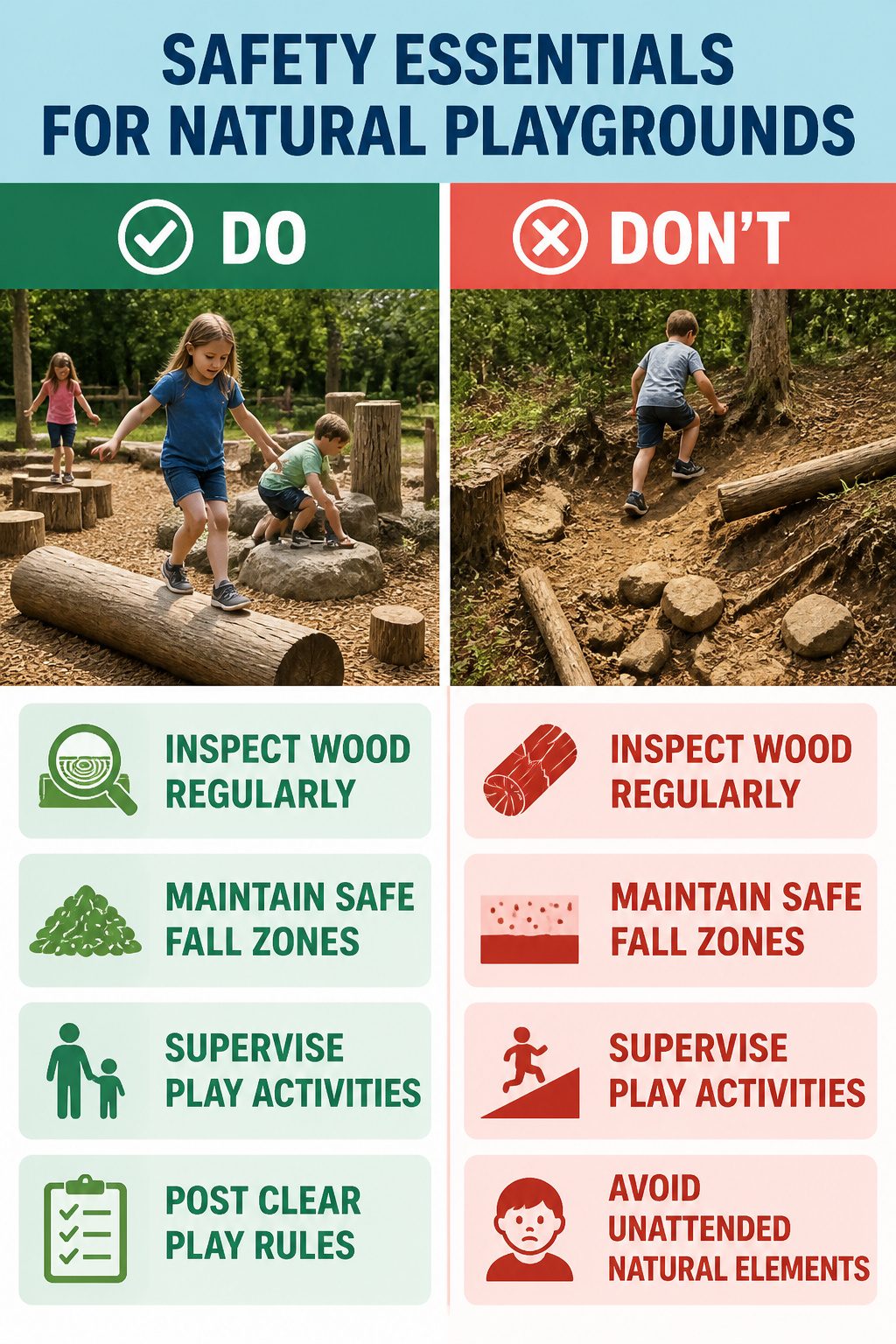
Natural materials carry risks that manufactured equipment does not, and we do not pretend otherwise. A log can split, a boulder can shift, and bark can hide splinters that a child will not notice until they are bleeding. Inspect wood before it goes in, and re-inspect it every season after. Sand the grain smooth, check for rot at ground contact, and replace anything that has cracked rather than hoping it holds.
Fall zones matter just as they do on plastic structures. Wood chips or sand under a climbing element absorb impact better than bare dirt, but they need depth to work. Spread them thick and rake them back into place after heavy use, because a thin spot is a broken wrist waiting to happen.
Supervision is not optional. A child testing height on a stump or speed on a slope is doing valuable risky play, but they need someone nearby who knows when to step in. Post rules if this is a school or park setting: age limits for the climbing elements, no running on slopes, adults within arm’s reach for children under five.
We would skip true natural elements in any space where no adult is reliably present. A nature-inspired structure, built from tested materials with designed fall zones, gives children the texture and challenge without the unpredictability of raw logs and loose rock. The choice between the two is a choice between immersion and certainty, and not every budget or staff level can afford the first.
Designing for Your Yard
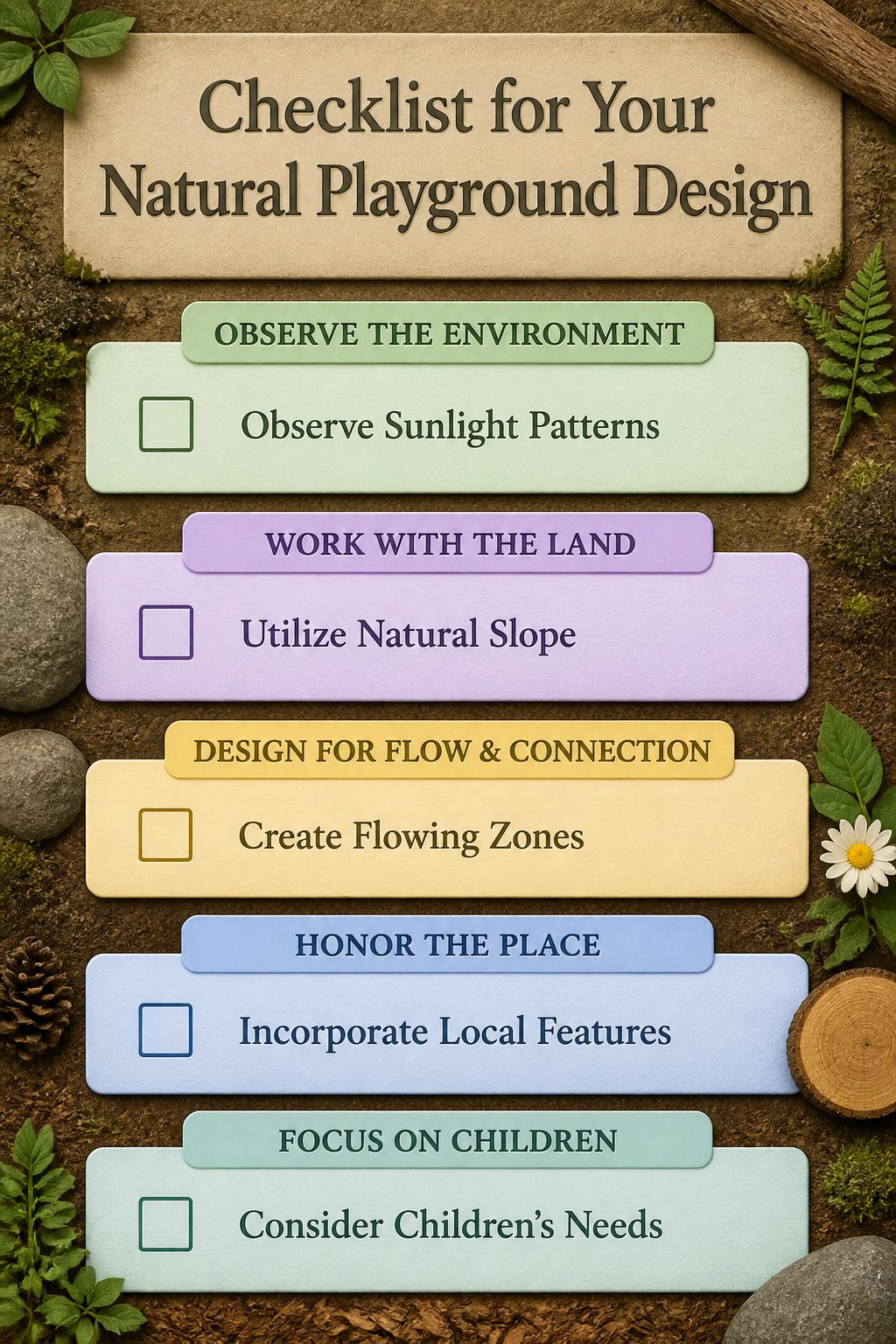
No two yards are identical, and a natural playground should read as though it grew from what was already there. We start every plan by walking the space at different times of day, noting where the sun hits hard and where mature trees already cast shade. Those patterns decide where digging and running zones go, and where a quieter corner under branches might hold logs or a sand circle for sensory play.
Work with the slope you have rather than grading it flat. A hill becomes part of the play path; large rocks already in place become climbing points instead of obstacles to haul away. In one Austin schoolyard we read about, two retired canoes sit where children pretend to paddle a local lake; the whole design mirrors that specific place so the play feels rooted.
Arrange elements into zones that flow, not a checklist scattered across the grass. A sand area belongs near water if you add a pump or mud kitchen, but separate from the running track. Loose parts, tree cookies and small wood blocks, need flat ground for tower-building. Let the path wind around existing garden beds or a patio edge; the playground can gradually transition to open lawn instead of ending at a fence line. The yard already tells you where things want to go.
Maintenance That Fits a Weekend
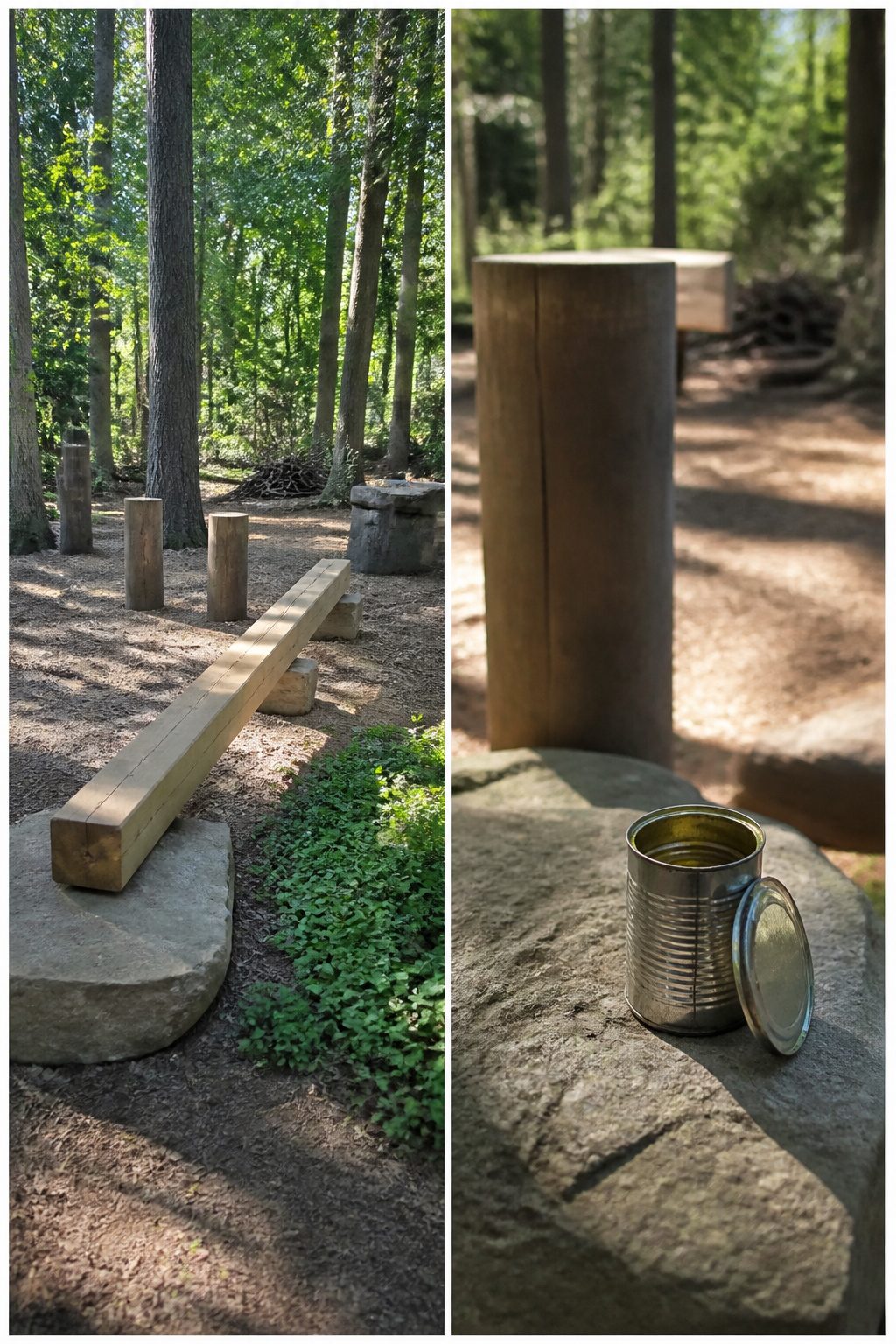
We check our own natural playground twice a year, once after the last hard freeze and again after leaf fall. The first pass is where we catch the problems that matter: rot at ground level on any log we set directly in soil, splinters on handholds, and whether last summer’s plantings have held the slope or washed out. Moving a log six inches onto a flat stone base when you first place it saves you replacing that log two years later. We learned that after pulling a rotted balance beam in year three.
Wood that stays dry lasts. We brush on a penetrating oil to anything vertical every other spring, which takes an afternoon for our whole setup, and we skip the deck stains; they flake and then you are sanding. Plants need the same eye. The willow we planted for a living tunnel needs cutting back hard in late winter or it shades out the path beneath. Ground cover between stumps gets walked on, so we keep a flat of cheap plugs to fill gaps rather than fight bare dirt.
Debris is the hazard nobody plans for. A weekend of wind turns a stick pile into a tripwire. We spend maybe two hours a season clearing, less if we stayed on top of it. The real work is front-loaded in the design: drainable surfaces, rot-resistant species, nothing buried in mulch that holds moisture against bark. Neglect does not announce itself; a wobbling stump or a hidden hole under leaves breaks an ankle before it looks like a problem.
Frequently Asked Questions
What is a natural playground?
A natural playground is an outdoor play area built from elements like logs, rocks, water, sand, and plants instead of manufactured steel and plastic equipment. Children climb boulders, balance on stumps, dig in sand, and invent games with loose materials. The open design lets kids explore, run, jump, and imagine without a single "right way" to use any feature.
What are the benefits of natural playgrounds?
Children stay physically active longer and their imaginative play lasts about twice as long compared to traditional playgrounds. They develop balance, strength, and coordination while playing more cooperatively with fewer children left out. Time in these spaces also reduces symptoms of attention deficit and depression, and kids return to indoor tasks calmer and better able to concentrate.
How do I create a natural playground at home?
Start with what your yard already offers: keep existing boulders for climbing, use fallen logs as balance beams or seating, and add a 12-inch sand pit with simple timber edging. Rotate loose materials like sticks, stones, and rope sections every two weeks to renew interest. Work with your slope and shade patterns rather than grading everything flat, and place elements in zones so sand stays near water features while running paths stay clear.