
The most useful thing you can put in a Christmas Eve box is not a gift at all: it is the order in which the child opens it. Pajamas go on first, the story gets read last, and the whole evening runs downhill into bed instead of uphill into chaos. That sequence matters more than anything inside, though most families still spend under $20 total. We have watched the same box turn a late night into a calm one simply because the sugary treat was small, the book was familiar, and the pajamas went on before the story, not after.
[link-whisper-related-posts]1. Christmas Pajamas
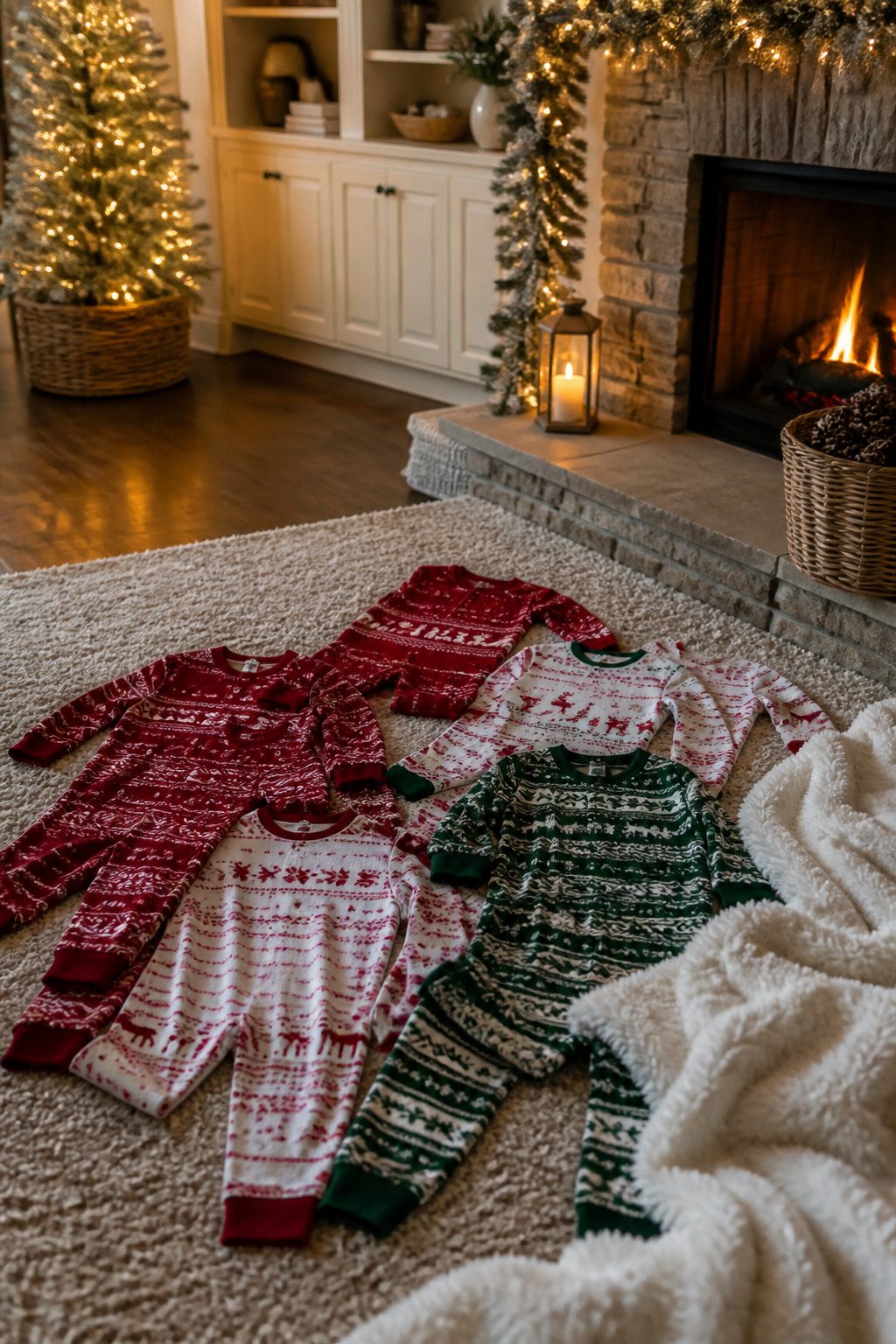
New pajamas are the one item we see in nearly every Christmas Eve box that comes through our Salt Lake City store, and for good reason. They create a visible shift from the chaos of Christmas Eve day into the calm of bedtime, especially when most families time the box opening as part of that routine. The kids put on something fresh, you get a few photos that do not require staging, and everyone is dressed for morning before the night even starts.
Matching family sets work best for the photo, but they are not the only way to play it. For toddlers and early elementary ages, we sell a lot of classic flannel one-piece styles, the kind with feet or without. Older kids and adults usually want separate tops and bottoms in softer jersey or fleece, and we have noticed more families skipping matchy-matchy in favor of coordinated colors or patterns so everyone actually sleeps comfortably. When a full set is not practical, festive socks or a simple new sleep shirt serve the same purpose at lower cost.
Most of the families we talk to open the box after dinner, sometimes right before the bath, so the pajamas go on and stay on. That timing matters more than the pattern.

SNUG FIT COTTON PAJAMAS — They're ready to catch some zzz's in the softest and comfiest 100% cotton pajamas

Christmas pajamas pants stretchy high rise waist with pull the drawstring;fits different body shapes for relaxed lounge and sleep at home.
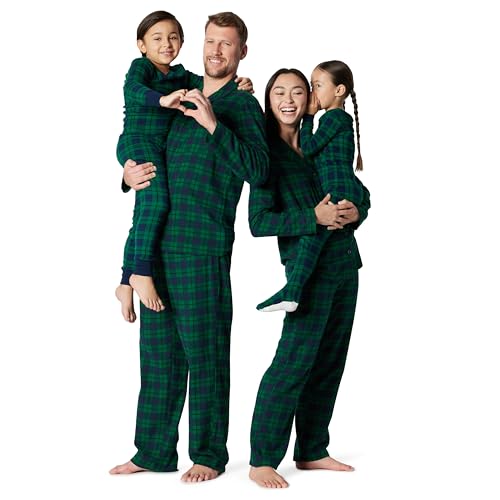
RELAXED FIT: Pants: Relaxed fit through the hips, thigh and leg. Sits below the natural waist. Top: Relaxed fit through the body
2. Christmas Book
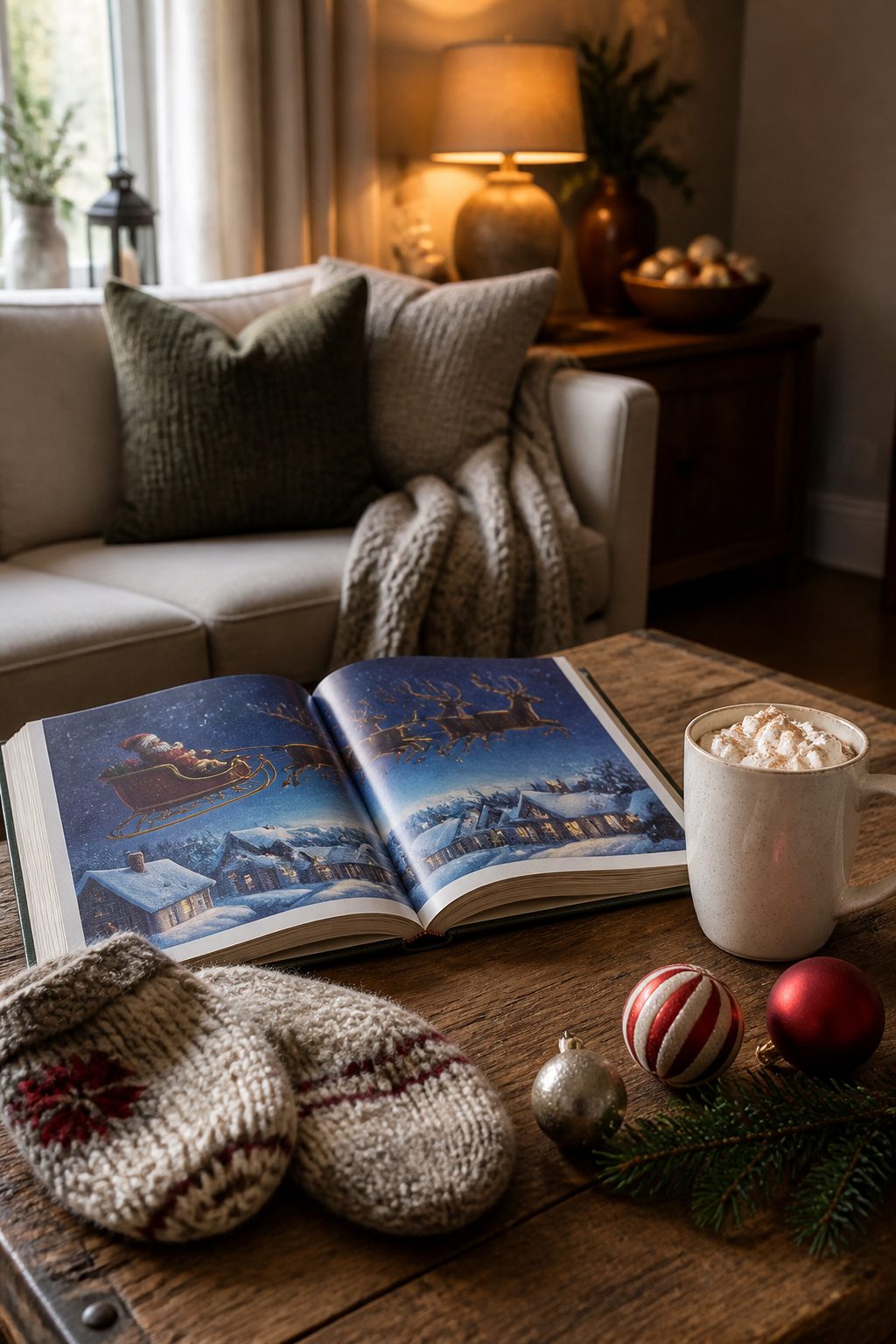
The Night Before Christmas still lands as the book most families reach for first, and for good reason. The rhythm carries kids straight into sleepiness even when they are fizzing with excitement about morning. We have watched younger children settle in faster with a familiar favorite they already know by heart, while older kids tend to engage more when the story connects to something they are actually into, whether that is a holiday chapter from a series they follow or a family story that feels personal rather than generic.
The real value is less about which title you pick and more about the act of reading it together. A short story gives everyone a shared stopping point before bed, and that routine becomes the signal Christmas Eve is winding down. If you are building this tradition for the first time, start with a book you will not mind reading aloud ten years running, because the repetition is what makes it stick. The ornament goes on the tree, the pajamas go on, and the book gets read. That sequence is what children remember and return to.

PAJAMA SET— Made of 100% cotton jersey, these pajamas are the coziest choice for bedtime

SNUG FIT COTTON PAJAMAS — They're ready to catch some zzz's in the softest and comfiest 100% cotton pajamas
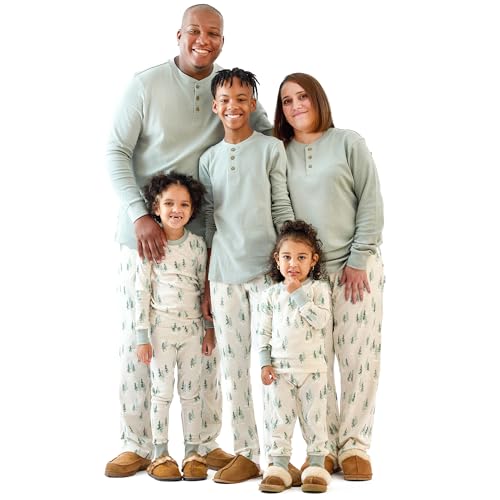
ORGANIC COTTON: Made from Butteryblu-soft GOTS certified organic cotton (with 3% elastane for extra comfort) so it's all super gentle even if you have sensitive skin.
3. Christmas Ornament
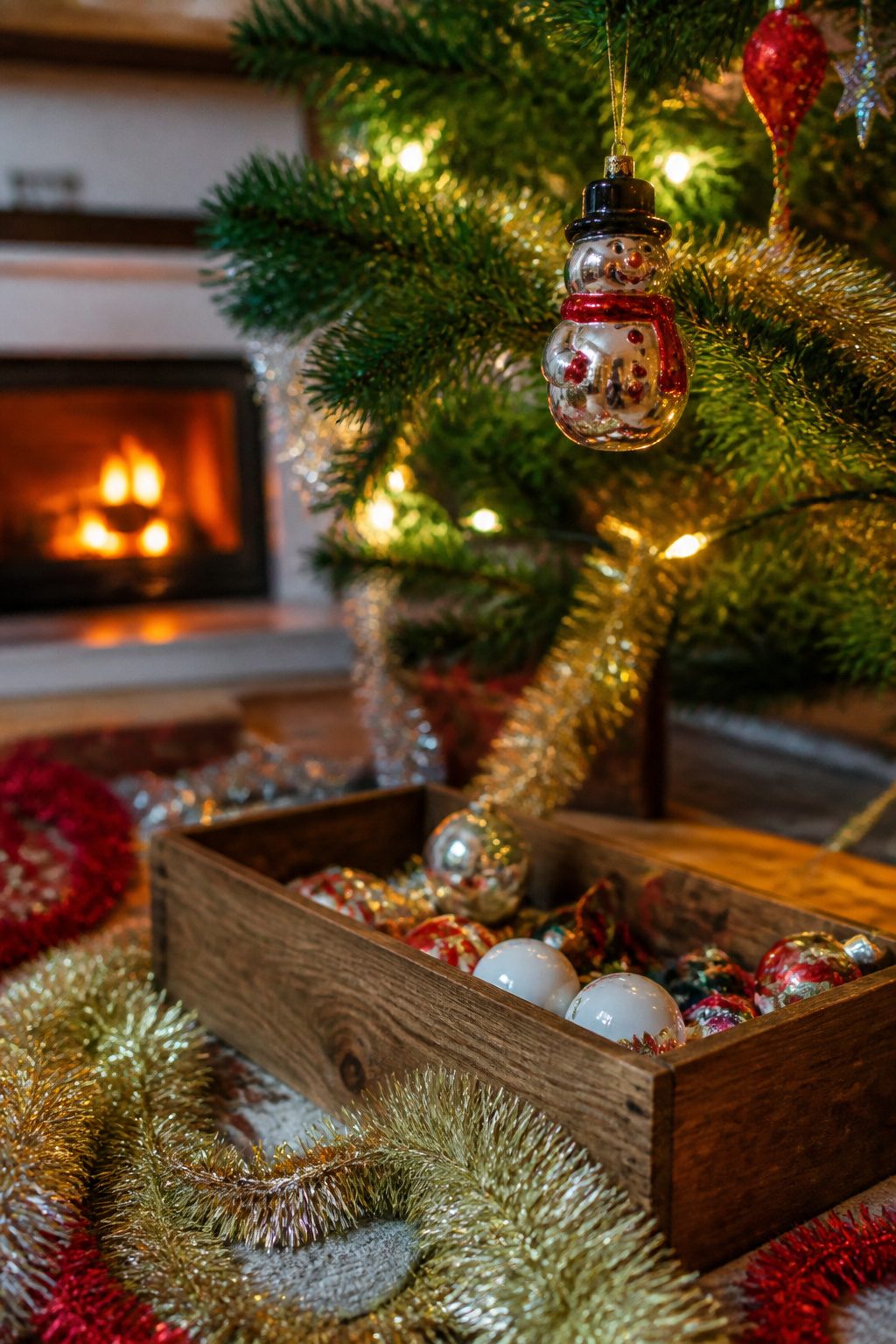
A new ornament each year turns the tree into something the kids can read like a timeline. We started this when ours were small, picking up a store-bought piece tied to whatever they were obsessed with that December, a soccer ball one year, a piano the next, with the date written on the back in fine-point Sharpie. The writing stays discreet, so the ornament still looks right on the branch, but you can hold it up years later and know exactly why it mattered.
You do not have to spend much. A salt-dough handprint or a cut-paper snowflake works the same way if you write the year on it. The homemade ones actually hold up fine if you keep them in a shoebox with tissue between layers, not crammed in a bag where the paint flakes off. Store-bought glass or resin goes back in its original box if you kept it, or wrapped in the tissue the drugstore bags your shampoo in. The key is getting them out of the tree storage bin where they rattle against metal hooks all year and come out chipped.
By the time they are packing for college, that shoebox is a childhood in order, dated, and still intact.


4. Hot Chocolate or Drink
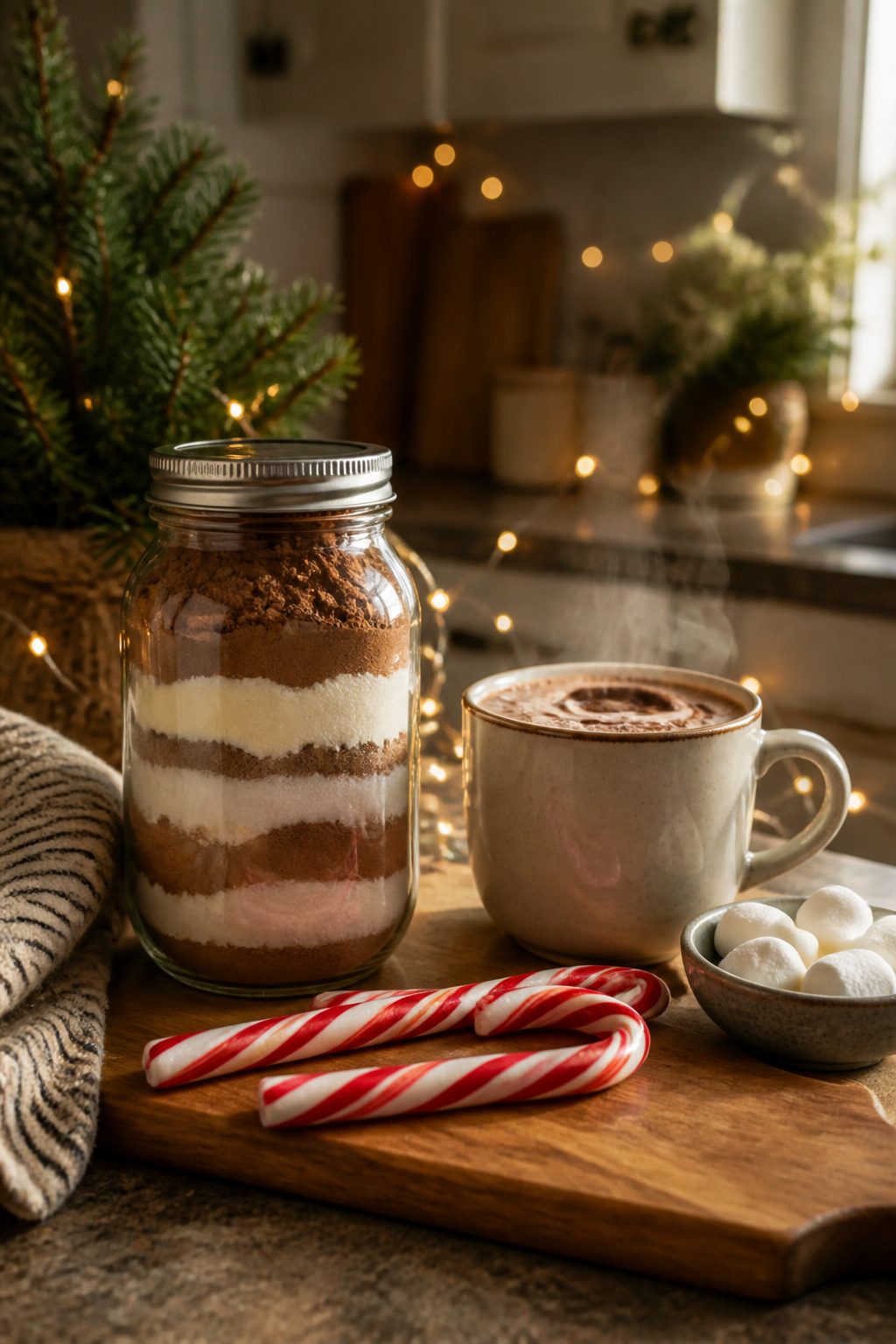
A single packet of hot chocolate mix is the simplest move, and most families already know whether their kids sleep fine after a small cup or turn into night owls. If you want the box to feel more intentional, a mason jar of homemade mix with layers of cocoa powder, sugar, and powdered milk reads as a project you actually finished, not an afterthought from the pantry. The jar becomes part of the ritual, and you can reuse it next year.
We have also seen parents skip the drink entirely and tuck in a festive mug with a note promising cocoa after the box is opened. The mug then doubles as the yearly keepsake, something the child pulls out each December even after the marshmallows are gone.
For serving, warm milk beats water for richness, and a Christmas tree stirring stick that dissolves while small marshmallows float on top turns the cup into a slow event rather than a quick sugar hit. Keep the portion small, serve it during the movie or story, and you have a pace-setter rather than a bedtime bomb.


5. Sweet Treats
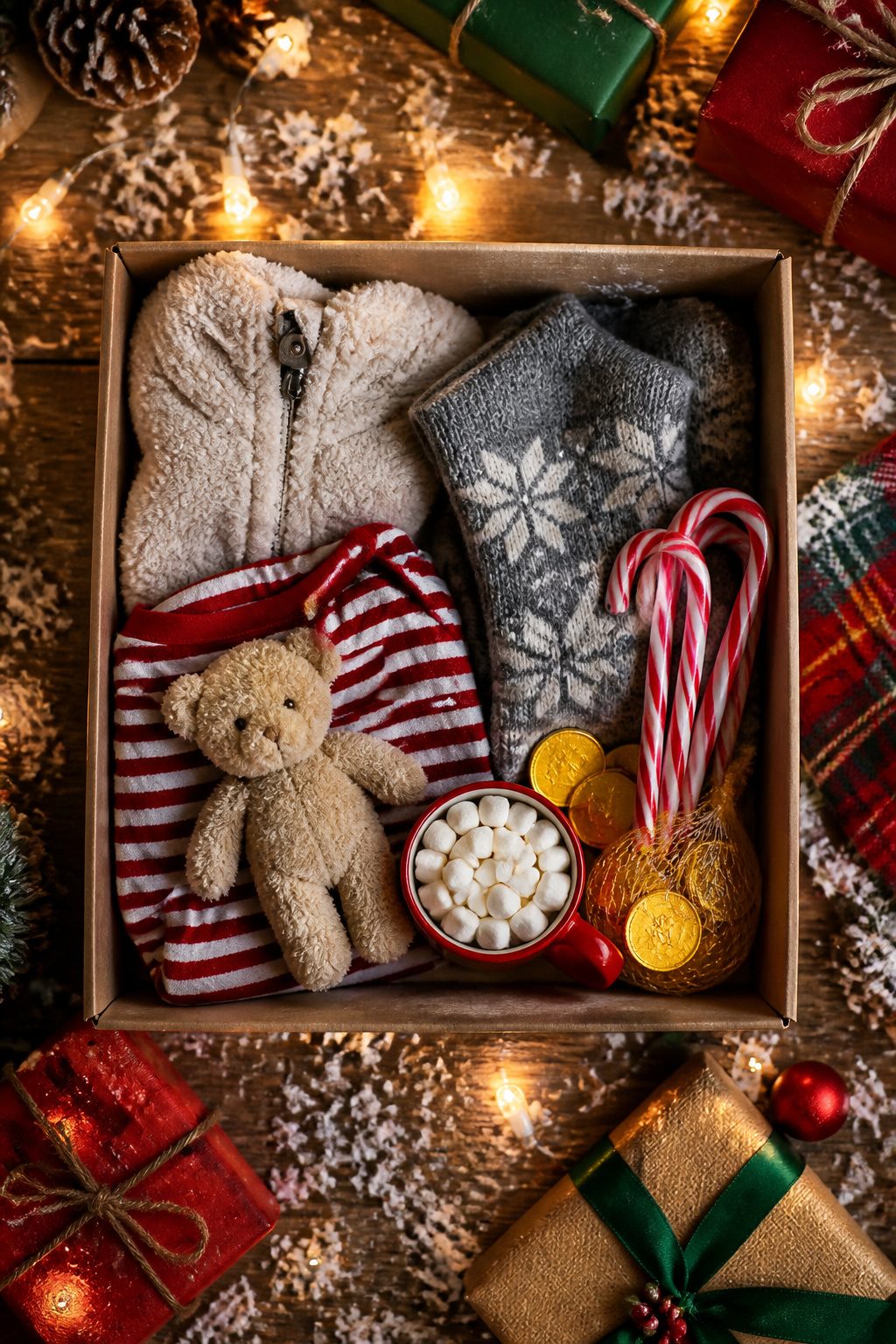
Candy canes and chocolate coins are the workhorses of a Christmas Eve box, and we keep them around because they do exactly what they need to do for about a dollar. A mesh bag of chocolate coins and two or three candy canes tucked into a corner of the box reads as festive without eating your budget. We buy ours at the dollar store or in bulk bins the week before, and we have never once regretted not upgrading to the foil-wrapped Belgian stuff. The point is a small hit of sugar, not a midnight stomachache, so one clearly defined treat per box beats a scattered handful. A single candy cane, a small chocolate figure, or a few coins is plenty. We learned that the hard way the year we stuffed the box with clearance Halloween candy and watched bedtime slide an hour later than planned. If you are building for kids especially, keep the portion obvious and the wrapper easy; you want the treat gone in two minutes so the evening keeps moving toward the story or the movie.

Rich in Quantity: you will receive 16 pieces of vintage Christmas snowman ball ornaments in 8 different styles, 2 pieces of each style, And we use collage technology to show the pattern on the front of the ball, enough quantity and various styles to meet your needs and replacements, you can also share some with your family members

SNOWFLAKES OF VARIED SIZES: A value pack of 36 pcs Christmas snowflake ornament decorations in 3 sizes and 2 classic styles: 8 pcs of 4.2-inch for both styles, 10 pcs of 3-inch, and 10 pcs of 1.8-inch. More than enough for your Christmas decorations.

Christmas Ornament Set: Snowman Ornaments includes 6 designs totaling 12 snowman Christmas tree ornaments, with 12 jute strings. Each design comes in a set of 2, providing ample quantity to easily meet your daily party and winter decor needs
6. Reindeer Food
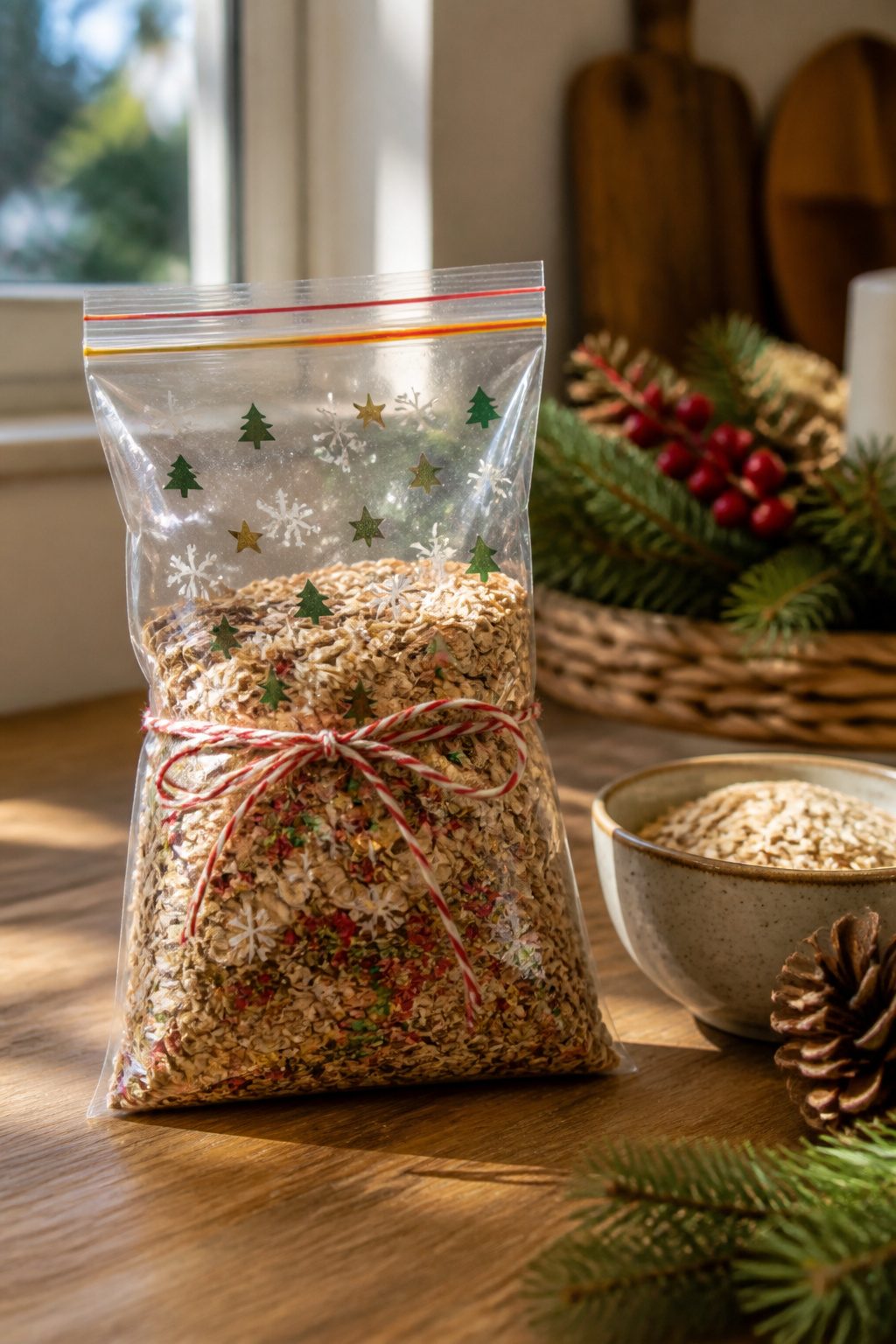
Magic Reindeer Food is one of the cheapest things you can put in a Christmas Eve box, and it gives kids something physical to do with the Santa story instead of just waiting. We make ours from porridge oats and a pinch of biodegradable glitter, nothing else. Skip the birdseed mix unless you already keep it in the pantry; oats alone are what most families have on hand, and they work fine.
The recipe is simple. Put a few generous scoops of oats into a small sandwich bag, add the glitter, and seal it. Decorate the bag to match your box if you want, but the kids usually take care of that part themselves.
Scatter it outside after dark on Christmas Eve, not before. The timing matters because the whole point is sending the signal that Santa’s team is cleared to land. Some families leave it on the lawn, others by the mailbox where the sleigh would have room to touch down. Either way, the oats disappear overnight, which is its own small mystery.

Cotton-like fabric family pajamas- Our matching christmas pajamas for family softer than flannel, more durable than cotton! Machine washable, fade-resistant, and keeps shape after many time washes. The matching family christmas pajamas no pilling like fleece, no shrinkage like pure cotton.

Christmas Pajamas Scratch-Off Cards INCLUDES 22 holiday plaid pj party game cards: 20 "loser" cards and 2 "winner" cards.

RELAXED FIT: Pants: Relaxed fit through the hips, thigh and leg. Sits below the natural waist. Top: Relaxed fit through the body
7. Family Game or Puzzle
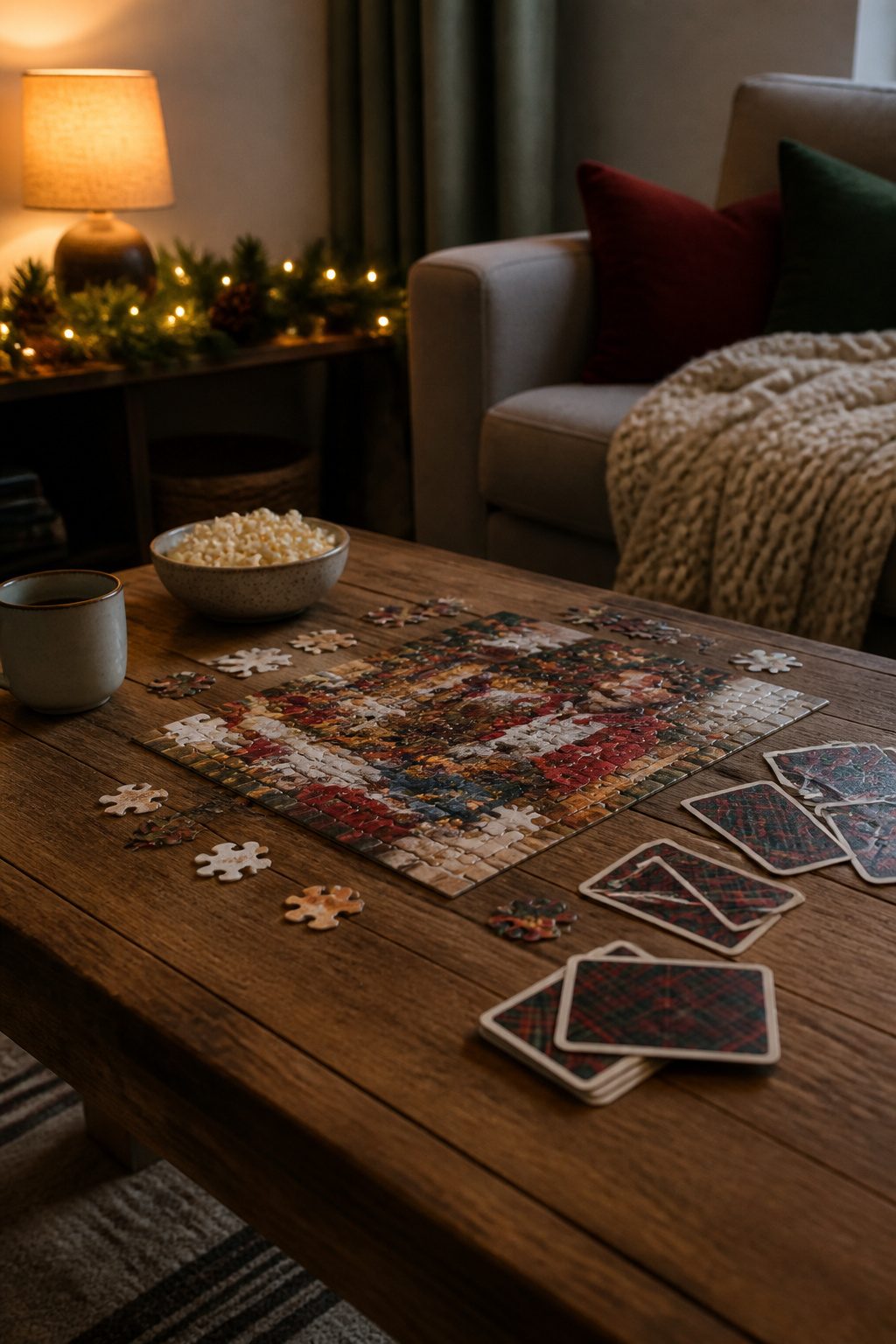
A card game or small puzzle works better than a board game for Christmas Eve because it fits the evening rather than becoming its own gift. We see families grab Dobble or a 50-piece festive jigsaw in December, something that runs 15 to 30 minutes and lets a four-year-old sit at the same table as a twelve-year-old. The puzzle can stay half-finished on the coffee table, picked up again Christmas morning. Skip anything with a long setup, a rulebook, or pieces that will get lost in wrapping paper. The point is to settle everyone down, not wind them up.

Safe & Ultra-Soft for the Whole Family: Crafted from a breathable 95% cotton blend with 5% spandex, these pajamas feature skin-friendly, perfect for babies, toddlers, and sensitive skin. No pilling, fading, or shrinkage after washes, ensuring long-lasting comfort for everyone in the family

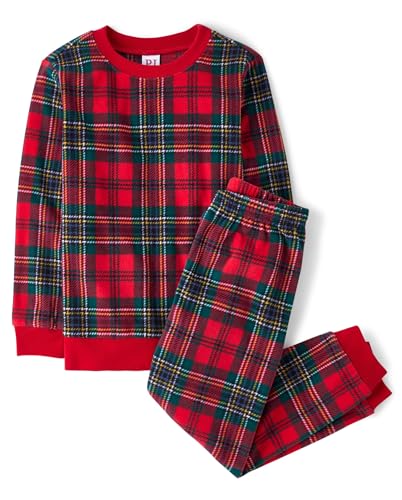
FABRICATION: 100% polyester microfleece body, 100% polyester rib-knit neck & cuffs, imported
8. Christmas Movie
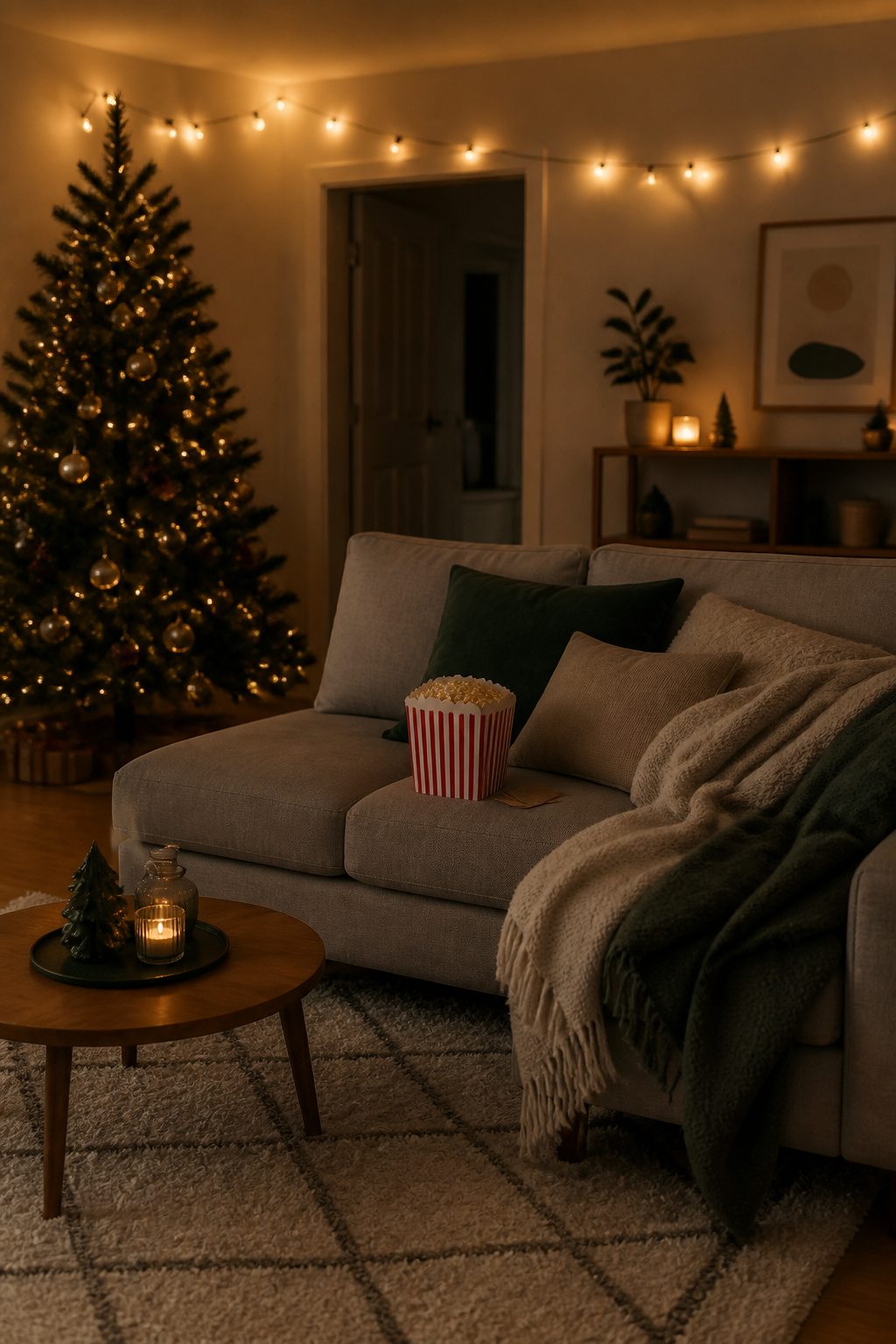
A DVD takes up space in the box and risks being a movie they already own, so we lean toward a streaming gift card or a printed code tucked inside a popcorn packet. Prime, Apple, or YouTube codes work for families who have cut the cord, and the kid never has to know you bought it that afternoon.
The real win, especially for tweens who have outgrown Santa routines, is a homemade ticket for a future night out. Print a card good for one December trip to a theater, or for a living-room showing of The Polar Express, Elf, Home Alone, or The Snowman with the house lights dimmed and a bowl of popcorn. It turns the box into a promise instead of just another thing, and it costs nothing but the paper.
We have used this as our experience voucher when the budget for a full outing was not there. The ticket sits in the box, the movie happens a week later when the holiday crush is over, and the evening still feels planned rather than improvised.


9. Cozy Blanket or Slippers
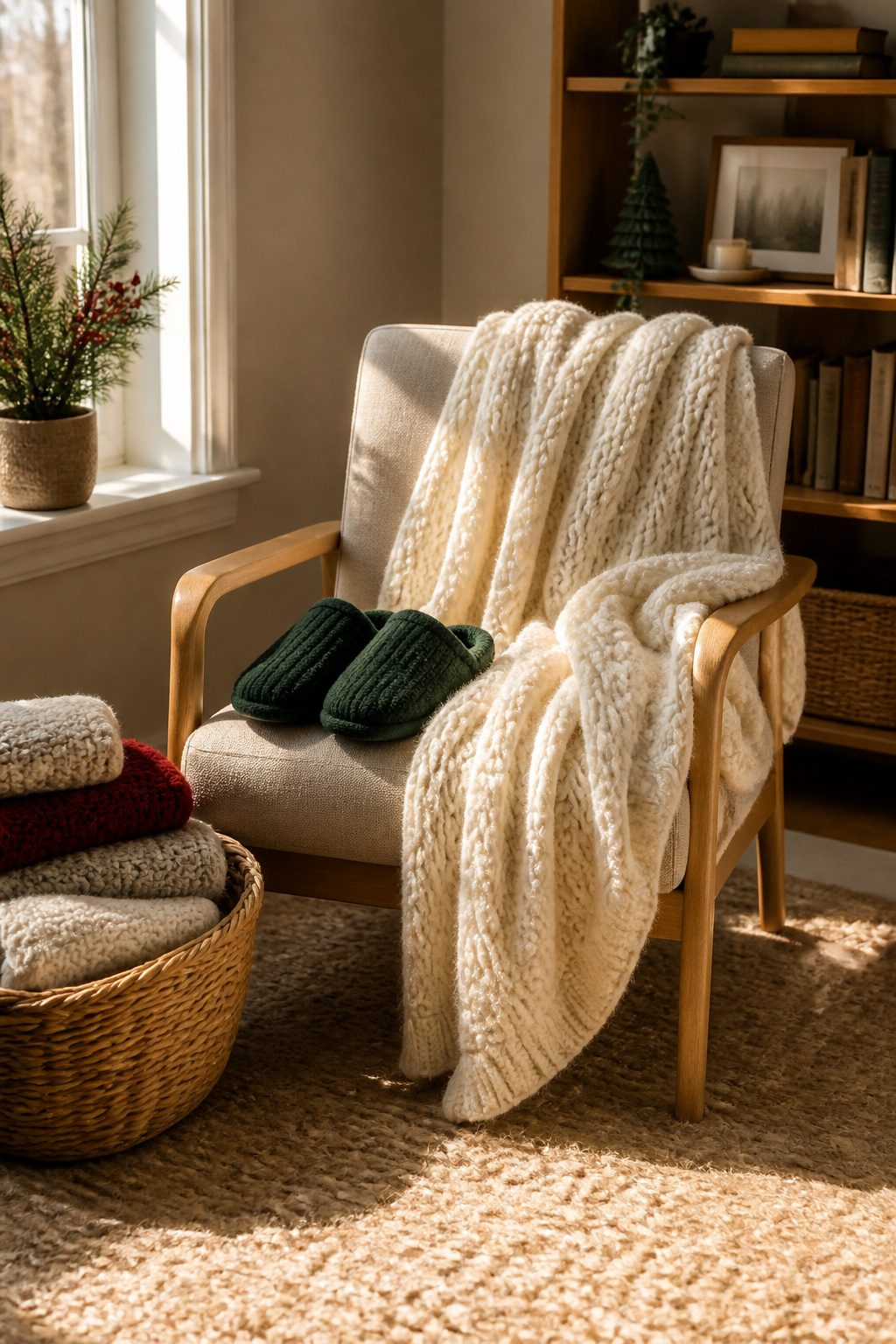
A soft throw or a pair of wool slippers turns the pajamas in your Christmas Eve box into an actual outfit for the evening, not just something to sleep in. We like this as the one bigger spend if the rest of the box stays small: a shared family throw runs about the same as a good pair of pure wool slippers with a cushioned non-slip sole, and either one justifies the space it takes. The slippers solve the problem we all hit around December, when kids have outgrown last year’s pair sometime between Thanksgiving and now. A blanket works better if your plan is everyone on the couch for a movie; slippers win if you are trying to build a ritual that gets them into bed without a fight. Either way, keep the colors neutral so it does not feel like a costume they can only wear for two weeks.
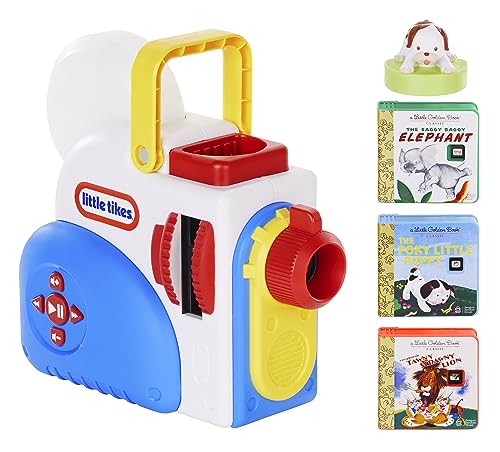
BRING STORYTIME TO LIFE - Watch, listen, and read along to stories like The Poky Little Puppy, as they shine bright on the wall. Colorful lights and sound effects help each story magically unfold.


10. Craft Activity or Coloring Book
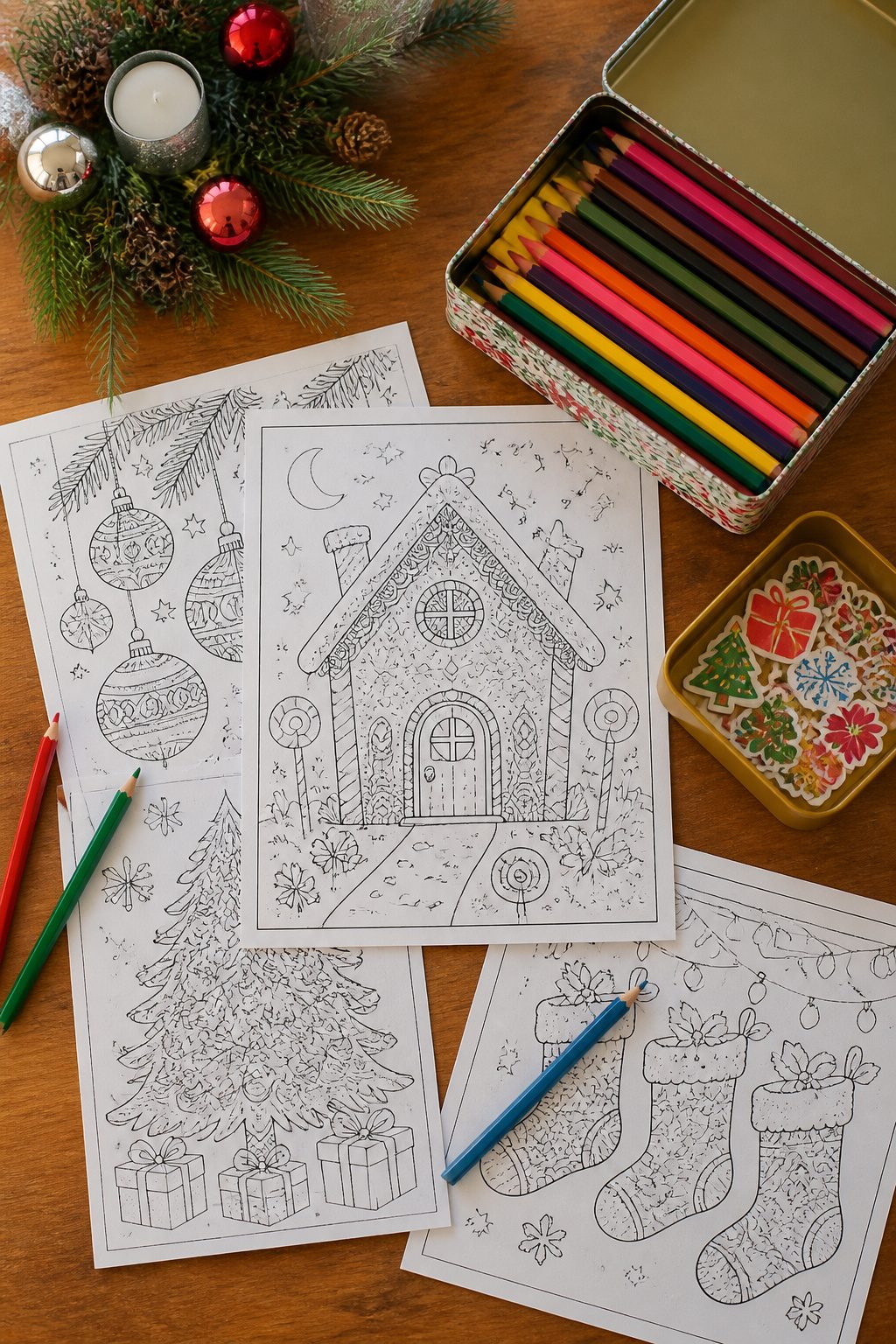
A craft activity in the box works because Christmas Eve is the one night of the year when kids are wired but adults need them occupied, not asleep. We have learned that the best projects are the ones that need no drying time and no adult assembly. Coloring sheets, Christmas stickers, or a small make-your-own kit hit that mark. If you go with a puzzle, pick one small enough to finish that evening, or accept that it becomes a Christmas morning project left half-done on the coffee table.
Skip anything requiring glue that needs to set, glitter that will be in the carpet until March, or paint that demands a supervised rinse at the kitchen sink. The goal is calmer hands, not another chore. We keep the supplies inside a gallon zip bag so the box itself stays clean, and we toss the finished pages straight into the fire kindling or the recycling bin before anyone thinks to save them.

【Handcrafted Christmas Delight】Add a touch of handmade charm to your holiday decor with these 4Pcs Christmas Snowman Ornaments. Each one is lovingly handcrafted, making them unique additions to your Christmas festivities.

Christmas Wood Ornaments: The package comes with 32pcs Christmas Snowman Ornaments and a bundle of hemp rope, there are 16 styles and 2pcs for each style, sufficient quantity and style to meet your Winter Christmas Holiday decoration.

EXTRA LARGE STATEMENT BALLS – At a bold 4.72 inches (120mm), these oversized white glitter snowballs command attention as focal-point ornaments. Cluster them toward the center of the tree for a dramatic, high-end look.
11. Letter From Santa
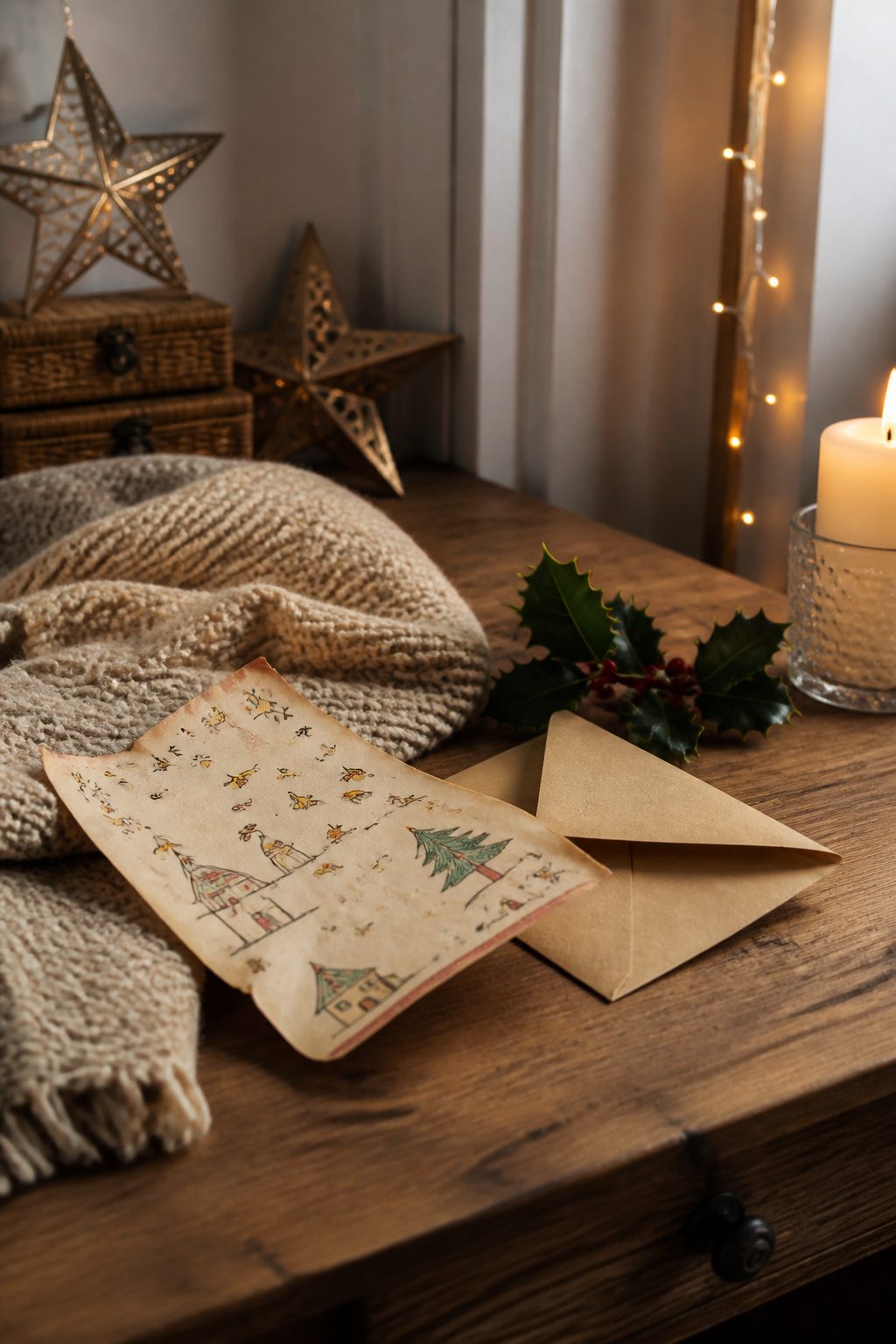
We have seen three ways families handle the Santa letter, and each lands differently. A printed template you personalize at home costs nothing but time and works fine if you already own a decent printer. A handwritten note in shaky block letters takes ten minutes and reads more believable to younger kids, though we have watched parents stress over handwriting that looks "too neat" and ruins the magic. The third route is ordering from a service that mails a North Pole postmarked envelope, which runs higher but saves the step entirely.
What the letter actually says matters more than how it arrives. We have noticed the best ones establish the order of the evening rather than just promising morning. They mention something the child did this year, set up what to open next, and place the child at the center of the ritual. One parent told us she writes that Santa left the box early because the sleigh is still loading, which explains why the gifts inside are small.
Put the letter on top so it is the first thing found. The child reads it, then follows its cues through the rest of the box. That sequence turns a pile of items into an actual Christmas Eve routine, which is the whole reason you are building the box in the first place.
12. Keepsake Item
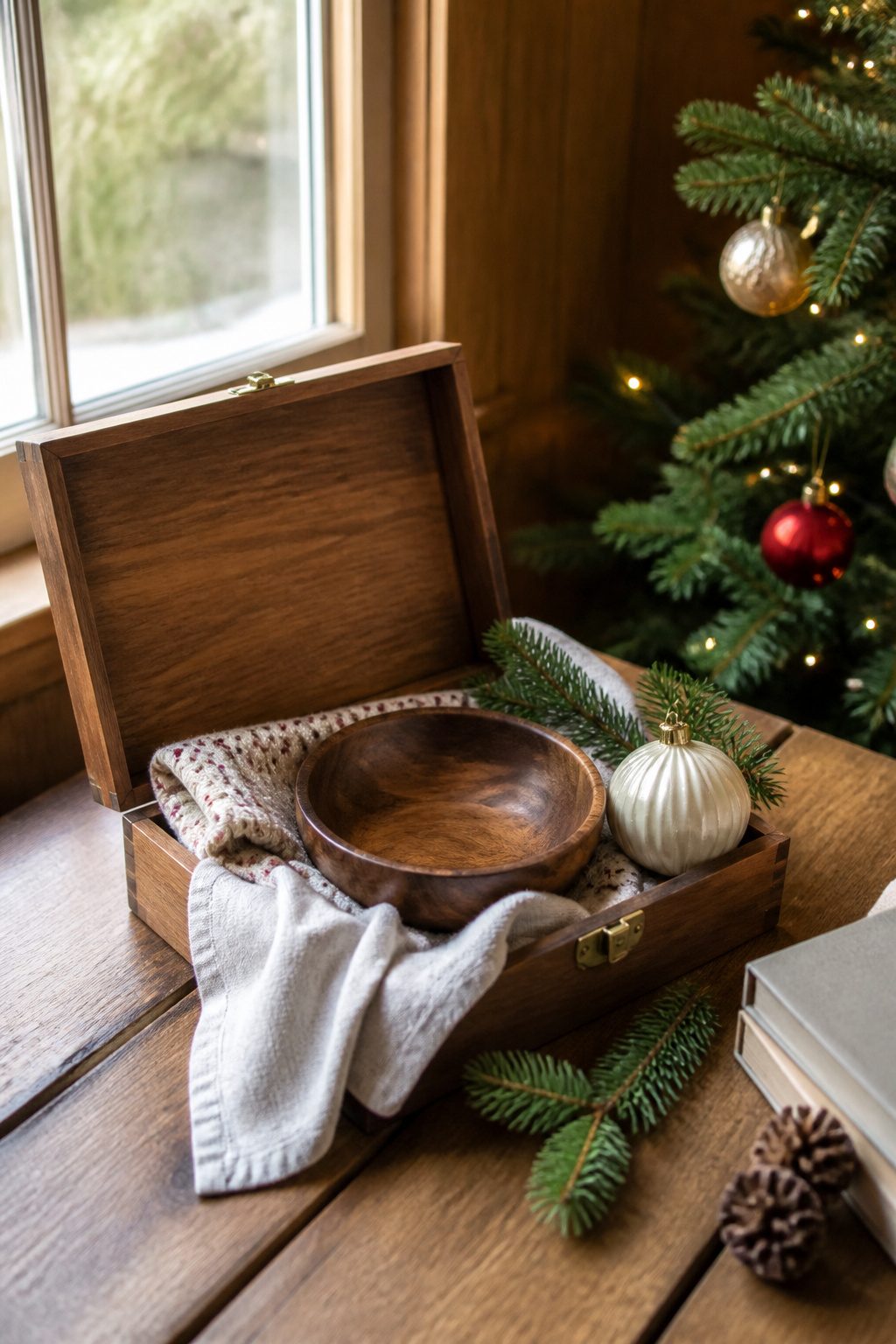
A keepsake item is not the same thing as the ornament that goes on the tree later. We learned this the hard way after our first year, when the box felt thin and the morning tree-trimming had nothing new to hang. A keepsake sits in the box itself: a small engraved trinket dish, a wooden block stamped with a name and the year, or a metal bookmark with the date. These are the pieces that end up in a drawer or on a shelf, not the branches.
Most families spend $12 to $25 for a personalized metal or wood piece from Etsy shops or local engravers in Salt Lake. The big-box craft stores will also do same-day engraving on select items if you bring it in early, though their fonts are limited and the lines get long after Thanksgiving. We have had better luck ordering two weeks out from a small shop, where you can preview the layout and request a specific font that matches the child’s handwriting stage. A baby block for a toddler reads differently than a sleek bar keychain for a teenager, and the shop owners usually know which way to steer you if you describe the age.
Skip the photo-based items unless you already have a perfect shot printed. The deadline pressure of Christmas Eve is the wrong moment to realize your phone gallery is all blurry candids from October.
13. Experience Voucher
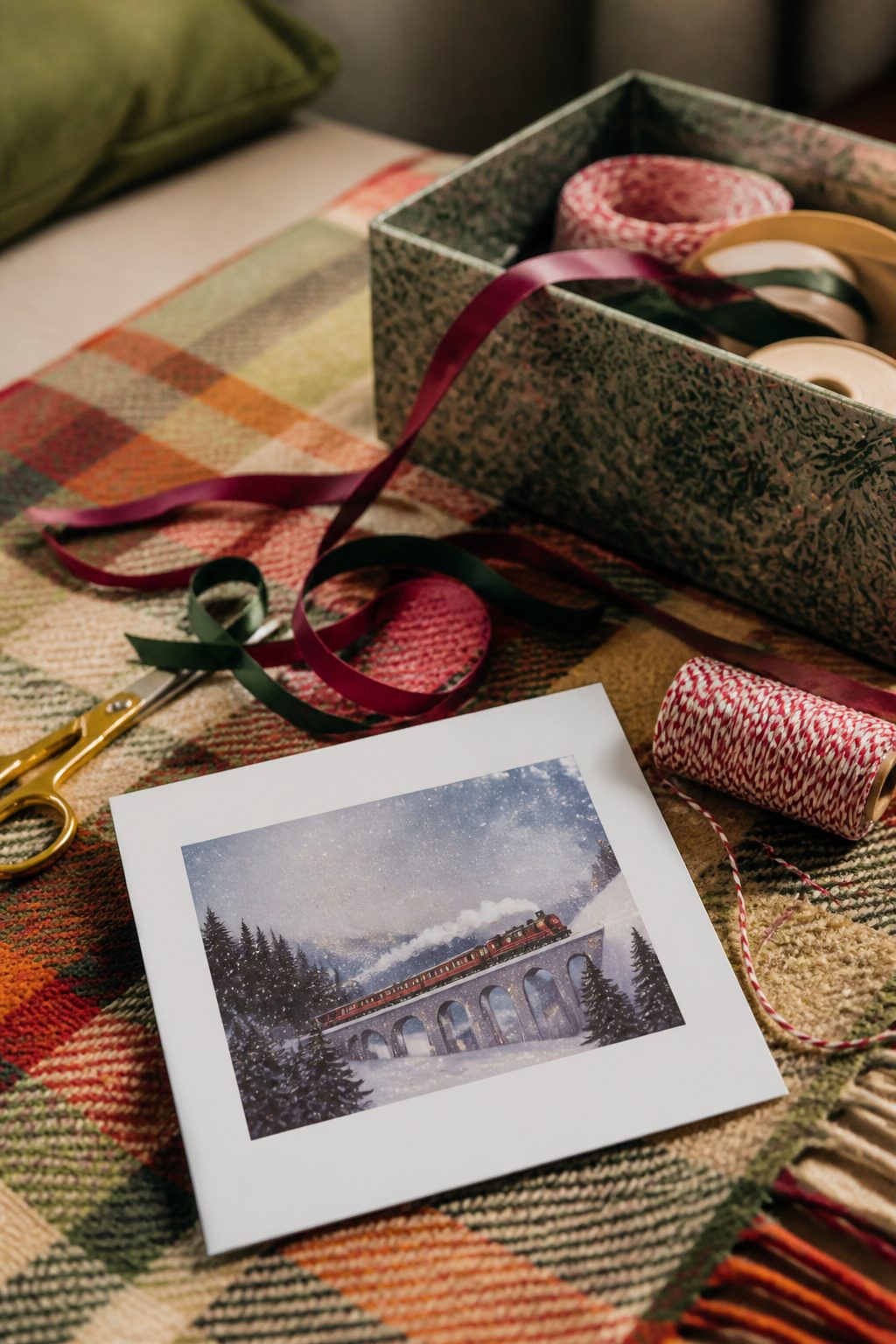
An experience voucher is one of the cleanest ways to fill a Christmas Eve box because it extends the holiday without adding another object to dust around. We print ours at home on cardstock: a certificate for a Christmas light drive, a promised hot cocoa outing, or a movie night scheduled for the week between Christmas and New Year’s. The trick is making the promise feel real. We set a date right on the voucher and slip it into the box unwrapped, since a folded paper parcel looks thin and a child might set it aside. Tuck it inside the book or tape it to the mug so it surfaces after the tangible gifts have already held their attention. One printed activity is enough; the structure creates the experience, not the count of items. If you are already giving pajamas the child needs or a library book, the voucher rounds out the box without pushing the budget. We have learned to write the details down rather than trust our memories: "Baking cookies together, January 3, morning." The paper becomes the plan.
14. Scented Candle or Room Spray
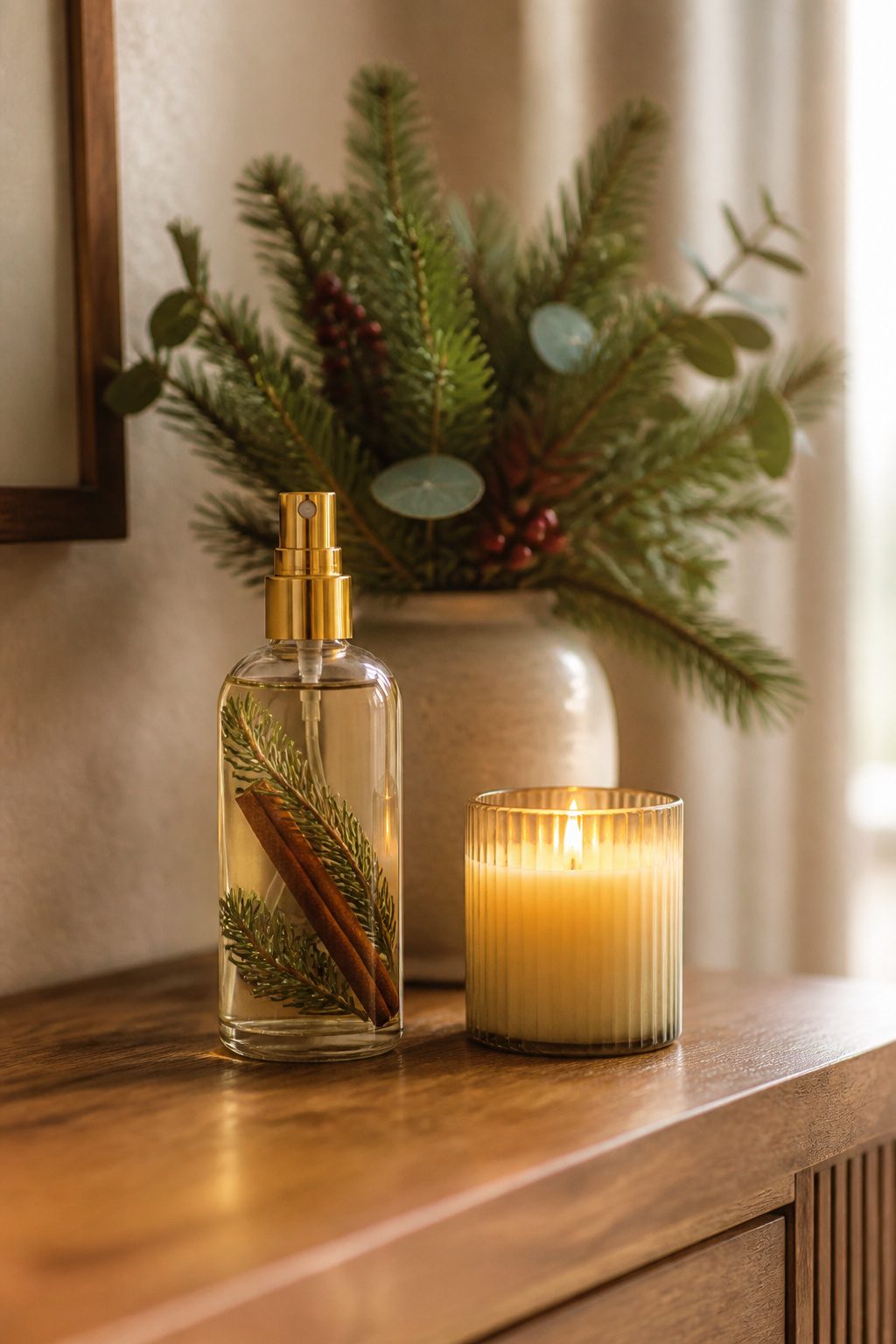
A scented candle or room spray belongs in the box for older kids or the adults opening their own. Cinnamon, orange, or pine read as Christmas without trying too hard, and they turn the living room into the smell of the season before anyone opens a gift.
We skip the candle if the box is for small children. Open flame and excited kids on Christmas Eve do not mix, and no scent is worth that risk. A room spray or pillow mist gives the same effect without the hazard, and you can tuck it in last so it does not leak on the pajamas. If you do include a candle, keep it to the parents’ box and plan to light it only after the kids are asleep and the wrapping is done.
15. Personalized Mug
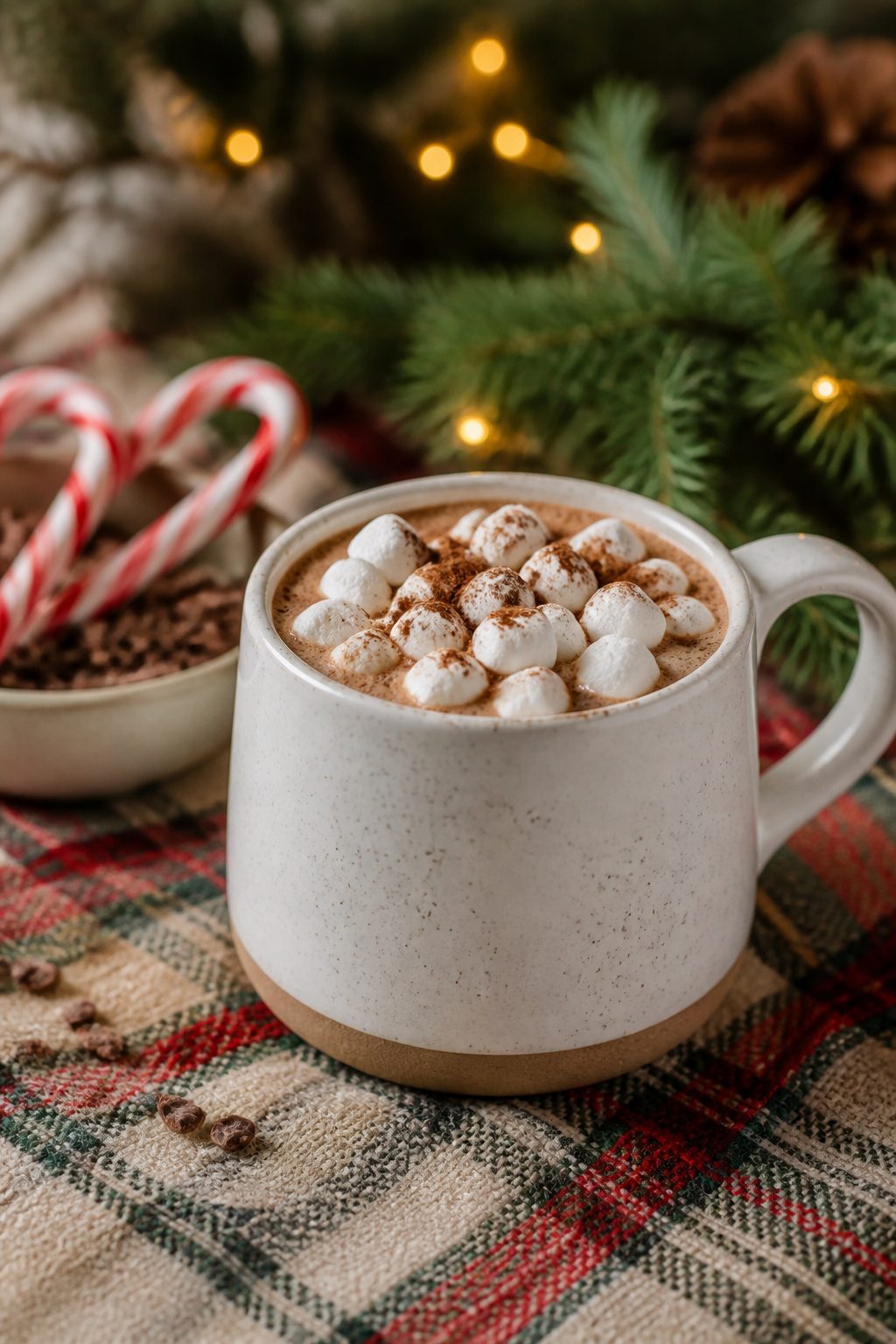
A personalized mug turns the hot chocolate into a keepsake that survives past Christmas morning. We like pairing it with a single sachet of cocoa and a few marshmallows, though leaving it empty works fine if you want the mug itself to carry the weight. The personalization runs about £6 to £8 depending on the shop, and in our view that is money well spent only if the mug is dishwasher-safe. A hand-wash-only novelty sits in the cabinet unused by February. Check the base stamp or product notes before you buy; if it does not say microwave and dishwasher safe, it is not the one for a box that is meant to feel easy.
The beauty of a Christmas Eve box is that you can fill it with whatever you like and give it to whoever you like.
That freedom is worth remembering with mugs. A child’s name and the year makes it a ritual object; a plain initial on a grown-up shape keeps it from feeling too cute. Either way, pair it with the drink or let it stand alone, but do not half-fill it with loose candy that rattles and melts.
What a Christmas Eve Box Is
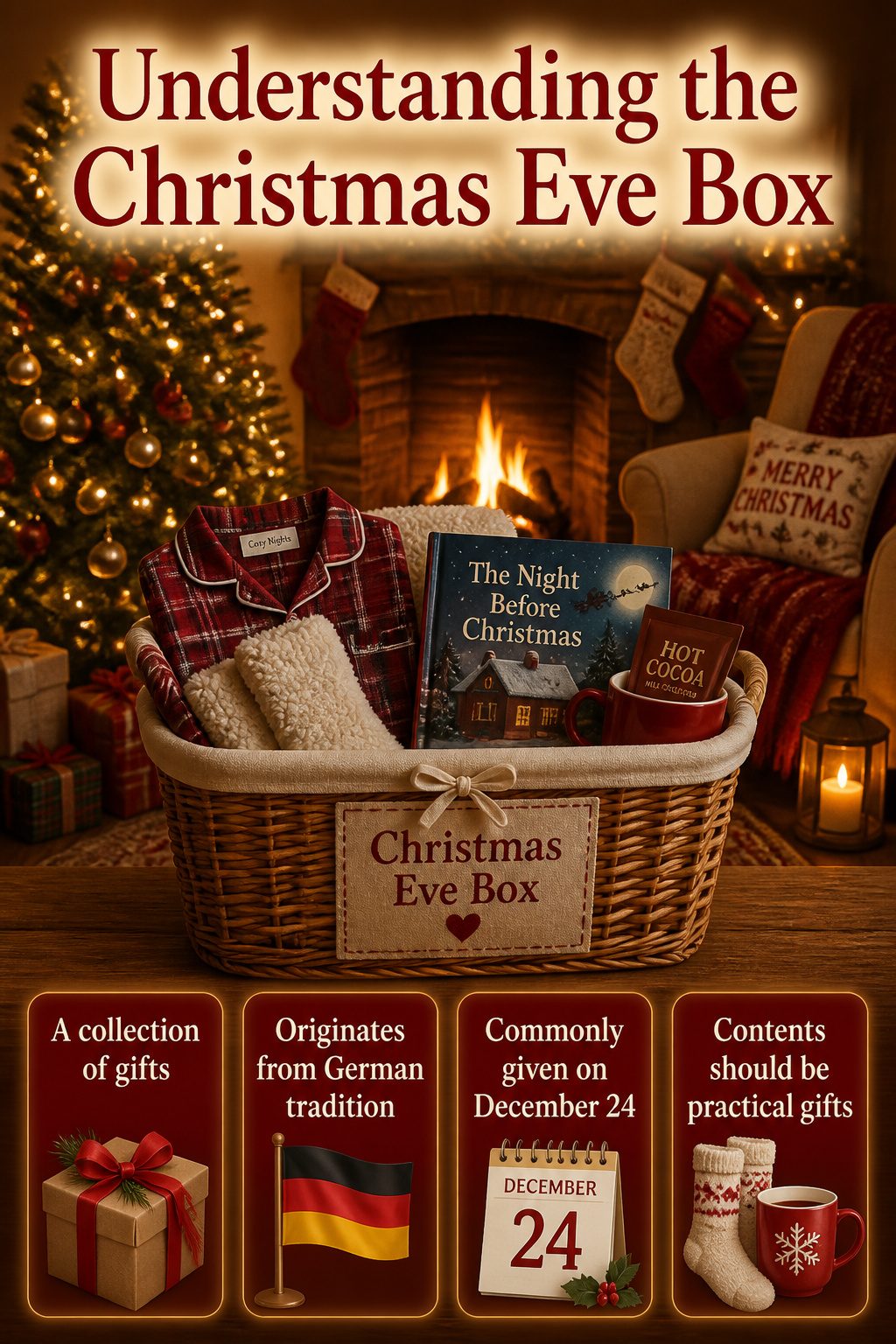
A Christmas Eve box is a small collection of gifts you hand out on December 24 to stretch the excitement across one more night. The tradition borrows loosely from Germany, where families have long opened presents on Christmas Eve rather than Christmas morning. The container itself does not need to be a box at all; a basket, crate, or even a pillowcase works fine. What matters is the gesture: a few curated items to open after dinner, before stockings, so the waiting has something to do. Some households give the box right after Thanksgiving or on December 1 to mark the season’s start, though December 24 is the more common timing. The gifts inside are typically small and practical, things that get used that same evening, not toys that compete with what Santa brings in the morning.
How to Make the Box
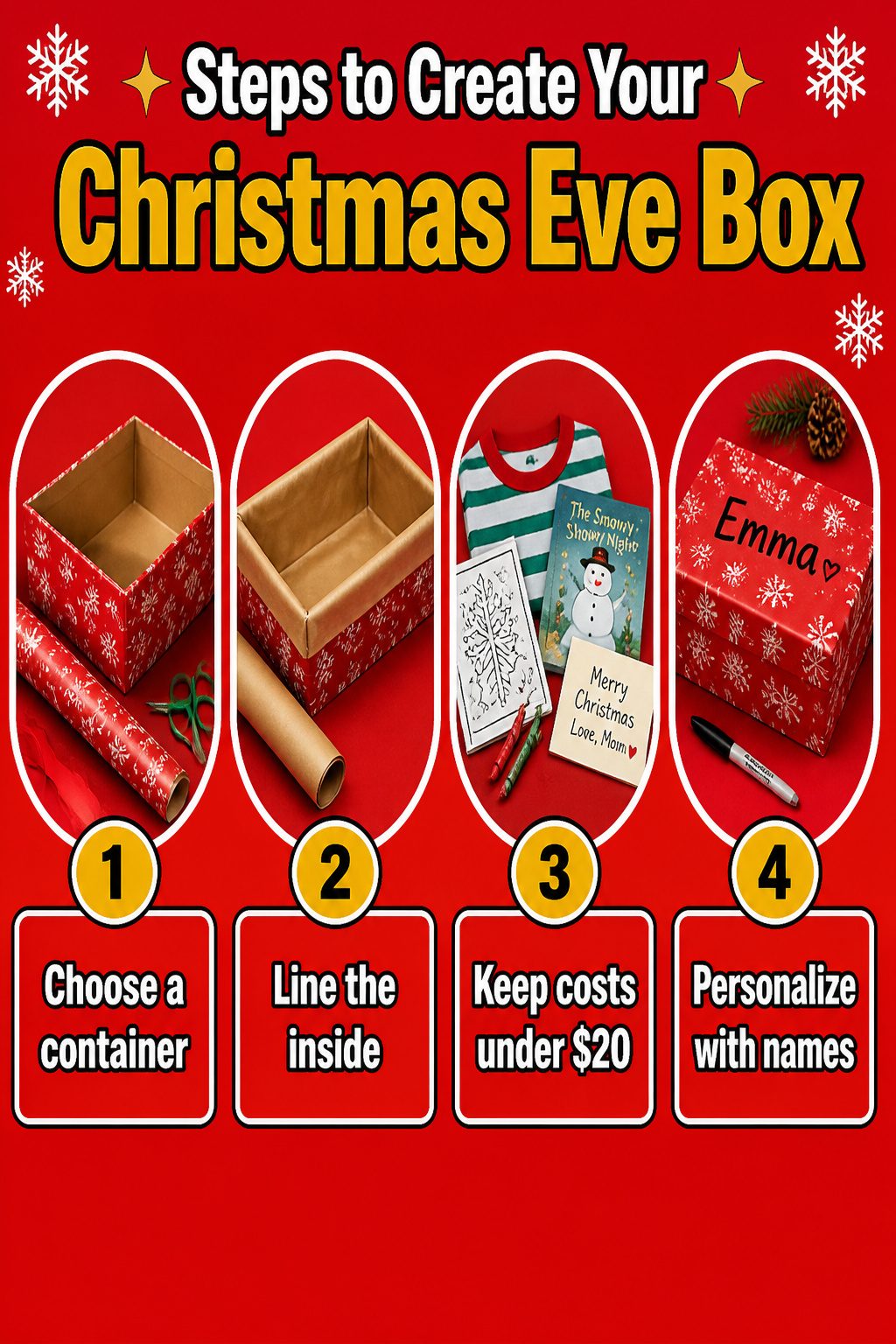
Any rigid container works. We have used shoeboxes wrapped in leftover wrapping paper, storage bins we already owned, and once a wooden crate from a gift basket that we kept because the lid still fit. The wrapping paper rips by January, so now we line the inside with a sheet of kraft paper instead; it costs next to nothing and the box survives for reuse.
Keep the total under $15 to $20 so the Christmas Eve box does not outshine what is under the tree the next morning. That figure is the ceiling most families actually stick to, and the sources back it: a low-cost box can hold pajamas the child needed anyway, a library book, one printed activity, and a handwritten note. The structure creates the experience, not the spend.
Personalizing matters more than finishing. A name written in marker on the lid beats a store-bought label. For small children, wrap each item individually so they get several parcels to open; for adults or babies, the unwrapped presentation inside the box itself is enough. Do it your way and start the tradition, or do not; the box is optional, the evening is not.
When to Open It
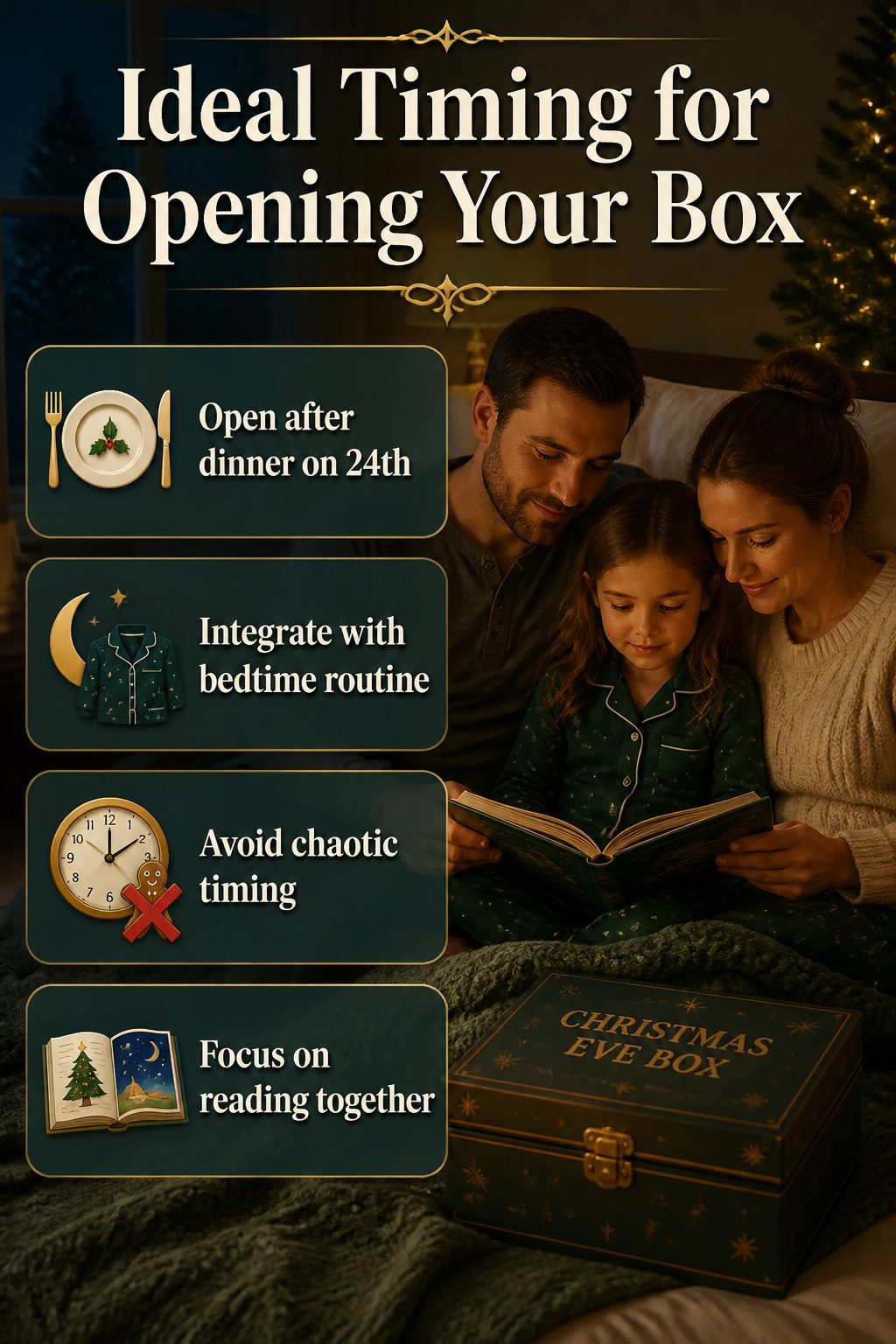
Most families we have talked with open the box right after dinner on December 24, or fold it into the bedtime routine itself. The timing matters more than the gifts inside. By that hour, children are already fizzing with excitement about Santa arriving, and the box is meant to bring that energy down, not push it higher.
We have seen the difference when the order is wrong. A box opened at three in the afternoon, with a craft activity and a sugary treat inside, turns into four hours of chaos before anyone sees a pillow. The same box opened after dinner, with pajamas first and a storybook last, runs straight into brushing teeth and lights out. The book does the real work. Reading together gives the child something to focus on besides the morning, and the parent a reason to sit still beside them.
If your household runs late on Christmas Eve, you can still make this work. One family we know keeps the box in the car for the drive home from relatives. The child changes into pajamas in the back seat, the ornament goes on the tree the minute they walk in, and the book is two chapters, not the whole thing. The wind-down still happens; it just travels.
The box works when it signals that the exciting part is finished, not that it is starting.
Budgeting the Box
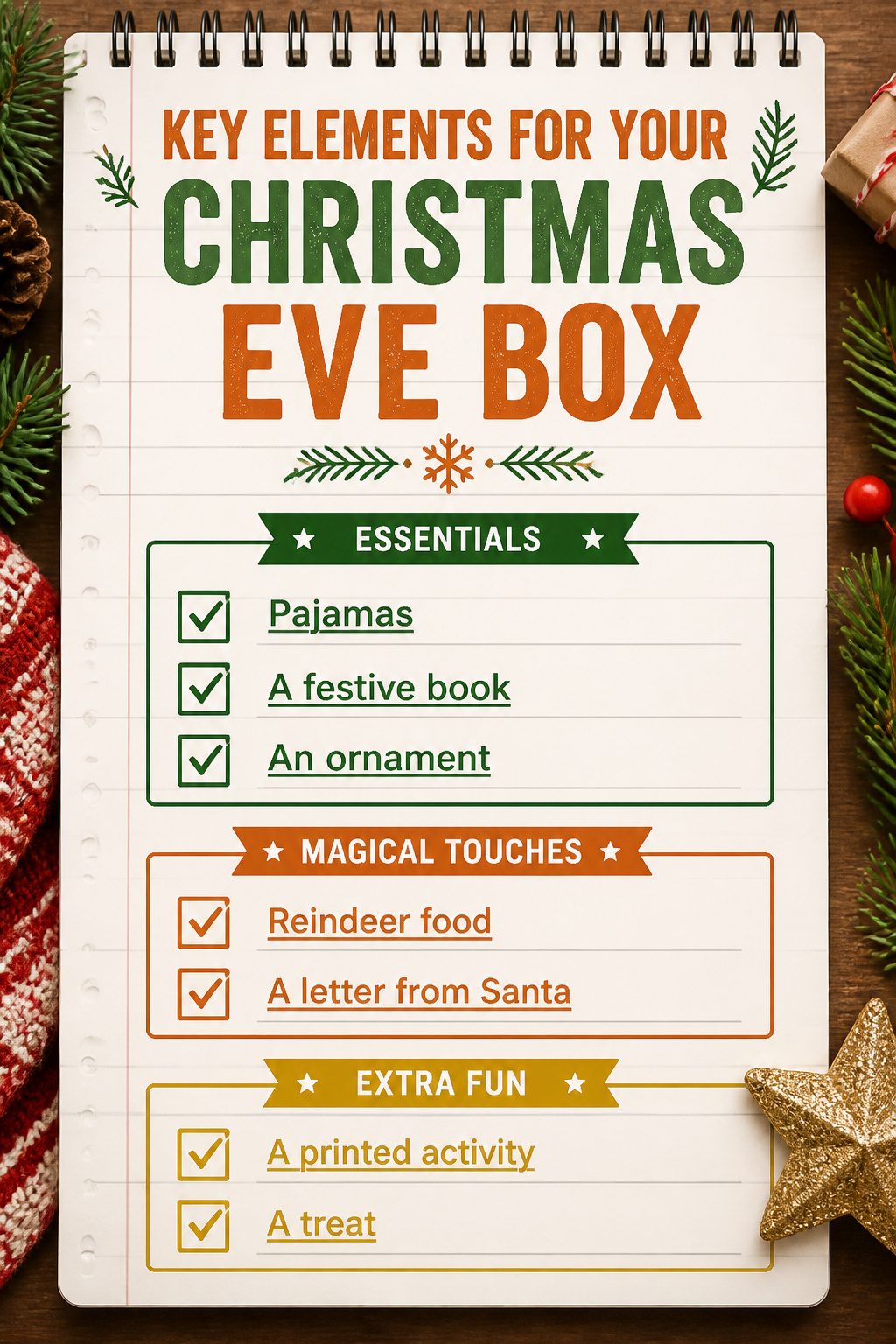
A Christmas Eve box should feel like a warm-up, not a second Christmas morning. We keep ours under $15 to $25 total, and that ceiling is deliberate. The pajamas, the book, the ornament, the reindeer food, the letter from Santa, the printed activity, the treat: these are things you would likely buy anyway, or make for pennies. Oats and biodegradable glitter for reindeer food cost next to nothing. A library book is free. An old shoebox wrapped in leftover paper is the container. The structure, not the spending, creates the experience. Leave the big-ticket items for December 25th.
Frequently Asked Questions
what do you put in christmas eve box?
The most common items are Christmas pajamas, a holiday book, a new ornament, a small sweet treat, and reindeer food made from oats and biodegradable glitter. Most families also include a letter from Santa and either a cozy blanket or a pair of slippers. The article lists fifteen ideas total, from hot chocolate mix and a personalized mug to an experience voucher printed at home.
how do you make a christmas eve box?
Any rigid container works, including a shoebox wrapped in leftover paper or a storage bin you already own. Line the inside with kraft paper so it survives for reuse, and keep the total spend under $15 to $20 so the box does not outshine Christmas morning. Write the recipient’s name on the lid in marker and wrap each item individually for small children, or leave items unwrapped for adults.
when do you open a christmas eve box?
Most families open it after dinner on December 24, often folding it straight into the bedtime routine. The timing matters more than the gifts: pajamas go on first, the ornament goes on the tree, and the book gets read last as a signal the evening is winding down. Some households give the box on December 1 to mark the season’s start, though Christmas Eve itself is the more common choice.
how much should you spend on a christmas eve box?
Keep the total under $15 to $25, a ceiling most families actually stick to. The pajamas, book, ornament, and reindeer food are things you would likely buy anyway or make for pennies; a library book costs nothing and oats with glitter cost next to nothing. The structure creates the experience, not the spending, so leave big-ticket items for December 25th.