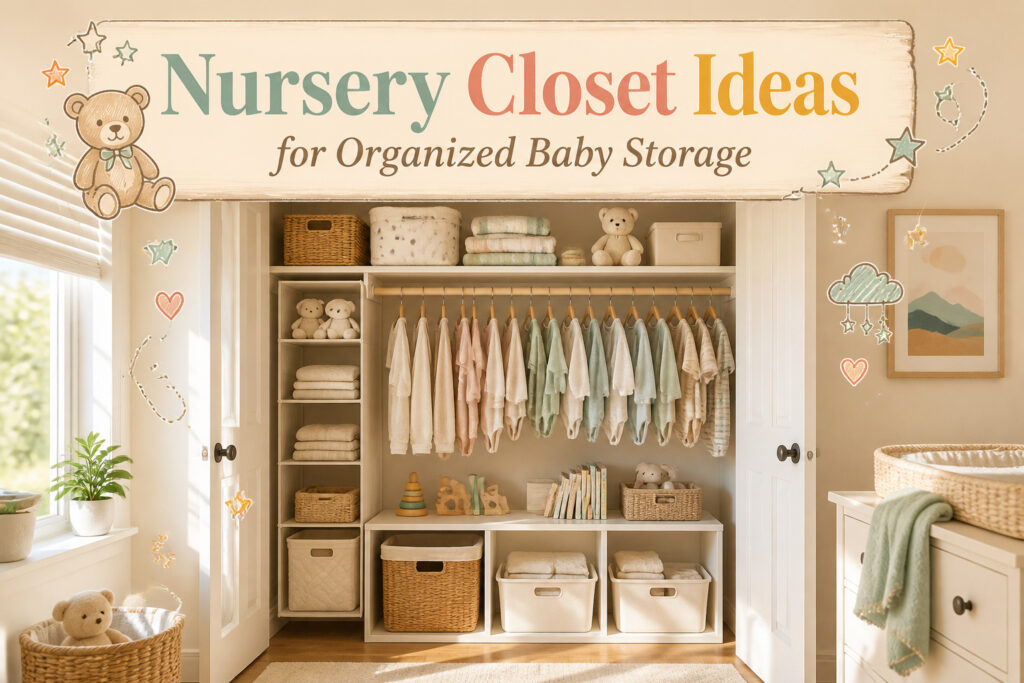
Nursery closet ideas range from a $15 over-the-door organizer to a full plywood rebuild, and the deciding factor is whether you rent or own the wall.
Renters lose the option to double rods or mount corner shelves, which is exactly where most of the usable space hides in a closet built for adult clothes.
The 30-plus inches of dead air above a baby hanger is the first thing to measure, because that gap determines whether you need a rod doubler, a second shelf stack, or permission from a landlord.
[link-whisper-related-posts]1. Drawer Dividers for Baby Clothes by Size
Baby clothes outgrow the drawer faster than you outgrow the patience to hunt for them.
We learned this the hard way after folding a stack of newborn onesies into a dresser drawer, only to find three-month sizes buried underneath two weeks later.
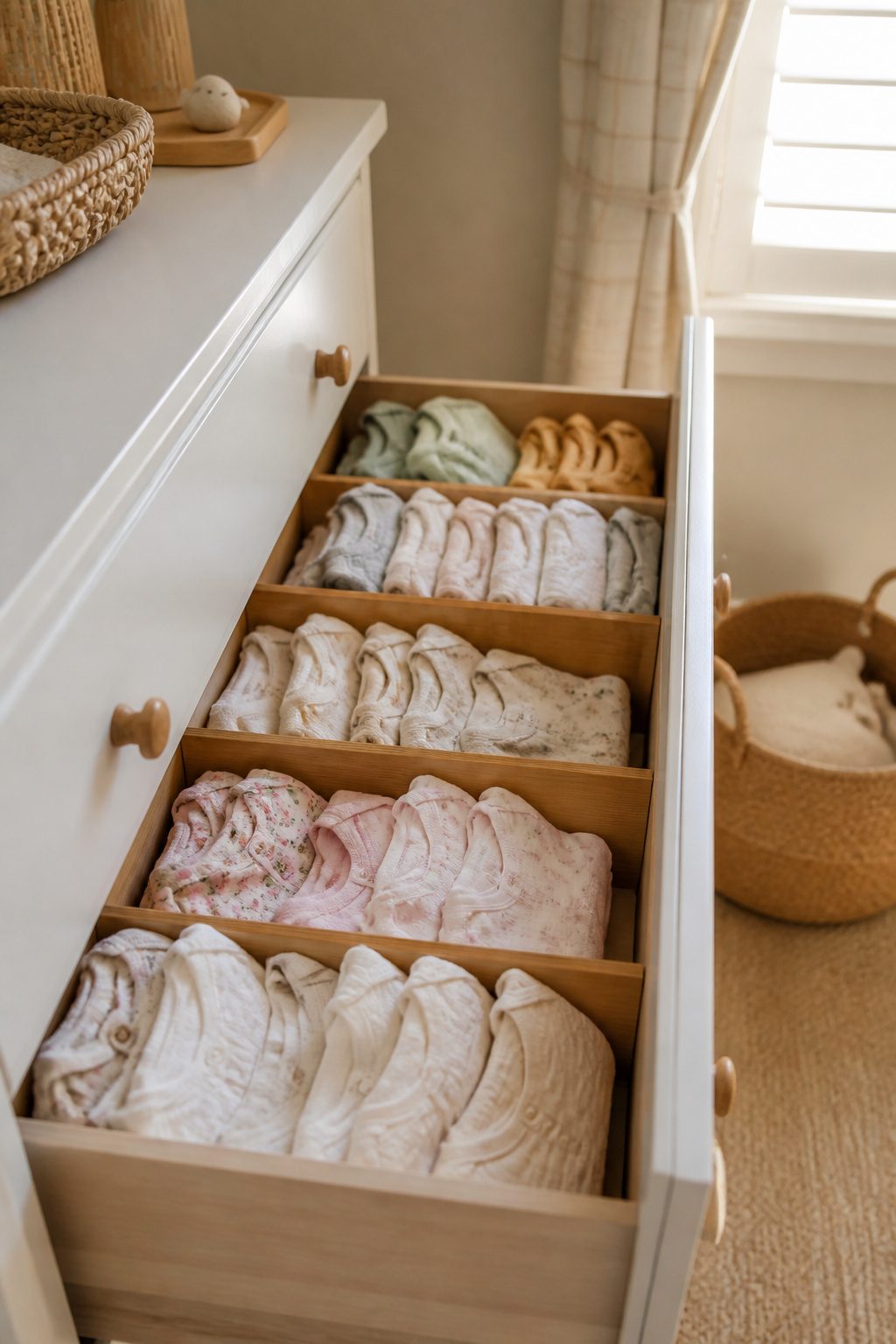
Drawer dividers fix that by giving each size band its own territory: newborn, 0–3 months, 3–6 months, 6–9 months, 9–12 months, and so on up to 2T.
The labels matter because you will grab the wrong size at 2 a.m. more often than you think, and a divider you can read by nightlight saves the fumble.
Adjustable bamboo dividers let you resize the compartments as the clothes shrink and the child grows.
One month the 6–9 month section needs three slots; three months later, 12–18 months takes the whole drawer. Without that flexibility, small items migrate into the wrong piles and the system collapses.
The sources we found kept coming back to this point: dividers beat open bins for anything folded flat, and the size labels keep the whole drawer honest.

Drawer dividers are the perfect solution to organize open drawers to keep things from shifting.

MAXIMIZE YOUR DRAWER SPACE: If you are tired of messy and disorganized drawers, Fabsome dividers are a game-changer. These separators let you quickly transform cluttered dressers into tidy and functional storage spaces. Compared to cloth cube bins, they allow you to utilize more space in your dresser and leave no dead space.
2. Rolling Carts for Diaper Changing Supplies
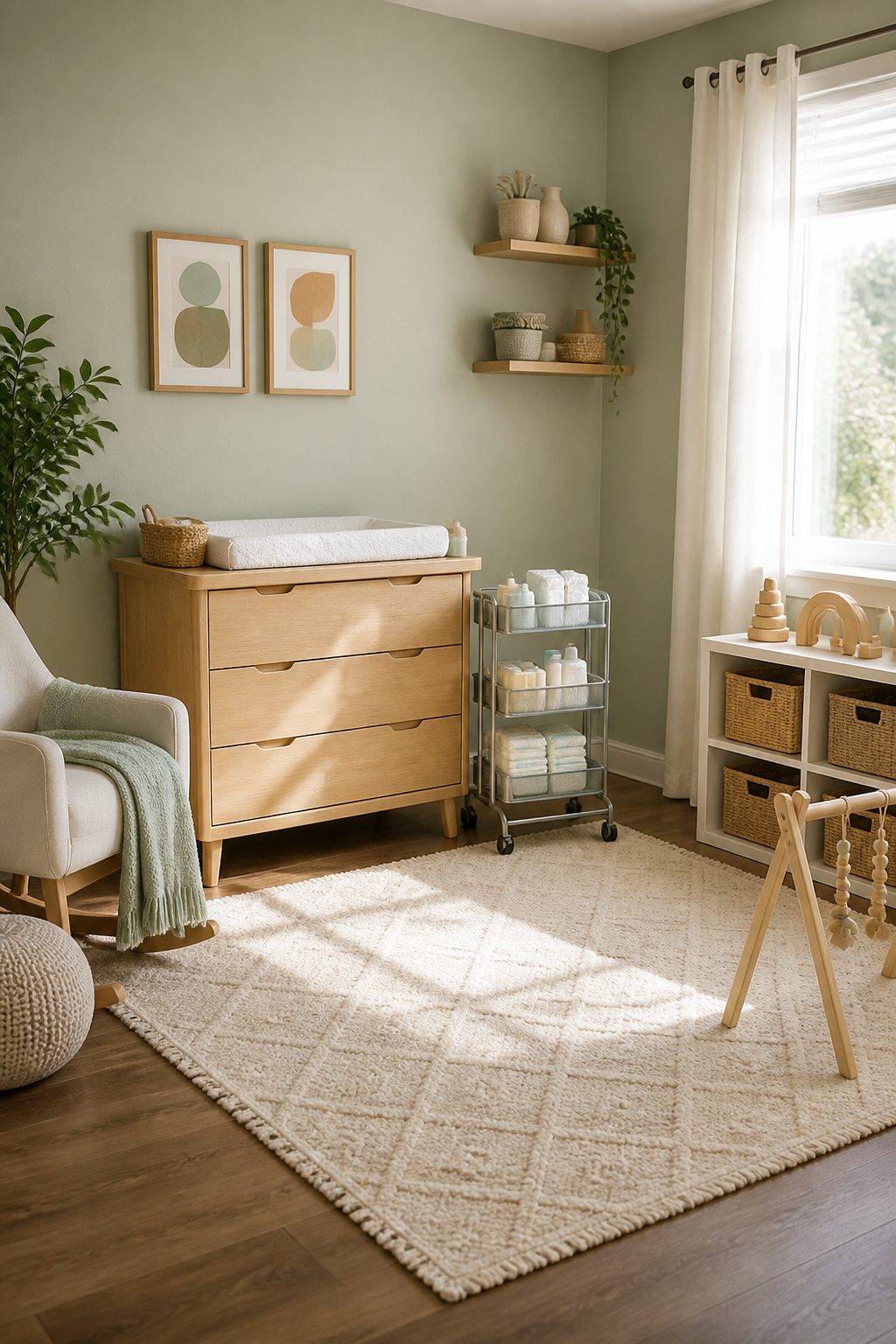
A rolling cart turns diaper changing supplies into something you can wheel where you need them.
We keep ours stocked with diapers, wipes, and diaper rash cream on the top tier, pump parts and extra burp cloths below, and the whole thing rolls between the changing table and closet without us making five trips.
When guests come over, we push it into the closet and the mess disappears.
Mobility matters because a baby rarely stays where you set up, and neither do you. The acrylic caddy we tried first looked tidy but stayed put; the cart from Target was the upgrade that actually kept up with us.

【Three-Tier Storage】This stylish beige 3 tier rolling cart is perfect for organizing baby necessities like diapers, wipes, and bottles. Ideal as a diaper caddy organizer cart or baby bottle storage organizer for countertop, with detachable dividers for customizable space. Equipped with 4 casters, suitable for bedrooms, children's rooms, bathrooms, and other settings.

【Ultimate Multi-Purpose Rolling Cart】This versatile rolling cart is perfect for the kitchen, bathroom, office, or craft room, helping organize essentials within easy reach. Its neutral design fits seamlessly into any space, while its sturdy construction ensures lasting use.
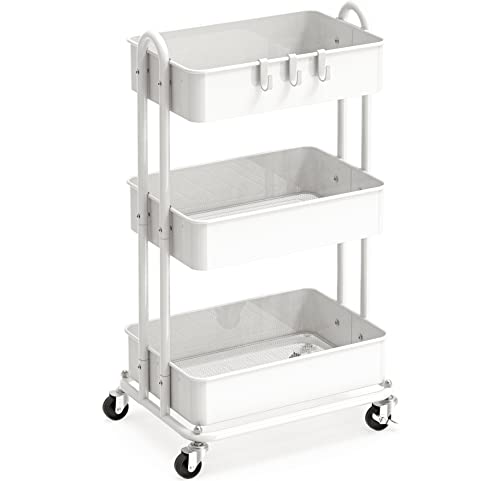
Heavy-Duty Construction : Solid steel frame and sturdy metal baskets with a sleek White finish for lasting durability and modern style.
3. Baskets for Too Big and Too Small Clothes
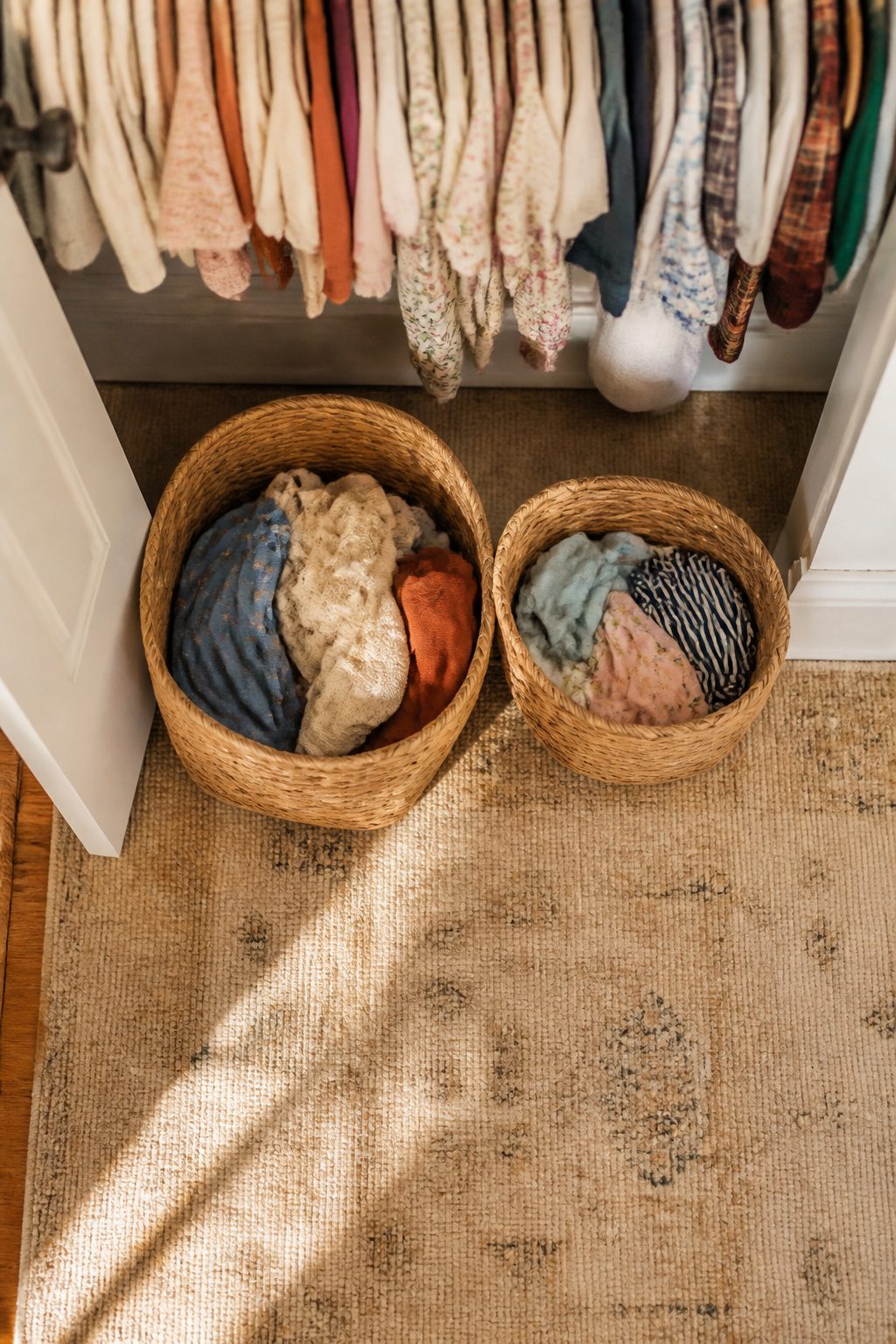
Babies outgrow clothes faster than you can fold them, and the gifts keep coming in sizes they will not wear for months.
We keep two woven baskets on the closet floor, one marked "too big" and one "too small," so nothing drifts into the wrong stack during a rushed morning.
The system only works if the labels clip on and off, because the categories flip every few weeks in the first two years.
A size that was too big in January is current rotation by March and too small by July.
Without the baskets, those stages all end up shuffled on the same rod, and you will find newborn onesies hiding behind 18-month overalls when it is already too late to use either.
We clip the labels from The Container Store onto the baskets themselves, not the shelf, so the whole unit moves if we rebuild the layout.

INCLUDED CHALKBOARD LABEL & MARKER: Comes complete with a water- and scratch-resistant chalkboard; use the marker to stay organized, then clean it off with a damp towel

INCLUDED CHALKBOARD LABEL & MARKER: Comes complete with a water- and scratch-resistant chalkboard; use the marker to stay organized, then clean it off with a damp towel

INCLUDED CHALKBOARD LABEL & MARKER: Comes complete with a water- and scratch-resistant chalkboard; use the marker to stay organized, then clean it off with a damp towel
4. Vertical Shelves for Books and Toys
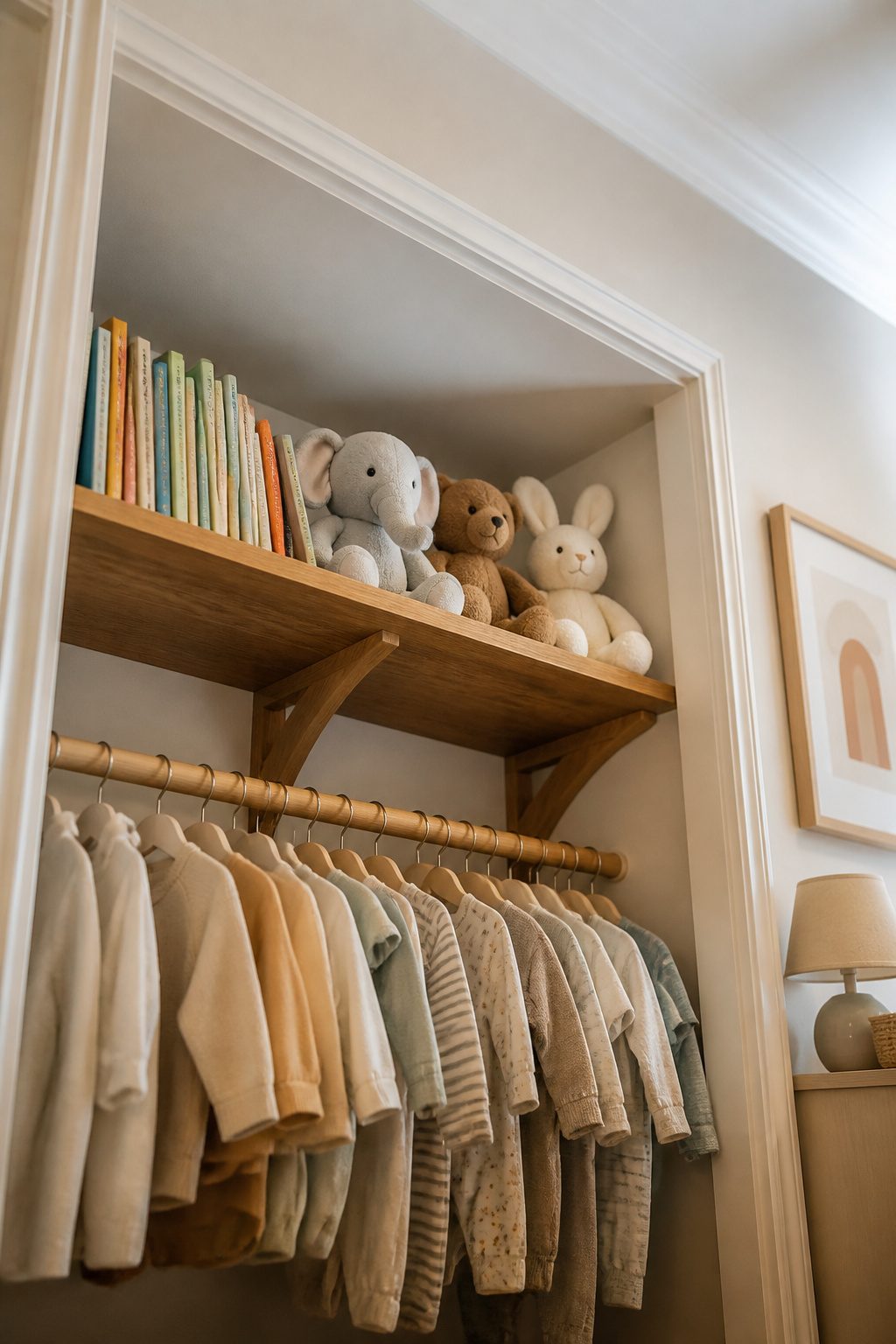
Baby clothes hang short, which leaves a lot of dead air above the rod that adult wardrobes never get.
We mounted a simple shelf twelve inches above our closet rod and suddenly had room for the board books we were tripping over in the hallway.
The clearance there is usually about thirty inches of wasted height before you hit the shelf that came with the closet, and baby garments only need half that.
The best spots are the corners the builder ignored. A triangular shelf wedged where two walls meet turns into storage for stuffed animals or that bead roller coaster you grabbed at Ikea.
We learned to check the depth before loading it up; a shelf narrower than ten inches holds books fine but dumps plush toys onto the floor every time the door closes hard.
If you are renting and cannot drill, a rod doubler hung from the existing bar lets you suspend a fabric shelf unit for toys without touching the wall.
The Container Store’s Elfa system does the same with more polish, though you will pay for it.
Either way, keep the everyday stuff at eye level and stash the "until they are bigger" items up high. Outgrown sizes in labeled bins belong on the top shelf, not the prime real estate you reach for daily.

Instantly Double Your Storage: Transform unused vertical space into a second tier to maximize capacity in small closets, dorms, and apartments

Instantly Double Your Storage: Transform unused vertical space into a second tier to maximize capacity in small closets, dorms, and apartments

【Upgrade Adjustable Width & Height】The width range is from 17 to 29 inches, and the height range is from 14.6 to 37.1 inches. The user-friendly design has six adjustable heights, which can maximize the unused space beneath hanging clothes. Dimensions: 37.1"H x 29"W (Fully Expand)
5. Clear Bins for Outgrown Clothes
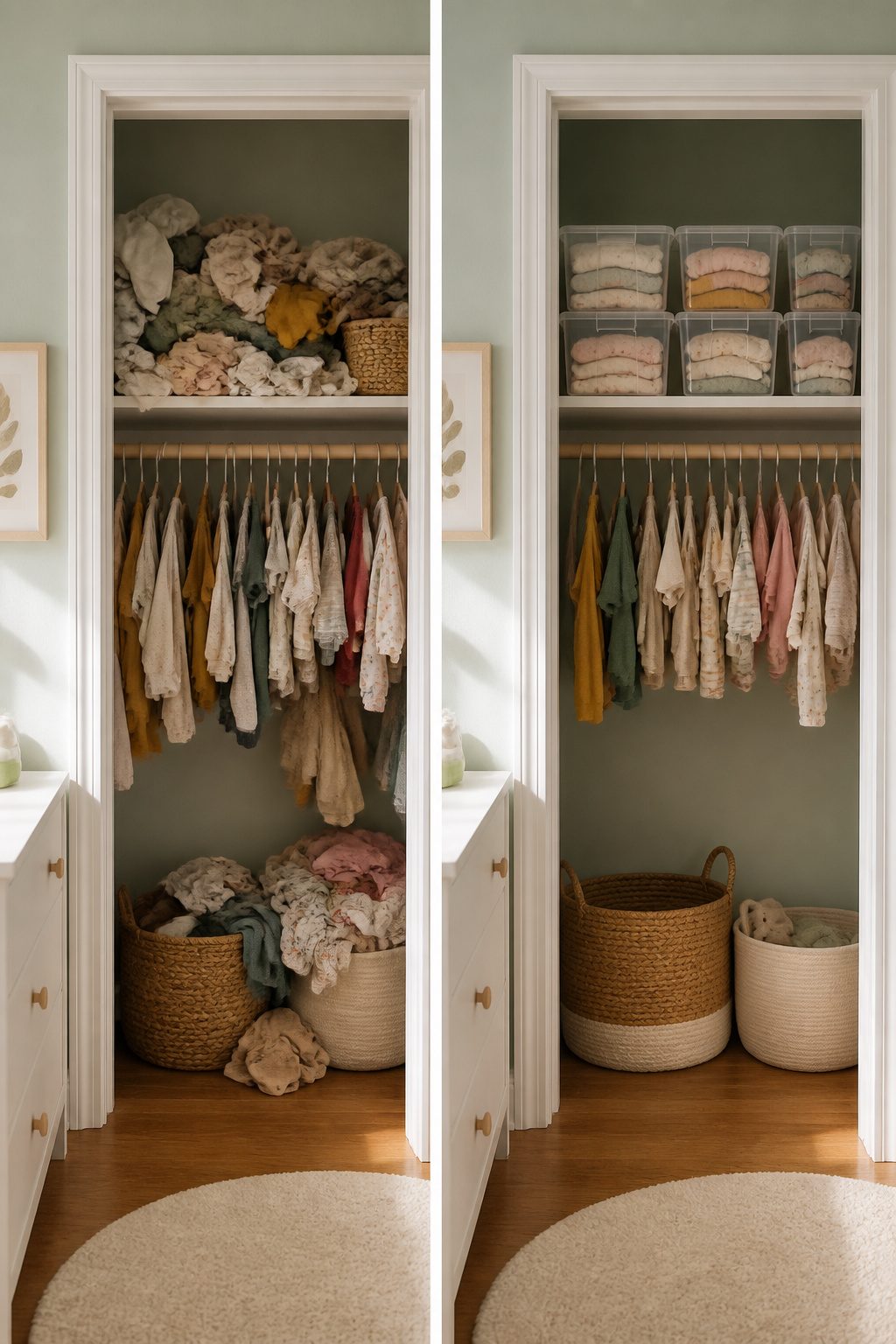
Clear bins earn their shelf space in a nursery closet because you can see what is inside without pulling the lid.
That matters when you are sorting outgrown clothes at 10 PM and need to know whether a bin holds 0–3 month onesies or the 6–9 month pile you already finished.
11 x 11 x 11 inch bins fit standard cube organizers and stack without wasting the vertical gap between shelves, which is where the extra capacity hides in most closets.
We keep ours on the top shelf, lidless, so outgrown items drop straight in during dressing changes instead of piling on the floor until a big cleanout.
Opaque bins have their place, but it is not here. A hyacinth or canvas box hides clutter well, which works for diaper packs or beach toys you will not touch for months.
For outgrown clothes, opacity slows you down; you open three boxes before you find the right size, or you stop checking and the system collapses.
Save the solid bins for sentimental storage, the hand-knitted blanket or going-home outfit you will not access often and actually prefer to keep out of sight.
The clear ones stay practical: flat-folded clothes, visible labels if you want them, and no mystery when it is time to size up or pass along.

STANDING CORNER SHELF UNIT: Wood shelving unit designed for corner spaces with (3) tiers; Includes (1) adjustable shelf

LED CLOSET DISPLAY: Want a corner shelf that adds storage and warm accent lighting? This compact closet organizers and storage features a plug-and-play LED light strip, button control, non-dimmable glow, predrilled wiring holes, and 4 fixed tiers for illuminated organization

【SAFE & HIGH-QUALITY FABRIC】This soft corner hanging organizer is made from high-quality breathable non-woven fabric that is non-toxic and free from any unpleasant smells for your safety. It has been specifically designed for corner organization, making the best use of your house's space. A tidy room will help keep your mood uplifted, and organized items are easy to find, bringing more efficiency to your life!
6. Matching Child-Size Hangers
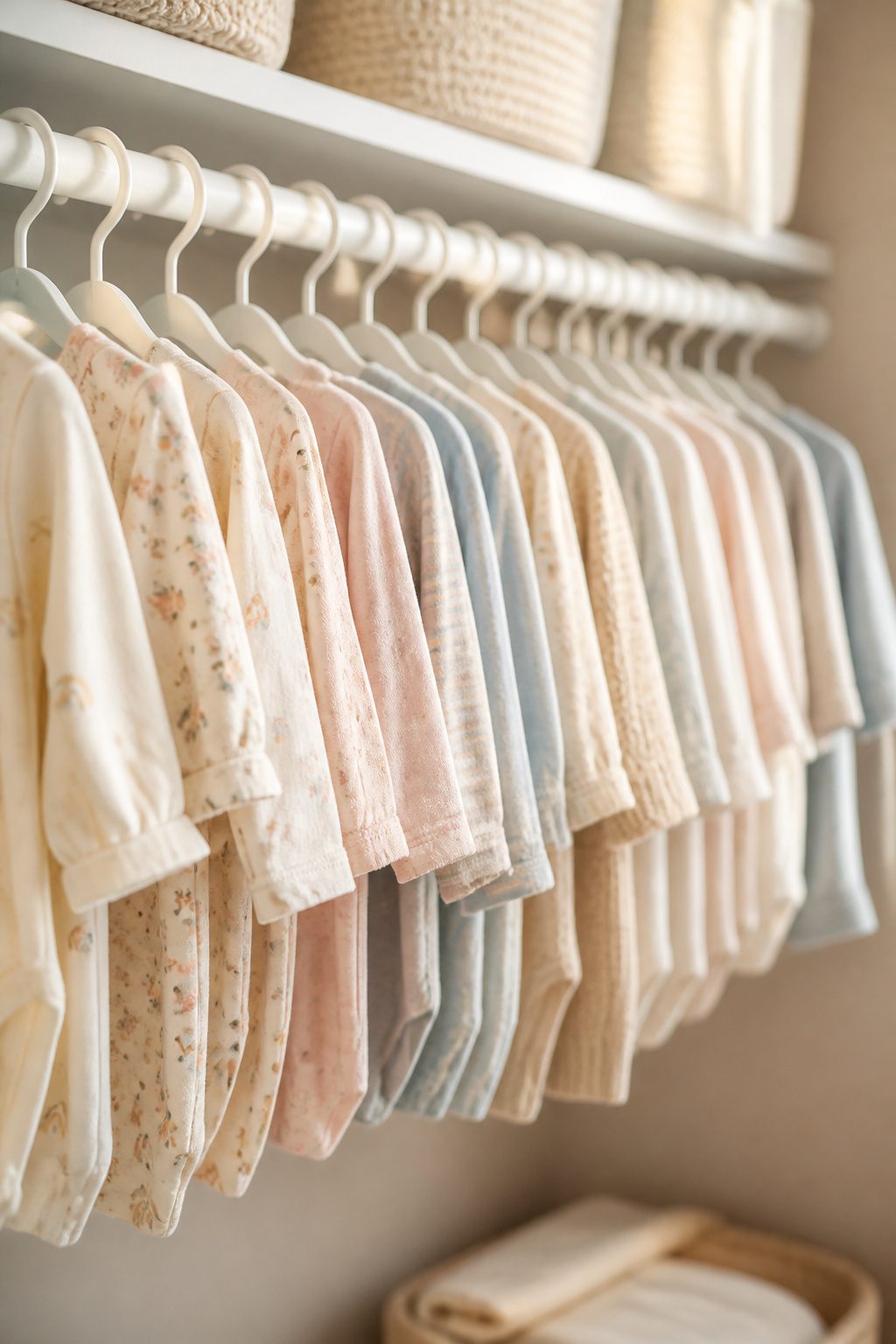
Standard adult hangers waste rod space in a nursery closet and stretch the shoulders of tiny garments until they dry with a bump.
We switched to matching child-size hangers after measuring how many more onesies fit the same length of rod when every hook sat at the same height.
The uniform sizing lets clothes hang closer together without tangling, which matters more than color coordination though an all-white set does keep the space visually calm.
Look for a slim profile and a smooth shoulder curve; anything thicker than about half an inch eats into your count faster than you would expect.
Some parents prefer drawers for baby clothes entirely, and that is a fair call for everyday pieces. For what you do hang, though, consistent small hangers turn a cramped rod into usable storage.

MAXIMIZE YOUR DRAWER SPACE: If you are tired of messy and disorganized drawers, Fabsome dividers are a game-changer. These separators let you quickly transform cluttered dressers into tidy and functional storage spaces. Compared to cloth cube bins, they allow you to utilize more space in your dresser and leave no dead space.

Premium Natural Bamboo: Crafted from solid bamboo with a smooth polished surface; sturdy for daily use; natural finish complements most cabinet and drawer interiors in kitchen bedroom or office

Perfect Drawer Organizer: This is a simple and easy way to organize kitchen utensils or clothes; Keep everything neat, organized and access convenience
7. Over-the-Door Organizers
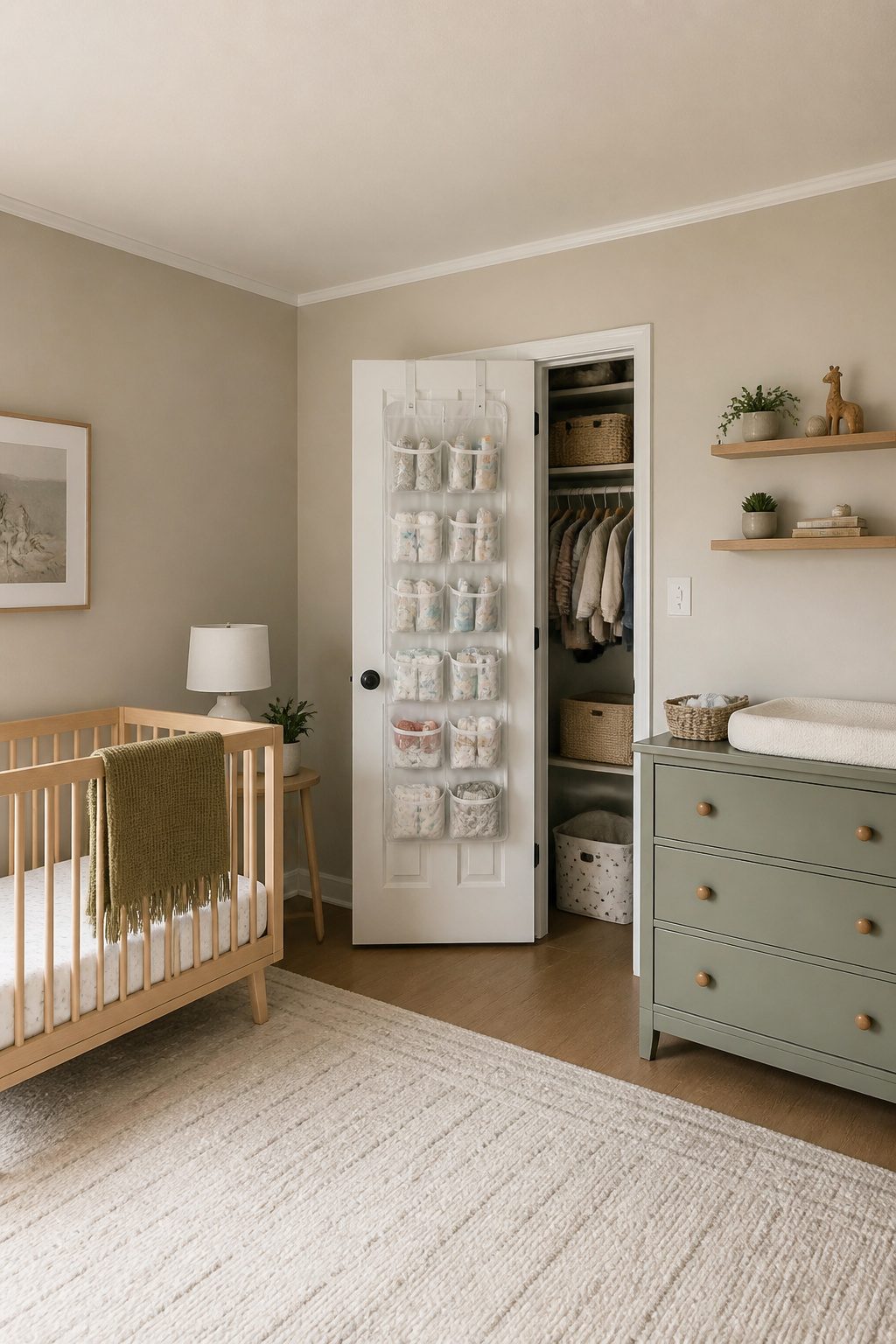
Closet doors are dead space until you mount something on them, and in a nursery that space belongs to the things you reach for ten times a day.
Over-the-door organizers with clear pockets or small baskets fit the items you need at arm’s length: wipes, burp cloths, bibs, the spare pacifier.
Inside the closet you keep the backup stock and the clothes sorted by size; on the door you keep the stuff you grab while holding a baby.
We have seen this work two ways.
A simple shoe organizer with clear pockets lets you spot a hat or mitten without opening the closet, and the clear pockets mean you are not digging through fabric to find what you need.
A utility rack with hooks and adjustable baskets, like the Elfa system, gives you more structure for burp cloths and small toys.
The Container Store and other retailers stock both; the rack costs more but holds weight better if you load it with wipes and diaper cream.
The catch is the door type.
Swinging doors take organizers fine. Sliding doors do not, so if that is what your nursery has, move the organizer to the back of the room door instead.
Either way, keep the inside of the closet for bulk storage and seasonal clothes, and use the door for the daily rotation.

【Three-Tier Storage】This stylish beige 3 tier rolling cart is perfect for organizing baby necessities like diapers, wipes, and bottles. Ideal as a diaper caddy organizer cart or baby bottle storage organizer for countertop, with detachable dividers for customizable space. Equipped with 4 casters, suitable for bedrooms, children's rooms, bathrooms, and other settings.
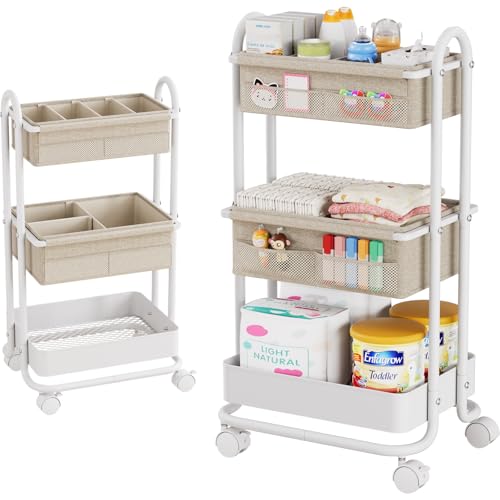
Baby Essentials - No more fumbling around for baby items, especially at night! This multi-functional baby diaper caddy organizer 3 tier rolling cart has excellent organizing and storage capacity. There is enough space for all the necessary baby essentials: baby diapers, baby clothes, baby wipes, bottles, bibs, onesies, changing pads, baby toys, formula, and other infant items!
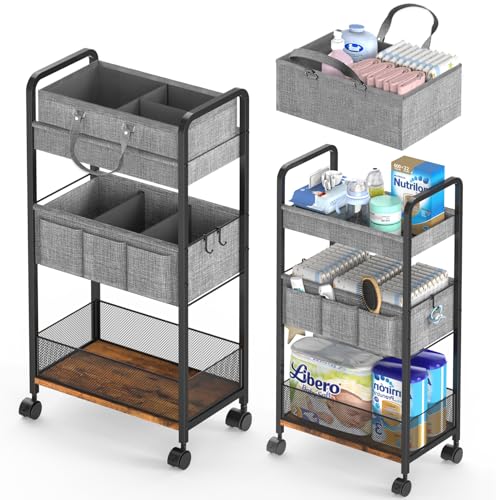
Large Capacity for Baby’s Must-Haves: Our 3-Tier Baby Caddy Organizer Cart can be classified to store diapers, baby toys, changing pads, baby clothes, baby wipes, bibs, burp cloths, and other baby necessities! Purposefully crafted to accommodate a wide array of baby essentials!
8. Added Shelves for Extra Storage
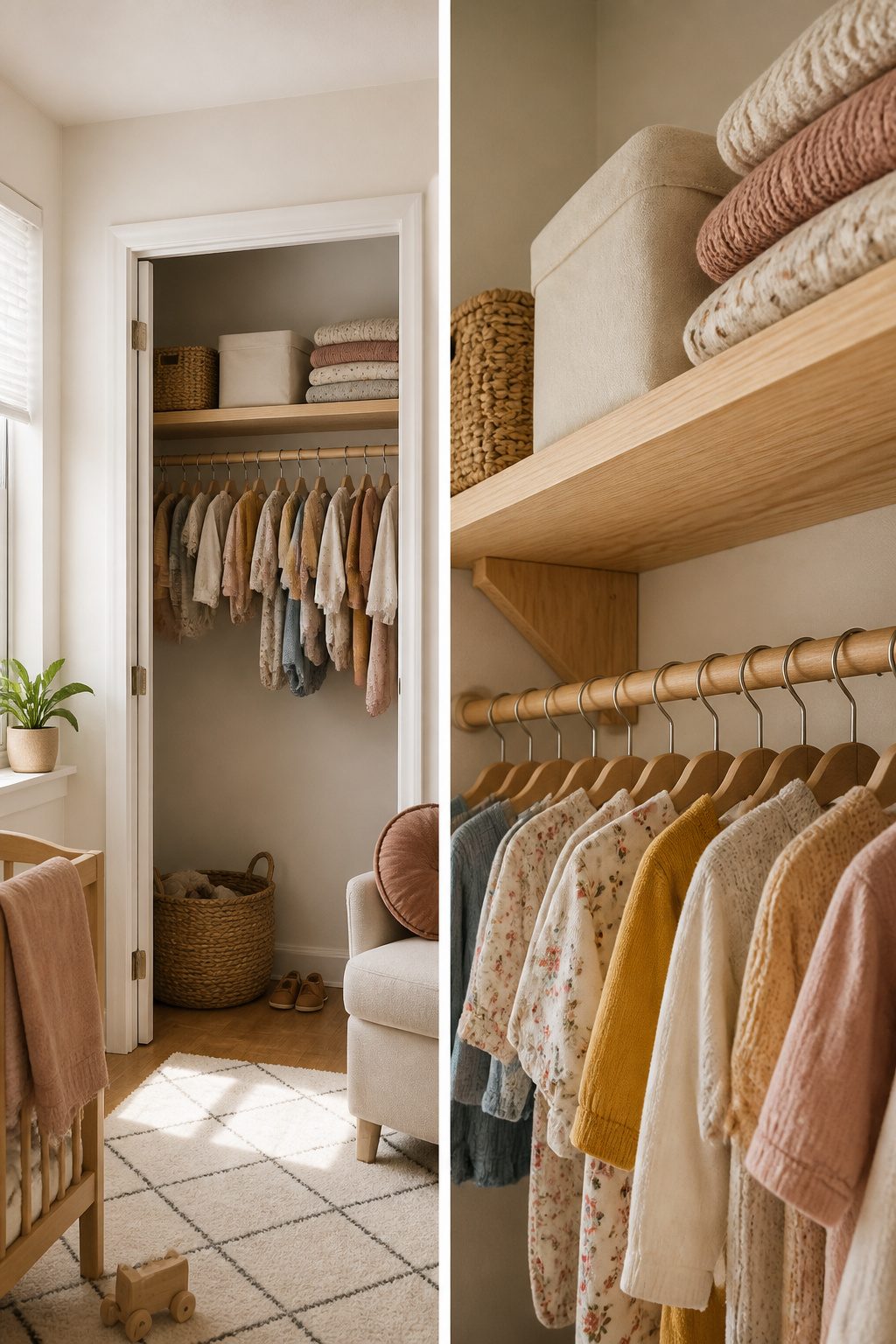
Most nursery closets come with a single wire shelf that wastes half the wall. We pulled ours out and built a plywood replacement with two levels of hanging space and a top shelf for bins.
The plywood cost less than a prefab system and let us set the heights exactly where baby clothes actually hang.
If you do not want to cut boards, a four by two cubbie shelving unit on the floor adds eight compartments without touching the walls, and you still get usable surface on top for folded blankets or a basket of wipes.
Off-the-shelf systems work too.
The Container Store’s Elfa line adds side-wall shelves most people ignore, and ClosetMaid brackets slot in under existing rods for extra tiers. IKEA’s Billy Bookcase hack turns a bookcase into closet shelving with a rod across the front.
We looked at all three and went plywood only because the closet was an odd width. Measure twice before you buy anything built to standard sizes, or you will end up with a two-inch gap you cannot use.

INCLUDED CHALKBOARD LABEL & MARKER: Comes complete with a water- and scratch-resistant chalkboard; use the marker to stay organized, then clean it off with a damp towel

INCLUDED CHALKBOARD LABEL & MARKER: Comes complete with a water- and scratch-resistant chalkboard; use the marker to stay organized, then clean it off with a damp towel

Optimize Space Utilization: BINO's plastic baskets help you maximize space efficiency and storage capacity, ensuring your bedroom, kitchen, or closet remains clutter-free.
9. Labels on Bins and Shelves
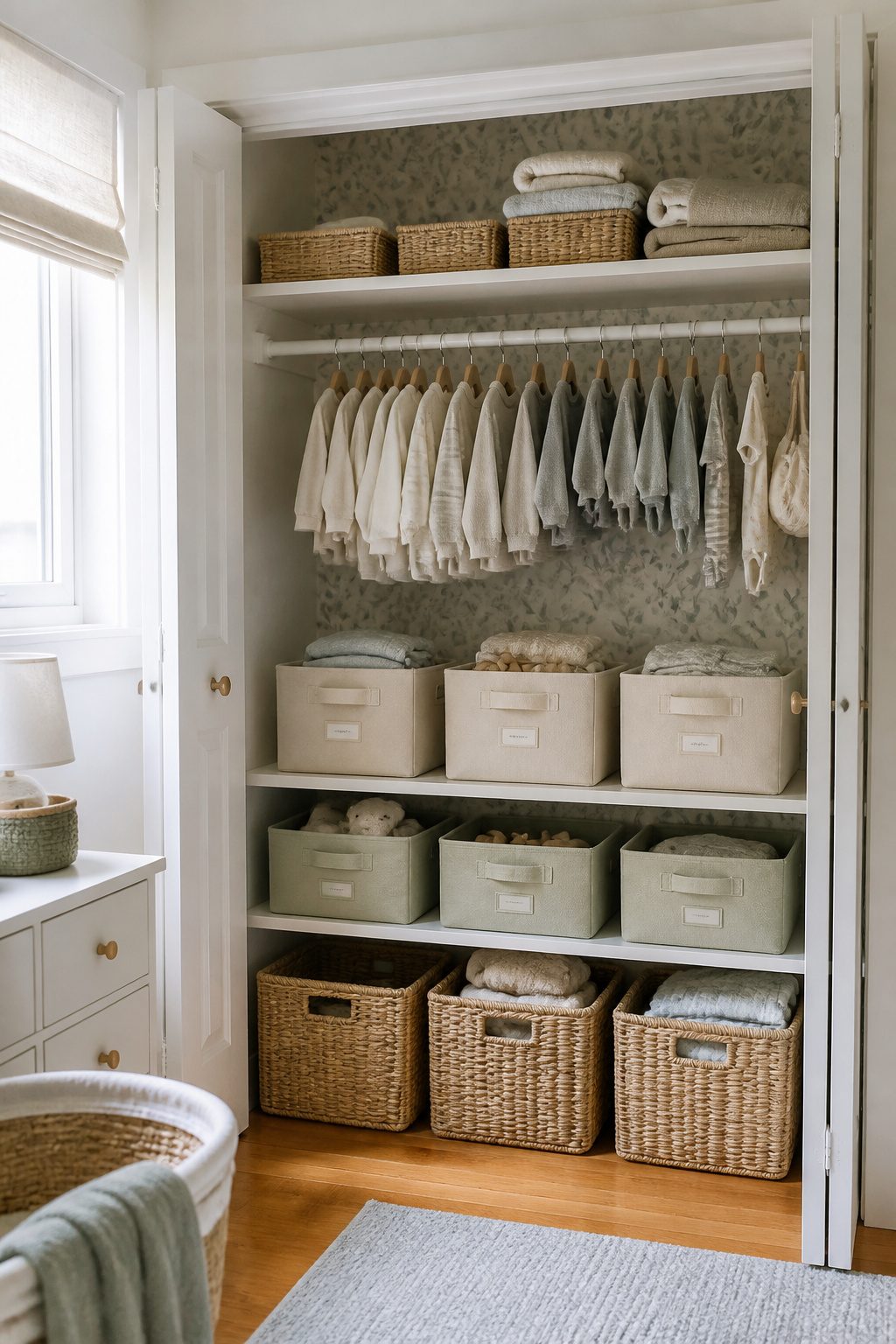
We waited seven months before labeling our nursery closet bins, and that delay nearly cost us the whole system.
What convinced us, reading through how other households actually use these spaces, is that labels are what keep a closet from collapsing the moment someone else touches it.
A co-parent, grandparent, or anyone helping with a midnight change needs to know where things go back, or they will guess, and the guess will be wrong.
For opaque containers, which most of us use, clip labels are the practical choice. We have seen black bin clips from Amazon and the bin clip labels from The Container Store both hold up on woven baskets through repeated handling.
If you own a label maker, clear labels on those clips stay readable longer than handwritten tape, which curls in closet humidity and fades where fingers grip.
The method that lasts is the one you will actually maintain. Live with your layout first, shuffle until the spots feel right, then lock them in with labels.
Skip this step and you are the only person who can restock the closet, which is not sustainable at two in the morning with a crying baby.

Horizontal bar can expand from 18.75 inches to 30.5 inches by every 1.96 inches. (7 spring positions) to fit the closet space or your preference.

Grows From Newborn to Age 9: Unlike fixed-height racks, this kids clothing rack adapts from babyhood to age 9. Raise or lower both rods for small baby and toddler clothes, use two levels to double hanging space, or remove the lower rod for longer coats, princess dresses and costumes—one rack that grows with your child

Great closet accessory for increasing closet space and usage
10. Zones for Different Item Categories
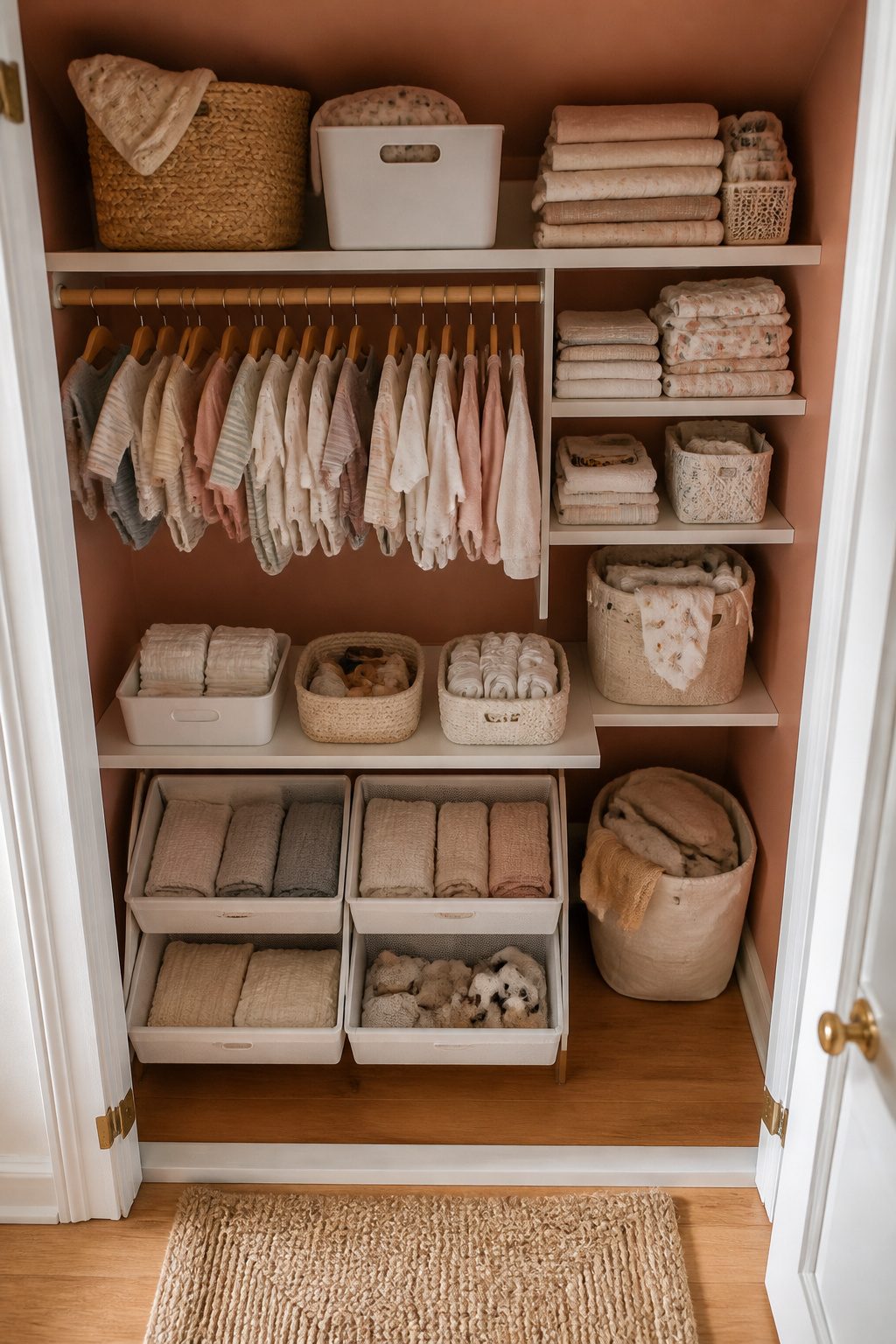
The first thing we noticed setting up our own nursery closet was that zones by frequency of use beat zones by item type for keeping the space workable at 2 a.m.
Put what you touch daily at eye level: onesies and rompers on the main rod, swaddles and burp cloths in a basket or shallow drawer you can reach without a step stool.
Upper shelves become the landing spot for outgrown clothing in bins, extra diapers, and seasonal bulk like that stroller cover you will not need for four months.
Dividing by type still matters for shared use. When two people are putting laundry away half-asleep, a rod section for jackets and sweaters separate from daily clothes means either of you can hang something up without deciding where it belongs.
Floor-level bins for linens, bath towels, and blankets keep soft items from mixing into the clothing flow. If you are both using the closet, labels on opaque bins close the gap.
One parent we read about ran her closet unlabeled for seven months while she figured out what landed where; only after the shuffling stopped did she commit to clip-on tags.
Clear bins skip that step if you can see the contents at a glance, though they cost more and scratch faster.

ROBUST AND READY FOR PLAYTIME. Made of a sturdy polymer that’s 20% thicker than most, the closet for baby clothes withstands the enthusiastic energy of little ones as the closet shelves for clothes have high-quality metal frames and ABS connectors.

Versatile Closet Organizers and Storage: Comes with 2 pack of closet dividers, you can use one as wardrobe organiser for storing socks, underwear and handkerchiefs, another one for dresser drawers to store jewellery, nail polish, lipstick, other bits and bobs etc, make your drawer is no longer chaos, become tidier and neater

[Lightweight Partitioned Storage: Corral Tiny Clutter]Perfect for kiddo’s lightweight gear—thin outfits, small board books, mini stuffed animals. No heavy lifting to dig through piles; grab morning outfits or tuck toys away in seconds. Easy to tidy their small stuff without the hassle.
DIY Shelf Builds With Plywood
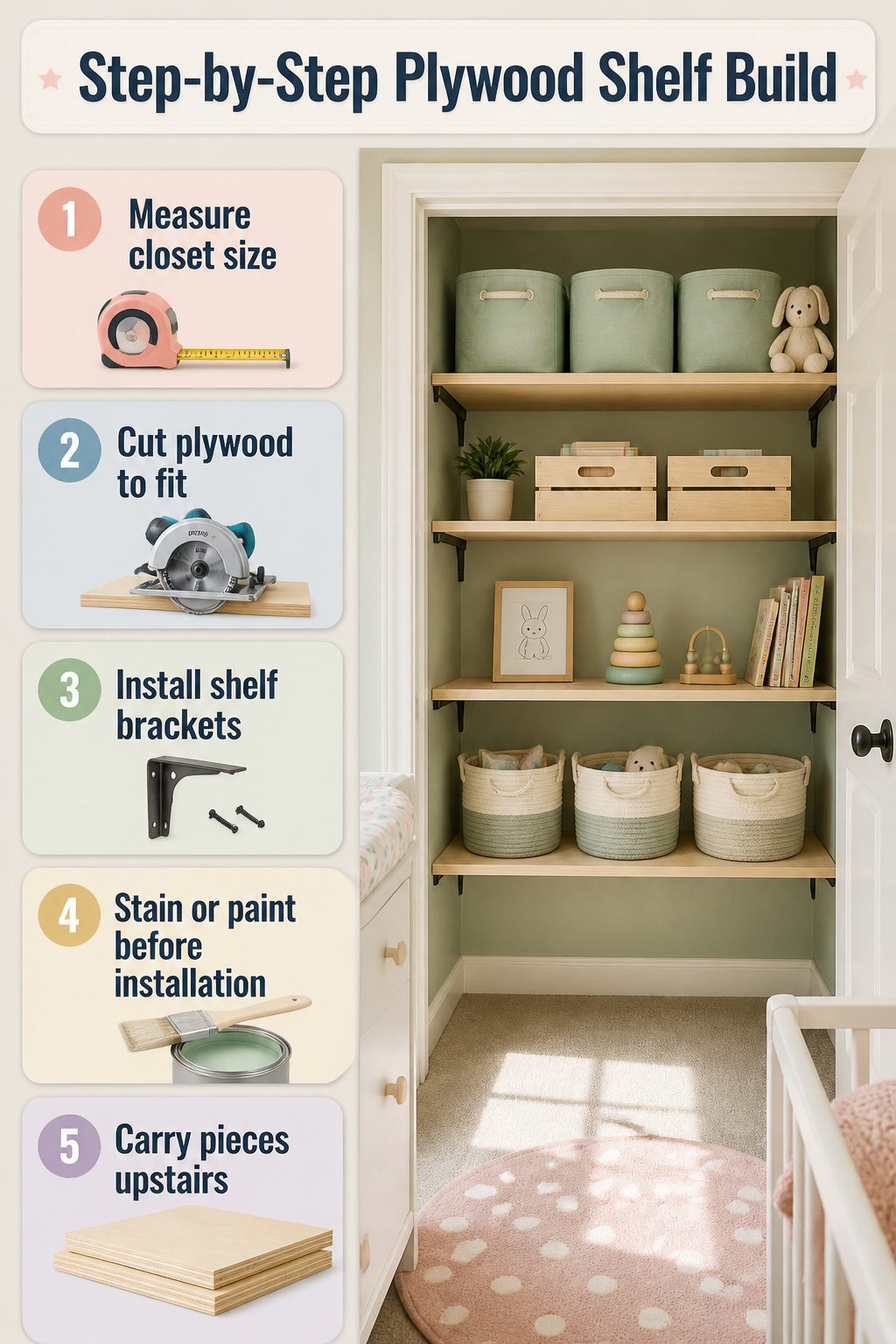
Plywood shelf builds make sense when your closet has an odd width or a slanted ceiling that prefab kits won’t forgive.
We pulled the wire shelf out of our nursery closet and cut 3/4-inch plywood to fit the full back wall plus the short returns on each side, the way you’d frame a mirror with wood: measure twice, accept that walls are never square, and build to what is actually there.
A circular saw, drill, and level are enough; shelf brackets go in with screws no longer than 3/4 inch if you are hitting standard studs.
Stain or paint before you carry the pieces upstairs, because brushing inside a closet is awkward and you will lean against wet finish.
The payoff is shelves at heights that match your bins, not the heights a manufacturer guessed.
One builder used large fabric bins up top, smaller wooden crates at eye level, and rope baskets below, all sized to the spaces she built rather than the other way around.
If your closet is a standard rectangle and your budget stretches to it, the IKEA Billy hack or an ELFA system from The Container Store saves a weekend.
But when the wall bows or the door swings into the only usable corner, plywood lets you build around the problem instead of fighting it.
Sentimental Items in the Closet
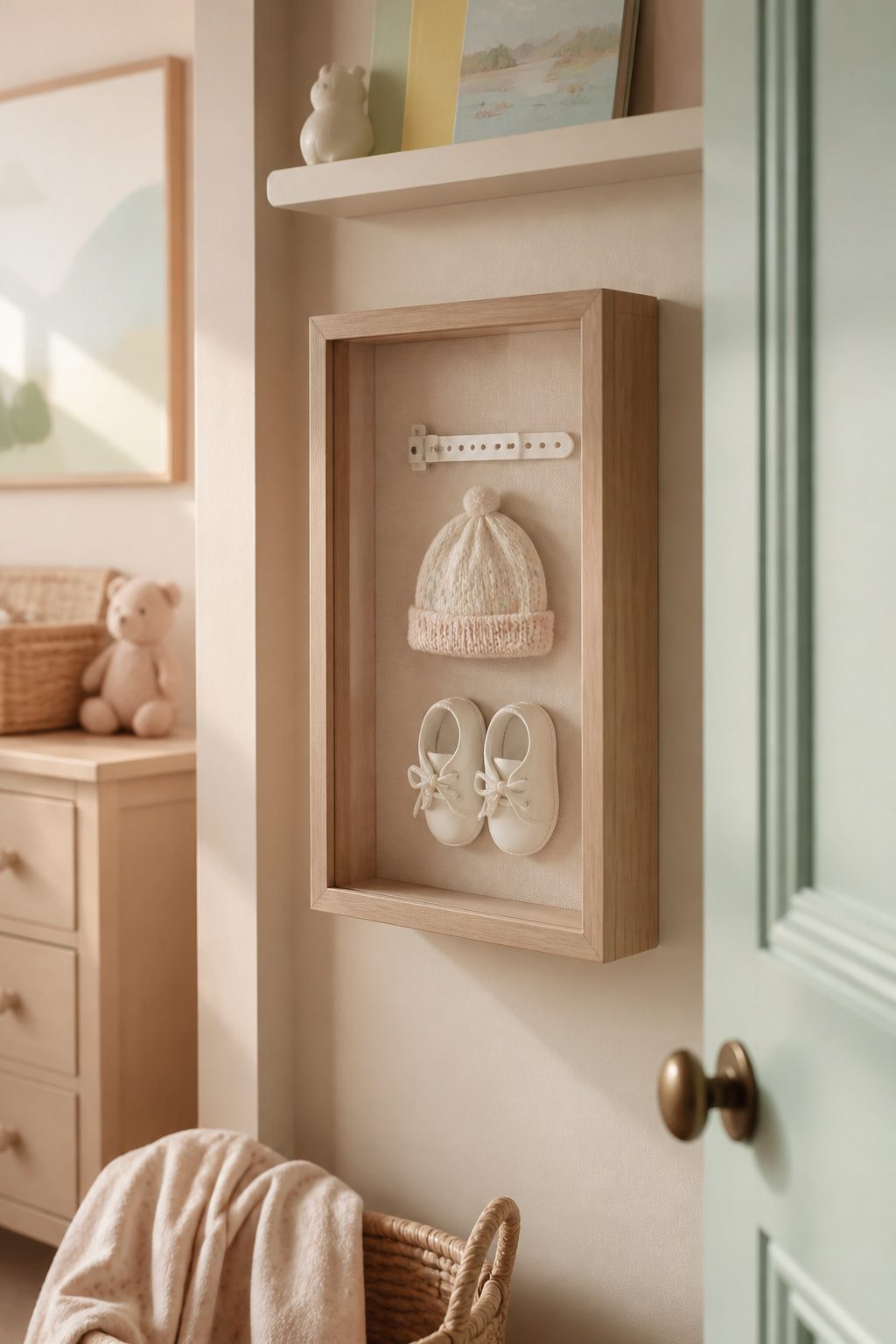
A nursery closet can hold more than onesies and wipes.
The back wall, the shelf above the rod, even the inside of the door if it is painted and fitted with shallow trim, these are places for the things you will want to explain later.
The hospital bracelet, the tiny knitted cap, the first pair of shoes that never touched pavement.
Keep it to one or two pieces at a time, rotated like a small gallery, or the closet becomes a memory box that swallows the function.
We have seen a shadow frame hung on the closet side wall, low enough that a child who is old enough will ask about it, and that seems about right.
The shelf above the hanging rod works too, though you are reaching up to dust it.
This is not storage.
Storage is the bin of outgrown clothes you will sort when you have time. This is display, which means it competes for the same visual space as the organizing system you just built.
We would not put anything here that you are not willing to lose if the humidity in that closet shifts, and we would keep it off the floor where the diaper bag lands.
Sorting by Size and Age
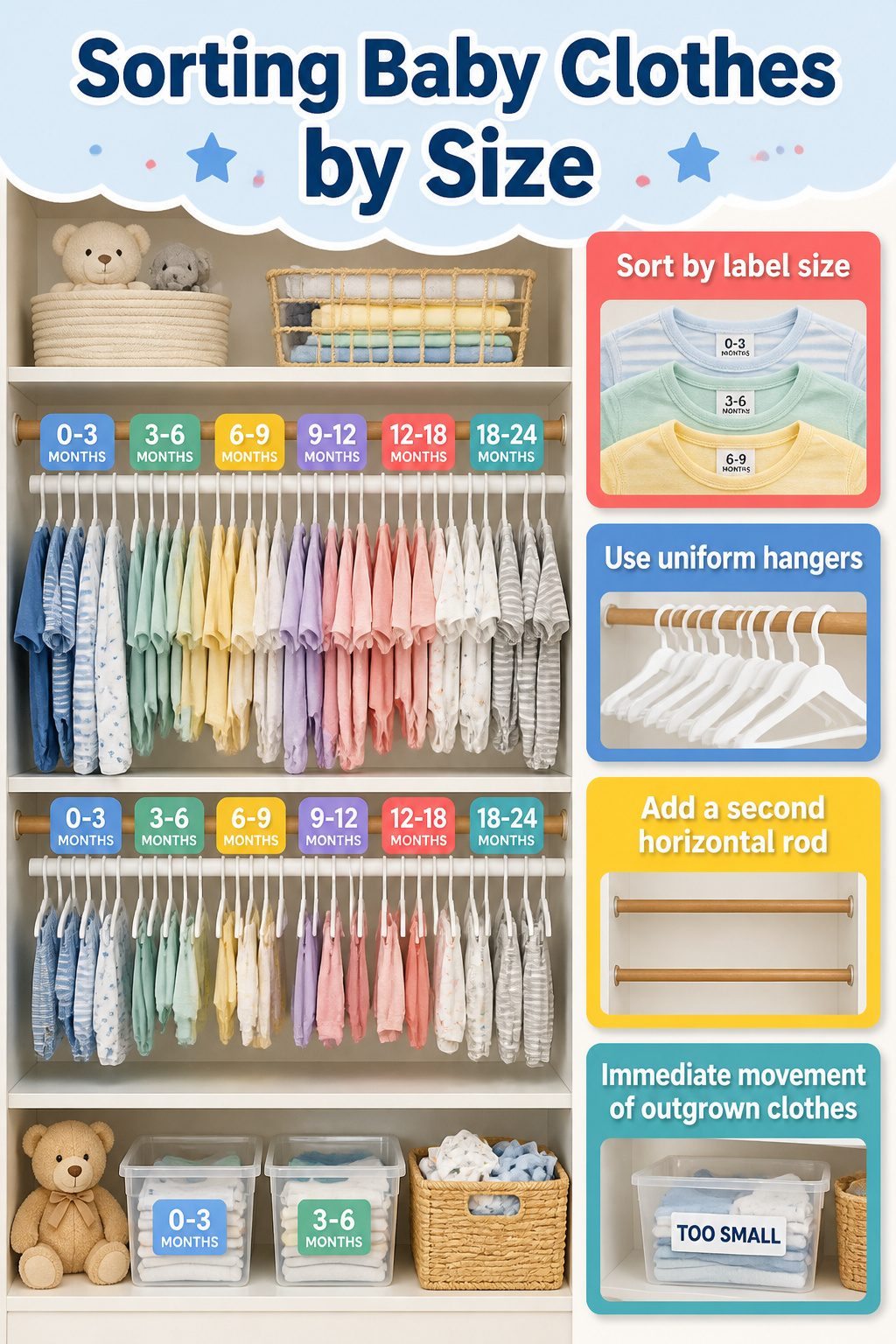
Baby clothes turn over faster than any other wardrobe in the house, and that speed is exactly why sorting by size has to happen before anything else goes into the closet.
We have watched friends skip this step and end up with newborn onesies buried behind 18-month pajamas, tags still on, discovered only after the kid outgrew them.
The system is simple: group everything by the label size, not by what you guess the baby wears.
Use the same hangers across the whole rod so you can see at a glance where one size ends and the next begins.
Clothes dividers in multiple colors work well for this, and they keep the categories honest when you are pulling outfits at 6 a.m.
Most closets are built for adult shirts and dresses, which leaves a lot of dead vertical space above a single rod.
A second horizontal hanging rod doubles the usable area and puts 0-3 month clothes at a height that makes sense for their short span in rotation.
When a size gets outgrown, move it immediately to a clear labeled bin or a basket on the top shelf without a lid so you can toss things in as you find them.
Waiting for a big cleanout means you will rediscover too-small items months later, still taking up prime real estate.
Why Vertical Space Matters in a Nursery
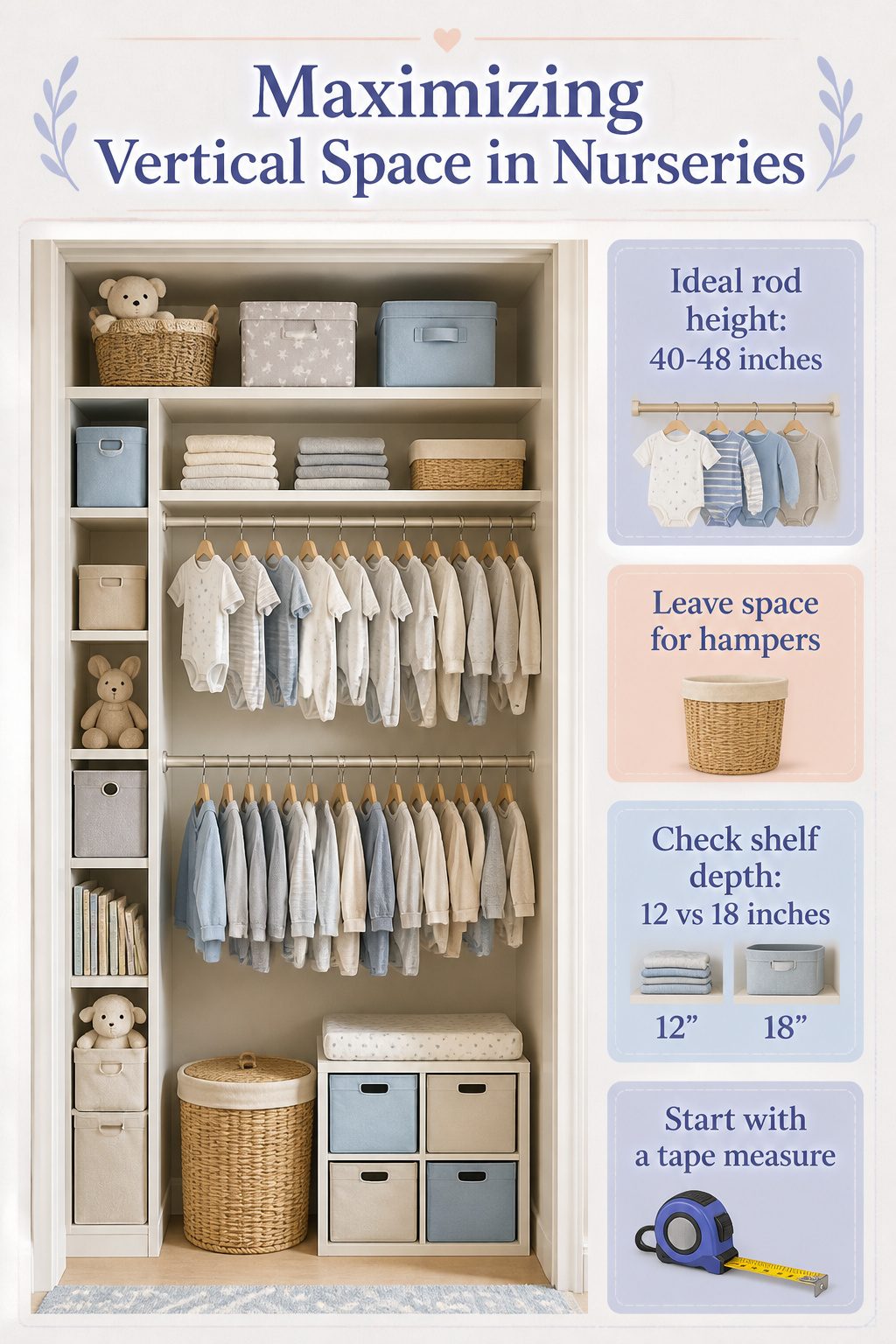
Baby clothes hang at roughly half the height of adult garments, which means a standard closet rod set to 64 inches leaves a foot or more of dead air above the shoulders and another gap below the hem.
We noticed this the first time we hung a newborn sleeper in a closet built for our own coats.
The fix is to measure your existing rod height, then plan for a second rod or shelf stack between 40 and 48 inches above the floor, which catches that wasted zone without crowding the floor space you still need for a hamper or cube unit.
If your closet has a single fixed shelf above the rod, check its depth too.
Many run 12 inches, deep enough for folded onesies but awkward for bins you want to pull straight out. A shallower second shelf at 18 inches, or a side-wall bracket system, can reclaim the upper corners where that fixed shelf ends.
The IKEA Billy hack we have seen in nursery builds uses the bookcase as a vertical spine, but the same principle works with simple shelf brackets if you measure the cavity first and buy boards cut to fit.
Either way, start with a tape measure, not a shopping cart.
A closet under 24 inches deep will fight full-size bins no matter how tall the stack goes, and a rod at 68 inches or higher may need a step stool for daily use once the baby arrives.
Frequently Asked Questions
What are some clever nursery closet ideas?
Drawer dividers keep folded clothes sorted by size, rolling carts bring diaper supplies where you need them, and matching child-size hangers let you fit more on the rod without stretching tiny shoulders.
Clear bins for outgrown clothes and over-the-door organizers for daily essentials round out the most useful systems.
How do I organize baby clothes in a nursery closet?
Sort everything by label size before it goes in, using the same hangers across the rod so you can see where one size ends and the next begins.
Add hanging dividers in multiple colors to keep categories honest, and move outgrown items immediately into a clear labeled bin or open basket so they do not drift back into rotation.
What is the best way to utilize vertical space in a nursery closet?
Add a second horizontal rod between 40 and 48 inches above the floor to catch the dead air above baby clothes, which hang at roughly half adult height.
Mount a simple shelf twelve inches above the existing rod for books or toys, and check whether side-wall brackets or a corner shelf can reclaim space the builder ignored.