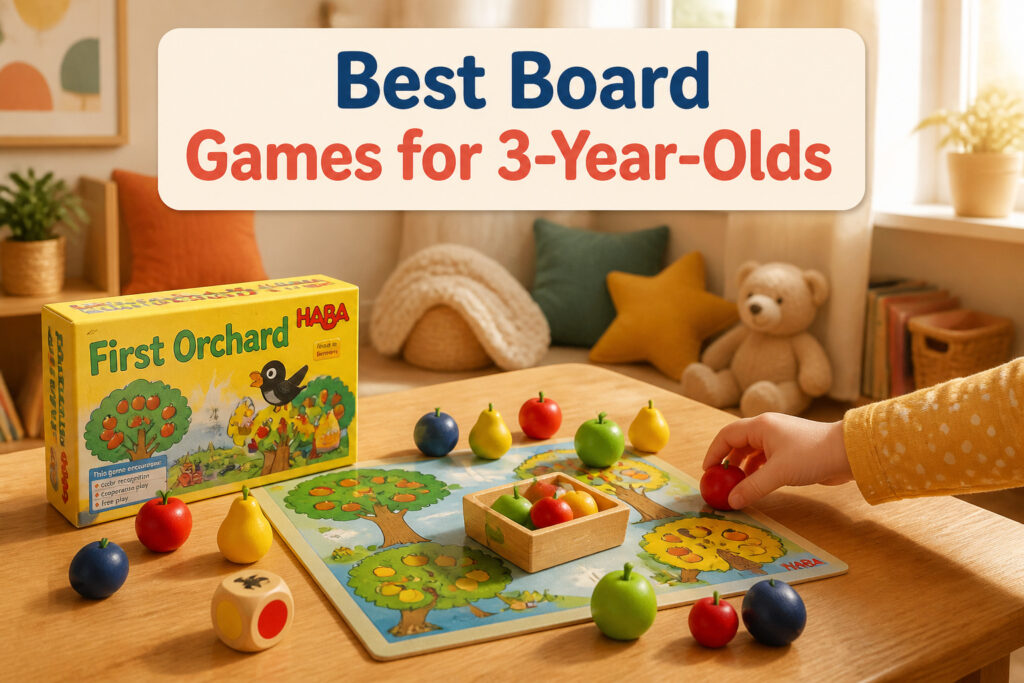
First Orchard by HABA is the board game we hand to a three-year-old who has never finished a turn-taking game.
The wooden fruit pieces are large enough to grip and the cooperative win means no one is left out when the basket fills.
Skip it if your child already handles turns without help; this one will feel too thin. For everyone else, the color-matching setup alone buys ten minutes of focused play before the first roll.
[link-whisper-related-posts]1. Best for First Board Game Experience
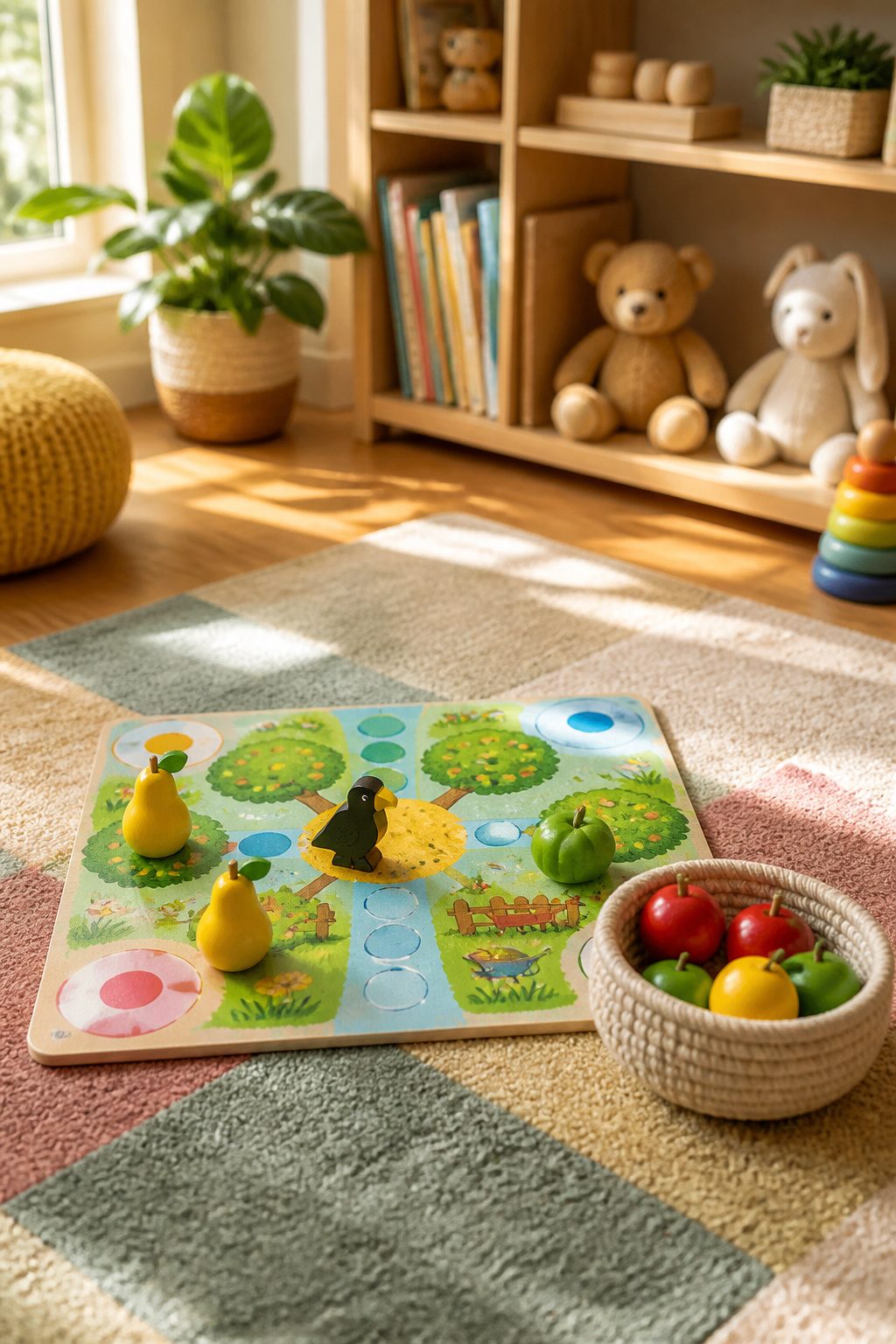
If your child has never sat through a full turn-taking game, First Orchard by HABA is where we would start.
It is listed for ages 2 and up, and the rules are simple enough that a three-year-old can grasp them mid-game: roll the die, harvest the matching fruit into the shared basket, or move the raven one step closer to the trees.
The wooden fruit pieces are large, satisfying to hold, and the cooperative win condition means no one is left behind when the basket fills.
The color-matching setup alone buys you ten minutes of focused play before the first roll. We have seen kids treat the pieces as loose parts afterward, building their own scenes for twice as long as the game itself lasted.
Skip this one if your child already handles turn-taking without a struggle.
For kids who have moved past that first threshold, First Orchard will feel too thin, too fast. But for a true first board game experience, it does exactly what it needs to do.

Count Your Chickens is the award winning cooperative counting game with pluck!

EXCITING PLAYTIME: These toddler board games for 2+ year olds have been enjoyed by families for over 30 years with over 3 million copies sold. The First Orchard toddler game is a perfect cooperative learning game for 1-4 players.
Winner of four awards including Oppenheim Toy Portfolio Platinum Award and Dr.Toy 10 Best Educational Toys Award
2. Best for Fine Motor Skills
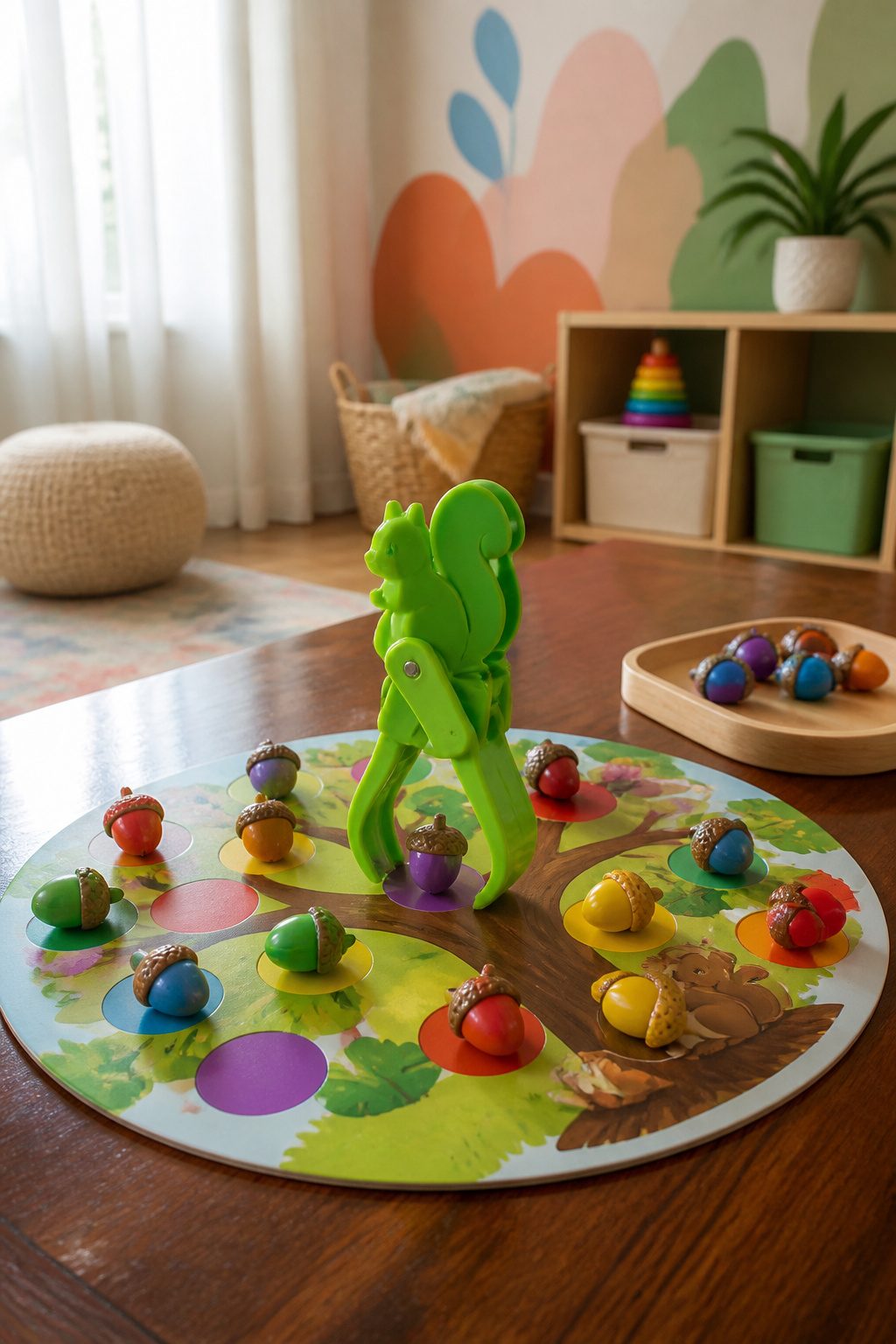
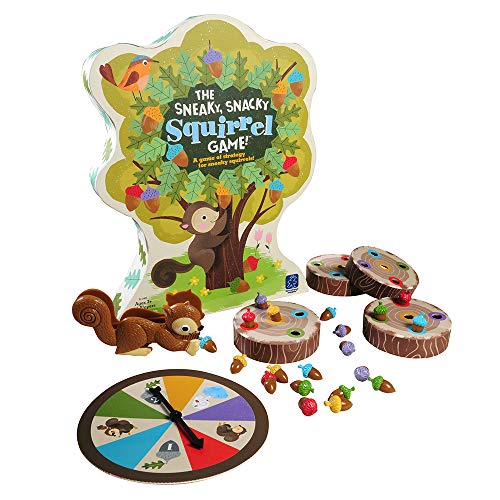
The plastic squirrel squeezer in Sneaky Snacky Squirrel is what separates this game from every other matching toy on the shelf.
Children use the tongs to grab colored acorns and drop them into their tree stump, and that squeezing motion is harder than it looks.
We have watched three-year-olds grip, miss, grip again, and finally land the acorn through the small hole. The tongs force the thumb and fingers to work together in a way that picking up blocks never does.
The game itself is straightforward: match your acorn color, steal from another player’s stump if the spinner lands on the sneaky squirrel, or lose a turn to a wind gust.
No reading, no counting past five. The fine motor challenge is baked into every move.
Skip this one if your child has limited hand strength or shuts down when physical tasks frustrate them. The tongs are not optional, and there is no workaround that keeps the game intact.
For children who still mouth small pieces, the acorns are large enough to be a safer bet than the smaller bones in similar games aimed at four-year-olds.
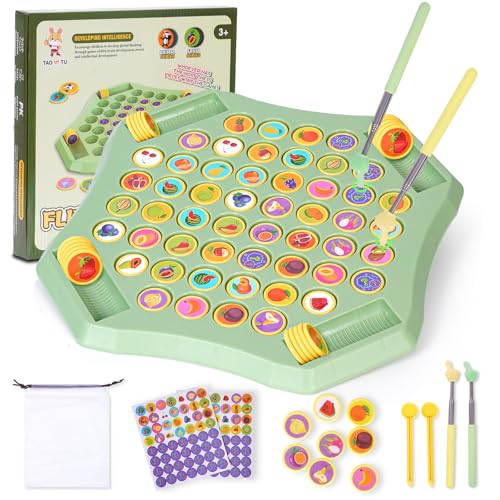
Memory Building Play: This memory game turns colorful fruit pictures into a fun matching game that helps kids practice visual recognition, concentration

COMPLETE 57-PIECE WOODEN DOMINO SET WITH BAG: Includes 28 fruit blocks, 28 animal blocks, 1 game block, 1 storage bag, and 2 instruction manuals. Unlike flimsy sets with missing pieces, our set offers full component matching and an included canvas bag for easy cleanup, keeping play spaces organized and travel-ready. Experience the timeless fun of arranging, stacking, and toppling classic dominoes.

50 BEAUTIFULLY ILLUSTRATED CARDS: Each card features stunning illustrations of a variety of plants, fruits and vegetables that are grown in gardens all over the world.
3. Best for Color Matching
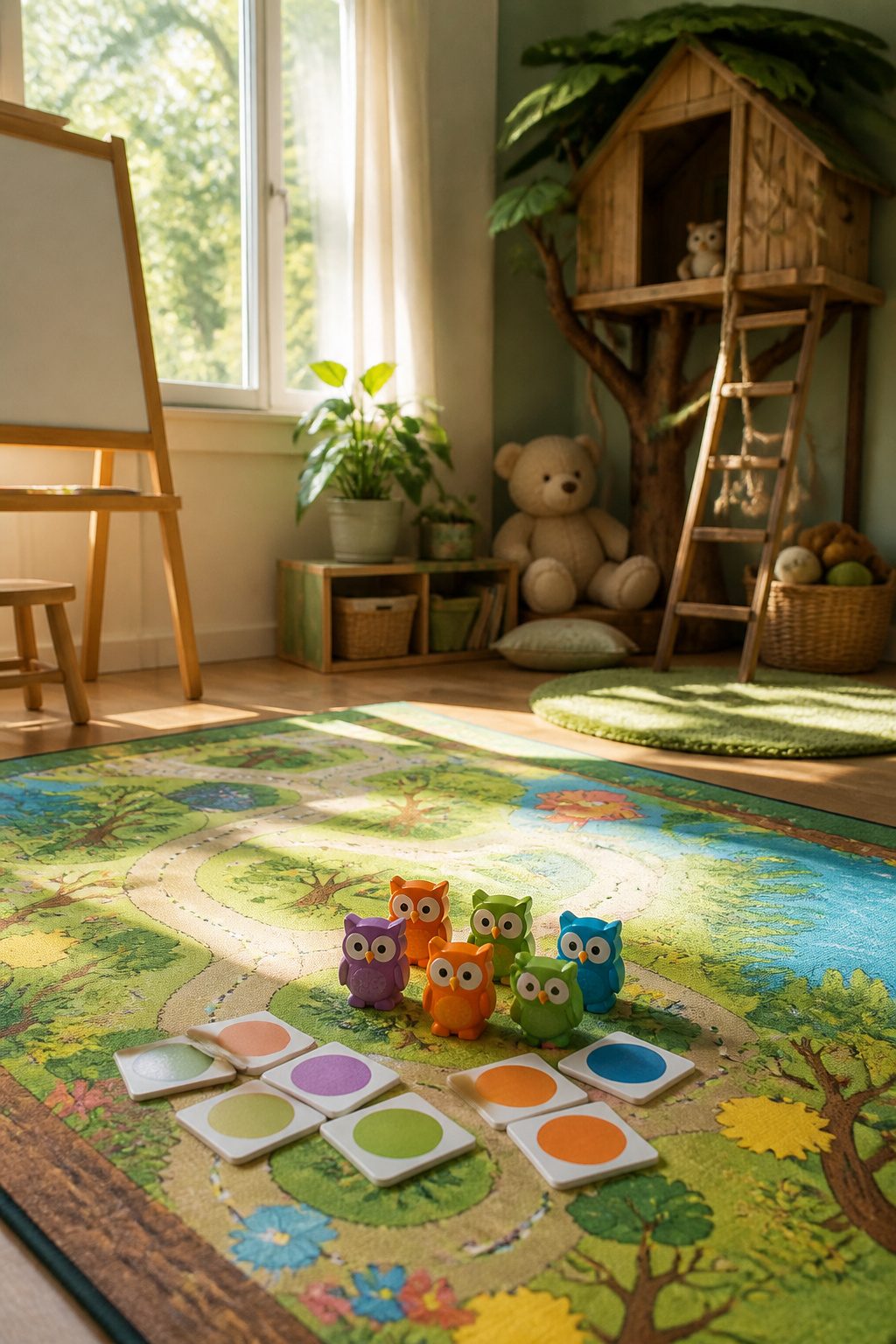
Hoot Owl Hoot! runs a 4+ age recommendation, which is slightly older than the 3-year-olds this list targets, but we have seen kids who are already solid on color identification grow into it well before that birthday.
The game is cooperative: everyone works together to move owls along a color path back to their nest before a sun token reaches the end of its own track.
You play a color card from your hand and advance any owl to the next matching space, so the core skill is color matching with a little bit of shared decision-making about which owl needs the help most.
The sunset track adds tension that some 3-year-olds handle fine and others do not.
If your child is still learning to reliably name colors, or melts down when a timer or countdown is involved, this one is not the right pick yet.
Peaceable Kingdom designed it so you can adjust difficulty by adding or removing owls from the board, which helps bridge that gap for younger players who are ready for the concept but need fewer moving pieces to track.

Color Match Game with Dual-Mode Excitement: Choose your adventure—unwind with a simple 4-color, 6-pole setup in Easy mode, or tackle a complex challenge with 6 colors and 8 poles in Hard mode! Designed to engage players of all ages and skill levels, guaranteeing endless enjoyment!

READY, SET, STACK! -- Simple rules for this color game: pick a challenge card and set up rings to match the layout. Race to sort strategically: you may only move rings onto empty pole or rings of the same color until each pole holds one solid color. Play timed solo rounds to beat your own record or race side-by-side with a second player, the first to finish sorting rings slams the victory bell to win with no turn waiting

🎉 UNPLUG & CONNECT FOR FAMILY NIGHT: Step away from screens and dive into fast-paced stacking fun. Whether it’s a competitive weekend challenge with friends or a lighthearted family activity, this color-matching puzzle brings everyone together for instant laughs and meaningful bonding.
4. Best for Counting Practice
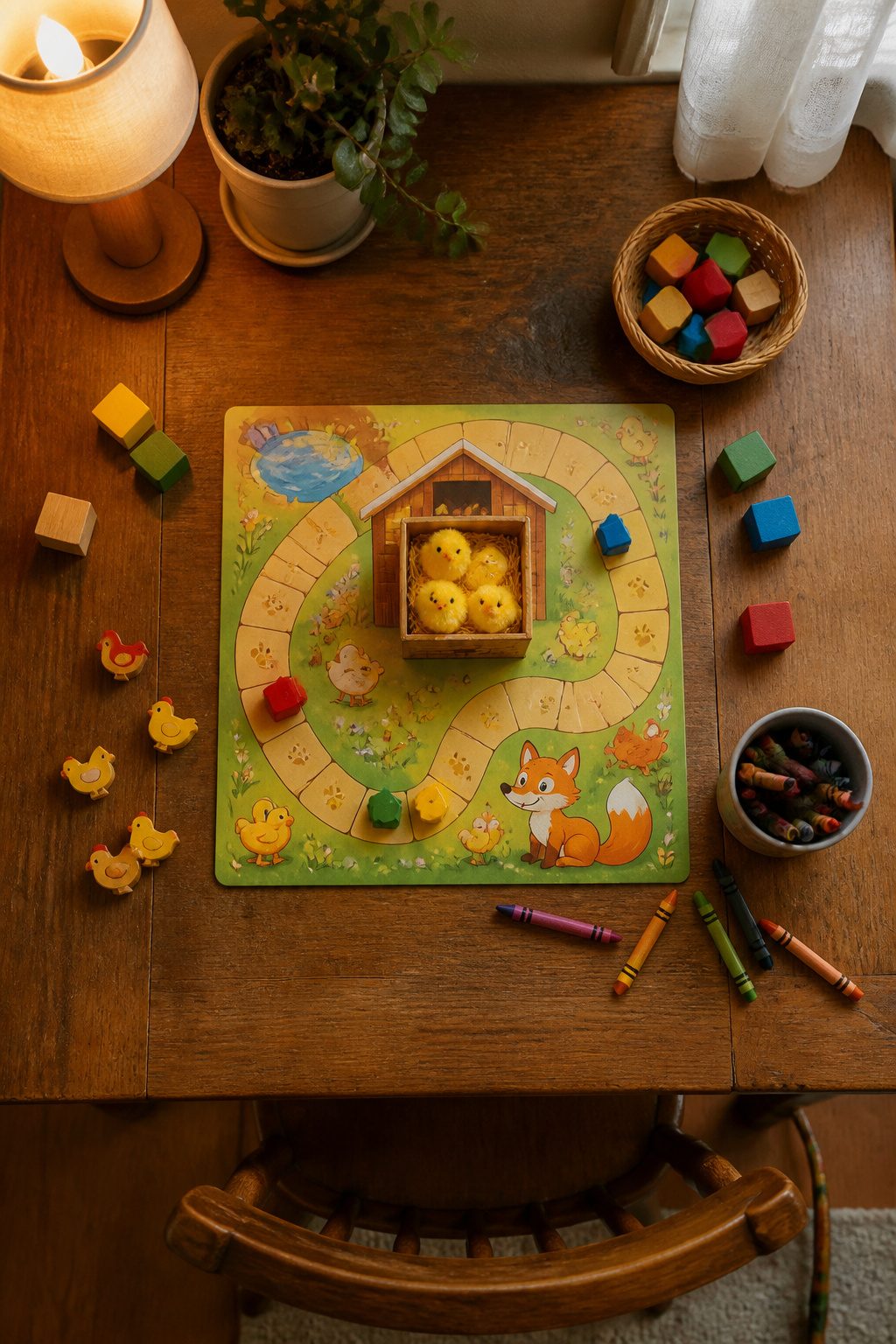
Count Your Chickens is the cooperative board game we keep coming back to when a child is still working out what numbers past five actually mean.
You spin a simple spinner, move that many spaces along the board, then move the same number of chicks into the coop.
Some spaces give you an extra chick, so you end up adding one to whatever you just counted, and every so often the fox sends a chick back out.
The counting runs past ten and sometimes toward fifteen, which matters because most preschool games stop at five and never let a child feel the rhythm of the higher numbers.
The board itself is straightforward, just a path with no branching choices, so a three-year-old can focus on the counting without juggling strategy at the same time.
We have seen kids treat the spinner like a slot machine and the coop like a barnyard victory lap; the game moves fast enough that losing a chick to the fox does not stall the mood.
Skip this one if your child already counts reliably past ten.
The repetition that builds confidence in a beginner turns dull quickly for a kid who has moved on. For that child, you want a game with harder math or more layered turns, not more of the same counting loop.

DEVELOPS FINE MOTOR SKILLS - Specially designed tongs help strengthen hand muscles and improve coordination as children pick up colorful donuts, perfect for preschoolers developing dexterity.

STRENGTHEN PENCIL GRIP: Help kids build proper pencil grip, hand strength, and fine motor skills with 3-prong tongs designed to mimic correct finger placement
STRATEGY SKILL GAME FOR PRESCHOOLERS: This toddler board game reinforces color learning, encourages strategic thinking, and develops hand-eye coordination, dexterity, & matching skills
5. Best Classic
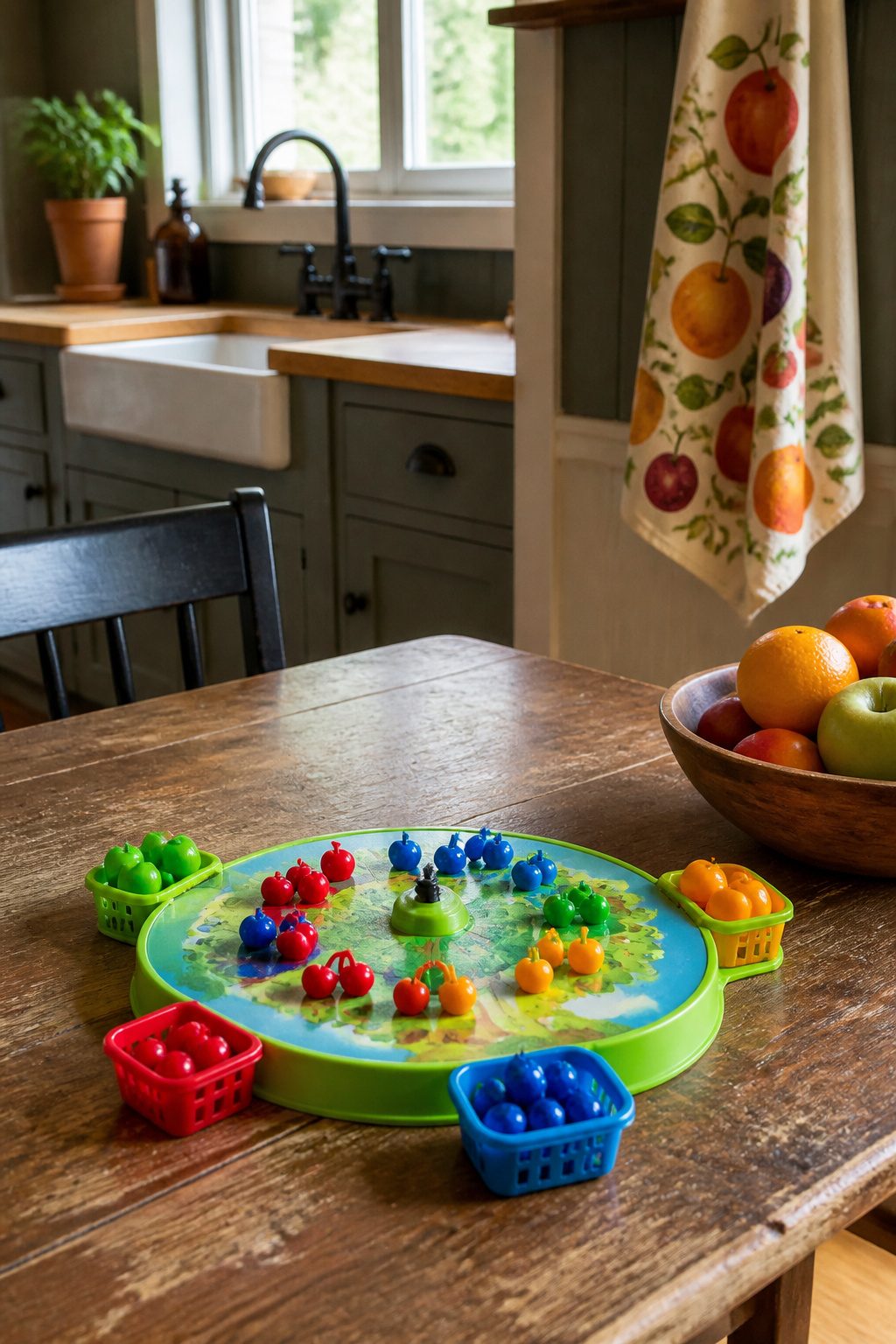
Hi Ho Cherry-O has been the entry point for preschool board games since the 1960s, and we still reach for it when a three-year-old needs something they can play without help.
The setup is simple: each player has a bucket and four trees holding cherries, blueberries, apples, and oranges. You spin, pick that many fruit from your tree, or put them back if the spinner says so.
The counting only runs to four, but moving each piece one by one builds one-to-one correspondence, the skill that separates kids who can recite numbers from kids who actually count.
The current version swapped the old flat spinner for a sturdier design, and the plastic fruit still feels good in small hands.
We like that it is physical, not a card or a token; the pieces roll and clatter, which keeps a toddler in the game longer than a paper chit would.
That said, some families are already done with this one. If you played it yourself as a child and cannot face another round, skip it.
The same goes if you want less direct competition; the classic rules send fruit back to the tree, and that can end in tears for a kid who is not ready.
Newer editions include a cooperative option, though we have not found that mode necessary at our table.
The competitive version works fine for most three-year-olds, but you know your child. If losing a cherry to the spinner will ruin the afternoon, look elsewhere.

BEAN-BALANCING KIDS GAME: This Don't Spill the Beans game is the suspenseful bean-balancing, jar-tipping game. It's a fun and easy 2-player game for kids

WHO’S GOT THE MOVES: Classic Twister gameplay challenges players to place their hands and feet on red

First Toddler Games That Teach: A fun introduction to toddler games ages 2-4, Happy Marshmallow enhances fine motor skills, boosts color recognition and teaches taking turns and following directions
6. Best for Memory Building
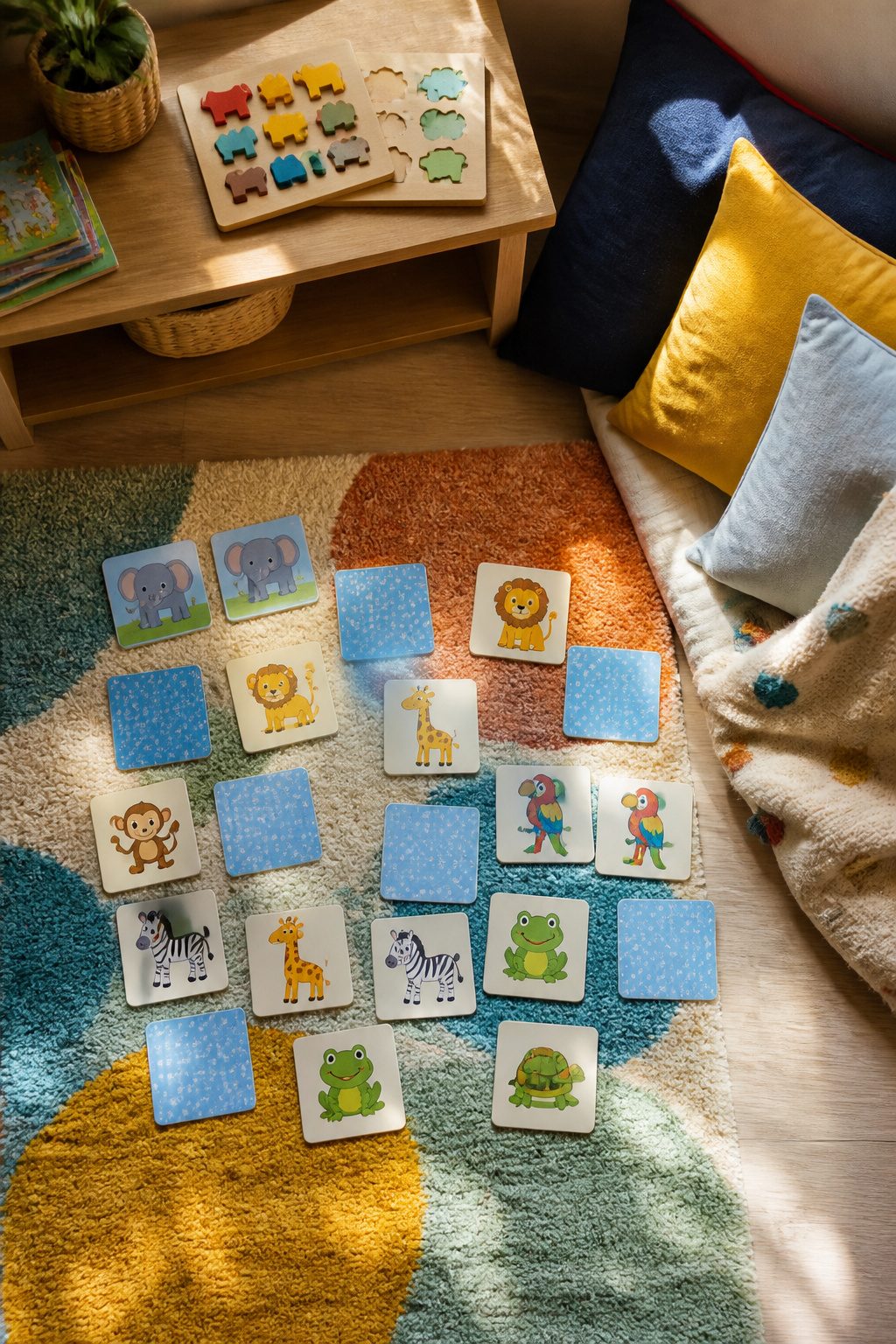
Memory Match belongs in nearly every toy cabinet because the cards can be swapped out without buying a new box.
We have used sets with animals, colors, and vehicles, and the rules stay the same. For a three-year-old, start with four pairs face up, then flip them face down once the child knows where they sit.
Add two more pairs only after they can clear the board without help. A full deck of twenty or more pairs is too much at this age; the game drags, and the child stops caring.
Skip this one if your child melts down when a turn ends with no match, because that is most turns in the early weeks.
Also skip it if the child needs to move their whole body to stay engaged; sitting still to flip cards will feel like a punishment.
In those cases, a physical game from the active-play section will serve the same waiting-and-remembering goals better.

THE VOLCANO IS RUMBLING: Your dinosaur friends are lost in the ferns and a volcano is about to blow. Can you help them escape to safety on dinosaur island? Memory, logic and luck will be your guide!
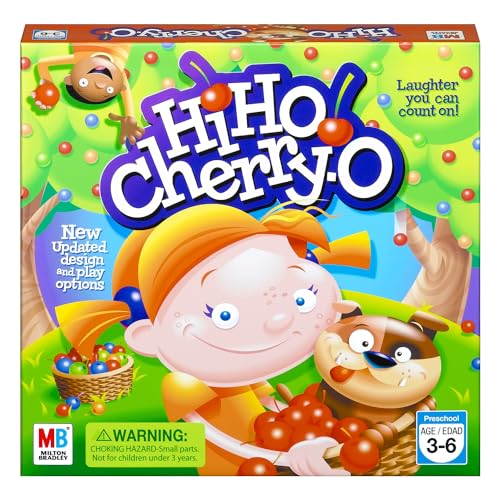
CLASSIC BEGINNER GAME: Do you remember playing the Hi Ho. Cherry-O game when you were a child. Introduce new generations to the classic gameplay of this kids' board game for boys and girls ages 3 and up
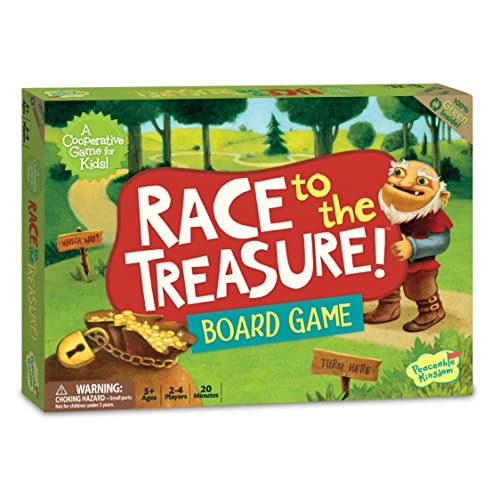
An award winning cooperative game where the race to the treasure is on!
7. Best for Active Play
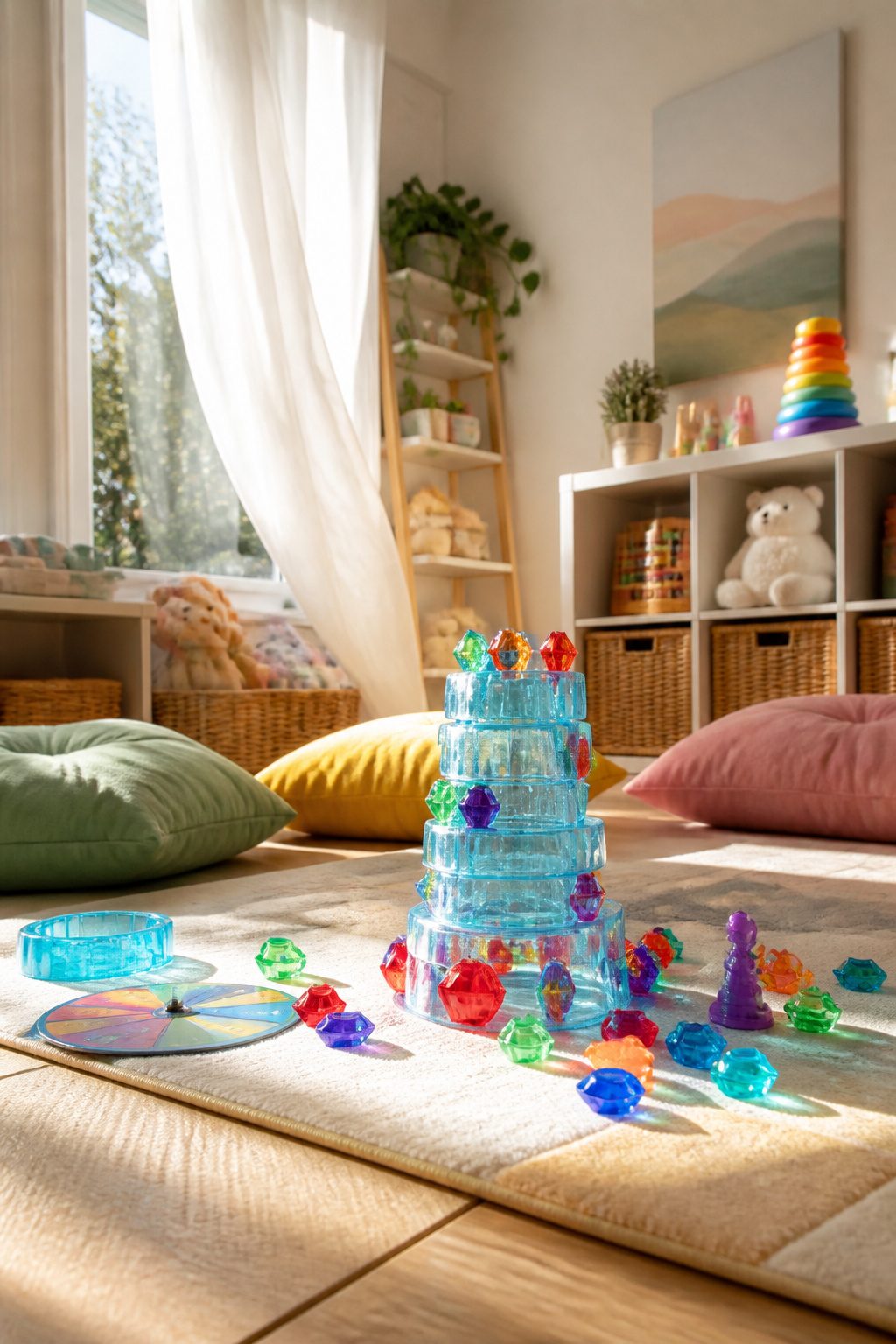
Dragon’s Breath builds a tower of ice rings stacked with colored crystals, then asks kids to knock it apart.
You set the plastic rings in alternating sizes, load the gems, and let players take turns pulling a ring free so crystals clatter down the center chute.
The physical action is the whole point: no turns spent waiting, no cards to read, just hands reaching in and the small crash of pieces falling.
The game ships with dozens of crystals, and they scatter. We would skip this one if your three-year-old still puts small objects in their mouth, or if a younger sibling crawls the same floor.
The pieces are bright and smooth, exactly the size that disappears under a couch or into a baby’s fist.
For families where that is not a worry, the melting tower holds attention longer than most games at this age because the outcome changes every time.

Multi-Level Challenge Cards for Logic & Memory Training Comes with over 30 gradient difficulty cards. Kids observe, remember and copy the fruit color arrangement on the vertical poles, effectively boost concentration, visual discrimination and sequential logical thinking.

ALPHABET MATCHING GAME: Collecting fruit bowls for Frida helps teach letter recognition for preschoolers as they practice the alphabet and develop matching and fine motor skills through play

Value Pack: It comes with 32pcs wooden chips in a box, a fun and engaging way for kids to develop their memory and matching skills. It's a classic game for children of all ages, helping them learn to recognize animals, remember locations, and improve their concentration. In addition, playing with a group will help enhance the ability to express.
8. Best for Path Building
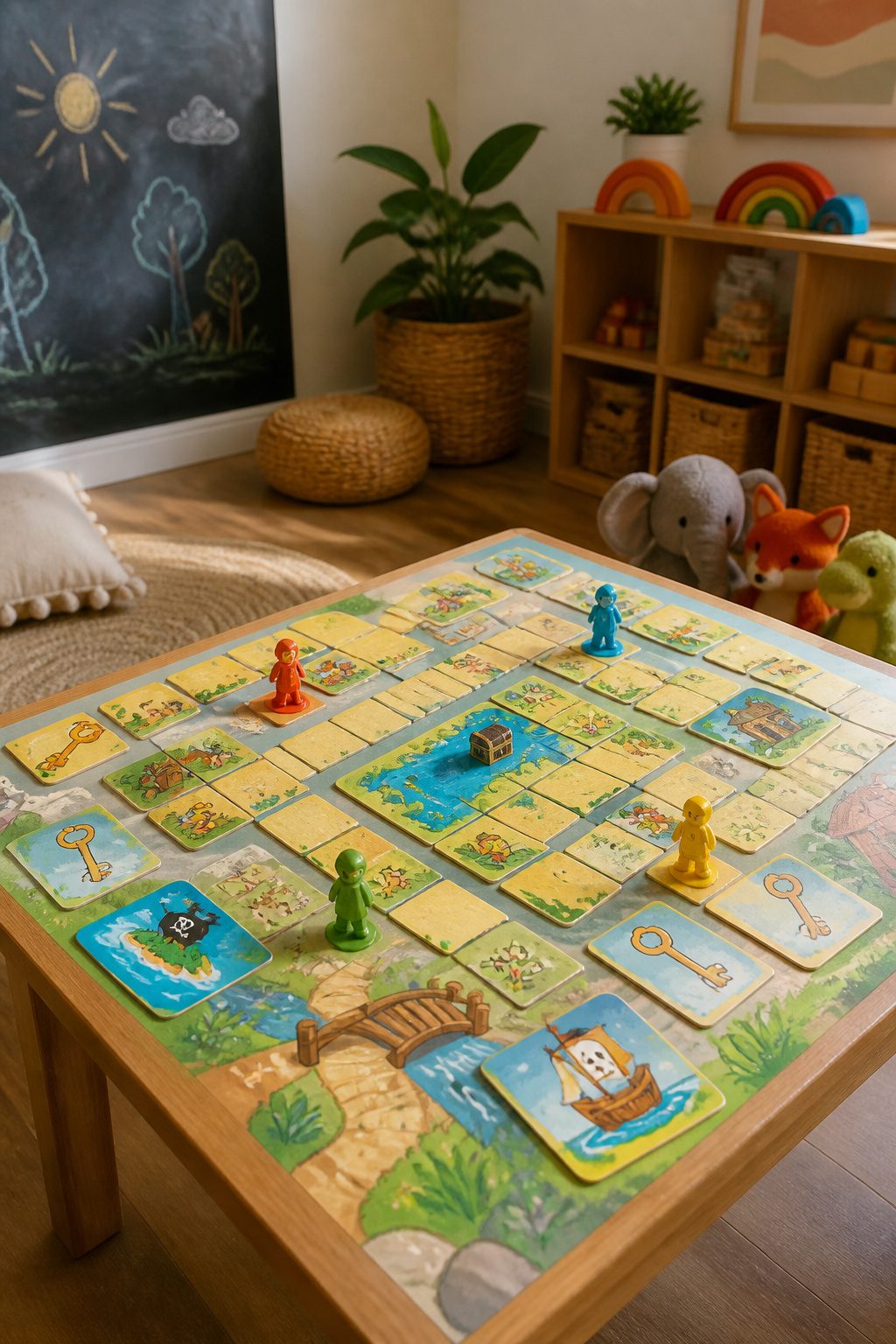
Race to the Treasure! builds a path across a grid using tile-laying that shifts every game.
Players roll one letter die and one number die to place three keys, then draw tiles that either extend the path, advance the ogre, or send him backward with an ogre snack.
The path has to reach all three keys and the treasure chest before too many ogre tiles appear.
The tile-laying asks a three-year-old to think about where a piece fits in two dimensions, which is early spatial reasoning in practice. They also have to hold two goals at once: build the path and keep the ogre away.
We saw that some children at this age find open-ended building frustrating; they want to know if they did it right, and a path that could go multiple ways does not give them that.
Others are not yet able to track both the path and the ogre threat without one goal dropping out of mind. Skip this one if that is your child right now.
The cooperative structure means no one loses alone, which keeps mixed-age groups playable. Mayer, who studies children’s games, notes it extends the skills from simpler cooperative games like First Orchard into actual decision-making and strategy.
One parent remembered their son peeking under tiles to avoid drawing the ogre, then asking them to draw for him when he got scared anyway. That fear became part of the fun, and the daughter later joined in on it.
Prices run about $20 at Kohl’s and $32 on Amazon. The components are paperboard tiles and a small ogre token, nothing that will survive rough handling forever, but the gameplay carries it for the age group it fits.

Color Matching Family Game: Enjoy color match games with this exciting family game! A fast-paced match the bottle color game featuring 20 vibrant bottles and a masking box. Players flip, reveal, and pair colors—perfect for bottle matching game fans, family nights, and classroom play.

Engaging Bottle Pairing Play for All Ages – Experience the thrill of this unique bottle collision game! Simply shake, swap, and match! The goal is to exchange bottle positions until all matching colors face each other. With adjustable difficulty (start with 5 pairs for a simpler matching game or 10 pairs for a greater logic challenge), it’s perfect for solo play or competitive family board game nights.

Montessori Wooden Memory Matching Puzzle Game Enhance Memory and Imagination Strengthens memory, imagination, hand-eye coordination, and problem-solving skills. Provides a hands-on, engaging learning experience.
9. Best for Animal Lovers
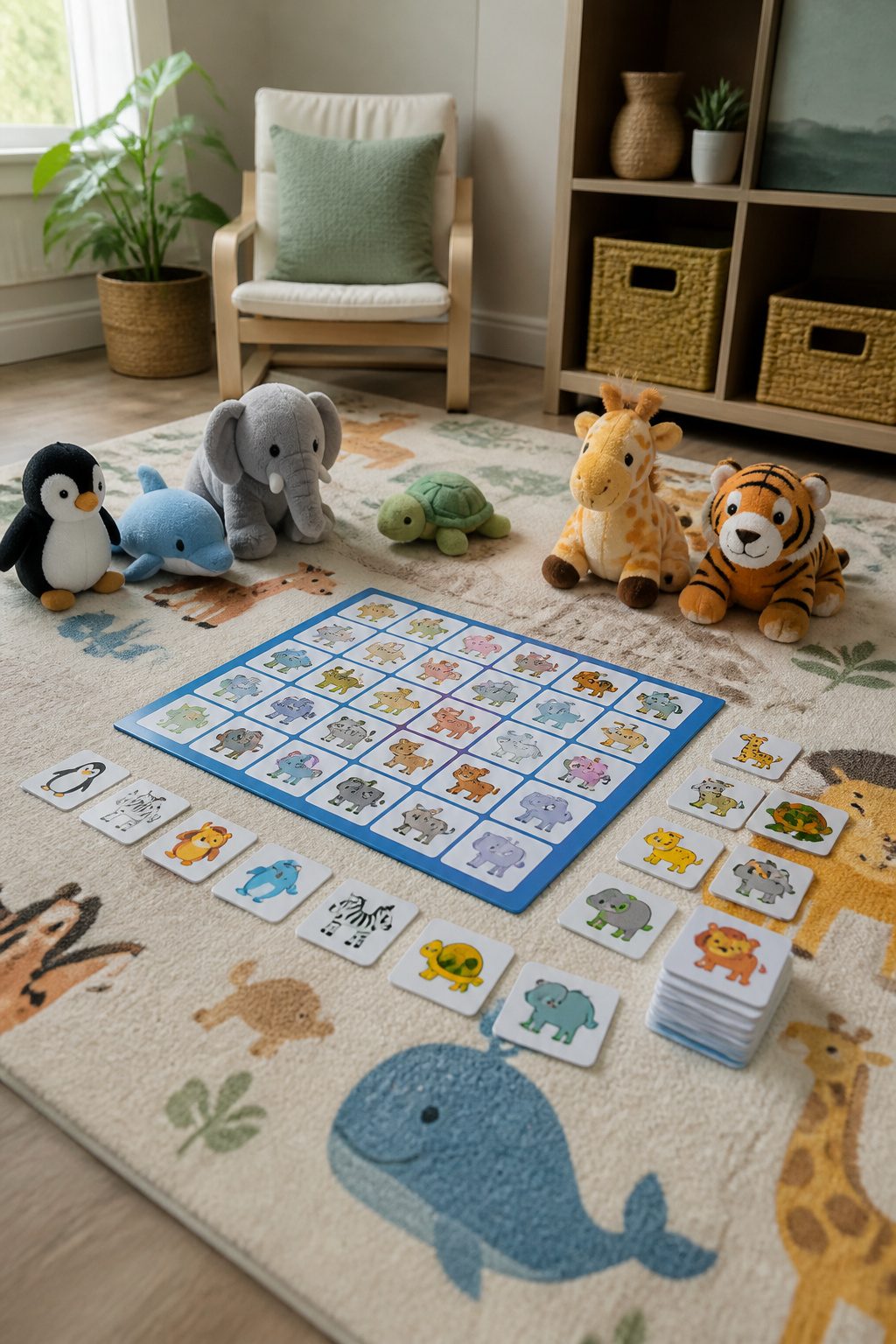
Sequence for Kids replaces the standard playing cards of the original with animal illustrations, which turns out to be the draw for a lot of three-year-olds.
Players match an animal card from their hand to the same animal on the board and place a chip there; first to line up four in a row wins.
The animals have names, and that small detail matters more than you’d expect at this age.
A practical note: holding cards is awkward for small hands. Laying the hand face-up on the floor keeps the game moving and removes the frustration.
This one is not for every three-year-old. If your child does not yet understand lining up four in a row, or needs more direct interaction than dropping chips on a board, skip it for now.
The game also includes wild cards and a remove-an-opponent’s-chip option, though most three-year-olds ignore the strategy and just enjoy placing tokens on animals they recognize.
For a longer session, some families play until every animal on the board is covered instead of racing for the row.
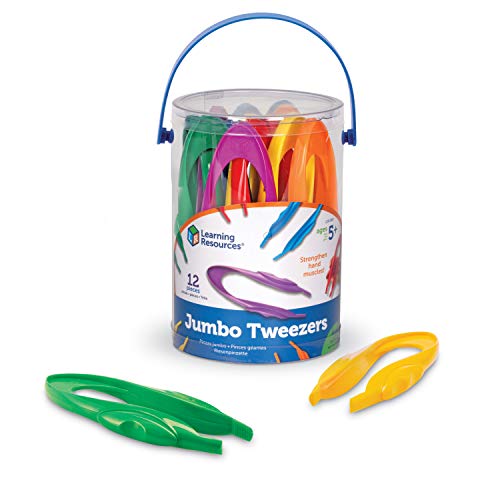
FINE MOTOR DEVELOPMENT: Strengthen hand muscles, pencil grip, coordination, and fine motor skills with easy grip preschool tweezers designed specifically for growing hands
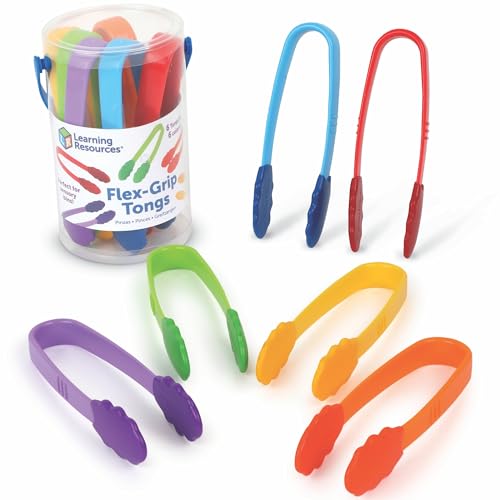
FINE MOTOR TOOLS: Grab and squeeze with these colorful tongs for kids, building hand strength, coordination, precision, and other fine motor skills, hands on fine motor tools for young learners here

PREMIUM SOLID WOOD, WEIGHTED FOR MOTOR SKILLS: Unlike lightweight, slippery plastic toys that slide off tweezers, our acorns are crafted from heavy-duty solid wood. The natural weight provides perfect resistance, forcing little hands to engage muscles for better fine motor control and pincer grasp development. Smooth, splinter-free edges and non-toxic water-based paint ensure a warm, safe tactile experience that cold plastic cannot match. Built to last as an heirloom, not landfill waste
10. Best for Speed and Coordination
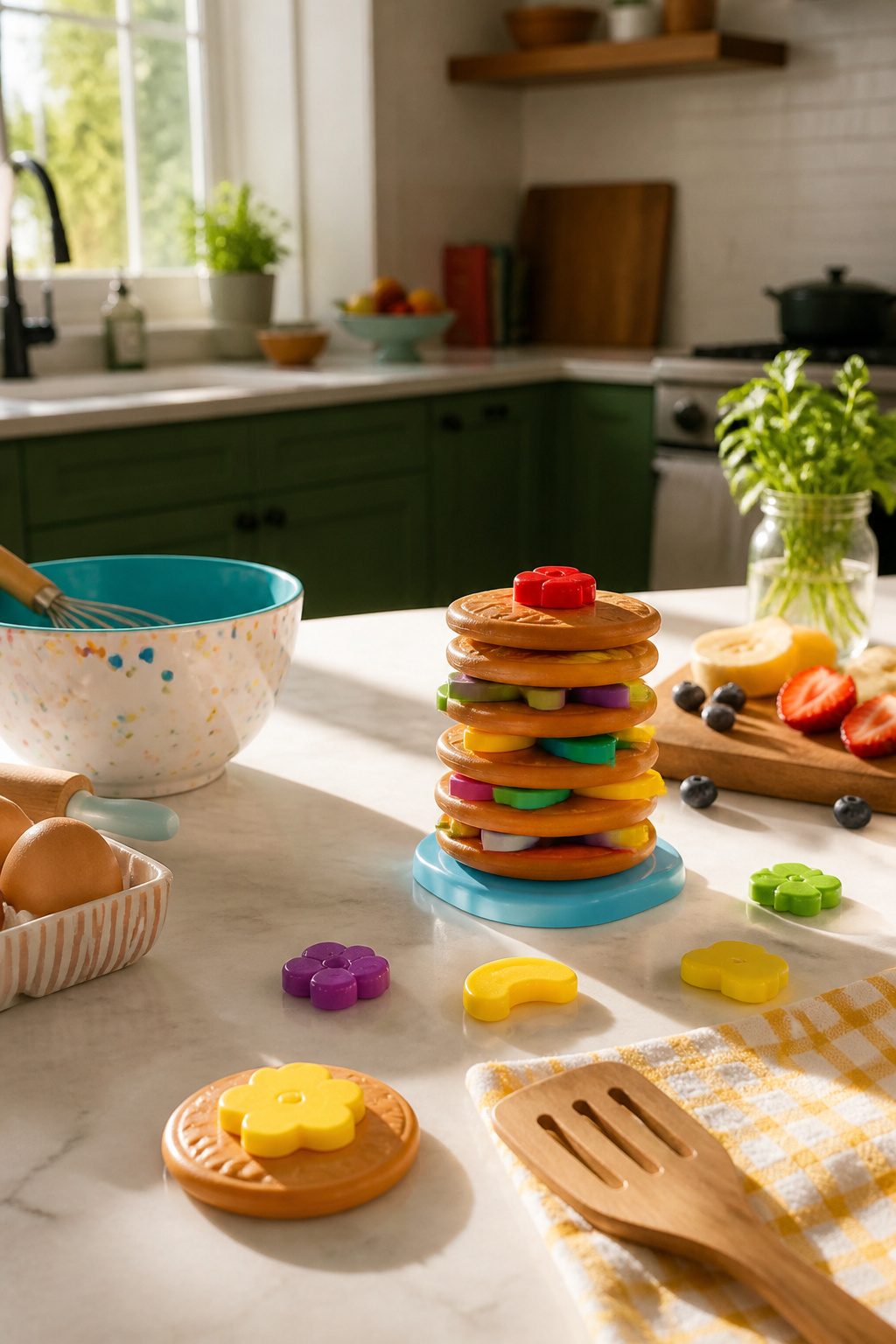
The plastic pancakes in Pancake Pile-Up! are thick enough for small hands to grip without tipping, and the spatulas force kids to balance rather than grab.
We watched a three-year-old at our store demo day drop the same pancake four times before she figured out the flat-wrist trick, then she refused to stop playing.
Orders come on cards that show stack sequences, butter and all.
Players race to build the stack and deliver it on the spatulas, which turns the game into a relay when more kids join. The pattern recognition is built in, not taught; they match the card without knowing they are matching.
Skip this one if your child freezes when someone else finishes first. The speed element is the whole point, and a three-year-old whose coordination runs behind peers will spend more time picking up dropped pancakes than stacking them.
That frustration compounds fast in a group. We have also seen it work beautifully for only children racing a kitchen timer instead, so the pressure is self-set.

Don’t Make The Croc Angry: This is an exciting toddler game that has its players placing the colorful wooden pieces on the croc’s belly to keep it balanced; once you rock the croc in this 3 year old game, it tumbles and you start all over

What Skills Board Games Build
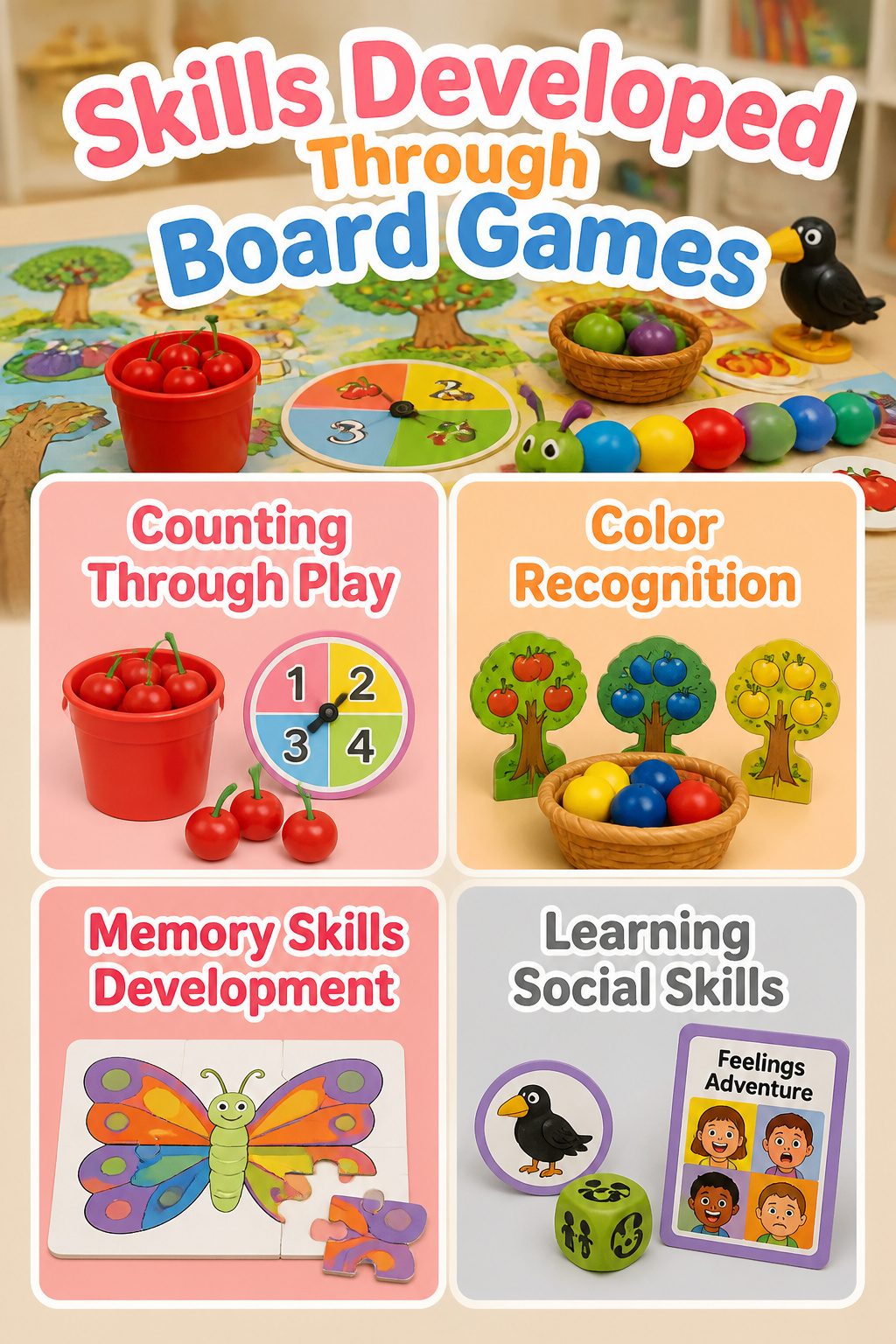
Three-year-olds do not sit down to learn.
They sit down to play, and the learning happens while they are not looking. Board games for 3 year olds work because the skills are baked into the action, not layered on top.
Take counting.
In Hi Ho! Cherry-O, a child picks colored fruit to fill a bucket.
Each turn is a small math problem: how many cherries did the spinner say, and did I already have four? The counting is real because the fruit is physical and the bucket fills or it does not.
First Orchard does the same with a shared harvest. The child counts apples or plums into a basket, and the counting is joint, not solo, which changes how the number feels.
Color recognition lands the same way. The fruit in both games is color-coded, so the child matches the piece to the tree without anyone calling it a lesson.
The Very Hungry Caterpillar game moves colored caterpillar pieces from fruit to fruit; the color is the path, and the child follows it naturally.
Memory builds more quietly.
The Caterpillar game has you collecting pieces to build a butterfly puzzle over several turns. A three-year-old starts to remember which fruit they still need, which piece they saw last round.
It is not flashcard memory. It is holding a small goal across time.
The social skills are the hardest part, and the games do not let you skip them.
First Orchard is cooperative; everyone wins or the raven wins. A child who grabs the die anyway learns that the group stops.
Hi Ho! Cherry-O forces turns because the spinner passes.
Feelings Adventure, aimed at this age, adds acting out emotions and affirmations, though some three-year-olds find it too simple. Even then, the turn-taking structure remains.
The game does not teach sharing by talking about it. It teaches by making the game unplayable without it.
Matching Game Complexity to Your Child
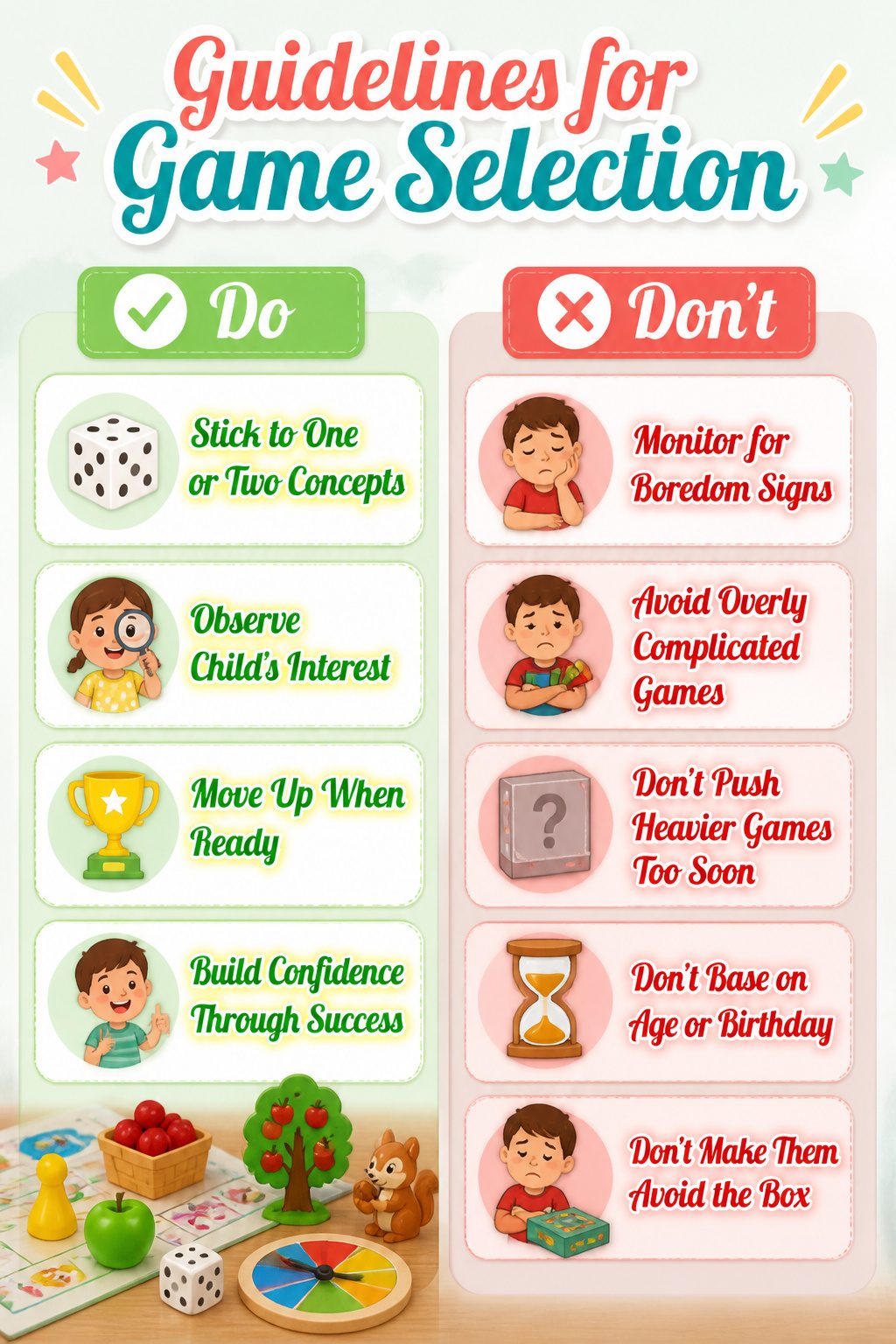
Three-year-olds are not a single skill level, and the gap between a child who has never touched a die and one who can spin a spinner and wait a turn is wide.
We start every recommendation by asking what your child has already done. If they have never played a board game, stick to one or two concepts at most: roll, match a color, done.
First Orchard works here because the setup alone, matching colored fruit to the right tree, teaches the same turn-taking and color matching the rest of the game needs.
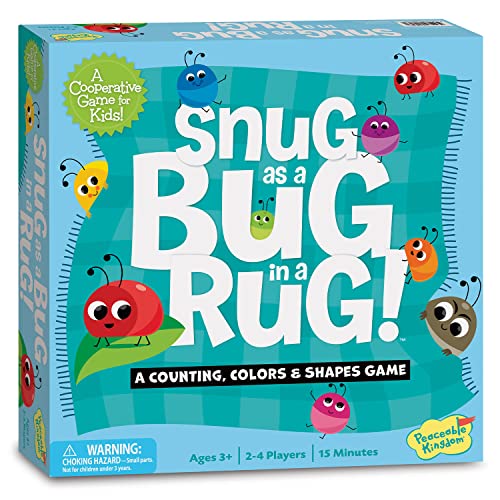
A child who has played a few times can handle Sneaky Snacky Squirrel, where the spinner adds wind and stealing, or Snug as a Bug in a Rug with its layered levels you can add later.
You will know a game is too hard when your child wanders off mid-turn or hands you the pieces to do it for them.
Too easy shows up as immediate boredom or house rules they invent just to stay interested. We move up when they ask to play again and finish faster each time, not because their birthday passed.
A child who masters a simple game at three and a half is building confidence that keeps them at the table when counting to fifteen in Count Your Chickens becomes interesting later.
Pushing a heavier game because you want to play it is a fast way to make them avoid the box entirely.
Cooperative and Competitive Play
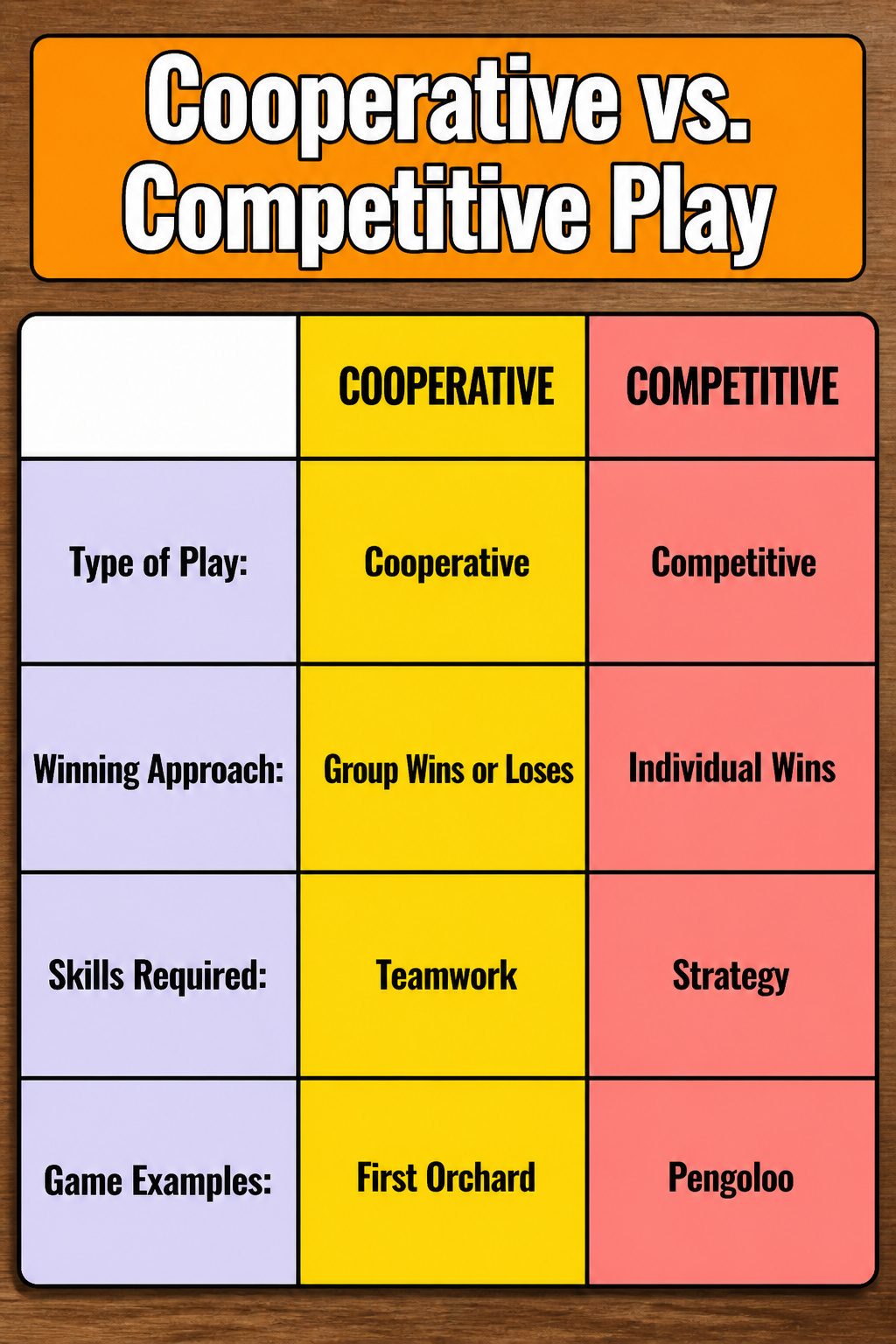
At three, most kids melt down when they lose a round they did not even fully understand.
Cooperative games sidestep that entirely. In First Orchard, players roll a die and either pick fruit for the communal basket or move a raven closer to the trees; the group wins or loses together.
The setup alone, matching colored fruits to matching trees, teaches something useful before the first roll.
Peaceable Kingdom’s Dinosaur Escape works the same way, part luck, part strategy, all teamwork. We keep a couple of these on the shelf for playdates where sharing is already shaky.
That said, you do not want a child who cannot handle any competition by kindergarten. The shift happens naturally around the edge of four.
Pengoloo starts as a memory and color-matching game with dice, then its advanced rules let players steal eggs from each other. We introduce that second layer only after the basic version feels easy.
Hoot Owl Hoot sits in the middle: still cooperative, still matching colors to fly owls home before sunrise, but the rising stakes teach kids to handle pressure without turning on each other.
The plastic owl tokens look cheap, so we swapped in small Schleich figures we already owned.
The best mix we have found is two cooperative games for every competitive one at this age. It keeps game night calm without making the later transition a shock.
Frequently Asked Questions
What are the best board games for 3-year-olds?
First Orchard, Sneaky Snacky Squirrel, and Hoot Owl Hoot! are top picks, with Hi Ho! Cherry-O as the best classic option.
Each targets a different skill: turn-taking, fine motor development, color matching, or early counting. The right choice depends on whether your child has played board games before and what they are ready to learn next.
Are cooperative games better for toddlers?
Cooperative games work better for most three-year-olds because they avoid the meltdowns that come with losing a round the child barely understood.
First Orchard and Hoot Owl Hoot! let the group win or lose together, which keeps playdates calmer and still teaches turn-taking. A good ratio at this age is two cooperative games for every competitive one.
What skills do board games teach toddlers?
Board games build counting, color recognition, memory, and social skills like taking turns and sharing. The learning happens through physical pieces and structured play rather than direct instruction.
A child counting cherries into a bucket in Hi Ho! Cherry-O is doing real math because the fruit is tangible and the outcome matters to the game.